
10 Best Aerosol Primers For Cars in 2026
This post contains affiliate links. As an Amazon Associate, we earn from qualifying purchases.
For most DIY car projects, the Rust-Oleum Stops Rust Filler & Sandable Primer is the best overall pick. It fills light surface scratches and rust pitting while drying fast enough to keep your project moving. If you are starting with bare metal, the Rust-Oleum Self Etching Primer Spray offers superior adhesion, while the U-POL Sandable Primer Spray is a versatile choice for metal and plastic parts alike.
Getting a smooth, durable paint job on your car starts with the right primer. The challenge is that different surfaces, bare metal, old paint, plastic, or rust spots, each need a specific type of primer to bond correctly and prevent corrosion. Choosing the wrong one can lead to peeling, rust bleeding through, or wasted time sanding.
We built this guide by analyzing manufacturer specifications, surface compatibility, drying times, and rust-prevention claims for ten leading aerosol primers. We also looked at patterns in owner feedback to understand what works in a real garage and what falls short. The result is a clear breakdown of which primer fits your specific project, from a quick touch-up to a full panel respray.
Top 10 Aerosol Primers For Cars in the Market
Certain content that appears on this site comes from Amazon. This content is provided "as is" and is subject to change or removal at any time.
The Best Aerosol Primers For Cars, Reviewed
Rust-Oleum Stops Rust Filler & Sandable Primer

What We Like
- Fills minor surface imperfections
- Dries and can be recoated in 10 minutes
- Rust-preventive base coat for vehicles
- Sands smooth for top coat adhesion
Trade-offs
- Oil-based formula requires solvent cleanup
- Not suitable for plastic surfaces
A filler and sandable primer that dries to the touch in just 10 minutes means you can move from prep to paint in a single afternoon, even on a busy weekend. It works on wood, metal, and fiberglass, so it handles everything from a rusty truck bed to a fiberglass hood, while the oil-based Stops Rust formula lays down a corrosion-resistant foundation. This is the primer for the DIYer who wants one can that fills small dings, sands smooth, and blocks rust without waiting around.
For anyone fixing up a car, truck, or other vehicle, the key fact is that this spray fills minor surface imperfections and sands smooth, saving you from having to apply a separate filler before priming. It works on wood, metal, and fiberglass, so you can use it on different parts of the same project. The oil-based formula does require solvent cleanup, which is a trade-off if you’re used to water-based sprays.
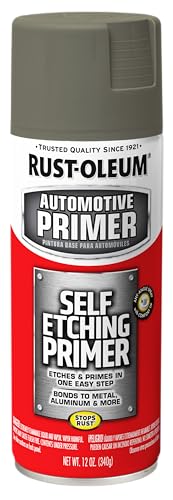
Rust-Oleum Self Etching Primer Spray
What We Like
- Etches and primes in one step
- Maximum adhesion on bare metal
- Stops Rust formula prevents corrosion
- Any-angle spray works upside down
Trade-offs
- Oil-based requires solvent for cleanup
- Limited to 12 sq ft per can
A 12-square-foot coverage per can means you can handle a fender, door panel, or small hood in a single pass, which keeps the job moving fast. This primer is built for bare metal, its self-etching formula bites into the surface while the Stops Rust oil base locks out corrosion from the start. If you’re prepping a patch of exposed steel or aluminum for paint, this two-in-one spray saves you a full step without sacrificing grip or protection.
The trade-off is that this primer skips the high-build filling power of a product like the Rust-Oleum Filler & Sandable Primer in favor of direct metal adhesion and rust prevention. For a quick, reliable etch-and-prime job on bare metal, it’s a straightforward choice that gets you to paint faster.
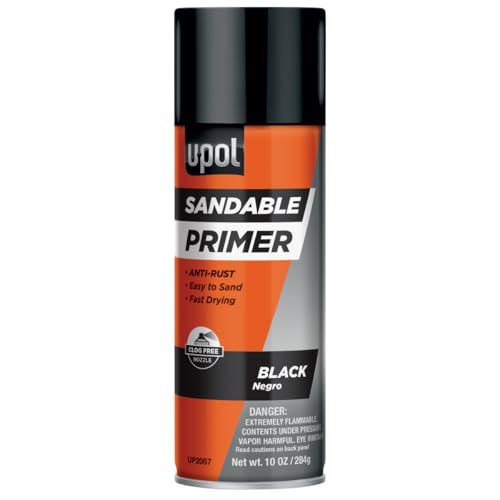
U-POL Sandable Primer Spray
What We Like
- Fast-drying for quick project turnaround
- Anti-rust technology protects metal surfaces
- Anti-clog nozzle for steady application
- Easy-to-sand for a smooth finish
Trade-offs
- Requires thorough surface prep for best adhesion
- Only one shade per can limits color matching
A fast-drying formula that sands down easily gives this primer a clear edge when you need to move through a project without long waits between coats. The anti-rust technology built into the paint adds a layer of protection on metal surfaces, making it a versatile choice for both body panels and plastic trim. Its all-purpose nature means you can grab one can for most jobs around the garage, from touching up a fender to prepping a bumper cover for a respray. The spray nozzle design includes anti-clog technology, which helps maintain a steady application.
The U-POL Sandable Primer Spray is a fast-drying, all-purpose primer with anti-rust technology, so it works well as a rust-preventative foundation on metal and plastic surfaces before topcoating. It sands down easily to create a smooth, even finish, and the spray nozzle has anti-clog technology for steady application. Unlike a two-part epoxy system, this is a simple one-part aerosol that doesn’t require mixing, making it straightforward to use.
Product photos
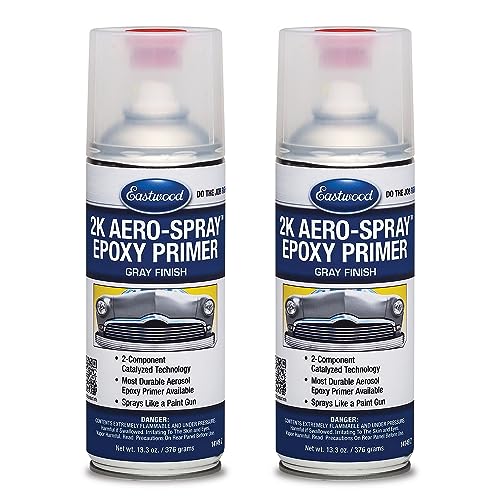
Eastwood 2K Epoxy Gray Primer
What We Like
- Direct-to-metal epoxy protection
- Wide fan nozzle for even spray
- 48-hour pot life after activation
- Rust-preventive finish
Trade-offs
- Requires NIOSH respirator and ventilation
- Heavier than single-stage aerosol primers
A two-component epoxy in an aerosol can means you get catalyzed durability without buying an HVLP spray setup. The Eastwood 2K Epoxy Gray Primer covers 10 to 16 square feet per can, sticks directly to bare metal, aluminum, steel, or fiberglass, and locks out rust before your topcoat goes on. That makes it a strong fit for anyone doing panel repairs or full resprays who wants professional-grade adhesion and corrosion resistance from a rattle can. The 48-hour pot life after you activate the can gives you time to work, and the three-year shelf life means a spare can won’t go bad sitting on the shelf.
The safety gear required. NIOSH-approved respirator and good ventilation, means this isn’t a quick driveway touch-up; it’s a job for a well-prepped workspace. Compared to the Rust-Oleum Self Etching Primer, which combines etching and priming in one step, the Eastwood demands more setup and protection. For a simple etch primer on small jobs, the Rust-Oleum is lighter and less demanding. For a durable epoxy base on body panels or bare steel, this Eastwood kit is the one to reach for.
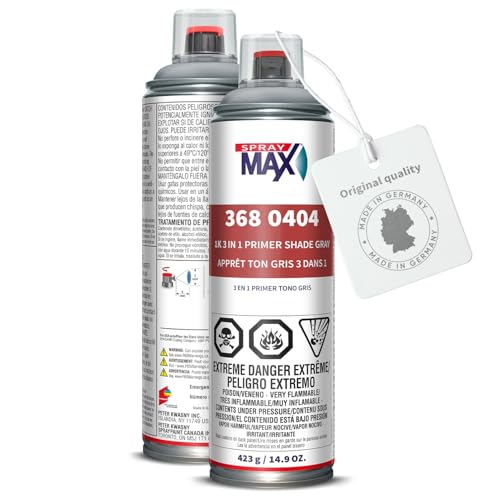
SprayMax 1K 3 in 1 Primer Gray
What We Like
- Bonds directly to steel, aluminum, and plastics
- High filling power levels imperfections quickly
- Fast-drying: dust-free in 7-8 minutes
- Sands smooth after about one hour
Trade-offs
- Single-component formula lacks 2K chemical resistance
- Requires dry or wet sanding before topcoat
- Not activated by catalyst, so less durable than 2K primers
This primer dries dust-free in 7-8 minutes, so you can keep moving through a repair without long waits between coats. It bonds directly to steel, aluminum, and specific plastics like PVC, ABS, and PC, making it a good choice for mixed-surface panels and bare metal repairs. With a filling power of 1.6 to 2.4 mil per coat, it levels imperfections efficiently, though deeper damage may need more than one application.
For most DIY bodywork and restoration jobs, a 1K primer like this one dries fast and sands easily after about an hour, which keeps the workflow moving. It won’t have the chemical and moisture resistance of a catalyzed 2K system. But you can overcoat it with 1K or 2K topcoats, including solventborne and waterborne systems, so it fits into a variety of paint workflows.
Product photos
LiME LiNE 2K Urethane Primer Surfacer
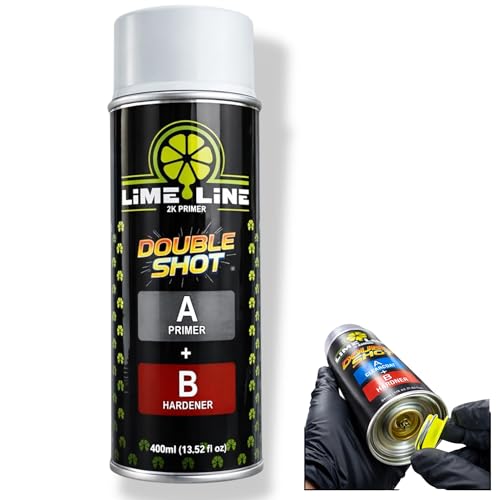
What We Like
- True two-component catalyzed primer
- 24-hour pot life after activation
- Adjustable HVLP-style spray nozzle
- High-build, sandable surfacer formula
Trade-offs
- Requires activation before use
- Single-use can after 24-hour pot life
A 24-hour pot life after activation gives you a full day of consistent, professional-grade spraying without the rush of quick-setting primers. That dual-chamber can mixes the activator and urethane resin inside the can when you trigger it, so you get a true two-component finish straight from an aerosol. This makes it a practical choice for anyone doing panel-level bodywork or spot repairs where you want a surfacer that sands smooth and fills minor imperfections without mixing a batch in a cup.
Once you activate the can, you have 24 hours to use it all or it cures in the can. That means it’s less convenient for a single small touch-up than a one-part primer like the Rust-Oleum Filler & Sandable Primer, which you can spray, cap, and save for weeks. But if you’re prepping a whole panel or multiple parts in a session, the catalyzed durability and sandability make the extra attention worthwhile.
U-POL Raptor Acid Etch Primer 1K

What We Like
- Etches and primes bare metal in one step
- No sanding needed before topcoat
- Phosphoric acid ester enhances adhesion
Trade-offs
- Not suitable for plastic or fiberglass surfaces.
- Requires topcoat for full UV protection.
This is a 1K aerosol, so it does not have the catalyzed cross-linking of a 2K primer like Eastwood’s 2K Epoxy Gray Primer. That means it is best for etch-priming on metal rather than as a build coat. For surfaces other than bare metals, galvanized steel, or aluminum, you will want a primer formulated for those materials.
LAUCO Grey High-Build Primer Surfacer
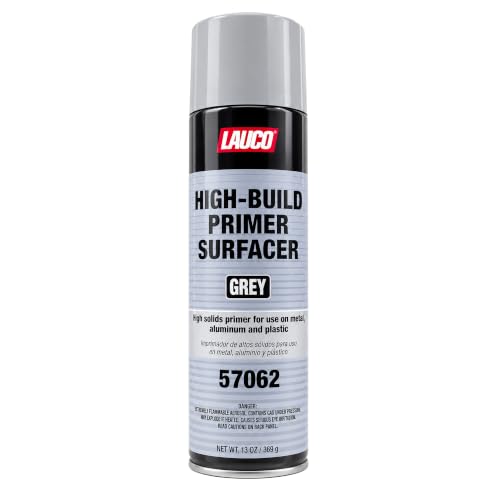
What We Like
- Fills minor imperfections for smooth finish
- Works on rigid and flexible substrates
- Compatible with most automotive topcoats
Trade-offs
- Not a self-etching or rust-preventive primer
- Not a self-etching primer for bare metal
A 13-ounce can with high-build filling properties means this primer can smooth over minor dings and scratches without needing multiple coats. That makes it a useful option for anyone prepping a car panel that has light surface flaws but doesn’t require body filler. It sticks to metal, aluminum, plastic, and fiberglass, so you can use it on nearly any part of the vehicle, and it sands easily to create a level base for your topcoat.
This primer is a surfacer, not a rust-preventive or etching primer, so it won’t bond to bare metal the way a dedicated self-etching product like Rust-Oleum Self Etching Primer Spray does. If you’re working with raw steel or aluminum, you’ll want to apply an etching primer first. But for filling and leveling on already-prepped surfaces, LAUCO delivers the smooth foundation a paint job needs.
Product photos
Eastwood 2K Epoxy Black Primer
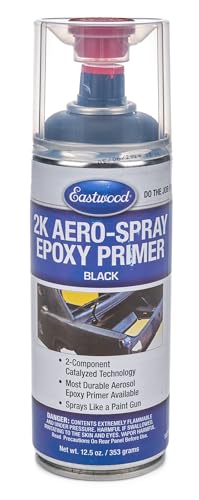
What We Like
- Direct-to-metal rust prevention
- Works on aluminum, steel, fiberglass
- 48-hour pot life after activation
- 3-year shelf life unactivated
Trade-offs
- Requires NIOSH-approved respirator during use
- Must be used in well-ventilated area
A 48-hour pot life after activation means you can use the can over two days without it hardening, which is useful for larger projects. That working window, combined with direct-to-metal rust prevention on steel, aluminum, or fiberglass, makes it suitable for bare metal surfaces before filler. The 3-year shelf life unactivated means it stores well for future use.
Safety gear is a key consideration here: this is a true 2K system, so you need a NIOSH-approved respirator and a well-ventilated space, which adds setup time compared to a simpler 1K primer like Rust-Oleum Self Etching. For bare metal adhesion and durability, the Eastwood uses a two-part formula that provides epoxy protection in an aerosol. It weighs 1.2 pounds, which is typical for a 2K aerosol can.
Product photos
Car-Rep 2K Epoxy Primer
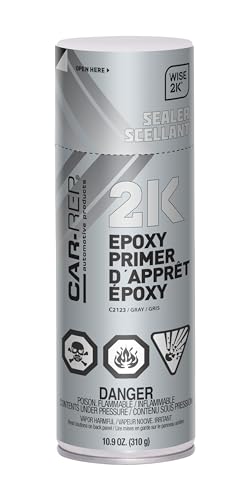
What We Like
- Unlimited potlife, no mixing needed
- Humidity activated crosslink for 2K quality
- Anti-corrosion pigments for chemical resistance
- Wet on wet overpaintable once touch dry
Trade-offs
- Requires ambient humidity to activate hardener
- Needs adequate ambient humidity for proper curing.
An unlimited potlife means you can set this can down, walk away, and come back weeks later without the primer hardening in the nozzle or the can. Car-Rep 2K Epoxy Primer uses Wise 2K Technology, where a de-activated hardener waits for moisture in the air to trigger crosslinking after you spray. That makes it ideal for anyone who works in stages, maybe you prime a panel today and don’t get to topcoat until next weekend. The anti-corrosion pigments add another layer of protection, especially useful on metal parts that sit in damp garages or see occasional rain.
This primer relies on humidity to cure, so in very dry climates or heated winter workshops, the crosslink may take longer to fully harden. For a patient DIYer who values flexibility over speed, this is a smart epoxy option.
Product photos
How We Evaluated Aerosol Primers For Cars
Our evaluation focused on four areas: surface compatibility, rust protection, ease of application, and final finish quality. We started by reviewing each product’s technical data sheet to understand what surfaces it bonds to, bare steel, aluminum, plastic, fiberglass, or existing paint. Adhesion and chemical resistance claims were cross-checked against the primer type: etching, epoxy, urethane, or single-stage lacquer.
Drying time and sandability were next. A primer that dries dust-free quickly can save hours on a multi-panel job, but a slower-curing epoxy often provides better long-term corrosion protection. We considered the balance each product strikes between speed and durability, and whether the manufacturer specifies recoat windows that work for a home garage schedule.
A research-led evaluation has limits. We did not spray test panels or measure film build in a lab. Our recommendations are based on published specs, expert build summaries, and the consensus in owner forums about real-world performance, nozzle quality, and coverage per can. That data is reliable for matching a primer to your surface and skill level.
What To Look For In Aerosol Primers For Cars
Choosing the right aerosol primer means matching the chemistry to your surface and prep level. Here are the key factors that separate a lasting repair from a do-over.
Pick your primer type by surface: etching primers for bare metal, epoxy primers for maximum rust prevention, high-build surfacers for filling scratches, and all-purpose primers for mixed surfaces.
Primer Chemistry: Etching, Epoxy, or Surfacer
The chemical type determines adhesion and protection. Self-etching primers contain phosphoric acid that bites into bare metal for a mechanical bond, making them ideal for aluminum and steel that has been stripped clean. Epoxy primers form a tough, moisture-proof barrier and are the best choice for long-term rust prevention on bare metal. High-build surfacers are formulated to fill sanding scratches and minor pitting but offer little to no rust protection on their own.
Surface Compatibility and Prep
Not every primer sticks to every surface. Some oil-based primers will not bond to plastic, while some universal primers work on both metal and flexible bumpers. Check the label for “rigid and flexible substrates” if you are priming plastic. Surface prep is non-negotiable: bare metal needs to be clean, degreased, and scuffed, while old paint should be sanded with fine-grit paper for proper mechanical adhesion.
Drying Time and Recoat Window
Fast-drying primers that reach touch-dry quickly let you move through a project quickly, but they often require a topcoat within a specific window, or the surface needs scuffing again. Slower-curing 2K epoxy primers offer a longer recoat window and better chemical resistance but require a respirator and good ventilation. Match the drying speed to your workspace and timeline.
- Confirm the primer is compatible with your surface (bare metal, plastic, fiberglass, or old paint).
- Check the recoat window: fast-drying primers need topcoat within 24 hours; epoxies offer longer.
- Use a self-etching primer on bare metal for best adhesion; use a high-build surfacer only over primed or painted surfaces.
- Always wear a NIOSH-approved respirator when spraying 2K epoxy or urethane primers.
If you are unsure about your surface, an all-purpose primer like the U-POL Sandable Primer Spray is a safe starting point for metal and plastic.
Aerosol Primers For Cars Compared
The table below compares the ten primers side by side, so you can quickly see which type, surface compatibility, and key feature matches your project.
| Product | Type | Surface Compatibility | Dry Time |
|---|---|---|---|
| Rust-Oleum Stops Rust Filler & Sandable Primer | Oil-based, Stops Rust | Wood, metal, fiberglass | 10 minutes to touch |
| Rust-Oleum Self Etching Primer Spray | Oil-based, Stops Rust | Bare metal, aluminum, fiberglass | 10 min to touch, 30 min to topcoat |
| U-POL Sandable Primer Spray | All-purpose primer | Metal & plastic | Fast-drying |
| Eastwood 2K Epoxy Gray Primer | 2K Epoxy | Metal, aluminum, steel, fiberglass | N/A |
| SprayMax 1K 3 in 1 Primer Gray | 1K 3-in-1 Primer | Metal, aluminum & plastics | Dries dust-free: 7-8 minutes |
| LiME LiNE 2K Urethane Primer Surfacer | 2K Urethane Primer Surfacer | N/A | N/A |
| U-POL Raptor Acid Etch Primer 1K | Acid etch primer 1K | Bare metals, galvanized steel, aluminum | N/A |
| LAUCO Grey High-Build Primer Surfacer | High-Build | Metal, Aluminum, Plastic, Fiberglass | N/A |
| Eastwood 2K Epoxy Black Primer | 2K Epoxy | Direct to Metal | N/A |
| Car-Rep 2K Epoxy Primer | 2K Epoxy | Metals, carbon fiber, most plastics | N/A |
Frequently Asked Questions
What is the difference between etching primer and epoxy primer?
Etching primer uses acid to chemically bond to bare metal, creating a surface for paint to grip. Epoxy primer forms a thick, moisture-proof barrier that blocks rust and bonds to metal, fiberglass, and some plastics. For bare metal panels that need maximum corrosion protection, epoxy is the stronger choice; for aluminum or smooth steel, etching primer is often sufficient.
Can I use aerosol primer on plastic car parts?
Yes, but you need a primer formulated for flexible substrates. Many all-purpose primers work on both metal and plastic, but some etching and epoxy primers are only for metal. Look for a label that says “rigid and flexible substrates” or “bonds to plastic.” Always scuff the plastic with fine sandpaper and clean it with a plastic prep solvent first.
How long should I let aerosol primer dry before sanding?
Drying time varies by primer type. Fast-drying lacquer primers can be sanded in 30 to 60 minutes, while single-stage urethane primers often need about one hour. Two-component epoxy primers should cure for at least 24 hours before wet sanding. Always follow the manufacturer’s recommended dry time on the can for best results.
Do I need to sand primer before painting?
Yes, for most automotive topcoats. Sanding primer with fine-grit wet-or-dry paper removes orange peel and gives the paint a mechanical surface to grip. Some self-etching primers, like the U-POL Raptor Acid Etch Primer, are designed to be painted without sanding, but a light scuff still improves adhesion.
What is the best primer for rust spots on a car?
A rust-inhibitive primer that also fills small pits is ideal. The Rust-Oleum Stops Rust Filler & Sandable Primer is formulated to block rust and fill minor surface imperfections in one step. For deeper rust repair, apply an epoxy primer like the Eastwood 2K Epoxy Gray Primer after removing all loose rust, then follow with a high-build surfacer.
The Bottom Line
For most DIYers working on body panels, rust spots, or touch-ups, the Rust-Oleum Stops Rust Filler & Sandable Primer is the best overall choice. It fills small imperfections, dries fast, and blocks rust, making it a true one-can solution for common car prep jobs. If you are starting with bare metal, the Rust-Oleum Self Etching Primer Spray gives you the adhesion you need, and the U-POL Sandable Primer Spray is a versatile pick for mixed surfaces.
Budget-conscious shoppers or those tackling a single small repair can rely on the LAUCO Grey High-Build Primer Surfacer for filling scratches on already-primed panels. Or you could choose the Car-Rep 2K Epoxy Primer if you need an epoxy that does not force you to finish in one session. The right primer is the one that matches your surface and your schedule.
The single most important factor is surface compatibility. Pick a primer that is chemically designed for what you are spraying, etching for bare metal, epoxy for maximum rust prevention, or a high-build surfacer for filling, and your paint job will last.
