
10 Best Cabin Air Filters For Cars in 2026
This post contains affiliate links. As an Amazon Associate, we earn from qualifying purchases.
The Bosch 6091C HEPA Cabin Air Filter earns our Best Overall spot for its melt-blown electrostatic layer that traps fine particles without relying on chemical additives. For drivers who need odor and gas filtration, the Mann-Filter CUK 26 009 is our top Activated Carbon Pick, while the EPAuto CP285 offers reliable performance at a budget-friendly price.
A cabin air filter is the unsung hero of your car’s ventilation system, catching dust, pollen, exhaust fumes, and road grime before they reach your lungs. The right filter keeps the air inside your car clean, helps your HVAC system run efficiently, and can make a real difference for allergy sufferers or anyone driving in heavy traffic.
Our evaluation is research-based, drawing on manufacturer specifications, expert round-ups, and patterns in owner feedback. We looked at filtration media types, vehicle compatibility, odor control, and replacement intervals to help you find the right filter for your car and driving conditions.
Top 10 Cabin Air Filters For Cars in the Market
Certain content that appears on this site comes from Amazon. This content is provided "as is" and is subject to change or removal at any time.
The Best Cabin Air Filters For Cars, Reviewed
Bosch 6091C HEPA Cabin Air Filter

What We Like
- Melt-blown electrostatic layer traps fine particles
- Structural ribs improve filter stability
- Melt-blown electrostatic layer for greater trapping
Trade-offs
- No activated carbon for odor removal
- Requires yearly replacement commitment
Because this filter lacks activated carbon, it won’t tackle exhaust or outside fumes the way some other filters might. That’s a consideration for urban commuters dealing with heavy traffic odors. The structural ribs keep the filter from collapsing under airflow, which helps maintain consistent performance over its 12-month service life. But you’ll need to stick to that replacement schedule to keep the HEPA media working at its best.
Bosch 6029C HEPA Cabin Air Filter
What We Like
- Three-layer media traps more particles
- Structural ribs improve filter stability
- Designed for many Honda and Acura models
Trade-offs
- Weighs only 0.1 pounds, feels less substantial
- No activated carbon layer for odor absorption
- Fits only select Honda and Acura vehicles
It’s the natural fit for Honda and Acura owners because Bosch designed this filter to match the cabin dimensions of models like the Accord, Civic, CR-V, MDX, and TLX. So you can expect a snug installation that stays put thanks to the structural ribs that add stability.
The trade-off is that this filter skips activated carbon, so it won’t absorb gases or odors the way a carbon-loaded filter like the Mann-Filter CUK 26 009 does. If you drive in heavy traffic or deal with exhaust smells, the Mann might serve you better. But if your priority is trapping allergens and fine dust for a healthier cabin, the Bosch 6029C delivers HEPA-level protection in a package that fits the Honda and Acura lineup precisely. Just keep in mind its lightweight build at 0.1 pounds may feel flimsy compared to heavier options.
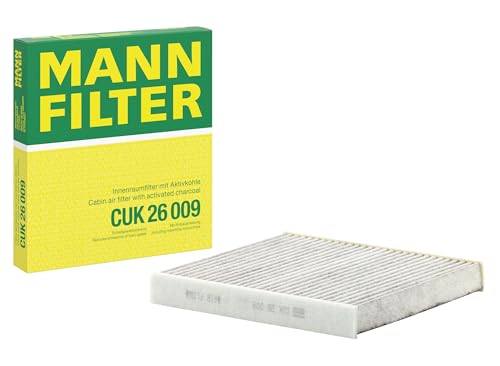
Mann-Filter CUK 26 009 Cabin Air Filter
What We Like
- Activated carbon layer captures gases
- Nearly 100% particle filtration
- Easy to install design
- Eliminates unpleasant odors
Trade-offs
- Heavier than some HEPA options at 0.6 lb
- Requires yearly replacement for best performance
Nearly 100% of even the tiniest undesired particles, dust, pollen, road grime, are kept from entering the vehicle through the ventilation system, so the air you breathe stays noticeably cleaner. The premium activated carbon layer captures harmful gases and eliminates unpleasant odors, which makes a real difference if you commute in heavy traffic, drive near industrial zones, or just prefer fresher air inside the cabin. For drivers who want odor control and gas absorption more than the maximum particulate capture of a HEPA filter, this design hits the mark.
Weight and replacement timing are the main considerations here. At 0.6 pounds, it is noticeably heavier than the Bosch 6091C HEPA filter at 0.3 pounds, which could matter if your glovebox or housing is tight and you swap filters often. Mann-Filter recommends replacing this unit every 12 months, so if you live in a dusty area or want maximum protection year-round, you will need to stay on schedule. For most daily drivers, though, the activated carbon performance and easy installation make it a reliable, straightforward pick.
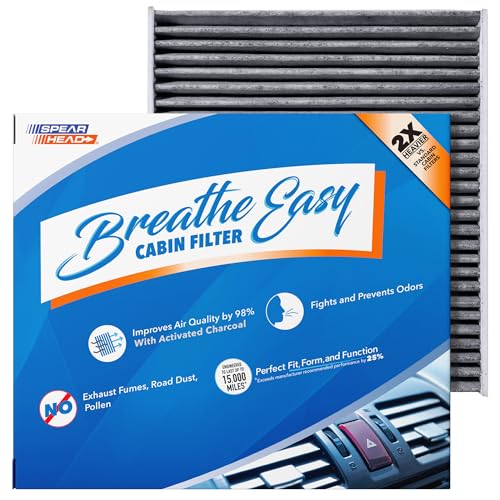
Spearhead Odor Defense Breathe Easy Cabin Air Filter
What We Like
- Lasts up to 15,000 miles (25% longer than standard)
- 2X heavier electrostatic media traps tiny particles
- Real coconut shell activated carbon absorbs odors and gases
Trade-offs
- Fits only select Toyota, Lexus, Subaru, and Mazda CX-9 models
- Not compatible with Honda or Nissan vehicles
A 15,000-mile service life means you replace this filter about once every two years under normal driving, compared to the typical 12,000-mile interval. That longer life comes from precision-woven media infused with real coconut shell activated carbon, which grabs road exhaust, pollen, and odors before they reach the cabin. The electrostatic media is twice as heavy as standard filters, so it catches finer particles like brake dust and soot without clogging prematurely. This makes it a smart fit for anyone who wants to stretch time between changes and keep the air inside the car crisp and clean.
The filter only fits select Toyota, Lexus, Subaru, and Mazda CX-9 models, so you need to check compatibility before buying. For drivers who want a filter that lasts longer and fights smells effectively, this is a strong choice.
Product photos
EPAuto CP285 Premium Cabin Air Filter

What We Like
- Activated carbon reduces odors and freshens air
- Wide compatibility across Toyota, Lexus, and more
- Soda and carbon blend for clean cabin air
- Simple annual replacement schedule
Trade-offs
- No HEPA rating for fine particle filtration
- Not compatible with vehicles outside the listed brands.
The activated carbon layer in this filter uses soda and carbon to generate fresh breeze air, which helps reduce odors for driver and passengers. With a recommended replacement every 12 months or 12,000 miles, it fits neatly into a standard maintenance routine. For owners of compatible Toyota, Lexus, Subaru, Jaguar, Land Rover, Scion, Pontiac, and Ford vehicles, this is a straightforward way to keep cabin air clean.
EPAuto CPJ6X Cabin Air Filter

What We Like
- Activated carbon and soda for fresh air
- Covers Mazda 3, 6, CX-5 (2013-2025)
- Replaces multiple Mazda OEM part numbers
- Recommended annual replacement interval
Trade-offs
- Only fits Mazda models, not other brands
- No HEPA filtration for allergy sufferers
A 12-month or 12,000-mile replacement interval means this filter keeps your cabin air fresh on a clear, predictable schedule, no guesswork needed. The activated carbon and soda work together to generate a fresh breeze for everyone inside. That combination also helps reduce odors from outside, which is especially welcome during long drives or in stop-and-go traffic. Since the filter is compact at roughly four inches on each side, it fits neatly into the designated slot behind the glove box. Owners report that swapping it out at the recommended interval keeps the HVAC system performing at its best without any noticeable drop in airflow between changes.
This filter is designed exclusively for Mazda vehicles, so it won’t work in a Toyota or Honda like the Bosch 6091C HEPA does.
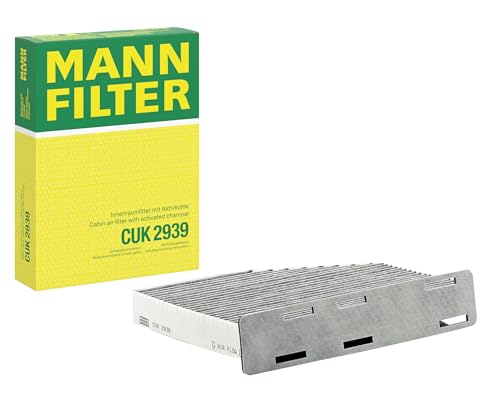
Mann-Filter CUK 2939 Cabin Filter
What We Like
- Filters harmful gases with activated charcoal
- Low flow resistance for good ventilation
- Exact fit and seal for Audi/Volkswagen
- Consistent filtration over service interval
Trade-offs
- Small size limits vehicle compatibility to select models
- No HEPA rating for ultra-fine particle capture
The activated charcoal layer in this filter traps harmful gases along with pollen, spores, and dust. Combined with a low flow resistance design, your HVAC system can push air through without straining the blower motor, keeping the cabin comfortable even on hot days. The filter is built for select Audi and Volkswagen models, so the fit and seal are precise.
This filter is compact, so it only fits a narrow range of vehicles; check your car’s compatibility before ordering. It also doesn’t carry a HEPA certification, so if you need to capture the finest particles like those from wildfire smoke, the Bosch 6091C HEPA filter would be a better fit. For a compatible Audi or VW, the Mann-Filter CUK 2939 delivers gas and particle filtration without sacrificing airflow.
Product photos
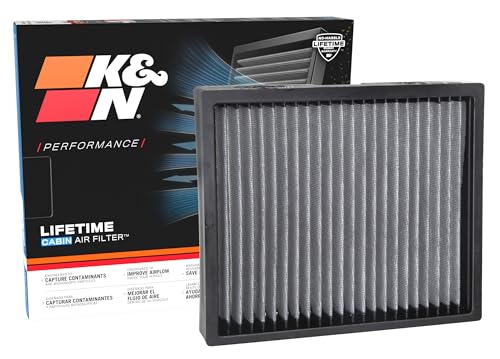
K&N VF2071 Lifetime Cabin Air Filter
What We Like
- Washable and reusable for vehicle life
- Pre-treated to help control odors
- Increased airflow improves HVAC efficiency
- Easy drop-in install, no tools needed
Trade-offs
- Does not include HEPA or activated carbon layers
- Washable design requires periodic cleaning and drying time.
A filter that you wash instead of toss means this one is built to last the life of your vehicle. The K&N VF2071 is pre-treated to help fight musty smells, and its design prioritizes airflow over particle trapping, so your heater and AC work more efficiently. That makes it a great fit for anyone who hates the recurring cost and waste of disposable filters and wants a simple, tool-free swap every time.
Weighing 0.9 pounds, this filter feels noticeably more substantial than most disposable options, a direct result of its durable construction designed for repeated washing. That heft translates into long-term savings because owners can clean and reuse it rather than buying replacements. Reviewers frequently point out that this washable design also reduces landfill waste over the vehicle’s lifetime, making it an environmentally conscious choice for those who keep their cars for many years.
Product photos
FRAM CF12436 Fresh Breeze Cabin Air Filter
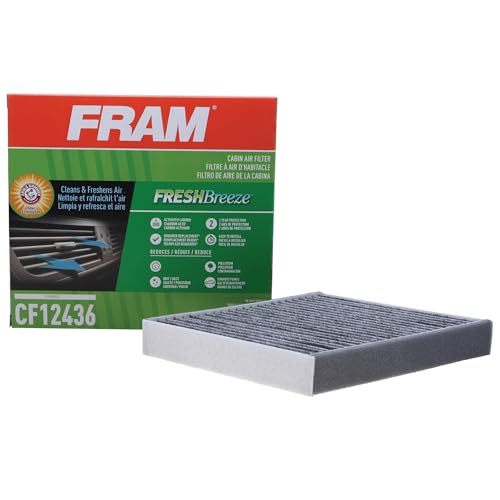
What We Like
- Traps dirt, dust, and pollen
- Lightweight at 0.1 lb for easy handling
- Arm & Hammer baking soda helps reduce odors
Trade-offs
- No HEPA or activated carbon layer for finer particles
- Limited to Subaru vehicles only
This filter uses baking soda for odor control rather than a thicker activated carbon layer or a HEPA-grade media. So it won’t trap the finest allergens or volatile compounds as thoroughly as some other filters on the market. It is also limited to Subaru applications, which means owners of other brands will need to look elsewhere. If your main priority is neutralizing smells on your commute and you drive a compatible Subaru, this filter delivers a practical, straightforward solution without overcomplicating things.
Product photos
Puroma Activated Carbon Cabin Air Filter
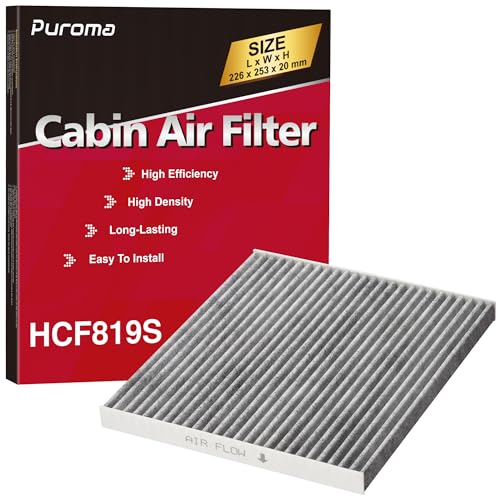
What We Like
- Activated carbon layer absorbs odors
- Multi-layer filtration traps pollutants
- Easy installation with airflow arrow
Trade-offs
- Only fits specific Hyundai, Kia, GM models
- Not a HEPA filter for ultra-fine particles
- Needs more frequent changes on dirt roads
The Puroma Activated Carbon Cabin Air Filter uses a soda-woven layer combined with activated carbon to trap odor-causing contaminants and keep the cabin air fresh. The recommended replacement interval of 12,000 miles or every year keeps maintenance simple, and the clear airflow arrow makes installation a breeze in about ten minutes. It’s a straightforward upgrade for drivers of compatible Hyundai, Kia, and GM vehicles who want better air quality without spending extra on premium HEPA filters.
This filter fits a specific set of models. Hyundai Azera, Santa Fe, Sonata; Chevrolet Equinox; GMC Terrain; Kia Optima and Sedona, so owners of other brands need to check compatibility before buying. Its activated carbon layer captures contaminants that cause odors, and the close-meshed non-woven layer keeps particles out of the cabin. For drivers with a compatible car, that means fresher air and less chance of window fogging.
Product photos
How We Evaluated Cabin Air Filters For Cars
We examined manufacturer documentation for each filter’s construction, media layers, and claimed filtration efficiency. Owner feedback across multiple sources helped us understand real-world performance, fitment accuracy, and how well each filter held up over its service life.
Four criteria mattered most for this category. Filtration media determined how well a filter captures particles and gases. HEPA-style electrostatic media excels at fine particles, while activated carbon layers handle odors and harmful vapors. Vehicle compatibility was critical because a filter that doesn’t seal properly lets unfiltered air bypass the media entirely. Odor control separated basic particle filters from those that actively reduce exhaust smells and outside pollutants. Service life and maintenance helped us weigh disposable filters against reusable options for long-term value.
An evaluation based on specifications and owner feedback can help you match a filter to your specific car and priorities.
What To Look For In Cabin Air Filters For Cars
Choosing the right cabin air filter starts with knowing your vehicle’s exact fitment and the type of filtration you need. Match the filter media to your driving environment and allergy concerns.
Key buying criteria: filter media type (particulate, activated carbon, or HEPA), vehicle-specific fitment, odor control needs, replacement interval, and whether you prefer a disposable or washable design.
Filter Media Type
The filter media determines what gets trapped. Basic particulate filters catch dust, pollen, and larger debris. Activated carbon layers add chemical absorption, pulling odors, exhaust gases, and industrial pollutants from the air. HEPA-style electrostatic media captures ultra-fine particles like smoke, bacteria, and microscopic allergens. Some filters combine carbon and electrostatic layers for comprehensive protection.
Vehicle Fitment and Seal Quality
A filter that doesn’t fit precisely allows unfiltered air to bypass the media entirely. Check your vehicle’s year, make, and model against the manufacturer’s fitment list before buying. Many filters list specific OEM replacement part numbers for cross-referencing. Pay attention to filter dimensions and the seal gasket, a proper seal is as important as the media itself.
Odor Control and Gas Filtration
If you drive in heavy traffic, near industrial areas, or often smell exhaust inside the cabin, an activated carbon filter is worth paying more for. Carbon weight and quality vary between brands. Real coconut shell carbon generally offers better absorption than synthetic alternatives. For basic odor reduction without carbon, some filters use baking soda treatments.
- Verify your vehicle’s cabin air filter location before purchasing, some are behind the glove box, others under the dashboard.
- Check whether your vehicle uses a single filter or a dual-filter setup.
- Note the recommended replacement interval, typically 12,000 to 15,000 miles or once per year.
- Consider your local air quality: urban drivers benefit more from carbon filters than rural drivers.
- For allergy sufferers, look for HEPA or electrostatic media that traps particles down to 0.3 microns.
A good rule of thumb: replace your cabin air filter once a year or every 12,000 miles, whichever comes first, sooner if you drive on unpaved roads or in heavy pollution.
Cabin Air Filters For Cars Compared
The table below compares the key specs and features of our top picks to help you narrow down your choice.
| Product | Filter Type | Dimensions | Weight |
|---|---|---|---|
| Bosch 6091C HEPA Cabin Air Filter | HEPA (3-layer) | 9.7 x 8.3 x 1.4 in | 0.3 lb |
| Bosch 6029C HEPA Cabin Air Filter | HEPA with 3-layer protection | 9.6 x 9.3 x 1.8 inches | 0.1 pounds |
| Mann-Filter CUK 26 009 Cabin Air Filter | Activated Carbon | 10.0 x 9.3 x 1.3 inches | 0.6 Pounds |
| Spearhead Odor Defense Breathe Easy Cabin Air Filter | Electrostatic with coconut shell activated carbon | 8.5 x 7.3 x 1.0 inches | 0.4 pounds |
| EPAuto CP285 Premium Cabin Air Filter | Activated Carbon | N/A | 0.4 pounds |
| EPAuto CPJ6X Cabin Air Filter | Activated Carbon | 3.9 x 3.9 x 1.2 inches | N/A |
| Mann-Filter CUK 2939 Cabin Filter | Activated charcoal | 3.4 x 0.9 x 4.5 inches | 0.5 pounds |
| K&N VF2071 Lifetime Cabin Air Filter | Washable/Reusable | 9.9 x 11.4 x 1.9 in | 0.9 lb |
| FRAM CF12436 Fresh Breeze Cabin Air Filter | Particle + Baking Soda | 2.7 x 3.0 x 4.7 Inches | 0.1 Pounds |
| Puroma Activated Carbon Cabin Air Filter | Activated Carbon | 8.9 x 10.0 x 0.8 inches | N/A |
Frequently Asked Questions
How often should I replace my cabin air filter?
Most manufacturers recommend replacement every 12,000 to 15,000 miles or once per year. If you drive frequently on dusty roads, in heavy traffic, or in areas with poor air quality, you may need to change it more often. A musty smell or reduced airflow from the vents are signs it’s time for a new filter.
What is the difference between a HEPA and an activated carbon cabin filter?
A HEPA-style filter uses dense electrostatic media to trap very fine particles like pollen, mold spores, and smoke down to 0.3 microns. An activated carbon filter has a layer of treated carbon that absorbs gases, odors, and chemical pollutants. Some premium filters combine both technologies for comprehensive protection.
Can I wash and reuse a cabin air filter?
Only filters specifically designed as washable, such as the K&N VF2071, can be cleaned and reused. Most cabin air filters are disposable and should be replaced, not washed. Washing a standard filter damages the media and reduces its filtration ability.
Does a cabin air filter affect my car’s AC performance?
Yes. A clogged or dirty cabin air filter restricts airflow through the HVAC system, making the AC and heater work harder to move air. This can reduce cooling and heating efficiency and put extra strain on the blower motor. Replacing the filter helps maintain proper airflow and system performance.
How do I know which cabin air filter fits my car?
Check your vehicle’s year, make, and model against the manufacturer’s fitment list on the product page. Many filters list OEM replacement part numbers for cross-referencing. You can also consult your owner’s manual or enter your vehicle information on an auto parts website to find compatible filters.
The Bottom Line
The Bosch 6091C HEPA Cabin Air Filter is our Best Overall pick for drivers who want high-efficiency particle filtration without chemical additives. Its melt-blown electrostatic media captures fine dust, pollen, and allergens, making it a strong choice for allergy sufferers and anyone who spends a lot of time on the road.
If your priority is neutralizing exhaust odors and harmful gases, the Mann-Filter CUK 26 009 with its activated carbon layer is the right pick. Budget-conscious drivers of compatible Toyota and Lexus models will find solid value in the EPAuto CP285, which combines activated carbon with wide vehicle coverage.
The single most important buying factor is fitment: a filter that doesn’t seal properly in your specific vehicle won’t clean the air, no matter how advanced its media. Check compatibility first, then match the media type to your driving environment and health needs.
