
10 Best Car Audio Eqs in 2026
This post contains affiliate links. As an Amazon Associate, we earn from qualifying purchases.
For most drivers, a good car audio EQ is the single best upgrade for bringing lifeless factory sound to life. The Banda Audiopart X8AiR DSP Car Audio Processor wins as our best overall pick because its 79-band EQ per channel and Bluetooth app control offer pro-level tuning in a compact package. For a simpler, more affordable approach, the Timpano TPT-EQ7 is our budget pick, while the AudioControl DM-810 is the choice for those who want a built-in real-time analyzer.
The problem is that factory stereos often compress sound and roll off the bass, leaving music flat. A quality equalizer lets you correct those flaws, boost weak frequencies, and tailor the sound to your vehicle’s unique acoustics.
This guide is based on a careful review of manufacturer specifications, expert round-ups, and patterns in owner feedback. We focused on the features that matter most for real-world use, from channel count and EQ bands to connectivity and installation ease, so you can find the right unit for your system and budget.
Top 10 Car Audio EQs in the Market

Certain content that appears on this site comes from Amazon. This content is provided "as is" and is subject to change or removal at any time.
The Best Car Audio EQs, Reviewed
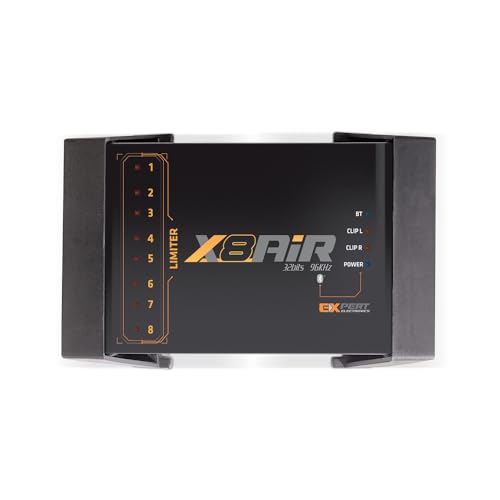
Banda Audiopart X8AiR DSP Car Audio Processor
What We Like
- 79-band EQ per channel for fine tuning
- Bluetooth app control from your phone
- 8-channel output supports complex setups
- Compact size fits tight spaces
Trade-offs
- Requires smartphone for real-time adjustments
- No built-in RTA for visual frequency analysis
The trade-off is that the X8AiR relies entirely on your phone for adjustments, so you won’t have a built-in real-time analyzer like the AudioControl DM-810 offers. That makes it less convenient for quick on-the-fly changes while driving, and at 0.7 pounds the unit is light enough to mount in tight spaces without much support. Still, for the tuning depth and wireless flexibility at this size, it offers a lot of control for the enthusiast who wants detailed adjustments without a large chassis.
Product photos
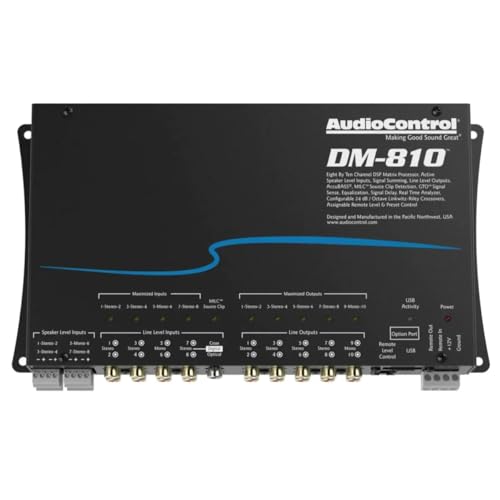
AudioControl DM-810 8×10 Channel Matrix DSP
What We Like
- 30-band EQ with auto EQ
- Real-time input/output analyzers
- AccuBASS recovers lost bass at high volume
- Internal channel summing for factory radios
Trade-offs
- Large footprint: 15 inches long
- Heavier than typical DSPs at 3.0 pounds
A 30-band equalizer with built-in real-time analyzers means you can see exactly what your system is doing and dial in corrections with surgical precision. This makes the DM-810 a natural fit for anyone who wants to tune a factory or aftermarket setup to sound its best, especially when dealing with complex OEM crossovers that need summing. The AccuBASS feature keeps low-end punch from fading as you turn up the volume, so your music stays full at highway speeds.
The trade-off is size and weight: at 15 inches long and 3 pounds, this DSP demands dedicated mounting space and solid support, unlike compact units such as the Banda Audiopart X8AiR. You also control it only through a laptop or PC app, not a phone, which limits on-the-fly adjustments. For serious tuners who value precision and don’t mind the larger footprint, the DM-810 delivers pro-level control that smaller processors can’t match.
PRV AUDIO Car Audio DSP 2.4X Digital Crossover

What We Like
- LCD display for real-time adjustments
- 15-band graphic EQ plus parametric EQ
- 16×2 character LCD for real-time adjustments
Trade-offs
- Four output channels limit expansion beyond 4 channels
- 16×2 character LCD shows text only, no graphics
The PRV Audio DSP 2.4X includes a 16×2 character LCD display that allows real-time audio adjustments directly on the unit. With two audio inputs (A and B) and four independent crossover outputs, you can choose the audio source (A, B, or A+B) for each output, giving you control over source mixing. The 15-band graphic equalizer comes with 12 presets including Flat, Loudness, Bass Boost, and Pancadão, and the parametric EQ on each input and output provides gain control, specific frequency setting, and bandwidth adjustment for detailed equalization. This DSP is suited for someone who wants to make adjustments using the onboard display rather than a separate device.
The four output channels are fixed, so if you need more than four channels for your system, you would need a unit with more outputs. One example is the AudioControl DM-810, which offers 8×10 channel matrix processing. The 16×2 character LCD provides basic text feedback, which means navigating settings is done through the interface rather than a graphical display. For a setup that fits within the four-channel limit and where you prefer to tune using the unit’s screen and buttons, this PRV DSP offers the processing features needed without requiring an external controller.
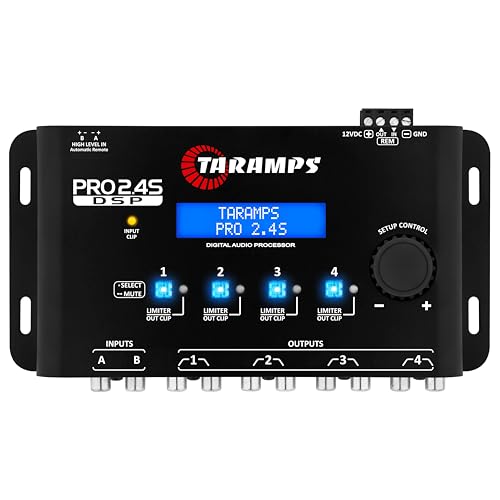
Taramps PRO 2.4S Black Car Audio DSP Equalizer
What We Like
- 15-band EQ with 12 presets
- Adjustable HPF/LPF up to 48dB/octave
- Anti-pop system reduces power noise
- Compact size fits tight spaces
Trade-offs
- 4 channels limit larger multi-speaker setups
- No Bluetooth or app control for tuning
With 4 channels and a 15-band graphic equalizer, you get fine control over each speaker pair. The adjustable high-pass and low-pass filters go up to 48 dB per octave, which lets you shape the sound precisely. That kind of tuning power is useful for anyone integrating a DSP into a custom car audio setup.
Four outputs mean you cannot independently tune separate tweeters, midranges, and subwoofers the way an eight-channel processor like the AudioControl DM-810 can. You also give up Bluetooth or app-based tuning. If your goal is a simple, high-quality 4-channel setup without the complexity of a larger matrix DSP, this Taramps offers the features listed in its spec sheet in a compact size.
Product photos
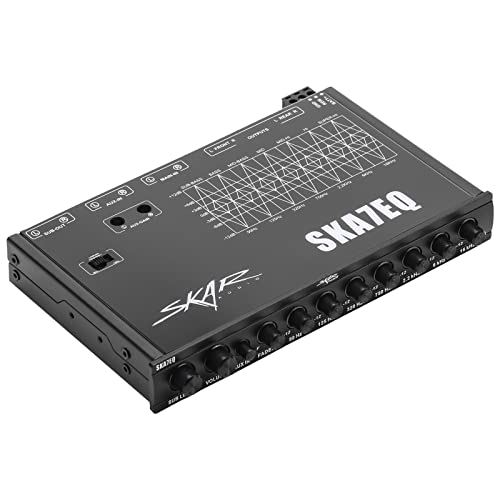
Skar Audio SKA7EQ 7 Band Pre-Amp Equalizer
What We Like
- 7V max output voltage for strong signal
- 7-band EQ with -12 to +12 dB adjustment
- Separate subwoofer level control on front
Trade-offs
- No digital signal processing or time alignment
- Lacks Bluetooth or app-based tuning
Seven fully adjustable bands span from 50 Hz up to 16 kHz, so you can fine-tune the low bass, midrange, and high treble exactly how you like. Each band offers a 12 dB boost or cut, which gives enough range to correct problem frequencies or tailor the sound to your music. The fader control built into the unit lets you balance front-to-rear levels without needing a separate controller. This kind of precise shaping is what makes a graphic EQ useful for dialing in a system that sounds clean and balanced across all types of audio.
Clarion EQS755V 7-Band Graphic Equalizer

What We Like
- High-level speaker inputs for factory radio connection
- Ground loop isolation circuit reduces noise
- Independent subwoofer level and crossover control
- Front 3.5mm AUX input for easy device connection
Trade-offs
- No Bluetooth or app-based tuning
- Analog EQ lacks the precision of digital DSP units
A dedicated ground loop isolation circuit and high-level speaker inputs make the Clarion EQS755V a natural fit for anyone keeping their factory radio. Instead of replacing the head unit, you tap into the existing speaker wires, add this half-DIN equalizer, and gain seven bands of graphic EQ plus a subwoofer channel with a selectable low-pass filter. That means you can shape the sound to your taste and add a powered sub without swapping out the dashboard. For drivers who want better audio without losing factory features like steering-wheel controls or a stock look, this is the straightforward path.
The Clarion EQS755V is an analog 7-band graphic equalizer, so you adjust sliders by ear rather than loading a digital profile on your phone. A DSP like the AudioControl DM-810 offers a 30-band equalizer with RTA for more precise tuning, but it also requires a deeper understanding of signal processing. The Clarion keeps things simple and effective for the factory-integration crowd.
Timpano TPT-EQ7 7 Band Equalizer

What We Like
- 10V high-voltage RCA outputs reduce noise
- Built-in speaker-wire-to-RCA converter
- Slim 1-inch profile fits tight spots
- Subwoofer level and crossover controls
Trade-offs
- Only 7 EQ bands limit fine-tuning range
- No digital signal processing or app control
The built-in speaker-wire-to-RCA converter lets you connect this equalizer to a factory radio without extra adapters, which simplifies installation. The up-to-10-volt RCA outputs help maintain low noise over longer cable runs to amplifiers, reducing the chance of interference. That combination makes the Timpano TPT-EQ7 a practical option for anyone upgrading a stock system, especially if you want straightforward control over your sound without complicated setup.
Seven fixed frequency bands (50Hz, 125Hz, 320Hz, 750Hz, 2.2kHz, 6kHz, 16kHz) give you less precision than the thirty-band equalizer found on the AudioControl DM-810 DSP.
Rockford Fosgate DSR1 8-Channel Signal Processor
What We Like
- Bluetooth 4.0 wireless app control
- Replaces factory amp in Ford & Chrysler
- Balanced differential inputs reduce noise
Trade-offs
- Only 4 high-level inputs limit input channels
- No built-in amplifier; requires external amps
A 245-band equalizer gives you more control than almost any other processor in this guide, letting you dial in frequencies with surgical precision. Designed as the first real solution for replacing factory amplifiers in Ford and Chrysler vehicles, the DSR1 uses the same powerful processing core as Rockford Fosgate’s 3Sixty.3. It adds a Bluetooth app for real-time tuning from your phone. It’s the right choice if you’re upgrading a stock system and want to keep your install clean without adding a separate interface module.
Owners of compatible Ford or Chrysler vehicles can replace the factory amplifier and speakers with a single processor, avoiding extra boxes or wiring headaches. The DSR1 integrates an iDatalink Maestro module directly, so the factory radio’s features remain functional while the processor takes over audio tuning. An interactive Apple iOS or Android app provides real-time adjustments, making it straightforward to dial in sound without needing a laptop. Reviewers note the compact dimensions fit easily under a seat or in a glove box, and the 1-year warranty covers the build quality Rockford Fosgate is known for.
Product photos
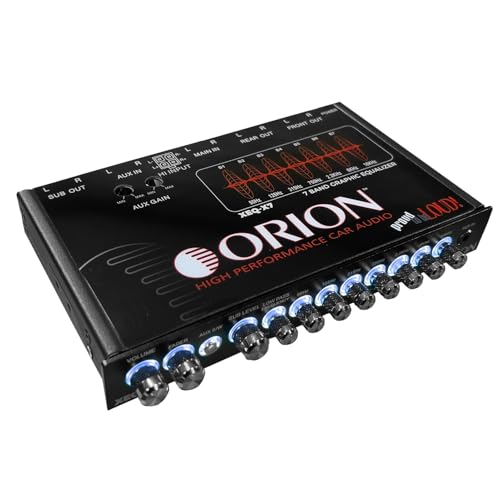
Orion XEQ-X7 7-Band Graphic Equalizer
What We Like
- Front 3.5mm AUX for portable devices
- High-level and low-level inputs included
- Dedicated subwoofer output with adjustable filter
- Compact half-DIN size fits tight spaces
Trade-offs
- Only 7 bands limit fine-tuning vs. DSP units
- No digital signal processing or time alignment
- No Bluetooth or app control for adjustments
A front-panel 3.5mm AUX input lets you plug in a phone or MP3 player without reaching behind the dash. The Orion XEQ-X7 also accepts both high-level speaker wires and low-level RCA inputs, so it works with factory stereos or aftermarket head units. That flexibility, paired with a dedicated subwoofer output and variable low-pass filter, makes it a straightforward choice for shaping your sound without digital menus.
Seven bands give you control over frequencies from 50Hz to 16kHz with ±12dB boost or cut. That covers the main tonal ranges, but not the per-band detail of a DSP with more bands. You get no digital signal processing or time alignment. For a simple analog EQ that connects to a variety of sources, the Orion does what it promises: adjust bass, midrange, and treble in a compact half-DIN package.
Product photos
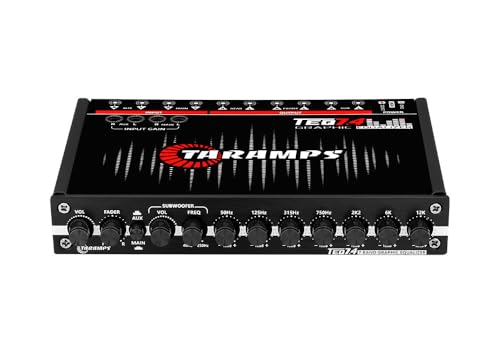
Taramps TEQ 7.4 Pro 7 Band Graphic Equalizer
What We Like
- Frequency response from 6 Hz to 55 kHz (-1dB)
- Two main and two auxiliary RCA inputs
Trade-offs
- No digital signal processing or time alignment
- Fixed 7-band EQ limits fine-tuning range
- Lacks Bluetooth or app-based control
You’re getting a classic analog equalizer, not a modern digital signal processor. That means no Bluetooth control like you’d find on a unit such as the Banda Audiopart X8AiR. If you need precise correction for complex speaker placements or enjoy tuning from your phone, the Taramps will feel limited. But if your goal is a simple, dead-quiet signal path that preserves every detail of your source, this is a focused and honest performer.
Product photos
How We Evaluated Car Audio EQs
We examined dozens of car audio equalizers and digital signal processors by reviewing manufacturer specifications, reading expert round-ups from the car audio community, and analyzing common owner feedback patterns. This research-based approach helps identify which products consistently perform as expected and which trade-offs matter most in real installations.
Our evaluation focused on four key criteria: EQ precision (the number of bands and whether the EQ is graphic, parametric, or DSP-based), channel count (how many speakers the unit can independently control), connectivity (input types, Bluetooth, and app control), and physical size (critical for fitting in tight dash or under-seat spaces). These factors directly determine how well a unit can fix a car’s unique acoustic problems.
Our recommendations come from analyzing what owners and experts consistently report, combined with a clear look at each unit’s specifications and limitations. This approach gives you a reliable starting point for your own research.
What To Look For In Car Audio EQs
Choosing the right car audio equalizer starts with understanding your system’s needs and your willingness to tune. Here are the key criteria to consider.
Look for a car audio EQ with enough bands to correct your car’s specific frequency problems. It should also have the right number of channels for your speaker setup. And consider the connectivity options, Bluetooth, app control, or physical knobs, that match how you want to adjust sound.
EQ Bands and Type
The number of EQ bands determines how precisely you can shape the sound. A 7-band graphic EQ (like the Skar Audio SKA7EQ) is fine for broad tonal adjustments, but a 30-band digital EQ (like the AudioControl DM-810) lets you surgically correct problem frequencies. For the ultimate in control, DSP units like the Banda Audiopart X8AiR offer 79 bands per channel, allowing you to tune each speaker independently.
Channel Count and System Complexity
Your EQ needs enough output channels to control each speaker pair or zone in your system. A 4-channel EQ works for a basic front-and-rear setup. But an 8-channel DSP (like the Rockford Fosgate DSR1) is necessary for systems with dedicated tweeters, midrange drivers, and subwoofers that need independent tuning and time alignment.
Connectivity and Control
How you adjust the EQ matters for daily use. Physical sliders and knobs (found on the Clarion EQS755V) are simple and immediate, while Bluetooth app control (on the Banda Audiopart X8AiR) offers more precise tuning from the driver’s seat. Some units include high-level speaker inputs for direct connection to factory radios, which is essential for vehicles without RCA pre-outs.
- Check the unit’s physical dimensions against your intended mounting location (under the dash, in the glove box, or in the trunk).
- Confirm the input types match your source unit (RCA, high-level speaker wire, or optical).
- Look for features like subwoofer level control, crossover filters, and time alignment if you want a complete system.
- Consider whether you want a built-in real-time analyzer (RTA) for visual frequency feedback, as found on the AudioControl DM-810.
A good rule of thumb: buy the EQ with the most bands and channels your budget and installation space allow. You can always ignore features you don’t need, but you can’t add them later.
Car Audio EQs Compared
The table below compares all ten car audio EQs side-by-side, highlighting their EQ bands, channel counts, and key features to help you narrow your choice.
| Product | EQ Bands | Channels | Inputs |
|---|---|---|---|
| Banda Audiopart X8AiR DSP Car Audio Processor | 79 per channel | 4 inputs / 8 outputs | Bluetooth app-based |
| AudioControl DM-810 8×10 Channel Matrix DSP | 30-band | 8×10 | Speaker-level, RCA, S/PDIF, TOSLINK |
| PRV AUDIO Car Audio DSP 2.4X Digital Crossover | 15 Graphic + Parametric | 4 | 2 (A and B) |
| Taramps PRO 2.4S Black Car Audio DSP Equalizer | 15-band graphic | 4 | RCA & high-level |
| Skar Audio SKA7EQ 7 Band Pre-Amp Equalizer | 7 bands | 6 Channel | 2 RCA (main + aux with variable gain) |
| Clarion EQS755V 7-Band Graphic Equalizer | 7-Band | 6-Channel | 3.5mm AUX, RCA AUX, High-Level Speaker |
| Timpano TPT-EQ7 7 Band Equalizer | 7 | 6-channel | RCA + High-Level (speaker wire) |
| Rockford Fosgate DSR1 8-Channel Signal Processor | 245 | 8 | 4 high-level, 4 balanced differential, Aux RCA, SPDIF coaxial |
| Orion XEQ-X7 7-Band Graphic Equalizer | 7 | N/A | High-level, low-level, front AUX |
| Taramps TEQ 7.4 Pro 7 Band Graphic Equalizer | 7 bands | 3 Stereo | 2 Stereo |
Frequently Asked Questions
What is the difference between a graphic EQ and a parametric EQ in a car audio system?
A graphic EQ has fixed frequency bands with sliders that boost or cut each band, making it simple and intuitive for broad tonal adjustments. A parametric EQ lets you select the center frequency, bandwidth (Q factor), and boost/cut level for each band, offering much more precise control for fixing specific acoustic problems in your car.
Do I need a DSP or just a basic equalizer for better car audio?
It depends on your goals. A basic 7-band graphic EQ is sufficient for correcting general tonal balance and boosting bass. A DSP (digital signal processor) is necessary if you want per-channel time alignment, precise crossover points, and the ability to tune each speaker independently for a true soundstage.
Can I install a car audio equalizer with a factory radio?
Yes, many equalizers are designed for factory radio integration. Look for units with high-level speaker inputs, like the Clarion EQS755V, which can accept the amplified signal from a factory stereo. You may also need a line output converter if the EQ does not have built-in high-level inputs.
What does time alignment do in a car audio system?
Time alignment digitally delays the sound from each speaker so that all audio reaches the driver’s ears at the same moment. This corrects for the different distances between each speaker and your listening position, creating a more accurate and immersive soundstage, as if the band is performing on your dashboard.
How many EQ bands do I really need for good car audio?
For most drivers, a 7-band EQ provides enough control to fix common tonal issues like muddy bass or harsh treble. If you are an enthusiast or have a complex system with multiple speakers, a 15- to 30-band EQ or a DSP with parametric EQ gives you the precision to correct narrow problem frequencies. It also lets you tailor the sound to your vehicle’s acoustics.
The Bottom Line
For the best overall car audio EQ, the Banda Audiopart X8AiR DSP Car Audio Processor is our top choice. Its 79-band EQ per channel and Bluetooth app control give audiophiles and DIY installers the power to fine-tune every speaker in a compact package. If you prefer a built-in real-time analyzer and auto-EQ for a more automated setup, the AudioControl DM-810 is the better fit.
Budget-conscious drivers should look at the Timpano TPT-EQ7, which offers 10V high-voltage outputs and a built-in speaker-wire-to-RCA converter at an affordable price. For those upgrading a Ford or Chrysler factory system, the Rockford Fosgate DSR1 replaces the factory amplifier with app-controlled digital processing.
The most important factor is matching the EQ to your system’s complexity and your tolerance for tuning. More bands and channels give you more control, but a simple 7-band graphic EQ can still transform your listening experience if you just want to fix the bass and brighten the treble.
