
10 Best Car Door Hinge Greases in 2026
This post contains affiliate links. As an Amazon Associate, we earn from qualifying purchases.
The best car door hinge grease we found is the WD-40 Specialist White Lithium Grease, which sprays on evenly for thick, long-lasting coverage that holds up under extreme pressure. For a budget-friendly two-pack, the Lucas Oil White Lithium Grease is a top value, while the Qucship Door Hinge Lubricant offers a precision needle oiler for tight spaces.
A squeaky car door isn’t just annoying; it’s a sign that metal parts are grinding together, accelerating wear on the hinge pins and bushings. Choosing the right grease means finding a formula that stays put under temperature swings, resists moisture, and can be applied precisely where it’s needed without making a mess.
This guide is built from a close look at manufacturer specifications, expert round-ups on automotive lubrication, and patterns in owner feedback. We break down the ten best options by their specific strengths, so you can match the right grease to your door’s needs and your preferred application method.
Top 10 Car Door Hinge Greases in the Market
Certain content that appears on this site comes from Amazon. This content is provided "as is" and is subject to change or removal at any time.
The Best Car Door Hinge Greases, Reviewed
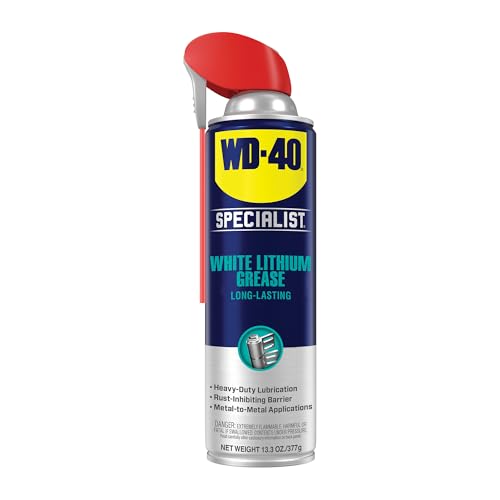
WD-40 Specialist White Lithium Grease
What We Like
- Sprays on evenly for thick coverage
- Long-lasting under extreme pressure
- Works from 0°F to 300°F
- Rust protection for metal surfaces
Trade-offs
- Aerosol can is bulky for tight spaces
- Not a precision oiler for small hinges
- Spray can overspray onto nearby parts
The working temperature range of 0°F to 300°F means this grease is rated for use in both cold and hot environments, from a frozen latch to a hot engine bay. The Smart Straw sprays two ways, giving you either a precise stream or broad coverage, so you can apply it to tight spots or larger surfaces as needed. For someone who wants a single can that handles metal-to-metal applications like hinges, pulleys, and guide rails without melting or freezing, this is a practical choice. It is heavy-duty enough for automotive and construction use yet simple enough for a weekend project.
The Qucship Door Hinge Lubricant comes in a 1-ounce needle oiler for precise spot application, while this 13.3-ounce aerosol can delivers heavy-duty lubrication and corrosion protection for metal-to-metal jobs. You’ll want to tape off painted surfaces or use the permanently attached Smart Straw for targeted spraying, but the trade-off is the ability to coat larger areas like sprockets, pulleys, and guide rails. Reviewers note that the spray won’t melt, freeze, or run off, and it handles temperatures from 0°F to 300°F, so it’s suited for chassis, suspension, and heavy equipment.
Lucas Oil White Lithium Grease

What We Like
- Two-tube pack for extended use
- NLGI-2 grade for heavy-duty lubrication
- Extreme friction reducer reduces wear
- Suitable for garage doors and hinges
Trade-offs
- 8-ounce tubes are small for large projects
- Squeeze tube requires manual application, no nozzle
Two 8-ounce tubes in one pack mean you get enough grease to handle multiple door hinges, garage door tracks, and spring mechanisms without running out mid-job. The NLGI-2 rating tells you this is a heavy-duty formulation that stays put under pressure and resists washout. So it won’t drip off vertical hinge pins or squeeze out under the weight of a heavy door. The two-pack gives you twice the grease of a single tube at a practical size for the home mechanic who wants to keep a spare on hand or tackle several projects at once.
The trade-off is that each tube is 8 ounces, which is a smaller volume than some aerosol options on the market. That means you will need to reload the tube more often on larger jobs like lubricating all the hinges in a house or a full garage door system. The squeeze tube also lacks a precision applicator, so applying grease into tight hinge pin gaps takes a bit more care. For the buyer who wants a bulk supply at a budget-friendly volume and doesn’t mind squeezing by hand, this two-pack delivers real value.
Qucship Door Hinge Lubricant

What We Like
- Needle oiler reaches tight gaps
- Multi-purpose for locks and chains
- Freeze point of -55°F
Trade-offs
- Only 1 oz, small for big jobs
- Thin oil, not a heavy grease
A 1-ounce needle oiler lets you place lubricant exactly where it’s needed, even into narrow hinge pin gaps or lock cylinders, without overspray or mess. That precision makes it a natural fit for tight clearances, delicate latches, or any spot where a spray would waste product. The lubricant bonds to surfaces for long-lasting protection from rust, corrosion, friction, and wear, and it works immediately after applying a few drops. For someone who values control over coverage, this little bottle is a smart buy.
At just 1 ounce, this lubricant is meant for small, targeted jobs, not for coating an entire suspension or a row of heavy-duty hinges. The Lucas Oil White Lithium Grease comes as a 2-pack of 8-ounce tubes, so for bigger surfaces you’d reach for that. But if you only need to silence one or two squeaky doors or free a sticky lock, the needle oiler’s accuracy saves you time and cleanup. For larger projects, keep a bigger can on hand.
Product photos
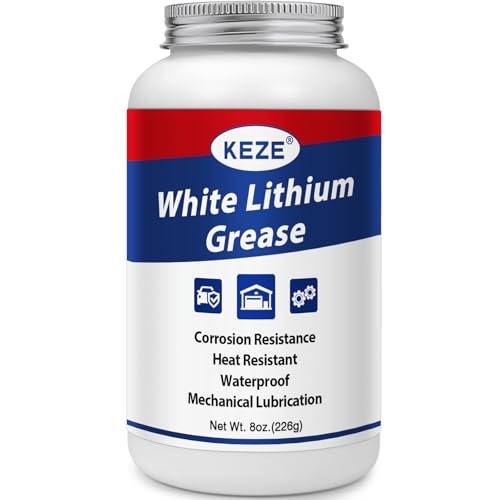
Keze White Lithium Grease
What We Like
- Brush-in-cap for no-mess precision
- Waterproof barrier blocks moisture
- Works from -4°F to 392°F
- Reduces squeaks in metal parts
Trade-offs
- Brush application slower than spray for large areas
- Not suitable for silicone-sensitive electronics or plastic parts
The brush-in-cap lets you dab grease exactly where you need it, so you can lubricate a hinge or track without the mess of a spray. The thick white lithium formula clings to surfaces and resists dripping, which keeps an overhead garage door or car door hinge clean during application. With a temperature range from -4°F to 392°F, it holds up in winter cold and summer heat, suiting both daily drivers and outdoor gear.
The same thick consistency that prevents drips may not seep into very tight hinge joints as easily as a thinner lubricant. For those spots, a needle oiler could be more effective. But for exposed hinges, sliding tracks, and jobs where you want grease only where you put it, the brush gives you control that other applicators may not offer.
Product photos
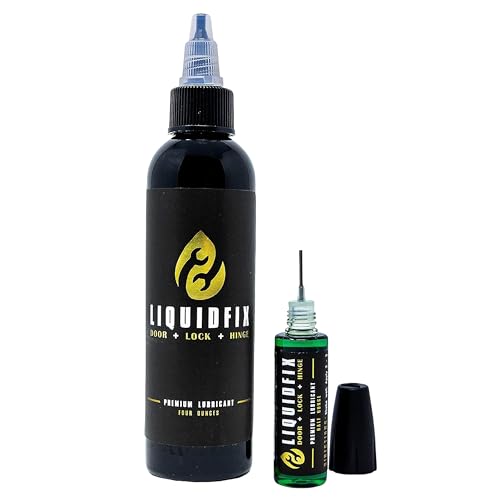
LiquidFix Door Lock Hinge Lubricant
What We Like
- Two-bottle combo for large and precision jobs
- Works down to -55°F
- Multi-purpose: locks, hinges, tracks
- Needle oiler for tight spots
Trade-offs
- Small needle bottle needs frequent refills
- Not a heavy grease for suspension parts
This lubricant stays fluid down to -55°F, so it keeps door hinges and locks working through cold winter mornings. The two-bottle combo gives you a 4 oz reservoir for broad jobs like sliding door tracks and a 0.5 oz needle oiler for precise drops into lock cylinders or hinge pins. It is a smart fit for anyone who wants one kit that handles both routine maintenance and cold-weather reliability, especially if you park outside in northern climates.
LiquidFix Door Lock Hinge Lubricant stays fluid down to -55°F, so it won’t gum up in a freezing garage or on a winter door. That’s a big deal if you’ve ever had a lock seize in cold weather. The kit comes with a 4 oz bottle and a 0.5 oz needle oiler. That lets you place drops exactly where you need them, inside a keyhole or along a hinge pin, without overspray or mess. You refill the small needle bottle from the larger one as needed.
Product photos
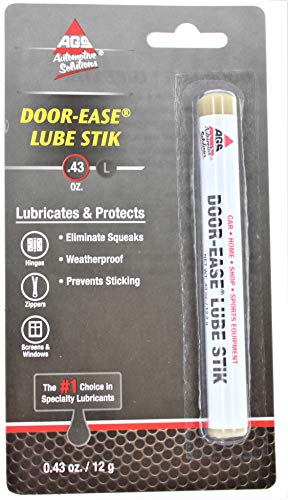
AGS Door Ease Lube Stick
What We Like
- Clean and easy to apply
- Works under all weather conditions
- Use on car door fittings, trunk, hood latch
- Lubricates all exposed surfaces
Trade-offs
- No spray nozzle for hard-to-access spots
- Weighs 0.0 pounds, so packaging weight is missing
A stick lubricant that weighs nothing on the scale and measures just six inches long means you can toss it in a glovebox or door pocket without adding bulk. The AGS Door Ease Lube Stick is designed for clean, no-mess application on exposed surfaces like car door fittings, trunk latches, and hood catches, and it holds up in any weather. That makes it a natural fit for drivers who want a quick, tidy touch-up on squeaky hinges without dealing with drips, overspray, or sticky residue. It’s the kind of tool you grab when you hear a squeak at a stoplight and want it gone before you park.
Reach is the main limitation here. Because it’s a stick, you can’t squirt lubricant deep into a hinge’s pivot barrel or behind a tight panel the way a needle oiler or aerosol can. If you’re working on a door that squeaks from the internal pin, a spray like the WD-40 Specialist White Lithium Grease can get into that gap more easily. But for the hinges, latches, and exposed linkage you can actually touch, the AGS stick gives you a controlled, weather-resistant layer of lube with zero cleanup. It’s a purpose-built tool for surface-level quieting, and it does that job without fuss.
Product photos
Horex White Lithium Grease
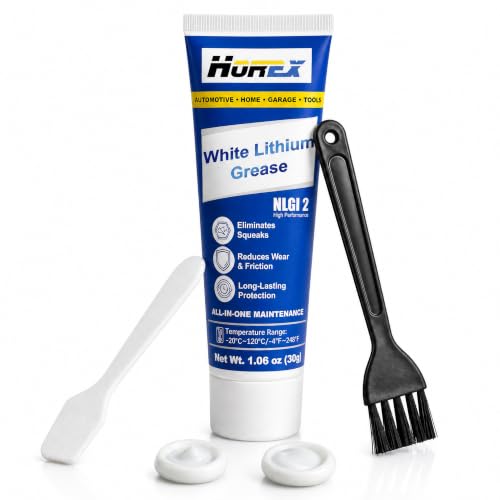
What We Like
- Multi-purpose for hinges, tracks, and gears
- Anti-friction formula reduces metal squeaks
- Resists moisture and pressure displacement
Trade-offs
- Small 1 oz tube limits large-scale jobs
- Brush and scraper are small per package specs
A 1-ounce tube might look modest, but this kit packs everything you need for a focused door-hinge tune-up. Alongside the grease, you get a brush, a scraper, and two finger-cots, so you can apply the lithium lubricant exactly where it’s needed without making a mess. The formula is built to fight friction on metal-to-metal parts, from door hinges to sunroof tracks and seat rails. It holds up across a wide temperature range of -20°C to 120°C. That makes it a smart, budget-friendly choice for someone who wants one compact set to silence squeaks on a few key spots around the car or home, without buying separate tools or a giant can they’ll never finish.
Capacity is the main limitation here. At just one ounce, this kit is ideal for precision jobs on a handful of hinges, but it won’t stretch to greasing an entire garage door track or multiple suspension points. Compared to a larger tube like Lucas Oil’s 8-ounce offering, you’ll get fewer applications per purchase.
Product photos
Permatex Silicone Spray Lubricant

What We Like
- Won't mar paint, rubber, or plastic
- Electrically insulates and waterproofs
- High silicone formula repels dust
- Protects and renews rubber mountings
Trade-offs
- Silicone residue can feel slippery on hands
- Aerosol overspray requires masking for precision work
A 10.25-ounce aerosol can means you get plenty of lubricant for multiple doors and windows without needing to buy another can soon. This Permatex spray is built around a high silicone formula that won’t attract dust or dirt, so your hinges stay quiet longer between applications. It also electrically insulates and waterproofs, making it a smart pick for door hinges exposed to moisture or for lubricating weather stripping and rubber bushings without damaging them. The formula will not mar paint, rubber, or plastic surfaces, and it coats hinges and channels to prevent locks, doors, and windows from binding and squeaking.
The biggest reason to pick this lubricant is that its high silicone formula does not attract dust or dirt, so it stays clean on hinges and channels long after you spray it. An aerosol can delivers a fine mist, which can overspray onto adjacent trim or glass if you’re not careful, so you’ll want to mask off the area or use the straw for precision. Compared to a white lithium grease like WD-40 Specialist, which is a thicker grease, this silicone spray is a lighter lubricant that won’t attract dust or dirt. For someone who wants a lubricant that is safe on multiple surfaces and also renews rubber mountings, bushings, and weather stripping, this is a silicone spray to consider.
WINUSD Door Hinge Lubricant
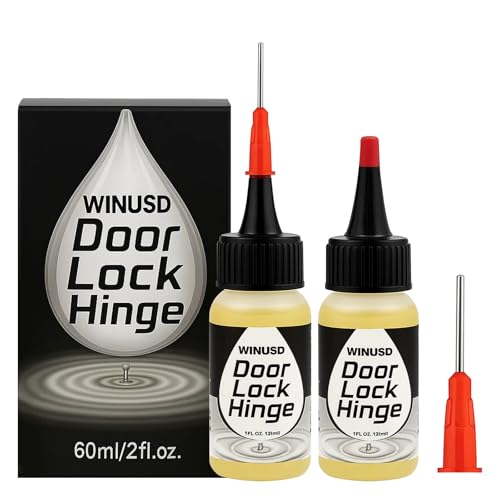
What We Like
- Precision needle oiler for tight spots
- -55°F freeze-proof all-season formula
- Non-toxic and low odor
- Bonds permanently to metal surfaces
Trade-offs
- 2 oz bottle is small for large jobs
- Only 2 oz total; frequent reapplication on heavy use
The -55°F freeze-proof formula means this lubricant won’t thicken or fail in winter garages or unheated workshops, so it keeps working when other oils turn to sludge. The included 1 oz precision needle oiler lets you reach deep into hinge pins and lock cylinders without overspray or mess. That turns a 2 oz bottle into a surgical tool for quieting a squeaky door in seconds. And because it’s non-toxic and low-odor, you can use it indoors without worrying about fumes, making it a single all-season solution for hinges, locks, bike chains, and cabinet slides.
Capacity is the main limitation here. At 2 oz, this bottle is tiny compared to a 13.3 oz aerosol can of WD-40 Specialist White Lithium Grease, so if you plan to grease a whole garage door track or multiple vehicle hinges in one session, you will run out fast. For occasional door and lock duty, the precision and portability win; for heavy-volume jobs, the WD-40 Specialist can will cover more ground per dollar.
Product photos
TRENUVX White Lithium Grease
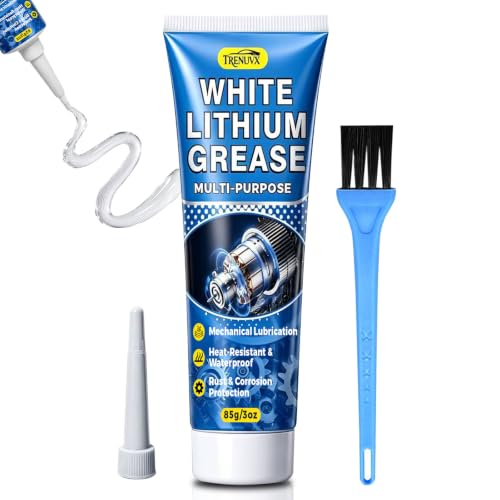
What We Like
- Built-in brush for precise application
- Precision tip for hard-to-reach spots
- Rust protection seals out moisture
- Works on metal and plastic surfaces
Trade-offs
- Small 3 oz tube covers fewer hinges per application
- Not an aerosol, so it requires manual spreading
A built-in brush and precision tip let you apply grease exactly where it needs to go, which is the whole point for car door hinges. The white lithium formula spreads smoothly over both metal and plastic surfaces, cutting friction fast while sealing out moisture to prevent rust. For someone who wants control and cleanliness over speed, this makes hinge maintenance a quick, mess-free task.
The 3 oz tube is smaller than the WD-40 Specialist aerosol can, so it may not be the best choice if you need to cover many large surfaces at once. But for the driver who values precision and hates wiping off overspray, the brush-and-tip combo delivers exactly that without the waste of a spray can.
Product photos
How We Evaluated Car Door Hinge Greases
We evaluated these car door hinge greases by examining manufacturer data sheets for temperature ranges, NLGI grades, and chemical composition. We also studied expert recommendations from automotive maintenance forums and summarized the most common praise and complaints from long-term owners to understand real-world performance.
The three criteria that mattered most were adhesion and staying power, temperature tolerance, and application precision. A grease that drips off or melts in summer heat won’t protect hinges long. We favored products with wide operating ranges and those that offered a delivery method, spray, brush, stick, or needle, that matches how most people actually work on their car doors.
A research-led evaluation cannot replicate the specific wear patterns of a ten-year-old hinge or the exact climate in your garage. We prioritize products with consistent positive feedback across many users and clear, verifiable specs. The final list represents the best balance of proven formulation and practical usability for the DIY driver.
What To Look For In Car Door Hinge Greases
Choosing the right grease starts with understanding the conditions your hinges face. Temperature swings, moisture exposure, and the tight clearances of hinge pins all matter.
Look for a grease with a wide temperature range, at least -20°F to 300°F, so it stays effective in both summer heat and winter cold. An NLGI grade of 2 gives it staying power, which keeps it from dripping off vertical surfaces. The application method, spray, brush, tube, or stick, should match your comfort level and how easily you can reach the hinge.
Temperature Range and Weather Resistance
Car door hinges live in the gap between the hot interior and the cold outside air, especially in winter. A grease that stiffens at 0°F won’t protect a hinge on a freezing morning, while one that runs at high temperatures can drip onto your floorboards in summer. Look for a product that specifies a working range of at least -4°F to 300°F to cover daily driving conditions in most climates.
Grease Grade and Adhesion (NLGI Grade)
The National Lubricating Grease Institute (NLGI) grades greases by consistency. For car door hinges, an NLGI 2 grade is the standard: it’s thick enough to cling to vertical metal surfaces but soft enough to be worked into the hinge pin gap. Lower grades are too thin and will drip; higher grades are too stiff to penetrate tight joints.
Application Method and Precision
- Aerosol sprays cover large areas quickly but can overspray onto paint and rubber seals.
- Brush-in-cap bottles give you direct control and no overspray, ideal for visible hinges.
- Needle oilers and precision tips reach the tight gap between the hinge pin and bushing.
- Stick lubricants are clean and portable but cannot penetrate deep internal joints.
A good rule of thumb: if you can see the hinge pin, a brush or stick works fine. If the squeak comes from inside the hinge, you need a needle oiler or a spray with a straw nozzle.
Car Door Hinge Greases Compared
The table below compares each product’s key specs and best use case side by side, so you can see at a glance which grease fits your door hinge job.
| Product | Form | Size | Application |
|---|---|---|---|
| WD-40 Specialist White Lithium Grease | Aerosol spray | 13.3 oz | Smart Straw 2-way spray |
| Lucas Oil White Lithium Grease | Squeeze tube | 8 oz | N/A |
| Qucship Door Hinge Lubricant | Needle oiler | 1 oz | Needle oiler |
| Keze White Lithium Grease | Tube | 8 oz | Brush-in-cap |
| LiquidFix Door Lock Hinge Lubricant | Dropper + needle oiler | 4 oz + 0.5 oz | Dropper + needle oiler |
| AGS Door Ease Lube Stick | Stick | N/A | Exposed surfaces |
| Horex White Lithium Grease | Tube | 1 oz | finger-cot, scraper, brush |
| Permatex Silicone Spray Lubricant | Aerosol | 10.25 oz | N/A |
| WINUSD Door Hinge Lubricant | Needle oiler | 2 oz | Precision needle oiler |
| TRENUVX White Lithium Grease | Tube | 3 oz | Built-in brush & precision tip |
Frequently Asked Questions
Can I use WD-40 on car door hinges?
Standard WD-40 is a solvent and light lubricant, not a grease. It can temporarily quiet a squeak but will evaporate or drip off quickly. For lasting protection, use a dedicated grease like the WD-40 Specialist White Lithium Grease, which is formulated to cling and resist pressure and temperature.
How often should I grease my car door hinges?
Most manufacturers recommend lubricating door hinges once a year or every twelve thousand miles. If you hear squeaking or feel resistance when opening the door, it’s time to reapply. In areas with heavy rain, snow, or road salt, checking hinges every six months is a good practice.
What is the difference between white lithium grease and silicone lubricant?
White lithium grease is a thick, clinging lubricant that excels under high pressure and resists water wash-off, making it ideal for hinge pins and load-bearing joints. Silicone lubricant is thinner and stays wet longer, but it does not provide the same heavy-duty protection. Use silicone where you need to protect rubber or plastic seals without staining.
Can I use a grease spray on my car door hinges?
Yes, a grease spray like the WD-40 Specialist White Lithium Grease is a popular choice. The aerosol delivers thick coverage quickly, and the included straw nozzle helps direct the grease into the hinge joint. Just be careful to mask off nearby paint and rubber to avoid overspray.
How do I apply grease to a car door hinge?
First, clean the hinge area with a rag and a degreaser to remove old, gritty grease. Apply the new grease directly into the hinge pin gap, use a precision tip or needle oiler for tight spots. Open and close the door several times to work the grease into the joint, then wipe away any excess from the hinge surface.
The Bottom Line
For most drivers, the WD-40 Specialist White Lithium Grease is the best overall choice because it combines a heavy-duty, temperature-resistant formula with an easy-to-use spray that covers hinges thoroughly. If you prefer a two-pack for multiple vehicles or projects, the Lucas Oil White Lithium Grease delivers the same NLGI-2 grade at a strong value.
If your squeak comes from a tight, hard-to-reach hinge pin, reach for the Qucship Door Hinge Lubricant with its needle oiler. And if you want to avoid any overspray on your car’s paint, the Keze White Lithium Grease with its brush-in-cap gives you total control.
The single most important factor is choosing a grease that stays put. A thick, NLGI-2 grade lubricant with a wide temperature range will protect your hinges through the seasons and keep your doors swinging smoothly for years.
