
10 Best Car Fuel Systems Cleaners in 2026
This post contains affiliate links. As an Amazon Associate, we earn from qualifying purchases.
For most drivers, the best way to restore lost power and fuel economy is a dedicated fuel system cleaner. We recommend Red Line SI-1 Complete Fuel System Cleaner as Best Overall for its ability to clean injectors, carburetors, valves, and combustion chambers in a single concentrated treatment. For truck and car owners wanting a versatile option, Chevron Techron Concentrate Plus Fuel System Cleaner is our Best For Cars And Trucks pick. Sea Foam Motor Treatment is the Best For Fuel And Oil for multi-engine households.
The real challenge with fuel system cleaners is matching the right formula to your engine’s age and condition. A high-mileage vehicle over 75,000 miles needs different chemistry than a newer direct-injection engine, and diesel owners require a cetane-boosting additive rather than a gasoline formula. Using the wrong cleaner can be ineffective or even wasteful.
This guide is based on a review of manufacturer specifications, expert round-ups from automotive publications, and patterns in long-term owner feedback. We focused on cleaning capability, compatibility with different fuel types and engine ages, and ease of use. Our goal is to help you choose a cleaner that actually addresses your vehicle’s specific needs.
Top 10 Car Fuel System Cleaners in the Market

Certain content that appears on this site comes from Amazon. This content is provided "as is" and is subject to change or removal at any time.
The Best Car Fuel System Cleaners, Reviewed
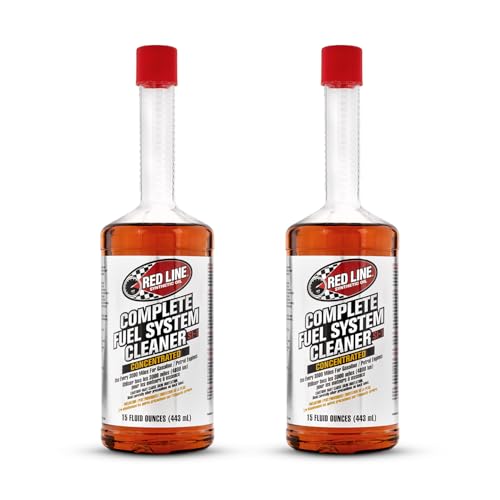
Red Line SI-1 Complete Fuel System Cleaner
What We Like
- Cleans injectors, carburetors, valves, and combustion chambers
- Concentrated high-temp and low-temp detergents
- Reduces gum and varnish formation
- One bottle per tank for full treatment
Trade-offs
- Requires full bottle per tank for best results
- Not formulated for diesel engines
The Red Line SI-1 Complete Fuel System Cleaner uses a concentrated blend of high-temp and low-temp detergents, so it cleans injectors, carburetors, valves, and combustion chambers in a single treatment. That means you get broad coverage without needing multiple products or guesswork about which part of the system is getting cleaned.
The trade-off is that you need to pour the whole 15-ounce bottle into a full tank to get nearly 100% cleaning efficiency. That’s a straightforward process, but it uses more product per treatment than some other fuel system cleaners. Still, the concentrated detergent blend is designed to handle deposits across the entire fuel system in one go.
Chevron Techron Concentrate Plus Fuel System Cleaner

What We Like
- Cleans entire fuel system including injectors and valves
- Restores lost power, acceleration, and fuel economy
- Reduces rough idle, hesitation, and spark plug fouling
- Improves cold start performance and fuel stability for one year
Trade-offs
- Pack of 6 is bulkier for single-vehicle households
- Requires 3,000-mile intervals for best results.
A 3,000-mile treatment interval means you can simply add a bottle at every oil change and forget about it. That kind of low-hassle maintenance keeps a daily driver running smoothly. Chevron Techron Concentrate Plus targets the whole fuel path, injectors, carburetors, intake valves, and combustion chambers, so it doesn’t just clean one spot and leave deposits elsewhere. That full-system approach restores lost power and acceleration while also improving cold starts and stabilizing fuel for up to a year, making it a practical choice for anyone who wants a single cleaner that works across cars, trucks, motorcycles, boats, and even lawn equipment.
The 12-ounce bottle size and the every-3,000-mile schedule mean you’ll need to buy and add a bottle regularly, rather than using a single treatment. But if you value consistent, thorough cleaning that covers everything from injectors to the fuel gauge sensor, and you don’t mind matching it to your oil change routine, this Chevron formula delivers dependable results across a wide range of gasoline engines. It’s a straightforward, no-surprises cleaner that fits naturally into regular vehicle care.
Chevron Techron High Mileage Fuel System Cleaner
What We Like
- Restores power by removing deposits
- Maximizes fuel economy
- Protects fuel system from corrosion
- Compatible with E10 and E85 fuels
Trade-offs
- Targeted for high-mileage vehicles, not all engines
- Only protects fuel systems, not engine oil or diesel systems
A corrosion-inhibiting formula that shields both ferrous and non-ferrous metal components means this cleaner does more than just scrub deposits, it actively protects the fuel system from rust and chemical damage. That makes it a strong match for high-mileage vehicles, where age and accumulated moisture can cause corrosion that steals performance and shortens component life. The Techron High Mileage Fuel System Cleaner is built to restore lost power and fuel economy by removing gum, varnish, and carbon buildup, all while keeping the fuel gauge sensor functioning properly.
The Chevron Techron High Mileage Fuel System Cleaner comes in a 12-ounce bottle, so it fits easily under a car seat or in a small toolbox. Compared to the Red Line SI-1 Complete Fuel System Cleaner, which cleans injectors, carburetors, valves, and combustion chambers, this Chevron formula targets the specific deposit and corrosion issues common in aging fuel systems. It protects both ferrous and non-ferrous metal components from corrosion, which helps keep the fuel gauge sensor working reliably over time.
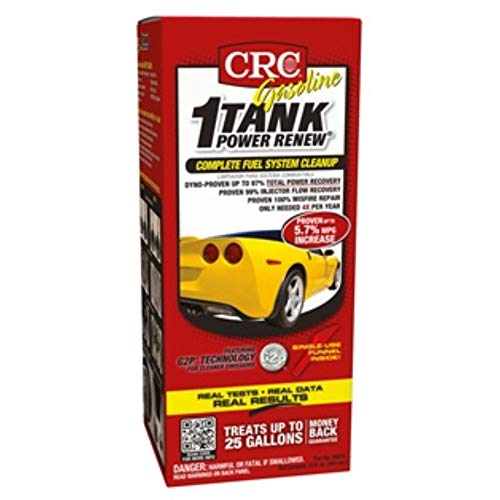
CRC 1-Tank Power Renew Fuel System Cleaner
What We Like
- Boosts MPG by up to 5.7%
- Safe for direct and port injection
Trade-offs
- One bottle treats only 25 gallons
- Requires quarterly use for maintenance
For drivers who have felt their vehicle lagging or hesitating, this cleaner targets the root cause, carbon buildup in injectors, intake valves, and combustion chambers, without requiring multiple treatments or special tools. A single 15 fl oz bottle treats up to 25 gallons of gasoline, so it’s enough for a full tank in most cars, trucks, or SUVs. The formula is safe for both direct and port fuel injection systems found in modern engines, meaning it works on nearly any gasoline vehicle on the road today. Owners report that using it about four times per year keeps the fuel system clean and helps maintain smooth acceleration. It’s a straightforward maintenance step that doesn’t complicate your routine.
A single 15-ounce bottle only covers 25 gallons, meaning larger tanks or heavy users will need to buy more frequently than the quarterly maintenance schedule suggests. If your goal is simply to keep a healthy engine running smoothly, a more frequent-use additive might suit you better, but if you’re chasing lost horsepower and throttle response, this is the one to try.
Hot Shot's Secret Everyday Diesel Treatment

What We Like
- Cleans internal and external injector deposits
- Boosts cetane up to 7 points
- Demulsifies moisture to prevent rust and corrosion
- Enhances fuel lubricity to protect pump and injectors
Trade-offs
- Requires use at every fill-up for full benefit
- 16 oz bottle treats 400 gallons, but dosing varies by need
A cetane boost of up to 7 points means this additive can sharpen throttle response and smooth out cold starts in a diesel engine, especially if you’re running on lower-quality fuel. The product cleans internal and external injector deposits, enhances fuel lubricity to protect the pump and injectors, and demulsifies moisture to prevent rust and corrosion. Its demulsifying action helps protect the fuel system from the damaging effects of rust and corrosion, which is a real plus for anyone dealing with condensation in their tank or storing a vehicle for a while.
This diesel treatment boosts cetane by up to 7 points, so you get a measurable improvement in fuel economy and smoother acceleration at every fill-up. It cleans both internal and external injector deposits while enhancing fuel lubricity to protect the pump and injectors, which helps extend engine life. You add 1 or 2 ounces per 25 gallons of diesel at each fill-up, making it a regular maintenance step rather than a one-shot fix.
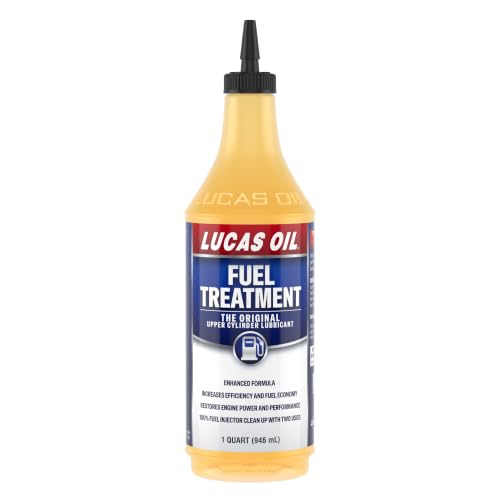
Lucas Oil Fuel Treatment
What We Like
- Works in both gasoline and diesel engines
- Cleans injectors, carburetor, and combustion chamber
- Neutralizes sulfur and harmful contaminants
- Prevents rust and corrosion
Trade-offs
- No specific treatment volume per tank listed
A single quart that treats both gasoline and diesel engines makes this a versatile option for households with mixed fuel vehicles. Lucas Oil Fuel Treatment cleans and lubricates the fuel system, including injectors, carburetor, and combustion chamber, while neutralizing sulfur and other harmful contaminants. For drivers who want a cleaner that works across different engines without juggling multiple products, this is a practical choice that simplifies maintenance.
You get a full quart, which is more than a single tank treatment for most cars, so you’ll need to measure or use it across multiple fill-ups. Compared to a dedicated diesel treatment like Hot Shot’s Secret Everyday Diesel Treatment, Lucas covers both fuel types but doesn’t offer a cetane boost specific to diesel performance. If you own one car and want a precise single-dose cleaner, a smaller bottle might be more convenient, but for versatility across your fleet, this quart delivers broad coverage.
Product photos
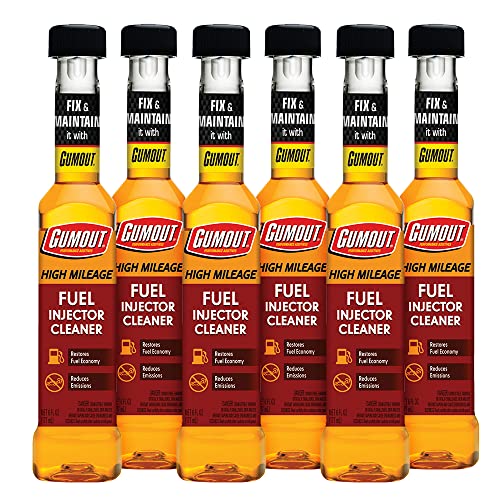
Gumout Fuel System Cleaner
What We Like
- Formulated for high-mileage carbon deposits
- Cleans injectors, valves, and ports
- Prevents future carbon build-up
- Safe for turbo and supercharged engines
Trade-offs
- Targeted at engines over 75,000 miles only
- Not suitable for engines with under 75,000 miles
Gumout Fuel System Cleaner is built around one clear purpose: removing carbon deposits from engines that have racked up over 75,000 miles. That high-mileage focus means the formula is aggressive enough to tackle the baked-on carbon that builds up over years of driving, cleaning fuel injectors, intake valves, and ports in a single treatment. For anyone driving an older car that feels sluggish or has lost its fuel economy, this cleaner directly addresses the root cause without risking damage to oxygen sensors or turbochargers.
If your vehicle is under 75,000 miles, a product like Chevron Techron Concentrate Plus offers a broader preventative approach without the heavy-duty chemistry. But for a high-mileage daily driver that needs a deep carbon cleanout, Gumout delivers a targeted solution that restores performance and keeps deposits from coming back.
Product photos
Sea Foam Motor Treatment

What We Like
- Cleans fuel system, oil, and stabilizes fuel
- Works with gas, diesel, E10, and E85
- Suitable for cars, trucks, RVs, and small engines
- Keeps stored fuel fresh for 2 years
Trade-offs
- Requires adding to fuel every 3,000 miles
- 16 oz treats only one tank; multiple tanks need more
- No dedicated diesel-only cetane boost like Hot Shot's
A single bottle of Sea Foam Motor Treatment cleans fuel systems, stabilizes stored fuel for up to two years, and treats engine oil, covering three jobs without needing separate products. That means you can smooth out a rough idle, recover lost MPG, and clean sludge from the crankcase to reduce engine wear, all with one additive. It works with gasoline, diesel, E10, and E85, so it fits cars, trucks, RVs, lawnmowers, snowblowers, ATVs, motorcycles, boats, and jet skis. For anyone maintaining multiple vehicles or storing equipment seasonally, this is the most versatile cleaner in the guide.
The main trade-off is that Sea Foam recommends adding it every 3,000 miles, so it is a recurring step rather than a one-and-done treatment. If you primarily drive a modern gasoline car and want a cleaner that targets injector and combustion chamber deposits, Chevron Techron Concentrate Plus cleans those areas. But if you own a mix of gas and diesel engines, or need a fuel stabilizer for stored vehicles, Sea Foam covers more ground with less shelf clutter.
Product photos
STA-BIL In-Season Protection Fuel Treatment

What We Like
- Cleans entire fuel system
- Prevents corrosion and ethanol damage
- Keeps fuel fresh up to 12 months
- Boosts gas mileage and engine power
Trade-offs
- Small 4 oz bottle treats only 5 gallons
- Requires 5-minute engine run after adding
A single 4-ounce bottle treats just 5 gallons of fuel, which makes this treatment best suited for small engines, seasonal vehicles, or anyone who fills up a single car at a time rather than a fleet or large tank. The real strength here is stabilization: it keeps ethanol-blended fuel fresh for up to 12 months. That means your lawn mower, motorcycle, or weekend cruiser starts right up after sitting all winter. It also cleans injectors, fuel pumps, and removes water, gum, and varnish while protecting against corrosion, so you get both storage protection and performance cleaning in one pour.
The small treat rate is a limitation: one 4-ounce bottle treats only 5 gallons of fuel. For a larger tank, you would need multiple bottles per fill-up. But if your priority is long-term storage protection for a vehicle that sits for months, this stabilizer-focused formula is a better fit than a straight cleaner. Just pour it in before filling, run the engine five minutes, and you are set for a year of worry-free storage.
Product photos
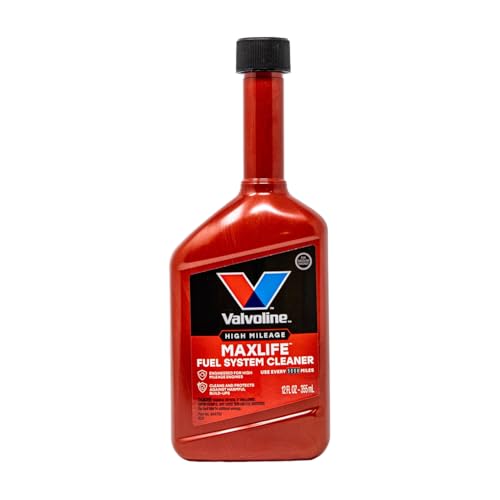
Valvoline MaxLife Complete Fuel System Cleaner
What We Like
- Removes stubborn deposits in high-mileage engines
- Restores lost engine performance and fuel efficiency
- Reduces engine friction and wear
- Provides long-term protection against future buildup
Trade-offs
- Designed only for engines over 75K miles
- Needs regular use to maintain long-term protection.
It works to remove stubborn deposits that accumulate over years of driving, while also reducing friction and wear inside the engine. That combination helps restore lost performance and fuel efficiency, which is exactly what you want when a car starts feeling sluggish or guzzling more gas than it used to. For anyone driving a well-worn daily commuter or a trusty road-trip companion that’s seen plenty of miles, this cleaner is built to address the grime and wear that come with age.
Because it is built for high-mileage engines, a single treatment may not fully clear severe buildup, so some owners might need a second bottle. The friction reduction and deposit removal still make it a practical choice for its intended audience, targeting the real issues of an aging fuel system without unnecessary complexity.
Product photos
How We Evaluated Car Fuel System Cleaners
We started by examining each product’s chemical formulation and the specific components it claims to clean, injectors, valves, combustion chambers, and carburetors. Manufacturer data sheets and technical bulletins provided the foundation for understanding how each cleaner works and what fuel types it supports, from standard gasoline to E85 and diesel.
The three criteria that mattered most were cleaning scope, engine compatibility, and treatment convenience. A cleaner that only addresses injectors but not valves or combustion chambers is less useful for direct-injection engines, which are prone to carbon buildup on intake valves. We also prioritized products that clearly state their dosing requirements, whether a single bottle treats a full tank or requires ongoing use at every fill-up.
This evaluation relies on published specifications, automotive expert round-ups, and the reported experiences of owners who have used these products across different vehicle makes and mileage ranges. This research-based approach helps identify which cleaners consistently deliver on their claims for specific engine types and conditions.
What To Look For In Car Fuel System Cleaners
The right fuel system cleaner depends on your engine type, mileage, and how you use the vehicle. Focus on cleaning chemistry, compatibility, and dosing convenience.
Choose a cleaner that matches your engine’s fuel type and age. Look for polyether amine (PEA) detergents for the most effective deposit removal, and confirm the product is safe for your specific fuel system, gasoline, diesel, or both.
Cleaning Chemistry and Detergent Type
The most effective fuel system cleaners use polyether amine (PEA) as their active detergent. PEA is more aggressive at breaking down carbon deposits than the lower-cost polyisobutylene amine (PIBA) found in budget additives. Products like Chevron Techron Concentrate Plus and Red Line SI-1 rely on high concentrations of PEA to clean injectors, intake valves, and combustion chambers thoroughly.
For high-mileage engines over 75,000 miles, formulations with additional friction modifiers and corrosion inhibitors, such as those in Valvoline MaxLife Complete Fuel System Cleaner, help address the wear and deposit buildup that accumulates over time. Diesel engines need a different approach, with cetane boosters and demulsifiers to handle moisture and improve fuel lubricity.
Engine and Fuel Compatibility
Not all cleaners work with every fuel type or engine design. Gasoline-specific formulas are not suitable for diesel engines, and vice versa. For drivers with both gasoline and diesel vehicles, a versatile option like Lucas Oil Fuel Treatment that works in both is worth considering. Direct-injection engines benefit from cleaners that specifically address intake valve deposits, as these engines do not benefit from fuel washing over the valves.
High-mileage formulations are designed for engines with more than 75,000 miles and often include seal conditioners and corrosion protectors. Using a standard cleaner in a high-mileage engine may not address the specific deposit patterns and wear that older engines experience. Always check the label for mileage recommendations and fuel type compatibility.
Treatment Frequency and Convenience
Some cleaners are designed for a single, powerful treatment per tank, while others work best as a maintenance additive added at every fill-up or oil change. A single-use product like Red Line SI-1 requires one full bottle per tank to deliver its full cleaning effect, which is ideal for a deep clean but less convenient for ongoing maintenance.
For drivers who prefer to add cleaner at every oil change, Chevron Techron Concentrate Plus works on a 3,000-mile interval. Diesel owners using Hot Shot’s Everyday Diesel Treatment need to add it at every fill-up for continuous protection. Consider how often you want to dose your fuel tank and whether you prefer a one-time deep clean or regular maintenance.
- Confirm the cleaner is safe for your engine’s fuel type (gasoline, diesel, E85).
- Check the recommended mileage range, some products are only for engines over 75,000 miles.
- Decide on treatment frequency: single-tank deep clean or ongoing maintenance at each fill-up.
- Look for PEA detergent content for the most effective deposit removal.
- For seasonal vehicles, choose a product that also stabilizes fuel for long storage periods.
A good rule of thumb: use a PEA-based cleaner at every oil change for routine maintenance, and switch to a high-mileage formula once your engine passes 75,000 miles.
Car Fuel System Cleaners Compared
The table below compares all 10 fuel system cleaners across the criteria that matter most: cleaning scope, fuel compatibility, treatment frequency, and best use case.
| Product | Volume | Target Areas | Engine Types |
|---|---|---|---|
| Red Line SI-1 Complete Fuel System Cleaner | 15 Ounce (2 Pack) | Injectors, Carburetors, Valves, Combustion Chambers | N/A |
| Chevron Techron Concentrate Plus Fuel System Cleaner | 12 oz (pack of 6) | Injectors, carburetors, valves, combustion chambers | Gasoline cars, trucks, motorcycles, boats, more |
| Chevron Techron High Mileage Fuel System Cleaner | 12 oz | N/A | All ethanol blends (E10, E85) |
| CRC 1-Tank Power Renew Fuel System Cleaner | 15 fl oz | Injectors, intake and combustion chambers | Gasoline cars, trucks and SUVs |
| Hot Shot's Secret Everyday Diesel Treatment | 16 oz | Fuel systems and injectors | Diesel |
| Lucas Oil Fuel Treatment | 1 quart | Fuel injectors, carburetor and combustion chamber | Gasoline & Diesel |
| Gumout Fuel System Cleaner | 6 Pack | Fuel injectors, intake valves, ports | Engines over 75,000 miles |
| Sea Foam Motor Treatment | 16 oz, pack of 3 | Fuel systems | Gas & diesel, E10, E85 |
| STA-BIL In-Season Protection Fuel Treatment | 4 oz | Fuel injectors to fuel pumps | N/A |
| Valvoline MaxLife Complete Fuel System Cleaner | 12 oz | Fuel systems | Over 75K miles |
Frequently Asked Questions
How often should I use a fuel system cleaner?
For most vehicles, using a fuel system cleaner every 3,000 miles or at each oil change is a good maintenance schedule. High-mileage engines over 75,000 miles may benefit from more frequent treatments, while seasonal vehicles only need a stabilizer before storage.
Can I use a gasoline fuel system cleaner in a diesel engine?
No. Gasoline fuel system cleaners are formulated differently and can damage diesel injectors and fuel pumps. Diesel engines require a dedicated diesel fuel treatment with cetane boosters and lubricity enhancers, such as Hot Shot’s Secret Everyday Diesel Treatment.
What is the difference between PEA and PIBA detergents?
PEA (polyether amine) is a more effective detergent that can remove carbon deposits from intake valves, combustion chambers, and injectors. PIBA (polyisobutylene amine) is a cheaper alternative that primarily cleans injectors but is less effective on intake valve deposits, especially in direct-injection engines.
Will a fuel system cleaner fix a check engine light?
A fuel system cleaner can sometimes resolve a check engine light caused by carbon buildup on injectors or oxygen sensors. However, a check engine light can indicate many other issues, so it is best to read the diagnostic code before assuming a cleaner will fix it.
Is it safe to use a fuel system cleaner in a high-mileage engine?
Yes, as long as you choose a cleaner specifically formulated for high-mileage engines, such as Chevron Techron High Mileage Fuel System Cleaner or Valvoline MaxLife Complete Fuel System Cleaner. These products include seal conditioners and corrosion inhibitors that are gentler on older engine components.
The Bottom Line
For most drivers, the Red Line SI-1 Complete Fuel System Cleaner is the best choice because it cleans the entire fuel system, injectors, carburetors, valves, and combustion chambers, with a single concentrated treatment. It is ideal for anyone who wants a powerful, one-time deep clean without the need for ongoing dosing.
If you drive a high-mileage vehicle over 75,000 miles, consider Chevron Techron High Mileage Fuel System Cleaner or Valvoline MaxLife Complete Fuel System Cleaner for their added seal conditioners and corrosion protection. Diesel owners should choose Hot Shot’s Secret Everyday Diesel Treatment for its cetane boost and moisture demulsification.
The single most important factor is matching the cleaner to your engine’s fuel type, age, and your preferred maintenance schedule. A PEA-based treatment used at every oil change will keep most engines running smoothly for years.
