
10 Best Car Hotspots in 2026
This post contains affiliate links. As an Amazon Associate, we earn from qualifying purchases.
For drivers and road-trippers who need reliable internet on the go, the RoamBird TD20 Portable WiFi Hotspot is our best overall pick thanks to its included CloudSIM data and handy display. For those needing blazing-fast speeds, the NETGEAR Nighthawk M7 5G Mobile Hotspot leads the pack. The Spectrum Smart 4G LTE USB WiFi Hotspot is our choice for a dead-simple, plug-and-play experience.
The real challenge with car hotspots isn’t finding one that works, it’s finding one that works where you drive. Coverage gaps, data limits, and power requirements can turn a connected road trip into a frustrating hunt for a coffee shop signal. We focused on what matters most for life on the road: reliable connectivity, easy power integration, and a data plan that doesn’t surprise you.
This guide is based on a review of specifications, manufacturer documentation, and owner feedback from across the automotive and tech community. The top 10 picks are organized to help you match the right hotspot to your driving style, for commuting, camping, or crossing the country.
Top 10 Car Hotspots in the Market

Certain content that appears on this site comes from Amazon. This content is provided "as is" and is subject to change or removal at any time.
The Best Car Hotspots, Reviewed
RoamBird TD20 Portable WiFi Hotspot
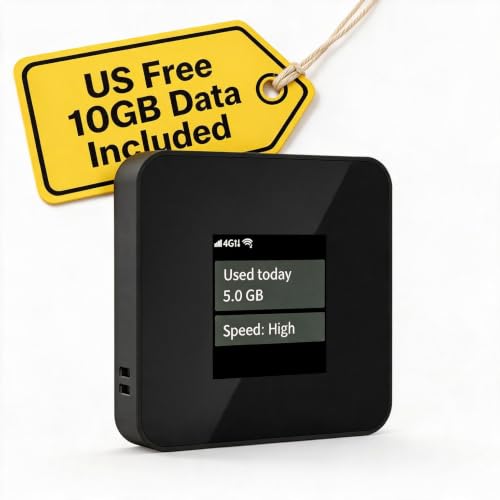
What We Like
- No SIM needed with CloudSIM
- 1.4-inch display shows data usage
- Works with power bank away from car
Trade-offs
- Requires continuous USB power, no battery
- Free 10GB data expires after 30 days
- 4G LTE only, not 5G
The TD20 has no internal battery, so it needs a steady USB power source. That setup works fine in a car or RV, but you will want a power bank if you take it on a picnic or hike.
Product photos
NETGEAR Nighthawk M7 5G Mobile Hotspot
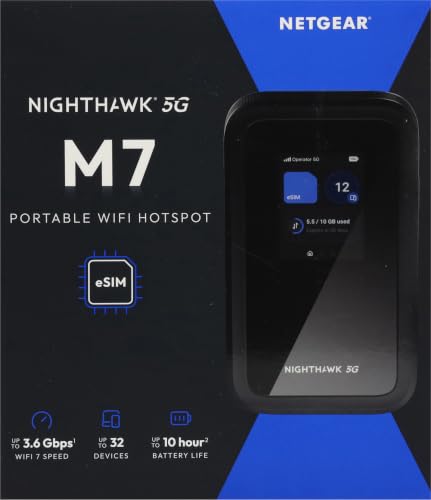
What We Like
- WiFi 7 reaches up to 3.6 Gbps
- Works in 140+ countries with eSIM
- Connects up to 32 devices at once
- Built-in WPA3 encryption and firewall
Trade-offs
- Ethernet adapter sold separately
- Speeds depend on carrier and signal strength
Real-world performance depends heavily on your carrier’s 5G coverage and how many devices are connected at once. For comparison, the RoamBird TD20 is lighter and USB-powered but tops out at 4G LTE and WiFi 6, so it cannot match the M7’s speed or device capacity.
Spectrum Smart 4G LTE USB WiFi Hotspot
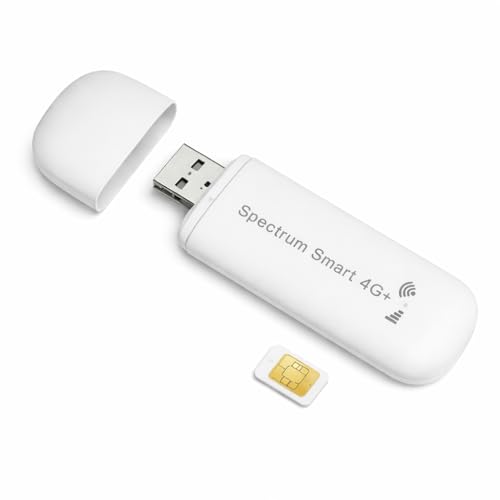
What We Like
- Double-carrier coverage (AT&T and T-Mobile)
- Plug-and-play, no setup required
- SIM card included in the box
Trade-offs
- No built-in battery, needs USB power always
- Limited to 4G LTE, no 5G support
- Only 10 devices, less than some competitors
The fact that this hotspot automatically connects to the strongest signal between AT&T and T-Mobile means you’re not stuck with a single carrier’s dead zones. That double-carrier coverage is the whole point here: plug it into a car charger or a power bank, and up to ten devices get their own WiFi in seconds, with no software or SIM hunting. It’s the kind of simplicity that makes sense for someone who just wants internet on a road trip without fiddling with settings. The included SIM and a 500MB trial (available with a budget-friendly plan purchase) take the guesswork out of coverage, too.
This device has no built-in battery, so it depends on a constant power source like a laptop, car charger, or battery pack. That keeps it tiny and always ready, but it is not something you can toss in a bag and use untethered. The RoamBird TD20 also runs on USB power but supports up to 16 devices, while the Spectrum Smart caps out at 10. For a family or a small crew, that is plenty, but if you are equipping a larger group, you might want the extra capacity.
Spectrum Smart WiFi Hotspot

What We Like
- Dual-carrier coverage (AT&T/T-Mobile)
- Built-in 3000 mAh battery
- Connects up to 10 devices
- Includes SIM card in box
Trade-offs
- 4G LTE only, no 5G support
- No built-in WiFi 6 or WiFi 7
The 3000 mAh battery turns this into a truly portable hotspot that can sit in your cupholder, toss in a glovebox, or slide into a pocket without hunting for a USB port. That battery powers dual-carrier coverage on both AT&T and T-Mobile networks, so the device automatically picks the strongest signal wherever you drive. For road trips, RV camping, or remote work from a job site, that means one less thing to plug in and one less worry about dead zones. It handles up to 10 devices at once, enough for a family streaming movies, navigating maps, and checking email simultaneously. The included SIM card gets you started right out of the box, no separate purchase or trip to a store needed. This is the pick for anyone who wants a grab-and-go hotspot that works across North America without being tethered to a power outlet.
For most drivers, the battery-powered freedom and dual-carrier reliability matter more than raw speed. The 3000 mAh battery keeps the hotspot running for hours on a road trip or at a job site. Because it works on both AT&T and T-Mobile networks, the device automatically connects to the strongest signal, so you don’t have to worry about losing coverage when you cross into a different carrier’s territory. This is a straightforward, no-fuss tool that does exactly what a car hotspot should: give you WiFi wherever there is cellular signal, without asking you to install software or manage a SIM card. The included SIM means you can start using it right away, and the 500MB trial data lets you test coverage before committing to a larger plan.
Product photos
Sierra Wireless AirLink MP70 Vehicle Router
What We Like
- Survives extreme voltage surges
- Dual-SIM for automatic failover
- Up to 5 concurrent VPN sessions
Trade-offs
- Heavy and large for personal use
- Heavy at 1.7 pounds for personal use
A Gigabit Ethernet port and dual-SIM failover mean this router keeps a fleet’s critical systems online even when one network drops. It maintains power during 5V brownouts and handles voltage spikes from -600 VDC to 200 VDC, designed for the harsh electrical environment of a commercial vehicle, not a passenger car’s lighter socket. That makes it a natural fit for work trucks, ambulances, and service vans where downtime costs real money.
At 1.7 pounds, the Sierra Wireless AirLink MP70 is a wired vehicle router, not a lightweight portable hotspot like the RoamBird TD20 or NETGEAR Nighthawk M7. It’s built for connecting multiple devices in a vehicle with Gigabit Ethernet, so it suits a work truck or service van rather than a family car. If you just want to stream movies on a road trip, a lighter portable hotspot will serve you better.
SIMO Solis Edge 5G WiFi Hotspot
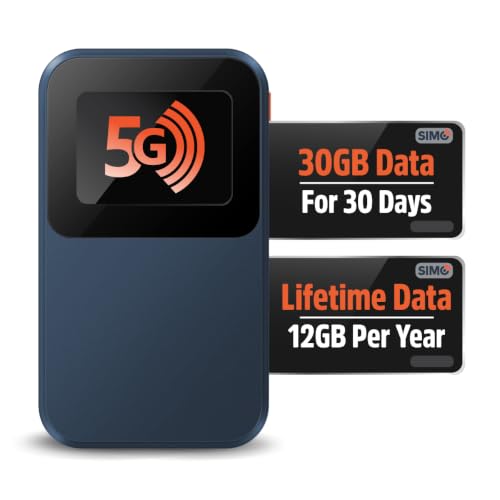
What We Like
- 5G speeds up to 15x faster than 4G
- Covers 140+ countries with 300+ carriers
- No SIM card or contract needed
- Weighs only 2.8 ounces for pocket portability
Trade-offs
- 1GB monthly lifetime data is very limited for heavy use
- 30GB global data will eventually run out on long trips
- No hardwired Ethernet or vehicle-mounting option included
The Solis Edge weighs just 2.8 ounces, so it slips into a jacket pocket or glove box without adding bulk. It automatically picks the strongest mobile signal from over 300 carriers in 140+ countries, which means you can cross state lines or international borders and still get online without fiddling with SIM cards. For travelers who move between regions, that kind of automatic connection keeps you working or navigating without interruption.
The data plan includes 1GB per month forever plus a bundled 30GB of global data. That 1GB is enough for email and maps, but heavy streaming or work hotspot use will drain it quickly. The 30GB gives more room, but once used, you will need to buy additional data. The NETGEAR Nighthawk M7 supports up to 32 devices and has a 10-hour battery. The Solis Edge is lighter and offers broader carrier switching, but its data limits require more attention on extended trips.
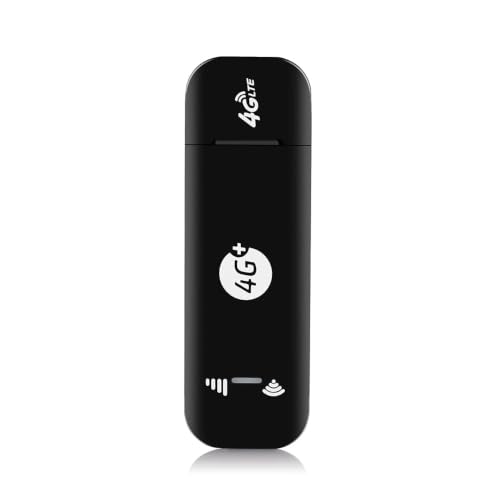
TIANJIE 4G USB WiFi Router
What We Like
- Ultra-light 28g design
- True plug-and-play setup
- Broad US carrier band support
- Connects up to 10 devices
Trade-offs
- No built-in battery requires USB power
- Needs a compatible data-only SIM plan
- Not compatible with T-Mobile/Verizon Home Internet SIMs
At just 28 grams, this router turns any USB port, from a laptop to a power bank, into a WiFi hotspot, so it’s easy to toss in a bag or pocket. Insert a 4G SIM card, and up to ten users can share a connection at speeds up to 150Mbps, depending on your carrier’s coverage. It supports most US operators, including AT&T, T-Mobile, and Verizon-compatible networks, making it a practical choice for urban and suburban areas.
This unit has no internal battery, so it needs a constant USB source, which works fine in a car but is less convenient for a day at the park. You will need to confirm your SIM plan works with third-party routers, because some phone or tablet plans will not play nice. The RoamBird TD20 includes 10GB free U.S. data for 30 days and requires no SIM, while the TIANJIE lets you choose your own carrier and plan but demands a little more setup homework. For budget-minded drivers who already have a data-only SIM, this is a smart, lightweight solution.
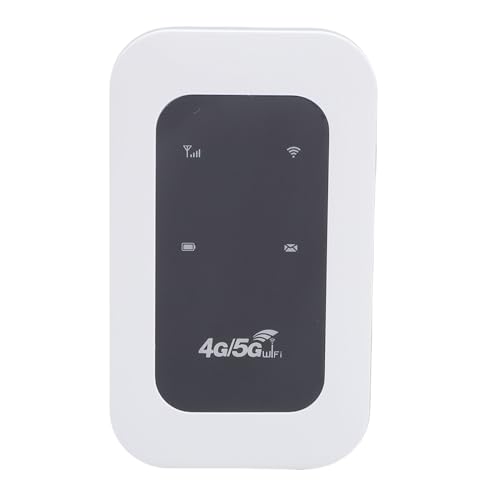
FOSA Portable 4G WiFi Hotspot
What We Like
- Unlocked SIM works with any GSM carrier
- 300Mbps download speed for streaming
- 10+ hour battery for all-day trips
- Type-C recharge from car or power bank
Trade-offs
- No built-in data plan or SIM included
- Only supports LTE bands B1/B3/B5/B40
- 2100mAh battery smaller than some rivals
The unlocked SIM slot works with any GSM SIM card, so you can use a local prepaid plan abroad or keep your current US carrier without being locked in. That flexibility, combined with download speeds up to 300Mbps on LTE CAT4, means you can stream and browse on up to ten devices at once. The built-in 2100mAh battery provides over ten hours of continuous use, which keeps a campsite connected from morning coffee through late-night stargazing.
You will need to supply your own SIM and data plan, and the band support is limited to B1/B3/B5/B40, which may not cover every rural stretch as broadly as some competitors. The RoamBird TD20 includes free U.S. data and runs without a battery, while the FOSA’s built-in power and carrier choice suit campers who want to stay untethered from a USB port. It is a straightforward, self-contained tool for road trips where you control the connection.
Product photos
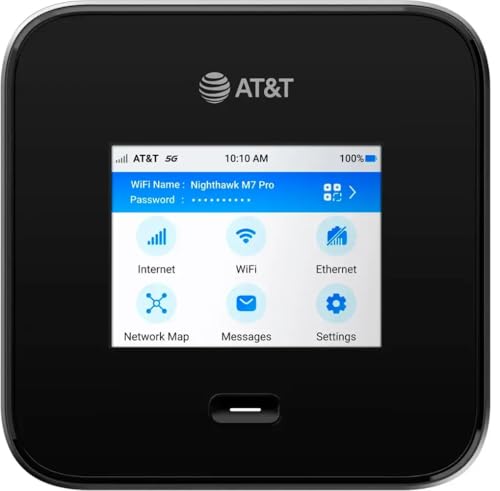
NETGEAR Nighthawk M7 Pro 5G Hotspot
What We Like
- WiFi 7 for multi-gigabit speeds
- Connects up to 64 devices
- 2,000 sq. ft. coverage
- LCD passcode locking for security
Trade-offs
- Designed for AT&T network only
- No battery life listed for portable use
With a top speed up to 5.8 Gbps and support for up to 64 devices, this hotspot can keep a large group connected at once, enough for streaming, video calls, and gaming on multiple devices. The WiFi 7 technology and 6GHz band help deliver those multi-gigabit speeds, which means less lag when everyone is online. Security features like URL filtering and device blocking are built in, so you can manage what connected devices access.
This unit is designed for AT&T networks, so if you travel through areas where that carrier has weak coverage, you may experience slower speeds. The RoamBird TD20 offers a no-SIM, carrier-flexible alternative for lighter use, but it tops out at 4G LTE and 16 devices. For a car hotspot that keeps a full crew connected, the Nighthawk M7 Pro is a strong option.
Product photos
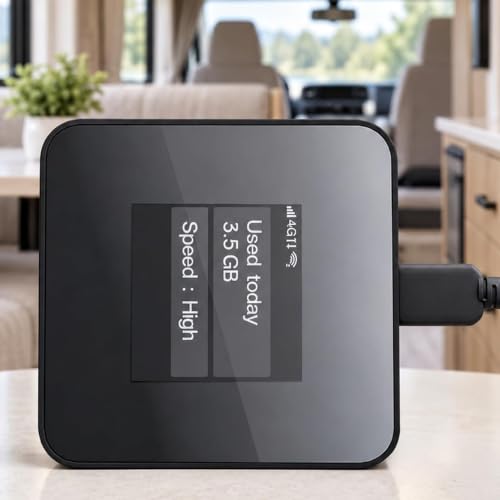
Pixlumvue Portable WiFi Mobile Hotspot
What We Like
- No battery to degrade or overheat
- USB powered from car, bank, or computer
- Connects 16 devices at once
Trade-offs
- Requires constant USB power source
- 4G LTE only, no 5G support
- Speeds depend on local carrier coverage
The Pixlumvue TD20 has no built-in battery, so it won’t swell or fail from heat inside a parked car, a real advantage for vehicle use. Plug it into any USB port, your car’s, a power bank, or a laptop, and it starts sharing internet with up to 16 devices. That makes it a natural fit for family road trips, truckers who leave their rig running, or anyone who wants reliable WiFi without remembering to charge another gadget. The included 10GB of U.S. data gets you started, and the vSIM technology connects to an available supported local network, so you’re not locked to one carrier.
It relies entirely on a USB power source, so if your car is off and you do not have a power bank, the hotspot will not work. It also uses 4G LTE rather than 5G, so in areas with strong 5G coverage, a model like the NETGEAR Nighthawk M7 could offer faster speeds. But for most driving scenarios, LTE is plenty for navigation, music streaming, and video calls. The Pixlumvue’s battery-free design and straightforward setup make it a practical choice for drivers who want connection without complication.
Product photos
How We Evaluated Car Hotspots
To find the best car hotspots, we looked beyond the spec sheets. Our research method combined a deep dive into manufacturer documentation, a review of expert round-ups from automotive and tech publications, and a careful analysis of what owners consistently report after months on the road. No product was tested in a lab; instead, we focused on real-world usability patterns.
Three criteria mattered most. First, connection reliability, how well a hotspot handles the shifting towers and variable signal strength of a moving vehicle. Second, power practicality, whether the device runs on a battery, USB power, or a hardwired vehicle connection, and how that fits different driving habits. Third, data simplicity, how easy it is to get online without hunting for a SIM card or deciphering a carrier contract.
An honest limit of a research-led evaluation is that we can’t replicate every driving environment. Signal strength varies by region, carrier, and even weather. What we can do is identify the features and trade-offs that matter most, so you can make an informed choice for your own routes and routines.
What To Look For In Car Hotspots
The right car hotspot balances network compatibility, power source, and data plan flexibility. Here’s what to check before you buy.
Look for a hotspot that matches your carrier’s best bands in the areas you drive. Choose a power source (USB, battery, or hardwired) that fits your vehicle setup. Then pick a data plan, included or BYO-SIM, that matches your monthly usage.
Network Compatibility and Speed
A hotspot is only as good as the network it connects to. Most 4G LTE hotspots support the major US carriers, but 5G models like the NETGEAR Nighthawk M7 offer faster speeds for streaming and video calls on the move. Check which LTE bands your preferred carrier uses in the regions you drive, as some hotspots skip important bands like B71 (T-Mobile’s extended range). For international travel, a device like the SIMO Solis Edge covers 140+ countries with 300+ carriers, removing the guesswork entirely.
Power Source and Vehicle Integration
How you power your hotspot determines where and how long you can use it. USB-powered units like the RoamBird TD20 or Pixlumvue are simple to plug into a car’s USB port, but they stop working when the car is off. Battery-powered models like the Spectrum Smart WiFi Hotspot or FOSA Portable 4G WiFi Hotspot give you hours of use away from the vehicle, which is ideal for camping or remote work.
For commercial fleets, the Sierra Wireless AirLink MP70 hardwires into the vehicle’s electrical system and survives voltage surges, making it the most reliable option for always-on connectivity.
Data Plans and SIM Flexibility
The easiest hotspots include data right out of the box. The RoamBird TD20 comes with 10GB of free data, while the SIMO Solis Edge offers 1GB monthly for life. Others, like the TIANJIE 4G USB WiFi Router, require you to bring your own data-only SIM plan, which gives you more control over carrier and cost but adds a setup step. Dual-SIM models like the Sierra Wireless AirLink MP70 allow automatic failover to a second carrier if the primary network drops, which is critical for commercial use or remote travel.
- Verify the hotspot supports your preferred carrier’s LTE bands in your driving area.
- Decide if you need battery power for off-vehicle use or if USB-only is fine.
- Check whether a SIM card and data plan are included or if you need to buy one separately.
- For heavy streaming or multiple devices, look for WiFi 6 or WiFi 7 support and a high device limit.
A good rule of thumb: if you drive the same routes daily, a USB-powered 4G hotspot with a cheap data-only SIM is often all you need. If you roam far or camp, invest in a battery-powered or dual-SIM model.
Car Hotspots Compared
The table below compares the key specs of our top 10 car hotspots, making it easy to see which one fits your vehicle and travel style.
| Product | Network | Max Devices | Power Source |
|---|---|---|---|
| RoamBird TD20 Portable WiFi Hotspot | 4G LTE with WiFi 6 | 16 | USB (no built-in battery) |
| NETGEAR Nighthawk M7 5G Mobile Hotspot | 5G or 4G | 32 | N/A |
| Spectrum Smart 4G LTE USB WiFi Hotspot | 4G LTE | 10 | USB-powered, no battery |
| Spectrum Smart WiFi Hotspot | 4G LTE | 10 | 3000 mAh battery |
| Sierra Wireless AirLink MP70 Vehicle Router | LTE-Advanced | N/A | DC Power Cable |
| SIMO Solis Edge 5G WiFi Hotspot | 5G & WiFi 6 | N/A | N/A |
| TIANJIE 4G USB WiFi Router | 4G LTE | 10 | USB (no built-in battery) |
| FOSA Portable 4G WiFi Hotspot | 4G LTE CAT4 | 10 | 2100mAh battery |
| NETGEAR Nighthawk M7 Pro 5G Hotspot | 5G mmWave | 64 | N/A |
| Pixlumvue Portable WiFi Mobile Hotspot | 4G LTE Cat4 | 16 | Battery-Free (USB powered) |
Frequently Asked Questions
Can I use a regular home internet hotspot in my car?
Most home internet hotspots are not designed for mobile use. They may not connect reliably to cellular towers as you drive, and some carriers restrict their use to a fixed address. A dedicated car hotspot is built to handle the shifting signal environment of a moving vehicle.
How much data do I need for a road trip?
A typical road trip with navigation, music streaming, and occasional video calls uses about 2-5GB per week. Heavy streaming or multiple devices can push that to 10GB or more. The RoamBird TD20‘s included 10GB is a good starting point for a week-long trip.
Do car hotspots work without a SIM card?
Some car hotspots, like the RoamBird TD20 and SIMO Solis Edge, use CloudSIM or eSIM technology that does not require a physical SIM card. Others need a data-only SIM from a carrier. Always check the product details to know what’s included.
What is the difference between 4G LTE and 5G for a car hotspot?
4G LTE is sufficient for navigation, music, and most video streaming. 5G offers much faster speeds, which helps with large file uploads, high-quality video calls, and connecting many devices at once. The trade-off is that 5G hotspots like the NETGEAR Nighthawk M7 cost more and may not have better coverage in rural areas.
Can I leave a car hotspot plugged in all the time?
USB-powered hotspots can be left plugged in, but they draw power from the car’s electrical system. In most modern vehicles, the USB port turns off with the ignition, so the hotspot powers down automatically. Battery-powered models should not be left charging indefinitely to avoid degrading the battery.
The Bottom Line
For most drivers and road-trippers, the RoamBird TD20 Portable WiFi Hotspot is the best overall choice. Its included CloudSIM data and simple USB power make it a no-fuss solution for keeping everyone in the car connected. If you need 5G speeds for streaming or work on the move, the NETGEAR Nighthawk M7 is worth the investment.
Budget-conscious buyers should look at the TIANJIE 4G USB WiFi Router, which is ultra-light and affordable if you already have a data-only SIM. For campers and motorhome travelers, the battery-powered FOSA Portable 4G WiFi Hotspot offers the flexibility to stay connected away from the vehicle.
The single most important factor when choosing a car hotspot is matching the device’s network bands and power source to how and where you drive. Get that right, and you’ll have reliable WiFi for the whole journey.
