
10 Best Connectors For Car Audios in 2026
This post contains affiliate links. As an Amazon Associate, we earn from qualifying purchases.
For a clean, reliable stereo upgrade, the Metra 70-1784 Radio Wiring Harness is the best overall pick. It plugs directly into the factory connector with color-coded leads, eliminating the need to cut any OEM wiring. Volkswagen owners with 1980-2007 models get a true plug-and-play solution. For Ford and Lincoln drivers, the Scosche FD16B is a top choice, and the RED WOLF T-Harness Adapter is ideal for adding an amplifier to a Toyota.
The biggest challenge when upgrading car audio is matching the aftermarket stereo’s wiring to the vehicle’s factory harness. Cutting and splicing wires can lead to shorts, poor connections, or a damaged stereo. The right wiring harness eliminates guesswork and protects your car’s electrical system.
This guide is built from manufacturer specifications, expert round-ups, and patterns in owner feedback. We evaluated ten harnesses to help you find the one that fits your vehicle’s make, model, and audio system without unnecessary complexity.
Top 10 Connectors For Car Audios in the Market
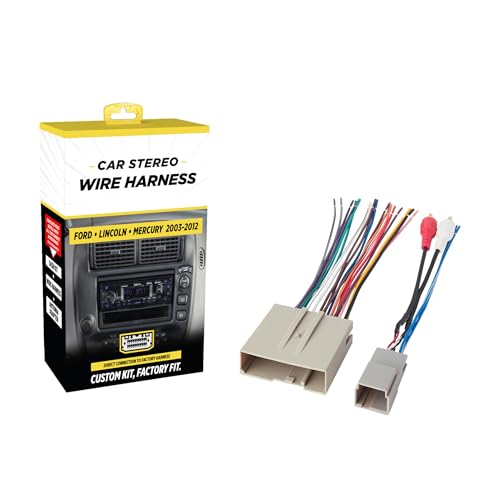
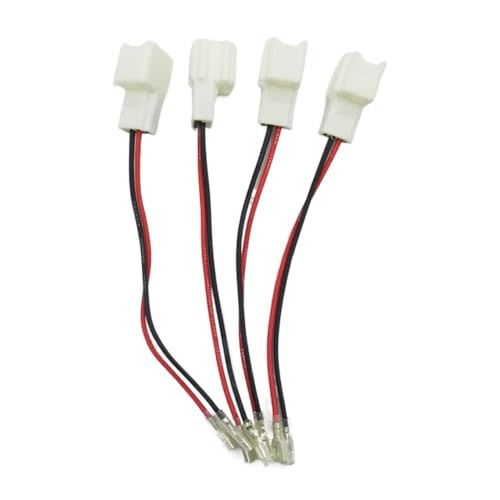

Certain content that appears on this site comes from Amazon. This content is provided "as is" and is subject to change or removal at any time.
The Best Connectors For Car Audios, Reviewed
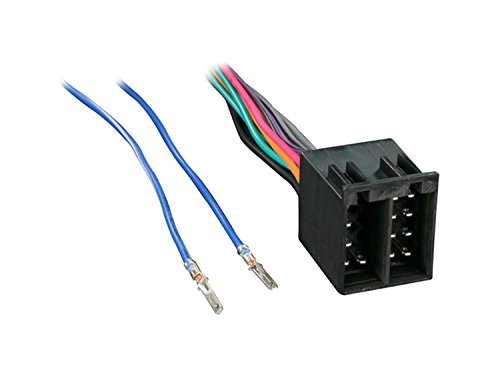
Metra 70-1784 Radio Wiring Harness
What We Like
- Plugs into factory connector
- Color-coded leads for easy installation
- No cutting OEM plugs needed
Trade-offs
- Limited to Volkswagen 1980-2007 models
- Only supports 4 speakers
A 16-pin plug that connects directly to the factory harness means you can install an aftermarket radio in a compatible Volkswagen without cutting or splicing any of the car’s original wiring. The color-coded leads further simplify the process, so you can match wires quickly and get back on the road.
The trade-off is that this harness is purpose-built for a specific range of Volkswagen models, so it won’t work with other brands or newer VWs. If you drive a Ford or Toyota from the same period, you would need a different adapter like the Scosche FD16B instead. For Volkswagen owners, however, this is the most direct and clean way to connect a new radio, and the lightweight design makes it easy to tuck behind the dash without adding bulk.
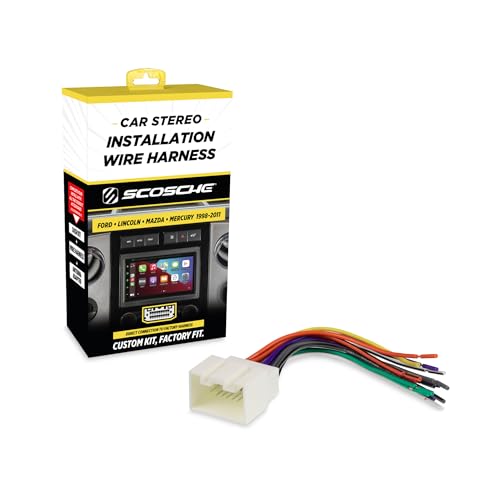
Scosche FD16B Stereo Wiring Harness
What We Like
- EIA color-coded wires for easy identification
- No cutting of factory wires required
- Limited Lifetime Warranty included
- Factory-quality materials for secure connection
Trade-offs
- Not compatible with factory amplified systems
- Limited to 1998-2011 model years listed
The Scosche FD16B is built for a straightforward swap: it plugs directly into the factory harness of select non-amplified Ford, Lincoln, Mazda, Mercury and Nissan vehicles from 1998 to 2011, so you can install an aftermarket radio without cutting a single factory wire. That means less guesswork, no crimping, and a cleaner install that stays reversible if you ever sell the car. For anyone driving one of those models and looking to upgrade the stereo without a headache, this harness keeps the job simple and dependable.
This harness connects only to non-amplified systems, so if your Ford or Lincoln has a factory amp, you’ll need the Scosche FDK11B instead. For vehicles without that amp, it plugs directly into the factory wiring for a new aftermarket radio, and Scosche backs it with a Limited Lifetime Warranty.
RED WOLF Radio Wiring Harness

What We Like
- Pure copper core for excellent conductivity
- No cutting of OEM wiring needed
- Heat-shrink tube connections for secure fit
- Covers GM vehicles from 1988 to 2005
Trade-offs
- Not compatible with Bose, Infinity, or On-Star systems
- Limited to non-amplified factory setups only
This harness uses a pure copper core and heat-shrink tube connections, so you can swap in an aftermarket stereo without cutting or splicing the factory wiring. It fits a wide range of GM vehicles, including Chevy Silverados, GMC Yukons, Buick Centuries, and Cadillac Escalades, with model years spanning from the late 1980s to the early 2000s. For anyone working on a non-amplified GM truck or sedan from that era, it’s a straightforward, reliable option.
The catch is that this harness won’t work with factory amplified systems like Bose, Infinity, or On-Star, so if your GM vehicle has one of those setups, you’ll need a different adapter. For a simple, no-cut install on a standard GM radio, it does the job.
Product photos
Scosche FDK11B Aftermarket Radio Wiring Harness
What We Like
- No cutting factory wiring required
- EIA color-coded wires for easy identification
- Limited Lifetime Warranty included
- Lifetime Tech Support from Scosche
Trade-offs
- Only works with factory amplified systems
- Compatibility limited by vehicle trim level
The key detail is that it works without cutting any factory wiring, which saves you from splicing into the car’s original harness and keeps everything reversible. If your vehicle has a factory amplifier, this is the cleanest way to swap the head unit, because the harness handles the signal routing between the amp and the new radio. Scosche backs it with a Limited Lifetime Warranty and lifetime tech support, so you’re not left on your own if something doesn’t match up.
This harness only fits vehicles with factory amplified systems, so it’s useless if your car has a standard non-amplified setup. That makes it a specialized tool rather than a universal solution. For comparison, the Scosche FD16B covers non-amplified Ford and Lincoln models from a similar era, so you’d need that one instead. Before buying, double-check the fit guide images to confirm your specific trim level is compatible, because some models have limited support. If your car matches, this harness makes the install straightforward and avoids the headache of figuring out which wire does what.
RED WOLF T-Harness Adapter Connector

What We Like
- Plug-and-play for Toyota Non-JBL systems
- Adds aftermarket amp and subwoofer easily
- Copper core for good conductivity
- Retains factory head unit
Trade-offs
- Only fits Non-JBL Toyota systems
- Limited to specific 2018-2024 model years
- Not compatible with JBL-equipped vehicles
This harness works only with Toyota Non-JBL systems from specific model years, so it will not help owners of older Toyotas or those with factory JBL audio. Compared to a universal wiring harness like the Metra 70-1784 for Volkswagen models, the RED WOLF is designed for a narrower set of vehicles. If your Toyota matches the compatibility list, you get a plug-and-play install with no splicing.
Product photos
Metra 72-5512 Speaker Harness
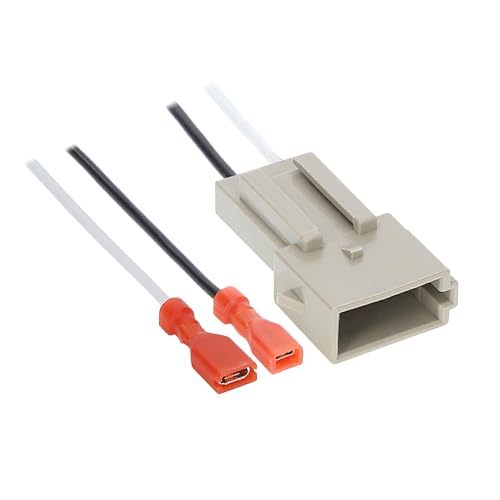
What We Like
- Plugs into factory connectors without cutting
- No splicing needed for aftermarket upgrade
- Designed for select Ford vehicles
Trade-offs
- Only fits select 1989-up Ford vehicles
- Weighs 0.0 pounds, so it offers no physical heft for stability
This harness plugs into your Ford’s factory speaker connectors, so you can upgrade the wiring for aftermarket audio without cutting or splicing. That means a straightforward installation that avoids permanent changes to the vehicle’s original wiring. If you own a compatible Ford from 1989 or newer, this adapter lets you connect aftermarket speakers or a new stereo using the existing factory plugs.
Plugging into factory connectors without cutting or splicing is the main draw here, this Metra harness lets you upgrade your car’s speakers by simply connecting to the existing Ford speaker openings. That means no wire stripping or soldering, just a direct fit for 1989-up Ford vehicles. Just confirm your car’s year and model before buying, since it’s designed for that specific range.
WildTundra 16Pin ISO Honda Acura Harness
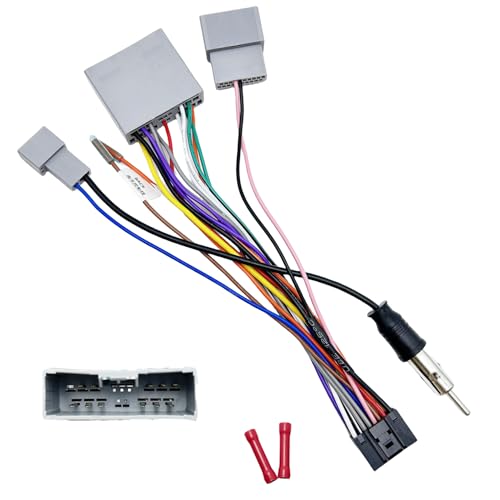
What We Like
- Plug-and-play installation with no cutting
- Includes SWC, reverse, and antenna adapters
- Fits multiple Honda and Acura models
Trade-offs
- Not compatible with premium AMP systems
- Does not fit vehicles with 6-speaker setups
- Only works with specific 17Pin male connector
A 17-pin to 16-pin ISO conversion means this harness bridges the gap between your factory Honda or Acura wiring and a standard aftermarket stereo. That lets you upgrade the head unit without splicing a single wire. The included SWC, reverse, and antenna adapters mean you don’t have to hunt down extra parts.
This harness only works with non-amplified, non-Canbus systems and specifically excludes cars with six-speaker audio or premium factory amps. If your Honda or Acura has a base sound system, it’s a direct fit; if it has the upgraded setup, you’ll need a different adapter like the Metra 70-1784 for Volkswagen applications. Check your vehicle’s connector shape before ordering, because the 17-pin male plug is specific to certain model years and trims.
Product photos
DSkoiph 4 Pack Nissan Infiniti Speaker Harness
What We Like
- Four adapters for front and rear doors
- No cutting or splicing needed
Trade-offs
- Only fits Nissan and Infiniti vehicles
- No color-coded leads for wire matching
Four adapters in one pack mean you can replace both front and rear door speaker harnesses without buying a second set. The plug-and-play design skips the crimping and soldering, so you can focus on the audio install rather than chasing wires.
This harness is purpose-built for Nissan and Infiniti vehicles only, so it won’t help if you work on other makes. But within that lane it delivers four adapters ready to go, which saves you from piecing together separate harnesses for each door. For a dedicated Nissan or Infiniti speaker job, that focus is exactly what makes it practical.
Product photos
YYTQP 16 Pin Kenwood Radio Harness
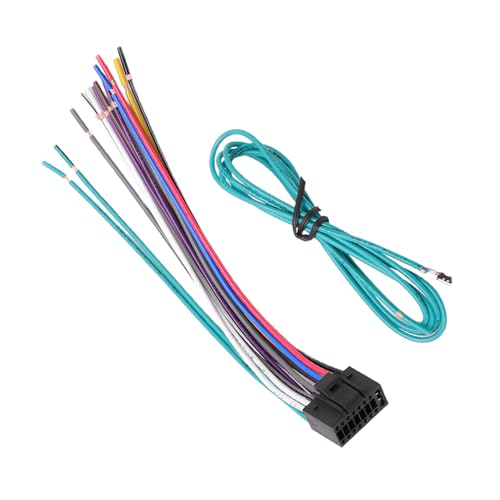
What We Like
- Pure copper for reliable signal transfer
- ABS plastic housing for durability
- No cutting of OEM harness required
- Covers many Kenwood KDC and KRC models
Trade-offs
- Limited to Kenwood radios only
- Weighs only 0.1 pounds, so it feels lightweight
The YYTQP 16 Pin Kenwood Radio Harness is compatible with a wide range of Kenwood KDC and KRC models, from the KDC-308 up through the KDC-X998, so if you are swapping an older or current Kenwood deck, this adapter is likely to fit. The harness uses pure copper contacts and an ABS plastic housing, which is designed for long-term use. For anyone installing an aftermarket Kenwood stereo into a vehicle that originally had one, this harness allows a plug-and-play swap without cutting into factory wiring.
This harness works exclusively with Kenwood radios, so it won’t help if you own a Pioneer, Sony, or Alpine deck. The Scosche FD16B covers select Ford, Lincoln, Mazda, Mercury, and Nissan vehicles, but the YYTQP is built for a specific brand. That focus means owners of compatible Kenwood models get a plug-and-play connector that matches their radio without needing extra parts.
Product photos
HSTECH 72-7800 Honda Acura Speaker Connectors
What We Like
- Includes 4 harnesses for two speakers
- Plugs into factory connectors without cutting
- Fits Honda and Acura models from 1990 onward
- Made from high-grade materials for secure fit
Trade-offs
- Only fits Honda and Acura vehicles, not universal
- No color-coded leads for aftermarket stereo wiring
Four harnesses in the pack let you connect two speakers without splicing a single wire. That plug-and-play design means you can swap out factory speakers in a 1990-up Honda or Acura, keeping the original connector intact. If you own a Civic, Accord, CR-V, or any of the other listed models, this set saves you from cutting and crimping. It’s a straightforward solution for anyone refreshing their car audio.
These connectors are built specifically for Honda and Acura vehicles, so they won’t work on a Ford or Toyota. Compared to a universal harness like the Metra 72-5512 for Ford vehicles, this set is laser-focused on one brand family, which means a perfect fit for those cars but no flexibility elsewhere. For a Honda or Acura owner, that specialization is exactly what makes it a clean, hassle-free install.
Product photos
How We Evaluated Connectors For Car Audios
To find the best connectors for car audios, we focused on compatibility, installation ease, build quality, and the specific audio system type. Our research drew from manufacturer documentation, professional installer recommendations, and common owner experiences reported across automotive forums.
Compatibility was our top priority. A harness that doesn’t match your vehicle’s year, make, and trim level is useless. We verified each product’s stated vehicle fitment, paying close attention to whether it supported factory amplified systems (like Bose or JBL) or non-amplified setups. We also checked for model year ranges to avoid recommending a harness that leaves newer or older owners stranded.
Installation ease came next. We prioritized harnesses that require no cutting of factory wires and feature color-coded leads matching the aftermarket stereo’s standard. Build quality mattered too, pure copper cores and secure connectors ensure reliable signal transfer and longevity. Finally, we considered the trade-offs, such as a harness that only works with specific radio brands or excludes certain premium audio systems.
A research-led evaluation has limits. We did not install each harness in every compatible vehicle. Instead, we relied on verified specs, professional installer knowledge, and consistent feedback from owners to identify the best options for common upgrade scenarios.
What To Look For In Connectors For Car Audios
Choosing the right connector for your car audio upgrade starts with understanding your vehicle’s factory setup. The wrong harness can turn a simple install into a headache.
Key buying criteria: Match the harness to your vehicle’s make, model, and year. Determine if you have a factory amplified system. Look for color-coded wires and a plug-and-play design. Prioritize pure copper cores for better conductivity.
Vehicle Compatibility and Audio System Type
The most critical factor is whether the harness fits your specific vehicle. Many harnesses are limited to certain brands (e.g., Volkswagen, Ford, Toyota) and model year ranges. Check the manufacturer’s compatibility list before buying. Equally important is knowing your audio system type, non-amplified, factory amplified (Bose, JBL, Infinity, On-Star), or a premium setup. A harness for a non-amplified system will not work with a Bose or JBL system, and vice versa.
Installation Ease and Wiring Standards
A good harness makes installation straightforward. Look for a plug-and-play design that connects directly to your car’s factory connector without cutting or splicing any wires. Color-coded leads that match the EIA standard (yellow for battery, red for accessory, black for ground, etc.) simplify connecting the aftermarket radio. Some harnesses also include adapters for steering wheel controls, reverse cameras, or antenna connections, which can save additional work.
Build Quality and Material
The harness’s construction affects signal quality and long-term reliability. Pure copper cores offer better conductivity and less resistance than copper-clad aluminum. Look for heat-shrink tubing or secure connectors that resist corrosion and vibration. A harness that feels flimsy or has thin wires may cause intermittent connections or fail over time. For speaker harnesses, ensure the connectors lock securely into the door speakers.
- Confirm your vehicle’s make, model, and year are on the harness’s compatibility list.
- Check if your factory audio system is amplified or non-amplified.
- Look for a harness that requires no cutting of factory wires.
- Prefer harnesses with color-coded leads for easy identification.
- Choose pure copper cores over copper-clad aluminum for better conductivity.
Rule of thumb: If your vehicle has a premium amplified system (Bose, JBL, Infinity, Mark Levinson), always buy a harness specifically designed for that system.
Connectors For Car Audios Compared
The table below compares the ten harnesses across key features, helping you quickly see which one matches your vehicle and audio setup.
| Product | Compatibility | Installation | Weight |
|---|---|---|---|
| Metra 70-1784 Radio Wiring Harness | Volkswagen 1980-2007 | plugs into factory connector | 0.1 Pounds |
| Scosche FD16B Stereo Wiring Harness | 1998-2011 Ford, Lincoln, Mazda, Mercury, Nissan | N/A | 0.1 pounds |
| RED WOLF Radio Wiring Harness | 1989-2002 Chevy GMC Buick Cadillac | no cutting | 0.1 Pounds |
| Scosche FDK11B Aftermarket Radio Wiring Harness | Factory Amplified 2003-12 Ford, Lincoln, Mercury | no cutting factory wiring | 0.1 pounds |
| RED WOLF T-Harness Adapter Connector | Toyota Non-JBL, 2018-2023 models | Plug-and-play, no splicing | 0.1 pounds |
| Metra 72-5512 Speaker Harness | Select 1989-Up Ford | no cutting or splicing needed | 0.0 Pounds |
| WildTundra 16Pin ISO Honda Acura Harness | Honda 2006-2011, Acura 2007-2013 | Plug and play, no cutting | 0.0 Pounds |
| DSkoiph 4 Pack Nissan Infiniti Speaker Harness | Nissan Sentra Altima Rogue 2004-2021 Infiniti 2006-2018 | Plug and play | 0.0 Pounds |
| YYTQP 16 Pin Kenwood Radio Harness | Kenwood KDC, KRC, KMD series | does not need to cut any OEM wire harness | 0.1 Pounds |
| HSTECH 72-7800 Honda Acura Speaker Connectors | Honda/Acura 1990-up | Plug-and-play, no cutting | 0.1 lbs |
Frequently Asked Questions
How do I know if my car has a factory amplified audio system?
Check your vehicle’s trim level or options list. Look for badges like Bose, JBL, Infinity, or Mark Levinson on the speaker grilles or head unit. You can also check the owner’s manual or look up your vehicle’s audio options by VIN online.
Can I use a wiring harness for a different car brand?
No. Wiring harnesses are designed for specific vehicle makes, models, and sometimes even trim levels. Using a harness for a different brand will likely result in incorrect pinouts, no sound, or electrical damage. Always match the harness to your exact vehicle.
Do I need a special harness to add an amplifier and subwoofer?
Yes, if you want to keep your factory head unit. A T-harness adapter, like the RED WOLF T-Harness, allows you to tap into the factory speaker wires without cutting them, making it easy to connect an aftermarket amplifier and subwoofer while retaining the stock radio.
What does a color-coded wiring harness mean?
Color-coded wires follow the EIA standard, where each wire color corresponds to a specific function (e.g., yellow for 12V battery, red for accessory, black for ground, and specific colors for each speaker). This makes matching the harness to your aftermarket radio’s wires straightforward and reduces wiring errors.
Is it better to solder wires or use a harness?
Using a proper wiring harness is almost always better. It eliminates the need to cut factory wires, provides a secure connection that won’t come loose, and makes future radio swaps easier. Soldering factory wires can damage the vehicle’s electrical system and voids warranties on some harnesses.
The Bottom Line
The Metra 70-1784 Radio Wiring Harness is the best overall choice for Volkswagen owners with a 1980-2007 model who want a straightforward, no-cut stereo upgrade. It saves time and reduces the risk of wiring mistakes. For Ford, Lincoln, and Mazda drivers, the Scosche FD16B offers the same plug-and-play convenience with a lifetime warranty.
If you drive a GM vehicle from 1988-2005 without a Bose or Infinity system, the RED WOLF Radio Wiring Harness delivers a pure copper connection and secure fit. Those adding an amplifier to a late-model Toyota should look at the RED WOLF T-Harness Adapter. For owners of factory amplified Ford vehicles, the Scosche FDK11B is the specific solution you need.
The single most important factor is compatibility. Double-check your vehicle’s make, model, year, and audio system type before buying. A perfect harness for one car is useless for another. Choose the one that matches your exact setup, and your stereo upgrade will be smooth, reliable, and rewarding.
