
10 Best Coolants For High Performance Cars in 2026
This post contains affiliate links. As an Amazon Associate, we earn from qualifying purchases.
For high-performance engines, standard coolant often falls short. The EVANS Cooling Systems EC53001 Waterless Engine Coolant is our Best Overall pick because its 375°F boiling point eliminates boilover and corrosion entirely. For drivers focused on temperature reduction, the Engine Ice TYDS008-02 is the Best Temperature Reduction pick, while the Mishimoto Liquid Chill offers the Best Boil-Over Protection.
The problem is that high-performance engines generate far more heat than a standard commuter car. A cooling system failure on a track day or during aggressive driving can mean a costly rebuild. You need a coolant that can handle sustained high RPMs, elevated cylinder pressures, and extreme ambient temperatures without failing.
This guide is built from manufacturer specifications, expert round-ups, and patterns in owner feedback from the high-performance community. We evaluated ten coolants across the key criteria that matter most for modified and track-driven vehicles, so you can match the right chemistry to your driving demands.
Top 10 Coolants For High Performance Cars in the Market


Certain content that appears on this site comes from Amazon. This content is provided "as is" and is subject to change or removal at any time.
The Best Coolants For High Performance Cars, Reviewed
EVANS Cooling Systems EC53001 Waterless Engine Coolant

What We Like
- Boiling point of 375°F prevents boilover
- Waterless formula eliminates corrosion
- Reduces strain on cooling system components
- Improves combustion efficiency and power
Trade-offs
- Requires complete removal of old water-based coolant
- Not compatible with water-based systems without full flush
A 375°F boiling point means this coolant simply won’t vaporize under the extreme heat a high-performance engine can generate, so boilover and after-boil become non-issues. That alone makes it a standout for anyone pushing their car hard on track days or in stop-and-go traffic. Because it contains no water, it also sidesteps the corrosion, liner pitting, and water pump cavitation that plague traditional coolants over time, which translates to less maintenance and fewer cooling system surprises. For drivers who want maximum thermal protection and long-term reliability, this is the kind of engineering that justifies the extra effort during installation.
The trade-off is that you cannot simply pour it in on top of your old coolant. The manufacturer requires that all water-based coolant and water be removed before installation, which means a more thorough process than a standard drain-and-fill. That takes more time and care, and it is not a job for someone in a hurry. Among the other coolants listed, the Red Line 81215 Supercool is a ready-to-use formula that can be swapped in more easily, but the Evans offers a different approach for those willing to do the work.
Product photos
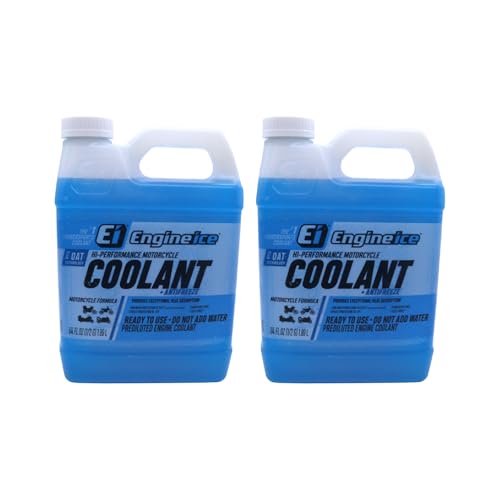
Engine Ice TYDS008-02 High Performance Coolant
What We Like
- Lowers temps 10-20°F on average
- Boil-over protection to 256°F
- Phosphate free, ready to use
Trade-offs
- Freeze protection only to -7°F
- Premixed limits custom dilution options
A 10 to 20 degree Fahrenheit drop in operating temperature is the headline number here, and for a high-performance engine that lives near the redline, that margin can mean the difference between pulling hard and pulling timing. Engine Ice uses propylene glycol with OAT technology to hit a boil-over point of 256°F, which gives you real headroom on hot track days or when crawling through summer traffic. It comes ready to pour straight from the bottle, so there is no mixing or guessing, just drain, fill, and go. This coolant is designed for drivers who want maximum heat rejection without fussing over ratios.
Freeze protection stops at -7°F, which is fine for most of the country but not for deep-winter storage in northern states. For the enthusiast who prioritizes summer track work and wants a simple swap that drops temperatures noticeably, Engine Ice delivers exactly what the spec sheet promises.
Product photos
Mishimoto Liquid Chill Performance Synthetic Radiator Coolant
What We Like
- Boil-over protection to 265°F
- Pre-mixed for immediate use
- Safe for all radiators and engines
- Reduces engine wear and corrosion
Trade-offs
- Freeze protection only to -26°F
- Not suitable for extreme arctic climates
Boil-over protection to 265°F means this coolant handles engine temperatures that would cause conventional coolants to boil over. It’s pre-mixed, so you pour directly from the 64-ounce container without measuring or diluting, and the lifetime warranty backs its corrosion and wear protection for any gas or diesel engine.
Liquid Chill’s freeze protection stops at -26°F, which is fine for most climates but not deep northern winters. For a vehicle that operates in extreme subzero conditions below -26°F, another coolant with lower freeze protection would be needed. Its advantage is a high boil-over threshold for engines that run hot.
Product photos
EVANS Coolant EC10064 NPG Waterless Engine Coolant

What We Like
- Boiling point above 375°F prevents boil-over
- Waterless formula eliminates vapor and pressure strain
- No oxygen content stops corrosion and erosion
- Reduces pre-ignition and detonation for more power
Trade-offs
- Requires complete removal of all old water-based coolant
- Only for venues allowing propylene glycol, not ethylene glycol
A boiling point above 375°F means this coolant won’t vaporize, which directly addresses overheating, boil-over, and after-boil in high-performance engines. Because it generates very low vapor pressure, it also reduces strain on cooling system components. The waterless formula contains no oxygen, effectively eliminating corrosion, liner erosion, and pump wear, so maintenance costs can drop. By reducing pre-ignition and detonation caused by heat, it helps combustion efficiency and can deliver more power.
Installation requires completely removing every drop of old water-based coolant before adding this. That’s a careful, thorough job, not a quick top-off. For a racing application where full system flushes are already part of the routine, that extra step is a small price for the boil-over protection and corrosion elimination it offers. It’s a specialized product for a specific use, and it does that job well.
Product photos
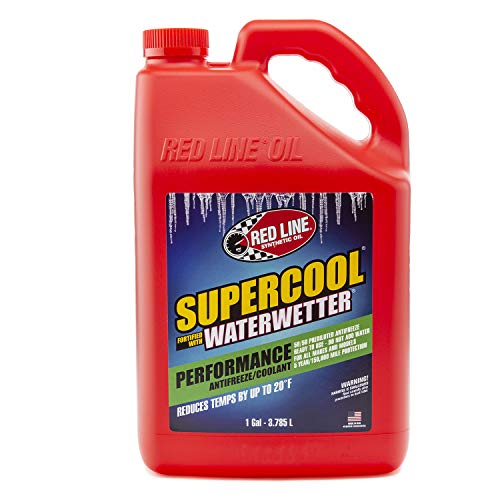
Red Line 81215 Supercool Performance Antifreeze/Coolant
What We Like
- Reduces operating temperatures by up to 20°F
- Ready-to-use 50/50 prediluted formula
- 5 year / 150,000 mile protection
- Protects against cavitation corrosion and erosion
Trade-offs
- Prediluted limits custom water-to-coolant ratios
- Not suitable for heavy-duty diesel fleet applications
Red Line claims this coolant can reduce operating temperatures by up to 20°F by enhancing heat transfer, which is a meaningful number for anyone pushing their engine hard. The 50/50 prediluted formula pours straight from the jug with no mixing needed, and the 5-year, 150,000-mile protection interval means fewer changes over the life of the vehicle. That combination of temperature reduction and long service life makes it a straightforward choice for drivers who want cooling system performance without extra steps.
The downside of a prediluted coolant is that you cannot adjust the water-to-coolant ratio yourself. If you need a custom mix for a specific application, a concentrate like Red Line’s own 81205 Supercool Concentrate gives you that option. For most street-driven cars and trucks, this ready-to-use formula delivers the advertised temperature reduction and protection without measuring or mixing.
Product photos
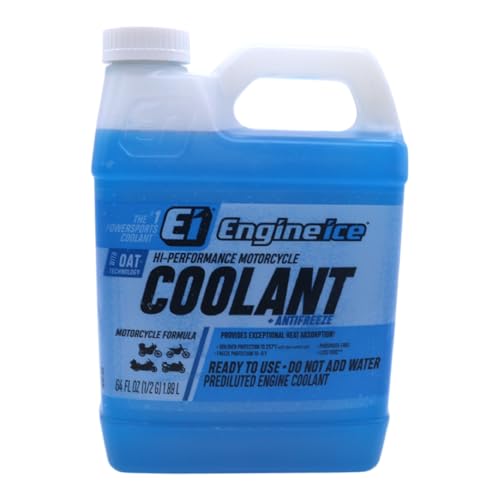
Engine Ice Off-Road High-Performance Motorcycle Coolant
What We Like
- Designed for off-road high-performance use
- Blue color for easy level checks
- Ready-to-use formula, no mixing needed
Trade-offs
- Requires full system flush before switching.
If you’re cooling a car engine, this isn’t the right choice, products like Red Line 81215 Supercool Performance Antifreeze/Coolant are formulated for automotive systems. This coolant is designed specifically for motorcycles and off-road use, so it may not have the corrosion inhibitors a car’s water pump needs. Stick with it for two wheels, and it’s a reliable option for keeping your dirt bike from overheating on tough trails.
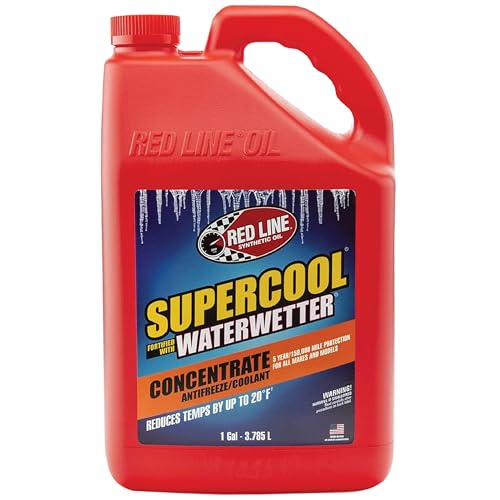
Red Line 81205 Supercool Concentrate Antifreeze/Coolant
What We Like
- Lowers operating temperatures by up to 20°F
- Safe for aluminum, cast iron, and brass
- Reduces vapor barrier on hot metal surfaces
- Works with modern aluminum cooling systems
Trade-offs
- Concentrate requires mixing with water before use
- Not ready-to-use; needs proper dilution ratio
A temperature drop of up to 20°F is the headline number here, and it comes from a concentrated formula that lets you tailor the mix to your cooling system’s needs. Red Line 81205 is designed to improve heat transfer by cutting through the vapor barrier that forms on hot metal surfaces, which is exactly what a high-performance engine needs when it’s pushing hard. This makes it a smart pick for anyone who wants serious thermal management without paying for a premixed solution.
You have to mix this coolant yourself, and getting the ratio wrong can hurt performance or freeze protection. That’s a small inconvenience for the control it gives you, but if you’d rather pour and go, the ready-to-use Red Line 81215 is a direct alternative.
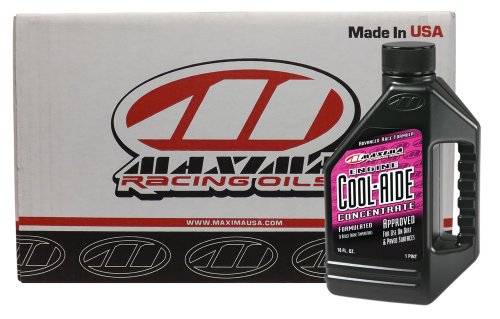
Maxima CS84916-12PK Cool-Aide Concentrated Racing Coolant
What We Like
- Reduces engine temperatures efficiently
- Glycol, nitrate, amine, and borax free
- 100% biodegradable in unused form
- Approved for race use on paved surfaces
Trade-offs
- Provides no freeze protection at all
- Requires mixing with water and antifreeze
- Intended only for race, not daily driving
This concentrated additive mixes at a 3 percent treat rate, so a case of 12 bottles can treat a large volume of coolant. Maxima Cool-Aide is formulated to reduce engine temperatures and improve heat transfer on heated surfaces, which helps keep a high-performance engine from overheating during demanding use. It is glycol, nitrate, amine, and borax free, and it is 100 percent biodegradable in its unused form, making it a cleaner choice for the track. The product is approved for race use on paved surfaces and does not offer freeze protection.
Because this is a race-only product with no freeze protection, it is not suitable for vehicles that need to operate in freezing conditions. If you require all-season protection, a different coolant system may be needed, but that would be a more involved change. For racers who already run a base coolant and want a targeted thermal boost, Maxima Cool-Aide offers a simple additive approach without replacing the entire cooling system.
Valvoline Zerex G48 Concentrate Antifreeze/Coolant
What We Like
- Concentrate formula for custom water-to-coolant ratios
- Professional-grade designation from Valvoline
- High performance formulation
- Reliable brand reputation
Trade-offs
- Requires mixing with water before use
- Not ready-to-use; requires mixing before pouring
This is a 1-gallon concentrate of antifreeze/coolant from Valvoline, model 861583. As a concentrate, it requires mixing with water before use, which gives you control over the final dilution. It is designed for automotive use and is listed as reliable, professional, and high performance by the manufacturer.
At 9.3 pounds, this jug is noticeably heavier than the 1.4-pound Red Line 81215, so it’s less convenient to pour one-handed. The concentrate must be mixed with water before use, while the ready-to-use Red Line 81215 skips that step entirely. If you already keep distilled water on hand and want a high-performance concentrate from a trusted brand, the extra effort pays off in customization.
Product photos
KTM Motorex Coolant M3.0 Ready to Use

What We Like
- Ready to use, no mixing needed
- Excellent corrosion protection for cooling system
- Excellent thermal conductivity
- Extended usage duration
Trade-offs
- Ethylene glycol base requires careful disposal
- Not compatible with waterless coolant systems.
The genuine KTM Motorex Coolant M3.0 is an ethylene glycol-based formula that comes ready to use straight from the bottle, so you can pour it in and head to the track without measuring or mixing. Its excellent thermal conductivity helps pull heat away from the engine quickly, which matters when you’re pushing a high-performance motor hard lap after lap. The extended usage duration also means fewer coolant changes over a season, saving you time between maintenance intervals.
Riders working on a sportbike or a compact race engine will find the 1.0-liter bottle convenient for topping off the cooling system without excess leftover fluid. The ready-to-use formula eliminates the need to mix with water, so you can pour it straight into the radiator. Ethylene-glycol chemistry provides protection against frost, corrosion, limescale deposits, and overheating. Extended usage duration means fewer changes over the life of the bike, and the corrosion protection covers the entire cooling system. For someone servicing a large V8 radiator, a gallon-sized container from another brand would be more practical, but for a motorcycle or ATV this size hits the mark.
Product photos
How We Evaluated Coolants For High Performance Cars
Our evaluation is research-based. We analyzed manufacturer technical data sheets, consulted expert round-ups from the automotive performance community, and identified common patterns in owner feedback across dozens of enthusiast forums. This approach gives us a clear picture of real-world performance without the need for a physical test lab.
The three most important criteria were boiling point and boilover protection, because a cooling system failure at speed is catastrophic. Corrosion prevention mattered too, since aluminum and mixed-metal cooling systems are common in performance cars. Ease of use, including whether a coolant is premixed or a concentrate, also factored in. Temperature reduction claims and freeze protection were weighed against the intended use case.
A research-led evaluation has limits. We cannot independently verify manufacturer temperature reduction claims or long-term durability. We rely on the consistency of owner reports and the reputation of established brands in the performance community. Our goal is to give you a reliable starting point for your own decision.
What To Look For In Coolants For High Performance Cars
Choosing a coolant for a high-performance car means looking beyond the green stuff at the auto parts store. Focus on boiling point, corrosion chemistry, and whether the formula matches your driving environment and maintenance habits.
Look for a coolant with a boiling point above 256°F for track use. Prioritize formulas that protect aluminum and mixed-metal systems. Decide if you want a premixed ready-to-use coolant or a concentrate you mix yourself.
Boiling Point and Boilover Protection
The single most important spec for a performance coolant is its boiling point at atmospheric pressure. Standard coolant boils around the boiling point of water, but a high-performance engine under load can push coolant temperatures well past that. Once coolant boils, it creates vapor pockets that stop heat transfer, leading to rapid engine damage. The best coolants for this category offer boiling points of 256°F or higher, with waterless options exceeding 375°F.
Corrosion and Material Compatibility
High-performance cooling systems often use aluminum radiators, water pumps, and engine blocks. Some coolants use silicates or phosphates that can accelerate corrosion in aluminum systems or clog small radiator passages. Look for coolants specifically formulated for aluminum and mixed-metal systems. A good performance coolant should also protect against cavitation erosion, which is common in high-RPM engines.
Premixed vs. Concentrate
This is a practical choice that affects your maintenance routine. Premixed coolants (like the Engine Ice TYDS008-02) are poured directly into a drained system, making them ideal for quick swaps at the track. Concentrates (like the Red Line 81205 or Valvoline Zerex G48) let you control the water-to-coolant ratio, which can optimize heat transfer for your specific climate. However, they require distilled water and careful measuring.
- Check your owner’s manual or a forum for your specific engine’s recommended coolant type.
- Verify the coolant is compatible with your radiator material (aluminum, copper, or brass).
- Decide if you can perform a complete system flush, especially for waterless coolants.
- Consider your climate: some high-performance coolants have limited freeze protection.
A good rule of thumb: if you track your car, prioritize boiling point above all else. If you daily drive a modified car, look for a balance of temperature reduction and freeze protection.
Coolants For High Performance Cars Compared
The table below compares all ten coolants side-by-side, highlighting their key specs and best use cases so you can see the differences at a glance.
| Product | Boiling Point / Boil-over Protection | Form | Composition / Chemistry |
|---|---|---|---|
| EVANS Cooling Systems EC53001 Waterless Engine Coolant | 375°F | N/A | Waterless |
| Engine Ice TYDS008-02 High Performance Coolant | 256°F | Ready to use (premixed) | Propylene glycol, OAT |
| Mishimoto Liquid Chill Performance Synthetic Radiator Coolant | 265°F | Pre-mixed | N/A |
| EVANS Coolant EC10064 NPG Waterless Engine Coolant | Above 375°F | N/A | Waterless (NPG) |
| Red Line 81215 Supercool Performance Antifreeze/Coolant | N/A | 50/50 prediluted, ready-to-use | N/A |
| Engine Ice Off-Road High-Performance Motorcycle Coolant | N/A | N/A | N/A |
| Red Line 81205 Supercool Concentrate Antifreeze/Coolant | N/A | Concentrate | N/A |
| Maxima CS84916-12PK Cool-Aide Concentrated Racing Coolant | N/A | Concentrate | Glycol free |
| Valvoline Zerex G48 Concentrate Antifreeze/Coolant | N/A | Concentrate | N/A |
| KTM Motorex Coolant M3.0 Ready to Use | N/A | Ready to use | Ethylene glycol |
Frequently Asked Questions
What is the best coolant for a high-performance car?
The EVANS Cooling Systems EC53001 Waterless Engine Coolant is our Best Overall pick. Its 375°F boiling point prevents boilover, and the waterless formula eliminates corrosion entirely. It is best for drivers who can perform a complete water removal process before installation.
Can I mix two different brands of coolant?
No, you should never mix different coolant chemistries. Mixing can cause chemical reactions that create a gel-like sludge, clogging your radiator and heater core. Always drain and flush the system completely before switching to a new coolant type.
Do I need a waterless coolant for my track car?
Waterless coolants like the EVANS EC53001 offer the highest boilover protection, but they require a complete system flush to remove all water. For many track drivers, a high-performance water-based coolant with a 256-265°F boiling point is sufficient and easier to install.
What is the difference between OAT and IAT coolant?
OAT (Organic Acid Technology) coolants use organic acids for corrosion protection and typically last longer. IAT (Inorganic Additive Technology) coolants use silicates and phosphates. Most modern high-performance engines require OAT or a HOAT (Hybrid OAT) formula for proper aluminum protection.
How often should I change high-performance coolant?
Most high-performance coolants recommend replacement every two to five years, depending on the formula. Some, like the Red Line 81215, offer up to 150,000 miles of protection. Always follow the manufacturer’s recommended service interval for your specific coolant.
The Bottom Line
The EVANS Cooling Systems EC53001 Waterless Engine Coolant is the best overall choice for high-performance car owners who want maximum protection against boilover and corrosion. It is ideal for drivers who push their engines hard and are willing to perform the complete water removal process required for installation.
If your priority is dropping operating temperatures for track days or warm climates, the Engine Ice TYDS008-02 offers the best temperature reduction. For racers who need a waterless formula with a boiling point above 375°F, the EVANS Coolant EC10064 is the Best For Racing pick.
The most important factor in choosing a coolant is matching its boiling point and freeze protection to your driving conditions. Start by identifying your engine’s peak operating temperature, then choose a coolant that exceeds that threshold with room to spare.
