
8 Best Flywheel Trainers in 2026
This post contains affiliate links. As an Amazon Associate, we earn from qualifying purchases.
For serious indoor training, the Wahoo KICKR V6 Smart Trainer takes the top spot with its AXIS feet that mimic side-to-side road motion, auto-calibrating accuracy, and 2200W resistance for powerful cyclists. Riders after the most realistic ride feel should look to the Garmin Tacx Nēra, while those on a budget will appreciate the Alpcour Fluid Bike Trainer Stand.
The challenge with flywheel trainers is balancing realistic road feel against noise, accuracy, and portability. A trainer that feels great on a long climb might be too heavy to move out of the way after your ride. We’ve broken down the key trade-offs to help you match a trainer to your space and riding style.
This guide is built from manufacturer specifications, expert analysis, and patterns in owner feedback across the top direct-drive, magnetic, and fluid models. We focus on the features that matter most for consistent, enjoyable indoor training.
Top 8 Flywheel Trainers in the Market
Certain content that appears on this site comes from Amazon. This content is provided "as is" and is subject to change or removal at any time.
The Best Flywheel Trainers, Reviewed
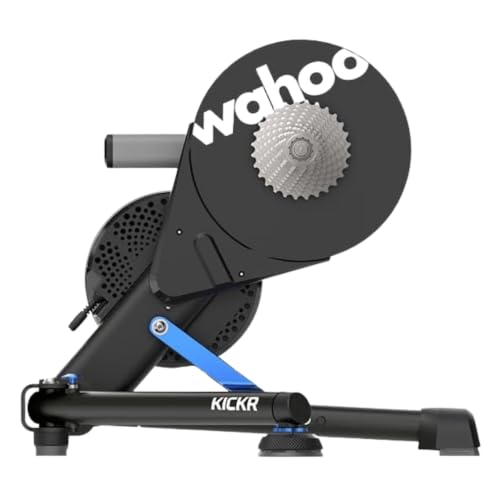
Wahoo KICKR V6 Smart Trainer
What We Like
- AXIS feet mimic side-to-side road motion
- Auto-calibrating for consistent accuracy
- 2200W resistance handles powerful cyclists
Trade-offs
- At 48.5 lb, it is heavy to move
- Requires a cassette (included 11-speed)
- Large footprint needs dedicated floor space
A 2200-watt max resistance with ±1% power accuracy means this trainer can handle everything from steady endurance spins to the hardest sprints a pro-level rider can throw at it. The 16-pound flywheel and AXIS feet work together to create a ride that actually sways side to side, so you don’t feel locked into a rigid machine. That combination of precision and realism is why it fits the best overall slot for anyone who wants a direct-drive trainer that feels like the road. You won’t need to mess with calibration or second-guess your power numbers.
The trade-off is its size and weight. At 48.5 pounds and roughly 28 inches long, it’s not something you’ll casually tuck under an arm after a ride. The Garmin Tacx Neo 2T is a few pounds lighter and slightly shorter, but the KICKR’s Wi-Fi connectivity gives it a more reliable link to apps like Zwift than Bluetooth alone can offer. If you have a permanent training spot and want the most authentic road feel with minimal setup fuss, this is the one to build your indoor setup around.
Product photos
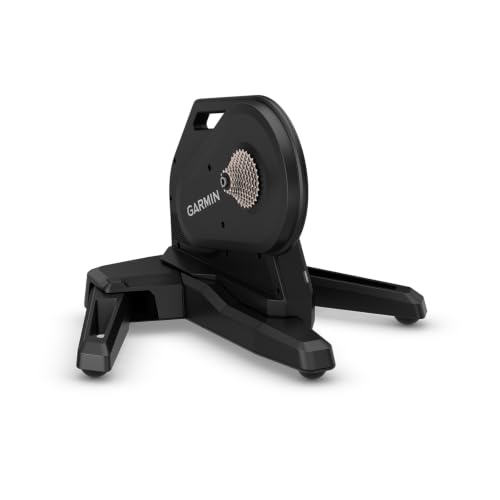
Garmin Tacx Nēra Smart Trainer
What We Like
- Built-in multidirectional motion for realistic feel
- Power and cadence accuracy within 1%
- Pre-installed cassette, no assembly needed
- Foldable legs and handle for storage
Trade-offs
- At 54.5 lb, moving it around takes some effort
- No calibration needed, but setup space is large
The built-in multidirectional motion is the feature that sets this trainer apart, it lets the bike sway side to side as you pedal, mimicking the natural movement of riding outside. That makes long indoor sessions feel less like a chore and more like a real ride, especially when you’re climbing or sprinting in virtual worlds. With power and cadence accuracy within 1% and auto calibration, you can trust the numbers without fiddling with settings. It’s a premium pick for anyone who prioritizes ride feel over portability.
At 54.5 pounds, this is a stationary piece of equipment that you’ll want to leave set up rather than haul to and from a closet each ride. Compared to the Wahoo KICKR V6, which also offers side-to-side motion but weighs 48.5 pounds, the Tacx Nēra is heavier and bulkier. If you have a dedicated training space and value the most road-like sensation indoors, that extra heft is worth it. For riders who need to stash their trainer after every session, a lighter option might serve better.
Garmin TacX Neo 2T Smart Trainer

What We Like
- 32 Neodymium magnets for smooth resistance
- ANT+ and Bluetooth wireless connectivity
- Foldable design for compact storage
- Includes multiple axle adapters
Trade-offs
- At 47.4 lb, it is heavy to move regularly
- Requires power cable (no battery option)
A 32-magnet neodymium system is the core of this trainer, delivering smooth magnetic resistance. That means you get reliable, predictable load changes during workouts without the mechanical feel of some friction-based units. It suits riders who want a sturdy, foldable platform that connects via ANT+ or Bluetooth to apps like Zwift or TrainerRoad. The included axle adapters cover quick-release and thru-axle bikes from 130mm to Boost spacing.
At 47.4 pounds, this is a solid unit that stays planted during hard efforts, but it is not something you will want to haul up stairs daily. Compared to the lighter Elite Direto XR (40 pounds), the Neo 2T demands a bit more effort to move between rooms. If you have a dedicated training space, the heft is an advantage for stability; if you need to pack it away after every ride, consider a lighter option.
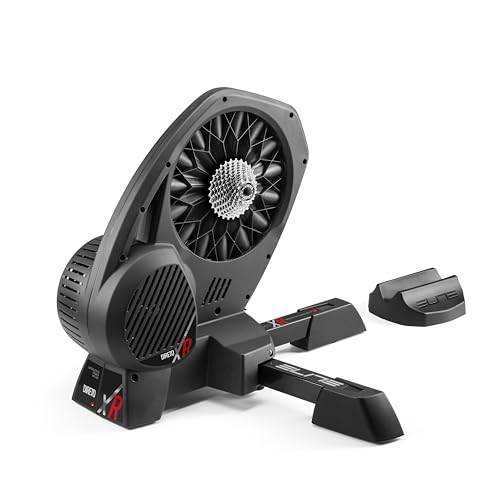
ELITE Direto XR Smart Trainer
What We Like
- Simulates steep climbs up to 24%
- Optical torque sensor for ±1.5% accuracy
- Wide bike compatibility including gravel and mountain
- Includes free 12-month My E-Training subscription
Trade-offs
- Other axle adapters and freehubs sold separately
- Weighs 40 pounds, not easy to move often
Up to a 24% simulated gradient means you can ride climbs steep enough to challenge riders training for hilly events, though the trainer’s capability is limited to that maximum slope. The optical torque sensor holds power accuracy to ±1.5%, which is precise enough for structured workouts and tracking performance. The freehub accepts Shimano and SRAM 9- through 12-speed cassettes out of the box, and included adapters cover quick-release and thru-axle frames, so gravel and mountain bikes can be used without extra parts.
At 40 pounds, the Direto XR is not something you’ll casually fold up and stash under the bed after every ride. That heft does keep it planted during hard efforts, but if you need a trainer that moves between rooms or gets packed into a car often, the lighter Saris Fluid2 might suit you better.
Product photos
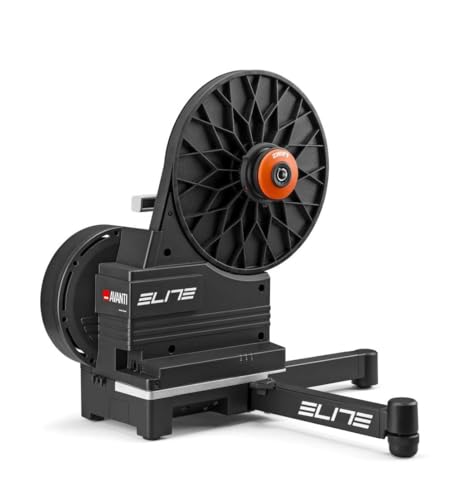
Elite Avanti Zwift Ready Smart Trainer
What We Like
- Professional-grade ±1% power accuracy
- Virtual shifting with 24 gears included
- WiFi, Bluetooth & ANT+ triple connectivity
- 2100W max and 18% climb simulation
Trade-offs
- 18% max gradient trails rivals like Wahoo's 20%
- 18% max gradient is lower than some competitors' 20%
The trade-off comes in gradient and flywheel feel. An 18% max climb is plenty for most virtual routes, but the Wahoo KICKR V6 offers 20% and a heavier flywheel. If absolute top-end climb simulation is your priority, the KICKR edges ahead, but for power accuracy and plug-and-play Zwift compatibility, the Avanti delivers where it counts.
ThinkRider X2Max Smart Trainer

What We Like
- Quiet 58 dB at riding speed
- 2000W max power for hard efforts
- 18% slope simulation for climbs
- Stable I-beam triangular frame
Trade-offs
- No cassette included, must buy separately.
- 18% max slope is lower than some competitors.
At just 58 decibels when you’re rolling at 30 km/h, this trainer is quiet enough that you can spin through a late workout without waking the rest of the house. The 2000W power ceiling and 18% grade simulation mean it can handle everything from a steady endurance ride to a steep virtual climb. The I-beam triangular structure keeps the whole setup planted even when you’re really pushing. For anyone who lives in an apartment or shares walls with neighbors, the low noise level is the main reason to put this one high on the list.
You’ll need to supply your own cassette, which adds a small upfront step compared to trainers that come with one already installed. At 35.2 pounds it’s not the lightest unit to move around, though it’s still manageable for rolling into a corner between sessions. Next to the Wahoo KICKR V6, which delivers a bit more max power (2200W) and slope (20%) but weighs 48.5 pounds, the ThinkRider gives you a quieter ride and a lighter lift for a noticeably lower overall weight.
Saris Fluid2 Smart Equipped Trainer
What We Like
- Quiet fluid resistance at 69 dB
- Progressive road-like feel
- Includes speed sensor for apps
- Foldable frame for easy storage
Trade-offs
- Thru-axle adapter sold separately
- No direct-drive power measurement
- Wheel-on design adds tire wear
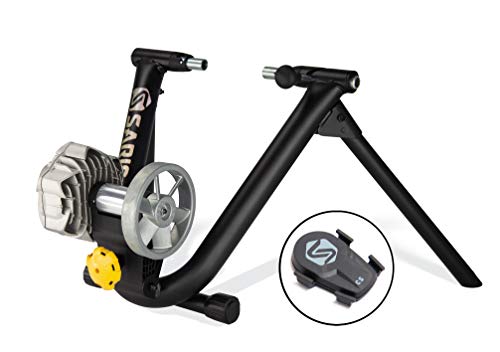
This trainer weighs 7.3 pounds and has a foldable frame, so it is easy to move and store. The fluid resistance provides a progressive, road-like feel, and the noise level is 69 decibels at 20 mph. The included speed sensor connects with Zwift and Rouvy, and a one-month Rouvy subscription is included. That combination works well for anyone who wants a simple indoor training setup without a permanent installation.
The wheel-on design means you ride on your rear tire, and the trainer does not measure power directly; the speed sensor pairs with apps that estimate power. If your bike uses a thru-axle, you will need a separate adapter (sold separately). For riders who prioritize portability and quiet operation over built-in power measurement, this trainer offers a straightforward solution.
Product photos
Alpcour Fluid Bike Trainer Stand
What We Like
- Near silent fluid resistance
- Progressive resistance increases with speed
- Foldable frame with carry bag
- Dual-lock system for security
Trade-offs
- No smart connectivity for apps or power data
- Resistance is not adjustable independently of speed
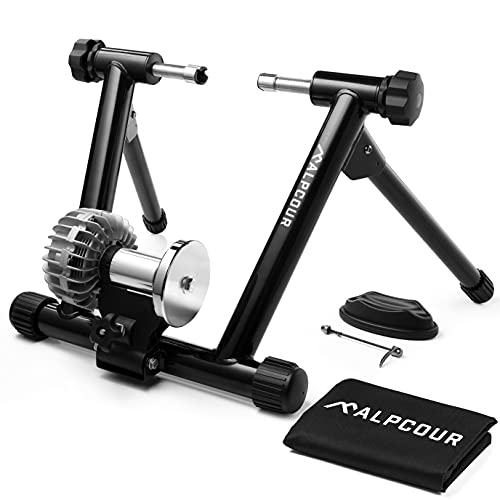
The fluid resistance in this trainer uses an impeller that spins inside liquid, heating up as you pedal faster to increase resistance progressively. That means you can push harder and feel the load increase naturally, without needing to adjust a knob or switch between workouts. The stainless steel frame and dual-lock system keep your bike planted, while the included front wheel riser and anti-slip pads add stability on any floor. For someone who wants a quiet, straightforward way to ride indoors without smart features, this trainer delivers a simple experience.
The main trade-off here is the lack of smart connectivity. Unlike the Wahoo KICKR V6, which includes Wi-Fi race mode and precise power measurement, the Alpcour does not offer Bluetooth or ANT+ connectivity. That means you cannot control resistance through apps like Zwift or track output with a head unit. The resistance is progressive and speed-based, which works well for steady efforts or interval pacing by feel, but not for structured workouts that require a specific watt target. If you just want to spin your legs while watching a movie or keep your fitness up during bad weather, this fluid trainer is a quiet and portable solution that won’t complicate your setup.
Product photos
How We Evaluated Flywheel Trainers
Our evaluation started with the technical specs: resistance type, maximum wattage, gradient simulation, power accuracy, and connectivity options like ANT+, Bluetooth, and Wi-Fi. We examined each trainer’s physical footprint, weight, and foldability to understand how it fits into a real home or garage.
The criteria that mattered most were ride realism, power accuracy, noise level, and ease of setup or storage. A trainer with great features is useless if it’s too loud for your apartment or too heavy to move regularly. We also looked at included accessories like cassettes and axle adapters, since missing parts can add cost and hassle.
Because this guide is based on research rather than direct product use, we focused on verified manufacturer data and consistent themes in owner experiences. This approach gives you a clear, honest picture of what each trainer offers and where it might fall short for your specific needs.
What To Look For In Flywheel Trainers
Choosing a flywheel trainer means weighing how you ride against where you ride. The best choice for a dedicated pain cave is different from the best for a shared living room.
The right flywheel trainer matches your power output, space, and tolerance for noise. Prioritize resistance type and accuracy first, then check weight, foldability, and included parts.
Resistance Type and Max Power
Direct-drive trainers offer the most accurate power measurement and quietest operation, but they cost more and require you to remove your rear wheel. Magnetic resistance provides smooth, consistent feel with minimal maintenance, while fluid resistance gives a progressive road-like feel at a lower price. Check that the trainer’s maximum wattage exceeds your typical sprint power; the Wahoo KICKR V6 handles 2200W, while some models may limit the strongest riders.
Ride Realism and Motion
Side-to-side or multidirectional motion makes long indoor sessions more comfortable by reducing pressure points. Some trainers include built-in motion systems, while others rely on rocker plates. If you train for climbing, look for gradient simulation that can replicate steep hills. The heaviest flywheels also contribute to a more natural deceleration feel.
Noise Level and Portability
Noise is measured in decibels, trainers below 60 dB are whisper-quiet, while fluid models around 69 dB are still acceptable for most homes. Weight matters if you need to move the trainer between rooms or store it after each ride. Foldable legs and carry handles make a big difference for portability.
- Measure your floor space before buying; some trainers need a dedicated area.
- Check if a cassette, thru-axle adapter, or spacer is included with your purchase.
- Consider your bike’s drivetrain, 11-speed cassettes are common, but some trainers accommodate 12-speed or single-speed setups.
- Look at connectivity: ANT+ and Bluetooth are standard, but Wi-Fi adds reliability for app-based training.
A trainer that fits your space and noise tolerance will get used far more often than one with better specs but worse livability.
Flywheel Trainers Compared
The table below compares the key specs and trade-offs of each trainer to help you narrow your choice based on resistance type, power accuracy, and physical footprint.
| Product | Resistance Type | Power Accuracy | Connectivity |
|---|---|---|---|
| Wahoo KICKR V6 Smart Trainer | Direct Drive | ±1% | WiFi |
| Garmin Tacx Nēra Smart Trainer | Direct Drive | within 1% | Wi-Fi |
| Garmin TacX Neo 2T Smart Trainer | Magnetic (32 Neodymium magnets) | N/A | ANT+, Bluetooth |
| ELITE Direto XR Smart Trainer | Direct Drive | ±1.5% | ANT+ FE-C, Bluetooth |
| Elite Avanti Zwift Ready Smart Trainer | Direct Drive | ±1% | WiFi, Bluetooth, ANT+ |
| ThinkRider X2Max Smart Trainer | Direct Drive | ± 2% | ANT+ & BLE |
| Saris Fluid2 Smart Equipped Trainer | Fluid | N/A | Speed sensor |
| Alpcour Fluid Bike Trainer Stand | Fluid | N/A | N/A |
Frequently Asked Questions
What is the difference between direct-drive and wheel-on trainers?
Direct-drive trainers replace your rear wheel and attach directly to the bike’s drivetrain, offering more accurate power measurement and quieter operation. Wheel-on trainers press a roller against your tire, which is cheaper but adds tire wear and noise. Direct-drive is the standard for serious indoor training.
How much power do I need from a flywheel trainer?
Most recreational cyclists need a certain wattage for sprint efforts. Stronger riders or those doing high-intensity intervals should look for higher wattage. The Wahoo KICKR V6 handles 2200W, while the ThinkRider X2Max offers 2000W for hard efforts.
Do I need a smart trainer for Zwift and other apps?
A smart trainer automatically adjusts resistance to match virtual terrain, making app-based training more immersive. Basic fluid trainers like the Alpcour work with speed sensors for simple data, but they won’t change resistance on their own. If you want structured workouts or racing, a smart trainer is worth the investment.
How quiet are flywheel trainers for apartment use?
The quietest direct-drive trainers operate around 58 dB, which is quieter than a normal conversation. Fluid trainers are slightly louder at 69 dB but still acceptable for most apartments. Magnetic trainers are also very quiet. Wheel-on trainers are the loudest due to tire contact.
What should I consider when storing a flywheel trainer?
Weight and foldability are key. The Elite Direto XR weighs 40 pounds, while the Garmin Tacx Nēra is 54.5 pounds. Look for foldable legs and carry handles if you plan to store the trainer after each ride. Some trainers also include storage bags for easier transport.
The Bottom Line
The Wahoo KICKR V6 Smart Trainer is the best overall pick for cyclists who want a heavy-duty, accurate direct-drive trainer with realistic side-to-side motion and stable Wi-Fi connectivity. It handles powerful riders and long sessions without compromise, making it ideal for those with a dedicated training space.
If your priority is the most realistic indoor ride feel, the Garmin Tacx Nēra delivers with its built-in multidirectional motion. Budget-conscious riders should look to the Alpcour Fluid Bike Trainer Stand for a quiet, portable fluid trainer without smart features, or the Saris Fluid2 for app connectivity at a lower price point.
The single most important factor in choosing a flywheel trainer is matching its resistance type and noise level to your space and riding style. A trainer you can set up and use consistently will always outperform one with better specs that stays in the corner.
