
9 Best Gas Treatments For Cars in 2026
This post contains affiliate links. As an Amazon Associate, we earn from qualifying purchases.
The Red Line SI-1 Complete Fuel System Cleaner is the best overall gas treatment because its dual-temperature detergent blend cleans injectors, carburetors, valves, and combustion chambers with nearly 100% efficiency in a single bottle. For drivers focused on restoring lost power, the Chevron Techron Concentrate Plus is a top choice, while the Hot Shot’s Secret Gasoline Extreme stands out for maximizing fuel economy.
A rough idle, sluggish acceleration, or declining gas mileage often points to carbon deposits building up inside your fuel system. Choosing the right treatment means matching the formula to your engine’s age, mileage, and specific symptoms rather than grabbing any bottle off the shelf.
This guide is based on a review of manufacturer specifications, expert recommendations, and patterns in owner feedback across nine leading products. We break down what each treatment does best so you can pick the one that fits your car’s needs.
Top 9 Gas Treatments For Cars in the Market

Certain content that appears on this site comes from Amazon. This content is provided "as is" and is subject to change or removal at any time.
The Best Gas Treatments For Cars, Reviewed
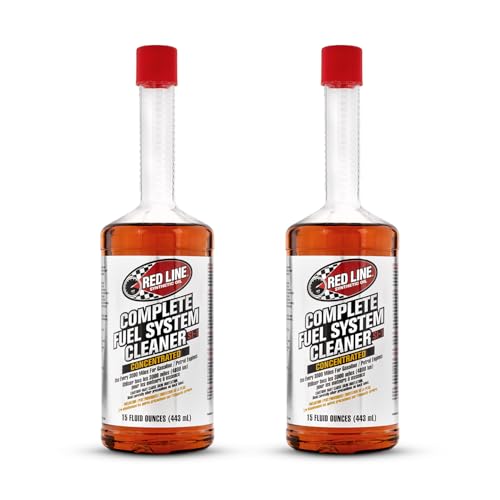
Red Line SI-1 Complete Fuel System Cleaner
What We Like
- Cleans injectors, carburetors, valves, and combustion chamber
- Dual high-temp and low-temp detergent blend
- Prevents fuel system corrosion
- Nearly 100% cleaning efficiency in one treatment
Trade-offs
- One bottle per tank limits flexibility for small tanks
- Two-pack requires storage space between uses
A concentrated blend of high-temp and low-temp detergents means this cleaner attacks deposits everywhere from injectors to combustion chambers, not just one spot. That full-system reach, combined with corrosion prevention and nearly 100% cleaning efficiency in a single treatment, makes it a strong choice for anyone wanting thorough fuel-system maintenance without repeated doses. Drivers who prefer a do-it-all approach will appreciate that one bottle per tank handles gum, varnish, and valve deposits in one pass.
The biggest selling point here is the 15-ounce bottle, which treats a full tank in one go and cleans nearly 100% of deposits in a single treatment. That means you just pour the whole bottle in before filling up, no measuring, no guessing. For most cars, that single-dose simplicity is exactly what you want, and the concentrated blend of high-temp and low-temp detergents handles injectors, carburetors, valves, and combustion chambers all at once.
Chevron Techron Concentrate Plus Fuel System Cleaner
What We Like
- Restores lost power and acceleration
- Cleans entire fuel system
- Reduces rough idle and hesitation
- Improves cold start performance
Trade-offs
- Requires use every 3,000 miles
- Six-pack is excessive for single-vehicle owners
A 12-ounce bottle that cleans the entire fuel system, fuel injectors, carburetors, intake valves, and combustion chambers, means this cleaner targets the deposits that drag down power, acceleration, and fuel economy. For anyone driving a car or truck that feels sluggish, this thorough cleaning can help bring back lost performance. The manufacturer recommends using it every 3,000 miles or at your next oil change, so it fits into a routine without extra thought.
The six-bottle pack means you’re buying in bulk, which is a lot of product if you only own one vehicle. Chevron’s Techron Concentrate Plus cleans fuel injectors, carburetors, intake valves, and combustion chambers, and it also restores lost power, acceleration, and fuel economy. Compared to the single-bottle Red Line SI-1, which cleans and prevents corrosion in the fuel system, this Chevron pack gives you multiple treatments at once. For someone who wants a full-system cleaner and doesn’t mind stocking up, this is a practical buy.
Chevron Techron High Mileage Fuel System Cleaner

What We Like
- Restores power by removing deposits
- Maximizes fuel economy
- Protects fuel gauge sensor from corrosion
- Works with all ethanol blends
Trade-offs
- Single 12 oz bottle treats one tank
- Designed specifically for high mileage engines
Chevron Techron High Mileage Fuel System Cleaner targets the unique buildup and corrosion problems that accumulate in engines with higher mileage. Its corrosion inhibitors protect both ferrous and non-ferrous metal components, including the fuel gauge sensor, which is a common failure point on older cars. The formula also handles any ethanol blend from E10 to E85, so it works in modern flex-fuel vehicles as well as aging daily drivers. For someone whose car has accumulated significant mileage and feels a little sluggish, this cleaner is built to address exactly that kind of carbon and varnish without guesswork.
The trade-off is that the 12-ounce bottle treats a single tank, so it is a one-shot maintenance step rather than a continuous additive. If your car is still low on the odometer, the standard Chevron Techron Concentrate Plus might be a better fit since it focuses on prevention rather than remediation. But for a high-mileage engine that needs deposit removal and corrosion protection in one pour, this is the cleaner that matches the job description.
Hot Shot's Secret Gasoline Extreme Fuel Additive

What We Like
- Boosts MPG up to 7.9%
- Cleans injectors, valves, and combustion chambers
- P.E.A. technology dissolves gum and varnish
- Easy pour-in application at fill-up
Trade-offs
- Single bottle treats only 20 gallons
- Requires use every 10,000 miles for best results
A claimed fuel economy improvement of up to 7.9% is the headline here, and it comes from a thorough cleaning of the entire fuel system, injectors, valves, pistons, and combustion chambers, using P.E.A. technology. That means this additive doesn’t just mask rough idling; it targets the deposits that rob your engine of efficiency and power. For drivers who log highway miles or want to stretch every gallon, this is a straightforward way to see a measurable gain in MPG without changing your driving habits.
A single 12-ounce bottle covers only 20 gallons of gas, so if you drive a large SUV or truck with a bigger tank, you’ll need to plan accordingly. It works best when you use it consistently every 10,000 miles, not as a quick fix for a one-time problem.
Product photos
BG PRODUCTS 44K-2 Gas Treatments

What We Like
- Increases power output
- Restores fuel economy
- Restores engine performance and drivability
- Targets deposit buildup on injectors and valves
Trade-offs
- Gasoline quality varies, so results depend on fuel
- Small high-output engines need it most
The BG Products 44K-2 is formulated to tackle the deposit buildup that robs power from small, high-output engines. Gasoline quality varies at the pump, and even minor deposits on fuel injectors, intake valves, and combustion chambers can increase emissions, reduce fuel economy, and cause engine knock. This product is designed to restore power output and improve drivability by cleaning those critical areas. It’s the right choice for drivers who want to reclaim lost performance from an engine that feels sluggish or hesitates under load.
Gasoline quality varies at the pump, and that inconsistency leads to deposit buildup on fuel injectors, intake ports, intake valves, and combustion chambers, especially in small, high-output engines that are extremely sensitive to those deposits. Even small amounts can cause increased exhaust emissions, reduced fuel economy, drivability problems, and engine knock. This treatment is designed to restore fuel economy and increase power output by cleaning those critical areas, so drivers who notice a performance drop from deposits can expect improved drivability and engine performance.
Product photos
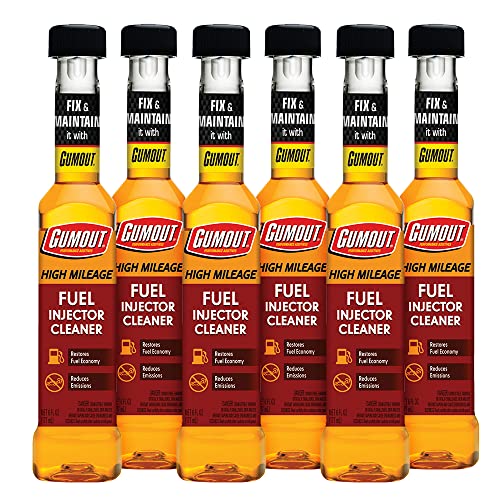
Gumout Fuel System Cleaner 6 Pack
What We Like
- Formulated for engines over 75,000 miles
- Cleans injectors, valves, and ports
- Oxygen sensor safe for modern cars
- Safe for turbo and supercharged engines
Trade-offs
- Six-bottle pack assumes regular, repeated use
- Not suitable for engines under 75,000 miles
A six-pack of Gumout Fuel System Cleaner means you can treat your car multiple times or share with a friend. It is specially formulated to remove carbon deposits from engines with over 75,000 miles, cleaning fuel injectors, intake valves, and ports to restore performance and fuel economy. That focus on older engines is the key reason this pack delivers real value: you get a treatment that addresses the specific buildup that comes with years of driving, without worrying about damaging oxygen sensors or voiding your warranty. For the driver who wants a straightforward, effective cleaner for a car that has seen plenty of road, this bundle keeps you stocked and ready.
If your engine has over 75,000 miles, this cleaner is specifically formulated to remove carbon deposits that build up over time, restoring performance and fuel economy. It cleans fuel injectors, intake valves, and ports, and it prevents future carbon build-up while reducing emissions. The formula is oxygen sensor safe and works in turbocharged and supercharged vehicles, so it fits a wide range of older cars without voiding the manufacturer’s warranty. Compared to Chevron Techron Concentrate Plus Fuel System Cleaner, which is a strong all-around cleaner but lacks the high-mileage focus, this pack gives you six bottles designed for engines that have already accumulated significant mileage.
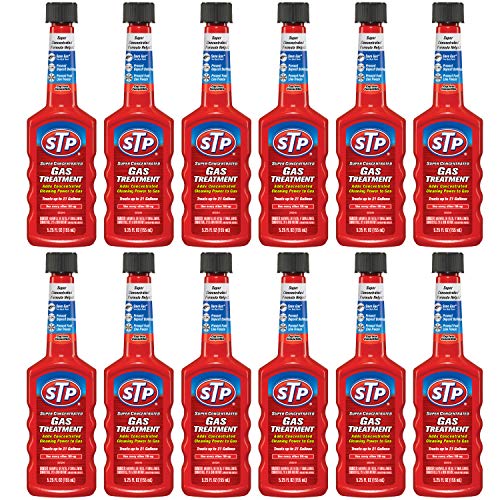
STP Fuel Intake System Cleaner 12 Pack
What We Like
- Compatible with cap-less fuel tanks
- 12 pack for multiple treatments
- Concentrated cleaning power added to gas
Trade-offs
- Only treats fuel intake system, not full system
- Single-use bottles create more waste per treatment
A 12-pack of super concentrated bottles means you can treat your fuel system multiple times without needing to restock, and each 5.25-ounce dose is designed to prevent deposit buildup and help keep gas flowing. This makes it a smart pick for drivers who face cold winters and want to avoid the hassle of a frozen fuel line, especially since it works with modern cap-less fuel tanks.
This cleaner focuses specifically on the fuel intake system rather than tackling the entire fuel path. So if you are dealing with injector or combustion chamber deposits, a broader cleaner like Chevron Techron Concentrate Plus might be a better fit. However, for someone whose main concern is preventing freeze-ups and keeping the intake clean over several fill-ups, the STP 12 pack offers straightforward protection without extra steps or special equipment.
Product photos
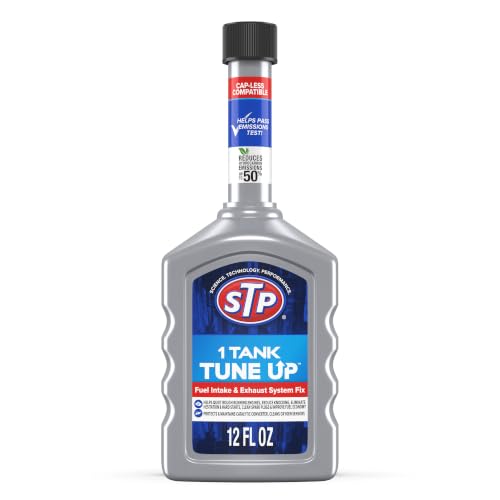
STP 1 Tank Tune Up Fuel System Cleaner
What We Like
- Reduces hydrocarbon emissions up to 50%
- Helps quiet rough running engines
- Helps reduce engine knocking and cleans spark plugs
Trade-offs
- One-tank treatment, not a multi-use formula
This makes it a smart choice for drivers who want to pass an emissions check without a trip to the shop, or for those maintaining an older engine that’s starting to run rough.
Product photos
Rislone Hy-per Fuel Injector Cleaner Concentrate

What We Like
- Suitable for gas, diesel, and carbureted engines
- Made in the USA
- Helps eliminate noisy injectors and fuel pumps
Trade-offs
- Concentrate requires careful measuring per tank
- Strong chemical smell during application
For anyone whose engine sounds like it’s complaining on cold mornings or after a long highway stretch, this concentrate directly addresses those symptoms without forcing you to switch products between vehicles or fuel types.
This is a concentrate, so you have to measure the right amount for your tank size, no pre-dosed single-bottle convenience like some competitors. That extra step pays off if you own multiple vehicles or frequently switch between fuel types, because one bottle covers gas, diesel, and ethanol blends. If you prefer a pour-and-go solution for one car, a pre-dosed option may be simpler, but for versatility across different engines and fuels, this concentrate brings more flexibility to your garage shelf.
How We Evaluated Gas Treatments For Cars
Our evaluation started with the specifications and technical documentation from each manufacturer. We examined the active cleaning agents, particularly polyether amine (P.E.A.) content, and whether the formula targets the entire fuel system or just one component like injectors or intake valves. We also compared recommended treatment intervals and per-bottle coverage to understand real-world value.
The three criteria that mattered most were cleaning scope (full system vs. Partial), active chemistry (P.E.A. Vs. Detergent blends), and application convenience (single-dose vs. Multi-pack). A treatment that cleans injectors, valves, and combustion chambers offers more thorough maintenance than one limited to the intake system. Likewise, a formula that works at both high and low temperatures prevents deposits from forming during short trips and highway driving alike.
Because our rankings rely on the collective experience of automotive experts and long-term owners, this approach gives you a clear starting point. Your specific driving habits and fuel quality will ultimately determine which treatment works best for your vehicle.
What To Look For In Gas Treatments For Cars
Choosing the right gas treatment starts with understanding what your engine needs. Not all cleaners are the same, and the wrong one can waste money or fail to address the real problem.
Focus on the active cleaning agent, the scope of the treatment, and the recommended interval. A P.E.A.-based formula that cleans the full fuel system is the most effective choice for most gasoline engines.
Active Cleaning Agent: P.E.A. Vs. P.I.B.A.
The two main detergent chemistries are polyether amine (P.E.A.) and polyisobutylene amine (P.I.B.A.). P.E.A. Is the more advanced option because it breaks down carbon deposits at high temperatures inside the combustion chamber, not just in the cooler intake tract. P.I.B.A.-based cleaners are effective on intake valves and injectors but can leave a residue in the combustion chamber if used repeatedly. For a thorough clean, look for a treatment that lists P.E.A. As the active ingredient.
Treatment Scope: Full System vs. Partial
Some gas treatments clean only the fuel injectors or the intake system, while others address the entire path from the fuel tank through the combustion chamber. A full-system cleaner removes deposits from injectors, intake valves, and the combustion chamber in one application. Partial treatments are cheaper but may leave deposits in areas that matter most for power and fuel economy. If your car is running rough or failing an emissions test, a full-system cleaner is the better investment.
Application Interval and Bottle Size
Treatments come as single-dose bottles or multi-pack kits. Single-dose bottles are convenient for one-time cleaning, while multi-packs work well for regular maintenance schedules. Pay attention to the recommended interval, some products require treatment every 3,000 miles, while others are effective for up to 10,000 miles. Also check how many gallons one bottle treats; a 12-ounce bottle covering 20 gallons may not be enough for a large SUV or truck with a bigger tank.
- Check the active ingredient: P.E.A. Is preferred for full-system cleaning.
- Match the treatment scope to your symptoms: rough idle may need injector cleaning, while poor power may need combustion chamber cleaning.
- Verify the per-bottle coverage against your fuel tank size.
- Note the recommended interval to plan regular maintenance.
- Choose single-dose for convenience or multi-pack for ongoing use.
A single full-system P.E.A. Treatment every few thousand to ten thousand miles is the most effective maintenance schedule for most drivers.
Gas Treatments For Cars Compared
The table below compares all nine gas treatments by their active chemistry, treatment scope, and best use case so you can see the differences at a glance.
| Product | Size | Targets | Corrosion Protection |
|---|---|---|---|
| Red Line SI-1 Complete Fuel System Cleaner | 15 oz (2 pack) | Injectors, carburetors, valves, combustion chamber | Prevents fuel system corrosion |
| Chevron Techron Concentrate Plus Fuel System Cleaner | 12 oz | Fuel injectors, carburetors, intake valves, combustion chambers | N/A |
| Chevron Techron High Mileage Fuel System Cleaner | 12 oz | High mileage vehicles | Ferrous and non-ferrous metals |
| Hot Shot's Secret Gasoline Extreme Fuel Additive | 12 oz | Fuel systems and injectors | N/A |
| BG PRODUCTS 44K-2 Gas Treatments | N/A | N/A | N/A |
| Gumout Fuel System Cleaner 6 Pack | 6 bottles | Engines with over 75,000 miles | N/A |
| STP Fuel Intake System Cleaner 12 Pack | 5.25 fl oz | N/A | N/A |
| STP 1 Tank Tune Up Fuel System Cleaner | 12 fl oz | Injectors, intake valves, combustion chamber, oxygen sensors, spark plugs | N/A |
| Rislone Hy-per Fuel Injector Cleaner Concentrate | N/A | N/A | N/A |
Frequently Asked Questions
How often should I use a gas treatment?
Most manufacturers recommend using a fuel system cleaner every 3,000 to 10,000 miles, depending on the formula. For routine maintenance, a P.E.A.-based full-system cleaner applied at every oil change is a good rule of thumb.
Will a gas treatment fix a check engine light?
It depends on the cause. If the check engine light is triggered by carbon deposits on the oxygen sensor or fuel injectors, a quality gas treatment can help. For mechanical issues or sensor failures, a diagnostic scan is needed first.
Can I use a gas treatment in a diesel engine?
Some gas treatments are specifically formulated for diesel engines, while others are gasoline-only. Always check the label. The Rislone Hy-per Fuel Injector Cleaner Concentrate, for example, works with gas, diesel, and ethanol blends.
What is the difference between a fuel system cleaner and a fuel additive?
A fuel system cleaner is designed to remove existing deposits from injectors, valves, and combustion chambers. A fuel additive typically focuses on a single function, such as boosting octane, preventing fuel line freeze, or stabilizing fuel during storage.
Do gas treatments improve gas mileage?
Yes, when carbon deposits are reducing fuel economy. By cleaning injectors and combustion chambers, a gas treatment restores proper fuel atomization and combustion, which can improve MPG. Results vary based on the severity of deposits and driving conditions.
The Bottom Line
The Red Line SI-1 Complete Fuel System Cleaner is the best overall choice for most drivers because its dual-temperature detergent blend cleans the entire fuel system in one treatment. If your car has over 75,000 miles and you want to restore lost power and acceleration, the Chevron Techron Concentrate Plus is a proven option that requires treatment every 3,000 miles.
For budget-conscious owners or those who prefer a multi-pack for regular maintenance, the Gumout Fuel System Cleaner 6 Pack offers good value for engines over 75,000 miles. Drivers focused on maximizing fuel economy should consider the Hot Shot’s Secret Gasoline Extreme, which reports up to 7.9% MPG improvement.
The most important factor is matching the treatment to your engine’s age and symptoms. A full-system P.E.A. Cleaner used at the right interval will keep your fuel system running clean and your car performing at its best.
