
10 Best Group 24 Deep Cycle Batteries in 2026
This post contains affiliate links. As an Amazon Associate, we earn from qualifying purchases.
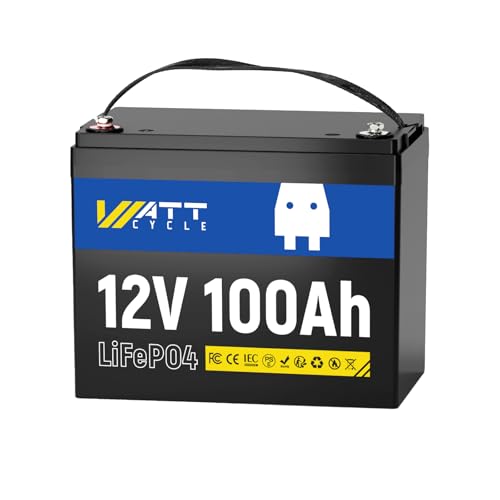
The best overall Group 24 deep cycle battery is the WattCycle 12.8V 100Ah LiFePO4 Battery. It wins for its compact BCI-compliant size and built-in 100A BMS with overcurrent protection. For those wanting Bluetooth monitoring, the Litime 12V 100Ah Group 24 LiFePO4 Battery is a strong choice. The Interstate Batteries 12V 60Ah LiFePO4 Marine Battery is the pick for boaters who need a lightweight option.
Choosing the right Group 24 battery means balancing capacity, weight, and the specific demands of your setup. An RV owner running a fridge and lights needs different cycle life than an angler powering a trolling motor for a day on the water.
This guide is based on a thorough review of manufacturer specifications, expert round-ups, and common owner feedback patterns. We present ten top contenders to help you find the right fit for your vehicle and budget.
Top 10 Group 24 Deep Cycle Batteries in the Market

Certain content that appears on this site comes from Amazon. This content is provided "as is" and is subject to change or removal at any time.
The Best Group 24 Deep Cycle Batteries, Reviewed
WattCycle 12.8V 100Ah LiFePO4 Battery
What We Like
- Built-in 100A BMS with overcurrent protection
- Compact BCI Group 24 size
- Up to 15000 cycles for long life
Trade-offs
- Heavier than some 100Ah lithium competitors
For anyone who wants a straightforward, durable power source that fits a standard Group 24 box, this is the one to start with. If you prefer simplicity and long-term reliability over app connectivity, the WattCycle delivers where it counts.
LIPULS 12.8V 100Ah LiFePO4 Battery
What We Like
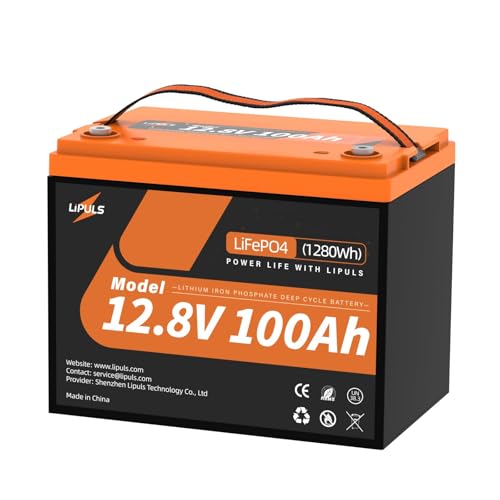
- Up to 15000+ cycles at 60% DOD
- Grade A cylindrical cells for stability
- Direct drop-in for Group 24 compartments
- Expandable to 4S4P for 20.48kWh
Trade-offs
- Not suitable for engine starting or golf carts
- Heavier than some lithium Group 24 rivals at 22.57 lbs
Up to 15,000 cycles at 60% depth of discharge means this battery could last over a decade for someone who partially drains it each night and recharges daily. That longevity comes from Grade A cylindrical cells and a 100A smart BMS that guards against overcharge, over-discharge, and short circuits. So you can trust it to run a fridge, coffee maker, or trolling motor without constant monitoring. The Group 24 dimensions let it drop into existing trays without modifications, making the switch from lead-acid straightforward.
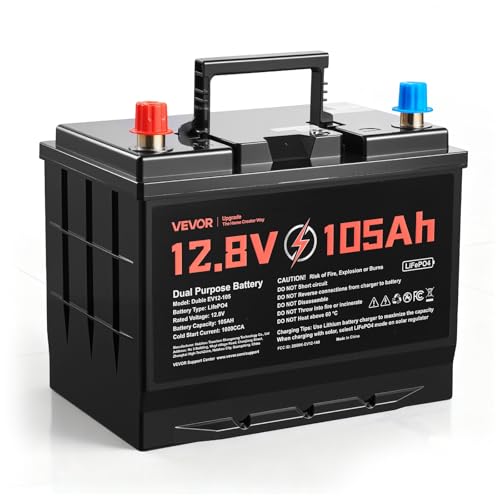
This battery isn’t meant for engine starting or golf cart use. If you need a dual-purpose battery that cranks a motor and runs accessories, consider the VEVOR 12V 105Ah Dual Purpose instead. At 22.57 pounds, it’s noticeably lighter than a typical Group 24 lead-acid battery, which makes handling and installation easier. You’ll also need to supply your own charger and set it correctly per the manual, but for anyone who prioritizes maximum cycle life in a drop-in lithium pack, this battery delivers where it counts.
Interstate Batteries 12V 60Ah LiFePO4 Marine Battery
What We Like
- Weighs only 13.2 lb
- Lasts up to 10X longer than AGM
- Uses 100% of available capacity
- Recharges up to 3X faster than regular
Trade-offs
- 60Ah capacity is lower than 100Ah competitors
- No built-in Bluetooth for battery monitoring.
At 13.2 pounds, this battery is less than a third the weight of Interstate’s own 75Ah AGM battery. So you can easily carry it in one hand when loading a kayak or swapping it into a tight compartment. You can use its full 60Ah capacity without damaging the cells, and it recharges up to three times faster than a regular deep-cycle battery, meaning less downtime between trips. For a weekend angler or a small RV owner who prioritizes portability and quick turnaround, this lithium battery simplifies the whole setup.
The trade-off for that light weight is capacity: at 60Ah, it holds less energy than the 100Ah batteries common in this guide, like the WattCycle 12.8V 100Ah LiFePO4. That means you’ll need to recharge more often if you’re running a trolling motor all day or powering a fridge overnight.
Product photos
SUPER EMPOWER 12V 100Ah LiFePO4 Battery
What We Like
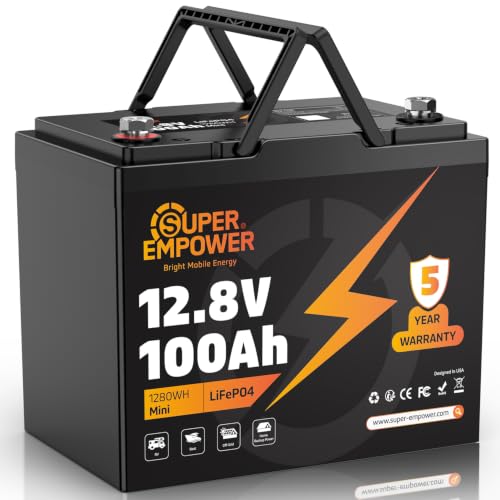
- Supports 4S4P expansion to 20.48kWh
- Low-temp charging cutoff below 32°F
- Drop-in replacement for Group 24 lead-acid
- 5-year warranty included
Trade-offs
- Charging disabled below 32°F (0°C)
- Not suitable for engine starting applications
- Requires dedicated LiFePO₄ charger for best results
You can start with a single 100Ah battery for a weekend RV trip and later add three more in series and parallel to reach 20.48kWh of storage, enough to run a full-time off-grid setup. The built-in 100A BMS handles cell balancing across multiple batteries, so you don’t need extra hardware to expand. That makes this a smart choice if you want to grow your energy system over time instead of buying one huge battery upfront.
Compared to the Litime 12V 100Ah Group 24 LiFePO₄ battery, which offers Bluetooth monitoring for the same size, the SUPER EMPOWER skips that convenience in favor of expandability. For a simple single-battery setup where Bluetooth tracking matters more, the Litime might be a better fit.
Litime 12V 100Ah Group 24 LiFePO4 Battery

What We Like
- Bluetooth monitoring via phone app
- Smart low-temp charge cutoff
- 100A BMS protects against faults
- IP65 waterproof rating
Trade-offs
- Not for starting engines or golf carts
- Requires phone app for full monitoring
Checking your battery’s state of charge from your phone, without crawling into a storage bay, means you always know exactly how much power you have left before heading out. That real-time visibility helps RVers, van dwellers, and boat owners plan trips with confidence and avoid surprises. The built-in 100A BMS continuously guards against overcharging, over-discharging, overheating, and short circuits, while the smart cutoff stops charging below 32°F and discharging below -4°F, so the battery stays safe even in freezing weather.
The key limitation is that this battery is built for deep-cycle use, not for starting engines or golf carts. If you need a dual-purpose battery, the VEVOR 105Ah model is a better fit. At 22.2 pounds, it’s about 63% lighter than a comparable lead-acid battery, which makes a real difference when you’re loading a travel trailer or small camper. With up to 15,000 deep cycles, you’ll replace it far less often than lead-acid, so the upfront cost pays off over time.
VEVOR 12V 105Ah Dual Purpose LiFePO4 Battery
What We Like
- 1000 CCA for reliable engine starting
- 105Ah capacity for deep cycle use
- Bluetooth app monitoring included
- ERM function preserves 10-15% starting power
Trade-offs
- Weighs 22.3 lbs, heavier than the lightest 100Ah competitors
- Bluetooth app required for full battery monitoring.
A 1000 cold cranking amp rating paired with 105 amp-hours of deep cycle capacity means this battery can fire up a V8 engine and then run a trolling motor or fridge all afternoon without breaking a sweat. The built-in Bluetooth app gives you live data on voltage, current, and remaining cycles. So you always know where your power stands. It’s a smart fit for RVers and boaters who want one battery to handle both starting and house loads without carrying a separate cranking battery.
At 22.3 pounds, it’s also slightly heavier than some 100Ah competitors. But that extra pound buys you 5 more amp-hours and the peace of mind that you won’t accidentally drain it dead thanks to the ERM reserve feature. If you need a single battery to start your engine and power your gear, this is the one.
Interstate Batteries 12V 75Ah Group 24 AGM Battery

What We Like
- Maintenance-free and spill-proof AGM design
- Rigorous 7-Point Quality Protocol testing
- 12-month performance warranty from Interstate
- Replaces many mobility device batteries
Trade-offs
- At 49 lb, it is very heavy for portable use
- 75 Ah capacity is lower than lithium alternatives
- Only 12-month warranty vs longer lithium coverage
The 75 amp-hour capacity in a sealed AGM format is what makes this battery a dependable workhorse for wheelchairs and scooters. So you can rely on it for deep discharge usage without the hassle of checking water levels or worrying about leaks. It fits standard Group 24 compartments and uses a bolt-in terminal that replaces FLAG TY, meaning swapping out an old mobility battery is straightforward. Interstate’s 7-Point Quality Protocol and 12-month performance warranty provide extra peace of mind for medical device users.
One downside is that 49 pounds makes it a workout to carry, especially compared to the WattCycle 12.8V 100Ah LiFePO4 at 23.1 pounds. You also get 75 Ah instead of 100 Ah, so runtime is shorter between charges. If you need maximum range or need to lift the battery often, a lithium option may serve you better.
Product photos
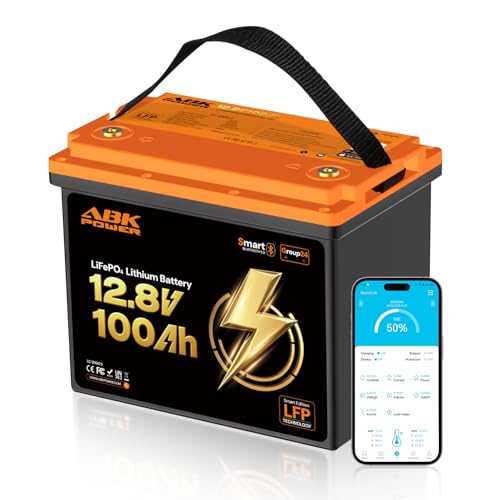
ABKpower 12V 100Ah LiFePO4 Battery
What We Like
- Bluetooth monitoring via phone app
- IP65 waterproof casing for marine use
- Low-temp cut-off below 32°F
- 6000+ deep cycles at 80% DOD
Trade-offs
- Not for starting engines or golf carts
- Only 100A BMS limits peak loads
A built-in Bluetooth 5.0 module lets you check voltage live from your phone, so you always know how much juice is left before you head out on the water. The IP65 waterproof casing handles spray and splashes better than most group 24 lithium packs, making this a natural fit for trolling motors and marine battery boxes. With 6000+ cycles at 80% depth of discharge, it should outlast your boat’s electronics upgrade cycle by a long stretch.
A potential drawback is the 100A BMS, which limits high-draw accessories. If you plan to run a large inverter or heavy winch, a higher-amp BMS battery like the WattCycle 12.8V 100Ah would give you more headroom. The ABKpower also skips starting-engine duty entirely, so it’s strictly for deep-cycle storage. But for a weekend angler or RV owner who wants live battery stats without pulling a multimeter, this is a clean, lightweight package that fits a standard group 24 tray.
Product photos
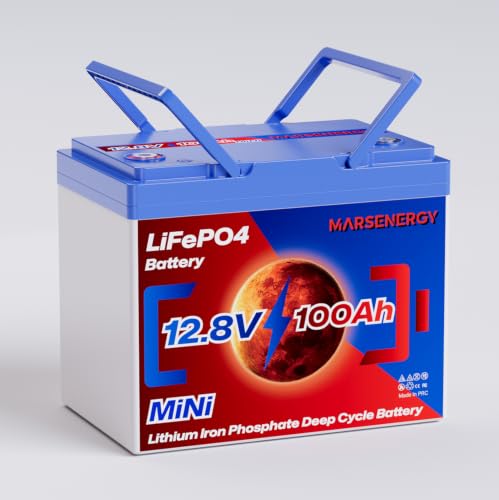
MARSENERGY 12V 100Ah LiFePO4 Battery
What We Like
- Weighs only 21 lb
- Fits standard Group 24 battery box
- 4500 deep cycles at 100% DOD
Trade-offs
- BMS cuts off charging below 32°F
- No Bluetooth monitoring included
The trade-off is the BMS’s low-temperature cutoff: it won’t charge below 32°F, so winter campers or cold-weather off-grid users should consider other batteries with similar low-temp protection. You also don’t get Bluetooth monitoring here, while some other models include it for checking charge status from your phone. If those features matter less than saving weight and getting a 5-year after-sales service, the MARSENERGY delivers the core job reliably.
Product photos
Redodo 12V 100Ah Group 24 LiFePO4 Battery

What We Like
- Bluetooth monitoring via phone app
- Low-temperature cut-off for cold weather
- Lightweight at 22.2 lbs
Trade-offs
- Cannot be used as a starter battery
- Requires a LiFePO4 charger with 0V capability
- Bluetooth range limited to 10 meters
A 100-amp-hour capacity in a Group 24 footprint means this battery delivers enough juice for a full day of trolling without weighing down the boat. The built-in Bluetooth 5.0 module lets you check voltage, current, and remaining capacity from your phone, so you are never guessing how much run time is left.
Keep in mind that this battery is strictly for deep-cycle use. It cannot double as a starter battery, so if your boat uses the same battery for cranking and trolling, you will need a separate starting battery.
Product photos
How We Evaluated Group 24 Deep Cycle Batteries
Our evaluation focused on the specifications that matter most for a Group 24 deep cycle battery. We examined manufacturer data on capacity (Ah), cycle life, weight, and physical dimensions to ensure each battery fits the standard BCI Group 24 tray. We also studied the built-in Battery Management System (BMS) features, such as low-temperature cutoff and overcurrent protection.
The three most critical criteria were cycle life, capacity, and weight. Cycle life determines how many years a battery will serve before replacement, while capacity (Ah) dictates how long it powers your gear. Weight is a key factor for portable and marine applications, where every pound matters.
An evaluation has limits. We cannot replicate real-world discharge patterns or predict battery longevity in every climate. Our findings are based on what manufacturers state and what patterns emerge in verified owner feedback, not on controlled testing.
What To Look For In Group 24 Deep Cycle Batteries
When shopping for a Group 24 deep cycle battery, focus on the chemistry, capacity, and features that match how you will use it. Lithium iron phosphate (LiFePO4) is the modern standard, but AGM still serves specific needs well.
Prioritize cycle life and capacity for off-grid use. Choose weight and recharge speed for marine applications. Look for Bluetooth monitoring if you want to track battery health from your phone.
Chemistry: LiFePO4 vs. AGM
Lithium iron phosphate (LiFePO4) batteries dominate this category because they last for thousands of cycles, weigh significantly less than AGM, and discharge fully without damage. AGM batteries remain a reliable, maintenance-free option for applications like mobility scooters where weight is less of a concern and upfront cost is a priority. Most modern Group 24 deep cycle needs are best served by LiFePO4.
Capacity and Cycle Life
Capacity is measured in amp-hours (Ah). A 100Ah battery can deliver 5 amps for 20 hours before needing a recharge. Cycle life tells you how many charge-discharge cycles the battery can handle before its capacity drops to 80%. Look for at least 4000 cycles at 80% depth of discharge (DOD) for a long-term investment. Higher cycle counts, like 15000 cycles at 60% DOD, mean decades of service for daily-use setups.
BMS and Additional Features
The Battery Management System (BMS) is the brain of a LiFePO4 battery. It protects against overcurrent, over-discharge, and short circuits. A low-temperature charging cutoff is essential if you live in a cold climate, as charging below freezing can damage lithium cells. Bluetooth monitoring is a convenient feature that lets you check voltage, capacity, and faults from your phone.
- Measure your battery tray to confirm it fits a Group 24 size (approximately 10.2 x 6.8 x 8.9 inches).
- Check the continuous discharge current rating against your inverter or motor’s peak draw.
- If using for engine starting, verify the Cold Cranking Amps (CCA) rating meets your engine’s requirement.
- For marine use, confirm the IP rating (e.g., IP65) for water resistance.
A battery with a 100A BMS is usually sufficient for most RV and marine loads, but high-draw setups may need a higher-rated model.
Group 24 Deep Cycle Batteries Compared
The table below compares the key specs and trade-offs of our top Group 24 deep cycle batteries, helping you see at a glance which model fits your needs.
| Product | Chemistry | Capacity | Weight | BMS |
|---|---|---|---|---|
| WattCycle 12.8V 100Ah LiFePO4 Battery | LiFePO4 | 100Ah | 23.2 lbs | Built-in 100A BMS |
| LIPULS 12.8V 100Ah LiFePO4 Battery | LiFePO4 | 100Ah | 22.57 lbs | 100A Smart BMS |
| Interstate Batteries 12V 60Ah LiFePO4 Marine Battery | LiFePO4 | 60Ah | 13.2 lb | N/A |
| SUPER EMPOWER 12V 100Ah LiFePO4 Battery | LiFePO4 | 100Ah | 21.6 lbs | 100A with low-temp cutoff |
| Litime 12V 100Ah Group 24 LiFePO4 Battery | LiFePO4 | 1280Wh | 22.2 lb | 100A |
| VEVOR 12V 105Ah Dual Purpose LiFePO4 Battery | LiFePO4 | 105Ah | 22.3 lbs | Smart BMS |
| Interstate Batteries 12V 75Ah Group 24 AGM Battery | AGM / VRLA | 75 Ah | 49.0 pounds | N/A |
| ABKpower 12V 100Ah LiFePO4 Battery | LiFePO4 | 100Ah | 21 lb | 100A BMS |
| MARSENERGY 12V 100Ah LiFePO4 Battery | LiFePO4 | 100Ah | 21.0 lb | 100A |
| Redodo 12V 100Ah Group 24 LiFePO4 Battery | LiFePO4 | 100Ah | 22.2 lbs | 100A with Bluetooth 5.0 |
Frequently Asked Questions
What is the best Group 24 deep cycle battery for an RV?
The WattCycle 12.8V 100Ah LiFePO4 Battery is the top pick for most RV owners. It offers a long cycle life, a well-designed BMS, and a compact size that fits standard Group 24 trays, making it a reliable choice for powering lights, a fridge, and other 12V accessories.
Can I use a Group 24 deep cycle battery to start my engine?
Some Group 24 batteries are dual-purpose and can handle engine starting. The VEVOR 12V 105Ah Dual Purpose LiFePO4 Battery is a good example, offering 1000 CCA for starting while still providing deep cycle capacity. Most pure deep cycle batteries, like the Litime or WattCycle, are not designed for starting.
How long will a Group 24 LiFePO4 battery last?
A quality LiFePO4 battery can last 10 to 15 years depending on usage and depth of discharge. Models like the LIPULS 12.8V 100Ah are rated for up to 15000 cycles at 60% DOD, which translates to decades of daily use for most RV and marine applications.
What is the lightest Group 24 deep cycle battery?
The Interstate Batteries 12V 60Ah LiFePO4 Marine Battery is the lightest option at only 13.2 pounds. It is ideal for boaters and RVers who prioritize weight savings for portability or performance, though its 60Ah capacity is lower than the standard 100Ah found in many competitors.
Do I need a special charger for a LiFePO4 battery?
Yes, for best performance and safety, you should use a charger specifically designed for LiFePO4 chemistry. Many lithium batteries, like the SUPER EMPOWER 12V 100Ah, recommend a dedicated LiFePO4 charger. Standard lead-acid chargers may not charge them fully or could damage the battery over time.
The Bottom Line
For most RV, marine, and off-grid users, the WattCycle 12.8V 100Ah LiFePO4 Battery is the best all-around Group 24 deep cycle battery. Its combination of a compact BCI Group 24 size, a 100A BMS, and an exceptional cycle life makes it a reliable, long-term investment for powering your gear.
If you need Bluetooth monitoring to keep an eye on your battery from your phone, the Litime 12V 100Ah Group 24 LiFePO4 Battery is an excellent alternative. For boaters who want the lightest possible weight, the Interstate Batteries 12V 60Ah LiFePO4 Marine Battery saves over nine pounds compared to standard 100Ah lithium models.
The single most important factor when buying a Group 24 deep cycle battery is matching the capacity and cycle life to your actual power needs. A battery that is too small will leave you without power, while one with more cycles than you need is money wasted. Measure your tray, calculate your daily amp-hour draw, and choose from there.
