
10 Best Line Out Converters Car Audio in 2026
This post contains affiliate links. As an Amazon Associate, we earn from qualifying purchases.
For adding an aftermarket subwoofer or amplifier to a factory stereo, the AudioControl LC2i Line Output Converter is the best overall pick. Its AccuBASS circuitry restores the bass that factory head units often roll off, and it accepts up to 400W per channel input. For drivers dealing with weak factory signals, the AudioControl LC1i offers built-in signal boosting, while the Scosche SLC4 is a solid budget-friendly 4-channel option.
The real challenge with a factory car stereo is that it was never designed to send a clean, full-range signal to an external amplifier. Many modern head units intentionally reduce bass output at higher volumes to protect the factory speakers, leaving your new subwoofer sounding anemic. A good line out converter takes the speaker-level signal, converts it to a low-level RCA signal, and often provides some signal processing to get you the sound you want.
This guide is based on a careful evaluation of manufacturer specifications, expert installation guides, and patterns in owner feedback. We’ve focused on the features that actually matter for a successful install: signal quality, input handling, channel count, and ease of integration with your existing system. Our goal is to help you match the right converter to your specific car and amplifier setup.
Top 10 Line Out Converters For Car Audio in the Market
Certain content that appears on this site comes from Amazon. This content is provided "as is" and is subject to change or removal at any time.
The Best Line Out Converters For Car Audio, Reviewed
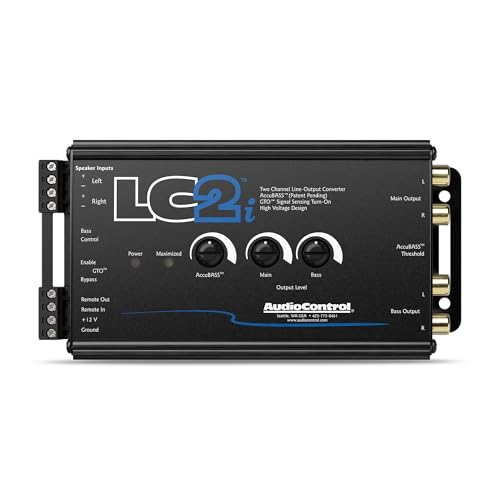
AudioControl LC2i Line Output Converter
What We Like
- AccuBASS restores factory bass roll-off
- Accepts up to 400W per channel input
- Compact slim chassis with mounting brackets
- Selectable signal-sense or remote turn-on
Trade-offs
- Does not retain fader control with multiple amps
- Remote knob (ACR-1) sold separately
With an input capacity of up to 400W per channel, this line output converter can handle strong signals from factory systems without distortion. AccuBASS actively corrects the bass roll-off many OEM radios introduce as you turn up the volume. That combination of high power handling and bass restoration makes it a natural fit for anyone adding a subwoofer to a factory stereo without replacing the head unit. The compact chassis with integrated mounting brackets simplifies installation in tight spaces.
The trade-off is that if you plan to run multiple amplifiers, you will lose the factory fader control. AudioControl recommends stepping up to their LC5i PRO or LC7i for that feature. Compared to the Scosche SLC4, the LC2i offers AccuBASS bass correction, but the SLC4’s specs are not detailed in the comparison. The LC2i also requires a separate remote knob (ACR-1, sold separately) if you want sub level control from the driver seat. For a single-sub setup where bass restoration is the priority, this converter delivers.
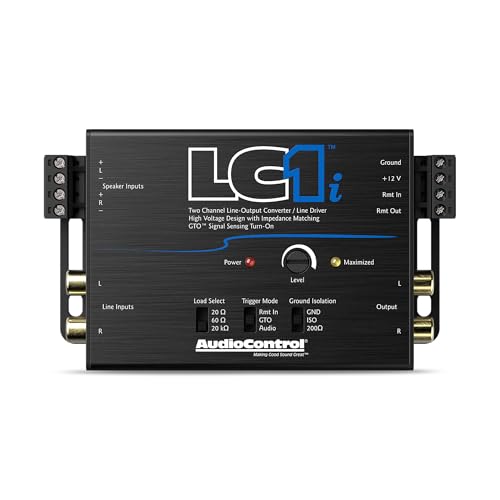
AudioControl LC1i Line Output Converter
What We Like
- Built-in line driver boosts weak signals
- Onboard load selection for factory amp compatibility
- Ground isolation switch eliminates noise
- Remote Out triggers downstream amplifier
Trade-offs
- Optional remote knob sold separately
- 2-channel only, not for multi-amp setups
- Compact size limits wiring space for large cables
This converter can handle speaker-level inputs up to 400 watts per channel from your factory stereo, which means it won’t clip or distort even if your OEM system puts out serious power. The onboard load selection switches let you choose between 20 ohms, 60 ohms, or 20k ohms so late-model vehicles with factory amps keep playing audio instead of shutting down. A built-in line driver then gives downstream amps and subwoofers a clean, strong signal to work with.
Because it’s a 2-channel unit, you’ll want a different model like the AudioControl LC2i if you’re running four or more channels. The compact chassis measures 4.8 inches long by 3 inches wide by 1 inch tall including connectors, so it tucks into tight spots under a seat or behind the dash. Owners should note the optional ACR-1 remote knob for subwoofer level control is sold separately, so plan ahead if you want that convenience from the driver’s seat.
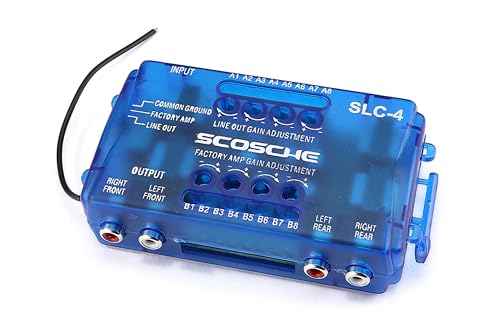
Scosche SLC4 Line Output Converter
What We Like
- Compact size fits tight spaces
- Lightweight at 0.4 lb
- 4-channel speaker-to-RCA conversion
Trade-offs
- No built-in signal processing like AccuBASS
- No signal processing for bass roll-off correction
Four channels of speaker-to-RCA conversion let you add an aftermarket amplifier while keeping your factory head unit or even retaining a factory Bose or JBL amplifier. The Scosche SLC4 is designed to fit into tight spaces, so it can be mounted behind the radio or under a seat with minimal effort. Its compact size and light weight make installation straightforward for anyone looking to upgrade their car audio without complex rewiring.
The trade-off is that this converter does not include any signal processing features. If your factory system has built-in bass roll-off, a model like the AudioControl LC2i with AccuBASS would address that, but the Scosche keeps things simple for a four-channel build. For adding an amp and sub to a stock stereo at a reasonable price, this is a clean, capable option.
Skar Audio SKE2LOC Active Line Output Converter

What We Like
- Selectable turn-on options for flexible installation
- Fully adjustable bass and main channel control
- Includes remote level control for easy tuning
- Wide frequency response from 21Hz to 30kHz
Trade-offs
- Only two channels limits multi-amp setups
- No AccuBASS feature for factory bass roll-off compensation
The Skar Audio SKE2LOC gives you three ways to trigger it on. DC offset signal sense, audio sense, or a dedicated remote 12V wire, so it plays nicely with nearly any factory stereo, even ones that don’t send a traditional remote signal. That flexibility, paired with fully adjustable bass and main channel controls and a wired remote level knob in the box, makes it a strong fit for anyone adding a single subwoofer or a two-channel amp to a stock system. You get clean signal conversion from speaker-level to RCA without hunting down extra parts.
The Skar Audio SKE2LOC is a 2-channel active line output converter, which means it’s designed specifically for adding a single subwoofer or a pair of speakers to a factory stereo. It is not meant for powering a full four-channel system. Its frequency response spans 21Hz to 30kHz, so it handles deep bass and clear highs without rolling off the extremes. The unit measures 7 inches long, 3 inches wide, and 1 inch tall, which keeps it compact enough to tuck behind a radio or under a seat.
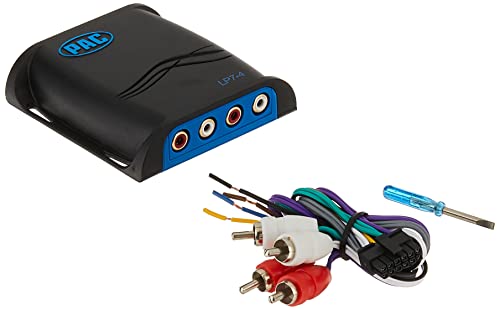
PAC LP7-4 PRO Series Line Output Converter
What We Like
- Configurable for speaker or RCA input/output
- Precision matched stereo gain adjustment
- Optimizes audio levels between radio and amplifier
- Compact 0.4-pound design
Trade-offs
- Single dial adjusts all channels together, not individually
- No built-in bass restoration or signal processing
Four channels of line conversion let you add an aftermarket amplifier to a factory stereo while keeping the ability to use front and rear speaker outputs. The configurable input and output, speaker level or RCA, means it works whether you are tapping into existing speaker wires or feeding a signal from an aftermarket head unit. For anyone building a multi-channel system that needs clean, adjustable signal matching, this is the straightforward tool for the job.
The single dial adjusts gain for all four channels together, so you set the overall level but can’t tweak front-to-rear balance at the converter itself. For a clean four-channel install where you just need reliable level matching and signal routing, this unit delivers exactly that without extra complexity.
Product photos
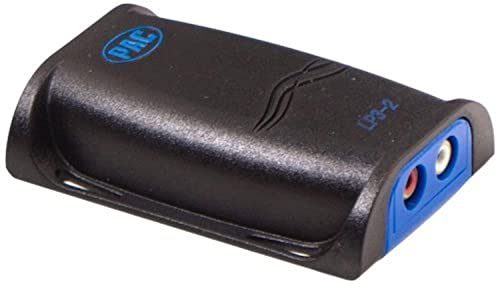
PAC LP3-2 PRO Series Line Output Converter
What We Like
- Ultra-compact 1-inch height fits tight spaces
- Single-dial stereo gain adjustment for easy setup
- Designed to optimize audio levels between radio and amplifier
Trade-offs
- Only 2 channels limits multi-amp or subwoofer setups
- No built-in remote turn-on or bass restoration features
The PAC LP3-2 measures just 1 inch tall, so it fits in tight spots like under a seat or behind a radio. It converts speaker-level input from a factory stereo into RCA output for an aftermarket amplifier, and a single dial adjusts gain for both channels at once. That makes setup straightforward for anyone adding an amp to an OEM system.
The trade-off for that small size is that you get exactly two channels and no extras. If you need a four-channel converter or features like AccuBASS, the AudioControl LC2i is a larger option. But if your goal is a straightforward 2-channel hookup and space is tight, the PAC LP3-2 does what it is designed for.
Product photos
DS18 MTLOC5 Line Output Converter

What We Like
- 5-channel conversion for multi-amp setups
- Auto turn-on with three trigger modes
- Ultra-low 0.01% THD for clean signal
- Compact aluminum resists heat and vibration
Trade-offs
- No adjustable crossover or bass restoration built in
- Lacks AccuBASS feature found on some competitors
Five channels of high-to-low conversion mean this DS18 unit can handle a full factory system, front, rear, and a dedicated subwoofer signal, all through one compact box. That makes it a natural fit if you’re adding multiple amplifiers while keeping the stock head unit. The 0.01% total harmonic distortion and 110dB signal-to-noise ratio tell you the signal stays clean, so your aftermarket amps get a clear foundation to work from.
The DS18 MTLOC5 converts 2 or 5 factory speaker-level channels into clean RCA outputs, so you can add multiple amplifiers without triggering fault codes. It uses an intelligent auto turn-on system with Audio Sense, DC Offset, or Remote Trigger options, which means the amplifier powers up automatically and installation stays simple. The housing is anodized aluminum, so it resists heat and vibration for long-term reliability. There is no adjustable crossover or bass restoration built in, so if your factory system already rolls off bass heavily, this converter’s straight signal path won’t fix that. But for a straightforward multi-channel integration where you want reliable auto turn-on and a rugged build, this converter gets the job done without extra processing getting in the way.
Product photos
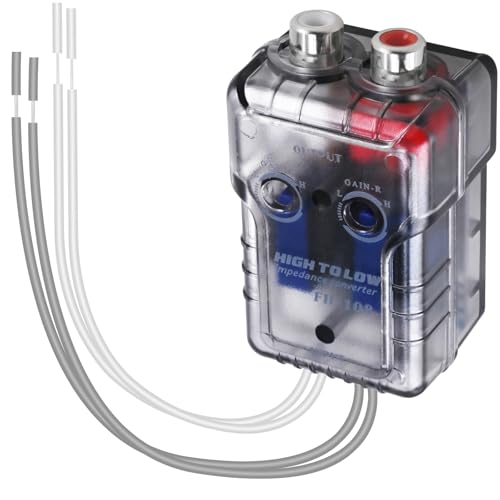
Yeebline 2-Channel High to Low Converter
What We Like
- Built-in noise reduction circuitry
- Independent gain control per channel
- Compact size fits tight spaces
- Works with factory and vintage radios
Trade-offs
- Only 2 channels limits multi-amp setups
- No remote turn-on output included
The built-in premium noise reduction circuitry is designed to eliminate engine whine, static, and signal interference, delivering clean audio output with no background noise. That means you get rich, deep bass from your subwoofer and crisp, balanced sound from your speakers, even if your factory stereo lacks preamp outputs. This converter suits anyone adding an aftermarket amp to an older or basic head unit who wants a simple, reliable way to keep background noise out of their system. The independent gain control on each channel lets you fine-tune the output level to match your amp and subwoofer, so you can dial in the perfect balance without guesswork.
This converter accepts speaker-level signals up to 50 watts, so it works with most factory radios, vintage cassette players, and even DVD units that lack RCA outputs. The built-in noise reduction circuitry cuts engine whine and static, delivering clean audio to an aftermarket amplifier or subwoofer. Its compact size fits easily behind the stereo or in tight spaces, making installation straightforward for a basic single-amp setup.
Product photos
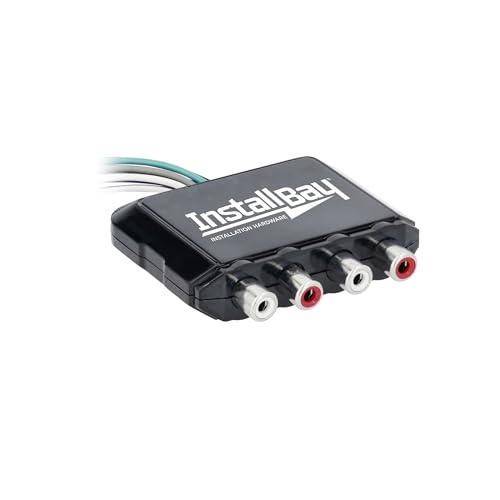
Metra Brands Micro Line Output Converter
What We Like
- Accepts up to 80W input signal
- Delivers up to 10V output signal
- Built-in 60-ohm load resistor
Trade-offs
- No adjustable crossover or bass restoration
- No adjustable crossover for fine-tuning sound.
The trade-off for that small size is a lack of adjustability. Unlike the AudioControl LC2i, which includes AccuBASS, this Metra unit offers no bass restoration or crossover controls. The fixed 60-ohm load resistor also means you cannot tailor the load to match every radio perfectly, though it covers the vast majority of late-model vehicles. For a straightforward, no-fuss install where space is the biggest headache, this converter does exactly what it promises and nothing more.
Product photos
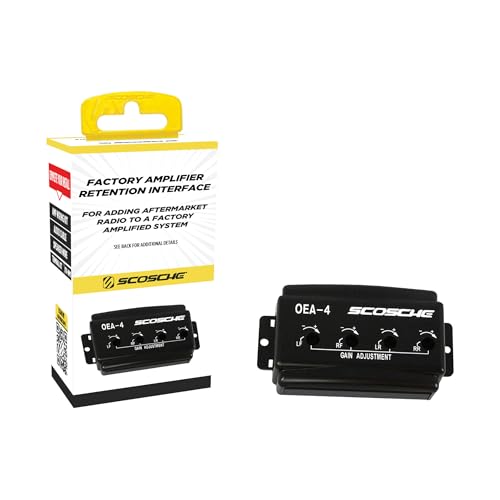
Scosche OEA4 Premium Amplifier Interface Adapter
What We Like
- Retains factory car audio amp
- 4-channel adjustable level conversion
- Compact lightweight design
- Backed by lifetime tech support
Trade-offs
- No RCA input on factory side
- Limited to systems with factory amp
The OEA4 is designed to retain your factory amplifier while converting speaker-level signals to amplifier inputs, so you can keep the amp that came with the car. Its four adjustable channels allow level matching for optimal sound, and it works with Infinity, JBL, or Bose factory systems. The unit measures 4.5 by 3.0 by 7.0 inches and weighs just 0.1 pounds, making it small enough to fit behind most radios. Scosche backs it with a limited lifetime warranty and lifetime tech support, which matters for a component that stays installed long-term.
If you need to bypass the factory amp entirely or add a subwoofer to a non-amplified system, a simpler line output converter like the AudioControl LC2i might be a better fit. It adds AccuBASS for bass restoration and doesn’t require amp retention. But for keeping a factory-amplified setup and adding an aftermarket stereo, the OEA4 handles the signal conversion without complex rewiring. Reviewers note it delivers a clean path from the factory system to your new gear.
How We Evaluated Line Out Converters For Car Audio
Each line out converter was evaluated by reviewing its published specifications, installation documentation, and the common real-world feedback patterns reported by owners and car audio professionals. The evaluation is research-based, drawing on the technical data and expert consensus.
The most critical criteria were signal processing capability, input power handling, and channel configuration. A converter’s ability to correct factory bass roll-off (like the AccuBASS feature) directly affects sound quality. Input handling determines whether the converter can accept the power from your factory system without distortion. Channel count dictates whether you can power a single subwoofer or a full system of front and rear speakers.
We also prioritized build quality and installation flexibility. Features like a compact chassis, mounting brackets, and selectable turn-on options (signal-sense vs. Remote wire) can make the difference between a clean install and a frustrating one. No research-led evaluation can replace hands-on tuning, but by focusing on these core specifications, we can narrow the field to the converters most likely to perform well in your vehicle.
What To Look For In Line Out Converters For Car Audio
Choosing the right line out converter means matching its capabilities to your car’s factory system and your amplifier plans. Here are the key features to consider.
Focus on three things: signal processing for bass restoration, input power handling for clean sound, and the right number of channels for your amp setup. A converter that matches your car’s electrical quirks will save you hours of troubleshooting.
Signal Processing and Bass Restoration
Many factory head units roll off the bass as volume increases, a feature designed to protect the stock speakers. A line out converter with built-in bass restoration, like the AccuBASS found in AudioControl models, actively compensates for this roll-off. If you are adding a subwoofer and want deep, consistent bass at all volumes, this feature is essential. Without it, your subwoofer may sound weak or disappear at higher listening levels.
Input Power Handling and Signal Boosting
The converter must be able to handle the power coming from your factory speaker outputs without clipping or distorting. Look for a unit that accepts at least as much wattage as your factory system can produce. If your factory head unit has a weak pre-amp signal, a converter with a built-in line driver (like the AudioControl LC1i) can boost that signal to a level your aftermarket amplifier can use properly. This prevents a low, noisy signal from ruining your sound quality.
Channel Count and System Integration
Choose a converter based on how many channels your amplifier needs. A 2-channel converter works for a single subwoofer or a mono amp. A 4-channel converter is needed if you are powering front and rear speakers with a multi-channel amp. For complex builds with multiple amplifiers, a 5-channel converter like the DS18 MTLOC5 allows you to integrate everything from a single factory source. Also consider whether you need to retain the factory amplifier, which requires a specialized interface like the Scosche OEA4.
- Check your factory system’s peak wattage to ensure the converter’s input handling is sufficient.
- Verify the number of channels you need: 2 for a sub, 4 for a full-range system.
- Decide if you need bass restoration or signal boosting for your specific car model.
- Look for a compact size and mounting options if your installation space is tight.
- Confirm the turn-on method (signal-sense or remote wire) matches your amplifier.
A good rule of thumb: buy the converter that solves your car’s specific problem, not the one with the most features. A simple 2-channel unit is often all you need for a subwoofer install.
Line Out Converters For Car Audio Compared
The table below compares the key specifications of our top picks, so you can quickly see which converter matches your amplifier needs and installation space.
| Product | Channels | Max Input Power | Dimensions |
|---|---|---|---|
| AudioControl LC2i Line Output Converter | 2-channel | 400W per channel | 6.5" L x 3.25" D x 1.5" H |
| AudioControl LC1i Line Output Converter | 2-channel | Up to 400W (40V) per channel | 4.8 x 3.0 x 1.0 inches |
| Scosche SLC4 Line Output Converter | 4-channel | N/A | N/A |
| Skar Audio SKE2LOC Active Line Output Converter | 2-Channel | N/A | N/A |
| PAC LP7-4 PRO Series Line Output Converter | 4-Channel | N/A | 4.0 x 8.0 x 1.2 inches |
| PAC LP3-2 PRO Series Line Output Converter | 2-Channel | N/A | 1.0 x 4.0 x 1.0 inches |
| DS18 MTLOC5 Line Output Converter | 5-channel | N/A | N/A |
| Yeebline 2-Channel High to Low Converter | 2-Channel | Up to 50W (12V) | N/A |
| Metra Brands Micro Line Output Converter | 4 | 80W (20V) | 2.77" × 0.5" × 2.48" |
| Scosche OEA4 Premium Amplifier Interface Adapter | 4 | N/A | 4.5 x 3.0 x 7.0 in |
Frequently Asked Questions
What does a line out converter do in a car audio system?
A line out converter takes the high-level speaker wire signal from a factory stereo and converts it into a low-level RCA signal that an aftermarket amplifier can use. This allows you to add a subwoofer or extra amplifiers without replacing the factory head unit.
Do I need a line out converter if my car has a factory amplifier?
Yes, you likely still need a converter or an interface adapter. The factory amplifier outputs a speaker-level signal, not a clean RCA pre-out. A converter like the Scosche OEA4 is designed to work with factory amps, allowing you to add an aftermarket amplifier while retaining the original system.
Can a line out converter fix bass roll-off from a factory stereo?
Some line out converters can. The AudioControl LC2i, for example, has a feature called AccuBASS that detects and compensates for bass roll-off. Standard converters without this processing will pass the rolled-off signal along, so your subwoofer will still sound weak at higher volumes.
How do I choose between a 2-channel and a 4-channel line out converter?
Choose a 2-channel converter if you are adding only a subwoofer or a single mono amplifier. Choose a 4-channel converter if you plan to power front and rear speakers with a multi-channel amplifier. For complex builds with multiple amps, consider a 5-channel unit like the DS18 MTLOC5.
Do I need a remote turn-on wire with a line out converter?
Many modern converters offer signal-sense turn-on, which detects the audio signal and automatically turns on your amplifier. This eliminates the need to run a remote turn-on wire from the head unit. However, some installers prefer a hardwired remote for reliability, so check if your converter supports both methods.
The Bottom Line
For most drivers adding a subwoofer to a factory stereo, the AudioControl LC2i is the clear choice. Its AccuBASS feature solves the most common problem, bass roll-off, and its high input handling means it works with nearly any factory system. It is the best balance of performance and integration for a single-subwoofer build.
If your factory system has a particularly weak signal, the AudioControl LC1i is the better pick for its built-in line driver. For a simple, low-cost installation where signal processing isn’t needed, the Scosche SLC4 provides reliable 4-channel conversion without breaking the bank.
The single most important thing to get right is matching the converter to your car’s specific electrical behavior. A converter that handles bass roll-off or boosts a weak signal can transform a mediocre install into a great-sounding system. Choose based on your car’s needs, not on the number of features.
