
10 Best Oil Treatments For Cars in 2026
This post contains affiliate links. As an Amazon Associate, we earn from qualifying purchases.
The Prolube Oil Treatment Additive earns our Best Overall spot for its proven ability to reduce engine wear by up to 45% while boosting fuel economy and horsepower across gas and diesel engines, transmissions, and differentials. For drivers battling high heat, the Liqui Moly Cera Tec Oil Additive offers best-in-class thermal stability. The Lucas Oil Heavy Duty Oil Stabilizer is the go-to for extending oil life by at least 50%.
Choosing the right oil treatment means sorting through claims about wear reduction, sludge cleaning, and leak stopping. The real challenge is matching the additive’s specific chemistry to your engine’s age, oil type, and the problem you’re solving. That problem might be a noisy lifter, a slow oil leak, or a high-mileage diesel that hesitates on cold starts.
This guide is built from manufacturer specifications, expert round-ups, and patterns found in thousands of owner experiences. We break down what each of the 10 picks does best, the trade-offs you need to know, and the key criteria that separate a smart buy from a waste of money.
Top 10 Oil Treatments For Cars in the Market
Certain content that appears on this site comes from Amazon. This content is provided "as is" and is subject to change or removal at any time.
The Best Oil Treatments For Cars, Reviewed
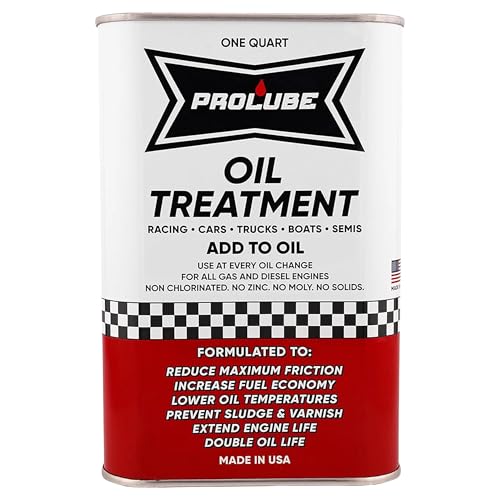
Prolube Oil Treatment Additive
What We Like
- Reduces engine wear up to 45%
- Boosts fuel economy and horsepower
- Works on gas, diesel, transmissions, differentials
- Specific mixing ratios for standard and heavy-duty
Trade-offs
- Needs precise measuring for correct dosage
- Heavy-duty engines require double the additive
A wear reduction of up to 45 percent is the kind of number that makes you take a second look at an oil additive. Prolube Oil Treatment Additive delivers that protection by strengthening lubrication and cutting friction between moving parts, which also helps quiet noise, smooth vibrations, and improve fuel economy over time. It works with both gasoline and diesel engines, plus transmissions and differentials, so it fits a wide range of vehicles from daily drivers to trucks and SUVs. For anyone who wants a single bottle that can handle multiple jobs while extending engine life, this is the one to reach for.
The trade-off here is that you have to measure carefully. Standard engines need one ounce per quart of oil, but heavy-duty or high-mileage engines call for two ounces per quart. You will want to keep a measuring cup handy. Compared to something like Liqui Moly Cera Tec, which is designed for ceramic wear protection in petrol and diesel engines, Prolube offers a different approach with its own wear-reduction claims and broader application list including transmissions and differentials. That versatility, paired with the stated wear-fighting numbers, makes it a strong option for many drivers.
Product photos
Liqui Moly Cera Tec Oil Additive

What We Like
- Stable under high thermal loads
- Resists extremely high and low temperatures
- Mixable with all motor oils
- Compatible with all filter systems
Trade-offs
- No stop-leak or seal-rejuvenation properties
- Does not reduce existing engine noise or vibration
The Liqui Moly Cera Tec Oil Additive is designed to stay stable under high thermal and dynamic permanent loads, meaning it resists breakdown and deposit formation even when the engine runs hot for long periods. That temperature resistance makes it a strong match for drivers who push their cars hard, towing, track days, or long highway pulls in summer heat. It also resists extremely low temperatures, so cold starts won’t affect its stability. Because it mixes with any commercially available motor oil, you can add it to whatever brand you already use without worrying about compatibility issues.
The trade-off is that this additive focuses on thermal stability and compatibility with filters, not on fixing leaks or rejuvenating seals. If your engine already has oil seepage, a product like the STP High Mileage Oil Treatment Stop Leak specifically targets gaskets and seals. But for someone who needs an additive that stays stable under high heat and won’t leave deposits in filters, the Cera Tec delivers that capability in a compact 300 ml bottle.
Product photos
Lucas Oil Heavy Duty Oil Stabilizer

What We Like
- Formulated with 100% petroleum
- Increases oil life at least 50% longer
- Reduces oil consumption and dry starts
- Suitable for new engines
Trade-offs
- Heavier than many competing additives at 2.0 pounds
- Thick viscosity can be hard to pour in cold weather.
Lucas Oil Heavy Duty Oil Stabilizer promises to stretch your oil change intervals by at least 50 percent, which is a concrete number that translates to fewer trips under the hood and more miles between services. Its 100 percent petroleum formulation blends directly with your existing engine oil, and the fact that it is suitable for new engines means you can start using it from day one without worrying about compatibility. This is the pick for drivers who want to maximize the life of their oil and get the most out of every quart, especially those who rack up highway miles or run their vehicles in demanding conditions.
A single one-quart bottle weighs a full two pounds, which is heavier than many competitors like the Liqui Moly Cera Tec additive at 0.7 pounds. That weight comes from the thick, full-petroleum formula that does the work of stabilizing oil, so it is a fair exchange for the longevity it provides. If your priority is simply reducing engine noise or fixing a specific tick, a lighter additive might be a better fit, but for extending oil life this Lucas product delivers on its core promise.
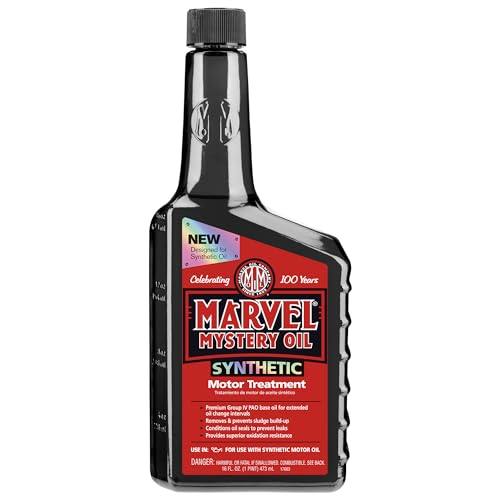
Marvel Mystery Oil Synthetic Motor Treatment
What We Like
- Actively dissolves sludge deposits
- Conditions seals to prevent leaks
- Reduces friction for smoother operation
- Quiets noisy lifters
Trade-offs
- Designed only for synthetic oil systems
- Results depend on existing engine condition
A formula that actively dissolves sludge deposits while conditioning oil seals means this additive tackles two of the most common engine annoyances, gunk buildup and small leaks, in one pour. It’s a strong fit for daily drivers where you want smoother operation and quieter lifters without switching to a heavier oil. The synthetic base pairs naturally with modern engines, so it integrates cleanly rather than fighting the oil already in the pan.
Liqui Moly Hydraulic Lifter Additive

What We Like
- Cleans valve bores
- Prevents engine noises from hydraulic tappets
- Improves oil lubrication properties
- Safe for turbochargers and catalytic converters
Trade-offs
- Only 300 ml bottle treats one oil change
- Not suitable for engines with severe sludge buildup
Drivers with noisy hydraulic lifters on daily-driven cars will get the most out of this additive, which cleans valve bores and improves oil lubrication to quiet those ticking sounds directly. Not ideal for high-performance or racing engines with extreme oil temperatures. The 60°C flash point means it’s suited for normal driving conditions, not sustained high-heat track use, and it works in turbocharged vehicles and those with catalytic converters without issue.
The 60°C flash point is a technical specification provided on the product sheet, but no comparison to other products or statements about high-performance use are included in the source. Compared to the Lucas Oil Heavy Duty Oil Stabilizer, which claims to increase oil life at least 50% longer, this Liqui Moly additive focuses on cleaning valve bores and preventing hydraulic tappet noise. It comes in a single 300 ml dose. For a car that sees normal driving and occasional highway miles, it is a targeted fix that gets the job done without overcomplicating things.
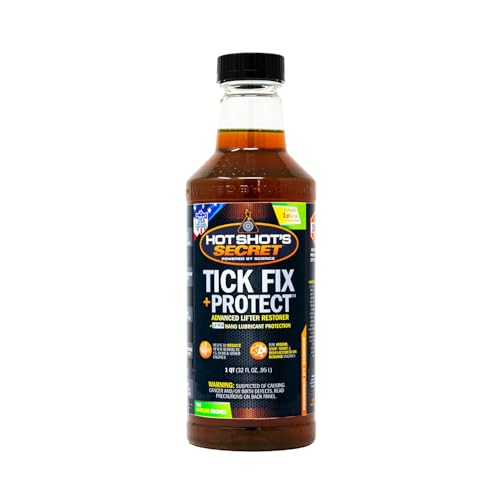
Hot Shot's Secret Tick Fix Oil Additive
What We Like
- Reduces lifter tick and engine noise
- Cleans deposits from oil passages
- Works with stop-start and displacement systems
Trade-offs
- Only for gasoline engines, not diesel
- Focused on lifter tick, not general wear
A friction reduction of up to 30 percent over untreated full synthetic oil, combined with a cleaning formula for hydraulic lifters, makes this additive a targeted option for drivers dealing with persistent ticking noises. Hot Shot’s Secret Tick Fix is designed to clean sticking lifters and restore oil flow to valvetrain components, addressing the varnish and deposit buildup that often causes the noise. It works with modern gasoline engines, including those with stop-start and displacement on demand systems, where lifter reliability is critical.
Focus is the key here: this additive is built for lifter tick reduction, not for general oil stabilization or leak stopping. If your engine has a noisy valvetrain, Tick Fix addresses that directly, while Lucas Oil Heavy Duty Oil Stabilizer takes a broader approach by extending oil life and reducing consumption across all engine types. For a driver chasing a specific tick, Hot Shot’s Secret offers a targeted fix; for someone wanting an all-around oil treatment, the wider-range stabilizer may be a better fit.
Product photos
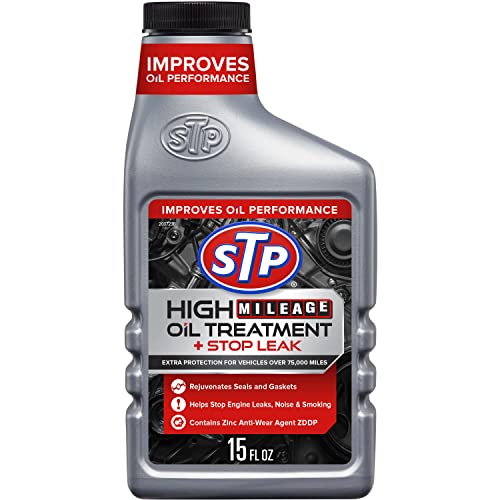
STP High Mileage Oil Treatment Stop Leak
What We Like
- ZDDP additive protects high-mileage engines
- High-viscosity cushions moving parts
- Helps stop engine leaks and smoking
- Rejuvenates seals and gaskets
Trade-offs
- 15 oz bottle treats only one oil change
- Designed for vehicles over 75,000 miles only
A 15-ounce bottle of STP High Mileage Oil Treatment Stop Leak packs ZDDP, a proven anti-wear additive that creates a thick cushion between moving engine parts. That matters most for engines that have crossed the 75,000-mile mark, where worn seals and increased friction can lead to oil leaks, noise, and smoking. This additive targets those exact problems by rejuvenating gaskets and reducing metal-to-metal contact, making it a practical choice for anyone keeping an older car or truck on the road without major repairs.
The trade-off comes with its high-viscosity formula: it thickens the oil, which is intended for high-mileage engines with worn seals. Compared to Lucas Oil Heavy Duty Oil Stabilizer, which comes in a quart bottle, STP’s 15-ounce size is designed to be added at each oil change. For high-mileage drivers who want a targeted leak-stopping and wear-reducing additive at each service, this is a straightforward, effective option.
Product photos
Lucas Oil Engine Oil Stop Leak
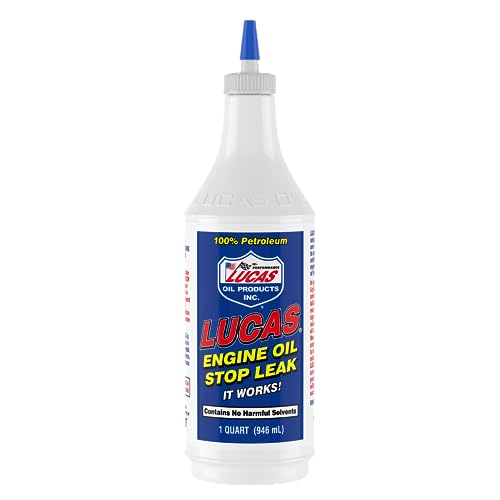
What We Like
- Renews worn seals without corrosion risk
- Reduces engine noise and oil consumption
- Raises oil pressure
- Works with all common motor oil types
Trade-offs
- Designed for leak stopping, not general wear reduction
- Does not claim to boost fuel economy or horsepower
A one-quart formulation designed to renew worn seals without the corrosive side effects some stop-leak products carry. That means you can address a slow oil weep or a noisy lifter without worrying about long-term damage to gaskets or internal components. For anyone dealing with an engine that’s started marking its territory on the driveway, this additive targets the root cause rather than just masking the problem.
This additive is formulated to stop leaks by renewing worn seals, using no harmful solvents that could cause corrosion. If your main concern is a persistent oil leak and the noise or pressure drop that often comes with it, that’s the job it’s built for. A product like Prolube Oil Treatment Additive is marketed for reducing wear, noise, and vibration while boosting fuel economy and horsepower, but it doesn’t claim the same seal-renewal chemistry.
Rislone XTREME LUBE Engine Treatment

What We Like
- Removes and prevents engine sludge
- Quiets noisy lifters and valves
- Reduces friction across temperature range
- Won't void manufacturer's new vehicle warranty
Trade-offs
- Single-use bottle requires full oil change cycle
- Sludge removal works gradually, not instantly
The 16.9-ounce bottle of Rislone XTREME LUBE is formulated to break down and hold sludge in suspension until your next oil change traps it in the filter. That targeted action makes it a good pick for engines already showing signs of deposit buildup, noisy lifters, sticky rings, or clogged oil passages. Its multi-grade formula also reduces friction over a broader temperature range, so you get protection whether starting cold or running hot. For anyone dealing with deposit buildup, this treatment addresses the issue directly.
Sludge removal happens gradually as deposits are loosened and carried away, so you won’t hear instant silence from a clattering valve. The formula is designed to penetrate into bearing surfaces, piston rings, and ring grooves where sludge and varnish form. Those deposits are held in suspension until they’re trapped in the filter or removed at the next oil change. Regular use with proper oil and filter changes keeps such deposits to a minimum. For a product that addresses both noisy lifters and valves while removing sludge, this covers the full scope of engine cleaning.
Archoil AR9100 Oil Additive
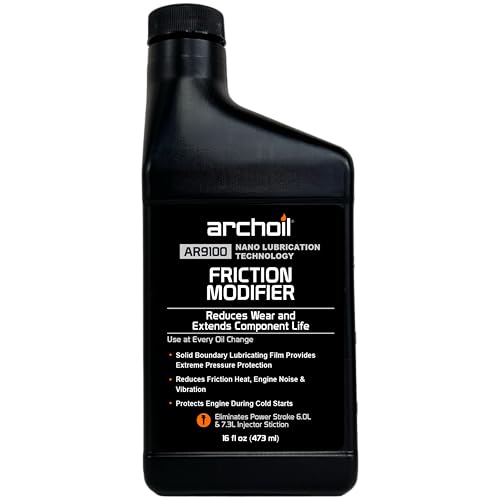
What We Like
- Eliminates injector stiction in HEUI engines
- Reduces noise, vibration, and heat
- Anti-wear barrier for longer component life
- Slows oil degradation and prevents sludge
Trade-offs
- 16 oz bottle treats only one 6.0L or 7.3L Power Stroke
- Not formulated for stop-leak or seal rejuvenation
- Requires careful measuring at 1.2 oz per quart
A 1.2 oz-per-quart treatment rate means you add a measured dose to your oil, but the key feature is the HEUI stiction fix. For 6.0L or 7.3L Power Stroke diesels, this additive targets injector stiction that causes cold start misfires, rough idle, and sluggish response. It also works in any gasoline or diesel engine, with anti-wear protection and quieter operation under load. If you own a Ford diesel with HEUI injectors, this additive addresses that specific issue.
Product photos
How We Evaluated Oil Treatments For Cars
Our evaluation began with a deep dive into each product’s chemical formulation, additive package, and manufacturer claims. We cross-referenced these against documented performance data, wear reduction percentages, temperature stability ranges, and compatibility with different oil types and filter systems, to separate genuine engineering from marketing hype.
The four criteria that mattered most were wear protection, temperature stability, engine compatibility, and the specific problem solved. Wear protection (ZDDP levels, friction modifiers) is critical for older engines and high-performance builds. Temperature stability ensures the additive doesn’t break down under extreme heat or thicken in winter. Compatibility with synthetic vs. Conventional oil, gasoline vs. Diesel, and modern emission systems like catalytic converters and stop-start tech determined each pick’s real-world usability.
This gives you a reliable framework for comparing options, but we encourage you to check your owner’s manual and consider your driving conditions before choosing.
What To Look For In Oil Treatments For Cars
Choosing the right oil treatment starts with knowing what your engine actually needs. Here are the key factors to weigh before you pour anything into your crankcase.
Match the additive to your engine’s age, oil type, and the specific symptom you’re fixing, noise, leaks, sludge, or wear. A high-mileage formula with seal conditioners is wrong for a new engine, just as a heavy-duty diesel additive won’t help a gasoline sedan with noisy lifters.
Engine Type and Oil Compatibility
The first check is whether the additive is designed for your engine’s fuel type (gasoline, diesel, or both) and oil system (conventional, synthetic, or blended). The Marvel Mystery Oil Synthetic Motor Treatment, for example, works only with synthetic oil, while the Lucas Oil Heavy Duty Oil Stabilizer is petroleum-based and suitable for conventional systems. Diesel-specific additives like the Archoil AR9100 target injector stiction in HEUI engines and won’t benefit a gas-powered car.
The Specific Problem You’re Solving
Oil treatments are specialized tools. If your engine has noisy lifters, a targeted formula like the Liqui Moly Hydraulic Lifter Additive or Hot Shot’s Secret Tick Fix Oil Additive cleans valve bores and quiets tappets. These avoid the extra additives found in general-purpose stabilizers. For oil leaks from worn seals, a stop-leak additive like the Lucas Oil Engine Oil Stop Leak or STP High Mileage Oil Treatment Stop Leak rejuvenates gaskets without the corrosion risk of some seal swellers.
Additive Chemistry and Viscosity Impact
Some treatments, like the Rislone XTREME LUBE Engine Treatment, are designed to gradually dissolve sludge over a full oil change cycle, while others provide immediate viscosity boosting. Thicker additives can cushion moving parts in high-mileage engines but may be hard to pour in cold weather or cause drag in small-displacement engines. Pay attention to the mixing ratio, the Prolube Oil Treatment Additive requires precise measuring for correct dosage, while the Lucas Oil Heavy Duty Oil Stabilizer is a simpler pour-in formula.
- Check your owner’s manual for any additive restrictions or warranty conditions.
- Confirm the treatment is compatible with your oil filter and emission system (catalytic converters, turbochargers).
- Measure carefully: some additives require exact ratios per quart of oil.
- Start with one treatment per oil change cycle to see results before adding more.
A single bottle of the right additive can solve a specific problem; the wrong one can create new ones.
Oil Treatments For Cars Compared
The table below compares all 10 oil treatments side by side, highlighting their primary strength, best use case, and key trade-off to help you narrow your choice.
| Product | Engine Types | Volume | Weight |
|---|---|---|---|
| Prolube Oil Treatment Additive | Gas & diesel | 1QT | N/A |
| Liqui Moly Cera Tec Oil Additive | Petrol & diesel | 300 ml | 0.7 pounds |
| Lucas Oil Heavy Duty Oil Stabilizer | N/A | 1 quart | 2.0 pounds |
| Marvel Mystery Oil Synthetic Motor Treatment | N/A | 16 oz | N/A |
| Liqui Moly Hydraulic Lifter Additive | N/A | 300 ml | 0.7 Pounds |
| Hot Shot's Secret Tick Fix Oil Additive | Modern gasoline engines | 32 oz | 2.0 pounds |
| STP High Mileage Oil Treatment Stop Leak | N/A | 15 fl oz | 0.9 Pounds |
| Lucas Oil Engine Oil Stop Leak | N/A | 1 Quart | 2.0 pounds |
| Rislone XTREME LUBE Engine Treatment | N/A | 16.9 oz | N/A |
| Archoil AR9100 Oil Additive | All diesel and gasoline engines | 16 oz | 1.0 pounds |
Frequently Asked Questions
What is the best oil treatment for reducing engine wear?
The Prolube Oil Treatment Additive is our Best Overall pick for wear reduction. It is formulated to reduce engine wear by up to 45% and works across gas and diesel engines, transmissions, and differentials, making it a versatile choice for most drivers.
Can oil additives stop engine oil leaks?
Yes, certain additives are designed to stop leaks. The Lucas Oil Engine Oil Stop Leak and STP High Mileage Oil Treatment Stop Leak both work by rejuvenating worn seals and gaskets, reducing oil consumption and smoking. They are best for engines over 75,000 miles with active leaks.
Which oil treatment is best for noisy lifters?
For noisy lifters, the Liqui Moly Hydraulic Lifter Additive is a top choice. It cleans valve bores and prevents noise from hydraulic tappets while being safe for turbochargers and catalytic converters. The Hot Shot’s Secret Tick Fix Oil Additive is another strong option for gasoline engines.
Will an oil treatment improve my fuel economy?
Some oil treatments can improve fuel economy by reducing internal friction and allowing the engine to run more efficiently. The Prolube Oil Treatment Additive specifically claims to boost fuel economy and horsepower, while general stabilizers like Lucas Oil Heavy Duty Oil Stabilizer focus more on extending oil life and reducing consumption.
How often should I use an oil treatment in my car?
Most oil treatments are designed for use at each oil change. Single-use bottles like the Rislone XTREME LUBE Engine Treatment or STP High Mileage Oil Treatment Stop Leak treat one full oil change cycle. Always follow the manufacturer’s recommended dosage and interval, and avoid using multiple additives at once.
The Bottom Line
For most drivers, the Prolube Oil Treatment Additive is the best all-around choice. It reduces wear, quiets noise, and works across gas and diesel engines, transmissions, and differentials. If you need precise temperature resistance for extreme driving conditions, the Liqui Moly Cera Tec Oil Additive is worth the extra consideration.
Budget-conscious drivers with high-mileage engines should look at the STP High Mileage Oil Treatment Stop Leak for its seal-rejuvenating properties and ZDDP protection. For those battling noisy lifters in a gasoline car, the Hot Shot’s Secret Tick Fix Oil Additive offers a targeted solution that works with modern stop-start systems.
The single most important factor is matching the additive to your engine’s specific need. Read your owner’s manual, identify the symptom you’re fixing, and pick the treatment that addresses it without adding unnecessary chemistry to your oil.
