
10 Best Primers For Bare Metal Cars in 2026
This post contains affiliate links. As an Amazon Associate, we earn from qualifying purchases.
The best primer for bare metal cars we found is the Rust-Oleum Automotive Self Etching Primer. It etches and primes in one step, stops rust, and dries to the touch in just 10 minutes. For those welding on bare panels, the Seymour PBE Professional Self Etching Primer offers zinc-enhanced protection, while the Eastwood 2K Epoxy Gray Primer is our choice for a durable direct-to-metal epoxy foundation.
The real challenge with bare metal is that it oxidizes almost instantly. A primer must etch into the surface for adhesion and seal it against corrosion, all while being practical to apply on a car panel in a home garage. Spray pattern, drying time, and compatibility with your topcoat matter just as much as the chemistry.
This guide is based on manufacturer specifications, application data, and patterns we found in owner feedback and expert how-to resources. We focused on adhesion, rust protection, application ease, and coverage to help you pick the right primer for your project, whether that is a small spot repair or a full panel.
Top 10 Primers For Bare Metal Cars in the Market
Certain content that appears on this site comes from Amazon. This content is provided "as is" and is subject to change or removal at any time.
The Best Primers For Bare Metal Cars, Reviewed
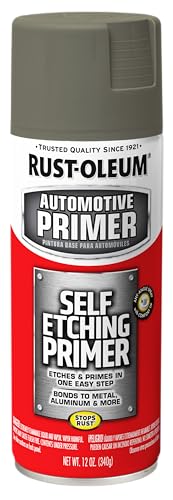
Rust-Oleum Automotive Self Etching Primer
What We Like
- Etches and primes in one step
- Stops Rust formula prevents corrosion
- Any-angle spray works upside down
- Dries to touch in 10 minutes
Trade-offs
- Only covers 12 sq ft per can
- Requires topcoat within 30 minutes for best results
The self-etching primer dries to the touch in 10 minutes and can be topcoated in 30 minutes, so you can move through a bare-metal repair without long waits. It bonds directly to bare metal, aluminum, or fiberglass, and its Stops Rust formula provides a rust-resistant base coat from the start. That speed and protection come without any mixing or extra steps, making it a straightforward foundation for car panels or truck beds that have been stripped clean.
Coverage is limited to 12 square feet per can, so a full-size hood or door will likely need two cans. Plan your budget accordingly. Compared to the Eastwood 2K Epoxy, which is a direct-to-metal epoxy primer for performance use on car body filler, this Rust-Oleum is better suited for quick repairs or smaller patches where you don’t need the extra build. The any-angle spray technology lets you hit tight spots without flipping the can, but if you’re tackling a whole vehicle, the Seymour PBE’s zinc-enhanced formula provides corrosion protection for welded auto body parts. For most DIY jobs, though, this is a smart starting point.
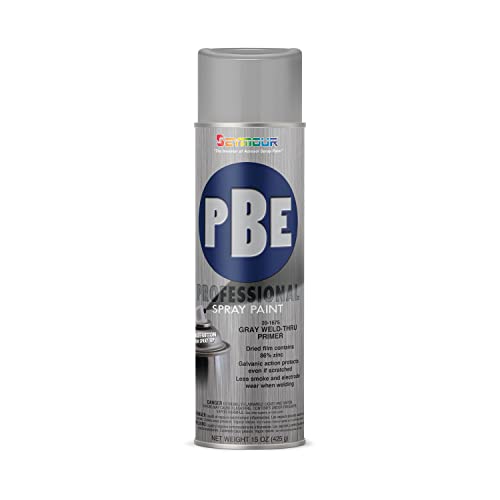
Seymour PBE Professional Self Etching Primer
What We Like
- Etches and primes in one step
- Zinc-enhanced electrochemical rust protection
- 86% pigment dry film for cleaner welding
- Heat resistant up to 250°F
Trade-offs
- 86% pigment dry film still produces less smoke than 100% zinc coatings, but some smoke is unavoidable.
The 86% pigment dry film in this primer produces less smoke and electrode wear when welding, and cuts faster than 100% zinc-rich coatings, which means cleaner weld prep for auto body work. The zinc-enhanced formula also provides electrochemical galvanic action that keeps protecting even if the coating gets nicked or chipped. This primer is a strong fit for anyone doing body panel welding on bare steel or aluminum, where corrosion protection after welding matters just as much as adhesion during prep.
For its intended job, etching and priming bare metal and aluminum in one step, the Seymour PBE delivers focused performance, but it is a dedicated weld-through primer, not a general-purpose epoxy. If you need a primer that also works on plastic or fiberglass, the Eastwood 2K Epoxy Gray Primer offers broader versatility, though it lacks the weld-through capability.
Product photos
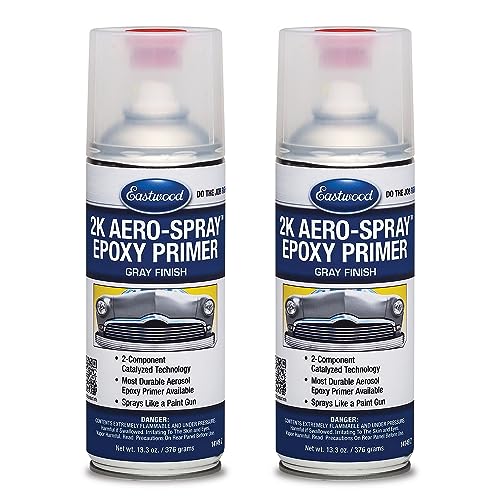
Eastwood 2K Epoxy Gray Primer
What We Like
- Direct-to-metal epoxy prevents rust
- 48-hour pot life after activation
- Works on steel, aluminum, fiberglass
Trade-offs
- Requires NIOSH-approved respirator for safety
- Must be used in well-ventilated area away from flame
- 12 oz can covers only 10-16 sq ft
A 48-hour pot life after you pop the activator means you can lay down this epoxy primer over a whole weekend without rushing. That two-component formula bonds directly to steel, aluminum, or fiberglass and prevents rust. For anyone prepping a bare-metal panel, this primer creates a durable finish that sets the stage for a new paint job.
The trade-off is the safety gear. Eastwood is upfront that you need a NIOSH-approved respirator and a well-ventilated space away from open flame, which is non-negotiable with a catalyzed epoxy. That puts it a step beyond simpler self-etching primers like the Rust-Oleum Self Etching Primer, which don’t demand the same precautions. If you are set up for the PPE and want a durable epoxy layer on bare metal, this primer is a strong option.
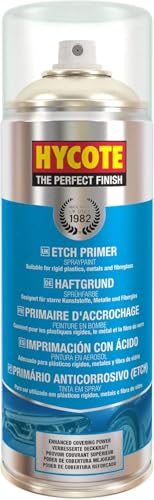
Hycote Etch Primer Spray Paint
What We Like
- Exceptional adhesion to non-ferrous metals
- Weatherproof and chip resistant
- Fast drying for quick project progress
- Works on rigid plastics too
Trade-offs
- Not suitable for copper or brass
- Aerosol limits coverage on large panels
This primer uses a specialty resin to provide a tough, durable coating with exceptional adhesion to non-ferrous metals like galvanized steel, aluminum, and zinc-coated surfaces. It also works on rigid plastics and fully cured paint, so it’s handy for mixed-material repairs or adding a fresh layer over an old finish. The result is a corrosion-resistant undercoat that improves paint adhesion for top coats.
It explicitly won’t bond to copper or brass, so if your project involves those metals you’ll need a different approach. Compared to Rust-Oleum’s self-etching primer, which is listed as a self-etching primer for automotive use, the Hycote is more specialized for non-ferrous metals. For aluminum body panels or galvanized frames, that focus can be a practical advantage when you need a primer that sticks well to those surfaces.
Product photos
U-POL Raptor Acid Etch Primer

What We Like
- One-step etching and priming
- Phosphoric acid ester for strong adhesion
- Anti-corrosive barrier prevents rust
- Flat fan nozzle for even coverage
Trade-offs
- 1K formula lacks a separate hardener
- Aerosol can limits coverage on large panels
The phosphoric acid ester formula is the key here, it chemically bites into slick surfaces like galvanized steel and aluminum, giving paint a foundation that won’t peel or flake. That single-step etch-and-prime action saves you time and guesswork. It makes this a strong option for anyone working on bare metal panels or touching up rub-throughs before color, especially if you want a tough, lasting shield against rust without needing a separate etching step.
This is a 1K aerosol, so you don’t get the added durability of a two-part epoxy system. For large jobs like a full quarter panel, the 13.2-ounce can means you’ll need several cans to get even coverage. But for spot repairs, small panels, or areas that see harsh conditions, the corrosion protection here is hard to beat for the convenience.
Product photos
U-POL Etching Primer Strong-Hold

What We Like
- Anti-clog spray nozzle for steady application
- Anti-rust technology protects bare metal
- Fast-drying for quick project progress
- Works on galvanized steel, aluminum, fiberglass
Trade-offs
- Not suitable for plastic surfaces
- Requires thorough surface prep before use
The anti-clog spray nozzle on this U-POL etching primer helps deliver a steady, even coat, which saves time when you’re priming bare metal panels that need multiple passes. The anti-corrosive formula helps prevent rust while providing maximum adhesion, so you’re prepping the surface and adding corrosion protection in one step. It dries fast, so you can move on to paint without long waits between coats. This primer is designed for bare metals like galvanized steel, aluminum, and fiberglass, making it a practical choice for those surfaces.
The biggest limitation is that this primer isn’t suitable on plastics, so bumpers or trim pieces will need a different product. Surface prep is mandatory: you have to clean, degrease, and sand the metal before spraying, or the adhesion won’t hold up. The anti-clog nozzle design helps deliver a smooth, steady application without fighting the can. For bare metal prep, it handles the tricky parts while keeping the spray consistent.
Product photos
Custom Shop Premium Self Etching Primer

What We Like
- Large 1-gallon can for big jobs
- Ready-to-spray, no mixing needed
- Etches and primes bare metal in one step
- Anti-corrosive for steel and aluminum
Trade-offs
- Requires spray equipment, not aerosol
- Needs proper surface prep for best adhesion
A full gallon of ready-to-spray primer means you can coat an entire truck bed, a set of fenders, or a whole project car without running back to the store. The self-etching formula bonds directly to bare steel and aluminum while adding anti-corrosion protection, so you skip the separate etching step.
This is a gallon can meant for spray application, not a grab-and-go aerosol. If you’re only doing a small patch or a single panel, a smaller aerosol like the Rust-Oleum self-etching spray may be more convenient. But for volume, this gallon gives you the freedom to lay down a uniform coat across a whole surface without worrying about running out halfway through.
Product photos
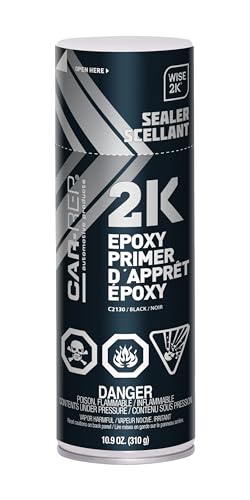
CAR-REP 2K Epoxy Primer
What We Like
- Unlimited potlife, no activation or mixing
- True 2K OEM corrosion resistance and adhesion
- Direct to metal, carbon fiber, and plastics
- Accepts putty without sanding, wet-on-wet topcoat
Trade-offs
- 11oz can covers less area than larger formats
- No self-etching chemistry for difficult bare metals
An 11oz aerosol that delivers true two-component epoxy performance without any mixing or activation is a rare find. The Wise 2K technology means you can set the can down, walk away, and come back hours later, it still sprays, no potlife clock ticking. That unlimited working time is a huge advantage when you’re priming a whole bare-metal panel or a set of small parts and don’t want to rush. For someone who wants OEM-level corrosion resistance and adhesion on metal, carbon fiber, or plastic, this can does what a traditional two-part epoxy does, but without the mess of measuring and mixing.
Coverage is the main limitation: at 11 ounces, you’ll go through a can faster than a larger quart or gallon mix, so bigger projects mean buying multiple cans. This epoxy primer relies on its own adhesion and anti-corrosion pigments for a durable, humidity-resistant barrier on clean, prepped surfaces.
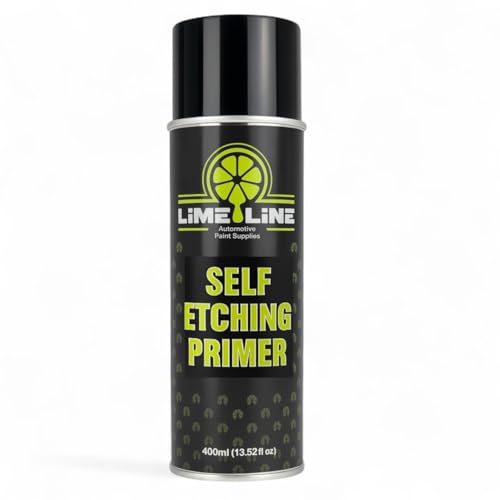
LiME LiNE Self Etching Primer
What We Like
- Acid-etch formula for bare metal adhesion
- Anti-rust protection seals against oxidation
- Ready for topcoat in 15-30 minutes
- Sands smooth with P400–P500 grit
Trade-offs
- Requires 2-minute shake after agitator ball frees
- Aerosol only; no bulk or spray-gun option
- Must invert can after use to clear valve
A fast-drying aerosol that lets you apply a topcoat in just 15-30 minutes means you can keep a restoration project moving without long waits between steps. The acid-etch formula chemically bonds to bare metal, which gives you strong adhesion and corrosion resistance right from the can. It sands easily with P400–P500 grit, so you can smooth out any imperfections before paint. This primer suits a DIY restorer who wants a quick, reliable base coat that won’t slow down a weekend workflow.
This is strictly an aerosol product, so if you’re spraying large panels or need to cover a whole car body, you’ll go through cans faster than a bulk option like the Eastwood 2K Epoxy Gray Primer. You also need to shake it for a full two minutes after the agitator ball rattles free, and remember to invert the can after each use to keep the valve from clogging. That routine is a small price for the speed and adhesion you get, but it is a step some users may find tedious.
Product photos
3M Mar-Hyde Self-Etching Primer

What We Like
- No thinning required before spraying
- Provides corrosion protection against rust
- Cures quickly for faster workflow
- Ready-to-use aerosol convenience
Trade-offs
- For industrial/occupational use only
- Limited to small bare metal applications
This self-etching aerosol comes in a 19-ounce can and is designed for small bare metal areas that come up during repair work. It sprays straight from the can with no thinning required, so you can move from sanding to priming without mixing or cleanup. The quick cure time helps keep your workflow moving, which is useful when you’re doing multiple small repairs. If your project involves touch-ups and patchwork rather than full panels, this primer fits that need.
3M targets this for industrial or occupational use only, not for consumer sale or use, so some DIYers may find that off-putting. Compared to the Rust-Oleum Self Etching Primer, which weighs 0.8 pounds, this 3M can is heavier at 1.4 pounds. For someone who needs a reliable etch primer for small fixes and values speed and simplicity, this product is a good option. Just know it’s intended for professional shop use, not for hobbyists.
Product photos
How We Evaluated Primers For Bare Metal Cars
We built this guide by analyzing manufacturer product data sheets, application instructions, and technical specifications for each primer. We also reviewed patterns in owner feedback across automotive forums and restoration communities to understand real-world performance and common frustrations.
Our evaluation centered on four criteria. Adhesion chemistry was first because a primer that fails to bond to bare metal is useless. Rust protection came next, looking at whether a formula is self-etching, epoxy-based, or contains zinc additives. Application method and coverage mattered for practical use, from aerosol convenience to bulk gallon options. Finally, we considered recoat windows and compatibility with common topcoats.
A research-led evaluation like this has limits. We did not spray these primers ourselves, and real-world results depend heavily on surface preparation, temperature, humidity, and application technique. Our goal is to give you the technical facts and owner-reported patterns so you can make an informed choice for your specific project.
What To Look For In Primers For Bare Metal Cars
Choosing the right primer means matching the chemistry to your metal type and your project scale. Self-etching primers are the most common choice for steel, while epoxy primers offer superior corrosion barriers for long-term builds.
Pick a primer that matches your metal type (steel, aluminum, galvanized), your application method (aerosol or spray gun), and your recoat timeline. The wrong chemistry or a missed prep step can ruin the final paint job.
Adhesion Chemistry
The primer must etch into bare metal for a mechanical bond. Self-etching primers contain phosphoric acid that etches the surface while depositing a corrosion-inhibiting coating. Epoxy primers bond directly to clean metal and create a tough, moisture-resistant film. For non-ferrous metals like aluminum, an etch primer designed for those surfaces is essential.
Rust and Corrosion Protection
Look for primers with anti-corrosive additives. Self-etching formulas often include zinc phosphate or similar compounds. Epoxy primers provide a dense barrier that blocks moisture. For welding applications, a weld-through primer with high zinc content protects the bare metal in the weld zone.
Application and Coverage
Aerosol cans are convenient for small repairs and spot work, but coverage is limited. A 12-ounce can typically covers 10 to 16 square feet. For larger panels, a gallon of ready-to-spray primer requires a paint gun but offers better value and consistency. Check the recoat window: some self-etching primers require a topcoat within 30 minutes for best adhesion.
- Match the primer type to your metal: self-etching for steel, dedicated etch for aluminum, epoxy for mixed substrates.
- Check the recoat window to avoid sanding and re-priming.
- Ensure you have proper ventilation and a respirator for 2K epoxy primers.
- Test spray pattern on scrap metal before applying to your panel.
- Clean and degrease bare metal thoroughly before any primer application.
A clean, oil-free surface is the single most important factor for primer adhesion.
Primers For Bare Metal Cars Compared
The table below compares all ten primers side by side, covering their chemistry, best-use metal types, and application format so you can quickly see which one fits your project.
| Product | Type | Surface Compatibility | Dry Time |
|---|---|---|---|
| Rust-Oleum Automotive Self Etching Primer | Self-etching | Bare metal, aluminum, fiberglass | 10 minutes |
| Seymour PBE Professional Self Etching Primer | Self-etching / weld-through | Bare steel and aluminum | N/A |
| Eastwood 2K Epoxy Gray Primer | 2K epoxy | Car body panels, aluminium, steel, or fiberglass | N/A |
| Hycote Etch Primer Spray Paint | Self-etching | Non-ferrous metals | Fast Drying |
| U-POL Raptor Acid Etch Primer | 1K aerosol | Galvanized steel, aluminum, bare metal | N/A |
| U-POL Etching Primer Strong-Hold | Self-etching primer | Bare metal, aluminum, fiberglass | Fast-drying |
| Custom Shop Premium Self Etching Primer | Self-etching | Bare metal, steel, aluminum, fiberglass | 60 minutes |
| CAR-REP 2K Epoxy Primer | 2K epoxy | Metals, carbon fiber, plastics | N/A |
| LiME LiNE Self Etching Primer | Acid-etch self-etching primer | Bare metal | 15-30 minutes |
| 3M Mar-Hyde Self-Etching Primer | Self-etching aerosol | Small bare metal repairs | Quick curing |
Frequently Asked Questions
Do I need to sand bare metal before applying self-etching primer?
Yes. Bare metal should be sanded with fine grit sandpaper to create a mechanical tooth for the primer to grip. The surface must also be completely clean and free of oil, grease, and rust before spraying.
Can I use self-etching primer on aluminum?
Many self-etching primers work on aluminum, but you need one specifically formulated for non-ferrous metals. The Hycote Etch Primer Spray Paint is designed for aluminum and galvanized steel. Always check the product label for compatibility.
How long should I wait before painting over primer?
It depends on the primer type. Some self-etching primers require a topcoat within 30 minutes for best adhesion. Others can be sanded and painted after 15 to 30 minutes. Epoxy primers often have a longer recoat window. Always follow the manufacturer’s instructions.
What is the difference between self-etching primer and epoxy primer?
Self-etching primer uses acid to etch the metal and deposit a thin, corrosion-inhibiting coating. Epoxy primer bonds directly to clean metal and forms a thicker, more durable barrier against moisture and chemicals. Epoxy is generally preferred for long-term restorations.
Can I use a weld-through primer on the whole car panel?
Weld-through primers are designed for weld flanges and areas that will be welded. They contain zinc that conducts electricity and protects the weld zone. Using them on the entire panel is not recommended because they are not intended for topcoating in the same way as a self-etching or epoxy primer.
The Bottom Line
For most DIY restorers and spot repairs on bare steel, the Rust-Oleum Automotive Self Etching Primer is the best overall choice. It etches and primes in one step, dries fast, and its Stops Rust formula gives you corrosion protection without needing a separate etching step.
If you are welding on bare panels, reach for the Seymour PBE Professional Self Etching Primer for its zinc-enhanced weld-through protection. For a heavy-duty epoxy base on steel, aluminum, or fiberglass, the Eastwood 2K Epoxy Gray Primer delivers a durable barrier, provided you have the ventilation and respirator gear for safe use.
The single most important factor in any bare metal primer job is surface preparation. Clean, sand, and degrease your metal thoroughly before spraying, and your primer will do its job.
