
9 Best Rust Stoppers For Cars in 2026
This post contains affiliate links. As an Amazon Associate, we earn from qualifying purchases.
For stopping car rust, the Rust-Oleum Stops Rust Reformer Spray is our best overall pick because it converts rust without sanding to bare metal and sprays at any angle, including upside down. For a fast-drying option that handles engine-bay heat, the Eastwood Rust Encapsulator Aerosol is a top choice. DIYers wanting a self-priming converter that skips sanding should look at the Eastwood Rust Converter Aerosol.
The real challenge with rust isn’t just covering it, it’s stopping the chemical reaction that spreads corrosion under paint. You need a product that penetrates the rust, converts it into a stable compound, and seals it from moisture and oxygen. Choosing the wrong treatment means the rust comes back in months.
We built this guide by analyzing manufacturer specifications, expert advice on rust chemistry, and patterns in owner feedback across dozens of products. The result is nine picks that match specific car-care needs, from fast touch-ups to large-frame restorations.
Top 9 Rust Stoppers For Cars in the Market
Certain content that appears on this site comes from Amazon. This content is provided "as is" and is subject to change or removal at any time.
The Best Rust Stoppers For Cars, Reviewed
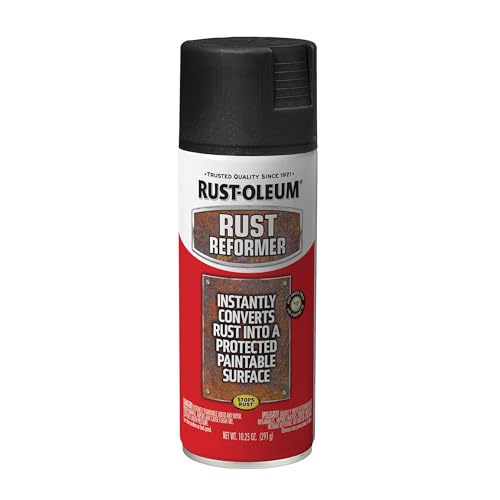
Rust-Oleum Stops Rust Reformer Spray
What We Like
- Converts rust without sanding to bare metal
- Any-angle spray works upside down
- Dries tack free in 20-40 minutes
- Creates paintable, rust-proof surface
Trade-offs
- Needs 24 hours before applying topcoat
- Oil-based formula requires solvent cleanup
This spray converts rust into a flat black, paintable surface without needing to sand down to bare metal, saving time on rusty metal parts. The any-angle spray technology lets you apply it even upside down, which helps reach awkward spots on a car or metal fixture. It dries tack-free in 20 to 40 minutes, so you can keep working on a weekend project without long waits. The oil-based formula bonds with rust and prevents future corrosion, and once it cures for 24 hours, you can paint over it. That combination of convenience and corrosion protection makes it a practical choice for anyone dealing with rust on metal surfaces.
The Rust-Oleum Stops Rust Reformer Spray needs a full 24-hour cure before you can apply a topcoat. That can stall a one-day paint job. Compared to the Eastwood Rust Encapsulator Aerosol, which offers heat resistance up to 400 degrees Fahrenheit, this Rust-Oleum is better suited for surfaces that do not see extreme heat, such as body panels or interior metal, rather than exhaust components or engine bays. If you are working on a part that sees high temperatures, the Eastwood is the smarter pick. But for general rust conversion on most metal surfaces, the any-angle spray and no-sanding convenience make this a versatile option.
Eastwood Rust Encapsulator Aerosol

What We Like
- Dries to touch in 20 minutes
- Heat resistant up to 400°F
- Penetrates deep into metal
Trade-offs
- Requires 6-8 hours before top coat
- Needs 220-grit sanding of surrounding paint
A 20-minute dry-to-touch time means you can move a car back into position or apply a second coat within an hour. That is a real advantage when you’re working on multiple rust spots in a single afternoon. The 400°F heat resistance also opens up engine-bay and brake-area use that many encapsulators can’t handle. This makes it a strong fit for DIYers who want a fast-drying, durable barrier on surface rust without waiting all day between steps.
The flat black finish and need to feather surrounding paint with 220-grit sandpaper mean it’s not a spray-and-walk-away solution. If you prefer a converter that bonds directly to rust without sanding, the Rust-Oleum Stops Rust Reformer Spray skips that prep step entirely. But for those who want a heat-tolerant, UV-resistant encapsulator that dries fast and lets you top-coat the same day, this Eastwood aerosol delivers exactly what its specs promise.
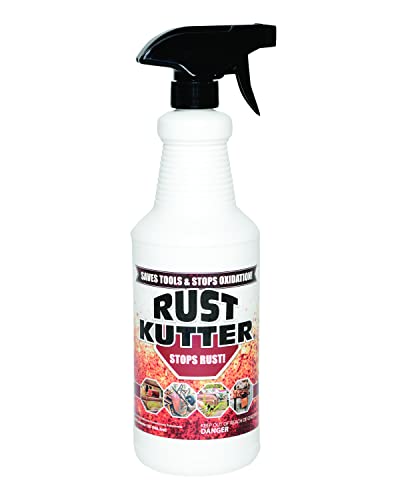
Rust Kutter Rust Converter Spray
What We Like
- Converts rust to stable paintable surface
- Creates protective barrier against further rust
- Works on car bodies and metal tools
Trade-offs
- Requires paint over converted surface for finish
- Heavier than some aerosol competitors at 2.8 lb
This 2.8-pound bottle includes a sprayer, so you can apply the converter directly to rusted metal without needing a separate tool. The product chemically reacts with rust to form a stable black compound that can be painted over. It is designed for metal surfaces like car bodies, tools, and outdoor equipment, making it a good fit for larger rust repair jobs.
The converted surface will need a topcoat of paint to achieve a finished look, unlike some encapsulators that can serve as a final coat. For instance, Eastwood’s Rust Encapsulator Aerosol offers UV and heat resistance up to 400°F and dries quickly, but Rust Kutter is formulated for thorough chemical conversion before painting. If you prefer a product that does not require a separate paint layer, the Eastwood option may be more suitable. For those who want to properly prep rusted metal for painting, this converter with its included sprayer is a straightforward option.
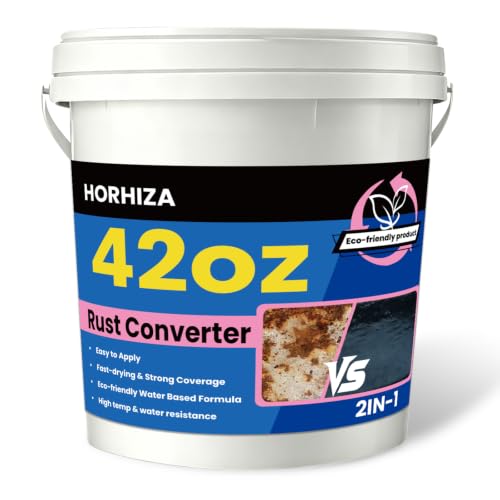
HORHIZA 2-in-1 Rust Converter & Primer
What We Like
- Eco-friendly water-based, low odor
- Converts rust and primes in one step
- Works on steel, iron, aluminum
Trade-offs
- Requires 24-hour dry time between coats
- Needs 2-3 thin coats for best results
A water-based formula that skips harsh solvents and cleans up with plain water makes this a standout for anyone who wants effective rust protection without the heavy fumes. It converts existing rust into a stable coating while priming the surface, so you can treat and seal in one step. This is the pick for DIYers and professionals who prioritize a safer, low-odor workspace without sacrificing durability.
Each coat needs a full 24 hours to dry, and the application method described is with a brush, so you’ll spend more time on intricate shapes than you might with an aerosol. But if you’re working on a flat panel or a frame you can reach easily, the extra time pays off in a smooth, tightly bonded finish that doesn’t need a separate primer. Just plan for a weekend project rather than a quick afternoon fix.
Product photos
Eastwood Rust Converter Aerosol

What We Like
- Converts rust into a primed surface
- No sanding, scraping, or grinding required
- Ready to paint over with oil or water paint
Trade-offs
- Requires appropriate respiratory protection during use
- 90-day limited warranty is shorter than some alternatives
This aerosol chemically converts rust into a black primed coating without any sanding or scraping. That makes it a time-saver for surface rust on steel components like those on a car, tractor, truck, or barn find chassis. You simply spray it on, the polymeric formula reacts with iron oxide, and the result is a sealed, paintable surface. That self-priming ability is why it stands out for projects where you want to skip the prep work and get straight to painting. It suits DIYers who need a straightforward rust treatment that also acts as a primed base, especially on larger metal components where grinding every spot would be tedious.
The 13-ounce aerosol can is smaller than some competitors like the FDC Rust Converter Ultra gallon, so for a large project you might need more than one can. The 90-day warranty is also shorter than what some other brands offer, which matters if you’re stocking up for long-term work. For spot repairs, small parts, or barn finds where convenience is key, this Eastwood converter does the job cleanly.
Product photos
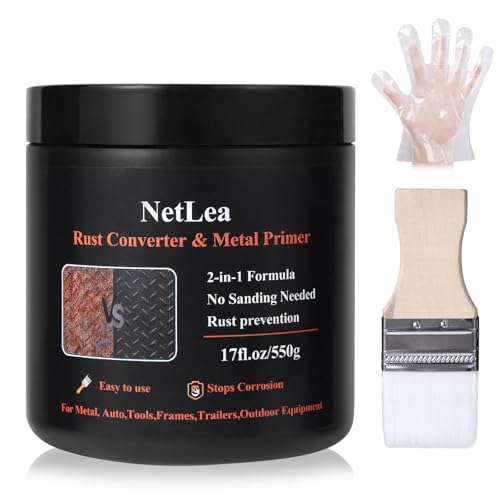
NetLea 2-in-1 Rust Converter & Primer
What We Like
- No sanding required before application
- Dries to matte black in 2 hours
- Heat resistant up to 350°F
- Works with oil- or water-based topcoats
Trade-offs
- Only for light to moderate rust, not heavy
- Requires 24 hours for full cure
- Water-based formula needs ventilation during use
A 2-hour dry time means you can brush on a coat in the morning and have it ready for a second coat by lunch. This NetLea converter goes straight over light to moderate rust with no sanding, wire brushing, or grinding, just open the can and start working. For anyone patching up a truck undercarriage, trailer frame, or a set of hand tools, that convenience saves a whole afternoon of prep work. It chemically converts rust into a stable black barrier that also acts as a primer, so you can follow up with whatever topcoat you already have, oil-based or water-based. The 350°F heat resistance means it holds up near exhaust components or engine bays, and the matte black finish looks clean without being glossy.
The real limitation here is that this converter only handles light to moderate rust. If you’ve got thick, flaking rust that crumbles at a touch, you’ll still need to knock that loose first, no converter can replace missing metal. Compared to the Rust-Oleum Stops Rust Reformer Spray, which is spray-only, the NetLea lets you brush or roll it on. Just make sure you’re working in a ventilated space; the mild odor is manageable, but you’ll want a window open.
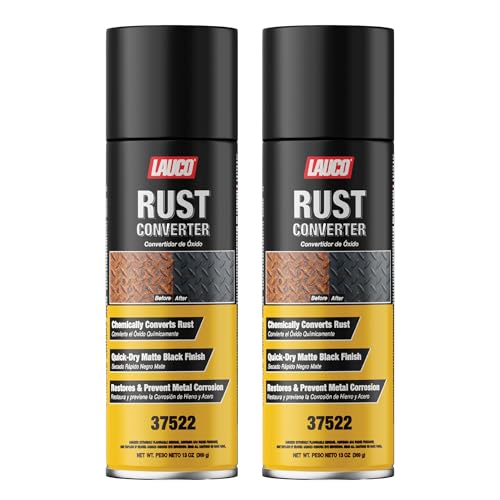
LAUCO Rust Converter Spray 2-Pack
What We Like
- Two cans for extended coverage
- Chemical conversion eliminates heavy sanding
- Dries fast to a paintable matte finish
- Aerosol reaches frames and undercarriages
Trade-offs
- Matte black finish only, no gloss option
- No UV or heat resistance beyond standard coating performance
A two-pack of 13-ounce aerosol cans means you can treat a full car frame or a set of boat components without running out halfway through. This LAUCO spray chemically reacts with rust on contact, turning iron oxide into a stable black coating that bonds to the metal, so you skip the heavy sanding or grinding that other rust treatments demand. It dries fast to a matte finish you can paint over or leave as-is, making it a practical choice for DIYers tackling automotive restoration, marine hardware, or outdoor metal furniture without needing special tools or experience.
The matte black finish is the only look you get, so if you need a gloss topcoat or a color-matched repair, you will have to paint over it. The two-pack format provides extended coverage for larger areas or multiple projects, which can be a practical advantage for users covering frames, undercarriages, or boat components. This makes it a convenient option for anyone who needs more than a single can, as long as you are comfortable with the final matte appearance or plan to paint over it.
Ideal for DIY car owners and marine enthusiasts who want an affordable two-pack rust converter with fast drying and easy aerosol coverage. Not ideal for those who need a glossy finish straight from the can or a product that works on bare metal without rust present.
Product photos
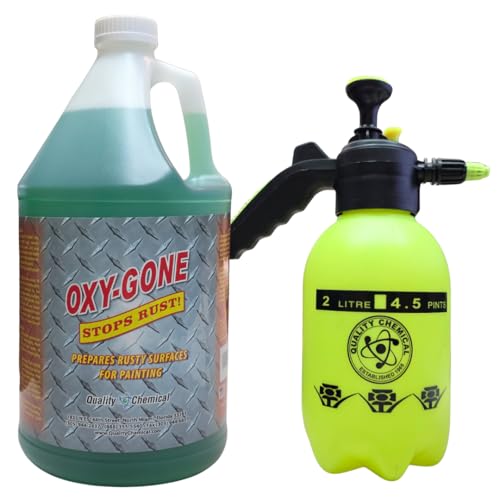
Quality Chemical Oxy-Gone Rust Converter
What We Like
- Water-thin formula covers more area
- Includes 2L pressure sprayer
- Works on rusted steel, bare metal, galvanized surfaces
Trade-offs
- Requires separate topcoat paint for finish
- Water-thin formula can drip on vertical surfaces
- Needs loose rust removal before application
A full gallon of rust converter plus a 2-liter pressure sprayer means you can cover a truck frame, trailer, or set of gates without stopping to refill or switch cans. The water-thin formula converts rust to iron phosphate, creating a hard black surface that resists moisture. For someone tackling a large project with both broad flat areas and tight corners, the ability to brush or spray from the same gallon is a real time-saver. This setup suits DIYers working on vehicle frames, trailers, fences, and other ferrous metal surfaces.
A gallon of Oxy-Gone and a 2-liter pressure sprayer come together in one package, so you can tackle large rusty fences, trailers, or vehicle frames without stopping to reload. The formula chemically converts iron oxide into a hard, inert black surface that oxygen and moisture can’t attack. That means rust stops spreading instead of coming back. Because it’s a primer, not a paint, you will need to apply a topcoat afterward for the final look, but that extra step ensures your paint bonds tightly and lasts far longer than it would over untreated metal.
Product photos
Bartoline Rust Converter Spray

What We Like
- Converts rust in 15 minutes
- Self-priming saves a step
- Spray application is simple
- Works on automotive parts and tools
Trade-offs
- Single 13.5 oz can covers limited area
- Only for ferrous metals, not aluminum
Fifteen minutes is all it takes for this spray to turn rust into a stable, paintable surface. That speed makes it the go-to when you need to treat a rust spot and move on with your project the same day. The self-priming formula means you skip the extra primer step, so cleaning and spraying is the whole job. For anyone working on automotive parts, tools, or garden furniture who wants a fast, no-fuss fix, this delivers exactly that.
The 13.5 oz can treats rust in just 15 minutes, so a small patch on a tool or a garden chair can be prepped and ready to paint in the same afternoon. For a full car door or a long fence section, you might want to grab a couple of cans, because the spray covers a limited area per can. That quick turnaround makes it ideal for spot repairs where you don’t want to wait around.
Product photos
How We Evaluated Rust Stoppers For Cars
Our evaluation started with the core chemistry: does a product convert iron oxide (rust) into a stable, paintable surface, or does it merely encapsulate it? We studied manufacturer data sheets to understand active ingredients, dry times, and surface preparation requirements. We then cross-referenced that with patterns in owner feedback to see how products performed in real-world conditions like road salt, humidity, and engine heat.
We focused on four criteria that matter most for car rust treatment. Surface preparation was the first: products that require sanding to bare metal add hours of labor, while no-sanding formulas save time but may not bond to heavy flaking rust. Dry and cure time came next, since a product that dries in 20 minutes but needs 24 hours before a topcoat changes your workflow. Heat resistance mattered for engine bay and brake area applications. Versatility of application, aerosol vs. Brush-on vs. Sprayer, determines how easily you can treat tight crevices, undercarriages, or large panels.
This is a research-led evaluation, not a hands-on lab test. We did not apply these products ourselves or measure corrosion resistance under controlled conditions. Our recommendations are based on what the specifications, expert consensus, and collective owner experience tell us.
What To Look For In Rust Stoppers For Cars
Choosing the right rust stopper means matching the product’s chemistry and application method to the severity and location of the rust on your vehicle. The wrong choice wastes time and money.
Pick a rust converter for moderate rust you can’t fully remove; pick an encapsulator for surface rust in high-heat areas; pick a reformer if you want a finished, paintable surface without a separate topcoat.
Rust Converter vs. Encapsulator vs. Reformer
A rust converter chemically reacts with iron oxide to create a stable, black layer that can be painted over. It works best when you’ve removed loose rust but left some firmly attached. An encapsulator seals rust in a flexible, moisture-proof coating but doesn’t change its chemistry; these are often heat-resistant for engine bays. A reformer combines both actions and leaves a textured black finish that needs no topcoat. For car body panels, converters and reformers are standard; for frames and suspension parts, encapsulators add durability.
Application Method and Surface Prep
Aerosols reach tight spots and undercarriages without dripping, but they require careful coverage and can overspray onto paint. Brush-on or sprayer formulas cover large areas faster but need more cleanup. The biggest time saver is a no-sanding formula, but be honest about your rust: heavy, flaking rust still needs mechanical removal with a wire brush or grinder before any product will bond.
Dry Time, Cure Time, and Heat Resistance
Fast-drying products (20 minutes to touch) let you apply multiple coats in an afternoon, but most require 6 to 24 hours before a topcoat. If you’re painting the same day, look for a product that accepts paint within the manufacturer’s recoat window. For engine bays, brake calipers, or exhaust components, check the heat rating; 400°F is a common threshold for high-heat encapsulators. Standard converters will burn off or discolor above lower temperatures.
- Check if the product requires a separate topcoat for UV or abrasion resistance.
- Verify the metal type: most converters work on steel and iron, but few work on aluminum.
- Look for any-angle spray nozzles if you’ll be treating frame rails or wheel wells.
- Read the warranty: some products offer 90 days; others have longer coverage.
- Confirm the solvent type, oil-based needs mineral spirits for cleanup; water-based washes up with soap.
A good rule: if you can see orange rust, you need a converter; if the rust is black and stable, an encapsulator will seal it.
Rust Stoppers For Cars Compared
The table below compares all nine rust stoppers side by side, covering their key specs, application methods, and best use cases so you can quickly narrow your choice.
| Product | Formula Type | Drying Time | Finish |
|---|---|---|---|
| Rust-Oleum Stops Rust Reformer Spray | Oil based | 20-40 minutes tack free; 24 hours topcoat | Flat black, paintable |
| Eastwood Rust Encapsulator Aerosol | N/A | 20 min to touch | Flat black |
| Rust Kutter Rust Converter Spray | N/A | N/A | N/A |
| HORHIZA 2-in-1 Rust Converter & Primer | Water-based | 24 hours | Smooth, tightly bonded |
| Eastwood Rust Converter Aerosol | N/A | N/A | N/A |
| NetLea 2-in-1 Rust Converter & Primer | N/A | 2 hours to touch | Matte black |
| LAUCO Rust Converter Spray 2-Pack | N/A | Quick-dry | Quick-dry matte black |
| Quality Chemical Oxy-Gone Rust Converter | N/A | N/A | N/A |
| Bartoline Rust Converter Spray | N/A | 15 minutes | N/A |
Frequently Asked Questions
Can I paint over a rust converter?
Yes, most rust converters create a paintable surface, but you must follow the manufacturer’s dry and cure times before applying your topcoat. Some products, like the Rust-Oleum Stops Rust Reformer Spray, act as both converter and finish coat, while others, like the Rust Kutter Rust Converter Spray, require a separate paint layer for a finished look.
Do I need to sand before using a rust stopper?
It depends on the product and the rust condition. Several picks, including the Eastwood Rust Converter Aerosol and the NetLea 2-in-1 Rust Converter & Primer, are designed to work without sanding. However, loose or flaking rust must always be removed with a wire brush or scraper first. Heavy rust that is actively bubbling or pitting requires mechanical removal before any converter will bond properly.
How long does a rust converter treatment last?
A properly applied rust converter can last several years, but its longevity depends on surface preparation, the number of coats, and exposure to road salt, moisture, and UV. Products with a separate topcoat or paint layer generally outlast single-step treatments. For best results, treat rust as soon as you spot it, and consider a wax or undercoating over the treated area for added protection.
What is the difference between a rust converter and a rust encapsulator?
A rust converter chemically changes iron oxide into a stable, inert compound, usually iron tannate, which stops the corrosion process. A rust encapsulator seals the rust in a flexible, moisture-proof coating but does not alter the rust chemically. Encapsulators like the Eastwood Rust Encapsulator Aerosol are better for high-heat areas, while converters are the standard choice for body panels.
Can I use a rust stopper on my car’s exhaust system?
Only if the product is rated for high heat. Most standard rust converters are not suitable for exhaust manifolds or catalytic converters because the heat burns off the coating. Look for an encapsulator with a heat rating of at least 400°F, such as the Eastwood Rust Encapsulator Aerosol, for exhaust components. For exhaust manifolds that exceed 400°F, use a specialized high-heat paint designed for that purpose.
The Bottom Line
For most car owners, the Rust-Oleum Stops Rust Reformer Spray is the best all-around solution. It converts rust without the hassle of sanding to bare metal, its any-angle spray makes undercarriage work easy, and it dries to a finish that doesn’t need a topcoat. It’s the pick for anyone who wants a straightforward, durable fix for rust spots on their car body, frame, or tools.
If your rust is in a high-heat area like an engine bay or brake backing plate, the Eastwood Rust Encapsulator Aerosol is the better choice for its 400°F heat resistance. For budget-conscious DIYers tackling large areas, the LAUCO Rust Converter Spray 2-Pack gives you two cans of fast-drying aerosol at a solid value. And if you prefer an eco-friendly, low-odor formula for indoor work, the HORHIZA 2-in-1 Rust Converter & Primer is worth the longer dry time.
The single most important factor in stopping rust permanently is surface preparation. No product can fix rust that hasn’t been properly cleaned of loose scale, grease, and dirt. Choose the product that matches your rust severity and your willingness to prep, and you’ll keep your car solid for years to come.
