
10 Best Seam Sealers For Cars in 2026
This post contains affiliate links. As an Amazon Associate, we earn from qualifying purchases.
For sealing body seams against moisture and corrosion, the 3M Urethane Seam Sealer is the best overall pick, thanks to its permanently flexible, non-shrinking formula that paints quickly. If you need a heavy-duty, non-sag option for vertical panels, the 3M Heavy-Bodied Seam Sealer is a good option. For restorers aiming for an OEM look, the Custom Shop Brushable Seam Sealer delivers a fast-drying, brushable finish that holds brush marks.
The real challenge with seam sealers isn’t just picking one, it’s matching the formula to your specific repair. A thick, non-sag sealer is essential for vertical seams, while a brushable type works better for covering wide flanges. You also need to consider cure time, paintability, and whether the sealer bonds to bare metal or just painted surfaces.
This guide is built from manufacturer specifications, expert round-ups, and patterns we found in owner feedback across dozens of models. We’ve organized the top options by their strengths so you can match the right sealer to your project without guesswork.
Top 10 Seam Sealers For Cars in the Market
Certain content that appears on this site comes from Amazon. This content is provided "as is" and is subject to change or removal at any time.
The Best Seam Sealers For Cars, Reviewed
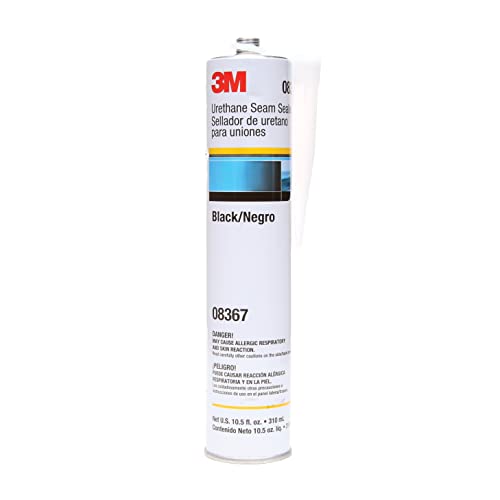
3M Urethane Seam Sealer
What We Like
- Non-shrinking, non-cracking formula
- Permanently flexible after cure
- Quick paintability in 30-45 minutes
- Adheres to bare metal and painted surfaces
Trade-offs
- Thick consistency requires smoothing or brushing
- Requires moisture in air to cure properly
A single-component urethane that cures with moisture in the air means you get a permanently flexible seal that won’t shrink or crack over time. That flexibility is critical on a car body, where panels flex and vibrate as you drive. The thick consistency fills large gaps cleanly, and you can smooth it to a featheredge or brush it out for a factory-like finish. It also grabs bare metal, primed metal, and painted surfaces without extra steps, so it works for both quick repairs and full restoration work. This is the sealer to reach for when you want one tube that handles everything from door seams to floorpan joints without fuss.
The 3M Urethane Seam Sealer is a single-component formula that adheres well to bare metal, primed metal, and painted surfaces. Its moisture-curing property provides excellent performance in high heat and humidity environments. It remains flexible, non-shrinking, and non-cracking, offering superior results to solvent-based sealers. You can paint over it after 30-45 minutes, and its thick consistency fills large voids, which you can smooth to a featheredge or brush.
Product photos
3M Heavy-Bodied Seam Sealer
What We Like
- Self-mixing cartridge eliminates manual mess
- Non-flowing formula for vertical seams
- Quick-cure, non-sag property
Trade-offs
- 200 ml cartridge is smaller than many competitors
- Labeled for industrial/occupational use only
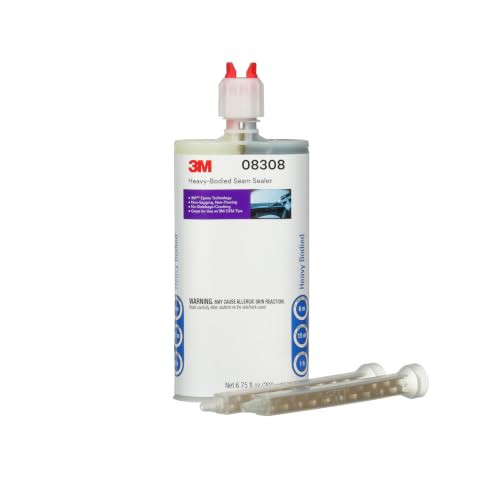
A two-part epoxy that self-mixes inside the dual syringe cartridge, so you never have to stir or guess ratios, just squeeze and apply. The heavy-bodied, non-flowing formula holds its shape on vertical panels and cures quickly without sagging, which makes tooling to match original factory seams straightforward. This cartridge is designed for sealing vertical and horizontal seams where a rigid, non-sag epoxy is needed, and where you want the precision of a metered mix without the cleanup of a brushable sealer.
For full floor replacements or rigid body seams requiring maximum strength and a factory-like finish, this two-part epoxy seals both vertical and horizontal seams to match OEM seals. The heavy-bodied, non-flowing formula allows easy tooling for replicating OEM seam sealer appearances, and its non-sag property aids during vertical applications. The dual syringe cartridge eliminates the mess of manual mixing while ensuring a perfect formulation every time. Weighing just half a pound, the cartridge is compact enough to keep in a tool drawer or carry to a job site. Note that this product is intended for industrial or occupational use only, not for consumer sale or use.
Product photos
Custom Shop Brushable Seam Sealer

What We Like
- Dries fast, paintable in under an hour
- Holds brush marks for OEM seam look
- Flexible finish resists cracking and sagging
- Strong adhesion on lap and flange seams
Trade-offs
- Brush application slower than cartridge guns
- Quart can requires brush, not spray or cartridge application
A quart can holds 30.4 fluid ounces of brushable seam sealer, enough for multiple body seams and joints without needing a second can. This fast-drying formula is paintable in 30 to 60 minutes and stays flexible, so it resists cracking or sagging as the vehicle moves. The brush application holds marks that replicate OEM seams, and the light gray finish accepts paint directly. For anyone restoring body panels or doing a full paint job, this sealer provides a professional-looking result with time to work it smooth.
The deciding factor here is application method. Brush-on sealers demand more manual effort than cartridge-based ones, and the quart can holds 30.4 fluid ounces, over three times the volume of a 10.5-ounce 3M Urethane Seam Sealer cartridge. That extra capacity suits large jobs like full restorations, but for a quick single-spot repair, a smaller cartridge might be handier.
Product photos
LAUCO Maxi-Seal Polyurethane Seam Sealer
What We Like
- Six-tube pack for large or multiple jobs
- Non-shrinking, non-cracking, flexible formula
- Brushable for precise, OEM-style seams
- Works on bare, primed, or painted metal
Trade-offs
- Moisture-curing means slower dry in dry climates
- Single-component requires careful storage to avoid skinning
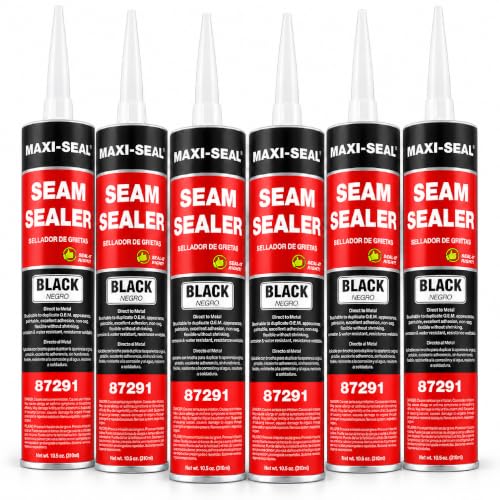
This six-pack of 10.5-ounce tubes gives you a generous amount of polyurethane seam sealer for large jobs or multiple repairs. The single-component formula stays flexible over time and resists shrinking or cracking, so joints hold up through weather changes and road vibration. It brushes on smoothly and includes an application tip, making it easy to work into tight spots or match factory seam texture on bare, primed, or painted metal surfaces. If you need volume and versatility across several panels, this pack delivers.
A six-pack of 10.5-ounce tubes gives you enough polyurethane seam sealer to handle multiple auto body repairs without running back to the store. The single-component formula cures by reacting with moisture in the air, so it works on bare, primed, or painted metal surfaces. Reviewers note that in very dry climates the curing can slow down, but the low-odor, non-shrinking material stays flexible even in harsh weather.
Product photos
STANLEY S360 Seam Sealer
What We Like
- Stays flexible from -40°F to 194°F
- Non-sag thixotropic formula for vertical seams
- Ultra-fast cure for quick workflow
- Adheres to metal, fiberglass, and aluminum
Trade-offs
- Cartridge format requires a standard caulking gun
- Ultra-fast cure leaves little working time for adjustments.
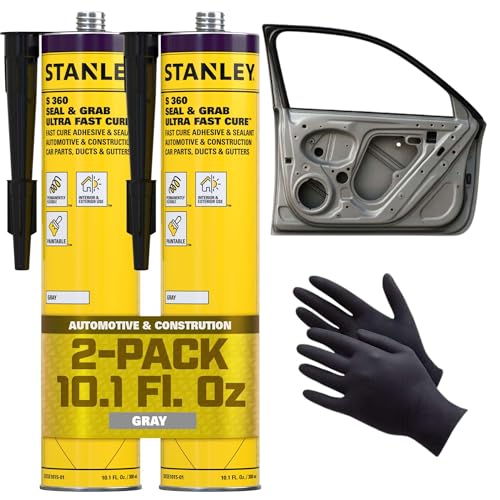
The STANLEY S360 handles temperatures from forty below to nearly two hundred degrees Fahrenheit without cracking or peeling. That means a single application can survive a northern winter and a desert summer on the same seam. It bonds to bare metal, painted panels, fiberglass, and aluminum, so it works across cars, trucks, RVs, and even boats. The ultra-fast cure gets you back to painting or reassembling quickly, and the thixotropic formula stays put on vertical panels and overhead joints without sagging. This is the sealer to grab when your repair has to outlast the weather, not just look good in the garage.
The trade-off is that this is a gray, paintable cartridge. If you need a black seam for a factory-cosmetic match on a dark vehicle, you will have to paint over it. For a color-critical interior or exposed seam, a black sealer like the 3M 08367 might save you that extra step. But if durability in extreme climates matters more than the color out of the tube, the S360 delivers a bond that stays flexible and intact where others get brittle. It is a professional-grade formula that asks only for a standard caulking gun and a few minutes of cure time.
Product photos
Evercoat Brushable Seam Sealer

What We Like
- Brushable formula for easy application
- Adheres to bare metal and paint
- Dries paintable in 1 hour
- Works on steel, aluminum, fiberglass
Trade-offs
- Heavier than cartridge-style sealers
- Dries in 1 hour, so you must work quickly on large areas.
This 32-ounce can of brushable seam sealer is designed for sealing spot-welded, riveted, or bolted seams and joints. It shows excellent adhesion to bare metal and painted surfaces, and it works on steel, aluminum, fiberglass, and more, so you can use it across different materials on a single project. The sealer dries to a paintable surface in 1 hour, which keeps the job moving.
This can weighs 2.5 pounds, so it’s heavier than a 10.5-ounce cartridge like the 3M 08367, and the brushable consistency may require careful application on vertical panels to avoid runs. If you’re working on flat or horizontal surfaces and want a single product that covers multiple materials, this sealer fits the bill.
Berkland Polyurethane Seam Sealer

What We Like
- Paintable in 30 minutes
- Won't shrink or crack
- Bonds to bare, primed, painted metal
- Includes nitrile gloves
Trade-offs
- Black color limits use on light panels
- Requires caulking gun for application
A 30-minute cure to paintable means you can prime and topcoat the same day, which keeps a restoration project moving without waiting overnight. The black polyurethane formula blends into dark undercarriage surfaces and wheel wells, so visible sealant lines disappear without extra paint coverage. This makes it a natural fit for someone working on a dark-colored vehicle or focusing on areas that won’t get a topcoat, like rocker panels and floor pans. It bonds to bare steel, primed panels, and even fiberglass, so you don’t need to strip everything down before applying.
Black sealer stands out on light-colored body panels if you’re painting over it, so you may need an extra coat of primer to hide it completely. Compared to other seam sealers that may require mixing or special tools, this Berkland cartridge works with any standard caulking gun: load it, apply, and wait half an hour. It won’t shrink or crack as it cures, giving you a durable seal that holds up to weather and vibration. For fast, straightforward seam sealing on dark or hidden areas, this is the one to grab.
ACDelco GM Original Equipment Seam Filler

What We Like
- Paintable just 60 minutes after application
- Flexible, non-sagging, and non-staining
- Won't crack or shrink over time
- Works on vertical and horizontal joints
Trade-offs
- Labeled for professional use only, not retail sale
- Requires a standard caulking gun for application
- Single cartridge limits large-scale projects
A 60-minute paint-ready time means you can move through body repairs fast, mask, apply, grab lunch, and come back to a surface that’s ready for color. That speed comes from a fast-curing formula that skins over quickly, so it holds its shape on vertical panels without sagging or dripping. This compound is flexible and non-staining, and it won’t crack or shrink over time. It’s a straightforward, no-fuss sealer for someone who values efficiency and a clean, professional result.
ACDelco explicitly markets this for professional use, not casual retail buyers, so you won’t find it on the shelf next to the brush-on cans. But if your priority is a fast-curing, paintable seam that won’t crack or shrink, this ACDelco cartridge is a reliable pick.
Carworx Brush On Seam Sealer
What We Like
- Bonds on wet or dry surfaces
- Stays flexible, won't crack
- Accepts paint directly
- Large 1-liter workshop volume
Trade-offs
- Brush-on only, no cartridge gun
- No cartridge option for precise application.
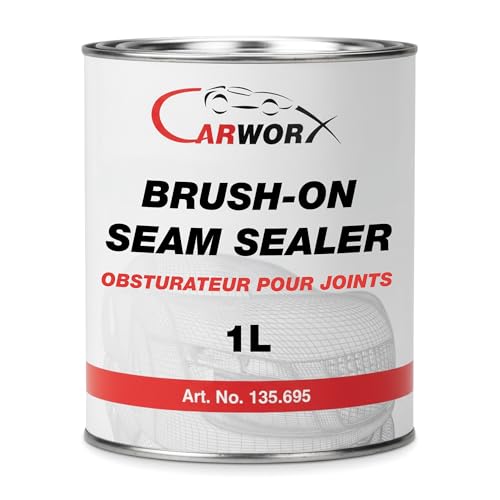
A full liter of synthetic rubber sealer means you can tackle multiple door skins, panel seams, and structural joints in one session without running out mid-job. Carworx Brush On Seam Sealer stays permanently flexible after curing, so it won’t turn brittle and crack along stress-prone seams the way rigid fillers do. That wet-surface capability is the real standout here: it bonds reliably even when moisture is present, which cuts down on rework and keeps your refinish timeline on track.
A full liter gives you enough material to handle multiple panel seams, door skins, and structural joints in a single session, so it suits volume work rather than a one-off touch-up. The synthetic rubber formula stays permanently flexible after it cures, resisting the brittleness and cracking that rigid fillers develop over time at stress-prone seams. Because it bonds to wet surfaces, you can keep production moving without waiting for everything to dry before sealing.
Product photos
VIKAGU Polyurethane Seam Sealer
What We Like
- Cures to a sandable, paintable finish
- Non-sag thixotropic formula stays on vertical panels
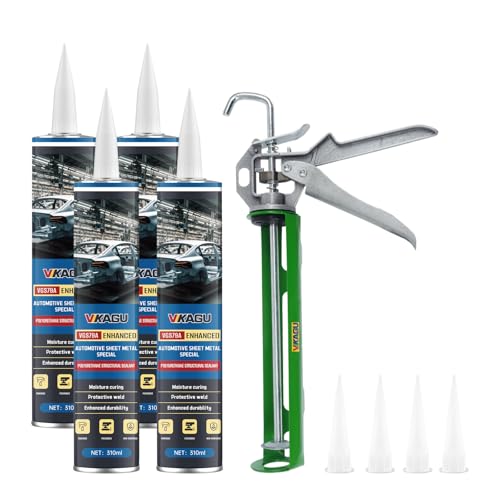
- Includes caulking gun, 8 tips, and 4 gloves
- Bonds to metal, welds, fiberglass, and composites
Trade-offs
- Requires a caulking gun (included) for application
- Not brushable like quart-can seam sealers
The VIKAGU Polyurethane Seam Sealer cures to a surface you can sand smooth and paint directly over, which matters most when the finished look of a repair is your priority. Its thixotropic formula stays put on vertical panels and overhead weld joints without dripping, so you get clean bead placement every time. This makes it a strong fit for auto body work where you want a clean blend with surrounding paint, and the included kit, caulking gun, eight tips, and four pairs of gloves, means you have everything you need to start right away.
Compared to the 3M Heavy-Bodied Seam Sealer, which is a two-part epoxy that self-mixes, the VIKAGU is simpler to apply and tool with a spatula or finger. For a hobbyist or DIYer focused on a sandable, paint-ready finish on smaller repairs, this kit delivers professional-grade results without the complexity.
Product photos
How We Evaluated Seam Sealers For Cars
To build this list, we started with manufacturer data sheets and technical documentation to verify each sealer’s cure time, temperature range, and adhesion properties. We then cross-referenced those specs with patterns found in owner feedback from body shop forums, restoration communities, and DIY repair groups. This approach lets us identify which sealers actually perform as claimed in real-world garage conditions.
The four criteria that mattered most were flexibility after cure, paintability window, application method, and surface adhesion. A sealer that cracks after a season of temperature swings fails its primary job, so we prioritized formulas that stay flexible. Fast paintability matters because it keeps your project moving, some sealers are ready for paint in 30 minutes, others take hours. We also looked closely at whether a sealer works on bare metal, since many DIY repairs start with stripped panels.
A research-led evaluation has limits: we haven’t tested these products ourselves, and individual results vary with temperature, humidity, and application technique. What we can offer is a clear picture of each sealer’s documented strengths and trade-offs so you can pick the right tool for your specific seam.
What To Look For In Seam Sealers For Cars
Choosing the right seam sealer comes down to matching the formula to your repair surface, working conditions, and desired finish. Here are the key factors to consider.
Pick a sealer that matches your application method (brush, gun, or cartridge), cures within your work schedule, and stays flexible through temperature swings. Always check if it bonds to bare metal if you’re working on stripped panels.
Flexibility and Cure Type
A seam sealer’s flexibility determines whether it will crack after the body flexes or temperatures change. Polyurethane and urethane-based sealers remain flexible after curing, which is ideal for panels that expand and contract. Some epoxy-based sealers cure rigid, which can lead to cracking on moving joints. Moisture-curing formulas require ambient humidity to set, so they cure slower in dry climates. If you need a sealer that stays permanently flexible, look for urethane or polyurethane formulations.
Paintability and Work Time
The time between application and painting varies widely, some sealers are paintable in 30 minutes, while others need several hours. Fast-paintable formulas let you move through a repair quickly, but they also leave less working time for smoothing and adjusting the bead. Brushable sealers typically dry faster than gun-applied types because they’re spread thin. If you’re working on a large panel, a slower-curing sealer gives you more time to shape the seam. Always check the manufacturer’s recoat window before priming or painting.
Application Method and Surface
Seam sealers come in three main formats: brushable (quart can), cartridge (caulking gun), and self-mixing cartridge. Brushable types are best for covering wide flange seams and replicating an OEM look, but they require a brush and can be messy. Cartridge sealers are cleaner and faster for long, straight beads. Self-mixing cartridges eliminate the need to premix two-part formulas. You also need to verify surface compatibility, some sealers only bond to painted metal, while others stick to bare steel, aluminum, or fiberglass.
- Check the sealer’s temperature range if you live in an area with extreme heat or cold.
- Confirm the sealer is paintable with your chosen topcoat (urethane, enamel, or single-stage).
- Look for non-sag or thixotropic formulas if you’re sealing vertical or overhead seams.
- Verify the sealer’s shelf life and storage requirements, moisture-curing types can skin over in the tube.
A good rule of thumb: choose a brushable sealer for wide flange seams and a cartridge sealer for long, straight beads on vertical panels.
Seam Sealers For Cars Compared
The table below compares each sealer’s key specs side by side, from cure time and flexibility to application method and surface compatibility.
| Product | Type | Volume | Paintable |
|---|---|---|---|
| 3M Urethane Seam Sealer | Single-component urethane | 310 mL / 10.5 fl oz | After 30-45 minutes |
| 3M Heavy-Bodied Seam Sealer | Two-part epoxy | 200 ml/6.75 fl oz | N/A |
| Custom Shop Brushable Seam Sealer | N/A | 30.4 fl oz | 30-60 minutes |
| LAUCO Maxi-Seal Polyurethane Seam Sealer | Polyurethane, single-component | 10.5 oz | N/A |
| STANLEY S360 Seam Sealer | N/A | 10.1 oz | Yes |
| Evercoat Brushable Seam Sealer | N/A | 32 fl oz | 1 hour |
| Berkland Polyurethane Seam Sealer | Polyurethane | 10.5 fl oz | 30 minutes |
| ACDelco GM Original Equipment Seam Filler | N/A | 10.1 oz | 60 minutes |
| Carworx Brush On Seam Sealer | Synthetic rubber | 1 L | Yes |
| VIKAGU Polyurethane Seam Sealer | Polyurethane | 310 ml | Paintable |
Frequently Asked Questions
What is the best seam sealer for cars?
The 3M Urethane Seam Sealer is widely considered the best overall for its permanently flexible, non-shrinking formula that adheres to bare or painted metal and paints quickly. It suits both DIYers and professionals who need a versatile, all-purpose sealer.
Can you paint over seam sealer?
Yes, most automotive seam sealers are designed to be paintable. Some cure fast enough to paint in 30 minutes, while others need an hour or more. Always check the manufacturer’s recoat time before applying primer or topcoat.
Do I need to prime metal before applying seam sealer?
It depends on the sealer. Some formulas, like the 3M Urethane Seam Sealer, bond directly to bare metal. Others require a primed or painted surface. Check the product’s adhesion specs before starting your repair.
What is the difference between brushable and cartridge seam sealer?
Brushable seam sealer comes in a can and is applied with a brush, making it ideal for covering wide flange seams and creating an OEM-style finish. Cartridge seam sealer is applied with a caulking gun and works best for long, straight beads on vertical or horizontal seams.
How long does seam sealer take to dry?
Drying time varies by product and conditions. Fast-curing sealers can be ready for paint in 30 minutes, while slower formulas may take several hours. Temperature, humidity, and the thickness of the application all affect cure time.
The Bottom Line
For most DIYers and professionals, the 3M Urethane Seam Sealer is the best overall choice because it balances permanent flexibility, fast paintability, and strong adhesion to both bare and painted metal. It handles a wide range of repairs without the need for special mixing or complex application techniques.
If your project involves vertical panels or overhead seams, the 3M Heavy-Bodied Seam Sealer is the right pick for its non-sag, self-mixing formula. For restorers who want an OEM-style finish on flange seams, the Custom Shop Brushable Seam Sealer delivers that factory look with fast drying and brush marks that hold.
The single most important factor in choosing a seam sealer is matching the formula to your application method and surface. A brushable sealer on a vertical seam will sag, and a cartridge sealer on a wide flange will leave gaps. Pick the right tool for the seam, and the rest follows.
