
10 Best Travel Car Seats For Flying in 2026
This post contains affiliate links. As an Amazon Associate, we earn from qualifying purchases.
The WAYB Pico Travel Car Seat folds compact enough for overhead bins and weighs only 8 pounds, so it’s a practical FAA-approved seat for air travel. For an even lighter option, the RideSafer Travel Vest Gen 6 Large packs under 1.5 pounds, while the BubbleBum Inflatable Travel Booster offers an affordable inflatable design that fits in a carry-on.
Flying with a car seat means juggling airport logistics, airline gate checks, and rental car safety. The real challenge is finding a seat that is light enough to carry through terminals, small enough to fit in airplane seats, and still meets safety standards at your destination. Most traditional car seats are too bulky for travel.
This guide is research-based, drawing on manufacturer specifications, safety certifications, and patterns in owner feedback. We evaluated weight, packability, FAA approval, and ease of installation to help you choose the right travel car seat for your next flight.
Top 10 Travel Car Seats For Flying in the Market
Certain content that appears on this site comes from Amazon. This content is provided "as is" and is subject to change or removal at any time.
The Best Travel Car Seats For Flying, Reviewed
WAYB Pico Travel Car Seat

What We Like
- Folds compact for overhead bins
- Weighs only 8 pounds
- FAA-approved for aircraft use
- Meets U.S. safety standards
Trade-offs
- Forward-facing only, no rear-facing mode
- Heavier than inflatable booster options like BubbleBum.
At eight pounds with a fold that slips into an overhead bin, the WAYB Pico solves the central problem of flying with a car seat. You don’t have to check it or wrestle it down the aisle. The aerospace-grade aluminum frame keeps it lightweight, and the FAA approval sticker on the bottom means it meets federal standards for aircraft use. This seat works on the plane, in the car, and at your destination without needing a luggage cart or extra help.
The trade-off is that the Pico only works forward-facing for kids between 26.5 and 50 pounds, so it won’t cover an infant or a toddler who still needs rear-facing. Compared to the BubbleBum inflatable booster, which weighs 0.9 pounds, the Pico offers a rigid structure and a five-point harness that provides more support for younger children. That makes it a strong choice for families who fly regularly with a forward-facing child and want one reliable seat for every leg of the trip.
Product photos
RideSafer Travel Vest Gen 6 Large
What We Like
- Weighs under 1.5 lbs for easy carry
- Folds flat to fit in carry-on luggage
- Kids can buckle themselves independently
- Machine washable for daily use
Trade-offs
- Only fits children 50-80 lbs
- No back or side impact head support
- Requires vehicle seat belt for installation
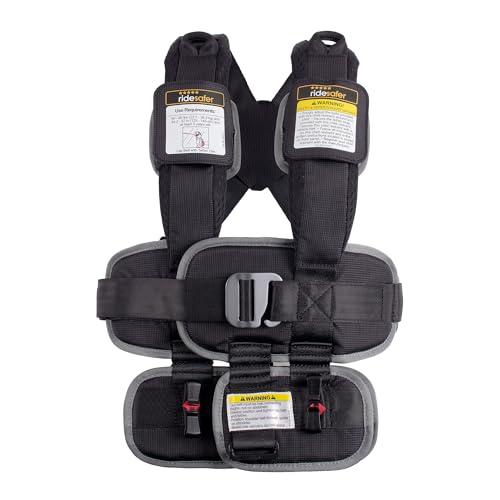
At less than 1.5 pounds, this vest is light enough that you won’t even notice it in your carry-on. It folds flat to slip into a bag, and kids as young as four can buckle themselves, which cuts down on airport and rental-car stress. For parents who fly frequently with a child in the 50-to-80-pound range, this vest saves real hassle: no lugging a bulky seat through security, no wrestling with LATCH connectors in a strange car. The vest simply goes on the child, then the vehicle’s own seat belt secures them, making it as fast as buckling an adult.
The vest-style restraint works without a high back or side wings, so it relies on the vehicle’s seat belt and headrest for crash protection. That means no head support for napping kids, and it works best in cars with adjustable head restraints. The RideSafer meets or exceeds FMVSS 213B standards, the same federal safety standard as traditional car seats. For parents who want the lightest, most packable option and don’t mind checking the vehicle’s headrest setup before flying, this is the one to grab.
Product photos
RideSafer Gen 5 Extra Small
What We Like
- Ultra-lightweight and compact design
- Fits three children in one row
- Works with or without tether
- Meets FMVSS 213 safety standards
Trade-offs
- Not FAA approved for use on aircraft
- Requires top tether with lap-only belts
- Only fits children up to 40 lb
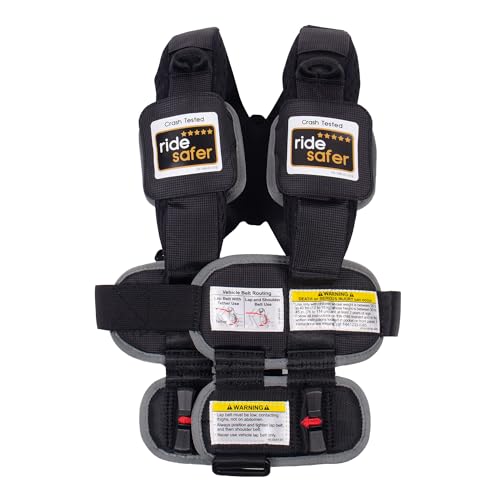
The RideSafer Vest is not FAA approved for use on aircraft, so you’ll need a separate FAA-approved car seat if you want to keep your child buckled during the flight. Once you’re on the road, the vest distributes crash forces across the child’s torso rather than relying on a raised seat cushion, which some parents find more comfortable on long drives. It also fits three children in the same row of a vehicle with comfort and ease, a feature that families with multiple kids appreciate. When using a lap-only belt, the vest requires a top tether anchor to secure it properly.
Product photos
Hiccapop UberBoost Inflatable Booster Seat
What We Like
- Inflates in under 20 seconds
- Packs into included travel bag
- Non-skid base for stable fit
- Fits three across back seat
Trade-offs
- No back support for sleeping kids
- Requires manual inflation before each use
- Side-impact protection not addressed
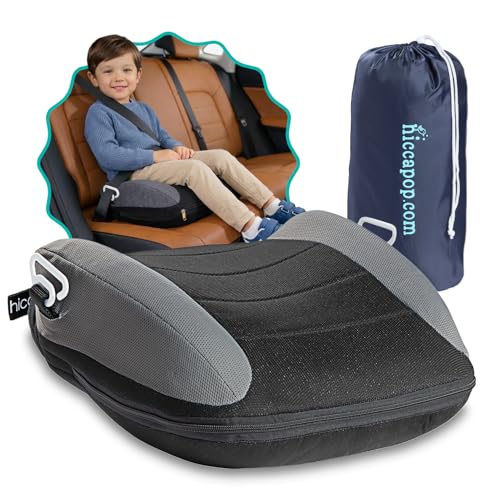
At just 1.3 pounds and deflating to a roll that tucks into a suitcase or carry-on, the Hiccapop UberBoost solves the weight and bulk problem that makes traditional boosters a pain for flying. You inflate it with a few breaths in under 20 seconds, and the non-skid base keeps it planted on rental-car leather or cloth seats. That combination of portability and quick setup makes it a natural fit for families who hop between taxis, rideshares, and airport shuttles and don’t want to lug a 8-pound seat through the terminal.
At just 1.3 pounds and inflating in under 20 seconds, the UberBoost is designed for quick trips in rental cars, taxis, or rideshares, not for long highway slogs where a child might doze off. By comparison, the Diono Airi Travel High Back Booster weighs 10.0 pounds and is bulkier, so it’s less portable. The UberBoost’s inflatable design offers a practical middle ground when weight and packability are your top priorities.
BubbleBum Inflatable Travel Booster
What We Like
- Inflates by mouth in 20 seconds
- Packs flat to carry-on size
- Slim fit for 3-across seating
- Crash tested to FMVSS 213 standards
Trade-offs
- No back support for sleeping children
- Requires child to sit upright for belt fit
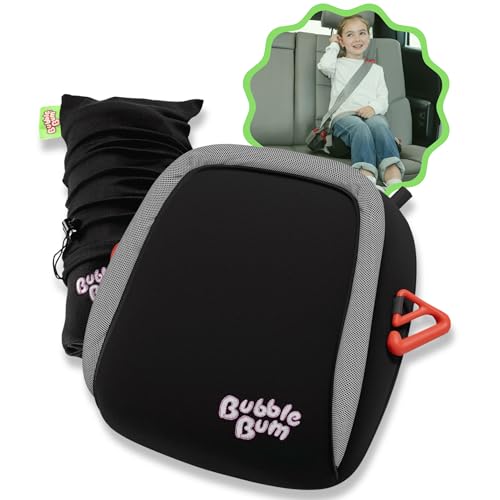
Families who fly often and need a seat that disappears into a backpack will appreciate the BubbleBum’s design. It inflates by mouth in about 20 seconds, so there is no pump or bulk to carry. Deflated, it collapses small enough to slip into a purse, backpack, or carry-on, which means rental car counters, rideshare pickups, and taxi lines no longer require scrambling for a seat. The booster is independently crash tested to exceed FMVSS 213 federal standards, securing both child and seat with a standard 3-point seatbelt. No LATCH anchors or special hardware are needed, making it straightforward to use in any vehicle.
Comfort and support are where this inflatable cushion falls short. Unlike a high-back booster, it offers no head or side support, so a child who falls asleep on a long drive will slump against the seatbelt. That’s fine for short airport runs or taxi hops, but for a multi-hour road trip after landing, a more structured option like the Diono Airi Travel High Back Booster provides better sleeping support. Still, if your priority is something you can inflate quickly, stow in a purse, and trust to meet federal safety standards, the BubbleBum is a certified booster that packs down small.
Product photos
Diono Airi Travel High Back Booster
What We Like
- Foldable slim 3-across fit
- Weighs only 4.1 lbs
- Removable machine-washable cover
- Meets FMVSS 213B safety standards
Trade-offs
- Requires child to be at least 4 years old
- Not suitable for children under 4 years old
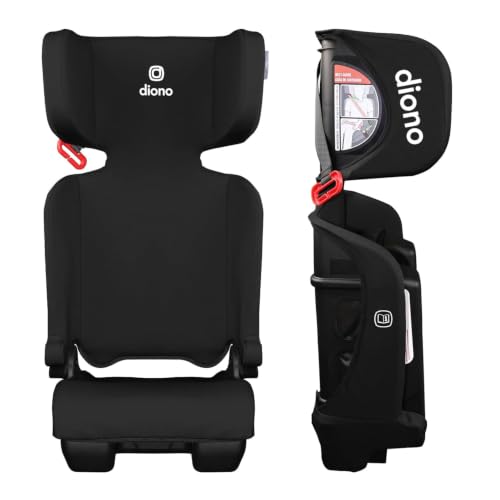
Weighing only 4.1 pounds, this high-back booster is light enough to carry between vehicles without breaking a sweat. Its narrow profile fits three across in most cars, which is a real help for families with multiple kids sharing the back seat. The contoured padding and built-in head support are designed for all-day comfort, and the removable cover is machine-washable for quick cleanup. It fits kids from 40 to 100 pounds, ages 4 and up, so it can serve a child for several years.
The folded dimensions of the Diono Airi, 13.4 by 15.7 by 30.9 inches, mean it won’t slip into a standard carry-on roller bag the way a backless inflatable like the BubbleBum can. You’ll likely need to pack it in a larger duffel or check it. Still, for parents who want the frontal-impact protection of a high-back booster without carrying a heavier seat, the Diono Airi strikes a practical balance between safety and portability.
Maxi-Cosi Romi 2-in-1 Convertible Car Seat

What We Like
- One of the lightest convertible car seats
- Machine-washable and dryer-safe fabrics
- Certified for airplane use
Trade-offs
- At 9.1 lb, heavier than dedicated travel boosters
- Bulky dimensions for tight airplane seats
- Forward-facing weight limit stops at 50 lbs
The Romi weighs 9.1 pounds and is 29 inches long, which is heavier and larger than dedicated travel boosters like the WAYB Pico at 8 pounds. For families who need the absolute lightest or most compact option for frequent flying, the Romi’s size may be a drawback. The forward-facing weight limit of 50 pounds means most children will need a booster seat later on, so plan for a second seat as your child grows.
Mifold Comfort Grab-and-Go Booster

What We Like
- Folds small enough for a backpack
- Weighs just 1.6 pounds
- Includes padded seat cushion for comfort
- Anti-slip pads keep it in place
Trade-offs
- No back support for napping kids
- Only fits children 40 pounds and up
At just 1.6 pounds and measuring 10 by 9 by 2.6 inches, this booster fits into a backpack or glove box without a second thought. That portability is the whole point: you can carry it easily for carpooling, ride sharing, and travel. It works with any standard three-point belt and needs no installation, so setup is quick. For families who want a compact booster for everyday car rides and travel, that convenience is hard to beat.
Comfort on longer rides is the main limitation here. Unlike the WAYB Pico Travel Car Seat, which is a forward-facing seat with a full structure, this is a backless booster. Kids who fall asleep in the car will slump without a side or headrest to lean on. The included padded cushion helps for longer rides, but for a long drive, a child may get restless. It is a great grab-and-go option for everyday car rides and travel, not a substitute for a full seat on a road trip.
Product photos
Mifold Hifold Adjustable High Back Booster
What We Like
- 243 adjustable settings for custom fit
- Meets FMVSS 213b safety standard
- Adjusts in seat, body, head width, and height
Trade-offs
- At 10 lbs, heavier than inflatable or vest options
- Requires child to sit properly in belt-positioning booster
- Not approved for use in Australia or Taiwan
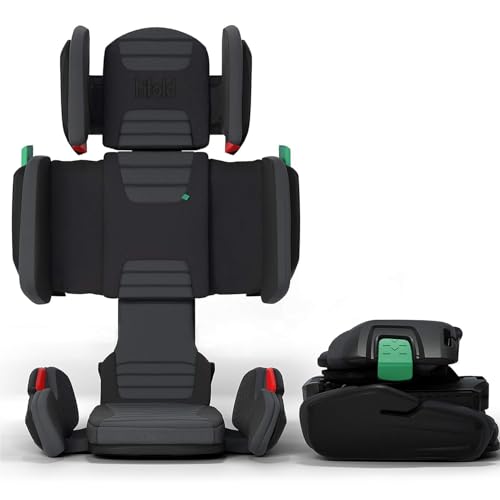
The Mifold Hifold offers 243 individual adjustment settings, which is more fine-tuning than most boosters provide. That means you can dial in the seat, body, head width, and height to match your child as they grow, helping the vehicle seatbelt sit correctly across their body. This adjustability makes it a strong fit for families who want a single booster that adapts through several years of growth, especially if you need a high-back design for extra support during travel or daily use.
Weight is the main drawback: at 10 pounds, it’s noticeably heavier than inflatable options like the BubbleBum (0.9 lbs) or the RideSafer vest, so it won’t disappear into a carry-on as easily. If you prioritize adjustability and a high back over absolute portability, this booster delivers. For maximum lightness, an inflatable or vest-style seat would be easier to tote.
Product photos
BubbleBum Teleport Car Booster Seat
What We Like
- Telescopic design folds to 40% size
- Includes shoulder strap for carrying
- Machine-washable, removable cover
- Non-slip base for stability
Trade-offs
- Backless design offers no head support
- Requires child to be at least 49 inches tall
- Heavier than inflatable booster options
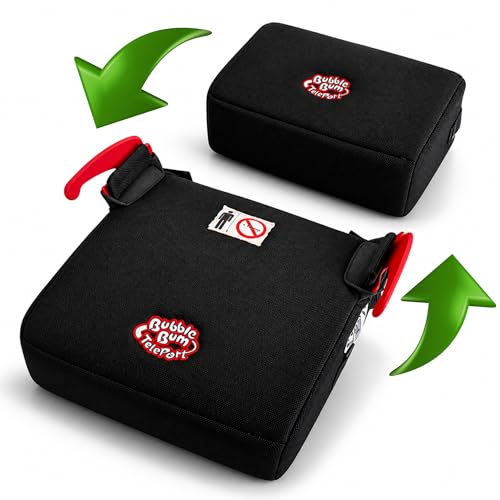
At 5.5 pounds, the BubbleBum Teleport is heavier than some travel boosters, but its rigid telescopic frame means it doubles as a sturdy everyday seat. It folds down to 40 percent of its full size for packing. That folding mechanism, paired with a built-in shoulder strap, makes it easy to carry through an airport and transport. It suits families who want one booster that can handle daily school runs and then collapse for a flight without feeling flimsy or inflatable.
At 5.5 pounds, this booster is heavier than the BubbleBum Inflatable Travel Booster (0.9 pounds), so if every ounce matters, the inflatable alternative is lighter. The Teleport’s rigid construction and non-slip base are designed for stability during everyday use. For parents who want a certified booster that folds down to 40% of its size for travel without giving up a solid, durable seat, this model offers a practical balance.
Product photos
How We Evaluated Travel Car Seats For Flying
Our evaluation started with a close look at each seat’s weight and packed dimensions, since these are the most critical factors for air travel. We compared manufacturer specs for FAA approval, weight, and foldability against the realities of airline carry-on size limits and overhead bin dimensions.
We focused on four criteria: portability (weight and packed size), FAA approval status, ease of installation and removal, and safety certifications. For families flying frequently, a seat that is under 5 pounds and folds flat is far more practical than a heavier convertible seat, even if the convertible offers more features.
Every evaluation has limits. Long-term durability and real-world comfort are hard to assess without direct experience. Owner feedback patterns help identify common trade-offs, such as whether inflatable boosters stay inflated during a flight or if vest-style seats are accepted by rental car companies.
What To Look For In Travel Car Seats For Flying
Choosing a travel car seat for flying means balancing weight, packability, and safety. Here are the key criteria to consider before you buy.
Look for an FAA-approved seat under 5 pounds that folds or inflates to fit in a standard carry-on bag. Prioritize ease of installation over extra features you will rarely use.
Weight and Packed Size
The single most important factor for flying is how much the seat weighs and how small it packs. A seat over 10 pounds becomes a burden through security and down jet bridges. Look for seats under 5 pounds for carry-on convenience. The best options fold flat, roll up, or inflate to fit inside a standard carry-on suitcase or backpack.
FAA Approval
Not all car seats are approved for use on an aircraft. FAA-approved seats have a label stating they meet the requirements for airplane use. This approval means you can use the seat during the flight rather than gate-checking it. For families who want the child restrained during takeoff and landing, an FAA-approved seat is essential.
Installation Ease
Travel car seats should install quickly and intuitively, especially when you are juggling bags in a rental car or taxi. Look for seats with clear belt path markings and simple tensioning systems. Inflatable boosters require inflation before each use, while vest-style seats use the vehicle’s seat belt. Avoid seats with complex LATCH systems that are hard to reset after travel.
- Check the weight limit to ensure it fits your child’s current size.
- Verify the seat is compatible with your vehicle’s seat belt type.
- Consider whether you need back support for sleeping children on long drives.
- Look for machine-washable covers for easy cleaning after travel.
The lighter the seat, the more likely you are to actually bring it on every trip.
Travel Car Seats For Flying Compared
The table below compares the key specs for each travel car seat, including weight, FAA approval, and packed size, so you can quickly find the right option for your next flight.
| Product | Weight | Child Weight Range | Child Height Range |
|---|---|---|---|
| WAYB Pico Travel Car Seat | 8.0 pounds | 26.5-50 lbs | 33.5-45 inches |
| RideSafer Travel Vest Gen 6 Large | Less than 1.5 lbs | 50-80 lbs | N/A |
| RideSafer Gen 5 Extra Small | N/A | 26.5–40 lb | 30-45 in |
| Hiccapop UberBoost Inflatable Booster Seat | 1.3 pounds | 40-110 lb | N/A |
| BubbleBum Inflatable Travel Booster | 0.9 Pounds | 40-110 lbs | N/A |
| Diono Airi Travel High Back Booster | 4.1 lbs | 40-100 lbs | 43-57 in |
| Maxi-Cosi Romi 2-in-1 Convertible Car Seat | 9.1 pounds | 5-40 lbs, 30-50 lbs | 19-40 inches, 34.4-44 inches |
| Mifold Comfort Grab-and-Go Booster | 1.6 pounds | 40-100 lbs | 43.5–59 inches |
| Mifold Hifold Adjustable High Back Booster | 10.0 lbs | 40-100 lbs | 43.5-59 inches |
| BubbleBum Teleport Car Booster Seat | 5.5 pounds | N/A | 49-60 inches |
Frequently Asked Questions
Can you use a car seat on an airplane?
Yes, you can use a car seat on an airplane if it has an FAA approval label. The seat must fit within the airplane seat width and be installed with the airplane’s lap belt. Most airlines allow FAA-approved car seats in window seats for children who have their own ticket.
What is the lightest car seat for flying?
The RideSafer Travel Vest Gen 6 Large is one of the lightest options at under 1.5 pounds, folding flat to fit in carry-on luggage. Inflatable boosters like the BubbleBum are also very light, typically under 1 pound, but they require inflation before each use.
Do you need a car seat for a rental car when flying?
Yes, rental car companies offer car seats, but they are often expensive to rent and may not be in the best condition. Bringing your own travel car seat ensures a clean, properly fitted seat that your child is comfortable with. Many travel seats are light enough to pack in a carry-on.
What is the difference between a travel vest and a booster seat?
A travel vest is a wearable harness that uses the vehicle’s seat belt to restrain the child, while a booster seat raises the child so the adult seat belt fits correctly. Vests are typically lighter and more packable, but they require the child to be at least 40 pounds and may not provide head support for sleeping.
How do I install a car seat on an airplane?
To install a car seat on an airplane, place it in a window seat facing forward if the child is forward-facing. Thread the airplane lap belt through the car seat’s belt path, buckle it, and tighten until the seat does not move more than one inch side to side. Check that the car seat has an FAA approval label before boarding.
The Bottom Line
The WAYB Pico Travel Car Seat is the best overall choice for families who fly with a forward-facing child between 26.5 and 50 pounds. It folds compact for overhead bins, weighs only 8 pounds, and is FAA-approved, making it the most practical all-in-one travel seat for air travel.
If you need something even lighter, the RideSafer Travel Vest Gen 6 Large weighs under 1.5 pounds and packs flat in a carry-on, perfect for children between 50 and 80 pounds. For budget-minded travelers, the BubbleBum Inflatable Travel Booster offers a certified inflatable design that fits in a backpack.
The single most important factor is weight: a seat you are willing to carry through the airport is the one you will actually use. Prioritize a lightweight, packable design over extra features, and always check for FAA approval before your flight.
