
8 Best Gmrs Radios For Trucks in 2026
This post contains affiliate links. As an Amazon Associate, we earn from qualifying purchases.
For reliable communication on the trail or highway, the Radioddity DB40-G GMRS Mobile Radio earns our best overall nod with its powerful 40W output and 169 fully customizable channels. Drivers seeking a cord-free setup should look at the Midland MXT295 MicroMobile for its Bluetooth mic, while those needing maximum transmit power will want the Midland MXT575 MicroMobile for its 50W output.
Getting a clear signal through a metal cab and across varied terrain is the real challenge for truck owners. You need a radio that cuts through engine noise, fits in a tight space, and offers enough power to reach your group on long hauls or remote trails. The wrong choice means dropped conversations and frustration.
This guide is built on a careful review of specifications, manufacturer claims, and patterns in owner feedback. We focused on power output, noise rejection, mounting flexibility, and ease of programming to help you pick the right radio for your rig.
Top 8 GMRS Radios For Trucks in the Market
Certain content that appears on this site comes from Amazon. This content is provided "as is" and is subject to change or removal at any time.
The Best GMRS Radios For Trucks, Reviewed
Radioddity DB40-G GMRS Mobile Radio

What We Like
- 40W output for long-range communication
- 169 fully customizable channels
- Dual watch and dual display
- VOX hands-free mic control
Trade-offs
- No IP waterproof rating listed
- No NOAA weather alert built in
Forty watts of transmit power gives the DB40-G a real edge for truckers and overlanders who need to stay in touch over long stretches of remote terrain. That kind of output, paired with 169 customizable channels and repeater capability, means you can reach up to forty miles under ideal conditions. The dual display lets you keep an eye on two channels at once, so you can monitor a trail frequency while staying tuned to a repeater or emergency channel. The mic includes VOX, which is a nice touch for hands-free operation when you’re focused on a rough section of road.
The trade-off is that this radio doesn’t carry an IP waterproof rating. If you plan to mount it in an open truck bed or a dusty cab, you’ll want to protect it from moisture and debris. For most highway and trail use, the DB40-G’s power and channel flexibility make it a strong everyday companion.
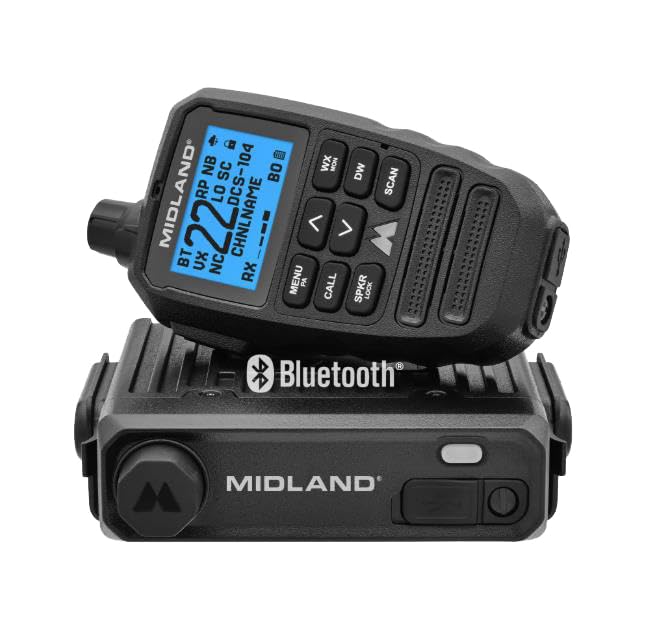
Midland MXT295 MicroMobile GMRS Radio
What We Like
- IP67 waterproof and dust-sealed
- Noise canceling blocks engine and wind noise
- Plug-and-play with PA and intercom
Trade-offs
- 15W power is lower than 40W or 50W options
- Bluetooth mic requires pairing and battery management
The trade-off is that 15 watts is less than the 40 or 50 watts you get from some other options in this guide, like the Radioddity DB40-G. If you regularly need to talk across long, open valleys or through dense forest from a moving truck, that extra power can make a difference. The noise canceling also helps keep your voice clear over engine rumble and wind, so you’re not repeating yourself every time you key the mic.
Midland MXT575 MicroMobile GMRS Radio
What We Like
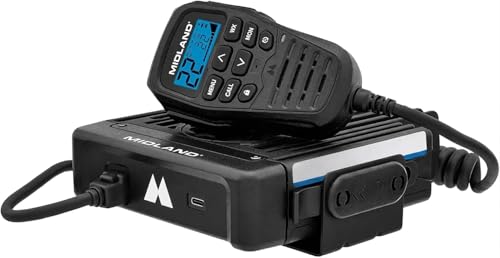
- 50W transmit power for long-range communication
- 15 high-power GMRS channels
- 8 repeater channels for extended coverage
- NOAA weather scan and alert built in
Trade-offs
- At 3.8 pounds, heavier than some mobile radios
- Integrated mic means no separate control head placement
Fifty watts of transmit power is the standout feature here, giving you strong output for a GMRS mobile radio. That means clearer signals over greater distances, especially useful when you’re deep in canyons or far from the nearest repeater. With 15 high-power channels and 8 repeater channels, you’ve got plenty of room to find a clear frequency on the trail or highway. The NOAA weather scan and alert keeps you informed of changing conditions without needing a separate device, which is a nice bonus for road trippers.
The trade-off for that power is weight and form factor. At 3.8 pounds, this radio is heavier than some mobile radios, so mounting it securely in a truck cab takes a bit more planning. The integrated control microphone also means you can’t separate the mic from the main unit for flexible placement, which some drivers prefer for keeping the dashboard clean. If raw range and power matter most for your off-road or highway setup, this Midland delivers where others compromise.
ABBREE AR-8118 GMRS Mobile Radio
What We Like
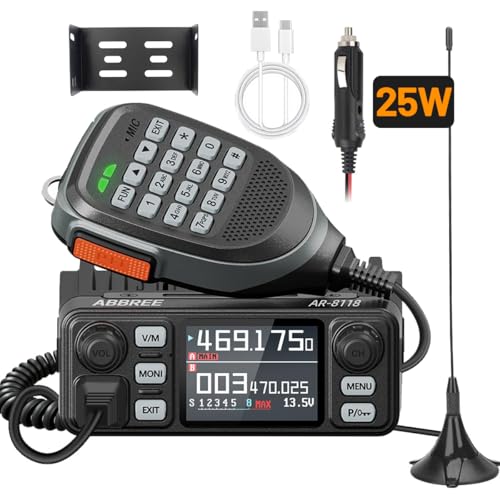
- 200 channels for cross-radio communication
- 25W power with 10-30 km range
- Dual PTT on body and microphone
- NOAA weather alerts included
Trade-offs
- Ticking noise when Dual-Watch is enabled
- Requires programming software for setup
- Range depends heavily on terrain and antenna
With 25 watts of transmit power, this radio can reach up to 10 to 30 kilometers depending on your terrain and antenna, which gives you a real shot at staying in touch on long trips. The 200 channels offer plenty of room to find a clear frequency, and the built-in NOAA weather alert means you’ll get advance notice of storms without needing a separate device. For a driver who wants capable GMRS communication in a compact package that fits easily in a truck cab, this ABBREE model delivers the essentials.
The 25-watt transmit power delivers reliable long-distance communication up to 10-30 km depending on terrain and antenna, so it works well for off-roading, camping, or farm use. The dual-watch scanning feature produces a ticking sound, so you’ll want to turn it off in the menu unless you enjoy a steady background click. Setup may involve using ABBREE’s programming software for parameter configuration, which adds a step compared to some other radios.
Radioddity UB15-G GMRS Mobile Radio
What We Like
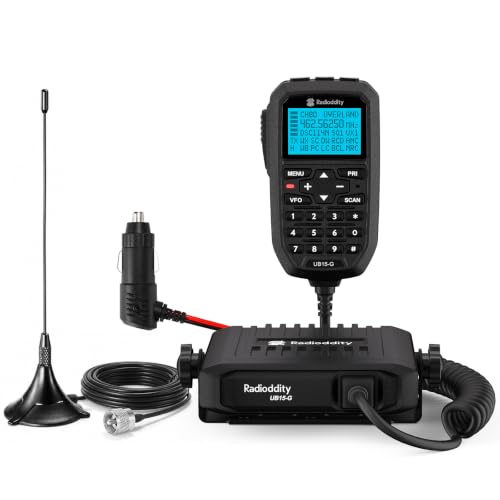
- Compact body with full-control mic
- RX NRC reduces incoming background noise
- TX ANC filters cabin noise for clearer transmit
- Large LCD shows channel, frequency, and codes
Trade-offs
- 15W output is lower than 40W or 50W alternatives
- Transmission limited to GMRS and repeater frequencies only
- No dual display for monitoring two channels at once
A full control microphone puts the LCD, numeric keypad, and menu controls in your hand. At just 1.1 pounds, the compact radio body is light enough to stash under a seat or in a door pocket. The 15W output gives you communication range that varies with terrain and conditions, which means it’s fine for convoys or farm work but won’t match higher-power units in open country. Receive-side NRC cuts background noise in incoming audio, and transmit-side ANC filters out cabin rumble so your voice comes through clearly, even with the engine running. The package includes a magnetic-mount GMRS antenna with a 19.7-foot cable and a 13.8V vehicle power adapter, plus NOAA weather alert capability so you can stay informed of severe weather without switching channels.
The trade-off for that small footprint is power: at 15W, this radio doesn’t reach as far as higher-wattage options like the Midland MXT575 (50W) or the Radioddity DB40-G (40W). That extra output helps punch through hilly or dense terrain. You also get 80 channels, but transmission is limited to GMRS and repeater frequencies. The 50 additional channels are receive-only for monitoring.
Product photos
Retevis RA86 GMRS Mobile Radio

What We Like
- CHIRP programming via included USB cable
- Dual speakers for noisy environments
- Compact body fits under seat or console
- NOAA weather alert and scan
Trade-offs
- No power output listed for range comparison
- Integrated mic limits remote mounting flexibility
The Retevis RA86 supports CHIRP programming via the included USB cable, so you can configure channels and frequencies from a laptop without using the microphone buttons. Its body measures 4.7 inches long and weighs 1.3 pounds, which allows it to be placed under a seat or console to save dashboard space. The dual speakers and adjustable mic gain help reduce engine and road noise for clearer communication on the trail or highway.
Retevis doesn’t publish a power output for the RA86, which makes it harder to gauge raw range against competitors like the Midland MXT575 with its 50 watts. If you’re comfortable relying on antenna placement and CHIRP flexibility over sheer wattage, this radio offers a smart, space-saving setup. The included magnetic antenna mounts securely without drilling or damage, and the compact body tucks under a seat or console to save dashboard space. For drivers who value quick computer-based programming and a low-profile install, the RA86 brings a practical, no-fuss approach to GMRS communication.
Product photos
HESENATE AT-779UV Gmrs Radios

What We Like
- Includes NMO antenna with low VSWR
- 500 programmable memory channels
- Free software download from AnyTone
- VOX and emergency alarm functions
Trade-offs
- 18W max output is lower than some truck radios
- Cigarette plug limits hardwiring options
The trade-off is power: at 18 watts on the main GMRS channels, this radio won’t reach as far as a 40-watt unit like the Radioddity DB40-G on long highway stretches. The magnetic base allows drill-free mounting on metal vehicle surfaces, which keeps installation simple. The included cigarette lighter plug makes it easy to power up in a car or truck right away. For drivers who want a straightforward setup with a solid antenna, this fits the bill.
Product photos
QYT KT-8900 GMRS Mobile Radio

What We Like
- Under 1 pound saves truck space
- Adjustable power (5W/10W/20W)
- 200 fully programmable channels
Trade-offs
- Lower power than 40W or 50W competitors
- Antenna not included; cannot transmit without one
If you run a newer laptop, you will need an older computer or a virtual machine to set up your channels. Compared to the Midland MXT575’s 50-watt output, the QYT’s 20-25 watts means less reach in open country. For most trail riding and overlanding convoys this radio offers plenty of range without hogging your dashboard real estate.
Product photos
How We Evaluated GMRS Radios For Trucks
Our evaluation centered on the practical needs of truck owners: getting a clear signal in a noisy, metal-enclosed cab. We examined transmit power (from 15W to 50W), noise-canceling features, and physical size to see which radios fit a truck’s limited dash and console space. Owner reports on real-world range and ease of installation also guided our rankings.
The most important criteria were transmit power for range, noise rejection for clear audio, mounting options for a tidy install, and channel flexibility for group rides. A radio with 40W or 50W power is better for long convoys, while noise-canceling mics matter most for diesel trucks and highway speeds.
This guide relies on the collective experience of the owner community to identify the best options for different truck setups and budgets.
What To Look For In GMRS Radios For Trucks
Choosing a GMRS radio for your truck means balancing power, size, and audio clarity. Here’s what matters most.
Focus on transmit power for range, noise rejection for clear audio, and a compact form factor that fits your cab without clutter.
Transmit Power and Range
Power is the primary factor for communication distance. Radios range from 15W to 50W, with higher wattage generally providing longer range, especially in open terrain. A 40W or 50W radio like the Radioddity DB40-G or Midland MXT575 is ideal for highway convoys and off-road groups, while 15W to 25W options work well for shorter trail runs. Remember that antenna quality and terrain also significantly impact actual range.
Noise Rejection and Audio Clarity
Truck cabs are noisy environments. Look for features like noise-canceling microphones (TX ANC) and incoming noise reduction (RX NRC) to filter out engine rumble, wind, and road noise. The Midland MXT295’s noise-canceling mic is a strong example, ensuring your voice cuts through the cabin din. A clear audio path is just as important as power for effective communication.
Mounting and Form Factor
Space is at a premium in a truck cab. Compact radios like the Radioddity UB15-G or Retevis RA86 fit under seats or in tight console spots. Radios with integrated mics (like the MXT575) save space but limit remote mounting, while those with detachable control heads offer more flexibility. Consider a model that matches your preferred mounting location and cab layout.
- Check the radio’s dimensions against your available dash, console, or under-seat space.
- Decide if you want a detachable faceplate or integrated mic for mounting flexibility.
- Verify if the radio includes a mounting bracket and all necessary hardware.
- Look for a radio that includes or offers an NMO antenna mount for a professional, permanent install.
The best radio is the one you can install cleanly and operate without distraction.
GMRS Radios For Trucks Compared
The table below compares the key specs of our top picks, helping you see at a glance which GMRS radio fits your truck and your driving style.
| Product | Power | Channels | Repeater Capable |
|---|---|---|---|
| Radioddity DB40-G GMRS Mobile Radio | 40W | 199 | Repeater capable |
| Midland MXT295 MicroMobile GMRS Radio | 15 watts | 99 | 8 repeater channels |
| Midland MXT575 MicroMobile GMRS Radio | 50 Watts | 15 Hi Power + 8 Repeater | 8 Repeater Channels |
| ABBREE AR-8118 GMRS Mobile Radio | 25W max | 200 | Repeater Capable |
| Radioddity UB15-G GMRS Mobile Radio | 15W | 80 | Repeater Capable |
| Retevis RA86 GMRS Mobile Radio | N/A | 22 GMRS + 8 repeater | repeater channels |
| HESENATE AT-779UV Gmrs Radios | 18W UHF / 5W UHF low | 500 programmable memory | N/A |
| QYT KT-8900 GMRS Mobile Radio | 25-Watt | 200 | All Programmable for Repeater Use |
Frequently Asked Questions
What is the best GMRS radio for a truck?
The Radioddity DB40-G GMRS Mobile Radio is our top pick for most truck owners, offering a strong 40W output and extensive channel customization for long-range communication. For a cord-free setup, consider the Midland MXT295 with its Bluetooth mic, or the Midland MXT575 if you need maximum 50W power.
How much power do I need in a GMRS radio for my truck?
For highway convoys and long off-road trails, a 40W or 50W radio provides the best range. For shorter trail runs or close-group communication, a 15W to 25W radio is often sufficient. Higher power is beneficial, but antenna quality and terrain are also critical factors.
Can I install a GMRS radio myself in my truck?
Yes, many GMRS radios are designed for DIY installation. Compact models like the Retevis RA86 fit under a seat, while others can be mounted to the dash or console. Most radios come with a power cable and mounting bracket, though hardwiring may require basic electrical knowledge.
What is the difference between a mobile and handheld GMRS radio?
Mobile GMRS radios are designed for permanent installation in a vehicle and offer higher transmit power (15W to 50W) and better range. Handheld units are portable and battery-powered, with lower power (typically 5W) and shorter range. For a truck, a mobile radio is the better choice for reliable communication.
Do I need a license to use a GMRS radio in my truck?
Yes, the FCC requires a license to operate a GMRS radio. The license covers your immediate family and is obtained by filing a simple application and paying a fee. It is legal and straightforward to get, and it ensures you are using the radio on the correct frequencies.
The Bottom Line
For the driver who needs reliable, long-range communication on the highway or trail, the Radioddity DB40-G GMRS Mobile Radio is the best overall pick. A 40W or 50W model like the Midland MXT575 will give you the reach you need, while a compact 15W unit like the Radioddity UB15-G is perfect for those who prioritize space savings. Choose based on your typical driving environment and how much room you have in your cab.
