
10 Best Cruising Motorcycle Helmets in 2026
This post contains affiliate links. As an Amazon Associate, we earn from qualifying purchases.
For riders who spend hours on the highway or winding backroads, the SHOEI J-Cruise 3 Open Face Helmet earns the best overall spot. It has dual DOT and ECE 22.06 safety certifications and wind-tunnel-tested aerodynamics that reduce noise and lift. The BEON Half 3/4 Face Retro Helmet takes the best retro cruiser pick, while the HJC i31 Solid Open Face Helmet offers strong value for budget-minded cruisers.
Choosing a cruising helmet means balancing protection, comfort, and style for long days in the saddle. Open-face designs offer airflow and visibility, but you still need reliable impact protection and features like sun visors that work with your bike’s windscreen.
This guide is based on manufacturer specifications, safety certifications, expert round-ups, and patterns in owner feedback across ten helmets. We focus on the features that matter most for cruising: aerodynamics, weight, visor systems, and fit.
Top 10 Cruising Motorcycle Helmets in the Market
Certain content that appears on this site comes from Amazon. This content is provided "as is" and is subject to change or removal at any time.
The Best Cruising Motorcycle Helmets, Reviewed
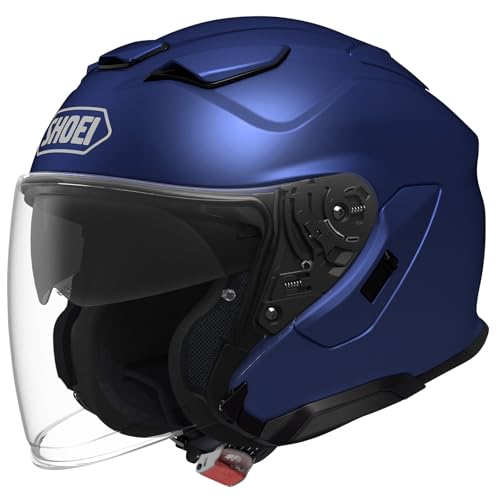
SHOEI J-Cruise 3 Open Face Helmet
What We Like
- Dual DOT and ECE 22.06 safety certs
- Wind-tunnel-tested shell reduces noise and lift
- Built-in QSV-2 sun visor for glare control
- Optional SENA SRL 3 integration for clean fit
Trade-offs
- At 3.1 lb, heavier than some half-shell options
- Open face offers less chin protection than full-face
- Communication system sold separately
A wind-tunnel-refined AIM+ shell and dual DOT/ECE 22.06 safety certifications make the SHOEI J-Cruise 3 a helmet that prioritizes both protection and long-haul comfort. The aerodynamic design reduces wind noise and lift, helping you stay steady on the highway. An integrated QSV-2 sun visor and upper intake/top exhaust vents give you adjustable airflow and light control without fumbling with shields. This open-face helmet combines touring comfort with a compact shape for everyday rides.
That extra weight comes from the multi-density EPS liner and stronger shell that deliver ECE 22.06 protection. If you prioritize maximum impact coverage, a full-face or modular design like the SPARK Flip-up might suit you better. But for open-face riders who value stability, quiet, and top-tier safety credentials, the J-Cruise 3 balances those priorities without compromise.
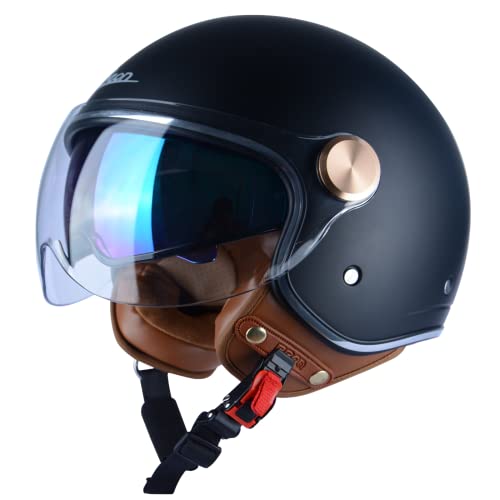
BEON Half 3/4 Face Retro Helmet
What We Like
- Dual visors: clear outer plus retractable inner sun visor
- Removable and washable inner liner
- Tool-free metal visor base adjustment
- Additional long outer visor included for high-speed protection
Trade-offs
- At 3.8 pounds, heavier than many open-face helmets
- No integrated speaker pockets or communication system mounts
- Fixed 3/4 design lacks full-face protection in bad weather
Dual visors, a clear anti-scratch outer shield and a retractable inner sun visor that blocks UV, mean you can ride from bright afternoon sun into a shaded canyon without fumbling for sunglasses or stopping to change shields. At 3.8 pounds it’s not the lightest open-face option, but the thermoplastic shell meets both DOT FMVSS 218 and ECE 22.05 standards, giving you certified protection. The removable, washable inner liner also keeps things fresh on long cruising days.
The trade-off for that dual-visor convenience is weight: at 3.8 pounds, it’s heavier than the Yesmotor Hawk Style half helmet (1.3 pounds), so you’ll notice the difference on longer rides. The metal visor base screws on and off by hand without tools, which is convenient for adjustments. For riders who want a retro open-face look with built-in sun protection and dual-certified safety, this helmet delivers a lot of value.
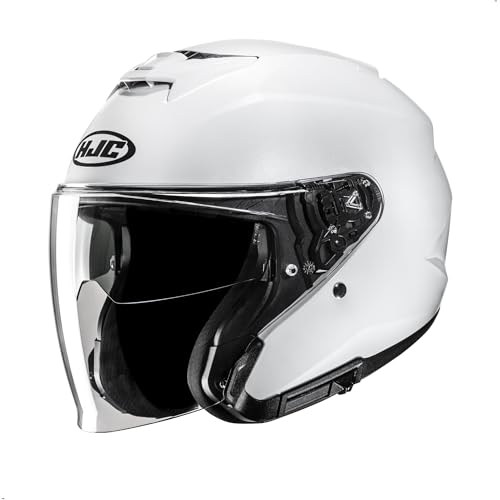
HJC i31 Solid Open Face Helmet
What We Like
- DOT-approved for safety
- Pinlock-ready visor with UV protection
- Removable, washable interior pads
- Glasses grooves for eyewear riders
Trade-offs
- Heavier than SHOEI J-Cruise 3 at 3.4 lb
- Open face leaves chin exposed
A DOT-approved polycarbonate shell that meets FMVSS 218 standards means this helmet has passed rigorous tests for impact and penetration resistance, giving you real peace of mind on the road. The Pinlock-ready HJ-43 visor blocks 99% of UV rays and resists scratches, while the Advanced Channeling Ventilation System pushes heat and humidity out from front to back. Riders who wear glasses will appreciate the built-in grooves, and the removable, washable crown and cheek pads make long-term care simple. This is the helmet for someone who wants proven protection and practical comfort without spending for a premium badge.
The trade-off comes down to weight. At 3.4 pounds, the HJC i31 is noticeably heavier than the SHOEI J-Cruise 3, which weighs 3.1 pounds. That extra heft can add fatigue on an all-day cruise, especially if you’re used to a lighter lid. The open-face design also leaves your chin and lower jaw exposed, so it’s not for riders who want full-face coverage. If weight is your top concern, the SHOEI is the lighter alternative. But for the money, the HJC i31 delivers solid DOT protection, ventilation, and eyewear-friendly features that make it a smart pick for relaxed cruising.
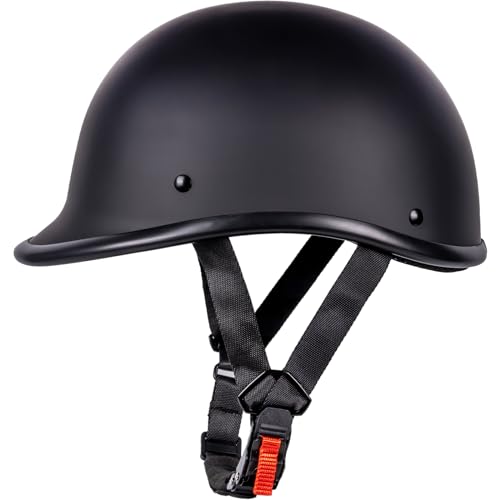
Yesmotor Hawk Style Half Helmet
What We Like
- Weighs only 1.3 pounds
- Low-profile beanie design
- Quick-release buckle for easy use
- Removable, washable inner padding
Trade-offs
- Half shell leaves face and ears exposed
- No built-in sun visor or shield
- Minimal coverage for colder weather
Weighing just 1.3 pounds, this helmet is lighter than many open-face options in this guide, which helps reduce neck fatigue on long rides. The low-profile beanie silhouette sits close to your head, avoiding the mushroom look common with some half helmets, and the DOT-approved ABS shell with EPS liner provides basic protection in a compact package. It’s built for riders who want minimal coverage and maximum airflow on warm days, especially on cruisers and bobbers where style and ventilation matter more than full enclosure.
The trade-off is straightforward: you get very little coverage. Unlike a 3/4 or full-face helmet, this half shell leaves your face and ears exposed to wind, bugs, and weather. The quick-release buckle makes it fast to throw on for a quick trip to the store or a short commute. But if you ride long distances on the highway or in unpredictable weather, you’ll miss the extra shell of a 3/4 or full-face design. This helmet prioritizes lightness and simplicity over all else.
ILM Open Face 3/4 Helmet Model 726X
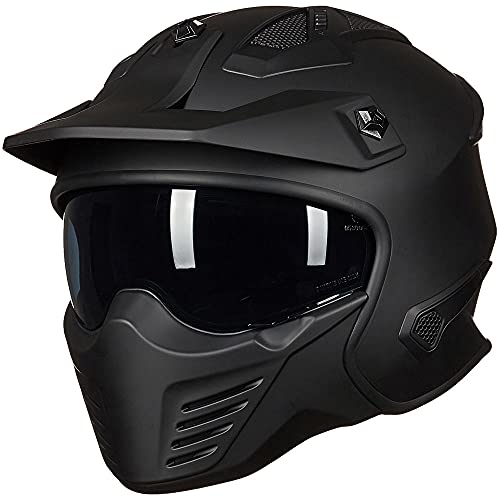
What We Like
- Meets DOT safety standards
- Detachable lens, sun shield, chin guard
- Multiple vents for airflow
- Quick release buckle for easy on/off
Trade-offs
- At 4.2 pounds, heavier than many open-face helmets
- Open face offers less protection than full-face models
At 4.2 pounds, this helmet sits on the heavier side compared to options like the YEMA YM-627 at 2.6 pounds or the Yesmotor Hawk Style at 1.3 pounds. That weight gives it a sturdy feel, and the ventilation system with multiple vents helps keep air flowing during warm rides. The detachable lens, sun shield, and chin guard let you adjust the setup for different conditions without needing extra gear, making it a practical single-helmet solution for varied riding environments.
The trade-off with the ILM 726X is its weight versus its versatility. It is heavier than the YEMA YM-627, so riders accustomed to lighter helmets will feel the difference. The open-face design leaves the chin exposed, unlike full-face or modular helmets such as the SPARK Modular Flip-up. However, the ability to swap between a clear lens, tinted sun shield, and chin guard gives you flexibility in a DOT-certified package.
TRIANGLE Convertible Full Face Helmet

What We Like
- DOT-certified impact protection
- Detachable mask for two riding styles
- Built-in drop-down sunshield
- Removable, washable comfort liner
Trade-offs
- At 4.3 lb, heavier than open-face helmets
- Full-face mode limits airflow on hot days
- Detachable mask adds complexity to storage
A detachable front mask lets this helmet switch from a full-face to a 3/4 open-face setup, giving you two configurations in one shell. The helmet is DOT FMVSS-218 certified, with a high-impact ABS outer shell and multi-density EPS liner for impact protection, plus a built-in drop-down sunshield for glare relief. This hybrid design suits riders who want the option to change coverage without buying a second helmet.
Weight is the main drawback here. At 4.3 pounds, it is noticeably heavier than open-face options like the SHOEI J-Cruise 3, so long days in the saddle might leave your neck a little more tired. The detachable mask also means there is an extra piece to keep track of when you are riding in 3/4 mode. If you value versatility over absolute lightness, this hybrid design delivers a lot of capability in one package.
Product photos
YEMA YM-627 Open Face Helmet

What We Like
- Dual visor eliminates sunglass switching
- Removable washable inner lining
- Quick release buckle for easy on/off
- Adjustable intake vents for airflow
Trade-offs
- At 2.6 lb, heavier than some half helmets
- Open face offers less jaw protection than full face
The dual visor setup is the standout feature here: a clear outer shield for wind and bugs, plus a built-in tinted inner visor that drops down when the sun gets harsh. That means no fumbling with sunglasses or swapping shields mid-ride, a real convenience for long cruising days. At 2.6 pounds, it’s lighter than many open-face options like the HJC i31 (3.4 lb) or the BELL Pit Boss (3.0 lb), so your neck won’t tire as quickly on all-day trips. The removable washable liner is a practical touch for keeping things fresh after sweaty summer miles, and the quick release buckle makes it easy to snap on and off even with gloves on.
The trade-off for that lightness and visor convenience is less coverage than a full-face or modular helmet. The 3/4 shell leaves your chin and jaw exposed, which matters if you’re more concerned about facial impact protection. The YEMA’s ABS construction meets DOT safety standards, making it a reliable choice for riders who prioritize airflow, easy visor management, and a lighter weight over maximum coverage. Just know that open face means open to the elements, so it’s best for fair-weather cruising where wind and sun are your main concerns.
Product photos
ILM Half Helmet Dial Fit 205V

What We Like
- Integrated drop-down sun visor
- Quick release chin strap
- Lightweight at 2.7 pounds
- Removable and replaceable inner
Trade-offs
- Half-shell leaves face fully exposed
- No face protection for highway speeds
Weighing 2.7 pounds, this half helmet is a lightweight option for riders who want to minimize neck strain on long cruises. The integrated drop-down sun visor lets you block glare without swapping glasses, and the quick-release chin strap makes it easy to take off at gas stops. It suits riders who prioritize low weight and convenience on warm-weather rides, especially around town or on the highway where wind protection matters less than comfort.
A half-shell design leaves your entire face, jaw, and chin exposed to wind, bugs, and debris, something a full-face or modular helmet would cover. Compared to the SHOEI J-Cruise 3, which weighs 3.1 pounds, the ILM is lighter but offers less coverage for the lower half of your face. If you prioritize breeze and visibility over full coverage, this is a practical, no-fuss choice for sunny cruising.
Product photos
SPARK Modular Flip-up Helmet

What We Like
- Modular flip-up chin bar for quick conversion
- Dual visor system with retractable inner sun shield
- Adjustable ventilation ports for airflow control
- Removable, washable interior padding
Trade-offs
- ABS shell is a common budget material
- Flip-up chin bar adds extra bulk to the helmet
A modular flip-up chin bar that converts from full-face to three-quarter coverage is the defining feature here, letting you grab a drink or talk at a gas stop without pulling the helmet off entirely. That convenience, paired with a dual visor system that includes a retractable inner sun shield, makes this a practical choice for cruiser riders who want full-face protection on the highway and open-face ease around town. The adjustable ventilation ports help manage heat on longer rides, and the removable padding keeps cleanup simple. For anyone watching their budget, this helmet delivers the core modular experience without stretching your wallet.
Product photos
BELL Pit Boss Half Helmet

What We Like
- Lightweight aramid-carbon-fiberglass shell
- Low-profile open-air cruising design
- Meets DOT safety standards
- Budget-friendly composite shell strength
Trade-offs
- No face or chin protection
- Limited coverage for cold or wet weather
A proprietary blend of aramid, carbon fiber, and fiberglass makes the Bell Pit Boss a half helmet that punches above its weight class in strength without loading you down. At just three pounds, it keeps your neck free during long cruises, and the low-profile shape stays tidy on your head rather than looking like a bucket. This is the helmet for riders who want the lightest, most minimal coverage that still meets DOT standards, and who value open-air feel over full-face protection.
The obvious downside is that a half helmet leaves your face and chin exposed, so it’s not the pick for highway slogs or chilly mornings. The SHOEI J-Cruise 3 weighs 3.1 pounds, only slightly more, but offers a different shape and more coverage area. If you ride a cruiser on warm backroads and want the bare minimum that still passes safety certification, the Pit Boss gives you composite armor without the premium price tag.
Product photos
How We Evaluated Cruising Motorcycle Helmets
Our evaluation starts with the safety certifications each helmet carries. DOT, ECE, or both, and the shell materials used. We then compare weight, because a heavy helmet becomes fatiguing on long rides, and aerodynamics, which affect both noise and neck strain at highway speeds.
We looked closely at visor systems, especially built-in sun visors and Pinlock readiness, since cruiser riders often face changing light conditions. Ventilation design, liner quality, and compatibility with communication systems also factored into our rankings, as these determine real-world comfort over hours of riding.
A research-led evaluation has limits: we don’t test helmets in a wind tunnel or on a track. Instead, we synthesize what specifications, expert consensus, and owner feedback reveal about each model’s strengths and trade-offs.
What To Look For In Cruising Motorcycle Helmets
The right cruising helmet combines safety certification, a comfortable weight, and features that reduce fatigue on long rides. Focus on fit first, then prioritize the details that match your riding style.
Look for dual DOT and ECE certification, a weight under a certain threshold for open-face models, a built-in sun visor, and a shell shape that works with your bike’s riding position.
Safety Certifications and Shell Construction
DOT certification is the minimum legal standard in the US, but ECE 22.06 is a more rigorous international standard that tests impact absorption at different speeds and angles. Helmets with both certifications offer broader protection assurance. Shell materials range from polycarbonate to fiberglass and carbon-fiber blends; lighter, stronger shells often cost more but reduce neck fatigue.
Weight and Aerodynamics
A helmet’s weight directly affects comfort on long cruises. Open-face helmets typically range from 2.6 to 4.2 pounds, while half-shells can drop below a certain weight. Aerodynamic testing, whether wind-tunnel or computational, matters because lift and buffeting at highway speeds strain your neck. Look for helmets that mention wind-tunnel design or reduced lift in their specs.
Visor Systems and Ventilation
A built-in drop-down sun visor eliminates the need to swap sunglasses or carry a tinted shield. Pinlock-ready visors prevent fogging in cool weather. Adjustable intake and exhaust vents let you control airflow; cruiser riders often prefer top vents that don’t create turbulence behind a windscreen.
- Check that the visor mechanism operates smoothly with one hand while riding.
- Verify Pinlock insert availability for your model if you ride in damp conditions.
- Ensure the helmet fits your bike’s riding position, chin-up cruiser posture vs. Tucked sport-touring stance.
- Test the chin strap buckle type: quick-release is convenient, but double-D rings are lighter and more secure.
- Confirm speaker pockets if you plan to add a communication system later.
A helmet that fits snugly without pressure points will always outperform one with better specs that doesn’t match your head shape.
Cruising Motorcycle Helmets Compared
The table below compares the ten helmets in this guide across key specs, so you can quickly see how each model stacks up on weight, certification, and standout features.
| Product | Weight | Safety Certifications | Shell Material | Visor Type |
|---|---|---|---|---|
| SHOEI J-Cruise 3 Open Face Helmet | 3.1 pounds | DOT FMVSS 218, ECE 22.06 | N/A | QSV-2 internal |
| BEON Half 3/4 Face Retro Helmet | 3.8 pounds | DOT FMVSS 218 & ECE 22.05 | Advanced thermoplastic | Clear outer + retractable inner sun visor |
| HJC i31 Solid Open Face Helmet | 3.4 pounds | DOT FMVSS 218 | Polycarbonate compound | Pinlock-ready HJ-43 |
| Yesmotor Hawk Style Half Helmet | 1.3 Pounds | DOT Approved | Rugged ABS | N/A |
| ILM Open Face 3/4 Helmet Model 726X | 4.2 Pounds | DOT FMVSS-218 | N/A | Lens, Sun Shield |
| TRIANGLE Convertible Full Face Helmet | 4.3 Pounds | DOT FMVSS-218 | High-impact ABS | Built-in drop-down |
| YEMA YM-627 Open Face Helmet | 2.6 pounds | DOT approved | Advanced ABS | Dual visor (clear + tinted internal) |
| ILM Half Helmet Dial Fit 205V | 2.7 pounds | DOT & FMVSS 218 | ABS | Integrated drop-down |
| SPARK Modular Flip-up Helmet | 3.1 pounds | DOT & FMVSS 218 | ABS | Dual Lens (clear + retractable inner) |
| BELL Pit Boss Half Helmet | 3.0 pounds | FMVSS 218 (DOT) | Aramid, carbon fiber, fiberglass | N/A |
Frequently Asked Questions
What is the safest type of motorcycle helmet for cruising?
Full-face helmets offer the most comprehensive protection, but many cruiser riders prefer open-face or half-shell designs for comfort and visibility. The safest open-face choice carries both DOT and ECE 22.06 certification, like the SHOEI J-Cruise 3, and fits your head shape without any rocking.
Do I need a sun visor in a motorcycle helmet?
A built-in sun visor is highly useful for cruiser riders who face changing light conditions on long rides. It lets you react to sun glare without stopping to swap shields or sunglasses, and models like the BEON Half 3/4 Face and YEMA YM-627 include this feature.
How heavy should a cruising motorcycle helmet be?
Most cruiser riders find open-face helmets between 2.6 and a certain weight comfortable for all-day wear. Half-shell helmets can be much lighter, around 1.3 to 2.7 pounds, but they offer less coverage. Heavier helmets above a certain weight can cause neck fatigue on long highway trips.
Can I wear glasses with an open-face motorcycle helmet?
Yes, many open-face helmets are designed with glasses grooves in the padding to accommodate eyewear. The HJC i31 Solid Open Face Helmet specifically mentions glasses-friendly design, and most 3/4 helmets leave enough side room for temple arms to fit comfortably.
What is the difference between DOT and ECE helmet certification?
DOT is the mandatory US standard that tests impact absorption, penetration resistance, and retention system strength. ECE 22.06 is a more comprehensive international standard that tests at multiple impact speeds and angles, includes rotational impact testing, and is updated more frequently. Helmets with both certifications meet stricter global safety benchmarks.
The Bottom Line
The SHOEI J-Cruise 3 Open Face Helmet is our best overall pick for riders who want premium aerodynamics, dual safety certifications, and a built-in sun visor for long highway cruises. It’s heavier than some half-shell options, but the wind-tunnel-tested shell and optional SENA SRL3 integration make it a touring-ready choice.
If your style leans vintage, the BEON Half 3/4 Face Retro Helmet delivers a classic look with modern dual visors and tool-free adjustments. For budget-conscious riders, the HJC i31 Solid Open Face Helmet provides DOT-approved safety and glasses-friendly comfort without the premium price.
The single most important factor when buying a cruising helmet is fit. A helmet that matches your head shape and riding posture will always serve you better than one with the best specs that doesn’t feel right.
