
10 Best Enduro Mountain Bike Pedals in 2026
This post contains affiliate links. As an Amazon Associate, we earn from qualifying purchases.
The Shimano XTR PD-M9120 Enduro Pedals earn our best overall spot by combining a wide platform for unclipped stability with sealed bearings that keep mud and moisture out. For riders who prioritize low weight, the HT Components T2 Clipless Platform Pedals offer a lightweight alternative, while the OneUp Components Composite Pedals deliver excellent grip in a serviceable composite package.
Enduro riding demands pedals that can handle technical climbs, high-speed descents, and the occasional rock strike. The right choice balances platform size, engagement type, and durability against your personal riding style and shoe preference.
We built this guide by analyzing manufacturer specifications, expert round-ups, and patterns in owner feedback across the enduro pedal market. Our goal is to help you find the pedal that matches your terrain, technique, and budget without the guesswork.
Top 10 Enduro Mountain Bike Pedals in the Market
Certain content that appears on this site comes from Amazon. This content is provided "as is" and is subject to change or removal at any time.
The Best Enduro Mountain Bike Pedals, Reviewed
Shimano XTR PD-M9120 Enduro Pedals
What We Like
- Wide platform boosts unclipped control
- Sealed bearings block dirt and moisture
- Open design sheds mud for reliable clipping
- Extra-long contact area improves power transfer
Trade-offs
- Clipless system requires specific cleat shoes
- Platform adds bulk for weight-conscious riders
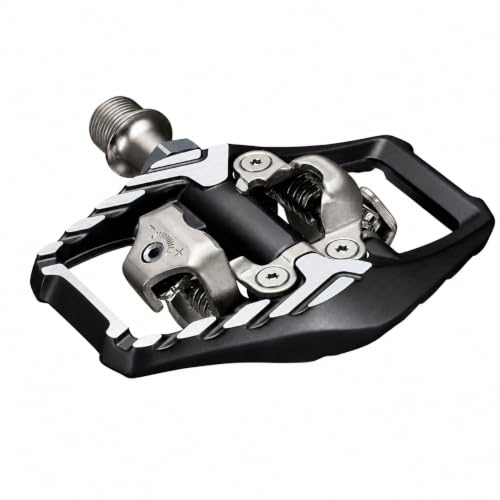
A wide 4.3-inch platform and extra-long pedal-to-shoe contact area mean you get stable power transfer when you’re clipped in or pedaling through a rough section without engaging the cleats. That dual-mode confidence suits enduro and trail riders who want to stay hooked up on climbs but still feel the platform underfoot when the trail gets rowdy. The sealed bearings keep grit and moisture out of the mechanism, so this pedal holds up through muddy seasons and creek crossings without needing constant service.
But for riders who prioritize reliable engagement in foul conditions, the open axle housing sheds mud proactively. And they want a platform that helps when you’re not clipped, the Shimano XTR delivers a durable, trustworthy package that balances control and protection. Not ideal for riders who prefer flat pedals exclusively or want the lightest possible setup for XC racing.
HT Components T2 Clipless Platform Pedals
What We Like
- CNC aluminum body keeps weight low
- Adjustable dual tension for secure hold
- Sealed bearings and IGUS bushings for smoothness
Trade-offs
- Proprietary cleat system limits compatibility
- 376 grams is light but not the lightest available
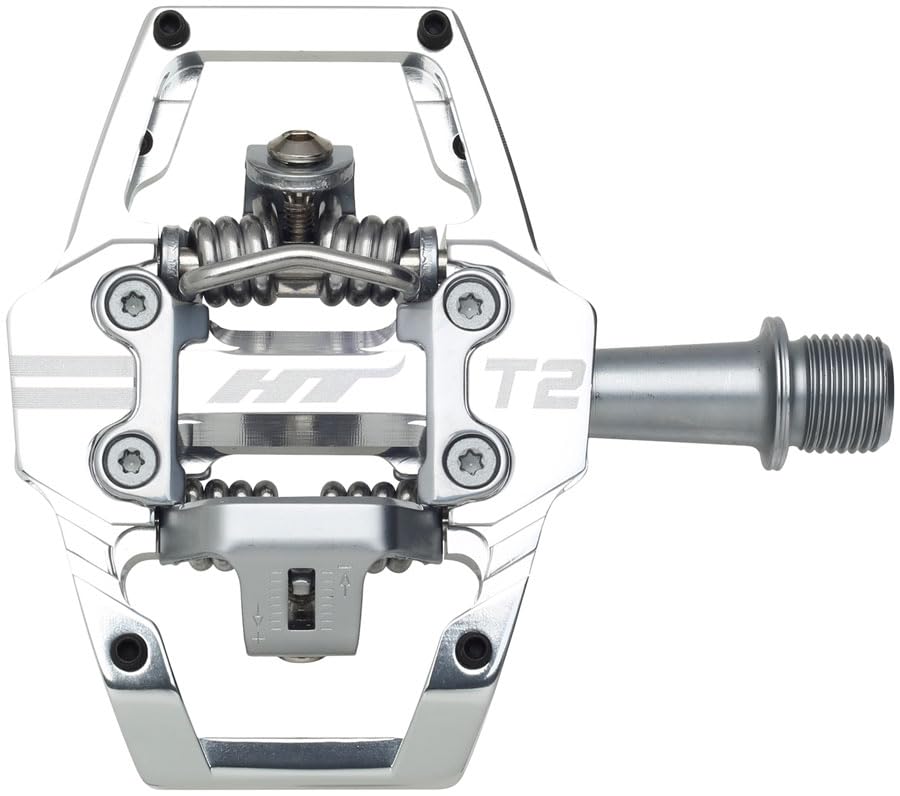
The trade-off is the proprietary cleat system: you are locked into HT’s cleats, so if you already own Shimano or Crankbrothers shoes and pedals, switching means buying new cleats and possibly new shoes. Compared to the Shimano XTR PD-M9120, the HT T2 is lighter at 376 grams versus 0.9 pounds, and it uses a dual-sided clipless design. For riders focused on aggressive mountain biking who are starting fresh with pedals, this is a lightweight clipless option.
OneUp Components Composite Pedals

What We Like
- Ultra-thin, convex profile reduces pedal strikes
- Large 115x105mm platform for secure footing
- Replaceable hexagonal pins for consistent grip
- Serviceable at home without special tools
Trade-offs
- Nylon composite less durable than aluminum under hard impacts
The OneUp Components Composite Pedals weigh 355 grams, making them the lightest pedal the brand makes. That low weight comes from a nylon composite body paired with a chromoly steel axle. The large 115x105mm platform uses ten replaceable hexagonal pins per side, and the subtly convex shape lets the pedal nestle into the arch of your foot for a natural, planted feel. Riders who value low weight without sacrificing platform size will find a lot to like here.
The trade-off for that light build is material choice. Nylon composite is less resistant to rock strikes than aluminum pedals, and the pedal height ranges from 13.3mm at the thinnest point to 18.5mm at the thickest. For riders who routinely bash pedals through chunky terrain, a metal pedal may offer more impact resistance. But for those who prioritize a light, grippy, serviceable flat pedal, the OneUp Composite delivers a combination that few others match.
Product photos
PNW Components Range Composite Pedals
What We Like
- Wide 110mm composite platform for stability
- Lightweight nylon body with sealed bearings
- Replaceable steel pins for adjustable grip
- Lifetime warranty on manufacturing defects
Trade-offs
- Nylon body less durable than aluminum under hard impacts
- Flat pedals lack clipless option for pedal-to-shoe connection
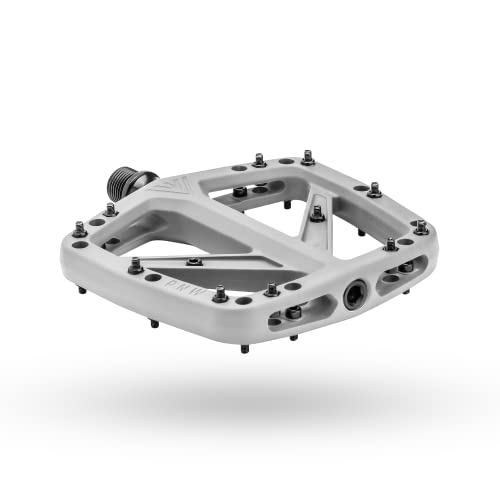
The PNW Range Composite Pedals carry a lifetime warranty against manufacturing defects, which means the company will replace them if the body or bearings fail due to poor workmanship. The 110mm platform gives your foot a stable landing spot, while the sealed bearings and DU bushings keep the spin smooth ride after ride. This is a flat pedal for riders who want a wide, grippy surface without worrying about premature wear.
The Range pedals come with a lifetime warranty against manufacturing defects, so if something breaks due to a flaw, PNW Components will cover it. The nylon body keeps the weight down to 0.9 pounds, which helps with bike handling on long rides. Riders who want a clipless option for steep climbs should consider the Shimano XTR PD-M9120 instead.
Shimano PD-ME700 Trail Pedals

What We Like
- Dual-sided entry for quick clipping
- Chrome-moly spindle for durability
- Versatile for many riding disciplines
Trade-offs
- At 1.2 lb, heavier than some clipless pedals
Dual-sided retention claws mean you can step down on either side and click in without fumbling, a real time-saver on technical climbs or when you need to dab a foot and get back on the gas fast. With a chrome-moly spindle, these pedals are built to handle the rough stuff without bending or breaking. That makes them a smart fit for enduro riders who also commute, ride gravel, or tackle cyclocross. The pedal measures 7.9 inches long and 3.1 inches wide, offering a broad contact area that helps you push hard through chunky sections without feeling unstable.
The trade-off is weight: at 1.2 pounds, these are heavier than the Crankbrothers Mallet Trail pedals, which come in at 0.8 pounds. That extra mass is noticeable if you’re counting every gram for racing, but for all-day trail riding or multi-use adventures where durability matters more than ounces, it’s a fair compromise. If you prioritize light weight above all else, the Mallet Trail might appeal more, but the Shimano PD-ME700 gives you a rugged, do-it-all clipless pedal that won’t let you down when the trail gets rowdy.
Crankbrothers Mallet Trail Pedals

What We Like
- Adjustable traction pins per side
- CNC aluminum body with steel wings
- 4-sided cleat for easy entry
- Integrated traction pads for grip
Trade-offs
- Platform narrower than some enduro pedals
- Overall product width is 2.0 inches
The 4-sided cleat capture means you can click in fast on rough terrain without hunting for the engagement point, which matters when you’re bouncing through rock gardens and need to get power down quickly. This pedal uses a CNC aluminum body with steel wings and two adjustable traction pins per side, so you can fine-tune how much grip you want against your shoe sole. Riders who like to dial in their interface will appreciate that control, especially on wet or loose trails where a secure connection inspires confidence. The included 6-degree cleats offer a predictable release angle for enduro riding, balancing float with stability.
The steel wings and aluminum body add durability but also mass, and the 2.0-inch width is narrower than some purpose-built enduro platforms such as the HT Components T2 at 5.0 inches. That narrower stance might feel less supportive for riders with larger feet or those who prefer a wide landing zone for stability. If adjustable grip and easy entry are priorities, the Mallet Trail delivers; if sheer platform size matters more, look at wider options.
Product photos
5DEV Mountain Bike Aluminum Pedal
What We Like
- Large 106mm x 110mm platform
- Smooth 4-bearing plus bushing internals
- Lightweight 6061-T6 aluminum build
- 2.5-degree dish for foot flexibility
Trade-offs
- Raw finish shows scuffs more than painted pedals
- 6061-T6 aluminum is softer than chromoly steel spindles
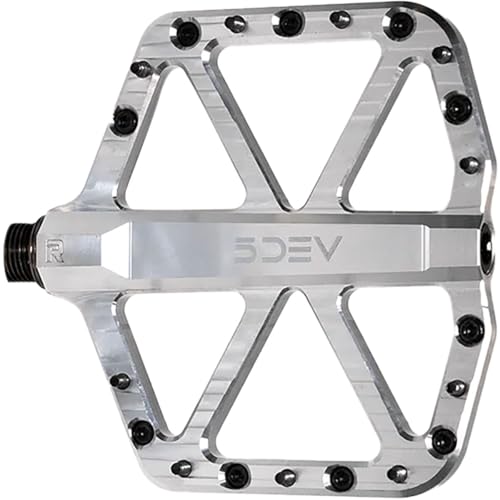
A 106mm by 110mm platform gives your foot a stable, planted feel on rough descents, while the 2.5-degree dish allows subtle movement for adjusting your stance mid-trail. The 6061-T6 aluminum body keeps weight reasonable at one pound, and the combination of one IGUS bushing with four bearings delivers smooth, reliable spin that holds up to mud and grit. This pedal suits riders who want a wide, durable aluminum platform with long-lasting internals for enduro and DH riding.
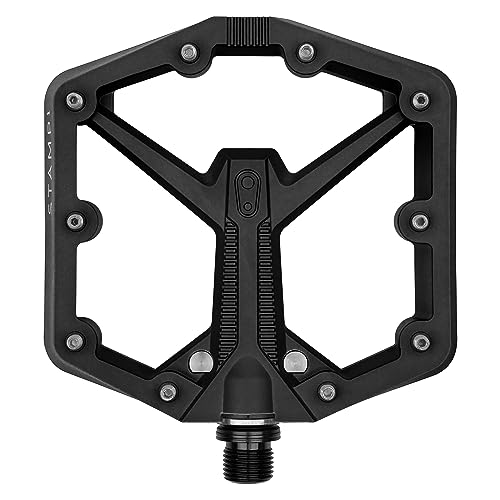
Crankbrothers Stamp 1 Gen 2 Pedals
What We Like
- Replaceable one-piece traction pins
- Serviceable IGUS bearings for long life
- Large platform supports big shoe sizes
- Lightweight nylon composite body
Trade-offs
- Composite body less durable than aluminum
Riders with US shoe sizes 10 to 15 get a 114mm square platform that keeps their feet planted on rough terrain, so you can push through rocky descents without slipping. Replaceable traction pins let you swap out worn grip without buying new pedals, and the nylon composite body keeps the weight at 0.8 pounds for easy handling on the trail. Fully serviceable IGUS bearings mean you can keep them spinning smoothly season after season.
The composite construction keeps weight and cost down, but riders who regularly hit sharp rocks may want a metal pedal for extra impact resistance. For those who value a large, grippy flat pedal with easy maintenance and a lightweight build, the Stamp 1 Gen 2 fits the bill.
Product photos
FIFTY-FIFTY MTB Nylon Composite Pedals

What We Like
- Ultra-thin 0.7-inch profile reduces pedal strikes
- Large 106×104 mm platform keeps feet planted
- Replaceable steel pins for reliable grip
- Sealed bearings resist water and dust
Trade-offs
- No clip-in option for riders who want clipped-in security
- No clipless option for pedal efficiency enthusiasts.
At just 0.7 inches thick, the FIFTY-FIFTY Nylon Composite Pedals give you maximum clearance on rocky, rooty enduro trails where pedal strikes can throw you off line. The large 106×104 mm platform paired with nine replaceable steel pins per side keeps your feet locked in place through rough descents and technical climbs.
The trade-off with that slim profile and nylon composite construction is durability under extreme abuse. Hard landings or repeated rock strikes can cause the nylon body to flex or crack over time. If you are a heavier rider or regularly ride the gnarliest rock gardens, you might prefer a metal pedal. For most enduro riders, though, the weight savings, grip, and clearance make this a smart, affordable choice that delivers where it counts.
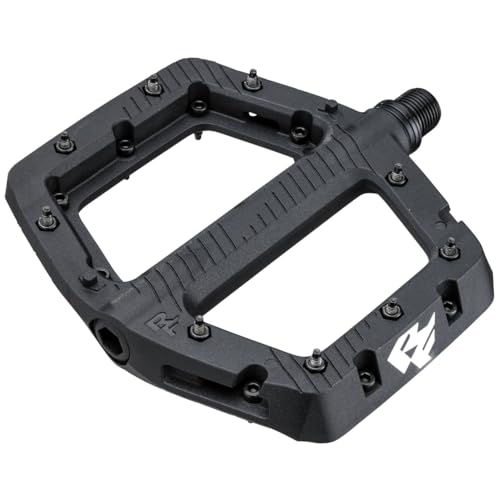
Race Face Chester Large Pedals
What We Like
- Large 115 x 110mm platform
- Cr-Mo chromoly steel spindle
- 11 pins per side for grip
- Fully serviceable internals
Trade-offs
- At 1.1 lb, heavier than composite pedals
- Steel spindle adds weight over aluminum alternatives
A 115 x 110mm platform gives you a stable, confidence-inspiring foothold that keeps your foot planted through rough descents and technical climbs. That generous surface area, paired with 11 pins per side (nine metal and two co-molded plastic), delivers reliable traction without feeling like you’re glued to the pedal. The Cr-Mo chromoly steel spindle adds strength for hard landings and rocky trails, while the fully serviceable internals mean you can keep these pedals spinning season after season. This is a durable, no-nonsense flat pedal built for riders who want a big deck and don’t mind a little extra heft for the sake of longevity.
The trade-off is weight: at 1.1 pounds, these are noticeably heavier than composite options like the OneUp Components Composite Pedals (0.8 lb). That extra mass is felt on long climbs, but it comes from the steel spindle and construction that can take repeated abuse on enduro terrain. If you prioritize a bombproof platform over gram counting, the Chester Large delivers where it counts. Riders who want a lighter pedal for all-day epics might prefer the OneUp, but for those who value a large, grippy, and rebuildable platform, this is a smart pick.
Product photos
How We Evaluated Enduro Mountain Bike Pedals
Our evaluation is based on manufacturer specifications, expert round-ups from the mountain biking community, and consistent patterns in owner feedback. We focused on what the data tells us about real-world performance, durability, and rider satisfaction across dozens of pedal models.
Four criteria mattered most for enduro pedals. Platform size and shape determine stability when unclipped or on flat pedals during rough descents. Bearing and bushing quality affects long-term smoothness and maintenance intervals. Material choice, aluminum, chromoly, or composite, trades weight against impact resistance. And cleat compatibility or pedal-to-shoe interface dictates whether the pedal works with your existing kit.
A research-led approach has limits. Owner feedback can reflect individual preferences rather than universal quality, and manufacturer specs don’t always predict how a pedal will feel on a specific trail. We prioritize consistent, well-documented patterns over outliers to give you a reliable starting point.
What To Look For In Enduro Mountain Bike Pedals
Choosing the right enduro pedal means matching platform dimensions, engagement style, and build materials to your riding terrain and personal preferences. Focus on what keeps you planted through rough sections and what survives rock strikes.
Key buying criteria: Platform size for foot support, spindle material for durability, bearing quality for smooth rolling, and cleat system compatibility with your shoes.
Platform Size and Shape
A wider platform gives you a stable landing when you unclip or ride flat pedals through rough sections. Look for platforms wide enough for enduro riding. The shape matters too, convex or concave profiles affect how your foot sits on the pedal, with concave shapes generally providing more secure footing.
Spindle and Body Materials
Chromoly steel spindles offer the best strength-to-weight ratio for enduro abuse, while aluminum spindles save grams but may bend under extreme impacts. Composite bodies are lighter and cheaper but can crack on sharp rock strikes. Aluminum bodies resist impacts better but add weight and cost.
Bearing and Bushing Quality
Sealed cartridge bearings keep dirt and water out, extending service intervals. Some pedals combine bearings with IGUS bushings for smoother rotation. Serviceable internals let you rebuild rather than replace a worn pedal, saving money over time.
Cleat System Compatibility
Clipless pedals use different cleat systems. Shimano SPD is the most common, while others use proprietary designs. If you already own shoes with SPD cleats, stick with Shimano or compatible pedals. For flat pedals, check pin height and replaceability; taller pins offer more grip but wear faster.
- Measure your shoe size against platform dimensions for proper foot support
- Check spindle material against your typical trail impact level
- Verify cleat compatibility with your current shoes
- Look for serviceable bearings if you ride in wet or muddy conditions
- Consider pin replaceability for flat pedals to maintain grip over time
Rule of thumb: Wider platforms and steel spindles favor durability; composite bodies and aluminum spindles favor weight savings.
Enduro Mountain Bike Pedals Compared
The table below compares key specifications across our top picks to help you see the differences in platform size, weight, and materials at a glance.
| Product | Pedal Type | Weight | Body Material |
|---|---|---|---|
| Shimano XTR PD-M9120 Enduro Pedals | Clipless with platform | 0.9 pounds | N/A |
| HT Components T2 Clipless Platform Pedals | Clipless with platform | 376 grams | CNC aluminum |
| OneUp Components Composite Pedals | Flat | 355g | Nylon Composite |
| PNW Components Range Composite Pedals | Flat | 0.9 Pounds | Durable Nylon |
| Shimano PD-ME700 Trail Pedals | Dual-sided | 1.2 pounds | N/A |
| Crankbrothers Mallet Trail Pedals | Clipless with platform | 0.8 Pounds | CNC aluminum |
| 5DEV Mountain Bike Aluminum Pedal | Flat | 1.0 pounds | 6061-T6 aluminum alloy |
| Crankbrothers Stamp 1 Gen 2 Pedals | Flat | 0.8 pounds | Nylon composite |
| FIFTY-FIFTY MTB Nylon Composite Pedals | Flat | 351 g / 12.3 oz | Nylon composite |
| Race Face Chester Large Pedals | Flat | 1.1 pounds | N/A |
Frequently Asked Questions
What size platform do I need for enduro mountain biking?
A platform width of at least a certain size provides stable footing for most riders on technical terrain. Riders with larger feet (US 10 and up) benefit from platforms wider than that, like the Race Face Chester Large Pedals at 115 x 110mm.
Should I choose clipless or flat pedals for enduro?
Clipless pedals like the Shimano XTR PD-M9120 offer efficient power transfer and secure foot placement on rough descents. Flat pedals give you the freedom to move your foot quickly and are easier to ride in tricky situations. Your choice depends on whether you prioritize pedaling efficiency or quick foot adjustments.
How often should I service my enduro pedals?
Service intervals depend on riding conditions. Riders in wet or muddy terrain should service sealed bearings every few months, while dry-weather riders can go longer. Pedals with serviceable internals, like the OneUp Components Composite Pedals, are easier to maintain at home.
What spindle material is best for enduro durability?
Chromoly steel spindles offer the best impact resistance for aggressive enduro riding. They withstand rock strikes better than aluminum spindles, which can bend under extreme loads. The trade-off is slightly higher weight.
Can I use Shimano SPD shoes with non-Shimano pedals?
Most clipless pedals use proprietary cleat systems that are not compatible with Shimano SPD shoes. The HT Components T2 uses its own cleat design, while Crankbrothers pedals require Crankbrothers cleats. Always verify cleat compatibility before buying.
The Bottom Line
The Shimano XTR PD-M9120 Enduro Pedals are our best overall pick for riders who want a durable clipless pedal with a wide platform for stability when unclipped. Its sealed bearings and mud-shedding design make it a reliable choice for technical enduro trails.
If you prioritize low weight, the HT Components T2 offers a lightweight clipless option with adjustable tension. For flat pedal riders, the OneUp Components Composite Pedals deliver excellent grip and home serviceability in a thin, lightweight package.
The single most important factor in choosing an enduro pedal is matching the platform size and engagement style to your riding terrain and shoe compatibility. Get that right, and you’ll have a pedal that keeps you planted through the rough stuff.
