
10 Best Motorcycle Antifreeze in 2026
This post contains affiliate links. As an Amazon Associate, we earn from qualifying purchases.
For most riders, the Yamaha Yamalube Pre Diluted Antifreeze is the best overall choice because it is a ready-to-use, OEM-spec coolant that includes a bittering agent for safety. If you ride a Kawasaki, the Kawasaki Aluma Cool QT Coolant is our top OEM pick. Riders pushing their bikes hard in summer should consider the Engine Ice High Performance Coolant for its ability to lower operating temperatures.
Choosing the right antifreeze for a motorcycle is different than picking one for a car. Motorcycle cooling systems are smaller, run hotter, and the coolant must be compatible with aluminum, magnesium, and other metals found in bike engines. Getting the wrong formula can lead to corrosion, poor heat transfer, or seal damage.
This guide is based on a thorough review of manufacturer specifications, expert recommendations, and patterns in owner feedback. We break down the top 10 options by what they do best, so you can match a coolant to your bike’s brand, your riding conditions, and your maintenance preferences.
Top 10 Motorcycle Antifreezes in the Market
Certain content that appears on this site comes from Amazon. This content is provided "as is" and is subject to change or removal at any time.
The Best Motorcycle Antifreezes, Reviewed
Yamaha Yamalube Pre Diluted Antifreeze

What We Like
- Pre-diluted and ready to use
- Contains bittering agent for safety
- OEM spec from Yamaha
- Includes two quarts
Trade-offs
- Only two quarts included, not a gallon
- Not suitable for vehicles requiring a 50/50 coolant ratio
A 60/40 coolant-to-water blend means this antifreeze is already mixed and ready to pour straight from the bottle, saving you the hassle of measuring and diluting. That pre-diluted formula, combined with a bittering agent that discourages accidental ingestion, makes it a particularly thoughtful choice for home mechanics who want a straightforward, safe option. It suits riders who value convenience and OEM compatibility, especially those maintaining a Yamaha who prefer to stick with the factory-recommended fluid without second-guessing mixtures or ratios.
The 60/40 coolant-to-water ratio is what Yamaha specifies for this product, so it’s ready to use without any mixing. For riders who prefer a different ratio, such as a 50/50 blend, other options like Engine Ice High Performance Coolant are available, but this Yamalube is formulated to meet Yamaha’s own requirements for their engines.
Product photos
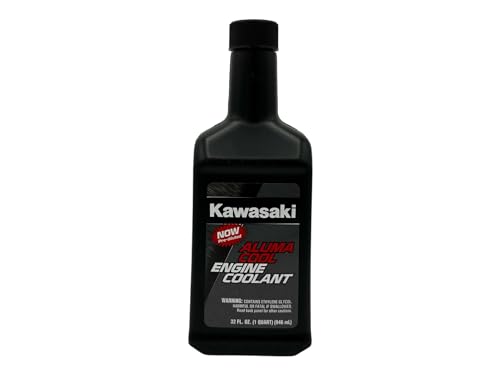
Kawasaki Aluma Cool QT Coolant
What We Like
- Genuine Kawasaki OEM part
- Pre-diluted for easy use
- No water needed
Trade-offs
- Pre-diluted limits custom mixing
- Only 1 quart, needs multiple bottles for full system flush
Genuine Kawasaki OEM part means this coolant is pre-diluted and ready to use directly from the bottle, so you skip measuring and mixing entirely. Open it and top off the reservoir without adding water. That convenience comes from the factory formulation, which eliminates guesswork for anyone maintaining a Kawasaki.
Compared to the Yamaha Yamalube Pre Diluted Antifreeze, which is also pre-diluted and comes in a 2-quart bottle, the Kawasaki Aluma Cool QT is a 1-quart size. That smaller volume suits single top-offs or smaller cooling systems but means you will need multiple bottles for a full system flush.
Product photos
Engine Ice High Performance Coolant

What We Like
- Lowers operating temps by 10-20°F
- Phosphate-free, safe for cooling systems
- Premixed with deionized water
- Boil-over protection up to 256°F
Trade-offs
- Heavier than many competitors at 4.3 pounds
- Propylene glycol formula not compatible with all cooling systems
Engine Ice drops operating temperatures by 10 to 20 degrees Fahrenheit compared to standard coolants, which means your bike runs cooler even when you’re pushing hard on a hot day or stuck in stop-and-go traffic. That temperature reduction helps prevent power loss from heat soak and keeps boil-over at bay up to 256°F. It’s a premixed propylene-glycol formula with OAT technology, so you pour it straight from the bottle without measuring or mixing. Riders who demand consistent performance from their cooling system will find this a straightforward upgrade.
The trade-off comes in cold weather: freeze protection stops at -7°F. Riders in northern climates who store or ride through deep winter may want something with a lower freeze point like Evans Powersports Waterless Coolant. Engine Ice also weighs 4.3 pounds per half-gallon, noticeably heavier than the 1-pound Red Line Supercool, which matters if you’re carrying spares on a long trip. Still, for the rider focused on heat management and ready-to-use convenience, this coolant delivers where it counts.
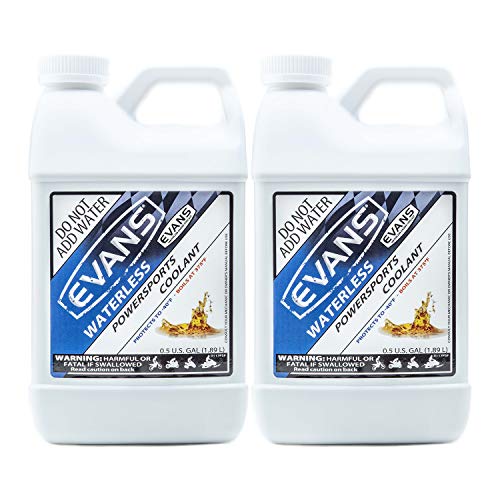
EVANS Powersports Waterless Coolant
What We Like
- Boils at 375°F, no vapor loss
- Water-free formula stops corrosion
- Reduces strain on cooling components
- Used by race teams
Trade-offs
- Requires complete removal of old coolant
- Not a drop-in replacement for water-based coolant
A 375°F boiling point means this coolant won’t vaporize, eliminating boilover and after-boil. By containing no water, it effectively eliminates corrosion, liner and water pump cavitation erosion, and minimizes the potential for corrosion and electrolysis issues. That makes it a strong fit for riders who use motocross bikes, trail bikes, Enduro bikes, street bikes, quads, ATVs, UTVs, or snowmobiles and want to avoid boilover and after-boil.
The boiling point of this coolant is 375 degrees Fahrenheit, so it won’t vaporize or cause boilover even under extreme heat. The catch is that you have to drain every drop of old water-based coolant before filling, which adds a step compared to a simple top-off. If you regularly ride in desert heat or hammer your bike hard, the extra prep time is worth the peace of mind.
This coolant is ideal for riders who want boilover protection and reduced corrosion risk, especially those who ride in demanding conditions. It is not ideal for those unwilling to fully flush old coolant before installation, as the process requires complete removal of any water-based coolant.
Product photos
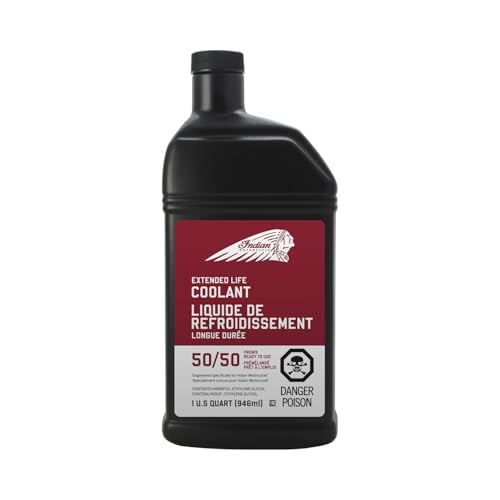
Indian Motorcycle Premix Antifreeze
What We Like
- Engineered specifically for Indian liquid-cooled engines
- Freeze protection down to -34°F
- Contains bittering agent to deter ingestion
- Quick fill formula safe with hard water
Trade-offs
- Only available as 50/50 premix, not concentrate
- Designed specifically for Indian Motorcycle engines only
Freeze protection down to -34°F and boil-over coverage means this coolant handles both bitter cold starts and scorching summer rides without a second thought. The formula is engineering-approved for Indian liquid-cooled engines and includes a bittering agent. Since it’s a 50/50 premix, you skip the hassle of mixing concentrate with water, and it’s safe to use with hard water, so you can pour it straight in and get back on the road.
This product is designed for Indian Motorcycle liquid-cooled engines, so riders of other brands would need a coolant suited to their bike. The 50/50 premix format means you cannot adjust the concentration, but for Indian owners who prefer a ready-to-use, extended-life coolant, this antifreeze offers a straightforward option backed by engineering approval.
Product photos
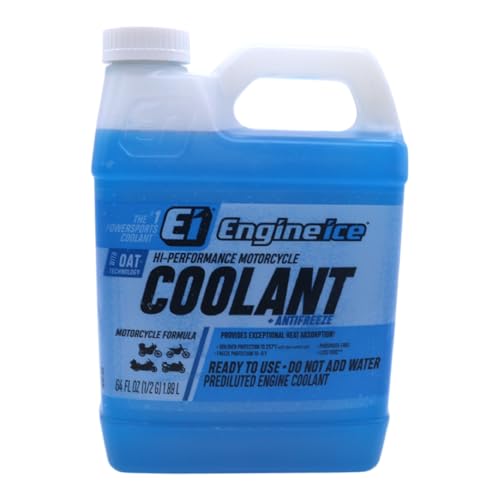
Engine Ice Off-Road Coolant Blue
What We Like
- Formulated for off-road high-performance use
- Ready-to-use blue coolant for easy installation
Trade-offs
- Targeted specifically at off-road riding conditions
- Not suitable for street-legal vehicles requiring ethylene glycol.
Engine Ice Off-Road Coolant Blue is a high-performance motorcycle coolant and antifreeze, ready to use without mixing. Its blue color is ready to pour straight into your cooling system, saving you the hassle of diluting. That makes it a straightforward choice for riders who want a dependable thermal solution without extra steps.
This coolant is formulated for off-road high-performance use, so it’s ideal for dirt bikes and enduros but may not suit street-only bikes or casual commuters. For pavement riders, the Yamaha Yamalube Pre Diluted Antifreeze offers a more general-purpose option.
4into1 Honda Type 2 HP Coolant

What We Like
- Compatible with original green coolant
- Ready-to-use 50/50 blend from bottle
- Bittering agent added for safety
Trade-offs
- Designed specifically for Honda, not universal
- Contains bittering agent, unpleasant if spilled
A 50/50 pre-diluted blend that protects from minus 34°F to 265°F means you can ride through deep winter and hot summer traffic without worrying about your cooling system. If you own a Honda, this takes the guesswork out of coolant choice, it’s ready to use directly from the bottle, and it’s fully backward-compatible with the older green coolant, so no flushing drama.
The trade-off is that this is a Honda-specific product, so it’s not a one-bottle-fits-all solution like a universal coolant. For a Kawasaki or Yamaha, other products like the Yamaha Yamalube Pre Diluted Antifreeze or Kawasaki Aluma Cool QT Coolant are available. But for a Honda owner who wants the exact spec the engineers designed, this is the straightforward pick.
Product photos
KTM Motorex Coolant M3.0

What We Like
- Genuine KTM factory PowerParts accessory
- Excellent corrosion protection for cooling system
- Excellent thermal conductivity
- Extended usage duration
Trade-offs
- Only available in 1.0L ready-to-use bottle
- Ethylene glycol formula is toxic if ingested.
A 1.0L ready-to-use bottle of genuine KTM factory PowerParts coolant means this fluid is engineered to meet the specifications of KTM’s own parts program. The ethylene-glycol formula provides excellent protection against frost, corrosion, limescale deposits, and overheating, while its excellent thermal conductivity helps modern engines shed heat efficiently. For owners who want a coolant that matches the factory’s own accessory line, this is a straightforward choice, no mixing, no guessing, just pour and ride.
The 1.0L ready-to-use bottle is enough for a single fill on many bikes, but if your cooling system is larger you will need to buy multiple bottles. This coolant uses an ethylene-glycol base that protects against frost, corrosion, limescale deposits, and overheating, and it offers extended usage duration. Reviewers note it is a Genuine KTM Factory PowerParts Technical Accessory, so it matches what the factory expects for KTM models.
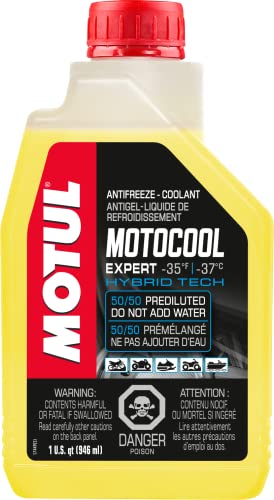
Motul Motocool Expert Coolant
What We Like
- Trusted Motul brand engineering
- 1-liter size fits most bikes
- Ready-to-use formula from a specialist
Trade-offs
- Only 1 liter limits larger cooling systems
- Not enough for high-performance racing engines
A 1-liter bottle from Motul, a brand known for high-performance lubricants, means you get a coolant engineered with the same attention to thermal management as their oils. That makes it a natural fit for riders who already trust Motul products and want consistency across their bike’s fluids. It suits anyone who values brand heritage and a straightforward, no-fuss coolant that’s ready to pour into a standard motorcycle cooling system without mixing or guessing.
The trade-off is capacity: at one liter, this bottle may not fully fill larger engines or bikes with extended cooling loops, so you might need a second bottle for a complete flush and refill. For riders who prefer a premium brand name and don’t mind the smaller size, it is a clean, reliable option.
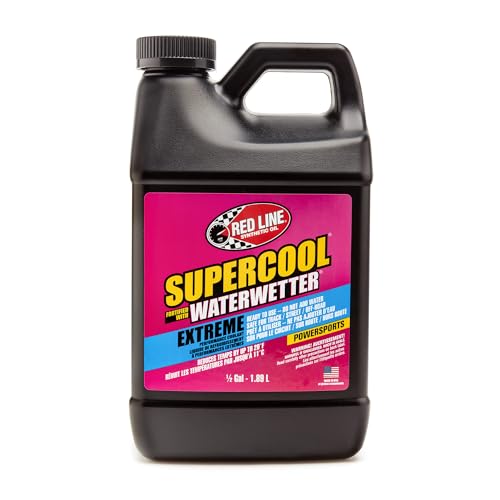
Red Line Supercool Powersports Coolant
What We Like
- Pre-mixed for pour-and-go use
- Reduces rust, corrosion, electrolysis
- Cleans and lubricates water pump seals
- Works with all modern cooling system metals
Trade-offs
- Pre-mixed only; no concentrate option for custom dilution
- No silicate-free option for engines requiring that chemistry
Red Line blends this coolant with purified, deionized water and a precise percentage of WaterWetter, so you get corrosion protection and seal lubrication straight from the bottle without mixing. That pre-mixed convenience makes it a strong fit for riders who want a quick, no-fuss fluid change on a motorcycle, ATV, or kart. The formula is designed to work with aluminum, cast iron, copper, brass, and bronze cooling systems, and it’s compatible with any other antifreeze or coolant already in the system, which simplifies top-offs or full flushes.
The formula is designed to work with aluminum, cast iron, copper, brass, and bronze cooling systems, and it’s compatible with any other antifreeze or coolant already in the system, which simplifies top-offs or full flushes. For riders who need a coolant that matches a specific factory recommendation, the Yamaha Yamalube Pre Diluted Antifreeze is another pre-mixed option available in a different volume. For most modern powersports engines, though, the Red Line’s metal compatibility and pump-friendly additives cover the essentials without the mixing hassle.
How We Evaluated Motorcycle Antifreezes
Our evaluation focused on what matters most when choosing coolant for a motorcycle: chemical compatibility, ease of use, and real-world temperature protection. We studied manufacturer data sheets, consulted expert maintenance guides, and looked at what experienced owners report across forums and product reviews.
The three criteria that mattered most were heat protection (boil-over and freeze points), formulation type (ethylene glycol vs. Propylene glycol, pre-diluted vs. Concentrate), and brand-specific compatibility. Many modern bikes require a specific coolant chemistry to protect water pump seals and mixed-metal engine blocks.
This evaluation has limits. Recommendations are based on published specs, expert consensus, and patterns seen in long-term owner feedback. Always check your owner’s manual for the exact coolant specification your bike requires.
What To Look For In Motorcycle Antifreezes
Choosing the right coolant starts with your bike’s owner’s manual. From there, focus on the formula type, temperature range, and whether the coolant is pre-mixed or a concentrate.
Match your coolant to your bike’s brand and engine metals. Pre-diluted formulas save time but limit custom mixing. Check the boil-over and freeze protection for your climate.
Ethylene Glycol vs. Propylene Glycol
Ethylene glycol is the traditional coolant base and offers excellent heat transfer and freeze protection. It is toxic, so look for a formula with a bittering agent to deter pets and children. Propylene glycol, used by Engine Ice High Performance Coolant, is less toxic and runs cooler in some engines, but it may not transfer heat as efficiently in all systems. Check your manufacturer’s recommendation before switching.
Pre-Diluted vs. Concentrate
Pre-diluted coolants like the Yamaha Yamalube Pre Diluted Antifreeze are ready to pour straight from the bottle. They save time and eliminate the risk of mixing the wrong ratio. Concentrates require you to mix with distilled water, which gives you control over the freeze point but adds a step. Most modern motorcycles are designed for a 50/50 pre-diluted mix, so a ready-to-use formula is the simpler choice.
Temperature Protection Range
Look at both the boil-over point and freeze protection. Standard 50/50 ethylene glycol protects to around -34°F and boils near 265°F. For extreme heat, the EVANS Powersports Waterless Coolant boils at 375°F, while the Engine Ice High Performance Coolant offers protection up to 256°F. If you ride in very cold climates, a coolant with -34°F freeze protection or lower is essential.
- Check your owner’s manual for the exact coolant type and ratio.
- Look for a bittering agent if you have pets or children at home.
- Consider a pre-diluted formula for convenience and consistency.
- Match the coolant to your bike’s metal types (aluminum, magnesium, copper).
- Buy enough coolant to do a full system flush, not just a top-off.
The most important rule: use the coolant your bike’s manufacturer designed the engine for.
Motorcycle Antifreezes Compared
The table below compares all 10 coolants by their key specs, best-use cases, and compatibility to help you make a quick decision.
| Product | Type | Volume | Mixture Ratio |
|---|---|---|---|
| Yamaha Yamalube Pre Diluted Antifreeze | Ethylene glycol based | 2 Quarts | 60/40 coolant/water |
| Kawasaki Aluma Cool QT Coolant | N/A | N/A | Pre-diluted |
| Engine Ice High Performance Coolant | Propylene glycol, OAT technology | 1/2 Gallon | Premixed, ready to use |
| EVANS Powersports Waterless Coolant | N/A | 1/2 Gallon | No water |
| Indian Motorcycle Premix Antifreeze | 50/50 Premix | 1 Quart | 50/50 Premix |
| Engine Ice Off-Road Coolant Blue | High-Performance Motorcycle Coolant and Antifreeze | N/A | N/A |
| 4into1 Honda Type 2 HP Coolant | Honda Type 2 HP | 32 fl oz (1 quart) | 50/50 pre-diluted |
| KTM Motorex Coolant M3.0 | Ethylene glycol | 1.0L | Ready to use |
| Motul Motocool Expert Coolant | N/A | 1 liter | N/A |
| Red Line Supercool Powersports Coolant | Pre-mixed coolant | 1/2 gallon | pre-mixed |
Frequently Asked Questions
What type of antifreeze is best for a motorcycle?
The best type is one that matches your manufacturer’s specification. Most modern liquid-cooled motorcycles use an ethylene glycol-based coolant pre-diluted to a 50/50 ratio. Some high-performance bikes or off-road machines may use propylene glycol or waterless coolants. Always check your owner’s manual first.
Can I use car antifreeze in my motorcycle?
It is not recommended. Car antifreeze often contains silicates and other additives that can damage the water pump seals and mixed-metal cooling systems found in motorcycles. Motorcycle-specific coolants like the Yamaha Yamalube Pre Diluted Antifreeze are formulated for the smaller, hotter, and more corrosion-sensitive cooling systems on bikes.
How often should I change my motorcycle coolant?
Most manufacturers recommend changing the coolant every few years or after a certain number of miles. Extended-life coolants like the Indian Motorcycle Premix Antifreeze may last longer. The best practice is to follow the interval in your bike’s service manual.
What does pre-diluted mean for motorcycle coolant?
Pre-diluted coolant is mixed 50/50 with deionized water at the factory. It is ready to pour straight into the cooling system without any additional mixing. This eliminates the risk of using the wrong ratio or tap water, which can cause corrosion and scaling.
Do I need to flush my cooling system before adding new coolant?
Yes. For best results, flush the old coolant completely before adding new antifreeze. This is especially important when switching to a different chemistry, such as from ethylene glycol to a waterless coolant like EVANS Powersports Waterless Coolant. Old coolant residue can react with the new formula and reduce its effectiveness.
The Bottom Line
The Yamaha Yamalube Pre Diluted Antifreeze is the best overall choice for most riders because it is a ready-to-use, OEM-spec coolant from a trusted manufacturer. It is ideal for Yamaha owners who want a simple, safe, and factory-recommended solution for their bike’s cooling system.
If you ride a Kawasaki, the Kawasaki Aluma Cool QT Coolant gives you the same peace of mind with a genuine OEM formula. For riders who push their bikes in hot conditions or on the track, the Engine Ice High Performance Coolant offers real temperature reductions. Budget-conscious riders will find value in the Motul Motocool Expert Coolant, a trusted brand in a compact, affordable size.
The single most important factor is compatibility. No matter how good a coolant looks on paper, if it does not match your bike’s chemical requirements, it can cause damage. Read your owner’s manual, choose a coolant that fits its specification, and you will keep your engine running cool for years.
