
10 Best Quiet Motorcycle Helmets in 2026
This post contains affiliate links. As an Amazon Associate, we earn from qualifying purchases.
The Shoei RF-1400 Full Face Helmet earns our best overall spot for its wind-tunnel-optimized shell that reduces drag and lift, combined with airtight window beading that blocks wind noise. For modular convenience, the Shoei Neotec II offers advanced noise reduction with a flip-up design, while the HAX Force Aerodynamic Full Face Helmet provides a budget-friendly quiet ride.
Wind noise isn’t just an annoyance; it causes rider fatigue on long trips and can damage your hearing over time. A quiet helmet lets you focus on the road, hear your GPS directions clearly, and arrive at your destination feeling less drained.
We built this guide by analyzing manufacturer specifications, expert reviews on aeroacoustic design, and patterns in owner feedback from thousands of riders. We focused on the key factors that make a helmet quiet: shell shape, seal quality, and padding density.
Top 10 Quiet Motorcycle Helmets in the Market
Certain content that appears on this site comes from Amazon. This content is provided "as is" and is subject to change or removal at any time.
The Best Quiet Motorcycle Helmets, Reviewed
Shoei RF-1400 Full Face Helmet

What We Like
- Lightest SNELL-approved full-face Shoei at 3.6 lb
- Wind tunnel-optimized shell reduces drag and lift
- Airtight window beading blocks wind and water
- Removable ear pads and voluminous cheek pads soften noise
Trade-offs
- Full-face design limits airflow compared to modular helmets
- Heavier than the HJC RPHA 91 modular helmet at 3.5 pounds
At just 3.6 pounds, the Shoei RF-1400 is the lightest SNELL M2020-approved full-face helmet Shoei has ever offered. That weight savings comes from a matrix of hand-laid interwoven fiberglass and lightweight organic fibers, so you get impact protection without a heavy neck load on long rides. Shoei refined the shell shape in a wind tunnel to cut drag and lift. The new CWR-F2 shield uses Vortex Generator technology to push wind turbulence away from your ears. The airtight window beading seals out wind and water so completely you might think you are trying to open a pickle jar, and the removable ear pads plus thicker cheek pads help soften the remaining noise. For riders who want a quiet, aerodynamic helmet that doesn’t compromise on safety or comfort, this is a carefully engineered package.
The trade-off is that a full-face design like this one does not offer the flip-up convenience of a modular helmet such as the Shoei Neotec II. If you frequently stop for quick chats or need to take a drink without removing your helmet, the RF-1400 will require you to take it off entirely. Still, for the rider who prioritizes low weight, quiet operation, and proven SNELL protection in a full-face shell, the RF-1400 delivers on every front.
Shoei Neotec II Modular Helmet

What We Like
- Flip-up modular design for flexibility
- Advanced noise reduction technology
- Anti-fog and anti-scratch sun shield
- Lightweight AIM shell construction
Trade-offs
- Modular hinge adds complexity over fixed shells
- Heavier than the Shoei RF-1400 full-face helmet
A 4.1-pound modular helmet with Shoei’s Advanced Integrated Matrix shell means you get flip-up convenience without hauling a heavy lid through a full day of riding. The QSV-1 sun shield is anti-fog and anti-scratch, so you can adapt to changing light without swapping visors. An advanced ventilation system and noise reduction technology help keep the ride comfortable on long stretches. This design suits the touring rider or daily commuter who wants to flip the chin bar up at a gas stop or during a quick chat, while still enjoying full-face protection.
The trade-off with any modular helmet is that the hinge mechanism adds a bit of weight and complexity compared to a one-piece shell. That extra mass is the price of the flip-up convenience. For many riders the ability to open the face without removing the helmet is well worth it. If you rarely stop for fuel or prefer the lightest possible weight, a fixed full-face helmet might suit you better, but for those who want quiet, versatility, and Shoei’s proven build quality, this modular is a smart fit.
Product photos
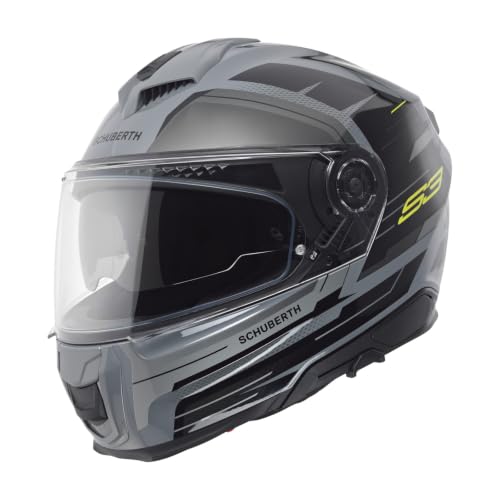
Schuberth S3 Full Face Helmet
What We Like
- Wind-tunnel-developed aeroacoustic shell
- Lightweight fiberglass-basalt composite construction
- Customizable interior padding thickness
- S.R.S emergency cheek pad removal system
Trade-offs
- At 6.0 lb shipping weight, heavier than some competitors
- No integrated communication system included
A wind-tunnel-honed shell that keeps wind noise down at highway speeds is the defining reason to consider this helmet. The Schuberth S3 uses a lightweight DFP fiberglass shell reinforced with basalt, so it stays around 3.8 pounds in smaller sizes while still delivering strong shock absorption. That aeroacoustic design, paired with a tailored neckroll, means you can ride longer without the fatigue of constant wind roar. Riders who value quiet comfort on long trips will appreciate how much the shape alone reduces noise before any earplugs go in.
At 6.0 pounds packaged, this helmet runs heavier than the RF-1400, which comes in at 3.6 pounds. That extra heft is noticeable when you’re turning your head in stop-and-go traffic or walking around with the helmet off the bike. Still, the S3 gives you customizable interior padding and a micro-lock ratchet strap that works smoothly with gloves, plus the S.R.S emergency release system for added peace of mind. If absolute lightness is your priority, the RF-1400 is lighter, but if aeroacoustic refinement matters more, the S3 delivers.
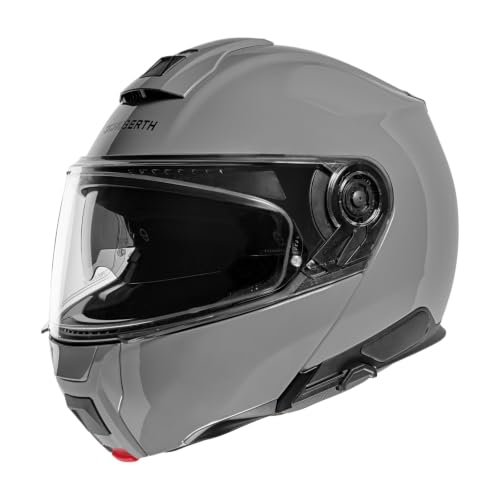
Schuberth C5 Modular Helmet
What We Like
- Lightweight fiberglass shell with basalt reinforcement
- Dual chin air intake with washable filter
- Visor memory function retains position after flip-up
- Customizable padding for sides, back and cheek pads
Trade-offs
- Flip-up chin bar adds bulk compared to full-face shells
- Heavier than some full-face helmets at 3.9 lb (XS–L)
A shell that weighs about 3.9 pounds in the most common sizes means this modular helmet won’t weigh down your neck on long rides. That’s especially true when you factor in the extra reinforcement from basalt fibers for impact protection. That combination of low weight and strong materials makes it a natural fit for touring riders who want the convenience of a flip-up chin bar without the usual heft. The dual chin intake with a washable filter also helps keep airflow fresh, and the visor memory function means you won’t have to readjust your sightline every time you flip the chin bar closed.
The actual helmet weight for sizes XS–L is about 3.9 pounds, which keeps it competitive with other modular helmets like the HJC RPHA 91 at 3.5 pounds. The fiberglass shell with basalt reinforcement provides strong impact protection without adding unnecessary heft, and the customizable padding system lets you adjust the fit for sides, back, and cheek pads. This helmet suits riders who prioritize a secure, adjustable fit and a lightweight modular design over the absolute lightest carry weight.
ScorpionEXO ST1400 EVO Carbon Fiber Helmet

What We Like
- Ultralight carbon fiber shell reduces fatigue
- Aero-tuned design cuts wind noise and turbulence
- Airfit inflation system customizes fit instantly
- Drop-down sunvisor with secure seal
Trade-offs
- Bluetooth system sold separately
- No integrated communication system
A 3.05-pound carbon fiber shell makes this helmet feel like it’s barely on your head, which matters on long rides when neck fatigue can sneak up on you. The aero-tuned ventilation isn’t just about cooling. It channels airflow from front to back in a way that reduces turbulence and lift, and that same streamlined shape helps keep wind noise down. For riders who want a quiet, stable ride without the bulk of a heavier lid, the carbon fiber construction paired with the Airfit inflation system lets you dial in the fit so the helmet stays planted, not flapping in the breeze.
The Bluetooth system is an extra purchase, so if you want integrated comms right out of the box, you’ll need to budget for it separately. Compared to the RF-1400, which weighs about 3.6 pounds, the ScorpionEXO is lighter, but at 5.0 pounds as shipped with packaging, it’s not the lightest option in this guide if you’re counting every ounce. Still, the combination of a no-fog, anti-scratch shield and a retractable sunvisor means you’re set for changing light conditions without fumbling with add-ons.
HAX Force Aerodynamic Full Face Helmet

What We Like
- DOT and ECE 22.06 dual certification
- Aerodynamic design reduces wind noise
- Removable hypoallergenic liner for easy cleaning
- Retractable sun visor included
Trade-offs
- At 4.6 lb, heavier than many premium helmets
- Bluetooth and Pinlock accessories sold separately
The HAX Force meets both DOT and ECE 22.06 safety standards, meaning it has passed impact tests for street use. Its aerodynamic shell is shaped to cut wind resistance and minimize wind noise at highway speeds. For daily commuters or weekend riders who want dual certification, a retractable sun visor for glare-free riding, and a removable liner that unclips for washing after sweaty summer trips, this helmet delivers those essentials.
The HAX Force weighs 4.6 pounds, which is more than the Shoei RF-1400 at 3.6 pounds. The helmet is Bluetooth and Pinlock ready, but those accessories are sold separately. It meets both DOT and ECE 22.06 safety standards, and its aerodynamic design aims to reduce wind resistance and noise.
ILM Adult Modular Full Face Helmet

What We Like
- Modular flip-up design for easy airflow
- Dual visors including internal sun visor
- Removable and washable liner and cheek pads
- Quick release buckle for secure fit
Trade-offs
- Heavier than the 3.5-pound HJC RPHA 91 modular helmet
- No built-in Bluetooth pockets for speaker integration
A 3.9-pound modular helmet with a flip-up design and dual visors brings real convenience to riders who want quick ventilation without fully removing their headgear. The internal sun visor is easy to operate with a switch, and the quick release buckle makes getting in and out simple. This helmet meets DOT safety standards, uses an ABS shell with a thick EPS liner, and includes removable washable padding for long-term freshness. It suits budget-conscious riders who need a versatile modular helmet for daily commuting or casual touring, where flexibility matters more than featherlight weight.
Modular helmets offer real-world flexibility, and this one keeps the essential features accessible without pushing into premium price territory. Weighing 3.9 pounds, it is lighter than several modular competitors such as the Schuberth C5 and the HAX Force, which helps reduce neck fatigue during longer rides. The streamlined aerodynamic shape cuts down on wind noise and drag, making highway travel more comfortable. Reviewers frequently note that the flip-up design allows quick ventilation without fully removing the helmet, a practical benefit for gas stops or quick conversations. The dual visor system adds further convenience, with an internal sun visor operated by a simple switch for adapting to changing light conditions.
Product photos
Sena Phantom Full Face Smart Helmet

What We Like
- Integrated Bluetooth and Mesh Intercom
- Front LED flashlight and brake-sensing taillights
- Retractable tinted interior visor
Trade-offs
- Heavier than Shoei RF-1400 at 3.7 lb vs 3.6 lb
- Integrated electronics add complexity over standard helmets
A built-in Harman Kardon sound system and Mesh Intercom turn this helmet into a rolling command center. The Sena Phantom pairs with your phone for navigation, music, and calls, and lets you talk to other riders without fumbling for a phone. Its composite fiberglass shell meets DOT safety standards, and the integrated front LED flashlight plus brake-sensing taillights add visibility that a standard helmet simply can’t match. For riders who want communication and lighting built right in, this is a well-equipped option.
At 3.7 pounds, the Phantom is a touch heavier than the RF-1400, and all those electronics mean more parts that could need attention down the road. The composite shell is durable but not as light as some other shell materials. If you prioritize integrated tech over absolute lightness or minimalism, the Phantom delivers a feature set that stands out. It’s a smart choice for riders who want everything in one shell.
Product photos
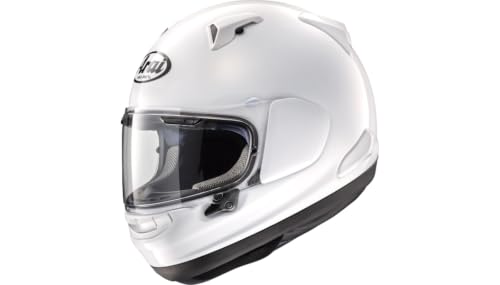
Arai Signet-X Full Face Helmet
What We Like
- VAS shield mechanism enhances shell shape
- Long oval fit for narrow forehead
- VAS latch prevents unexpected shield opening
- PB-SCLC shell balances performance and affordability
Trade-offs
- At 4.8 lb, heavier than several competitors
- Long oval shape limits fit for round heads
The Variable Axis System shield mechanism is the standout feature here, because it was developed to enhance the shape of the shell. That means the shell can be shaped more effectively while the shield still seals properly. This helmet is built for riders with a narrow head and a more pronounced forehead; the long oval interior gives those shapes a snug, stable fit that shorter-oval helmets often can’t match. The peripherally belted shell uses multiple materials to deliver both performance and affordability, and it meets DOT and FMVSS 218 standards for legal on-road use in the United States.
At 4.8 pounds, the Signet-X is heavier than the RF-1400, which weighs 3.6 pounds. That extra weight is the trade-off for a long-oval fit, designed for riders with a narrow head and more pronounced forehead. The VAS latch captures and holds the shield closed to help prevent unexpected opening, which can reduce wind noise and keep the shield secure at speed. If you need that specific head shape, the weight difference becomes secondary to getting a helmet that actually matches your skull.
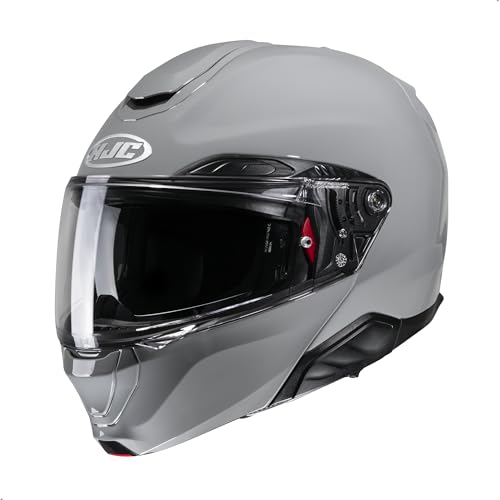
HJC RPHA 91 Modular Helmet
What We Like
- Carbon fiber shell keeps weight low
- 5 intake and 7 exhaust vents for airflow
- Pinlock 120 shield resists fogging
- Removable, washable cheek and crown pads
Trade-offs
- Modular design adds more wind noise than full-face
- Bluetooth system sold separately
- At 3.5 lb, still heavier than some full-face options
At 3.5 pounds, the HJC RPHA 91 uses a carbon and carbon-glass hybrid fiber shell to keep weight low, which reduces neck strain during long rides and makes the chin bar easier to flip up at stops. The 5 intake and 7 exhaust vents work with the aerodynamic shell to expel heat and humidity, helping you stay cool. For riders who want the convenience of a modular without the usual bulk, this helmet strikes a balance between flexibility and all-day comfort.
The RPHA 91 requires a separate Bluetooth purchase if you want integrated communication. For someone who values a lightweight lid they can flip open at gas stations or for quick chats, this HJC delivers that freedom without the weight of heavier modulars like the Schuberth C5 (6.0 lb).
How We Evaluated Quiet Motorcycle Helmets
Our evaluation is research-based, drawing from manufacturer technical data, expert round-ups on helmet aerodynamics, and patterns in owner feedback across the riding community.
We prioritized four criteria that directly impact perceived noise levels. Shell aerodynamics came first: a helmet shaped and refined in a wind tunnel produces less turbulence and wind roar. Seal quality was next, focusing on window beading, chin curtain design, and neck roll construction that block air leaks. Padding volume and density matters because snug, thick cheek pads and ear cups absorb and dampen sound. Finally, weight and stability affect how a helmet sits at speed. A heavier helmet can feel quieter if it doesn’t lift or buffet, but a lighter helmet reduces neck strain.
The honest limit of a research-led evaluation is that perceived noise is subjective. A helmet that sounds quiet to one rider on a naked bike may be noisy to another on a touring machine with a tall windshield. We present the data so you can match it to your riding style.
What To Look For In Quiet Motorcycle Helmets
A quiet helmet is an investment in comfort and hearing health. Look beyond the price tag and focus on how the helmet is built to manage air.
Choose a helmet with a wind-tunnel-developed shell, excellent window and neck seals, and thick, customizable padding. The best quiet helmets combine aerodynamic shape with dense, well-fitted interior materials.
Shell Aerodynamics and Wind-Tunnel Development
The shape of the helmet is the single biggest factor in how much wind noise it generates. Helmets designed in a wind tunnel have smoother profiles that reduce turbulence around the visor and neck area. Look for manufacturers that openly discuss their aeroacoustic development, such as Shoei’s wind-tunnel work or Schuberth’s aeroacoustic shell design. A helmet with a pronounced rear spoiler or diffuser is often engineered to stabilize the shell at highway speeds, which directly reduces the low-frequency roar that causes fatigue.
Seal Quality and Construction
A quiet helmet must be airtight. Pay close attention to the window beading, which is the rubber or silicone gasket around the visor opening. Airtight window beading, like that found on the Shoei RF-1400, prevents wind from whistling through the gap. A chin curtain, which blocks air from entering under the chin, is essential. Neck rolls that are thick and fit snugly around the collar also prevent drafts. For modular helmets, the chin bar latch mechanism must create a solid seal to avoid noise at the hinge point.
Interior Padding and Fit
The padding does more than provide comfort; it is a primary noise-dampening layer. Helmets with voluminous cheek pads that sit close to the jaw and ear pockets that accommodate the ears without pressure points reduce noise best. Removable and washable liners are a practical bonus, but the density and coverage of the padding are what matter for sound. A helmet that fits your head shape perfectly will always be quieter than one that is loose, as gaps allow air to enter and noise to travel.
- Check that the ear pockets are deep enough so your ears don’t fold, which can be painful and create noise.
- Ensure the chin curtain is long enough to reach your neck and block rising wind.
- Verify that the visor closes with a positive, solid click and no play in the latch.
The rule of thumb: if you can feel a draft on your face or hear a whistle, the helmet is not quiet enough for long highway miles.
Quiet Motorcycle Helmets Compared
The table below compares the key specs and trade-offs of each quiet helmet, from weight to shell material, so you can quickly see how they stack up.
| Product | Weight | Shell Material | Certification |
|---|---|---|---|
| Shoei RF-1400 Full Face Helmet | 3.6 Pounds | Matrix hand-laid fiberglass/ organic fibers | N/A |
| Shoei Neotec II Modular Helmet | 4.1 Pounds | AIM (Advanced Integrated Matrix) | DOT-218 |
| Schuberth S3 Full Face Helmet | approx. 3.8 lb | DFP fiberglass with basalt | DOT FMVSS 218 |
| Schuberth C5 Modular Helmet | 3.9 lb | DFP fiberglass with basalt | DOT FMVSS 218 |
| ScorpionEXO ST1400 EVO Carbon Fiber Helmet | 3.05 lbs | TCT-U 3K carbon fiber | DOT, ECE |
| HAX Force Aerodynamic Full Face Helmet | 4.6 Pounds | ABS+PC Composite | DOT & ECE 22.06 |
| ILM Adult Modular Full Face Helmet | 3.9 pounds | ABS | DOT |
| Sena Phantom Full Face Smart Helmet | 3.7 pounds | Composite fiberglass | DOT / FMVSS 218 |
| Arai Signet-X Full Face Helmet | 4.8 pounds | PB-SCLC | DOT / FMVSS 218 |
| HJC RPHA 91 Modular Helmet | 3.5 pounds | Carbon / carbon-glass hybrid fiber | DOT |
Frequently Asked Questions
What is the quietest motorcycle helmet on the market?
The quietest helmets are typically full-face models with wind-tunnel-developed shells and excellent seals. The Shoei RF-1400 and Schuberth S3 are often cited by owners for their low noise levels at highway speeds, thanks to their aeroacoustic engineering and airtight construction.
Are modular helmets noisier than full-face helmets?
Generally, yes. The hinge mechanism and split shell of a modular helmet create more potential for wind noise compared to a one-piece full-face shell. However, some modular models like the Shoei Neotec II and Schuberth C5 use advanced noise-reduction technology to close the gap significantly.
Does a heavier helmet reduce wind noise?
Not necessarily. A heavier helmet can feel more stable and less prone to buffeting, which some riders perceive as quieter. However, a lightweight helmet with excellent aerodynamics, like the ScorpionEXO ST1400 Carbon Fiber, can be very quiet without adding weight. The shell shape and seals are more important than weight alone.
How important is the chin curtain for a quiet helmet?
Very important. The chin curtain is the primary barrier against wind entering from below, which is a major source of noise and cold air. A well-designed chin curtain that seals against the neck can dramatically reduce perceived noise, especially at higher speeds.
Can I make my current helmet quieter?
Yes. You can add a aftermarket chin curtain, install a wind-blocking neck sock, or replace the visor with a Pinlock-ready anti-fog version to improve the seal. For some helmets, thicker replacement cheek pads are available to create a tighter, more noise-dampening fit.
The Bottom Line
If you spend long hours on the highway and want the quietest ride possible, the Shoei RF-1400 Full Face Helmet is the best choice. Its wind-tunnel design and airtight seals make it a benchmark for low noise, and its light weight keeps you comfortable all day. For touring riders who value the convenience of a flip-up chin bar, the Shoei Neotec II is an excellent alternative with nearly the same noise performance.
Budget-conscious riders should look to the HAX Force Aerodynamic Full Face Helmet, which delivers dual-certified safety and reduced wind noise without a premium price. Riders with a long oval head shape will find the Arai Signet-X provides a secure, quiet fit that many other helmets cannot match.
The single most important factor in a quiet helmet is how well it fits your head. A perfectly sealed, aerodynamic shell means nothing if the padding is loose or the shape is wrong. Try on helmets, or buy from a retailer with a good return policy, and prioritize fit above all else.
