
10 Best Sleeping Pads For Motorcycle Camping in 2026
This post contains affiliate links. As an Amazon Associate, we earn from qualifying purchases.
For motorcycle campers who need to save every cubic inch of pannier space, the Therm-a-Rest NeoAir Xlite NXT Sleeping Pad wins as Best Overall. Its 4.5 R-Value warmth and ability to roll down to the size of a 1-liter bottle make it a top pick. For plush comfort on long trips, the Sea to Summit Ether Light XR Insulated Pad delivers a thick 4-inch sleep surface. The ONETIGRIS AERODREAM Self-Inflating Mattress offers quick setup for riders who hate pumping air.
Your motorcycle’s limited storage makes every gear choice a compromise between comfort, weight, and packed size. A sleeping pad that’s too bulky forces you to leave other essentials behind, while one that’s too thin can ruin a night’s rest after a long day in the saddle.
We built this guide by analyzing manufacturer specifications, expert round-ups, and patterns in owner feedback for the most popular camping pads. We focused on the features that matter most when your sleeping bag lives in a saddlebag: packed size, insulation for varying climates, and durability on unpredictable campsites.
Top 10 Sleeping Pads For Motorcycle Camping in the Market
Certain content that appears on this site comes from Amazon. This content is provided "as is" and is subject to change or removal at any time.
The Best Sleeping Pads For Motorcycle Camping, Reviewed
Therm-a-Rest NeoAir Xlite NXT Sleeping Pad

What We Like
- 4.5 R-Value for year-round warmth
- 3-inch thick baffled stability
- Rolls up as small as a 1-liter bottle (size Regular)
Trade-offs
- At 17 oz, heavier than some foam pads like the NEMO Switchback (0.9 lb)
- Pump sack required for inflation; no self-inflating feature.
A 4.5 R-Value means this pad keeps you warm well below freezing, which matters when your motorcycle campout turns unexpectedly cold. In the Large size it weighs 17 ounces, light enough for riders who also backpack to their campsite, and the 3-inch baffled design provides stability on uneven ground. This is the pad for anyone who wants one piece of gear that works from spring through winter without compromise.
Sea to Summit Ether Light XR Insulated Pad

What We Like
- Plush 4-inch Air Sprung Cell construction
- Quiet ThermalCore insulation for cool weather
- Fast inflation with included Airstream Pumpsack
- Lightweight at just 1.0 pounds
Trade-offs
- Tapered shape reduces interior width for sprawlers
- 21.7-inch width is narrower than many competitors
A 4-inch-thick Air Sprung Cell design means this pad delivers a genuinely cushioned sleep surface that adapts to side, back, and stomach sleepers. The ThermalCore insulation reflects infrared heat back to you while staying quiet, so you don’t get that crinkly plastic sound that keeps you awake. For a motorcycle camper who prioritizes comfort after a long day in the saddle, the Ether Light XR Insulated Pad offers a hotel-bed feel that packs down small enough to fit in a pannier.
The trade-off for that plushness is a tapered shape that measures just 21.7 inches wide at its broadest, which can feel restrictive if you’re a restless sleeper who tosses and turns. Compared to the Klymit Insulated Static V Lite’s 23-inch width, you lose some real estate for sprawling. Still, at only 1.0 pounds, it’s lighter than the Klymit while giving you twice the thickness, making it a worthy choice for riders who want luxury without a weight penalty.
Product photos
Klymit Insulated Static V Lite Sleeping Pad

What We Like
- R-Value 4.4 for four-season insulation
- Weighs only 20 oz packed
- Inflates in 10-15 breaths
- V-chamber design cradles side sleepers
Trade-offs
- 2.5-inch thickness less plush than thicker pads
- 23-inch width feels narrow for broad shoulders
An R-Value of 4.4 means this pad handles everything from chilly spring nights to below-freezing winter camps without adding bulk. At just 20 ounces and packing down to 8 by 3 inches, it fits easily into a backpack or small cargo space. The V-chamber design limits air sloshing, so side sleepers won’t wake up on a cold, flat pancake of nylon. That balance of warmth and packability makes it a strong choice for anyone who needs lightweight insulation without sacrificing too much comfort.
The trade-off is comfort. A 2.5-inch thickness is noticeably firmer than the 4-inch Sea to Summit Ether Light XR, which feels more like a mattress at home. If you’re a restless sleeper or carry extra gear to pad the ground, that thinner profile might leave you tossing. The 23-inch width also feels snug for broad-shouldered riders who sprawl. But for anyone who prioritizes a small packed size and reliable insulation over plushness, this pad is a smart, capable choice that won’t hog your cargo space.
Product photos
ONETIGRIS AERODREAM Self-Inflating Mattress
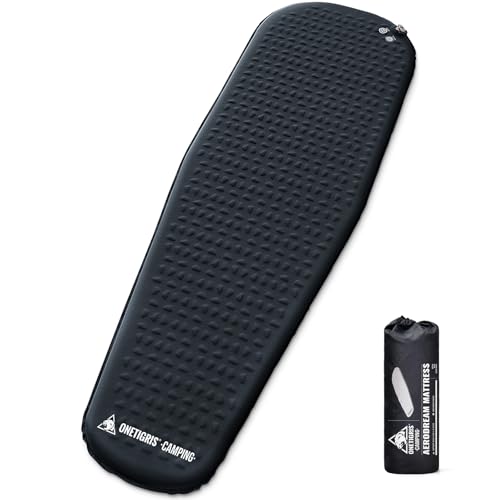
What We Like
- Self-inflates to 60% in under a minute
- Compact mummy shape fits panniers
- 4.1 R-value for three-season insulation
- Anti-slip base for stability
Trade-offs
- At 1.38 in thick, less cushion than air pads
- Mummy shape limits shoulder room for side sleepers
A 4.1 R-value and self-inflating foam core mean you get reliable warmth without a pump or a long blowing session, just open the valve, wait a minute, then add a few breaths for full firmness. That matters when you’re unloading a motorcycle after a long day: less fuss, more time relaxing. The mummy shape and 1.89-pound weight keep it small enough for a pannier, yet the high-rebound foam gives firm support close to the ground. This pad suits riders who want a simple, durable setup that doesn’t rely on batteries or fragile air bladders, especially for three-season trips where packability and quick setup are the priority.
Thickness is where this pad makes its biggest compromise. At 1.38 inches, the Aerodream offers less plushness than a tall air pad like the Sea to Summit Ether Light XR (4 inches thick), so side sleepers or anyone who prefers a softer bed may feel the ground through their hips. The mummy taper also cuts width at the shoulders, which can feel snug for broad frames. What you gain is a pad that uses durable materials, doesn’t need a pump, and packs down smaller than standard 4-inch air mattresses. For a motorcyclist who values reliability and speed over cloud-like comfort, this is a smart, practical choice.
Product photos
Therm-a-Rest Z Lite Original Sleeping Pad
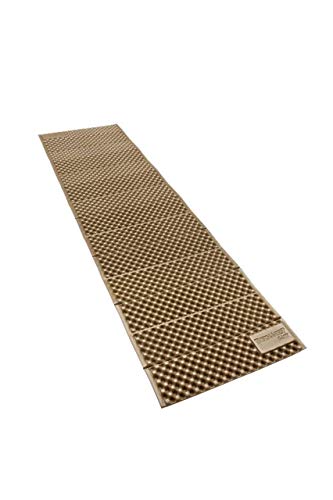
What We Like
- Accordion-fold design packs compactly
- Dual-density foam: soft top, dense bottom
- Dimples trap heat for cold-weather warmth
- Made in the USA
Trade-offs
- At 0.8 inches thick, minimal cushion on rough ground
- Weighs 2.0 pounds, heavier than inflatable alternatives
A closed-cell foam pad that folds accordion-style into a compact block means you can strap it to a motorcycle’s luggage rack or stuff it in a pannier without worrying about punctures. The dual-density construction, softer foam on top for comfort, denser foam underneath for insulation and ground protection, makes this a set-and-forget sleeping pad for riders who prioritize durability over plushness. It suits campers who want a pad that won’t fail, inflate, or leak, especially when setting up after dark or on rough terrain where a stray rock could pop an air mattress.
Comfort is the biggest trade-off: at just 0.8 inches thick, you’ll feel roots and stones more than you would on a 3-inch inflatable like the Therm-a-Rest NeoAir Xlite NXT. For a motorcyclist who values reliability over cushion and packs gear tight, the Z Lite delivers exactly what it promises, a bombproof sleep surface that never needs pumping.
Trekology UL R7 Sleeping Pad
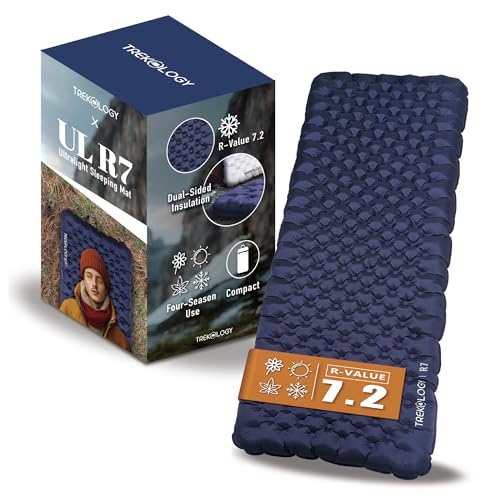
What We Like
- 7.2 R-value insulates against ground chill
- Packs to water-bottle size for easy storage
- Supports up to 330 lb with durable build
- Anti-leak valve prevents air loss
Trade-offs
- No built-in pump; requires separate pump bag or mouth inflation
- At 2.0 lb, heavier than ultralight air pads
- Length best for sleepers up to 5'11"
A 7.2 R-value provides strong insulation against ground chill, making this Trekology model a good choice for cold-weather camping. It inflates to nearly four inches thick, which helps prevent bottoming out on uneven ground, and the 40D ripstop nylon with TPU coating holds up against rough tent floors or a tarp. At two pounds and packing down to the size of a water bottle, it fits easily into a saddlebag or top case without cramping your gear.
Weight is the main consideration here: at two pounds, it is heavier than some ultralight pads like the Therm-a-Rest NeoAir Xlite NXT, which weighs 1.1 pounds. Ultralight backpackers on bikes might prefer that pad for long-distance trips where every ounce counts. But the Trekology gives you that extra insulation and thickness, though you will need to either blow it up by mouth or carry a separate pump bag (not included). For riders who prioritize warmth and durability over shaving grams, this pad delivers reliable comfort from spring through deep winter.
Hikenture Insulated Sleeping Pad

What We Like
- High 6.2 R-value for cold weather
- Lightweight at 1.6 pounds
- 3.2-inch thickness for comfort
- Eco-friendly TPU liner and packaging
Trade-offs
- Pump sack inflation requires effort
A 6.2 R-value means this pad keeps you warm in serious cold, which is a big deal when you’re sleeping on the ground after a long day outdoors. At 1.6 pounds and 78 inches long, it’s light enough for packing but long enough for taller campers. The 3.2-inch thickness and airbag structure spread pressure evenly, so you won’t feel the ground through the pad. That combination of insulation, weight, and comfort makes it a smart pick for anyone who wants reliable warmth without hauling a heavy load.
At 1.6 pounds, this pad is heavier than the Therm-a-Rest NeoAir Xlite NXT (1.1 pounds), so backpackers counting every gram may notice the extra weight. The included storage bag doubles as a pump sack and inflates the mat in three pumps, which is straightforward. Hikenture uses a TPU liner and cardboard packaging, reflecting attention to materials. For campers who want strong insulation and a comfortable thickness without chasing the lightest possible pack, this pad delivers.
NEMO Switchback Foam Sleeping Pad
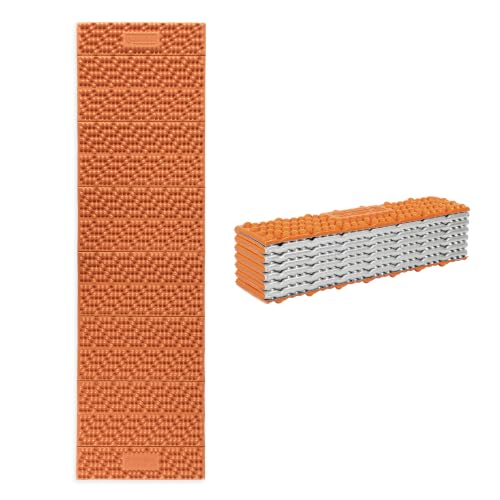
What We Like
- Hexagonal nesting pattern for plushness
- Metallized film reflects body heat
- Durable dual-density foam construction
Trade-offs
- Smaller surface area than inflatable pads
- Less cushioning than thicker foam pads
- No self-inflating or air adjustability
At just 0.9 pounds, this foam pad keeps your sleeping bag off the cold ground without weighing down your pack. The hexagonal nesting pattern uses taller nodes to create more space for uncompressed sleeping bag insulation, trapping more warmth around your body. Dual-density Axiotomic foam gives you a supple layer for comfort and a resilient layer for support, while the metallized reflective film bounces your body heat back at you. For anyone who needs to save weight and pack space, this is a straightforward, no-fuss solution that sets up quickly and never deflates. It suits those who prioritize compactness and reliability over thick cushioning.
The main difference comes down to thickness and coverage. Unlike inflatable pads that can offer several inches of plushness, the Switchback relies on its foam structure for cushioning. That means you get less give on uneven ground, and the pad’s dimensions may not cover your full body length for taller users. But for the person who values a pad that can be strapped to a pack without worry of punctures, and that packs down smaller than many foam options, this is a compact foam pad to consider. It won’t provide the same comfort as an air mattress, but it will never deflate mid-trip either.
Product photos
CYMULA Memory Foam Camping Mattress Pad

What We Like
- Memory foam adapts to body shape
- OEKO-TEX certified, fiberglass-free
- Non-slip waterproof bottom
- Includes storage bag and straps
Trade-offs
- Requires 24-72 hours to fully expand
- Too bulky for backpacking due to roll-up size
At 0.8 pounds and a rolled-up size that fits a storage bag, this memory foam pad is one of the lightest ways to add real cushion to a motorcycle camp setup. The high-density foam automatically conforms to your body, which means you get pressure relief without the fuss of inflating or patching a leak. For riders who prioritize simplicity and a quick setup after a long day in the saddle, that’s a genuine advantage. The OEKO-TEX certification and fiberglass-free flame-retardant layer also mean no worries about skin irritation or harmful dust when you unroll it inside your tent.
This pad’s comfort depends entirely on the foam’s natural firmness and the 3-inch thickness. Unlike an inflatable pad such as the Sea to Summit Ether Light XR, you cannot adjust the feel by adding or releasing air. And because it arrives vacuum-compressed, you need to open it a day or two before your trip and let it fully rebound, otherwise it may not reach its full 3-inch height. That makes it less spontaneous than a self-inflating or air pad. Still, for the budget-minded motorcyclist who values durability, zero inflation time, and a compact carry, this is a smart, honest choice.
Product photos
OJAYERR Foam Sleeping Pad
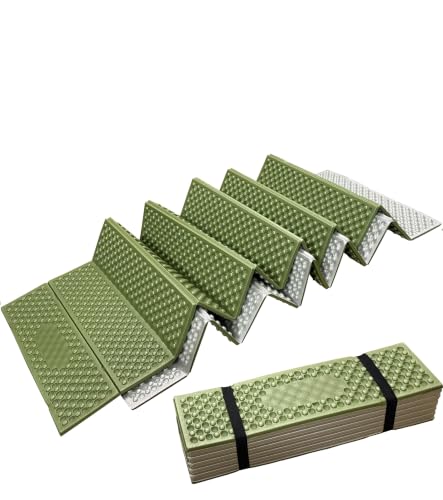
What We Like
- Extra-long 77.1-inch length
- Lightweight 0.7 pounds
- Heat-reflective aluminum underside
- Water-resistant closed-cell foam
Trade-offs
- Only 0.78 inches thick for ground feel
- R-Value 2.1 limits cold-weather use
- Foam pad lacks inflatable comfort
At 77.1 inches long, this foam pad offers extra length for campers who need more coverage than standard mats. The 24-inch width provides room to move, and the 0.7-pound weight makes it easy to carry on a backpack or strap to gear. Its closed-cell XPE foam with an eggshell design cushions and helps retain body heat, while the aluminum-coated underside reflects warmth and blocks ground moisture. This is a simple, durable pad for campers who want a reliable surface without the hassle of inflation.
Thickness is the main compromise: at just 0.78 inches, the pad offers minimal cushioning, so it is best on even ground or inside a tent. The R-Value of 2.1 provides some insulation but is not suited for very cold conditions. Compared to the Therm-a-Rest NeoAir Xlite NXT, which is 3.0 inches thick and inflatable, the OJAYERR is lighter and simpler but less cushioned. For backpackers who prioritize low weight and packability over plush comfort, this pad works well.
How We Evaluated Sleeping Pads For Motorcycle Camping
Our evaluation is research-based, drawing on manufacturer specifications, expert round-ups, and common patterns found in owner feedback. We analyzed published data on R-values, packed dimensions, weights, and construction materials across dozens of models to identify the pads that best serve motorcycle campers.
The three criteria that mattered most were packed size, insulation (R-Value), and durability. Motorcycle campers have limited cargo space, so a pad that compresses to water-bottle size earns higher marks than one that eats up half a pannier. R-Value tells us how well the pad insulates from cold ground, which matters when camping in summer or shoulder season. Durability covers puncture resistance, valve reliability, and whether the pad can survive being strapped to a bike for hundreds of miles.
We recognize the limits of a research-led approach: we cannot report on real-world durability over many seasons or how a pad feels after a long day of riding. Owner feedback helps fill those gaps, but individual experiences vary. This guide is a starting point for narrowing your choices, not a substitute for trying a pad yourself.
What To Look For In Sleeping Pads For Motorcycle Camping
Motorcycle camping demands a sleeping pad that balances comfort, packability, and insulation. Here are the key factors to consider before buying.
Choose a sleeping pad with an R-Value of 4.0 or higher for three-season motorcycle camping. Also consider a packed size that fits your pannier or dry bag and durable construction that can handle being strapped to a bike.
Packed Size and Weight
Every cubic inch matters when your gear fits in saddlebags or a top roll. Look at the packed dimensions, not just the weight: a pad that rolls to water-bottle size leaves room for a cook kit or extra layers. Inflatable pads like the Therm-a-Rest NeoAir Xlite NXT pack smaller than foam pads, but foam pads like the NEMO Switchback offer puncture-proof peace of mind. Consider the trade-off between packed volume and the weight you’re willing to carry on long-distance trips.
R-Value and Insulation
R-Value measures how well a pad insulates you from cold ground. For summer-only camping, an R-Value of 2.0 to 3.0 is sufficient. Three-season riders should target R-Value 4.0 or higher, while cold-weather campers need an R-Value above 5.0. The Trekology UL R7 Sleeping Pad offers a 7.2 R-Value for extreme cold, while the Therm-a-Rest Z Lite‘s dimpled foam traps heat effectively despite its thin profile. Match your pad’s insulation to the lowest temperatures you expect to encounter.
Inflation Method and Setup Time
- Self-inflating pads like the ONETIGRIS AERODREAM reach 60% inflation in under a minute, ideal for tired riders arriving at camp after dark.
- Pump-sack inflation adds a few minutes but prevents moisture from your breath entering the pad, which can reduce insulation over time.
- Mouth inflation is the lightest option but introduces warm, moist air that may promote internal mold.
- Foam pads require zero inflation and set up instantly, making them the fastest option for quick overnight stops.
A good rule of thumb: if you camp in cold weather, choose an insulated pad with an R-Value of 4.0 or higher and a pump sack to keep moisture out.
Sleeping Pads For Motorcycle Camping Compared
The table below compares all ten sleeping pads across the specifications that matter most for motorcycle camping: R-Value, packed size, weight, and thickness.
| Product | Weight | Thickness | Dimensions |
|---|---|---|---|
| Therm-a-Rest NeoAir Xlite NXT Sleeping Pad | 17 oz (480 g) | 3.0 in (7.6 cm) | 77 x 25 in |
| Sea to Summit Ether Light XR Insulated Pad | 1.0 pounds | 4.0 inches | 72.0 x 21.7 inches |
| Klymit Insulated Static V Lite Sleeping Pad | 20 oz | 2.5 in | 72 x 23 x 2.5 in |
| ONETIGRIS AERODREAM Self-Inflating Mattress | 1.89 lb | 1.38 in | 72.1×22.85 in |
| Therm-a-Rest Z Lite Original Sleeping Pad | 2.0 pounds | 0.8 inches | 51.0 inches, W 20.0 inches |
| Trekology UL R7 Sleeping Pad | 2.0 lb | 3.9 in | 70.9 x 23.6 in |
| Hikenture Insulated Sleeping Pad | 1.6 pounds | 3.2 inches | 78 x 25 inches |
| NEMO Switchback Foam Sleeping Pad | 0.9 pounds | N/A | 21.0 x 6.2 x 5.5 inches |
| CYMULA Memory Foam Camping Mattress Pad | 0.8 lb | 3 in | 72 x 24 x 3 in |
| OJAYERR Foam Sleeping Pad | 0.7 pounds | 0.78 inches | 77.1″ x 24″ |
Frequently Asked Questions
What R-Value do I need for motorcycle camping?
For summer camping, an R-Value of 2.0 to 3.0 is enough. For three-season use, look for R-Value 4.0 or higher. If you camp in cold weather or at high elevation, choose a pad with R-Value 5.0 or above. The Therm-a-Rest NeoAir Xlite NXT offers a 4.5 R-Value, while the Trekology UL R7 provides 7.2 for extreme conditions.
How small should a sleeping pad pack for motorcycle travel?
Aim for a packed size no larger than a standard water bottle. This leaves room in your panniers for a tent, sleeping bag, and cooking gear. Inflatable pads like the Therm-a-Rest NeoAir Xlite NXT pack to about the size of a 1-liter bottle, making them ideal for motorcycle storage.
Are self-inflating pads better for motorcycle camping than air pads?
Self-inflating pads are faster to set up and don’t require a pump sack, which can be convenient after a long ride. However, they are generally thicker when packed and less cushioned than high-end air pads. Air pads like the Sea to Summit Ether Light XR offer more comfort and pack smaller, but require inflation effort.
Can I use a foam sleeping pad for motorcycle camping?
Yes, foam pads are puncture-proof and set up instantly, making them reliable for rough campsites. The Therm-a-Rest Z Lite and NEMO Switchback are popular choices for their durability and compact foldable design. The trade-off is less cushioning compared to inflatable pads, especially for side sleepers.
How do I keep my sleeping pad from puncturing on a motorcycle trip?
Use a ground cloth or footprint under your tent to protect the pad from sharp rocks and twigs. Inflatable pads should be stored in a stuff sack or pannier liner to prevent abrasion from other gear. Foam pads like the Therm-a-Rest Z Lite are naturally puncture-proof and require no special care.
The Bottom Line
The Therm-a-Rest NeoAir Xlite NXT Sleeping Pad is the best overall choice for motorcycle campers who need year-round warmth in a package that disappears into a pannier. Its 4.5 R-Value and bottle-sized packed volume make it the most versatile pick for riders who camp across seasons and want one pad that does it all.
If comfort is your priority and you have room to spare, the Sea to Summit Ether Light XR offers plush 4-inch cushioning for side sleepers. For riders who value quick setup above all else, the ONETIGRIS AERODREAM self-inflates to 60% in under a minute and fits neatly in a pannier.
The single most important factor in choosing a sleeping pad for motorcycle camping is packed size. No matter how comfortable or warm a pad is, it won’t serve you if it doesn’t fit in your gear. Measure your storage space before you buy, and choose a pad that leaves room for the rest of your kit.
