
8 Best Soft Compound Mx Tires in 2026
This post contains affiliate links. As an Amazon Associate, we earn from qualifying purchases.
For soft, loose terrain like sand, mud, and deep loam, the Pirelli Scorpion MX Soft Rear Tire is the best overall pick. Its tall, widely-spaced knobs clear mud effectively, and the reinforced carcass holds up to race-level impacts. Riders who need deep tread for off-road trails should look at the Tusk EMEX T-35, while those wanting the latest grip technology will appreciate the Bridgestone Battlecross X31.
The real challenge with soft-terrain tires is balancing self-cleaning ability with durability. A tire that digs in and hooks up in deep sand can feel vague and wear quickly on hard-packed sections, so choosing the right tire means being honest about where you ride most.
This guide is based on a review of manufacturer specifications, expert round-ups, and patterns in owner feedback. We break down what makes each of these eight tires excel so you can match the right one to your bike and your terrain.
Top 8 Soft Compound MX Tires in the Market
Certain content that appears on this site comes from Amazon. This content is provided "as is" and is subject to change or removal at any time.
The Best Soft Compound MX Tires, Reviewed
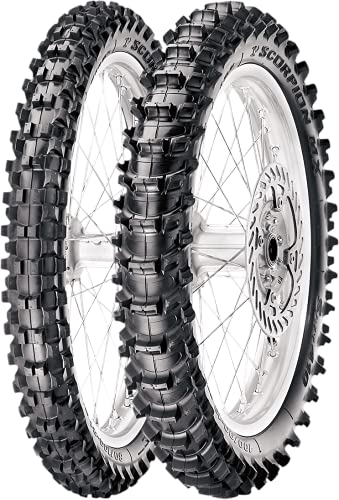
Pirelli Scorpion MX Soft Rear Tire
What We Like
- Tall, widely-spaced knobs for self-cleaning
- Advanced rubber resists tearing
- Reinforced carcass withstands impact
- Race-proven for extreme conditions
Trade-offs
- Soft-terrain focus limits hard-pack versatility
- Narrow size range for 125cc-250cc bikes only
The reinforced carcass withstands impacts from rocks and roots, so this tire keeps its bite even after hard hits. Tall, widely-spaced knobs deliver maximum bite and self-cleaning in mud and sand, meaning you hold traction in soft conditions. The advanced rubber compound resists tearing, which helps the tire survive rough terrain without losing grip.
The trade-off is that this tire is built for soft ground, so it won’t perform as well on hard-packed or intermediate soil. And with the 100/90-19 size, it fits a specific range of 125cc to 250cc bikes, leaving larger-displacement machines out of the picture. But if your riding world is mud and sand, the Pirelli delivers exactly what the name promises: grip that stays in those conditions.
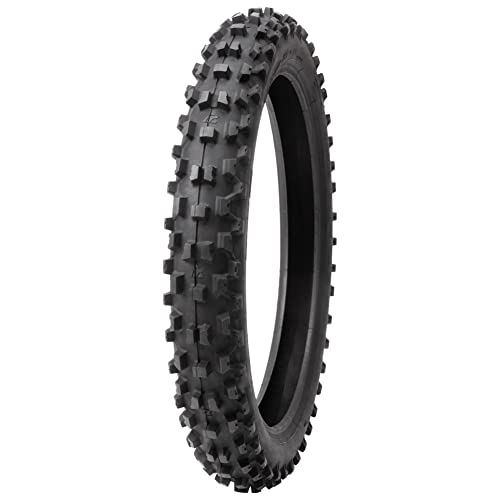
Tusk EMEX T-35 Soft/Intermediate Tire
What We Like
- Deep lugs for superior grip
- Works on sandy, loamy, packed dirt
- Durable rubber resists wear
- Fits front or rear 21-inch wheels
Trade-offs
- Tube-type design requires inner tube
- Limited to 21-inch wheel sizes
The 80/100×21 size fits front or rear on dirt bikes with 21-inch wheels, so you can mount it on either end. Its deep-lug tread pattern is built for soft to intermediate terrain, sandy, loamy, and packed dirt, giving you reliable bite when accelerating, braking, and cornering on loose trails. That makes it a strong pick for riders who spend most of their time in mixed off-road conditions and want a tire that digs in without slipping.
This is a tube-type tire, so you will need to run an inner tube and deal with mounting it yourself or paying a shop. Compared to the Bridgestone Battlecross X31, which also targets soft-intermediate ground, the Tusk EMEX T-35 offers a similar terrain focus. It is a practical choice for riders who want deep traction on soft to intermediate terrain.
Bridgestone Battlecross X31 Rear Tire

What We Like
- Asymmetric block pattern boosts traction
- Castle Block Technology increases cornering grip
- Bunker groove enhances bite and stability
- Cooling fins reduce tire degradation
Trade-offs
- Soft/intermediate focus limits hard-pack performance
- Cooling fins add weight for some riders.
The Bridgestone Battlecross X31 uses Castle Block Technology on every rear block to create extra edge effect, which means you get noticeably higher cornering grip across different terrain types. Combined with a redesigned bunker groove that increases contact touch and bite feel, this tire is built for riders who want confident traction in soft to intermediate conditions without sacrificing stability. The asymmetric block pattern widens the working range, so it adapts well as the track changes through a moto.
Cooling fins in the sidewall create airflow that reduces tire degradation and keeps performance consistent over the tire’s life. So you get reliable grip lap after lap without the rubber going off as quickly as some softer compounds. The asymmetric block pattern and Castle Block Technology on every rear block add extra biting edges for cornering and traction on soft loam or intermediate dirt. If your terrain is mostly soft to medium, this tire packs a lot of grip technology into a package that resists overheating. It is not built for hard-packed or rocky ground, where a stiffer tread pattern would grab better.
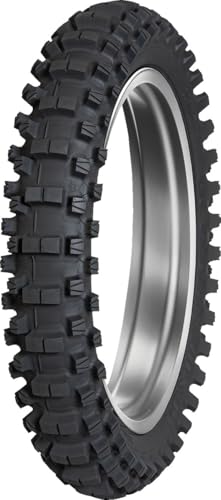
Dunlop Geomax MX34 Rear Tire
What We Like
- Progressive Cornering Block Technology for lean grip
- Taller, wider center blocks clear mud
- Versatile on soft and mixed dirt
Trade-offs
- Tube-type requires inner tube installation
- 16-inch size fits only specific dirt bikes
The Dunlop Geomax MX34 rear tire’s Progressive Cornering Block Technology is the headline here, it boosts grip as you lean into turns, giving you a planted feel through ruts and berms on soft, loamy tracks. This tire suits racers and weekend riders who spend most of their time in soft dirt or mud and want predictable cornering without sacrificing durability.
Because this tire requires an inner tube, you’ll need to fit one and handle a slightly more involved setup than a tubeless option.
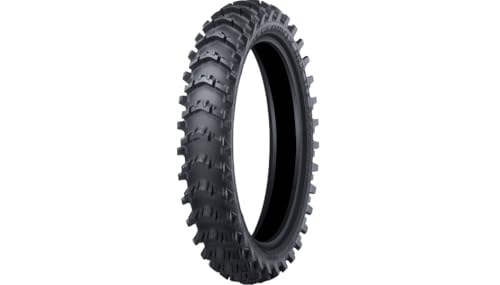
Dunlop Geomax MX14 Sand/Mud Tire
What We Like
- Designed specifically for sand and mud
- Lightweight 5.6 lb rear tire
- 80/100-12 size
Trade-offs
- Specialized for sand/mud, not for hardpack or loam
- Only available in 80/100-12 size, limiting bike fit
Because this tire is specialized for sand and mud, it won’t perform as well on hardpack or loam as a more general soft-terrain tire like the Bridgestone Battlecross X31. That tire uses bunker groove and castle block technology to handle a wider range of soft-to-intermediate conditions. The MX14 commits fully to the deepest, loosest stuff, so if your local tracks are mostly tacky dirt with occasional mud holes, the Battlecross might be a better all-arounder. But for riders who regularly face bottomless sand or standing water, the Dunlop Geomax MX14 delivers the dedicated traction you need to stay moving forward.
Product photos
Michelin Starcross 6 Sand Front Tire

What We Like
- Engineered specifically for sand terrain
- Front tire optimized for steering control
- Lightweight at 7.9 pounds
Trade-offs
- Narrow use case: only for sand conditions
- Front tire only, requires matching rear
A 80/100-21 front tire built exclusively for sand means the Michelin Starcross 6 Sand is a specialist, not a generalist. The lightweight 7.9-pound construction helps the front end float rather than dig, which is exactly what you want when the dirt turns to deep loam. Riders who frequently hit dunes or soft, sandy tracks will find the steering precise and predictable, with less arm fatigue from fighting a plowing front tire. This tire is designed for one purpose: sand terrain, and it delivers on that focus.
This tire is designed exclusively for sand, so it won’t grip on hardpack, clay, or loam. Riders who mix terrain types should look at a more versatile option. For pure sand work, the focused tread pattern provides the flotation you need. You’ll also want a matching rear sand tire to complete the setup.
Product photos
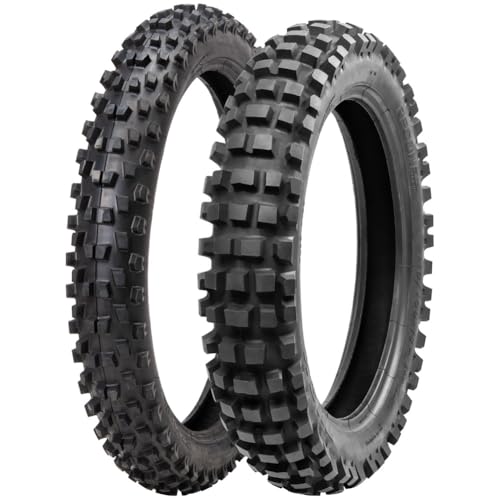
Tusk Recon Hybrid Tire Set
What We Like
- Sticky gummy compound grips rocks and roots
- Trials-tire-like conformability with MX tread
- Formulated for maximum wear life
- Softer carcass absorbs impacts on technical terrain
Trade-offs
- Soft carcass feels vague on hard-packed fire roads
A soft, sticky gummy rubber compound that conforms to rocks and roots like a trials tire, but with a motocross-inspired tread for mud, sand, and aggressive cornering, that is the core idea behind the Tusk Recon Hybrid Tire Set. The rear tire’s formulation is built for maximum wear, so you get that tenacious grip without burning through rubber after one hard ride. The carcass is noticeably softer than a standard off-road or motocross tire, which helps it absorb impacts and wrap around obstacles on technical single track. This set is for riders who spend their days picking through boulder fields, root tangles, and steep, loose climbs where traction is everything.
The plush, gummy feel means the Recon can feel a bit vague when you open it up on faster, smoother sections. Something a stiffer tire like the Bridgestone Battlecross X31 handles with more precision. But if your world is tight, nasty trail and you want a tire that sticks like a trials tire yet still lets you carve corners and brake hard, the Tusk Recon delivers that hybrid balance without demanding a separate set of wheels.
Product photos
Bridgestone M204/M203 Motocross Tire

What We Like
- Tall tread blocks for soft terrain
- Shoulder steps improve stability
- Increased base angle for durability
- Works in soft and intermediate soil
Trade-offs
- Tube-type design requires inner tube
- 16-inch rear limits bike compatibility
The Bridgestone M204 rear tire uses tall tread blocks with shoulder steps and an increased base angle radius, which together deliver reliable stability and durability in abusive soil conditions. That makes it a strong fit for riders who regularly tackle deep, soft terrain like loam or freshly tilled dirt and want a tire that holds its shape and grip through rough rides. It suits intermediate conditions too, so you aren’t locked into one surface.
This tire uses a tube-type design, so you will need to run an inner tube, and the 16-inch rear size means it won’t fit every bike. At 7.6 pounds, it is a bias-ply tire built for durability in soft and intermediate terrain. If your bike accepts a 16-inch rear and you want a tire designed for deep dirt without giving up stability, this Bridgestone delivers.
Product photos
How We Evaluated Soft Compound MX Tires
Our evaluation began with a close look at each tire’s tread design, rubber compound, and intended terrain. We reviewed manufacturer technical documents and consulted expert round-ups that analyze how different tread patterns perform in sand, mud, loam, and soft loam. We also looked for patterns in owner feedback, paying special attention to reports of traction, wear life, and puncture resistance.
The three criteria that mattered most were tread design and self-cleaning ability, rubber compound tackiness and durability, and the tire’s fitment range. A tall, open tread pattern clears mud and sand better than a tightly spaced one, but it can also wear faster on hard ground. Softer compounds offer more grip but may not last as long, and a tire that only fits a narrow range of bikes limits its usefulness.
This is a research-based evaluation, not a testing-based one. The tires were not mounted, so recommendations are based on the collective experience of riders and mechanics. Read owner reviews specific to your bike and riding style before purchasing.
What To Look For In Soft Compound MX Tires
Choosing the right soft-terrain tire means understanding how tread pattern, rubber compound, and carcass construction work together for your specific conditions.
Look for tall, widely-spaced knobs that shed mud, a sticky compound that grips roots and rocks, and a carcass that matches your bike’s power and your riding weight.
Tread Pattern and Self-Cleaning
The most important feature of a soft-terrain tire is its ability to clear mud and sand from between the knobs. Widely-spaced, tall knobs allow the tire to dig in and grab loose material. Tires like the Pirelli Scorpion MX Soft and Dunlop Geomax MX34 use these tall, open patterns to maintain traction when the going gets sloppy. If the tread packs with mud, the tire becomes a slick, useless donut.
Rubber Compound and Grip
Softer rubber compounds provide more surface-area contact and stick better to slippery surfaces like wet roots and rocks. The Tusk Recon Hybrid uses a gummy compound that conforms to terrain like a trials tire, while the Bridgestone Battlecross X31 uses cooling fins to manage heat and reduce compound degradation. The trade-off is that softer tires tend to wear faster on dry, hard-packed trails.
Carcass Construction and Fitment
A tire’s carcass, the body of the tire beneath the tread, determines how it absorbs impacts and how well it holds its shape under load. Reinforced carcasses, like the Pirelli’s, resist punctures and pinch flats in rocky terrain. Tube-type designs, like the Tusk EMEX T-35 and Dunlop Geomax MX34, require an inner tube and are common in off-road tires, while some riders prefer tubeless setups for easier repairs. Fitment is also critical: many soft-terrain tires come in limited sizes, so check your bike’s wheel diameter before buying.
- Measure your bike’s rear wheel diameter (usually 18, 19, or 16 inches) before shopping.
- Check whether the tire is tube-type or tubeless and plan your installation accordingly.
- Read owner reviews from riders who ride the same terrain and bike model as you.
A tire that excels in deep sand may feel vague on hardpack, so match the tire to your primary riding conditions, not your ideal all-rounder.
Soft Compound MX Tires Compared
The table below compares each tire’s intended terrain, construction type, and key strengths to help you narrow your choices quickly.
| Product | Size | Terrain | Type |
|---|---|---|---|
| Pirelli Scorpion MX Soft Rear Tire | 100/90-19 | Soft-Terrain | Rear |
| Tusk EMEX T-35 Soft/Intermediate Tire | 80/100×21 | Soft to Intermediate | Front or Rear |
| Bridgestone Battlecross X31 Rear Tire | 110/100-18 | Soft/Intermediate | Rear |
| Dunlop Geomax MX34 Rear Tire | 90/100-16 | Soft / loamy soil | Rear |
| Dunlop Geomax MX14 Sand/Mud Tire | 80/100-12 | Sand/Mud | Rear |
| Michelin Starcross 6 Sand Front Tire | 80/100-21 | Sand | Front |
| Tusk Recon Hybrid Tire Set | 90/100×21 Front, 120/100×18 Rear | N/A | N/A |
| Bridgestone M204/M203 Motocross Tire | 90/100-16 | soft & intermediate | Rear |
Frequently Asked Questions
What is the difference between soft and intermediate terrain tires?
Soft-terrain tires use tall, widely-spaced knobs that dig into loose soil, sand, and mud and shed debris easily. Intermediate tires have shorter, more closely spaced knobs for better traction on packed dirt and hardpack. Using a soft tire on hardpack leads to fast wear and vague handling.
Can I use a soft compound tire on hard-packed trails?
You can, but it is not ideal. Soft-terrain tires wear quickly on hardpack and can feel unstable because their tall knobs flex too much on firm ground. For mixed conditions, consider an intermediate or soft-intermediate tire like the Bridgestone Battlecross X31.
Do I need a tube with these tires?
Some tires, like the Tusk EMEX T-35 and the Dunlop Geomax MX34, are tube-type designs and require an inner tube. Others may be tubeless. Always check the manufacturer’s specifications for your tire model, and use the correct tube if required.
Which tire is best for deep sand and dunes?
The Dunlop Geomax MX14 Sand/Mud Tire is designed specifically for sand and mud, with a lightweight 80/100-12 size. For the front, the Michelin Starcross 6 Sand Front Tire is optimized for steering control in deep sand. Both are dedicated sand tires, not all-rounders.
How do I know if a soft tire fits my bike?
Check your bike’s wheel diameter and recommended tire sizes in the owner’s manual. Soft-terrain tires often come in limited sizes, so verify that the tire’s dimensions match your bike’s rims. Many soft tires are designed for 125cc-250cc bikes.
The Bottom Line
For riders who spend most of their time in soft, muddy, or sandy terrain on a 125cc-250cc bike, the Pirelli Scorpion MX Soft Rear Tire is the best overall choice. Its race-proven tread and reinforced carcass give you the confidence to push hard in conditions where other tires would spin or pack up.
If your riding mixes soft and intermediate trails, or you need a deep-tread option for a 21-inch wheel, the Tusk EMEX T-35 is a strong budget-friendly pick. For technical, rocky single track, the Tusk Recon Hybrid offers gummy grip that mimics a trials tire.
The single most important factor is being honest about your terrain. A tire that hooks up perfectly in deep sand will disappoint on hardpack, so choose the tire that matches where you ride most, not the one you wish you could ride.
