
9 Best Street Motorcycle Helmets in 2026
This post contains affiliate links. As an Amazon Associate, we earn from qualifying purchases.
For most street riders, the LS2 Stream II Full Face Helmet earns its place as the best overall pick. It combines modern ECE 22.06 certification with a built-in sun shield and rotational impact protection in a single package. Riders who prioritize a lightweight shell might prefer the Shoei RF-1400, while those wanting modular convenience should consider the Bell SRT.
Buying a street helmet means balancing safety standards, fit, weight, and features like ventilation or a sun visor. A helmet that fits poorly or lacks the right certification can compromise protection and comfort on every ride.
This guide is built from manufacturer specifications, expert round-ups, and patterns in owner feedback. We focus on the criteria that matter most for street riding so you can choose with confidence.
Top 9 Street Motorcycle Helmets in the Market
Certain content that appears on this site comes from Amazon. This content is provided "as is" and is subject to change or removal at any time.
The Best Street Motorcycle Helmets, Reviewed
LS2 Stream II Full Face Helmet

What We Like
- Integrated SunShield for glare reduction
- ECE 22.06 certified
Trade-offs
- At 5.0 lb, heavier than several competitors
- Ships with clear shield only; tinted shield optional
The main trade-off is weight: at exactly 5.0 pounds, the Stream II is noticeably heavier than the Shoei RF-1400 (3.6 pounds) or the AGV K1 S (3.5 pounds). On longer rides that extra pound can add fatigue, especially if you’re used to a lighter lid. Still, the combination of rotational impact management, a drop-down sun visor, and ECE 22.06 certification at this weight class makes it a well-rounded street helmet for anyone who values safety features over featherlight weight.
AGV K1 S Full Face Helmet
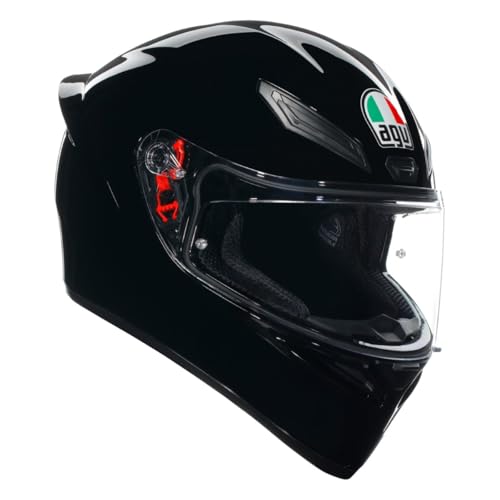
What We Like
- Two shell sizes for balanced fit
- Large front and crown vents plus rear extractors
- Pinlock MaxVision-prepared GT4 wide visor
- Double-D ring chinstrap for race-proven security
Trade-offs
- No integrated sun shield or drop-down visor
- Thermoplastic shell, not carbon or fiberglass
A high-resistance thermoplastic shell in two sizes means this helmet balances weight and protection without forcing a one-size-fits-all outer shape. The large front and crown vents work with rear extractors to push a steady stream of fresh air through the interior, which helps keep you focused on the road during long rides. Combined with a Pinlock MaxVision-prepared GT4 visor that offers a wide field of view, the K1 S delivers clear optics and solid ventilation for daily street riding.
At 3.5 pounds, this helmet matches the weight of the Bell Qualifier. The double-D ring closure adds a secure, race-proven touch that many riders appreciate. If you want a straightforward full-face helmet with strong airflow and a wide visor, this is a well-rounded pick for urban commutes and weekend cruises.
Shoei RF-1400 Full Face Helmet

What We Like
- Lightest SNELL-approved full-face in Shoei lineup
- Wind-tunnel-refined shell reduces drag and lift
- Vortex Generator shield technology cuts turbulence
- Removable ear pads and voluminous cheek pads
Trade-offs
- No built-in sun shield like LS2 Stream II
- No integrated sun visor like some competitors.
At 3.6 pounds, the Shoei RF-1400 is the lightest SNELL-approved full-face helmet Shoei offers, which directly cuts neck fatigue on long highway stretches. The wind-tunnel-shaped shell and spoiler reduce both drag and lift, so your head stays planted at higher speeds rather than getting tugged around by the wind. That aerodynamic focus pairs with a new CWR-F2 shield that uses Vortex Generator technology to displace turbulence. Plus, airtight window beading seals out wind and water so effectively you might struggle to open it like a pickle jar. This is a helmet built for riders who spend hours on the road and want quiet, stable airflow without the weight penalty that usually comes with full protection.
The trade-off for that light weight is no built-in sun shield like the LS2 Stream II offers. What you do get is a dual-layer multi-density EPS liner that channels cool air through the foam while absorbing impact. It also uses a hand-laid matrix of fiberglass and organic fibers that meets both SNELL M2020 and DOT standards. For the rider who prioritizes aerodynamic stability and noise reduction over convenience features, the RF-1400 delivers a purpose-built design that earns its place as the aerodynamic leader.
Bell Qualifier Full Face Helmet
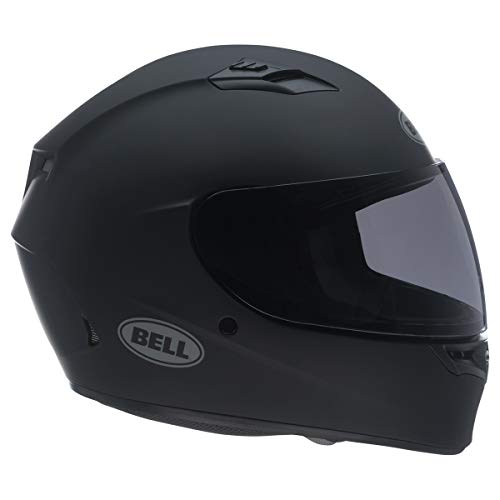
What We Like
- Three shell sizes for better fit
- IONIC+ padding manages sweat and odor
- Meets DOT and ECE22.06 standards
Trade-offs
- Single matte black color limits options
- No integrated sun shield
Three shell sizes mean this helmet doesn’t just rely on thicker padding to fit smaller or larger heads. It uses a different outer shell for each size range, so the proportions stay right and the weight stays balanced. That makes it a smart pick for riders whose head shape falls between standard sizes or who want a snug, stable fit without extra bulk inside. The IONIC+ padding pulls sweat away and resists odor, which matters on long summer rides or stop-and-go commutes where you’re taking the helmet on and off.
The weight is a plus: at 3.5 pounds it’s lighter than the Shoei RF-1400’s 3.6 pounds, so it won’t add fatigue on long rides. The matte black finish means you’re stuck with one color, so if you want a bright or graphic look, you’ll need to look elsewhere. For a rider who values fit precision and doesn’t mind a simple color, this helmet delivers a solid, well-ventilated ride.
ScorpionEXO ST1400 EVO Carbon Fiber Helmet

What We Like
- Airfit inflation system customizes fit on the fly
- Everclear anti-fog shield with drop-down sunvisor
- Emergency quick-release cheek pads for safety
Trade-offs
- At 3.05 lbs, lighter than many but not the lightest
- Bluetooth system sold separately from helmet
Carbon fiber construction keeps the helmet light on your head, and with three shell sizes available, finding a precise fit is straightforward. Riders get the stiffness of a carbon weave composite for impact dispersal, plus both DOT and ECE certifications for legal use on the street. The Airfit inflation system allows you to adjust cheek pad pressure on the fly, making it easy to switch from a tight canyon run to a relaxed all-day tour. The Everclear shield is treated on both sides to resist fogging and blocks 95% of UV-A and UV-B, so vision stays clear in changing conditions.
The drop-down sunvisor works well, but riders who prefer a fixed tinted shield may find the mechanical slider less convenient than a built-in sun shield on some modular helmets. Bluetooth communication requires the separately sold EXO-COM kit or a compatible system, which adds to the overall cost. For a sport-touring full-face helmet that prioritizes a featherlight carbon shell and customizable comfort, this ScorpionEXO delivers where it counts. Just be ready to budget separately for comms and accept the mechanical sunvisor action rather than an integrated tinted shield.
Product photos
Bell SRT Modular Flip-Up Helmet
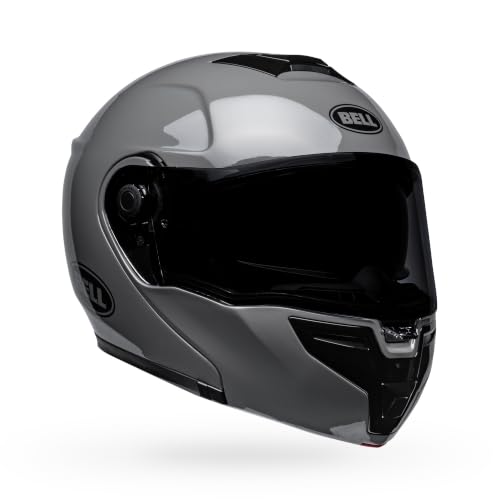
What We Like
- Flip-up design for full-face or open-face use
- Wide Panovision Class 1 face shield
- Lightweight fiberglass shell
- Bluetooth speaker pockets included
Trade-offs
- No integrated sun shield or internal visor
- Only one clear face shield included
The Bell SRT Modular Flip-Up Helmet weighs just 1.0 pounds, making it one of the lightest modular options on the market. That low weight means less strain on your neck during long rides, while the flip-up chin bar lets you switch from full-face protection to open-air convenience without removing the helmet. The Panovision Class 1 face shield gives you a wide field of view, which helps with safer lane changes and head checks in traffic. Fiberglass shell construction adds strength without the bulk, and the recessed speaker pockets make it easy to add a Bluetooth communication system for group rides or navigation.
The trade-off for that featherlight feel is a simpler feature set compared to some modular competitors. Unlike the Shoei Neotec II, this Bell SRT does not include an integrated sun visor or a second shield, so you will need to swap the included clear shield or wear sunglasses in bright conditions. For riders who prioritize low weight and flip-up convenience over all-weather sun protection, this is a smart, practical choice.
Product photos
Shoei Neotec II Modular Helmet

What We Like
- Flip-up modular design for flexibility
- Advanced Integrated Matrix shell is lightweight yet durable
- QSV-1 sun shield is anti-fog and anti-scratch
- Noise reduction technology for a quiet ride
Trade-offs
- At 4.1 pounds, heavier than some full-face options
- Modular hinge adds complexity compared to fixed full-face helmets
The Shoei Neotec II’s noise reduction technology is described as state-of-the-art, helping to reduce wind roar for a quieter ride. Its flip-up face cover blends the convenience of an open-face helmet with full-face protection, making it adaptable to different riding conditions. Riders on commutes or tours will appreciate the quiet ride and modular flexibility.
Its modular design weighs 4.1 pounds, a bit more than a fixed full-face like the Shoei RF-1400 at 3.6 pounds, and the hinge mechanism adds a small complexity in maintenance. If you rarely need to flip the chin bar and value the lightest possible weight, the RF-1400 might be a better fit. But for those who want a modular helmet with quiet ride features, the Neotec II offers that combination.
Product photos
Arai Contour-X Full Face Helmet
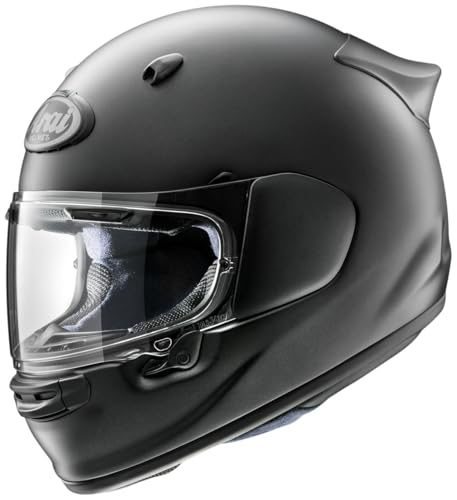
What We Like
- Aerodynamic rear spoiler with exhaust function
- Logo duct works at low speed and upright riding
- Duct lever easy to use with summer or winter gloves
- Logo duct designed to breakaway on impact
Trade-offs
- At 5.0 pounds, heavier than many street helmets
- Logo duct visibility depends on rider seeing the lever
The 3D ARAI logo duct, just 3.5 mm in depth, feeds two central 10 mm intake ports, delivering airflow even at low speeds and with an upright riding position. That makes this helmet a strong match for riders who spend time in town or on relaxed highway stretches where wind ram pressure is low. The aerodynamic rear spoiler includes a one-piece exhaust function, and the logo duct is designed to breakaway in the event of an impact. Riders who want predictable ventilation they can adjust on the fly will appreciate the short-stroke lever, which is designed to be operated easily with summer or winter gloves.
The Contour-X comes in at 5.0 pounds, heavier than the Shoei RF-1400’s 3.6 pounds. That extra mass can become more noticeable on long days in the saddle or if you frequently turn your head to check traffic. Still, if your priority is stable, low-speed ventilation and a functional spoiler, this Arai delivers exactly that. It is a focused piece of gear for riders who value aerodynamic function over shaving every last ounce.
Product photos
ScorpionEXO Covert FX Full Face Helmet

What We Like
- ECE 22.06 certification for rigorous testing
- Includes free dark smoke EverClear fog-free shield
- KwikFit cheek pads accommodate most eyeglasses
- Removable, washable KwikWick C moisture-wicking liner
Trade-offs
- Pinlock shields sold separately, not included
- No integrated sun shield for bright-day riders
A 2.9-pound full-face helmet built with a TCT-Ultra Composite shell and dual safety certifications (DOT and ECE 22.06) means you get serious impact protection without the neck fatigue that heavier lids can cause on longer rides. This is a street fighter style helmet that pairs aggressive looks with practical comfort features like aero-tuned ventilation, a KwikWick C moisture-wicking liner, and sculpted cheek pads that actually work with eyeglasses. It suits riders who want the exposed, mechanical vibe of a street fighter helmet but refuse to compromise on full-face safety and all-day wearability.
The trade-off comes in shield setup. You get a free dark smoke EverClear fog-free shield in the box, but Pinlock inserts are sold separately, so if you ride in heavy fog or rain, you’ll need to budget for that upgrade. For riders who value the street fighter aesthetic and don’t mind a few extra ounces for the composite shell and dual certs, this helmet delivers a lot of character and protection for the money.
Product photos
How We Evaluated Street Motorcycle Helmets
We started with the safety certifications that set the baseline for any street helmet: DOT, ECE 22.06, and SNELL. From there, we compared shell materials, weight, and ventilation designs across each model. Owner feedback helped us understand real-world fit, noise levels, and how well features like sun shields and anti-fog systems perform over time.
The three criteria that mattered most were safety certification, weight, and fit customization. A helmet that meets modern standards like ECE 22.06 offers better impact protection. Weight affects neck fatigue on long rides, and a proper fit is essential for both safety and comfort.
This is a research-led evaluation, not a hands-on test. We rely on verified specs, expert consensus, and the collective experience of owners to make our recommendations.
What To Look For In Street Motorcycle Helmets
Choosing a street helmet comes down to safety, fit, and the features that match your riding style. Here is what to keep in mind.
A street helmet must meet DOT or ECE standards, fit snugly without pressure points, and include features like ventilation, a sun shield, or anti-fog protection that match how and where you ride.
Safety Certifications
DOT is the minimum legal standard in the US. ECE 22.06 is a more rigorous international standard that includes rotational impact testing. SNELL is another voluntary standard that tests for higher impact forces. A helmet with ECE 22.06 or SNELL certification offers a higher level of protection than DOT alone.
Shell Material and Weight
Helmet shells are made from polycarbonate (thermoplastic), fiberglass, or carbon fiber. Polycarbonate is affordable and durable but heavier. Fiberglass offers a good balance of weight and strength. Carbon fiber is the lightest and often the most expensive. Weight matters because a heavier helmet causes more neck fatigue on long rides.
Fit and Sizing
A helmet should fit snugly all around your head without painful pressure points. It should not shift when you shake your head. Many helmets offer multiple shell sizes to better fit different head shapes. Check for features like adjustable cheek pads or an inflation system to fine-tune the fit.
- Try on helmets for at least 15 minutes to check for pressure points.
- Measure your head circumference and compare it to the manufacturer’s size chart.
- Look for helmets with emergency release cheek pads for safer removal after a crash.
- If you wear glasses, check for channels or cutouts that accommodate frames.
- A double-D ring chinstrap is more secure than a micro-ratchet buckle for track use.
A helmet that fits perfectly is safer and more comfortable than one with better specs that does not fit your head shape.
Street Motorcycle Helmets Compared
The table below compares the key specs and features of our nine top picks for street motorcycle helmets.
| Product | Shell Material | Weight | Safety Standard |
|---|---|---|---|
| LS2 Stream II Full Face Helmet | Kinetic Polymer Alloy | 5.0 Pounds | DOT / FMVSS 218 |
| AGV K1 S Full Face Helmet | High-resistance thermoplastic | 3.5 pounds | DOT FMVSS 218 |
| Shoei RF-1400 Full Face Helmet | Matrix hand-laid fiberglass/organic fibers | 3.6 Pounds | SNELL M2020 |
| Bell Qualifier Full Face Helmet | N/A | 3.5 pounds | DOT and ECE22.06 |
| ScorpionEXO ST1400 EVO Carbon Fiber Helmet | Resin-infused TCT-U 3K carbon fiber | 3.05 lbs (size medium) | DOT FMVSS No. 218 / ECE |
| Bell SRT Modular Flip-Up Helmet | Fiberglass | 1.0 pounds | FMVSS 218 / DOT |
| Shoei Neotec II Modular Helmet | AIM (Advanced Integrated Matrix) | 4.1 Pounds | DOT-218 |
| Arai Contour-X Full Face Helmet | N/A | 5.0 Pounds | DOT approved, FMVSS 218 |
| ScorpionEXO Covert FX Full Face Helmet | TCT-Ultra Composite | 2.9 lbs (size medium) | N/A |
Frequently Asked Questions
What is the safest type of motorcycle helmet for street riding?
Full-face helmets offer the most protection because they cover your entire head and face. They are the best choice for street riding, as they protect your jaw and chin in a crash. Modular helmets offer similar protection when the chin bar is locked, but the hinge adds a potential weak point.
How do I know if a helmet fits properly?
A properly fitting helmet should feel snug all around your head without any painful pressure points. When you shake your head, the helmet should move with your head, not shift independently. The cheek pads should touch your cheeks without being uncomfortable, and there should be no gaps between your forehead and the helmet’s foam.
What does ECE 22.06 certification mean?
ECE 22.06 is a European safety standard that tests helmets for impact absorption, retention system strength, and rotational impact protection. It is more rigorous than the US DOT standard and includes tests at different impact angles and speeds. Helmets with this certification offer a high level of proven protection.
Should I get a modular or full-face helmet?
Full-face helmets are lighter, stronger, and quieter than modular helmets. Modular helmets offer the convenience of flipping up the chin bar for easier communication or to get fresh air at stops. Choose a full-face for maximum protection and light weight, and a modular for touring or commuting where you value the flip-up convenience.
How often should I replace my motorcycle helmet?
Most manufacturers recommend replacing a helmet every five to seven years, even if it has not been in a crash. The EPS foam liner can degrade over time from sweat, UV light, and temperature changes. Always replace a helmet immediately after any impact, even if it looks undamaged.
The Bottom Line
The LS2 Stream II Full Face Helmet is the best overall pick for most street riders. It brings together modern ECE 22.06 safety certification, a built-in sun shield, and rotational impact protection in a single package that works well for daily commuting and weekend rides alike.
If you want a lighter helmet for long highway miles, the Shoei RF-1400 is the top choice with its wind-tunnel-refined shell and SNELL approval. For riders who prefer a modular design for touring or commuting, the Bell SRT offers a lightweight fiberglass shell with Bluetooth speaker pockets.
The single most important factor in choosing a street helmet is fit. No amount of advanced features or safety certifications matters if the helmet does not fit your head shape securely and comfortably. Take the time to try on helmets before you buy.
