
10 Best 27 5 Mountain Bike Tires in 2026
This post contains affiliate links. As an Amazon Associate, we earn from qualifying purchases.
For riders who want maximum cornering confidence and cut resistance on aggressive terrain, the Maxxis Assegai Dual Compound MTB Tire earns our top spot. Its tenacious grip profile and EXO sidewall make it the choice for enduro and trail riding. For a fast-rolling rear companion, the Maxxis Aggressor is our Best Rear Tire, while the Continental Cross King covers all-round trail duty.
Choosing the right 27.5 tire means balancing grip, rolling speed, and durability against your local trails. A tire that excels on loose loam may drag on hardpack climbs, and a lightweight XC casing may not survive rocky descents.
This guide is built from manufacturer specifications, expert round-ups of trail and enduro tires, and patterns in owner feedback. We break down the key criteria so you can match a tire to your riding style and terrain.
Top 10 27.5 Mountain Bike Tires in the Market
Certain content that appears on this site comes from Amazon. This content is provided "as is" and is subject to change or removal at any time.
The Best 27.5 Mountain Bike Tires, Reviewed
Maxxis Assegai Dual Compound MTB Tire

What We Like
- Tenacious grip across all lean angles
- Dual Compound balances rolling resistance and grip
- EXO sidewall resists cuts and abrasion
- Wide Trail optimized for modern rims
Trade-offs
- Heavier casing limits quick acceleration on smooth trails
- Aggressive tread adds drag on hardpack climbs
Greg Minnaar’s signature tire delivers tenacious, predictable grip across the entire tread profile no matter how far you lean. That full-profile confidence comes from a Dual Compound that balances rolling resistance with cornering bite, plus an EXO sidewall that shrugs off cuts and abrasions on rocky terrain. It is tubeless ready and Wide Trail optimized for modern rims (ideal at 30mm internal width), so it fits the bikes most riders are building today. This is the tire you mount when you want to push hard into turns and trust the rubber to hold.
The trade-off is weight and rolling resistance: the aggressive tread and reinforced casing that give you that grip also add drag on smooth hardpack and make quick acceleration feel a bit sluggish. For comparison, the Continental Cross King rolls noticeably faster on firmer trails with its ShieldWall casing and lighter build, but it does not offer the same cornering bite at extreme lean angles. If your priority is all-out traction and you are willing to accept a slower roll on the straights, the Assegai earns its place as the best overall pick for aggressive trail and enduro riding.
Product photos
Maxxis Aggressor Dual Compound MTB Tire

What We Like
- Fast-rolling center tread design
- Grippy cornering knobs for hardpack
- EXO sidewall cut and abrasion resistance
- E25 rated for light e-bikes
Trade-offs
- Narrower 2.30 width limits flotation in loose terrain
- Designed for hardpack, not soft or muddy trails
A fast-rolling center tread with grippy cornering knobs makes this tire a natural match for riders who want to carry speed on hard-packed rocky trails without giving up cornering bite. Designed specifically as a rear tire and often paired with a more aggressive front like the Minion DHF or Assegai, it balances low rolling resistance with predictable traction when you lean into a turn. The EXO sidewall adds cut and abrasion protection for the sharp rocks you’ll find on those trails. The E25 rating means it works on light e-bikes up to 16.1 mph, so pedal-assist riders aren’t left out.
This tire’s 2.30 width and hardpack-focused tread pattern don’t offer the same float or bite in loose, sandy, or muddy conditions that a wider or more open-tread tire like the Continental Cross King (2.80) would. That narrower footprint also means less cushion and traction when the trail turns soft or wet. If your local loops are dry, fast, and rocky, the Aggressor’s speed and cornering grip make it a smart rear-wheel partner. For riders who regularly face loose over hard or deep mud, a wider all-rounder would be a better fit.
Product photos
Continental Cross King ShieldWall MTB Tire

What We Like
- ShieldWall layer resists punctures and cuts
- PureGrip compound balances grip and durability
- Tubeless-ready airtight construction
- E25 rated for e-bike use
Trade-offs
- Requires sealant for first tubeless mount
- 2.80 width limits frame compatibility
The Continental Cross King’s ShieldWall puncture protection, an extra layer of woven cross fabric, gives you real peace of mind on rocky, root-filled trails without turning the tire into a stiff, unyielding ring. That flexibility carries over to the PureGrip compound, which uses activated silica to hold its bite lap after lap, so you’re not swapping tires every few rides. It’s a tire that rolls smoothly on hardpack, grips confidently in loose corners, and handles the daily mix of climbs, descents, and surprises that make trail riding fun. For the rider who wants one set of tires that can do a little bit of everything without demanding a second mortgage, this is the pick.
Setting up the tire tubeless requires an initial addition of sealant, with Continental recommending at least 30 ml of RevoSealant per tire for first mounting. This is a routine step for any tubeless-ready tire, so it doesn’t add unusual complexity, but it does mean you’ll need to have sealant on hand before the first ride. The airtight construction allows the tire to run without an inner tube, which reduces rotational weight and the chance of pinch flats, or you can still use a tube if preferred.
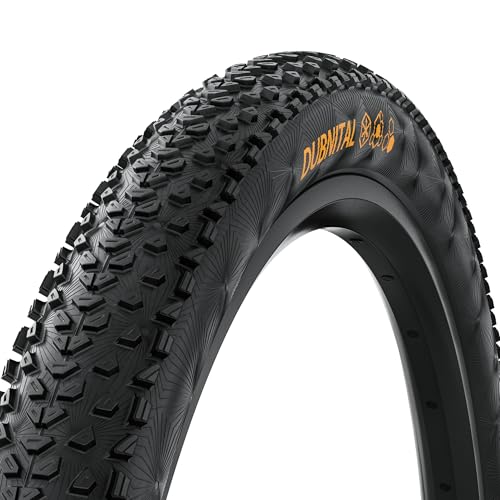
Continental Dubnital Rapid Trail MTB Tire
What We Like
- Rapid Compound for hardpack speed
- Hookless compatible for modern rims
- BlackChili compound from road/race/gravel tires
Trade-offs
- 2.20 width limits float on loose terrain
- One-ply casing less cut-resistant than thicker options
- Narrow pressure range for varied rider weight
The 330 TPI Trail Casing and Rapid Compound make this tire a pure speed tool for hardpack and dry conditions. It suits cross-country and down-country riders who want fast lap times on rocky, packed trails without extra weight or drag.
A narrow 2.20 width and a single-ply casing trade sidewall toughness for weight savings. If your local trails are mostly hardpack and you prioritize speed over all-terrain grip, this tire rewards you with a lively, responsive feel. Just keep the pressure within the 26-58 PSI window and watch for sharp rocks that could cut the lighter casing.
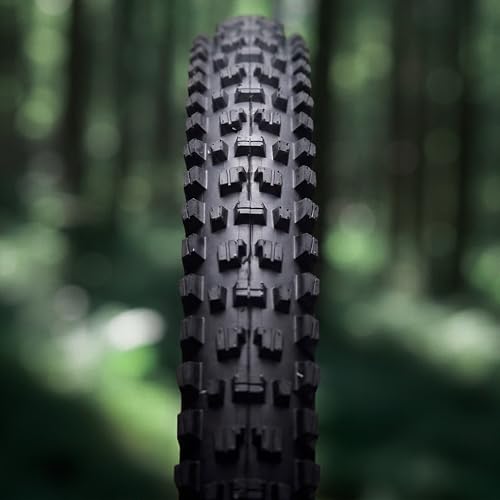
e*thirteen Grappler Radial MTB Tire
What We Like
- Radial casing improves bump absorption
- Tall siped side lugs for predictable cornering
- Soft 42a compound maximizes traction
Trade-offs
- 1425g weight is heavy for climbing
- Soft compound wears faster on hardpack
At 1425g, this tire is built for aggressive terrain, not for light climbing. The Flux GR Radial casing uses a dual-ply construction with Dual Apex inserts on each sidewall, letting the tread and sidewall work more independently for better bump absorption and traction. The 42a MoPo compound delivers maximum grip in corners, under braking, and in loose terrain, making it a strong choice for enduro, DH, and E-MTB riding.
The soft compound and heavy casing make it less suited for smooth climbs or fire roads. Compared to the Maxxis Aggressor, which has a dual compound and EXO casing, the Grappler is heavier and uses a softer single compound. For riders who need grip on loose or wet descents, the radial design and sticky rubber offer strong traction. It is made for enduro, DH, and E-MTB riding, not for cross-country or all-day trail use.
Product photos
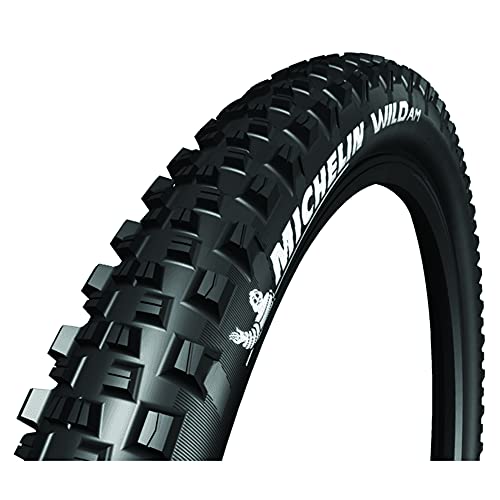
Michelin Wild AM Competition Line MTB Tire
What We Like
- Triple-layer Trail Shield casing for puncture protection
- Gum-X3D compound boosts cornering grip
Trade-offs
- 2.1-pound weight adds rotating mass for climbing
- Deep tread pattern can slow rolling on hardpack
A 2.8-inch width and triple-layer Trail Shield casing give you the confidence to push into loose, muddy, or mixed terrain without worrying about cuts or punctures. The Gum-X3D triple rubber compound keeps you hooked through corners while still rolling efficiently for a tire this size. The all-condition tread pattern provides grip across diverse environments, and the e-bike rating means it handles the extra torque without complaint. This tire is built for traction and durability first, not for speed demons chasing seconds on hardpack.
The trade-off comes on dry, fast trails where the wide footprint and tread pattern feel a bit sluggish compared to something like the Maxxis Aggressor. At 2.1 pounds, it’s not the lightest option for long climbs, and the 2.8-inch width can feel bulky in tight switchbacks. But if your rides regularly hit soft ground, mud, or loose over hardpack, that extra rubber and casing protection is exactly what keeps you upright and rolling. It’s a specialist that does its job well.
Bell Flat Defense Mountain Bike Tire

What We Like
- Flat Defense layer boosts puncture resistance 25%
- Tall knobby tread for trail to single track
- Carbon steel bead folds for easy storage
- PSI range 35-65 suits varied terrain
Trade-offs
- At 2.0 lb, heavier than some trail-focused tires
- Narrow 1.95-2.10 width limits float on loose terrain
A protective inner layer that adds 25% more puncture resistance compared to a standard tire is the core reason to consider the Bell Flat Defense. That extra shield sits inside the casing, so sharp rocks and thorns have a harder time reaching your tube. The tall, knobby tread pattern also delivers solid grip from smooth trails up to technical single track, and the carbon steel bead lets you fold the tire for compact storage without damage. Riders who prioritize avoiding trailside flat repairs over outright speed will find this a sensible choice for mixed-condition riding where punctures are a real worry.
The Flat Defense layer and steel bead add weight, at 2.0 pounds this tire is noticeably heavier than a race-oriented model like the Maxxis Aggressor (1.3 lb). That extra heft can be felt on climbs and accelerations. The 1.95-2.10-inch width also limits float on soft or loose surfaces compared to wider options. If you ride mostly hardpack or groomed trails and want the best flat protection without going tubeless, the Bell suits that mission. For riders chasing every gram or needing maximum volume for loose terrain, a lighter or wider tire would be a better fit.
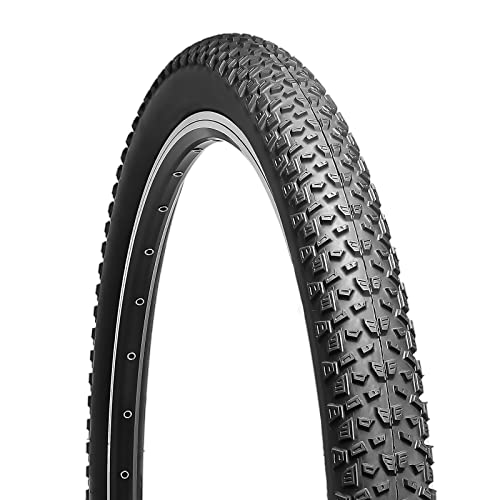
Hycline 27.5×2.125 Folding MTB Tire
What We Like
- Folding carbon steel bead for easy storage
- Aggressive tread for mud clearing and grip
- Puncture-resistant layer adds 30% more strength
- Works on both front and rear wheels
Trade-offs
- 30 TPI casing is less supple than higher-count options
- 2.125" width is narrow for aggressive trail riding
- PSI range tops at 65, limiting low-pressure use
The 30 TPI casing and carbon steel folding bead allow the tire to be folded without damage for easy storage, which is useful when you need to carry a spare. The open, aggressive tread design provides excellent soil penetration and mud-clearing ability, and the protective layer under the tread adds 30% more strength and puncture resistance. For riders who frequently switch between road and offroad terrain, this tire offers a balance of features at a reasonable price point.
Product photos
Fincci 27.5×2.25 MTB Tire with Tubes

What We Like
- Includes two tires and two inner tubes
- 1mm nylon antipuncture protection layer
- 60 TPI for better rolling resistance
Trade-offs
- 2.25-inch width limits grip in loose terrain
- 60 TPI casing less durable than higher-count options
A 1mm nylon antipuncture layer sits inside each tire, which means fewer roadside flats on rocky trails or gravel paths. This set suits riders who want a ready-to-roll package: two tires and two 48mm Presta valve inner tubes arrive together, so you can swap both wheels without hunting for tubes separately. The 60 TPI casing helps reduce rolling resistance, while the knobby tread provides grip on dirt and uneven ground. It is a practical choice for commuters, weekend trail riders, or anyone maintaining a second bike on a budget.
At 2.25 inches wide, these tires lack the flotation of a 2.50 or 2.80 model like the Maxxis Assegai, so they will break traction sooner in sand or thick mud. For riders who stick to hardpack, fire roads, and mixed pavement, this set delivers dependable grip and flat protection without the fuss of tubeless setup. It is a complete, no-surprises kit for everyday riding.
Product photos
Blackburn Mountain Bike Tire 27.5

What We Like
- Protective layer under tread boosts puncture resistance
- Folding carbon steel bead for easy storage
- Tall knobby tread suits smooth to technical trails
- Optimized tread design for traction and control
Trade-offs
- Narrower width range (1.95-2.10 in) limits float on loose terrain
- Not tubeless-ready, requires tubes or conversion setup
A protective layer under the tread provides 30% more puncture resistance than a standard tire, which means fewer trailside flats and more time riding. The tall knobby tread handles everything from smooth paths to technical singletrack, and the folding carbon steel bead makes it easy to pack for a trip or store in a cramped garage. It’s a straightforward, no-fuss option for recreational mountain bikers who prioritize reliability over cutting-edge weight savings.
The trade-off comes in the 1.95 to 2.10 inch width range, which is narrower than many modern trail tires. On loose or deep soil, you won’t get the same flotation or cornering bite as a wider tire like the Maxxis Assegai 2.50. That narrower profile does keep rolling resistance lower on hardpack and pavement, so it’s a fair compromise if your riding mixes dirt roads with occasional singletrack. For someone looking for a dependable, puncture-resistant tire that won’t break the budget, this Blackburn covers the basics well.
Product photos
How We Evaluated 27.5 Mountain Bike Tires
Our evaluation is research-based. We reviewed manufacturer specifications, technical documents, and expert round-ups from the mountain biking community. We also analyzed patterns in owner feedback across dozens of models to identify real-world strengths and trade-offs. No tires were tested in-house; this is a comparative assessment of published data and rider consensus.
Three criteria mattered most. First, tread design and compound determine grip and rolling resistance, aggressive knobs for loose terrain, ramped center knobs for speed. Second, casing construction and TPI (threads per inch) affect puncture resistance, suppleness, and weight. Third, width and volume influence flotation and cornering stability, especially on modern wider rims.
A research-led evaluation has limits: it cannot capture how a tire feels at the limit on a specific trail. We rely on what riders consistently report and what the specs tell us about intended use. Your local conditions and riding style should always be the final judge.
What To Look For In 27.5 Mountain Bike Tires
Choosing a 27.5 tire starts with matching tread and casing to your terrain and riding aggression. Here are the key factors to consider before you buy.
Match tread to terrain: ramped center knobs for hardpack speed, tall spaced knobs for loose or muddy conditions. Match casing to risk: lightweight for XC, reinforced for enduro and rocky trails.
Tread Pattern and Compound
The tread does two jobs: center knobs roll and brake, side knobs corner. A tire with a continuous center ridge rolls fast on hardpack but washes out in loose corners. Tall, widely spaced knobs dig into soft soil but hum on pavement. The rubber compound matters too, softer compounds like Maxxis MaxxGrip or Continental BlackChili grip better but wear faster. Dual or triple compounds use a harder base with softer edges to balance durability and cornering traction.
Casing, TPI, and Puncture Protection
Higher TPI means a more supple casing that conforms to trail bumps, but it is less resistant to cuts. Lower TPI casings are tougher and more puncture-resistant but feel stiffer. Many tires add a protective layer under the tread; look for EXO, ShieldWall, or similar names if you ride rocky terrain. Tubeless-ready tires let you run lower pressures for more grip without pinch flats, but require sealant.
Width and Volume
Wider tires provide more flotation on loose soil and sand, and allow lower pressures for better traction. Narrower tires accelerate faster and clear frame clearance issues. Modern rims with wider internal widths pair best with Wide Trail or wider tires to keep the tread profile square and predictable in corners.
- Check your frame and fork clearance before buying a wide tire.
- Match the tire’s intended position (front or rear) to your riding style.
- Consider tire weight if you climb a lot; every gram matters on long ascents.
- Look for e-bike ratings (E25) if you ride an e-MTB.
A good rule: run the widest tire your frame can clear for the terrain you ride most.
27.5 Mountain Bike Tires Compared
The table below compares our top picks across key specs and best-use scenarios to help you narrow your choice.
| Product | Size | Casing | Compound |
|---|---|---|---|
| Maxxis Assegai Dual Compound MTB Tire | 27.5×2.50WT | EXO | Dual Compound |
| Maxxis Aggressor Dual Compound MTB Tire | 27.5×2.30 | EXO | Dual Compound |
| Continental Cross King ShieldWall MTB Tire | 27.5×2.80 | ShieldWall | PureGrip |
| Continental Dubnital Rapid Trail MTB Tire | 27.5×2.20 | Trail Casing | Rapid Compound with BlackChili |
| e*thirteen Grappler Radial MTB Tire | 27.5 x 2.5 | Flux GR Radial | MoPo 42a single compound |
| Michelin Wild AM Competition Line MTB Tire | 27.5 x 2.80 | Trail Shield | Gum-X3D triple rubber |
| Bell Flat Defense Mountain Bike Tire | 27.5" x 1.95-2.10" | Flat Defense inner layer | N/A |
| Hycline 27.5×2.125 Folding MTB Tire | 27.5×2.125" | Protective layer under tread | N/A |
| Fincci 27.5×2.25 MTB Tire with Tubes | 27.5×2.25 inches | 1mm Nylon | N/A |
| Blackburn Mountain Bike Tire 27.5 | 27.5" x 1.95-2.10 | Protective layer under tread | N/A |
Frequently Asked Questions
What is the difference between 27.5 and 29-inch mountain bike tires?
27.5-inch tires accelerate faster, are more maneuverable in tight turns, and fit smaller frames better. Larger tires roll over obstacles more easily and maintain speed better on open terrain. The choice depends on your riding style, frame size, and local trail character.
How do I know what width tire my mountain bike can fit?
Check your frame and fork clearance. Measure the gap between the tire and the chainstays, seatstays, and fork crown at full compression. Most modern frames list a maximum tire width in the geometry chart. A narrower tire fits most bikes, while wider tires require careful measurement.
Are tubeless tires better than tires with tubes?
Tubeless tires allow lower air pressure for more traction without pinch flats, and they self-seal small punctures when used with sealant. Tubes are simpler to install and repair on the trail. Many tubeless-ready tires can also be run with tubes if needed.
How often should I replace my mountain bike tires?
Replace a tire when the center tread knobs are less than half their original height, when side knobs show tearing or chunking, or when you see cuts through the casing. Many riders get one to two seasons of regular riding from a rear tire and longer from a front tire.
What tire pressure should I run on 27.5 mountain bike tires?
Start with moderate psi for a rider of average weight on trail tires, then adjust down in small increments until you feel the tire squirm in corners. Lower pressures work for tubeless setups on soft terrain. Higher pressures suit hardpack and heavier riders. Always stay within the tire’s rated range.
The Bottom Line
The Maxxis Assegai Dual Compound MTB Tire is our Best Overall pick for riders who prioritize cornering grip and cut resistance on aggressive trail and enduro terrain. It is not the lightest or fastest-rolling tire, but it delivers confidence where it counts. For a dedicated rear tire, pair it with the Maxxis Aggressor.
Budget-conscious riders should look at the Hycline 27.5×2.125 Folding MTB Tire, which offers a folding bead and puncture resistance at an affordable price. Those who want a single tire for mixed conditions will appreciate the Continental Cross King‘s balanced tread and puncture protection.
The single most important factor in choosing a 27.5 tire is matching the tread and casing to the terrain you ride most. A tire that works well on hardpack will struggle in mud, and a tough enduro casing adds noticeable weight on climbs. Know your trails, and pick accordingly.
