
10 Best Aero Bars For Road Bikes in 2026
This post contains affiliate links. As an Amazon Associate, we earn from qualifying purchases.
For road cyclists looking to improve aerodynamics without a full time trial bike, the Profile Design Neosonic Ergo+ Aerobar is the best overall pick thanks to its wide armrest range (124-290mm) and adjustable extension tilt. Riders who value tool-free switching between positions should consider the REDSHIFT Quick-Release Clip-On Aerobars, while the Profile Design Legacy II Aerobars offer exceptional lightweight value.
Adding aero bars to a road bike changes your riding position, which affects handling, comfort, and power output. The challenge is finding a set that fits your body dimensions and handlebar setup without introducing pain points or instability.
This guide is based on manufacturer specifications, expert round-ups, and patterns in owner feedback. We evaluated adjustability, weight, construction materials, and ease of installation to help you choose with confidence.
Top 10 Aero Bars For Road Bikes in the Market
Certain content that appears on this site comes from Amazon. This content is provided "as is" and is subject to change or removal at any time.
The Best Aero Bars For Road Bikes, Reviewed
Profile Design Neosonic Ergo+ Aerobar
What We Like
- Wide armrest width range (124-290mm)
- Adjustable extension tilt and width
- Lightweight aluminum at 700 grams
- Rear-exit cable routing for clean setup
Trade-offs
- Above-the-bar brackets add stack height
- Aluminum alloy not as light as carbon options
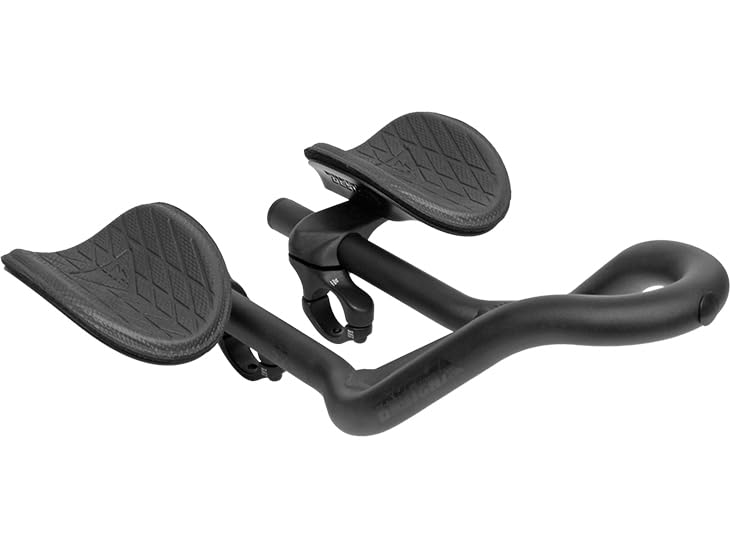
A 700-gram aluminum build keeps this aero bar light without the premium cost of carbon. The adjustable armrest width from 124mm to 290mm means riders of nearly any shoulder width can find a comfortable tuck. The 340mm extensions tilt and widen to dial in your ideal reach and hand position, making it a truly custom fit for road cyclists who want to improve aerodynamics without committing to a full time-trial setup.
The trade-off comes in the bracket design: the above-the-bar mounting system raises the armrest stack height starting at 42.5mm, which may feel a bit tall for riders who prefer a very low, aggressive front end. Compared to the REDSHIFT Quick-Release Clip-On Aerobars at 1.4 pounds, the Profile Design is lighter, but the REDSHIFT’s integrated bracket may offer a different mounting profile. For road cyclists wanting a versatile, well-built aero bar that fits and adjusts easily, this is a strong option to consider.
Product photos
VISION Trimax Clip-On Aerobar
What We Like
- Highly adjustable armrest width
- Three extension bend options
- Internal cable routing for clean setup
- Open-access bolts for easy adjustment
Trade-offs
- At 2.2 lb, heavier than many clip-ons
- No carbon option for weight-conscious racers
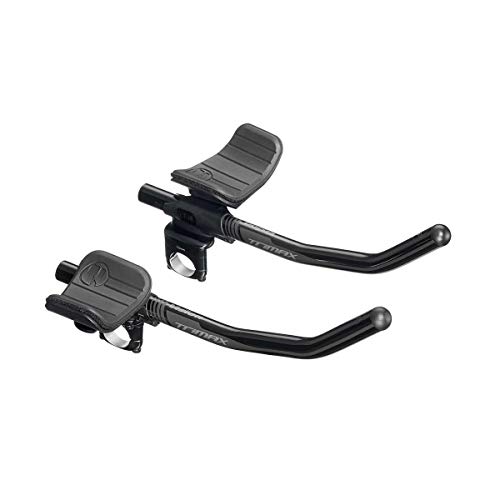
The 40mm of armrest width adjustment means you can fine-tune your elbow spacing for comfort and aerodynamics without swapping parts. That range, paired with three extension bend choices (JS, J, and S), gives riders real flexibility to dial in their position. It suits anyone who wants a clip-on that adapts to their body rather than forcing a single posture. The internal cable routing also keeps the front end tidy, especially for electronic shifting setups.
The trade-off is weight: at 2.2 pounds, the Trimax is noticeably heavier than the Profile Design Legacy II, which weighs just 0.2 pounds. That extra heft matters if you’re climbing or carrying the bike up stairs. For riders who prioritize adjustability over grams, though, this bar’s range of fit options makes it a practical choice.
Profile Design Legacy II Aerobars

What We Like
- Lightweight 450g aluminum construction
- Venturi-style armrests reduce fatigue
- Width and rotation adjustable armrests
- Compatible with 31.8mm and 26.0mm bars
Trade-offs
- Shim kit for 26.0mm bars sold separately
- Not compatible with 26.0mm bars without extra shim kit.
At just 450 grams, the Legacy II Aerobars shed weight without sacrificing the durability of forged 6061-T6 aluminum. That lightness matters on long climbs or when you’re already pushing a full triathlon kit, and the Venturi-style armrests give you multiple hand positions to fight fatigue. The width and rotation adjustments let you dial in a snug fit on most road bike setups, making this a smart pick for riders who want aerodynamic gains without a heavy penalty.
REDSHIFT Quick-Release Clip-On Aerobars

What We Like
- Tool-free quick release in seconds
- On-the-fly switch between road and aero
- Fine-tune fit with four adjustments
Trade-offs
- Height adjustment needs separate riser sold separately
- Shims for 26.0 mm bars sold separately
- Aluminum extensions add weight over carbon
The quick-release mechanism lets you attach or remove these aero bars in seconds without any tools, so you can switch between road and aero positions on the fly. That flexibility means you can change your riding position during a ride without stopping to fiddle with bolts. It is ideal for riders who want aero benefits without committing to a dedicated time-trial setup. The wide range of adjustability, extension length, arm pad fore-aft, arm pad width, and height (with a separate riser), lets you dial in a fit that works for any body size.
Height adjustment requires an extra riser sold separately, and if your handlebars are 26.0 mm rather than the standard 31.8 mm, you will need to buy shims. Compared to the VISION Trimax Clip-On Aerobar at 2.2 pounds, the REDSHIFT is lighter at 1.4 pounds. For riders who value the ability to quickly convert their road bike for a triathlon or time trial without permanent changes, this is a smart, practical choice.
Product photos
RXL SL Carbon Aero Bars

What We Like
- Ultra-light T800 carbon build
- Adjustable rest bar length
- Removable, washable sponge pads
- Reduces wind resistance
Trade-offs
- 255mm rest bar limits arm position range
- Only 15mm of length adjustment
- Requires careful 4 Nm torque to avoid damage
Weighing about 300 grams, this clip-on aero bar uses T800 carbon fiber to keep weight low, which is helpful if you leave the bars on for climbs or long rides. The 255mm rest bar offers 15mm of adjustability to dial in elbow position, and the removable sponge pads add comfort without trapping moisture.
The 4 Nm torque limit on the clamp bolts is a critical spec for this carbon component. Exceeding that value can damage the fibers, so a torque wrench is strongly advised during setup. Owners report that applying carbon assembly paste on the 31.8mm bar area helps prevent slipping at the correct torque, and tightening the bolts in a cross pattern distributes the load evenly. This attention to detail keeps the aero bars secure on long rides without risking the integrity of the lightweight T800 carbon construction.
Product photos
Zipp Vuka Aerobar Extensions

What We Like
- Large armrest reduces pressure points
- Lightweight carbon construction at 0.2 lb
- Compatible with adjustable risers and accessories
- Sleek black finish complements bike aesthetics
Trade-offs
- Extensions only; base bar and mount sold separately
- Short 14.9-inch length limits reach for taller riders
At 0.2 pounds, this carbon extension set is among the lightest options available, which can help reduce overall bike weight for riders focused on performance. The large armrest is designed to reduce pressure points, a feature that can improve comfort during extended rides. The extensions accept additional risers, armrests, and aero accessories, allowing for a customized fit.
These are only the extensions; you will need a compatible base bar and mounting hardware to install them on your bike. The VISION Trimax Clip-On Aerobar weighs 2.2 pounds and is made from alloy, while the Zipp Vuka setup uses carbon and weighs significantly less. Riders who prefer a complete clip-on unit out of the box may want to consider alternatives.
BBB Cycling AeroMax Aerobar

What We Like
- Extra-long 350mm J-bend bars
- EVA foam padding for comfort
- Two-piece design for easy setup
Trade-offs
- Heavier than carbon alternatives at 0.8 lb
- Aluminium construction less vibration-damping than carbon
- J-bend shape limits hand position options
The 350mm extra-long J-bend bars let you stretch out into a truly aerodynamic tuck without feeling cramped, which is ideal for riders who want maximum reach and a low frontal profile on long straight sections. The arm rests can be adjusted in length and width to suit your preferences, so you can find a comfortable elbow position. EVA foam padding on the bars adds cushion to keep your forearms from going numb during hour-long efforts. It’s a straightforward setup that prioritizes aero position over frills.
At 0.8 pounds, this aluminum bar is heavier than carbon options like the Zipp Vuka Aerobar Extensions (0.2 lb), so if you are counting grams for a hill-climb time trial, the BBB won’t be your lightest choice. The aluminum also transmits more road buzz than carbon, which might fatigue your hands on rough pavement. Compared to the Profile Design Neosonic Ergo+ Aerobar, the AeroMax gives you longer extensions for a more aggressive reach, but the Neosonic’s ergo bends offer more wrist relief. For riders who prioritize a stretched-out aero position and don’t mind a bit of extra heft, this bar delivers exactly what the spec sheet promises.
Zipp Vuka Evo 70 Aerobar

What We Like
- Large armrest reduces pressure points
- Carbon fiber construction for lightweight strength
- Above-bar mount for optimal placement
- Includes Vuka Carbon Evo 70 extensions
Trade-offs
- At 1.5 lb, heavier than some clip-on alternatives
- Above-bar mount limits low-stack handlebar setups
A large armrest that spreads pressure across a wider surface means you can settle into a long aero tuck without the usual hotspots or numbness. The high-performance carbon fiber keeps the whole setup light enough that you won’t feel it fighting your steering, and the above-bar mount positions the arm cups higher than traditional clip-ons. That design suits riders who want a more upright aero position, common on road bikes where you need to keep some weight off the front wheel for handling.
That same above-bar mount lifts your hands higher, which can feel unnatural if you are used to a low, aggressive time-trial posture. Compared to the Legacy II Aerobars, which weighs 0.2 pounds, the Zipp Vuka Evo 70 is noticeably heavier at 1.5 pounds. That extra weight is the price of the larger armrest and carbon fiber construction, but if every gram matters for a hilly course or a weight-weenie build, a lighter option might fit better.
FSA Vision Team Clip-On Aerobars

What We Like
- Adjustable length from 230-270mm
- Lightweight alloy construction
- Aerodynamic J-Bend design
- Sleek black finish
Trade-offs
- Fixed 31.8mm clamp limits base bar choice
- J-Bend design not suitable for upright riders.
An adjustable length range of 230 to 270mm means you can fine-tune your reach without swapping bars, a rare feature at this weight. Built from alloy, these clip-ons keep weight reasonable at 1.4 pounds while offering the stiffness needed for time trial efforts. The J-Bend shape tucks your arms close for a clean aero position, making this a smart pick for riders who want to dial in fit without spending on carbon.
Riders who prioritize adjustability and alloy durability over saving every gram will find a lot to like here. The 31.8mm clamp fits the vast majority of standard road handlebars, so compatibility is broad, but double-check your base bar’s diameter before ordering. Length adjusts from 230mm to 270mm, letting you dial in reach for a time trial or triathlon position without swapping parts. The alloy construction keeps weight reasonable while resisting the flex that can come with longer extensions. A black finish gives it a clean, professional look that blends with most cockpit setups.
Product photos
Yccyctrek Carbon Clip-On Aerobars

What We Like
- Removable, washable sponge pads
- Lightweight at approx 320g
- Easy installation with hexagon wrench
Trade-offs
- No adjustability in arm rest position
Weighing approximately 320 grams, this Yccyctrek carbon clip-on is built from T700 carbon fiber, making it a very light addition to a road bike without requiring a full handlebar swap. The 340mm arm rest length suits a compact riding position, and the thick sponge pads attach with velcro for comfort, with the pads being removable and washable. This works well for a rider focused on saving weight and getting aerodynamic, especially if weight reduction matters more than adjustability.
Simplicity is the trade-off here. Unlike the Legacy II which offers adjustable armrests, the Yccyctrek bars have a fixed position once installed, so you cannot fine-tune your elbow pad placement or extension angle. If you need frequent adjustments or prefer a more durable pad material, the extra heft of an aluminum adjustable model might serve you better.
Product photos
How We Evaluated Aero Bars For Road Bikes
Our evaluation draws from manufacturer specifications, expert analysis of aero bar design, and common patterns reported by riders. We focused on what makes a set of aero bars work well over the long term: fit range, weight, build quality, and compatibility with standard road handlebars.
The most critical criterion was adjustability. Aero bars that cannot be tuned to your arm length, elbow width, and hand position will cause discomfort and negate aerodynamic gains. We prioritized models with adjustable armrest width, extension length, and tilt.
Weight matters because aero bars are added mass on the front of the bike. Heavier sets affect climbing and steering feel. We looked for the best balance of weight and adjustability, noting that carbon models save grams but often cost more.
Construction material influences vibration damping and durability. Aluminum is affordable and reliable; carbon fiber offers weight savings and compliance but requires careful torque management. We also considered cable routing options and how easily each model mounts to standard 31.8mm handlebars.
What To Look For In Aero Bars For Road Bikes
Choosing aero bars means balancing reach, stack, and arm support. The best set for you fits your torso length, arm width, and riding goals without forcing an extreme position.
Look for aero bars that match your handlebar diameter (31.8mm is standard), offer enough armrest width adjustment for your shoulder width, and provide extension length that lets you maintain a comfortable elbow angle.
Armrest Width And Pad Adjustability
The armrest width determines how stable your upper body feels in the aero position. Most riders need a range that accommodates their shoulder width. Narrower pads suit smaller frames and tighter cockpit spaces; wider pads give more stability for larger riders. Pads that rotate or tilt help you find a flat, pressure-free forearm position.
Extension Length And Bend Shape
Extensions control your reach and hand angle. Standard lengths vary. S-bend and J-bend shapes place your hands at different angles: S-bends keep wrists flatter, while J-bends allow a more natural drop. Your ideal length puts your elbows at roughly a right angle when you are in the aero position.
Weight And Material
Aero bars add weight to your bike. Aluminum is durable and affordable, typically weighing several hundred grams. Carbon fiber saves some weight and dampens road vibration but costs more and requires careful tightening. For climbing-focused riders, lighter is better. For flat courses or triathlons, weight matters less than comfort and adjustability.
- Measure your handlebar clamp area diameter before buying (31.8mm is most common).
- Check whether shims or riser kits are included or sold separately for non-standard bars.
- Verify that your shift cables or brake housing can route cleanly without kinking.
- Confirm the extension length range matches your torso reach when measured from your saddle nose.
Aero bars should fit your body, not the other way around. Prioritize adjustability over weight savings if you plan to ride for extended periods in the aero position.
Aero Bars For Road Bikes Compared
The table below compares each aero bar’s key specs, including weight, armrest width range, and extension length, so you can quickly see which models match your fit needs.
| Product | Material | Weight | Clamp Diameter |
|---|---|---|---|
| Profile Design Neosonic Ergo+ Aerobar | Aluminum alloy | 700 grams | N/A |
| VISION Trimax Clip-On Aerobar | Alloy | 2.2 pounds | 31.8mm |
| Profile Design Legacy II Aerobars | Forged 6061-T6 aluminum | 450g | 31.8mm |
| REDSHIFT Quick-Release Clip-On Aerobars | Aluminum | 1.4 Pounds | 31.8 mm |
| RXL SL Carbon Aero Bars | T800 carbon fiber | 300g ± 10g | 31.8mm |
| Zipp Vuka Aerobar Extensions | High-performance carbon | 0.2 Pounds | N/A |
| BBB Cycling AeroMax Aerobar | Aluminium | 0.8 pounds | 25,4/31,8 mm |
| Zipp Vuka Evo 70 Aerobar | High-performance carbon fiber | 1.5 pounds | N/A |
| FSA Vision Team Clip-On Aerobars | Alloy | 1.4 lbs | 31.8mm |
| Yccyctrek Carbon Clip-On Aerobars | T700 Carbon Fiber | approx 320g | 31.8mm |
Frequently Asked Questions
What are aero bars and why would I use them on a road bike?
Aero bars are clip-on extensions that let you tuck your arms closer together, reducing frontal wind resistance. Road cyclists use them for time trials, long flat stretches, or triathlons where aerodynamic efficiency saves energy at higher speeds.
How do I know what length of aero bar extensions I need?
Your ideal extension length puts your elbows at roughly a right angle when your forearms rest on the pads. Measure from the tip of your elbow to your middle finger, then add some length for the shift lever. Most riders need between the shorter and longer extension lengths available.
Can I install aero bars on any road bike?
Most aero bars clamp to standard 31.8mm round handlebars. If your bars are 26.0mm or have an aero-shaped flat top, you will need shims or a different mounting system. Check your handlebar diameter and shape before purchasing.
Do aero bars make climbing harder?
Yes. Aero bars add weight to the front of the bike, which can make the steering feel heavier on steep climbs. The aero position also limits your leverage for pulling on the bars. Most riders switch back to the drops or hoods for climbing.
Are carbon aero bars better than aluminum?
Carbon aero bars are lighter and dampen road vibration better than aluminum, but they cost more and require precise torque settings (usually 4-5 Nm) to avoid damage. Aluminum bars are more affordable, durable, and offer similar adjustability for most riders.
The Bottom Line
The Profile Design Neosonic Ergo+ Aerobar is the best overall choice for road cyclists who want a fully adjustable, lightweight aluminum aero bar that can be dialed in for a custom fit. Its wide armrest range and adjustable extension tilt make it suitable for most body types and bike setups.
If you need to switch between road and aero positions without tools, the REDSHIFT Quick-Release Clip-On Aerobars solve that problem elegantly. For riders who prioritize weight savings on a budget, the Profile Design Legacy II Aerobars deliver a lightweight aluminum build with solid adjustability.
The single most important factor when buying aero bars is fit. No amount of aerodynamic gain is worth chronic shoulder or wrist pain. Measure your handlebar diameter, your arm reach, and your shoulder width before you buy, and choose a model that lets you adjust all three.
