
10 Best Bicycle Rear Lights in 2026
This post contains affiliate links. As an Amazon Associate, we earn from qualifying purchases.
For a safer ride, the Magicshine SEEMEE 300 Bike Taillight wins as best overall thanks to its automatic brake sensor and 260-degree visibility that keeps you seen from every angle. For road cyclists who want vehicle alerts, the Garmin Varia RTL515 is the best radar integration pick. The Cygolite Hypershot 350 is our choice for best brightness on busy streets.
The real challenge with a rear light isn’t just being seen, it’s being seen in time, from the side, and in all weather. A weak beam or a narrow angle leaves you invisible at critical moments. The right light matches your riding style, roads, and typical conditions.
This guide is based on specifications, manufacturer data, and patterns in owner feedback. We focused on brightness, visibility angles, battery life, and smart features that matter most for safety. Here are the ten best bicycle rear lights for confident riding.
Top 10 Bicycle Rear Lights in the Market

Certain content that appears on this site comes from Amazon. This content is provided "as is" and is subject to change or removal at any time.
The Best Bicycle Rear Lights, Reviewed
Magicshine SEEMEE 300 Bike Taillight

What We Like
- Smart brake sensor auto-activates
- 260° visibility for side safety
- IPX6 waterproof for heavy rain
- USB-C fast charging in 2 hours
Trade-offs
- At 0.3 lb, heavier than many tail lights
- No radar integration for vehicle alerts
A 300-lumen output with 260-degree visibility means drivers see you from almost any angle, not just directly behind. The built-in motion sensor triggers a brighter flash when you brake, giving following traffic an extra warning without you having to think about it. That combination of raw brightness and smart automation makes this light a confident choice for commuters who ride in mixed traffic or after dark. The IPX6 waterproofing and USB-C charging add practical durability, and the ECO mode stretches battery life to 200 hours when you need it most.
The trade-off is weight: at 0.3 pounds, it’s noticeably heavier than a radar-equipped model like the Garmin Varia RTL515 (0.2 lb). You’re also giving up vehicle-detection radar entirely, so you won’t get audible alerts for approaching cars. What you do get is a simpler, brighter light that works out of the box without pairing or mounting a separate sensor. For riders who want maximum visibility without the complexity of radar, this is a straight-ahead upgrade that delivers where it counts.
Garmin Varia RTL515 Rearview Radar Tail Light

What We Like
- Radar alerts for vehicles up to 153 yards
- Pairs with Edge computers and smartphones
- Daylight visibility up to 1 mile
- Peloton mode for group rides
Trade-offs
- Solid mode battery lasts only 6 hours
- Requires compatible device for radar features
Knowing what’s behind you changes how you ride. The Garmin Varia RTL515 uses radar to detect approaching vehicles up to 153 yards away and sends visual and audible alerts to your Edge bike computer or compatible smartphone. That means you get a heads-up before a car gets close, which is especially valuable on roads with fast traffic or limited shoulder space. It also shines bright enough to be seen from a mile away in daylight, so drivers notice you early. For anyone who regularly rides on open roads or in mixed traffic, this light adds a layer of awareness no standard tail light can match.
Battery life is the main compromise here. In solid mode you get only 6 hours, so longer all-day rides may need a midday charge or switching to day flash mode, which stretches to 16 hours. The radar function also requires pairing with a compatible device, it won’t work as a standalone radar. Compared to the Magicshine SEEMEE 300, which is smaller and lighter but offers no radar, the Varia is a heavier, more specialized tool. It’s not for every rider, but if rearview awareness matters most, this is the one that delivers it.
Cygolite Hypershot 350 Lumen Bike Tail Light
What We Like
- 350 lumens for busy streets
- 7 modes with adjustable flash speeds
- IP64 water resistant body
- USB rechargeable with low battery indicator
Trade-offs
- At 1.0 inches wide, side visibility is limited
- No brake sensor or radar integration
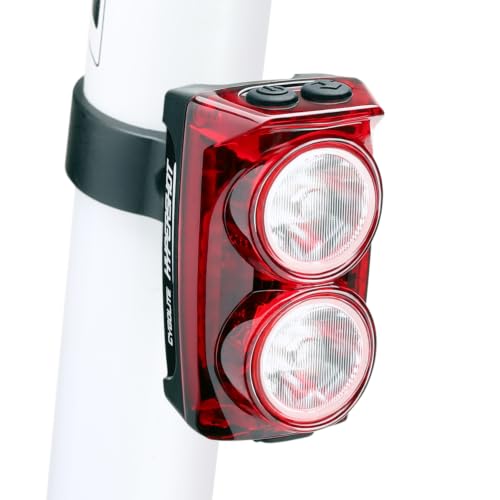
350 lumens is a serious amount of light for a taillight, enough to cut through the visual noise of a busy road both at night and in broad daylight. The adjustable flash speeds let you vary the pattern, and the Steady Pulse mode shines a steady beam to help motorists gauge their distance while overlapping pulses keep them alert at night. This light is built to endure road cycling conditions with a durable, water-resistant body and hard mounts, all while keeping a compact form and weighing only 75 grams.
The Cygolite Hypershot pumps out 350 lumens from a body that’s just an inch wide. That compact shape fits easily in a jersey pocket but won’t throw as much light to the sides as a wider taillight. Seven modes give you steady, pulse, and flash options for day and night, with adjustable flash speeds to catch drivers’ attention. It skips radar or brake detection, so you’re relying on the bright beam and custom patterns to stay visible on busy streets.
Product photos
Garmin Varia RearVue 820 Advanced Radar Tail Light
What We Like
- Brake light shows unique flash pattern
- Custom light patterns via smartphone app
- Same-speed tracking for following vehicles
Trade-offs
- Requires compatible Edge computer, smartwatch, or phone
- Same-speed tracking unavailable at slower speeds
- Peloton mode reduces intensity for group riding
Same-speed tracking alerts you to vehicles following at your pace or attempting to pass, so you stay aware of threats that might otherwise go unnoticed until they’re close. This feature can be especially reassuring on long, open-road rides where traffic moves fast and drivers may not expect a cyclist. Reviewers note that the system tracks vehicles even when they hang back, giving you time to react. Just keep in mind that tracking may be unavailable at slower speeds or when the radar is obstructed, so it works best on steady, moderate-to-fast paced rides.
The catch is that you need a compatible device, an Edge cycling computer, a Garmin smartwatch, or your phone with the Varia app, to see the radar display. Without one, you’re just getting a very bright tail light. Riders who prefer a simple standalone light may find the setup more involved than a basic taillight.
RAVEMEN TR250 Bike Rear Light
What We Like
- 280° beam angle for side visibility
- Smart brake light boosts to 100 lumens
- Auto sleep/wake for commuting stops
- USB-C rechargeable with low-power mode
Trade-offs
- 250 lumens is less than some daytime-focused lights
- No radar or vehicle detection feature
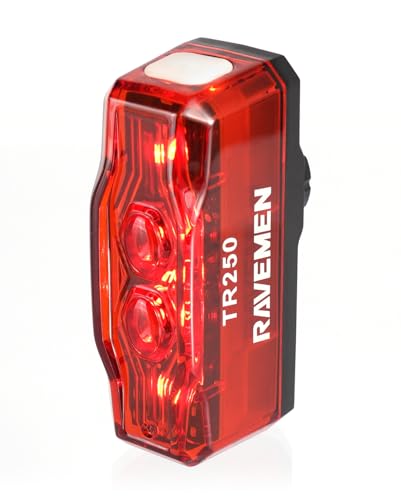
A 280° beam angle keeps you visible from all sides, which is especially useful in traffic where side visibility matters. With 250 lumens and a visibility range of over 1.1 miles, this light is noticeable from a distance. The smart brake detection boosts brightness to 100 lumens for two seconds when it senses sudden deceleration, alerting following traffic. An auto sleep and wake feature turns the light off after two minutes of stillness and reactivates with movement, which is convenient for stops.
The TR250 puts out up to 250 lumens, which is enough to be visible from over 1.1 miles away, so drivers get plenty of warning on most roads. Its 280-degree beam angle wraps light around the sides, meaning you’re seen from cross streets and driveways, not just straight behind. For riders who want that all-around visibility rather than just a brighter spot, this light covers the angles that matter in traffic.
LEZYNE Strip Drive Pro 400+ Rear Bike Light

What We Like
- 270-degree visibility from wide-angle optics
- IPX7 waterproof for heavy rain
- 80-hour runtime in Femto mode
- USB-C rechargeable with 7 light modes
Trade-offs
- USB-C cable not included in the box
- Silicone strap limits mount to seatposts only
- No brake sensor or radar feature
Ten LEDs pushing 400 lumens out through wide-angle optics give this rear light a 270-degree visibility zone that catches drivers from the side as well as from behind. That broad beam means you stay seen at intersections and on winding roads where a narrow tail light would vanish. With an IPX7 waterproof rating, it shrugs off downpours, and the 80-hour Femto mode lets you commute for weeks between charges.
You get a pure light here, not a smart light. There is no brake sensor or radar like the Garmin Varia RTL515 offers, so you won’t get alerts about approaching cars. And while the included silicone strap fits aero and round seatposts cleanly, you cannot swap it onto a saddle rail or rack. If side visibility and weather durability matter most, this is a strong pick. If you want collision warnings, look at the Garmin instead.
Product photos
CATEYE ViZ450 USB Rechargeable Safety Light

What We Like
- 450 lumens for daytime hyperflash
- Visible up to 2 km away
- Five LEDs with OptiCube lens technology
Trade-offs
- USB-C cable sold separately
- Only four modes limit night-time flexibility
- No brake or radar sensor
The 450-lumen output in Daytime Hyperflash mode makes this the brightest rear safety light CatEye has ever built, and that raw brightness translates directly into real-world visibility. Motorists can spot you from up to 2 km away, giving them extra seconds to react. Five LEDs paired with OptiCube lens technology and long rear beam projection increase the effective visibility range. The 0.1-pound body is light enough for any seatpost, and the Group Ride mode is designed for riding with others.
One catch is that the USB-C cable is sold separately, so you’ll need to supply your own. And while the four modes cover the basics, there is no brake sensor or radar integration like you get with the Garmin Varia RTL515. That means you won’t get automatic brightness spikes when you slow down or alerts for approaching vehicles. For riders who want a straightforward, bright daytime light that recharges via USB-C, the ViZ450 delivers. If you need smart features for night commuting, the Varia line offers more, but at a higher weight and cost.
NiteRider Vmax+ 180 Lumen Bike Rear Light
What We Like
- Daylight-visible 180-lumen output
- Compact 0.1-pound housing
- 7 modes with mode memory
- IP64 water and dust resistance
Trade-offs
- 180 lumens is less than 300-lumen alternatives
- No brake sensor or radar feature
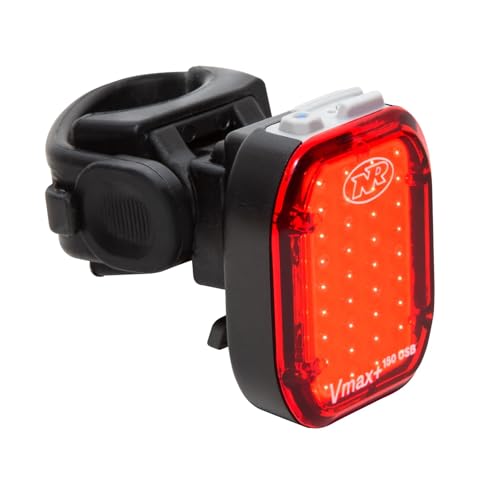
A 180-lumen COB LED in a 0.1-pound housing gives you a bright rear light that won’t weigh down your bike. Seven lighting modes let you pick the right pattern for your ride, and the mode memory turns it on in your last-used setting so you don’t have to cycle through options at a stop. The IP64 rating means it resists splashing water and dust, making it suitable for riding in wet or dusty conditions.
The compact size comes with a lower lumen count than some alternatives such as the Magicshine SEEMEE 300, which offers 300 lumens and includes a smart brake sensor. If you ride in heavy traffic or want automated braking alerts, the NiteRider does not have those features. But for cyclists who want a lightweight, straightforward taillight with multiple modes and weather resistance, this model delivers a practical option without extra complexity.
Product photos
BLITZU 120T 2-Pack Bike Tail Light
What We Like
- USB-C rechargeable for fast charging
- Up to 10 hours battery life
- Waterproof and weather-resistant
- Versatile mounting for bikes, helmets, bags
Trade-offs
- No daytime flash mode for high-sun visibility
- No brake detection feature for automatic brightness increase
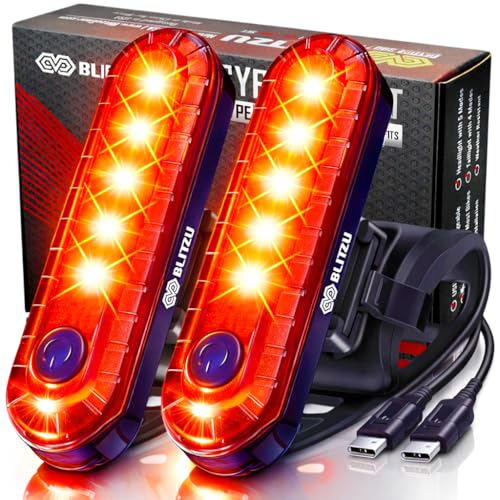
A 10-hour battery life on a single charge means you can ride several evenings before reaching for the USB-C cable. That rechargeable convenience saves money and cuts waste compared to disposable lights. The two-pack design makes it easy to outfit a second bike or share with a riding partner. For commuters, casual riders, or families who want reliable rear visibility without fussing over batteries, this set delivers straightforward safety at a budget-friendly value.
The BLITZU 120T doesn’t list a lumen output or offer a daytime flash mode, so riders who often bike in bright midday sun may find it less visible than a light designed for those conditions. Its waterproof build and flexible mounting options, including helmets and backpacks, make it practical for evening rides and wet weather. If your priority is an affordable, low-maintenance two-pack for dusk-to-dark riding, this light fits the bill.
Product photos
DARKBEAM Bike Tail Light with LED Display

What We Like
- Intelligent brake sensing boosts brightness
- Auto sleep after 30 seconds saves power
- Compact and weighs only 0.85 oz
Trade-offs
- No daytime-specific high-lumen mode
- Brake sensing only works in normal mode
But the brake sensing only activates in the default normal mode, so if you prefer a flash pattern for visibility, you lose that automatic boost. Compared to the Magicshine SEEMEE 300, which offers 5 night and daytime modes and 300 lumens, the DARKBEAM focuses more on battery status display and compact convenience than raw brightness. It’s a thoughtful pick for commuters and casual cyclists who value knowing their light’s power status over sheer lumens. Riders who spend most of their time in bright daylight might want a model with a dedicated high-visibility daytime flash.
Product photos
How We Evaluated Bicycle Rear Lights
We started by examining the technical specs of each light: lumen output, beam angle, battery capacity, charging method, and waterproof rating. These numbers tell the baseline story of how a light performs in real conditions. We then cross-referenced expert round-ups and analyzed common praise and complaints in owner feedback to understand durability and real-world usability.
The four criteria that mattered most were visibility range and angle, brightness for both day and night, battery life and charging convenience, and the presence of smart features like brake sensing or radar. A light that is bright but only visible from behind leaves you vulnerable at intersections. A long battery life is useless if the light is dim or the mount fails.
An evaluation based on research cannot replace actual road testing, but it does show which lights consistently work as advertised. We focused on patterns in user reports: do mounts hold up? Do claimed runtimes match real use? This helps separate marketing from performance.
What To Look For In Bicycle Rear Lights
Choosing the right rear light comes down to where you ride, when you ride, and how much awareness you need from your gear.
Look for a rear light that offers at least 200 lumens for daytime visibility, a beam angle of 180 degrees or wider for side safety, and USB-C charging for convenience. Smart features like brake sensing or radar add real safety value on busy roads.
Brightness and Visibility
Lumens measure raw output, but beam angle matters just as much. A 350-lumen light with a narrow beam is less safe than a 200-lumen light with 270-degree visibility. For daytime riding on open roads, aim for 300 lumens or more in a flash mode. For night commuting in the city, 100 to 200 lumens with wide side optics is often sufficient. Look for lights that list both lumen output and beam angle in degrees.
Battery Life and Charging
Battery life varies dramatically by mode. A light that lasts 80 hours in a low-power flashing mode may last only 2 hours at full brightness. USB-C charging is now standard on most quality lights and offers fast, convenient recharging. Check whether the cable is included, some manufacturers omit it. For commuters who ride daily, a light that charges in under three hours and holds enough charge for a week of short rides is ideal.
Smart Features and Mounting
Brake sensors that automatically boost brightness when you slow down add a layer of safety that a static light cannot provide. Radar systems like Garmin’s Varia give you real-time alerts about approaching vehicles. Consider what device you already carry, a phone or bike computer, since some features require pairing. Mounting options matter too: seatpost straps are simple, but some lights offer clip mounts for bags or helmets.
- Does the light have a brake sensor or radar integration?
- Is the beam angle wide enough for side visibility at intersections?
- Does the mount fit your seatpost diameter and allow quick removal?
- Is the battery life sufficient for your longest planned ride?
- Is the light waterproof to at least IPX4 for rain protection?
A rear light is only as good as its mounting system, test the fit before you rely on it.
Bicycle Rear Lights Compared
The table below compares the ten best bicycle rear lights across the key specs that matter most for safety and convenience.
| Product | Battery Runtime | Water Resistance | Modes |
|---|---|---|---|
| Magicshine SEEMEE 300 Bike Taillight | Up to 200 hours (ECO mode) | IPX6 | 5 Night & Daytime Modes |
| Garmin Varia RTL515 Rearview Radar Tail Light | 16 hours (Day Flash) | N/A | N/A |
| Cygolite Hypershot 350 Lumen Bike Tail Light | 2 to 200 hours | IP64 | 7 night & daytime modes |
| Garmin Varia RearVue 820 Advanced Radar Tail Light | Up to 24 hours (day flash) | N/A | N/A |
| RAVEMEN TR250 Bike Rear Light | N/A | IPX6 | 6 lighting modes |
| LEZYNE Strip Drive Pro 400+ Rear Bike Light | 80 hours (Femto mode) | IPX7 | Multiple Solid and Flash Modes |
| CATEYE ViZ450 USB Rechargeable Safety Light | N/A | N/A | Constant, Flashing, Group Ride, Daytime Hyperflash |
| NiteRider Vmax+ 180 Lumen Bike Rear Light | Up to 24 hours | IP64 | 7 |
| BLITZU 120T 2-Pack Bike Tail Light | Up to 10 hours | Waterproof | 4 Modes |
| DARKBEAM Bike Tail Light with LED Display | 14-38 hours | IP55 | 6 modes |
Frequently Asked Questions
How many lumens do I need for a bike tail light?
For daytime visibility on open roads, look for at least 200 lumens in a flash mode. For night riding in the city, 50 to 100 lumens with a wide beam angle is usually sufficient. Higher lumens are better for bright sunlight, but beam angle and flash pattern matter just as much.
What is the difference between a brake light and a radar tail light?
A brake light uses a sensor to detect deceleration and automatically increases brightness to signal you are slowing. A radar tail light, like the Garmin Varia RTL515, actively detects vehicles approaching from behind and alerts you via a paired device. Both improve safety, but radar adds proactive awareness.
Can I use a rear bike light during the day?
Yes, many modern rear lights have dedicated daytime flash modes that are bright enough to be visible in direct sunlight. Look for lights that list daytime visibility in meters or claim 300 lumens or more for daytime use. A light that works well at night may be invisible during the day.
How do I mount a rear light to my bike?
Most rear lights use a silicone or rubber strap that wraps around the seatpost. Some lights offer clip mounts for saddle bags, helmet straps, or panniers. Ensure the mount fits your seatpost diameter and is secure enough not to bounce loose on rough roads. Quick-release mounts are convenient for theft prevention.
What does IPX waterproof rating mean for bike lights?
IPX ratings indicate water resistance. IPX4 means the light can handle splashing rain from any direction. IPX6 can withstand heavy rain and powerful water jets. IPX7 means the light can be submerged in water up to one meter for 30 minutes. For year-round commuting, IPX6 or higher is recommended.
The Bottom Line
The Magicshine SEEMEE 300 is the best overall bicycle rear light for most riders because it combines automatic brake sensing, wide 260-degree visibility, and fast USB-C charging in a waterproof package. It is ideal for city commuters and night riders who want smart safety without needing a paired device.
If you ride on roads with vehicle traffic, the Garmin Varia RTL515 adds radar alerts that give you real-time awareness of cars approaching from behind. For riders on a budget, the BLITZU 120T 2-Pack offers reliable rechargeable lights for evening commutes and family rides without breaking the bank.
The single most important buying factor is visibility where it counts, choose a light with a wide beam angle and enough brightness for your typical riding conditions. A bright light that only shines straight back leaves you invisible at intersections.
