
10 Best Bike Saddles For Numbness in 2026
This post contains affiliate links. As an Amazon Associate, we earn from qualifying purchases.
For cyclists dealing with saddle numbness, the WTB Volt Bike Saddle is our Best Overall pick because its medium padding, deep contour, and Love Channel work together to relieve soft-tissue pressure without sacrificing support. We also recommend the ISM PN 3.1 Tri Saddle for those ready to try a noseless design, and the Selle Italia Sport Gel Flow for riders who want maximum gel-cushioned comfort.
Numbness while riding is often caused by prolonged pressure on the perineal area, which compresses nerves and restricts blood flow. Finding a saddle that shifts your weight onto your sit bones while relieving pressure in the front is the key to longer, more comfortable rides.
This guide is based on a careful analysis of manufacturer specifications, expert round-ups, and patterns in owner feedback across dozens of models. We focused on the features that directly address numbness, cutouts, channels, noseless profiles, and padding materials, to help you choose with confidence.
Top 10 Bike Saddles For Numbness in the Market
Certain content that appears on this site comes from Amazon. This content is provided "as is" and is subject to change or removal at any time.
The Best Bike Saddles For Numbness, Reviewed
WTB Volt Bike Saddle

What We Like
- Medium padding balances cushion and support
- Deeply contoured shape cradles the pelvis
- Three widths for sit bone fit
- Love Channel relieves soft tissue pressure
Trade-offs
- At 0.7 pounds, heavier than some road-focused saddles
- Steel rails add weight compared to titanium or carbon alternatives
A 10.4-inch length and 5.6-inch width with medium-thickness padding strike a careful balance between soft cushion and firm support, so you get enough squish for comfort without sinking in and losing pedaling efficiency. The deeply contoured shape cradles the pelvis, which helps riders with reduced flexibility stay stable, while the Love Channel and Comfort Zone cutout work together to relieve pressure on soft tissue and keep blood flowing. That combination makes this saddle a strong fit for anyone dealing with numbness on medium-distance rides, whether on a mountain bike, gravel bike, or e-bike.
The trade-off is that at 0.7 pounds with steel rails, it is not the lightest option if you are chasing every gram on a road bike. Compared to the Fizik Vento Antares R5 at 0.5 pounds, the Volt is heavier, but that extra weight comes with steel rails and a design suited for mixed-terrain use. The medium padding is a balanced choice for most riders, but if your rides regularly stretch past four hours, you might find yourself wishing for a bit more give. Still, for the vast majority of cyclists dealing with numbness, the Volt’s thoughtful relief features and three-width sizing make it a smart, versatile pick.
Product photos
ISM PN 3.1 Tri Saddle

What We Like
- Noseless design eliminates soft-tissue pressure
- 40-Series foam adds forgiving comfort
- Chromoly rails for durable build
- Generous thigh and hamstring clearance
Trade-offs
- Narrower width than many comfort saddles
- Short length limits adjustment options
At just 10 inches long and 4.7 inches wide, the ISM PN 3.1 Tri Saddle fully removes the traditional nose that presses on sensitive soft tissue, which directly targets the root cause of numbness for many cyclists. Its 40-Series foam padding gives a noticeably softer feel than firmer performance saddles, so you can stay comfortable during longer rides on gravel, road, or triathlon courses. This noseless shape also frees your thighs and hamstrings from rubbing, letting you shift positions without restriction. Riders who struggle with groin numbness or discomfort from standard saddles will find this design a straightforward solution.
The 4.7-inch width is narrower than many comfort-oriented seats, so it won’t cover as much area for riders who prefer a wider platform. Compared to the WTB Volt, which measures 5.6 inches across, the ISM PN 3.1 prioritizes pressure relief over broad cushioning. This saddle is a focused tool for those who know numbness is their main barrier, not a universal comfort seat.
Selle Italia Sport Gel Flow Road Bike Saddle

What We Like
- Gel layer for soft-tissue comfort
- Extra padding protects against skin inflammation
- Lightweight at only 0.5 pounds
Trade-offs
- Steel rails add weight compared to carbon alternatives
- Not for riders who prefer a noseless saddle design
The Flow anatomic cut-out and gel layer work together to provide comfort to soft-tissue areas, while increased padding helps protect against skin inflammation. This saddle is designed for riders who want a plush feel, especially those logging long distances or dealing with pressure sensitivity. It prioritizes comfort over a stiff, performance-oriented feel, making it a good fit for riders new to addressing discomfort or those who prefer a cushioned ride.
The extra padding and gel layer create a softer feel, which may not suit riders who prefer a firmer, more direct connection to the bike. Compared to the WTB Volt, which has a different padding approach, this Selle Italia offers a plusher ride but may not transfer power as efficiently for hard efforts. If your main goal is pressure relief and you don’t mind a cushier seat, this saddle delivers exactly that.
Product photos
Ergon SF Ergon Bicycle Saddle

What We Like
- Anatomical relief channel prevents numbness
- Orthopaedic Comfort Foam for pressure distribution
Trade-offs
- At 1.1 lb, heavier than many saddles
- Steel rails add weight over carbon options
At 1.1 pounds, this saddle is heavier than the 0.5-pound Fizik Vento Antares R5, so it’s better suited for touring or commuting than for weight-weenie road racing. That extra heft buys you a nylon composite shell and steel rails, which hold up under longer rides. If you value comfort over a light build, the Ergon SF’s padding and channel design aim to prevent numbness.
SZYNIC Extra Wide Bike Seat
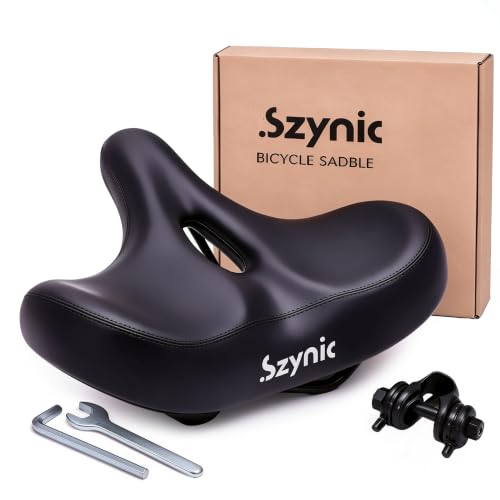
What We Like
- Dual shock absorbers smooth road vibrations
- Center cutout reduces perineal pressure
- Water-resistant PVC cover wipes clean easily
Trade-offs
- At 2.0 lb, noticeably heavier than performance saddles
- Short 10.6-inch length limits forward-leaning riding positions
A 10.6-inch wide platform makes this saddle one of the widest in this guide, offering generous support for riders who sit upright on cruisers, e-bikes, or stationary bikes. That broad footprint, paired with a center cutout and dual shock-absorbing balls, directly addresses the main cause of numbness: concentrated pressure on soft tissue. It suits riders who want maximum support without feeling the road through the seatbones.
Weighing two pounds, this saddle is more than double the heft of the Selle Italia Sport Gel Flow. The 13.0-inch length is typical for a comfort saddle, so it works fine for casual pedaling. Riders who lean forward aggressively on road or mountain bikes will find the extra width and cushioning less suited to performance riding. But for relaxed, upright riding where numbness is the main concern, this is a sensible pick.
Product photos
Fizik Vento Antares R5 Road Bike Saddle

What We Like
- Ergonomic cutout relieves pressure
- Double-density foam supports ischial bones
- Low profile aids power transfer
- Lightweight at 0.5 pounds
Trade-offs
- Performance focus limits all-day touring comfort
- Narrow 140mm width limits comfort for wider sit bones
The Fizik Vento Antares R5 uses an ergonomic cutout developed with pressure analysis and medical input to relieve pressure and improve blood flow, making it a strong choice for riders who want to reduce numbness without giving up performance. Its double-density foam is firmer under the sit bones and softer at the nose, so you get support where you need it and relief where pressure builds. This saddle suits cyclists who spend time in aggressive positions, attacking climbs or holding tempo on flats, and want a lightweight, responsive platform that keeps blood moving.
The trade-off comes in all-day comfort: the low-profile padding is firmer than a plush touring saddle, so riders who prefer a cushioned feel may find it lacking on multi-hour endurance rides. Compared to the Selle Italia Sport Gel Flow, which uses gel padding for a softer feel, the Antares R5 prioritizes power transfer and pressure relief over outright plushness. At 0.5 pounds, it is also lighter than many competitors. If your goal is to fight numbness while keeping every watt going into the pedals, this saddle delivers.
Product photos
ISM P1 Gravel Bike Saddle

What We Like
- Waterproof molded construction for rough rides
- Noseless design eliminates numbness
- Tapered edges for rough rides
Trade-offs
- At 2.0 lb, noticeably heavier than most saddles
- Short 10-inch length limits fore-aft adjustment room
At 2.0 pounds, this saddle is nearly three times heavier than the Selle Italia Sport Gel Flow (0.5 lb), so it’s not ideal for riders counting every gram on a road bike. The short 10-inch length also gives you less room to shift your position fore and aft compared to longer saddles like the WTB Volt (10.4 inches). If you prioritize vibration control and numbness prevention over light weight and prefer a fixed, pressure-free seating position, this saddle delivers on its core promise. It’s purpose-built for rough terrain where comfort matters more than ounces.
Product photos
Selle Italia Novus Boost Evo TM Superflow X-Cross Saddle

What We Like
- Superflow cut-out reduces numbness
- Integrated gel padding absorbs vibrations
- Manganese rails are durable for off-road use
Trade-offs
- Short 9.6-inch length limits fore-aft adjustment room
A wave-shaped shell supports the sit bones, which improves stability during long MTB and gravel rides. The Superflow cut-out reduces pressure and numbness, so pedaling remains comfortable and efficient over distance. Integrated gel padding absorbs vibrations from rough terrain, delivering a noticeably smoother ride. Manganese rails provide reliable strength for regular off-road use without adding unnecessary weight. This design prioritizes vibration damping and perineal relief, making it a focused choice for riders who value those qualities above all else.
Its compact 9.6-inch length gives it a shorter footprint than something like the WTB Volt (10.4 inches). That means less room to slide forward or back when climbing, and it may feel snug if you prefer a longer platform. But for gravel and mountain bikers who know their fit and want a saddle that actively fights numbness on rough ground, this Selle Italia delivers exactly what it promises.
Product photos
Fizik Tempo Aliante R3 Adaptive Saddle

What We Like
- 3D-printed padding for pressure relief
- Waved profile supports ischial bones
- Tailored zonal cushioning for long rides
- Slightly wider platform improves stability
Trade-offs
- At 0.7 lb, heavier than some road saddles
- 3D-printed padding is a premium material
The 3D-printed Adaptive padding is the standout feature here, engineered with multiple functional zones that each offer different mechanical properties for targeted support. That means the central area is softer to relieve pressure on soft tissue, while the edges stay firm enough to keep you stable during long days in the saddle. The waved profile with a slightly wider platform is designed to cradle your ischial bones, spreading weight evenly so numbness doesn’t creep in after hour three. This saddle is built for riders who spend all day on the bike and want a shape that supports a more upright endurance position without sacrificing pedaling efficiency.
At 0.7 pounds, this saddle is heavier than a performance-focused model like the Fizik Vento Antares R5, which weighs 0.5 pounds, so riders chasing speed over comfort may prefer the lighter option. The 155mm width and waved profile with a slightly wider platform are designed to support the ischial bones and improve stability for all-day rides. Compared to the Selle Italia Sport Gel Flow with traditional gel padding, this Fizik’s 3D-printed construction offers precisely tuned zones for pressure relief, making it a premium choice for endurance where numbness is the enemy.
Revere Performance Bike Saddle

What We Like
- Pressure-relief center channel reduces numbness
- Multi-stage foam absorbs vibration on long rides
- Low-profile shape minimizes friction while pedaling
- Waterproof cover resists weather and wear
Trade-offs
- Low-profile shape offers less padding for upright riding
A 255 x 143mm low-profile shape with a pressure-relief center channel directly addresses the main cause of numbness: excess pressure on sensitive areas. The multi-stage comfort foam layers absorb road vibration without adding bulk, so you keep an efficient pedal stroke on road, gravel, or trail. This saddle suits riders who want circulation-friendly support on longer rides without sacrificing performance or adding weight.
Its low-profile padding and performance-oriented shape may feel firm if you prefer a plush, gel-filled seat. Compared to the Selle Italia Sport Gel Flow Road Bike Saddle, which uses gel for a softer feel, the Revere focuses on channel-based relief and a more performance-oriented shape. It works best for riders who prioritize numbness prevention and pedaling efficiency over pillowy comfort.
Product photos
How We Evaluated Bike Saddles For Numbness
To build this list, we studied manufacturer specifications, consulted expert round-ups from cycling publications, and analyzed what owners consistently report about numbness relief. Our evaluation is research-based, not tested in a lab, so we rely on documented design features and real-world feedback patterns.
We prioritized four criteria. First, pressure-relief design, saddles with cutouts, channels, or noseless shapes that reduce perineal pressure. Second, padding type and density, because gel, foam, and 3D-printed materials each distribute weight differently. Third, width options and sit-bone support, since a saddle that matches your anatomy prevents sliding and pressure points. Fourth, overall weight and rail material, which affect how the saddle feels on longer rides and on different bike types.
A research-led approach has limits: individual anatomy varies widely, and what works for one rider may not work for another. We recommend using a sit-bone measurement tool and considering your riding position before making a final choice.
What To Look For In Bike Saddles For Numbness
The right saddle for numbness balances pressure relief with support for your riding style. Focus on the channel or cutout design, padding density, and overall shape before considering weight or aesthetics.
Look for a saddle with a pressure-relief channel, cutout, or noseless design to reduce perineal pressure. Match the width to your sit-bone spacing. Choose padding that cushions without bottoming out on long rides. Consider your riding position, upright cruisers need different saddles than aggressive road bikes.
Pressure Relief Design
The most effective saddles for numbness use a central channel, cutout, or noseless profile to redirect pressure away from soft tissue. A cutout relieves the perineal area directly, while a full channel spreads the load across the sit bones. Noseless designs, like the ISM PN 3.1 Tri Saddle, eliminate front contact entirely.
Padding Density and Material
Padding that is too soft can compress and create new pressure points, while padding that is too firm may not absorb enough vibration. Gel padding, as found on the Selle Italia Sport Gel Flow, offers plush comfort for sensitive riders. Multi-stage foam and 3D-printed padding, like on the Fizik Tempo Aliante R3 Adaptive, provide targeted support that adapts to your body over long miles.
Saddle Width and Sit-Bone Fit
A saddle that is too narrow will not support your sit bones, causing you to rock and press into soft tissue. A saddle that is too wide can chafe your inner thighs. Many saddles, including the WTB Volt, are available in multiple widths. Measure your sit bones at home or at a local bike shop to find the right fit.
- Measure your sit-bone width before buying.
- Check your riding position: aggressive, upright, or somewhere in between.
- Look for a pressure-relief feature that matches your anatomy.
- Read owner feedback about numbness relief for your specific bike type.
- Consider rail material if weight matters for your riding style.
A saddle that fits your sit bones and relieves pressure is worth more than the lightest or most expensive option.
Bike Saddles For Numbness Compared
The table below compares the ten saddles we selected, highlighting their pressure-relief features, weight, and best use case at a glance.
| Product | Length | Width | Weight | Padding |
|---|---|---|---|---|
| WTB Volt Bike Saddle | 10.4 inches | 5.6 inches | 0.7 Pounds | Medium thickness |
| ISM PN 3.1 Tri Saddle | 10.0 Inches | 4.7 Inches | 0.8 Pounds | 40-Series Foam |
| Selle Italia Sport Gel Flow Road Bike Saddle | 12.5 Inches | 7.0 inches | 0.5 Pounds | Gel layer + extra padding |
| Ergon SF Ergon Bicycle Saddle | 13.4 inches | 7.5 inches | 1.1 pounds | Orthopaedic Comfort Foam |
| SZYNIC Extra Wide Bike Seat | 13.0 inches | 10.6 inches | 2.0 Pounds | Foam |
| Fizik Vento Antares R5 Road Bike Saddle | 14.0 inches | 8.0 inches | 0.5 pounds | Double-density foam |
| ISM P1 Gravel Bike Saddle | 10.0 inches | 4.7 inches | 2.0 Pounds | 35-Series high-rebound air foam |
| Selle Italia Novus Boost Evo TM Superflow X-Cross Saddle | 9.6 inches | 5.7 inches | 0.6 pounds | Gel padding |
| Fizik Tempo Aliante R3 Adaptive Saddle | 14.0 inches | 7.0 Inches | 0.7 Pounds | 3D-printed Adaptive |
| Revere Performance Bike Saddle | N/A | N/A | N/A | Multi-Stage Comfort Foam |
Frequently Asked Questions
What causes numbness when riding a bike?
Numbness is usually caused by pressure on the perineal nerves and blood vessels between your sit bones. This happens when your saddle is too narrow, too firm, or shaped in a way that concentrates weight on soft tissue rather than your sit bones.
Is a noseless saddle better for numbness?
Many riders find noseless saddles like the ISM PN 3.1 Tri Saddle effective because they eliminate contact with the perineal area entirely. However, they require a different riding position and may not suit everyone, especially those who shift forward frequently on descents.
How wide should my bike saddle be?
Your saddle width should match your sit-bone spacing, which is typically between a narrow and wide range for most adults. You can measure this at home using cardboard and a hard surface, or visit a bike shop for a professional fitting.
Can gel padding help with saddle numbness?
Gel padding can help by providing a soft, forgiving layer that reduces pressure points. The Selle Italia Sport Gel Flow is a good example. However, gel is heavier than foam and may not be ideal for riders who want a firm, performance-oriented saddle.
Does a cutout saddle really prevent numbness?
A cutout or channel saddle can significantly reduce numbness by creating a gap where pressure would otherwise build. Models like the Fizik Vento Antares R5 and Revere Performance Saddle use this design effectively, but the cutout must be positioned correctly for your anatomy to work.
The Bottom Line
For most riders dealing with numbness, the WTB Volt Bike Saddle is the best starting point. Its medium padding, deep contour, and Love Channel provide balanced relief without going too far in any one direction, and the three width options make it easier to find your fit.
If you have tried traditional saddles without success, consider the ISM PN 3.1 Tri Saddle for a noseless approach, or the Selle Italia Sport Gel Flow if you prefer plush gel cushioning. Riders on upright cruisers or stationary bikes will appreciate the SZYNIC Extra Wide Bike Seat and its dual shock absorbers.
The single most important factor in choosing a saddle for numbness is fit. A saddle that matches your sit bones and riding position will always outperform one with more padding or a fancier cutout. Measure first, then choose the design that addresses your specific pressure points.
