
10 Best Bike Safety Lights in 2026
This post contains affiliate links. As an Amazon Associate, we earn from qualifying purchases.
The Magicshine SEEMEE 300 Bike Taillight earns our best overall spot for its 300-lumen dual-LED output and smart brake sensor that auto-activates on deceleration. That gives riders exceptional rear visibility in traffic. For those who prioritize a featherlight setup, the Cygolite Hotrod 120 Lumen Bike Tail Light is our pick for the best ultra lightweight tail light. The LEZYNE Strip Drive Pro 400+ Rear Bike Light wins for wide-angle visibility.
Every cyclist knows the feeling of being invisible to a turning driver, it’s the core problem bike safety lights solve. But not all lights are equal: daytime visibility requires different lumen output and flash patterns than night riding, and battery life, mounting options, and weather resistance matter just as much.
This guide is research-based, drawing on manufacturer specifications, expert round-ups, and patterns in owner feedback to identify the ten best bike safety lights on the market. We break down what to look for and who each pick serves best.
Top 10 Bike Safety Lights in the Market
Certain content that appears on this site comes from Amazon. This content is provided "as is" and is subject to change or removal at any time.
The Best Bike Safety Lights, Reviewed
Magicshine SEEMEE 300 Bike Taillight

What We Like
- 300-lumen dual-LED output for daytime visibility
- Smart brake sensor auto-activates on deceleration
- 260° visibility angle for side traffic awareness
- 200-hour ECO runtime on a single charge
Trade-offs
- At 0.3 lb, heavier than some compact taillights
- 2-hour charge time is longer than some rivals
The SEEMEE 300 puts out 300 lumens from two LEDs with different lens angles, and the manufacturer claims a max visibility distance of 3000 meters. That kind of reach means drivers approaching from behind have more time to spot you, especially on roads where traffic moves fast. The 260° beam spread also catches vehicles coming from the side, not just directly behind, which adds a layer of safety in intersections or multi-lane roads. An integrated motion sensor automatically activates a brighter output when you brake, giving following traffic a clear signal without any extra action on your part. For anyone who rides on roads with cars, this light is designed to make you as visible as possible.
The payoff for that long battery life and rugged aluminum housing is weight. At 0.3 pounds it’s noticeably heavier than a Cygolite Hotrod (0.1 lb), so minimalist riders or those who swap lights between bikes may prefer something lighter. The 2-hour USB-C charge time is also a bit slower than some competitors, though the 200-hour ECO runtime means you won’t be plugging it in often.
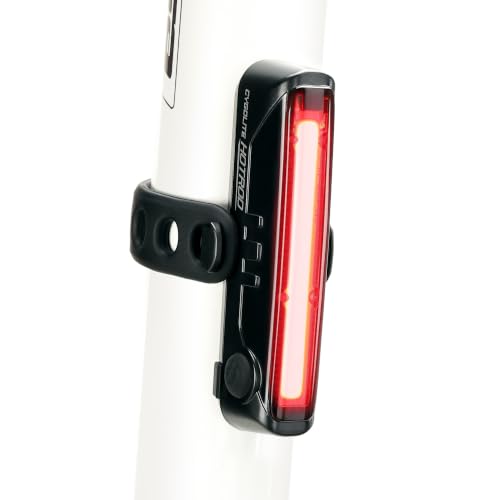
Cygolite Hotrod 120 Lumen Bike Tail Light
What We Like
- Ultra lightweight at only 29 grams
- 7 modes include daytime DayLightning Flash
- IP64 water resistant body
- USB rechargeable with low battery indicator
Trade-offs
- 120 lumens is less bright than 300+ lumen rivals
- No smart brake sensor feature
- Micro USB instead of USB-C in some competitors
Weighing just 29 grams and measuring 3.5 inches long, the Cygolite Hotrod 120 is one of the lighter tail lights available, making it easy to mount on a road bike seatpost without adding noticeable weight. Its seven modes include a DayLightning Flash designed for daytime visibility, and the IP64 water resistant body handles light rain. For riders who prioritize low weight and simple USB charging over maximum lumen output, this light offers a practical balance.
The trade-off is straightforward: 120 lumens is sufficient for city streets and dusk riding, but it won’t match the 300 or 400 lumen output of some rivals on darker roads. You also miss out on a brake sensor, which some riders appreciate for extra stopping visibility. If your rides stay mostly in well-lit areas or you want a lightweight safety light, the Hotrod is a reasonable choice. For those who need higher brightness or automated brake signaling, other models offer more power at the cost of extra weight.
Product photos
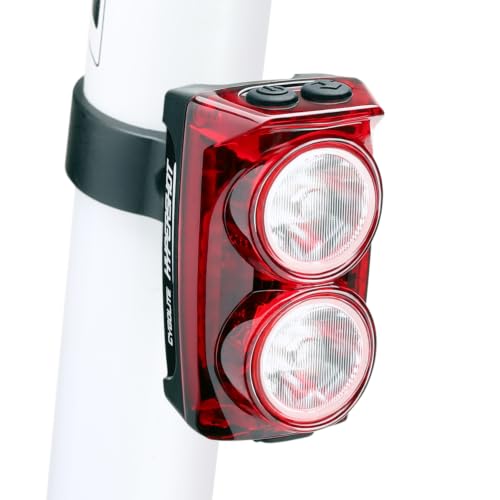
Cygolite Hypershot 350 Lumen Bike Tail Light
What We Like
- 350 lumens for day and night visibility
- Patent-pending adjustable flash speeds
- 7 modes including Daylighting Flash
- Compact at 2.0 inches tall
Trade-offs
- Only 2-hour runtime in brightest mode
- Mounts only fit standard seat posts and stays.
At 350 lumens, this tail light punches well above what you’d expect from something that weighs just 75 grams and tucks into a 2-inch package. That brightness, paired with a dedicated Daylighting Flash mode, is what makes it a standout for busy streets where you need drivers to spot you from blocks away, even under the midday sun. The patent-pending adjustable flash speeds let you fine-tune the pattern to grab attention without blinding the person behind you. The seven total modes give you options for everything from steady night riding to rapid pulsing in traffic. It’s built tough too, with an IP64 water-resistant body and a secure hard mount that keeps it planted on rough pavement.
The trade-off for that extreme brightness is runtime: on the brightest steady mode, you get only about two hours, so daily commuters will need to charge every night or two. The Cygolite weighs just 75 grams and measures 2.0 inches tall, making it compact and easy to mount. If your priority is maximum visibility in a tiny, durable package that you can dial in to your exact riding conditions, this is the one to grab.
Product photos
OLIGHT RN 120 C Bike Tail Light

What We Like
- Auto-brightness adjusts to ambient light
- Brake sensor lights up for 3 seconds
Trade-offs
- Sold as a single tail light, no front light included
- 120 lumens is lower than some competing models
A built-in motion sensor triggers a 120-lumen burst for three seconds when you brake. That means cars behind you see your deceleration instantly, not just a steady red glow. That smart brake feature, paired with a 260-degree visibility arc and an ambient light sensor that cranks brightness up in bright sun and dims at night, makes this tail light especially useful for urban commuters who want an extra layer of communication with drivers.
At 120 lumens, this light has a lower output compared to the Magicshine SEEMEE 300’s 300 lumens, which gives that light a stronger daytime punch. For most evening and city riding the RN 120 C’s brightness is plenty, but if you regularly ride in broad daylight on fast roads you might want more raw power. The ambient sensor automatically adjusts brightness according to ambient lighting conditions, which handles day and night shifts without manual intervention. For the rider who values smart automation over peak lumens, this is a well-thought-out rear light.
Product photos
LEZYNE Strip Drive Pro 400+ Rear Bike Light

What We Like
- 270-degree wide-angle visibility
- IPX7 waterproof construction
- 7 light modes including day flash
- 80-hour max runtime in Femto mode
Trade-offs
- USB-C cable not included
A 270-degree beam pattern means drivers see you from the side as well as straight behind, which matters most on busy roads or at intersections where a narrow light can disappear. The 400-lumen output and IPX7 waterproofing let you ride through rain or snow without worrying about a dead light halfway home. With seven modes including two day-flash settings, you can dial in the right brightness for dusk, dark, or broad daylight without fiddling through menus.
The LEZYNE Strip Drive Pro 400+ ships without a USB-C cable, so you’ll need to have one handy or buy it alongside the light. It also lacks a brake sensor, which the Magicshine SEEMEE 300 includes for extra visibility when you slow down. But for side-to-side coverage and weather toughness, the LEZYNE delivers a combination of brightness and build that suits riders who need a reliable rear light in varied conditions.
Product photos
LEZYNE Macro Drive 1400+ Front Bike Light

What We Like
- 1400-lumen output with Tri-Focus Optics
- IPX7 waterproof for all weather
- 300-hour max runtime in Femto mode
- CNC-machined aluminum with cooling fins
Trade-offs
- USB-C cable not included for charging
- 0.5-pound weight adds noticeable heft to handlebars
A 1400-lumen output backed by Tri-Focus Optics means this front light throws a bright center spot inside a wide beam. You can see far down a dark trail while still illuminating the edges of the road. That kind of power suits riders who tackle unlit paths or fast descents at night, where every bit of visibility counts. The IPX7 waterproofing and CNC-machined aluminum body with cooling fins tell you it is built to handle rain and long runs without dimming or overheating.
The trade-off is weight: at half a pound it is heavier than some rear lights listed in the guide, so minimalist riders may feel the extra mass on the handlebars. Also, the USB-C cable is sold separately, which means you will need to supply your own for recharging. For anyone who prioritizes raw illumination and durability over featherlight gear, this is the front light to grab.
Product photos
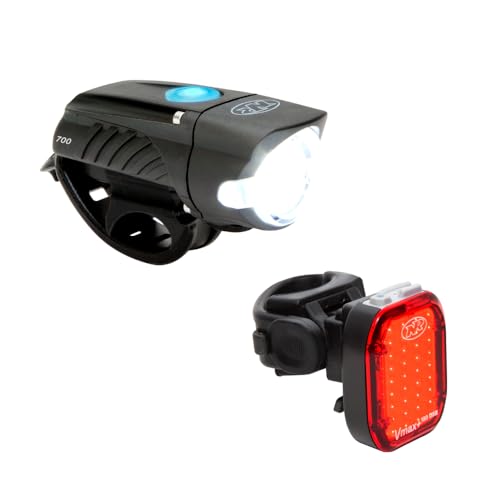
NiteRider Swift 700 + Vmax+ 180 Front & Rear Combo
What We Like
- 700-lumen front light for dark roads
- 12 total modes for day and night
- IP64 weather sealing for all conditions
- USB-C fast charging in 2 hours
Trade-offs
- At 0.5 lb total, heavier than some rear-only lights
- Front mount is rubber strap only, not hard mount
A 700-lumen headlight paired with a 180-lumen taillight means you can see the road ahead clearly on unlit rural routes while drivers spot you from behind in traffic. That front light is bright enough for night commuting on dark country roads, and the rear has seven flash modes to catch attention during daytime group rides. With IP64 weather sealing, rain or dust won’t shut you down, and the USB-C charging gets both lights full in about two hours. This set is for the rider who wants one reliable kit for both seeing and being seen, without juggling separate brands or chargers.
A complete front-and-rear lighting system offers 12 total modes between the two lights, so riders can dial in exactly the beam pattern they need for any condition. The built-in travel lock prevents accidental activation during transport or storage, which means no dead batteries when you pull the set out of a backpack or glove box. For anyone who wants a matched pair that handles everything from pre-dawn commutes to after-dark group rides, this combo covers all the bases without the hassle of mixing different brands and chargers.
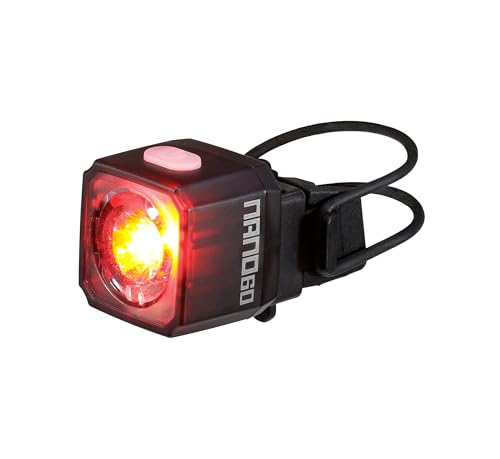
CATEYE NANO60 Bike Safety Light
What We Like
- USB-C rechargeable
- Six modes including Group Ride
- Daytime Hyperflash modes for increased visibility
Trade-offs
- USB-C cable not included
- Only 60 lumens for night use
- No brake sensor feature
For a budget-friendly taillight that still puts safety first, this is the one to grab if you ride mostly during the day or in well-lit areas. It is a reliable, compact light that won’t weigh down your saddle bag.
The trade-off here is that 60 lumens is modest compared to something like the Magicshine SEEMEE 300, which offers five times the output for darker roads. The Cateye also lacks a brake sensor, so it won’t automatically brighten when you slow down. But if your riding is mainly daytime commuting or casual group rides, the Group Ride mode is designed to keep you visible without blinding the person behind you. You do need to supply your own USB-C cable, but the three-hour recharge is quick enough to top off before your next spin.
Victoper High Lumens Bike Light Set
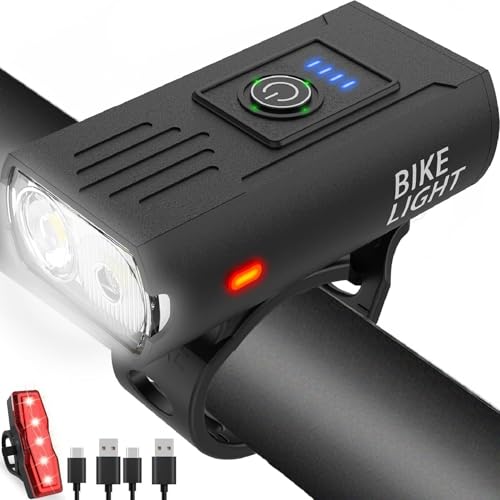
What We Like
- Aluminum alloy housing for durability
- IPX4 waterproof for heavy rain
- Lightweight and easy to install
Trade-offs
- No lumen rating listed for brightness comparison
- IPX4 is less water-resistant than IPX6 or IPX7 rivals
The aluminum alloy housing and IPX4 waterproof rating mean it can handle a sudden downpour or muddy trail without fuss. The whole kit weighs just 0.2 pounds, so you won’t feel it on your handlebars or seatpost. Riders who want a straightforward, durable combo that covers both ends of the bike without breaking the bank will find a lot to like here.
The biggest downside is the missing lumen spec, which makes it hard to compare raw brightness against lights like the Lezyne Strip Drive Pro 400+ or the Magicshine SEEMEE 300. The IPX4 rating is fine for rain, but if you regularly ride through deep puddles or store your bike outdoors, a light with IPX6 or IPX7 (like the Lezyne or Magicshine) offers more peace of mind. For most commuters and weekend riders, though, this Victoper set delivers solid visibility and versatility at a very accessible level.
DARKBEAM LED Display Tail Light

What We Like
- Real-time battery level display
- Intelligent brake sensing
- Auto sleep and wake on vibration
- USB-C rechargeable
Trade-offs
- No lumen rating listed for brightness comparison
- IP55 is less water-resistant than some IPX6 rivals
A digital display that shows your battery level in real time sets this tail light apart from anything else on the shelf. A quick glance tells you how much charge remains, so you can plan your ride without guessing. Six memory modes mean the light stays on your preferred setting even after you turn it off, and the brake sensor automatically increases brightness when it detects rapid braking. For commuters and night riders who want to stay informed without fussing with controls, this is a clever and practical design.
One downside is that the DARKBEAM does not publish a lumen output, so you cannot directly compare its brightness to the 300-lumen Magicshine SEEMEE 300 or the 120-lumen Cygolite Hotrod.
Product photos
How We Evaluated Bike Safety Lights
We evaluated bike safety lights by analyzing manufacturer specifications, studying expert round-ups from cycling publications, and identifying common praise and complaints in owner feedback. Our goal was to find lights that deliver real-world visibility, reliability, and value for different riding styles.
The three criteria that mattered most were lumen output and beam pattern for day and night visibility, battery life and charging convenience (USB-C versus Micro USB, runtime modes), and mounting security and weather resistance. A light that falls off on a bumpy road or dies mid-commute is worse than no light at all.
Instead, we cross-referenced specs against trusted industry benchmarks and aggregated owner experiences to identify consistent strengths and trade-offs.
What To Look For In Bike Safety Lights
Choosing a bike safety light means balancing brightness, battery life, and mounting practicality for your specific rides. Here’s what matters most.
Look for at least 200 lumens for daytime rear visibility, USB-C charging for convenience, and a wide beam angle (over 180°) so drivers see you from the side. Water resistance of IPX4 or higher ensures the light works in rain.
Lumen Output and Daytime Visibility
Lumens measure raw brightness, but how that brightness is focused matters more. A taillight with a focused beam can be more visible in daylight than a light with a diffuse beam. For daytime riding, look for lights with a dedicated “Daytime Flash” or “DayLightning” mode that pulses at a frequency proven to catch driver attention. For night riding, a steady beam or slower pulse is easier for drivers to track.
Battery Life and Charging
Battery life varies dramatically by mode. A light may claim 80 hours in an ultra-low “Femto” mode but only 2 hours at full brightness. Check the runtime on the mode you will actually use most. USB-C charging is becoming standard and offers faster, more convenient recharging than Micro USB. Some lights include the charging cable; many do not, so factor that into your purchase.
Mounting Security and Beam Angle
A light is only useful if it stays on the bike. Rubber strap mounts are common and work for most seat posts and handlebars, but hard mounts (bolts or brackets) are more secure on rough terrain. Beam angle is critical for side visibility: a 260° or 270° light is far safer in traffic than a 180° one, as it lets drivers approaching from an angle see you sooner.
- Check that the mount fits your seat post or handlebar diameter.
- Look for a light with at least IPX4 water resistance if you ride in rain.
- Consider a light with a brake sensor if you ride in stop-and-go traffic.
- Choose USB-C over Micro USB for faster, easier charging.
- Verify the runtime in the mode you will use most, not the maximum advertised runtime.
A good rule of thumb: the best bike safety light is the one you actually remember to charge and mount before every ride.
Bike Safety Lights Compared
The table below compares the ten bike safety lights across key specs, helping you see at a glance which model fits your riding needs.
| Product | Brightness | Waterproof | Charging |
|---|---|---|---|
| Magicshine SEEMEE 300 Bike Taillight | 300 lumens | IPX6 | USB-C |
| Cygolite Hotrod 120 Lumen Bike Tail Light | 120 lumens | IP64 | USB rechargeable |
| Cygolite Hypershot 350 Lumen Bike Tail Light | 350 lumens | IP64 | USB rechargeable |
| OLIGHT RN 120 C Bike Tail Light | 120 lumens | IPX6 | USB-C |
| LEZYNE Strip Drive Pro 400+ Rear Bike Light | 400 lumens | IPX7 | N/A |
| LEZYNE Macro Drive 1400+ Front Bike Light | 1400 lumens | IPX7 | USB-C |
| NiteRider Swift 700 + Vmax+ 180 Front & Rear Combo | 700 lumens | IP64 | USB-C |
| CATEYE NANO60 Bike Safety Light | 60 lumens | N/A | USB-C |
| Victoper High Lumens Bike Light Set | N/A | IPX4 | USB rechargeable |
| DARKBEAM LED Display Tail Light | N/A | IP55 | USB-C |
Frequently Asked Questions
How many lumens do I need for a bike tail light?
For daytime visibility, look for at least 200 lumens. For night riding on lit streets, fewer lumens is often sufficient, but unlit roads benefit from 300 lumens or more. A dedicated daytime flash mode can make a lower-lumen light more visible in bright sun.
What is the difference between IPX4 and IPX7 waterproof ratings?
IPX4 means the light is splash-proof and can handle rain from any direction. IPX7 means it can be submerged in up to one meter of water for 30 minutes. For commuting in heavy rain, IPX7 offers more peace of mind; for occasional drizzle, IPX4 is adequate.
Should I get a front light and rear light separately or as a set?
A complete set like the NiteRider Swift 700 + Vmax+ 180 ensures both lights are matched in brightness and battery life, and often costs less than buying separately. However, buying separately lets you choose the best rear light for your needs and pair it with a front light of your choice.
What does a brake sensor do on a bike tail light?
A brake sensor detects deceleration and automatically increases the light’s brightness or switches to a flashing pattern for a few seconds. This mimics a car’s brake light, giving drivers behind you extra warning that you are slowing down. It is especially useful in stop-and-go city traffic.
How long do bike light batteries typically last between charges?
Battery life varies widely by mode. In the brightest mode, most lights last a few hours. In eco or flashing modes, runtimes can exceed 50 hours. USB-C rechargeable lights typically take a few hours for a full charge. Always check the runtime for the mode you plan to use most.
The Bottom Line
The Magicshine SEEMEE 300 Bike Taillight is our best overall pick for riders who need maximum rear visibility and value smart features like auto-braking and ambient light adjustment. Its 300-lumen output and 260° visibility angle make it a strong choice for busy roads.
If you want a lighter setup for road cycling, the Cygolite Hotrod 120 Lumen Bike Tail Light is our ultra lightweight pick at just 29 grams. For budget-conscious riders, the CATEYE NANO60 Bike Safety Light offers USB-C charging and daytime flash modes at an affordable price point.
The single most important factor is visibility: choose a light bright enough for your riding conditions, with a beam angle wide enough for side traffic to see you. A light you charge and mount every ride is the one that keeps you safe.
