
9 Best Exercise Bike Trainers in 2026
This post contains affiliate links. As an Amazon Associate, we earn from qualifying purchases.
For cyclists who want to train indoors, the Wahoo KICKR CORE 2 Smart Trainer is the best overall pick because it combines 1800W resistance for hard efforts with fast Wi-Fi pairing and broad bike compatibility. The Garmin TacX NEO 3M offers the most realistic ride feel with integrated motion plates, while the Saris M2 is our top wheel-on smart trainer for those who prefer not to remove the rear wheel.
The challenge with indoor trainers is finding one that matches your training style, bike type, and space without breaking your budget or your patience with setup. Direct-drive trainers offer the best performance but cost more, while wheel-on and fluid options are simpler and more portable.
We evaluated these nine trainers based on specifications, manufacturer documentation, expert round-ups, and patterns in owner feedback. This guide gives you the key criteria to make a confident choice.
Top 9 Exercise Bike Trainers in the Market
Certain content that appears on this site comes from Amazon. This content is provided "as is" and is subject to change or removal at any time.
The Best Exercise Bike Trainers, Reviewed
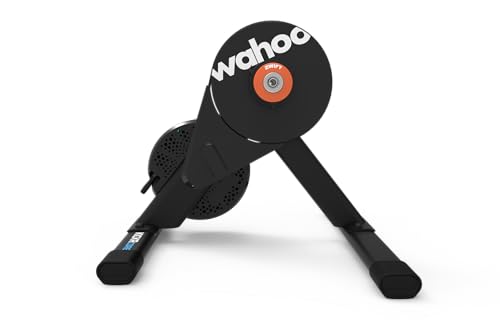
Wahoo KICKR CORE 2 Smart Trainer
What We Like
- 1800W resistance for hard efforts
- Wi-Fi for fast pairing and updates
- Fits 8 to 13 speed bikes
Trade-offs
- At 30 lb, less portable than fluid trainers
- At 30 lb, heavier than some other trainers
At 30 pounds, it is heavier than the Saris Fluid2 (7.3 lb), so it is less portable if you need to move it often. For riders who can dedicate a permanent spot, the stable ride and smooth resistance make it a trainer you will look forward to using every day.
Product photos
Garmin TacX NEO 3M Smart Trainer

What We Like
- Integrated motion plates for realistic ride feel
- Virtual flywheel simulates cobblestone and gravel
- Accurate power, speed, and cadence within 1%
- Stable during sprints up to 2200 watts
Trade-offs
- At 52 pounds, it's heavy to move around
- Large footprint needs dedicated floor space
- Requires compatible app for surface simulation
The built-in motion plates let the trainer sway side to side as you pedal, mimicking the natural movement of riding outdoors. That multidirectional freedom, paired with a virtual flywheel that can simulate cobblestone or gravel surfaces, makes indoor training feel far less static than a standard direct-drive unit. Riders who crave a lifelike experience, especially those training for varied terrain, will appreciate how the Tacx NEO 3M translates road texture into pedal feedback. Power accuracy within 1% and support for inclines up to 25% mean your structured workouts and virtual climbs translate directly to real-world gains.
The trade-off is size and heft: at 52 pounds and roughly two feet wide, this trainer demands a permanent spot rather than a quick setup and takedown. Compared to the lighter Wahoo KICKR CORE 2, the NEO 3M is noticeably harder to move between rooms or store away after a ride. But if you have the space and your priority is the most immersive, road-like feel you can get from a smart trainer, the motion plates and surface simulation make that weight worthwhile. It’s a premium tool for dedicated riders who want their indoor miles to mirror the road.
Saris M2 Smart Indoor Trainer

What We Like
- Wheel-on design, no disassembly needed
- Electromagnetic resistance for consistent workouts
- Zwift certified with dual connectivity
- Includes one month Rouvy subscription
Trade-offs
- Weighs 20 pounds, which is heavier than some wheel-on trainers
- Noisy at 69 decibels during use
The electromagnetic resistance with +/- 5% accuracy means every interval and recovery is repeatable, so you can trust your training data session after session. This wheel-on trainer suits riders who want smart features without the hassle of removing their rear wheel, just clamp it on and connect via ANT+ or Bluetooth to Zwift or other apps. The included one-month Rouvy subscription gets you started with virtual routes right away, making it a practical entry into structured indoor riding.
At 69 decibels, it’s not silent, you’ll hear the tire against the roller at higher speeds, which is a trade-off for the convenience of a wheel-on design. For riders who value quick installation and app connectivity over absolute realism, this is a capable and honest performer.
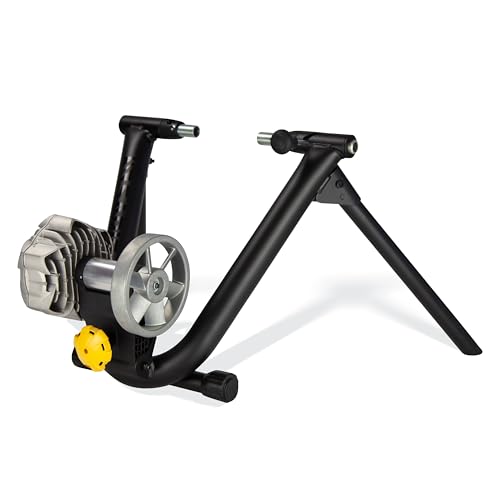
Saris Fluid2 Indoor Bike Trainer
What We Like
- Weighs only 7.3 pounds
- Fluid resistance for smooth feel
- Works with road and mountain bikes
- Compatible with Zwift app
Trade-offs
- No smart features or auto-resistance
- Fixed resistance curve limits workout variety
At just 7.3 pounds, the Saris Fluid2 is one of the lightest trainers you can buy, making it easy to move from closet to bike and back again. That portability is a real advantage if you don’t have a permanent training setup or need to take it on trips. It uses fluid resistance to deliver a smooth, road-like feel, and it’s compatible with both road and mountain bikes, so it fits a range of riders. The Zwift app compatibility means you can still join virtual rides, even without a smart trainer.
The trade-off for that light weight is that this is a classic fluid trainer, not a smart one. There’s no automatic resistance adjustment based on terrain or power output, so you’ll shift gears manually to change effort. It’s a straightforward, reliable choice for riders who value simplicity and easy storage over high-tech features.
Sportneer Magnetic Indoor Trainer

What We Like
- 6-level magnetic resistance with remote control
- Wide bike compatibility with quick-release skewer
- Quiet magnetic wheel design for smooth ride
- Stable base with 5 adjustable anti-slip feet
Trade-offs
- No smart connectivity for app-based training
- Resistance adjusted manually, not automatically
- Noise depends on tire tread and material
Six levels of magnetic resistance and a bar-mounted remote let you dial in effort from flat to climb without getting off the bike, making this a straightforward way to build endurance at home. It fits most road and mountain bikes with 26-28″ or 700C wheels, and the quick-release lever means you can swap from trainer to outdoor ride in seconds. The wide base and five adjustable rubber feet keep things planted on uneven floors, so you can push hard without wobble. For someone who wants a reliable, no-fuss indoor trainer that doesn’t break the budget, this setup delivers the essentials without extra complexity.
If you don’t need smart features like automatic resistance changes or Zwift integration, you adjust the resistance manually using the bar-mounted remote control. Compared to the Saris M2 Smart Indoor Trainer, which offers app-controlled resistance, the Sportneer is lighter at 19.3 pounds, making it easier to move and store. For manual workout control without virtual gradients, this magnetic trainer provides a stable, quiet ride, just pair it with slick tires for the quietest experience.
Product photos
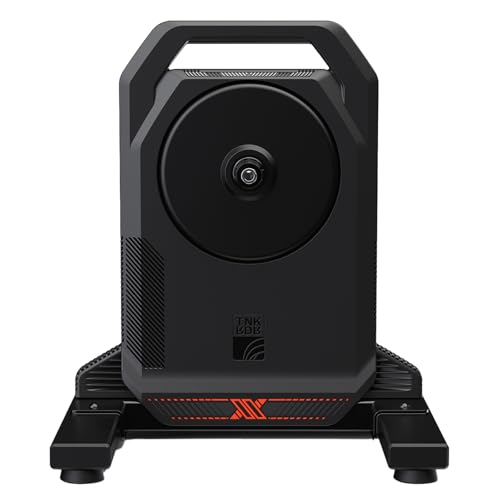
ThinkRider XXPRO Smart Trainer
What We Like
- Self-powered, no power adapter needed
- Downhill simulation for realistic riding
- 2500W max power handles intense efforts
- Direct motor drive, no calibration required
Trade-offs
- No weight listed in specifications
- No included Zwift Cog or Click Shifter
A 2500W maximum power and 25% gradient simulation mean this trainer can replicate nearly any climb or sprint you’d face outdoors, without needing to plug it into a wall. The self-power generation capability makes setup as simple as mounting your bike and hopping on, which is especially handy if your training space lacks an outlet near your bike. This is a great fit for riders who want a smart trainer that feels independent and responsive, with direct motor drive delivering ±1% accuracy without the hassle of calibration.
The self-powered design means you don’t need to plug the trainer into a wall outlet, which simplifies setup if your training area lacks a nearby power source. However, a trainer like the Wahoo KICKR CORE 2 requires a power connection for its electronics, so the XXPRO offers more flexibility in placement. For most indoor workouts, the XXPRO’s downhill simulation and automatic resistance adjustments with apps like Zwift make it a versatile companion. If you value a cord-free setup and realistic road feel, this trainer brings a lot to the table without tying you to an outlet.
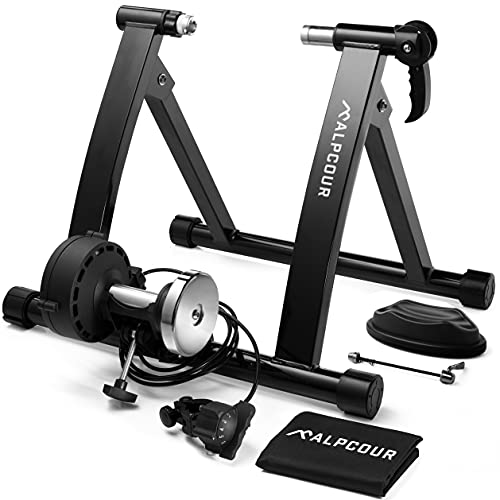
Alpcour Magnetic Bike Trainer Stand
What We Like
- Folds for easy storage and travel
- Includes carrying bag
- 6 resistance levels via cable controller
- Super quiet magnetic technology
Trade-offs
- No smart connectivity for apps like Zwift
- Fixed resistance, not automatically adjustable
A foldable stainless steel frame that packs into its own bag makes this one of the most travel-friendly trainers in the guide. The six resistance levels are controlled from the handlebar, so you can dial up a hill climb without hopping off the bike. It’s a straightforward, no-nonsense choice for anyone who wants to turn their road or mountain bike into a stationary setup quickly and then stow it away when the ride is over.
You won’t get app-controlled resistance or automatic gradient simulation like you would with a smart trainer that offers those features. That makes it less ideal for structured training programs or Zwift racing, but for simple, quiet indoor riding and easy portability, it does the job well. If you don’t need Bluetooth connectivity and just want a stable, quiet stand that folds up small, this is a practical pick.
Product photos
ELITE Direto XR Smart Trainer
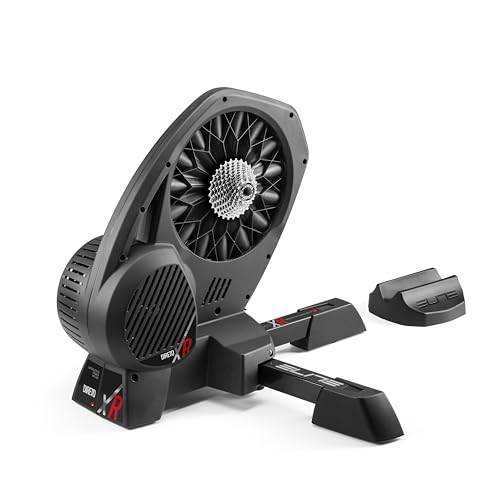
What We Like
- Optical Torque Sensor for ±1.5% accuracy
- Simulates climbs up to 24%
- Works with most road, gravel, mountain bikes
- Includes free 12-month My E-Training subscription
Trade-offs
- At 40.0 lb, it's heavy to move around
- Freehub supports Shimano/SRAM 9-11spd, Shimano 12spd road, SRAM NX/SX Eagle only
A built-in Optical Torque Sensor delivers power readings accurate to within ±1.5%, so your intervals and FTP tests reflect real effort, not guesswork. That precision, paired with the ability to simulate gradients up to 24%, makes this trainer a strong fit for riders who follow structured training plans or want to tackle virtual mountain stages without leaving the garage. It connects via ANT+ FE-C and Bluetooth to apps like Zwift and TrainerRoad, and ELITE includes a free 12-month subscription to their My E-Training platform for guided workouts.
At 40 pounds, the Direto XR is heavier than a comparable direct-drive trainer that weighs 30 pounds, so moving it between rooms or storing it after a ride takes more effort. The freehub comes ready for Shimano/SRAM 9-12 speed and SRAM Eagle cassettes, but if you run a different drivetrain, you will need to buy an adapter separately. For cyclists who value accuracy and realistic climbing resistance over easy portability, this trainer delivers where it counts.
Product photos
Tacx Flux S Smart Bike Trainer

What We Like
- Next-to-silent direct drive operation
- Measures power within 3% accuracy
- Works with Zwift and TacX apps
- Sturdy design for standing pedaling
Trade-offs
- At 50 lb, it's heavy to move around
- Only simulates inclines up to 10%
A 10% max gradient covers most real-world climbs, but the real draw here is the next-to-silent direct drive. You can ride hard without waking the house, and the sturdy frame lets you stand on the pedals for those tough efforts. Power accuracy within 3% means your training data is reliable, and compatibility with Zwift and TacX apps keeps your rides engaging. This trainer suits anyone who values a quiet, stable setup for focused indoor sessions.
At 50 pounds, it’s not something you’ll casually move between rooms. Compare that to a trainer that weighs 30 pounds, which is easier to stash away. The 10% gradient limit also means you won’t get the steep simulated climbs some riders want. If you need a lighter, more portable option or steeper grades, look elsewhere, but for a quiet, solid foundation that handles real riding effort, this Tacx delivers.
Product photos
How We Evaluated Exercise Bike Trainers
Our evaluation is research-based. We analyzed manufacturer specifications, expert reviews from cycling publications, and aggregated owner feedback to identify the strengths and trade-offs of each model. No product was tested in a lab; instead, we focused on what the data and experienced riders consistently report.
The four criteria that mattered most were resistance type and power capacity, connectivity and smart features, weight and portability, and overall ride feel. For indoor training, resistance determines how hard you can push, and smart connectivity enables structured workouts on apps like Zwift. Portability matters if you need to store or move the trainer between rides.
A research-led evaluation has limits. We cannot verify long-term durability or real-world noise levels beyond what owners report. We recommend reading recent owner reviews and checking compatibility with your specific bike before purchasing.
What To Look For In Exercise Bike Trainers
Choosing an indoor trainer comes down to matching your bike, your training goals, and your space. Here are the key factors to consider.
Focus on resistance type (direct-drive, wheel-on, or fluid), smart connectivity, power accuracy, and weight. Your choice depends on whether you prioritize realistic ride feel, portability, or budget.
Resistance Type and Power Capacity
Direct-drive trainers remove the rear wheel and connect directly to the cassette, offering the most realistic feel and high resistance levels. They typically handle enough power for sprint efforts. Wheel-on trainers press against the tire and are easier to set up but can wear tires and be noisier. Fluid trainers use a sealed fluid unit for a smooth, road-like feel but have a fixed resistance curve.
Smart Connectivity and App Compatibility
Smart trainers connect via ANT+, Bluetooth, or Wi-Fi to apps like Zwift, TrainerRoad, and Rouvy. They automatically adjust resistance based on virtual terrain or structured workouts. If you plan to follow training plans or ride virtual worlds, a smart trainer is essential. Non-smart trainers require manual resistance adjustment and offer no auto-resistance.
Weight, Portability, and Noise
Trainer weight ranges from around 7 pounds for a fluid trainer to over 50 pounds for a direct-drive model with motion plates. Heavier trainers are more stable during hard efforts but harder to move. Noise levels vary: direct-drive trainers are generally quietest, while wheel-on and magnetic trainers can produce tire or fan noise.
- Check your bike’s axle standard and cassette compatibility before buying a direct-drive trainer.
- Measure your floor space; some trainers need a dedicated area.
- Consider whether you need a carrying bag or foldable design for storage.
- Look for a stable base with adjustable feet for uneven floors.
A good rule of thumb: spend more on a direct-drive smart trainer if you train seriously, and choose a fluid or wheel-on trainer for casual indoor riding on a budget.
Exercise Bike Trainers Compared
The table below compares the key specifications of all nine trainers to help you see the differences at a glance.
| Product | Type | Max Gradient | Connectivity |
|---|---|---|---|
| Wahoo KICKR CORE 2 Smart Trainer | Direct Drive | N/A | Wi-Fi, ANT+, BLE |
| Garmin TacX NEO 3M Smart Trainer | Direct Drive | 25% | N/A |
| Saris M2 Smart Indoor Trainer | Wheel-on | N/A | ANT+ FE-C, Bluetooth |
| Saris Fluid2 Indoor Bike Trainer | Fluid resistance | N/A | N/A |
| Sportneer Magnetic Indoor Trainer | Magnetic | N/A | N/A |
| ThinkRider XXPRO Smart Trainer | Direct Motor Drive | 25% | ANT+ & BLE |
| Alpcour Magnetic Bike Trainer Stand | Magnetic | N/A | N/A |
| ELITE Direto XR Smart Trainer | Direct Drive | 24% | ANT+ FE-C and Bluetooth |
| Tacx Flux S Smart Bike Trainer | Direct Drive | 10% | N/A |
Frequently Asked Questions
What is the difference between a direct-drive and a wheel-on trainer?
A direct-drive trainer removes the rear wheel and connects directly to the bike’s cassette, offering more realistic ride feel, higher resistance, and quieter operation. A wheel-on trainer presses a roller against the rear tire, making setup faster but potentially wearing tires and creating more noise.
Can I use a smart trainer without a subscription app?
Yes, most smart trainers can be used in manual mode without any app. You will not get auto-resistance or structured workouts, but you can still ride and adjust resistance manually using the trainer’s controls or a remote.
How much power do I need from an indoor trainer?
Most recreational cyclists need a trainer that handles enough power for sprints. Serious racers and strong riders should look for a trainer that can match their maximum efforts without plateauing.
Are indoor trainers noisy?
Noise levels vary. Direct-drive trainers are generally the quietest, with some models described as next-to-silent. Wheel-on trainers produce tire noise, and magnetic trainers can have a fan or hum. Fluid trainers are usually quieter than magnetic but louder than direct-drive.
Do I need a special tire for a wheel-on trainer?
A dedicated trainer tire is recommended for wheel-on trainers. Regular road tires wear quickly under the constant pressure and heat of a trainer, and they can leave rubber residue on the roller. Trainer tires are smoother, quieter, and last much longer.
The Bottom Line
The Wahoo KICKR CORE 2 Smart Trainer is the best overall choice for most cyclists. It delivers powerful resistance, easy Wi-Fi connectivity, and broad bike compatibility in a package that balances performance and value. If you want the most realistic indoor ride feel with motion simulation, the Garmin TacX NEO 3M is worth paying more for.
For riders on a budget or those who need a lightweight, portable trainer, the Saris Fluid2 is an excellent fluid trainer at just over seven pounds. The Sportneer Magnetic Trainer offers manual resistance at an affordable price. The Alpcour Magnetic Trainer folds for easy storage and includes a carrying bag.
The single most important factor is matching the trainer to how you ride. If you train with power and apps, invest in a direct-drive smart trainer. If you just want to spin indoors occasionally, a wheel-on or fluid trainer will serve you well.
