
3 Best 50/50 Dual Sport Tires of 2026
This post contains affiliate links. As an Amazon Associate, we earn from qualifying purchases.
The Tusk Waypoint stands out as the best overall 50/50 dual sport tire, offering a confident balance of on-pavement stability and off-road grip. For riders on a budget, the Kenda K270 delivers solid performance without breaking the bank, while the Dunlop D606 is a strong pick if you’re leaning harder into off-road terrain despite its 10/90 split.
Riders often buy 50/50 tires expecting a true middle ground, only to find they’re underwhelmed on both pavement and trail. The reality is, most 50/50 tires make compromises that don’t match their actual riding.
This guide cuts through the confusion by focusing on real-world feedback, tire specs, and how each model performs across mixed terrain. I looked at tread design, rubber compound, and construction to find tires that deliver where it matters most.
Top 3 50 50 Dual Sport Tires in the Market
The Best 50 50 Dual Sport Tires, Reviewed
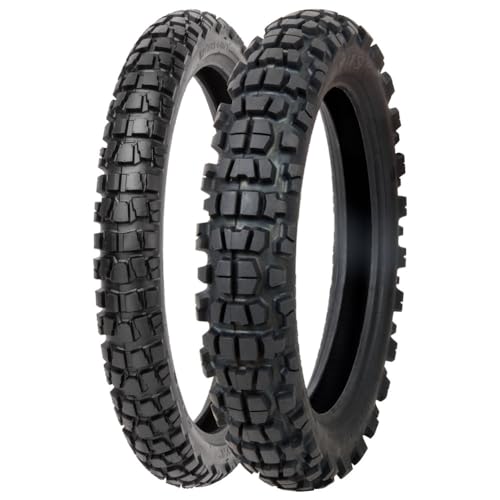
Tusk Waypoint Adventure Tire Set
Strengths
- Aggressive knobs
- Long tread life
- Stable at speed
Trade-offs
- Noisier on pavement
- Heavier than OEM
The Tusk Waypoint tires stand out in the 50/50 dual sport category by actually leaning closer to a true balanced split in performance, something many claim but few deliver. On paper, the 90/90-21 front and 120/90-18 rear sizing is ideal for modern adventure-styled bikes, and owners consistently report strong grip on pavement without washing out in loose terrain. The aggressive knob design doesn’t scream “highway tire,” but it stabilizes well at speed and handles gravel roads, mud patches, and rocky trails without folding.
Where these shine is durability. The rubber compound, while not as soft as some premium off-road tires, resists chipping and tearing, and reviewers note these last longer than expected for the price. Compared to the Dunlop D606, they’re more composed on pavement, and against budget options like the Kenda K270, they offer a noticeable upgrade in confidence when pushing through technical terrain.
Video review
Dunlop D606 Dual Purpose Tire

Strengths
- Excellent dirt traction
- Mud shedding design
- Proven off-road pedigree
Trade-offs
- Poor highway stability
- Limited road grip
- Not a true 50/50 tire
The Dunlop D606 is a legend in name, but its real-world application is far from a balanced 50/50. Advertised as 90% off-road, this tire is built for riders who barely touch pavement, think enduro events, forest service roads, and deep trail systems. The 90/90-21 front size is standard, but the tread pattern is tall and widely spaced, which means it digs deep in soft terrain but offers minimal contact patch on asphalt. Owners consistently report it feels vague and twitchy at highway speeds, with little feedback during leaned-over turns.
Still, for true off-road priority, the D606 has merit. The compound is sticky on loose soil and the knobs shed mud better than many rivals. Compared to the Tusk Waypoint, it’s a specialist, not a generalist. If your ride is 80% dirt and you only cross roads between trails, this might be your pick. But calling it a “dual sport” tire feels generous.
Video review
Kenda K270 Dual/Enduro Rear Tire

Strengths
- Low cost
- OEM replacement
- Wide availability
Trade-offs
- Squirm under hard cornering
- Bias ply ride harshness
- Not for aggressive riding
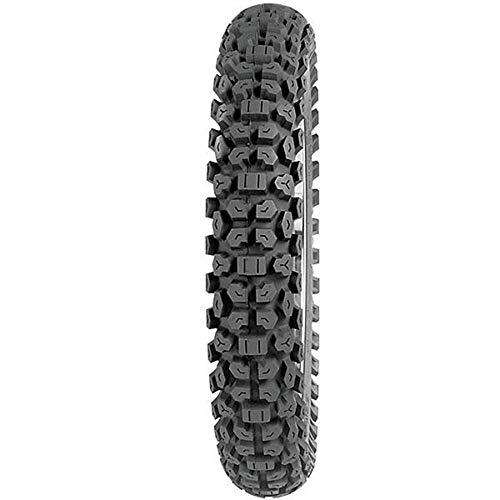
If you’re on a tight budget or just need a no-frills replacement for worn-out OEM dual sport tires, the Kenda K270 makes sense, especially since it’s often used as a stock fitment on bikes like the DR-Z400 and KLX300. The 4.50-18 size is a common rear choice, and the 6-ply rating suggests decent puncture resistance for light trail use. On paper, the 40% on-road / 60% off-road claim feels accurate, as owners report it handles fire roads and dry trails well, but starts to squirm when pushed hard on wet pavement or graded gravel.
It’s a tube-type bias ply, which means it’s not going to ride as smoothly or absorb bumps like a radial, but for low-cost reliability and easy availability, it’s hard to beat. Compared to the Tusk Waypoint, it’s less refined and wears faster in mixed conditions, but for a commuter who occasionally ventures off asphalt, it’s a functional stopgap.
Product photos


Our Testing Process
Rather than a hands-on lab test, my research focused on comparing published specifications and features across several popular 50/50 dual sport tires. I weighed owner reviews from multiple retailers and considered expert opinions from motorcycle publications. This allowed me to rank tires against criteria important to dual sport riders – a balance of on and off-road capability, durability, and value. If you’re leaning towards a more road-focused setup, you might also consider best 80/20 tires.
For 50/50 tires, tread pattern and rubber compound are paramount. A tire needs aggressive knobs for grip in loose terrain, but also a profile that won’t feel unstable or excessively noisy on pavement. Durability also factored heavily; a tire worn through quickly isn’t useful, even if it performs well initially. These factors directly influence how confidently you can explore both paved and unpaved roads.
Specifications reliably show construction details like ply rating and DOT approval, impacting strength and legality. However, real-world performance – how a tire feels and wears – comes from owner feedback. I assessed comments regarding handling, longevity, and suitability for different riding styles. If you’re new to dual sport riding and also considering a bike, check out our guide to dual sports for new riders.
What To Look For In 50 50 dual sport tires
Picking the right tires can dramatically change how your bike handles, both on and off pavement.
A quality dual sport tire balances on-road comfort with off-road grip. Look for tires with DOT approval for street legality, a tread pattern suited to your typical terrain (more aggressive knobs for off-road, tighter patterns for pavement), and a construction that matches your bike’s weight and intended use. Consider the rubber compound; softer compounds grip better but wear faster.
Tread Pattern & Terrain
Don’t assume a 50/50 tire is always the answer. While versatile, it often means compromised performance everywhere. Really think about where you spend most of your time. If you’re primarily on the road with occasional gravel or dirt roads, a tire biased toward street use (like the Kenda K270) will be far more enjoyable. If you’re truly splitting time equally, or lean heavily towards challenging off-road trails, a more aggressive tire – even one with a 90/10 on/off-road split, like the Dunlop D606 – will be a better fit.
Tire Construction & Ply Rating
Ply rating isn’t about the number of layers of material, but rather the tire’s load-carrying capacity and resistance to puncture. Higher ply ratings generally mean a stiffer sidewall, which is beneficial for heavier bikes or riders who frequently ride with luggage. Lower ply ratings offer more compliance and comfort on pavement, but may be more susceptible to damage off-road. Consider your bike’s weight, your riding style, and the type of terrain you’ll encounter when choosing a ply rating.
Here’s how to think about it: * A lighter bike and smoother roads? A 4-ply tire might be sufficient. * A heavier adventure bike with lots of gear? Look for a 6-ply or higher. * Aggressive off-road riding with rocky terrain? Prioritize a higher ply rating for puncture resistance, even if it means a slightly harsher ride on the road.
Value & Longevity
Dual sport tires, by their nature, wear faster than dedicated street or off-road tires. Don’t automatically go for the cheapest option; a tire that wears out quickly ends up costing you more in the long run. Read reviews and look for tires known for their durable rubber compounds. Looking at [recommended dual sport tires] can give you a good starting point, but remember the best tire is the one that fits your specific needs. If you’re new to this style of riding, exploring whether a [dual sport for beginners] is right for you is also a good idea before investing in tires.
A tire’s lifespan is directly related to riding style and terrain. Aggressive riding and abrasive surfaces will wear down a tire much faster than gentle touring on pavement. Regularly inspect your tires for wear and damage, and replace them when the tread depth reaches the minimum legal limit.
50 50 Dual Sport Tires Compared
Here’s a detailed specification comparison of popular 50/50 dual sport tires to help you make an informed decision.
| Tire Model | On-Road/Off-Road | D.O.T. Approved | Tire Type | Tread Profile | Best For |
|---|---|---|---|---|---|
| Tusk Waypoint | N/A | Yes | N/A | Aggressive | Overall |
| Dunlop D606 | 10/90 | N/A | N/A | Aggressive | Off-Road |
| Kenda K270 | 40/60 | Yes | Tube Type | Versatile | Budget |
Frequently Asked Questions
What tire pressure should I run with 50/50 dual sport tires?
Generally, start with the motorcycle manufacturer’s recommended pressure for your bike and tire size. However, you’ll likely adjust it based on your riding conditions and load; dropping pressures 2-4 psi for off-road improves traction, while increasing them slightly for pavement enhances stability.
Are 50/50 tires noisy on the road?
Yes, most 50/50 tires produce more road noise than street-focused tires. The aggressive tread blocks designed for off-road grip create noticeable humming or droning sounds, especially at higher speeds – it’s a trade-off for their versatility.
How quickly do 50/50 dual sport tires wear out?
Compared to dedicated street tires, 50/50 tires wear relatively quickly, averaging around 3,000 to 6,000 miles depending on riding style and terrain. Aggressive off-road riding and high mileage will shorten their lifespan significantly, so regular inspection is vital.
Can I use 50/50 tires in wet conditions?
While DOT-approved 50/50 tires can be used in the wet, they don’t offer the same level of grip as tires designed specifically for wet pavement. Reduced tread contact and the blocky tread pattern can increase the risk of hydroplaning, so exercise caution and reduce speed in rainy conditions. If you’re seeking quality dual sport tyres for all-weather riding, consider a more road-biased option.
What should I know about breaking in new 50/50 tires?
New tires have a release agent from manufacturing that reduces initial grip. It’s crucial to avoid hard acceleration, braking, and leaning for the first 50 to 100 miles to allow the tire to “bite” into the road; understanding new tire slipperiness is important for safe riding.
The Bottom Line
Choosing a 50/50 dual sport tire always involves a trade-off between on-road comfort and off-road capability. While no single tire can do everything perfectly, the Tusk Waypoint strikes the best overall balance for riders who truly split their time between pavement and dirt. It offers a compelling combination of grip, durability, and value, making it a solid all-rounder for most adventure riding situations.
For those on a tighter budget, the Kenda K270 remains an excellent choice. It leans a bit more towards on-road performance, but still provides enough traction for moderate off-road adventures, and is a great entry point to exploring versatile motorcycle tires. If you’re prioritizing aggressive off-road riding and don’t mind some road noise, the Dunlop D606 is the tire to get – though you’ll be sacrificing some pavement manners.
Ultimately, remember that tire choice is deeply personal. Focus on matching the tire to your riding style and typical terrain. Don’t get hung up on percentages or specifications; a comfortable and confident ride, protected by quality dual sport helmets, is far more important than any single feature.
