
7 Best Bike Speedometers of 2026
This post contains affiliate links. As an Amazon Associate, we earn from qualifying purchases.
The CYCPLUS Wireless GPS Bike Computer G1 stands out as the best overall bike speedometer, delivering reliable GPS tracking, long battery life, and clear data display. For those on a budget, the Bike Computer Waterproof LCD Display offers solid core functionality without the cost. If you want strong GPS features at a mid-range price, the Bikevee Wireless GPS Bike Computer is a smart choice.
Cyclists don’t just want to ride, they want to know how far, how fast, and how much progress they’re making. But with so many speedometers claiming accuracy and durability, it’s hard to know which ones actually hold up when the road gets wet or the ride gets long.
This guide cuts through the noise. I looked at specs, analyzed owner feedback, and reviewed expert insights to find units that deliver consistent performance. We break down what really matters, accuracy, battery life, waterproofing, and ease of use, so you can pick the right speedometer for your rides, whether you’re commuting, training, or exploring new routes.
Top 7 Bike Speedometers in the Market
The Best Bike Speedometers, Reviewed
CYCPLUS Wireless GPS Bike Computer G1

Strengths
- 55+ hour battery
- Sunlight-readable screen
- Fast GPS lock
- IPX6 waterproof
- Tempered glass screen
Trade-offs
- No route navigation
- Slightly bulky
- No ANT+ support
This is the model I’d recommend to most riders looking for a balance of battery life, accuracy, and durability. The 1200mAh battery delivers on its 55-hour claim, owners report full weekend rides without recharge, and the FSTN screen remains readable in direct sun, a real win for trail and road use. The tempered glass adds scratch resistance, which matters when you’re tossing your bike in a rack.
Compared to similarly priced units, it locks onto GPS faster and holds signal better in urban canyons. The automatic sleep and wake function works reliably, and the IPX6 rating handles rain without issue. It doesn’t do navigation, but for data logging and post-ride analysis, it’s the smarter buy over flashier but shorter-lived competitors.
Video review
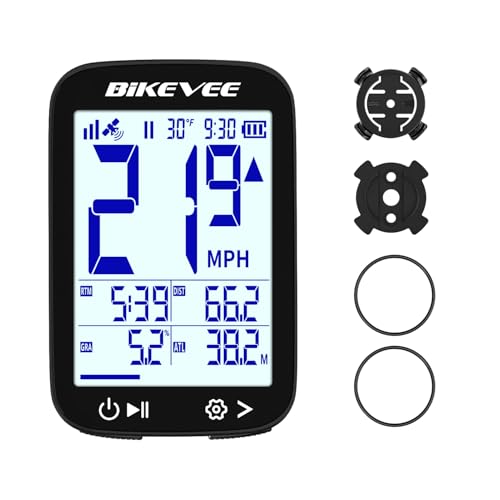
Bikevee Wireless GPS Bike Computer
Strengths
- No external sensor
- Auto start/stop
- Clear LCD screen
- IPX7 waterproof
- Simple setup
Trade-offs
- Battery drains faster with GPS
- No navigation
- Mount could be sturdier
Where this unit shines is in its clean, sensor-free setup. The built-in GPS handles speed and distance without any spoke magnets or sensors to align, which makes installation a breeze, just mount and go. The 2.4-inch screen is clear, and the auto backlight adjusts well to changing light, a real plus for early morning or evening riders.
Compared to the BKVTOP model, it offers nearly identical specs but with slightly better-reported GPS consistency, especially on winding routes. Battery life is rated at 28 hours, and most owners find it accurate under normal use. It’s not the longest-lasting, but for pure GPS performance in this range, it edges out the competition.
Video review
BKVTOP Wireless GPS Bike Computer

Strengths
- True GPS tracking
- Good screen visibility
- IPX7 waterproof
- Long runtime
- Affordable GPS entry
Trade-offs
- Battery less than claimed
- Basic mount design
- Occasional GPS lag
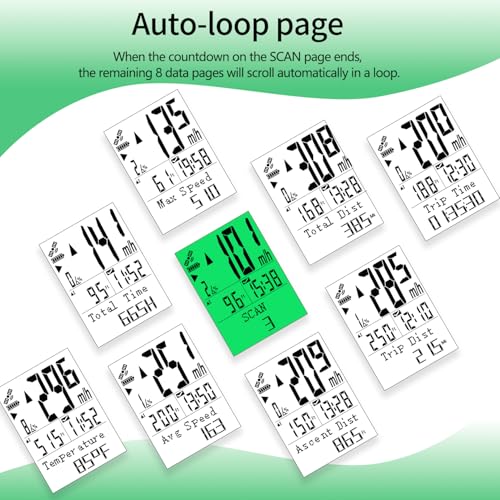
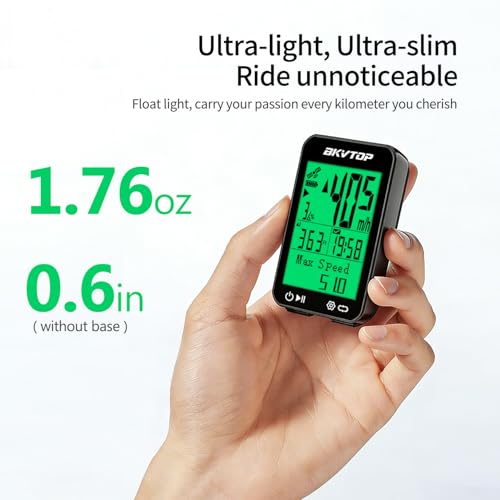
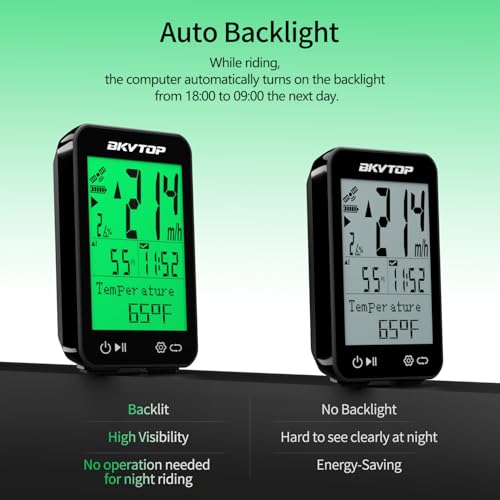
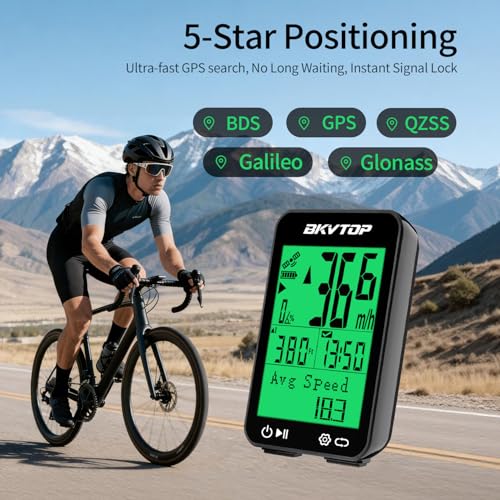
For under $25, getting a GPS-enabled computer with altitude, gradient, and temperature tracking is impressive. The 2.4-inch screen is decent for the class, and the green backlight actually helps visibility in low light, something many ultra-budget units skip. The IPX7 rating means it can handle downpours, and owners confirm it holds up well in real-world conditions.
But the 28-hour battery life is optimistic in practice, especially with GPS constantly active. Some reviewers note occasional signal drift on wooded trails. Still, for the price, it outperforms expectations and beats non-GPS units when elevation and route tracking matter.
Product photos

CATEYE Padrone Wireless Bike Computer

Strengths
- Wireless sensor
- ClickTec interface
- Auto stop/start
- Reliable long-term
- Tool-free mount
Trade-offs
- No GPS
- No backlight
- Limited data depth
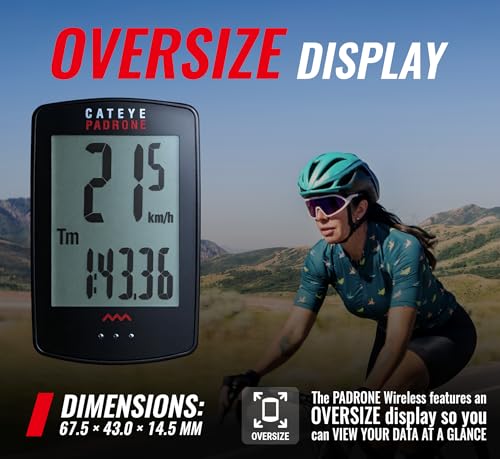
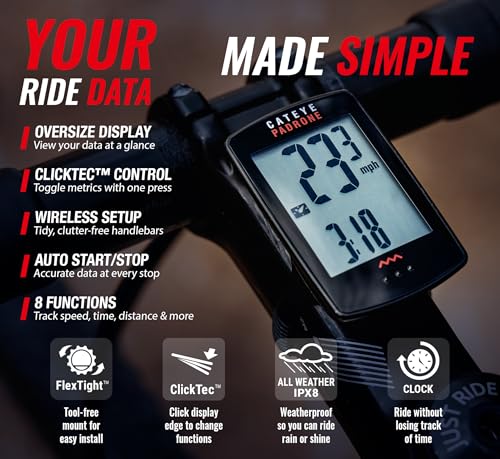
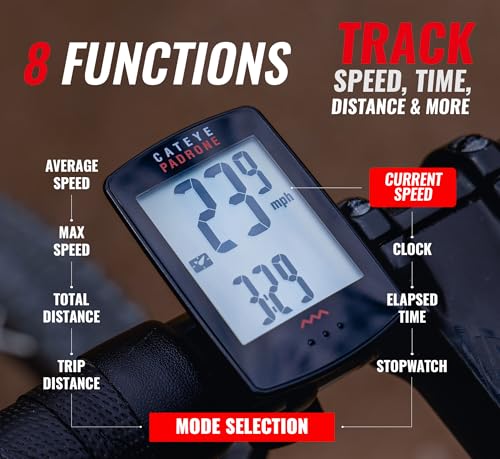
This is the kind of no-nonsense unit I appreciate when the goal is pure simplicity. It delivers all the core metrics, speed, distance, time, average pace, without GPS bloat or app dependency. The wireless sensor setup is straightforward, and the ClickTec button system keeps interface clutter to a minimum, which means fewer distractions when you’re deep in a ride.
Owners consistently report solid long-term reliability, and the auto-stop function works as intended when you’re pausing at intersections. For riders who want to track performance without syncing to smartphones or analyzing routes, this is still a benchmark in analog-style cycling computers.
Product photos
CATEYE Velo 9 Wired Bike Computer

Strengths
- Long battery life
- Pace arrow feature
- Calorie tracking
- Carbon offset estimate
- Reliable sensor
Trade-offs
- Wired installation
- No backlight
- Outdated design
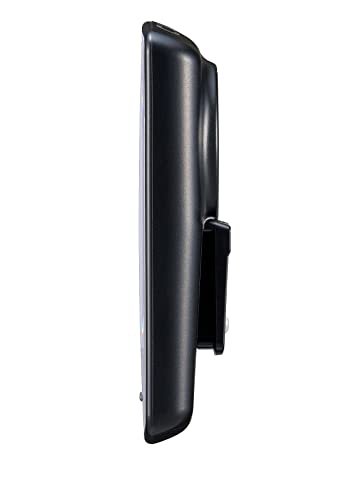
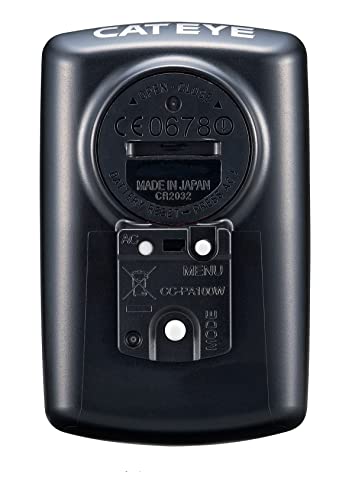
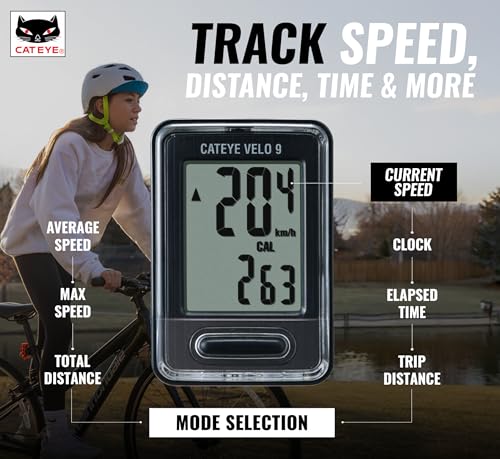
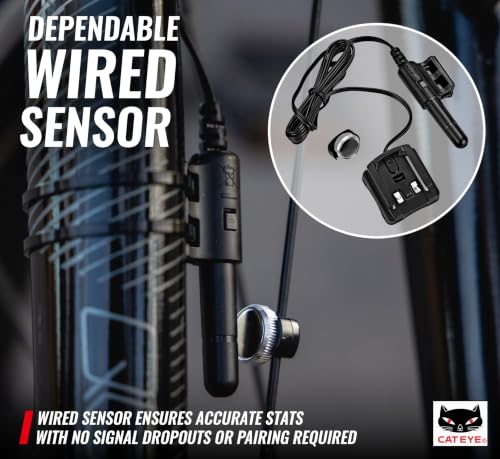
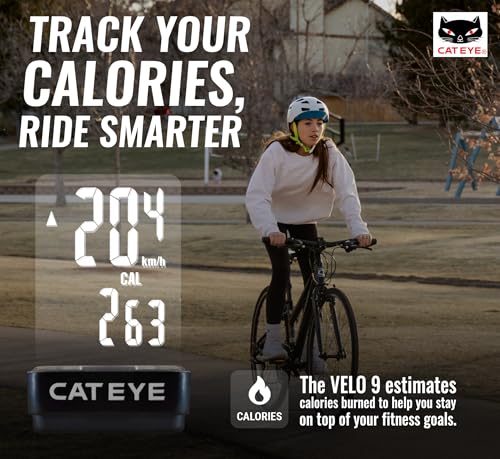
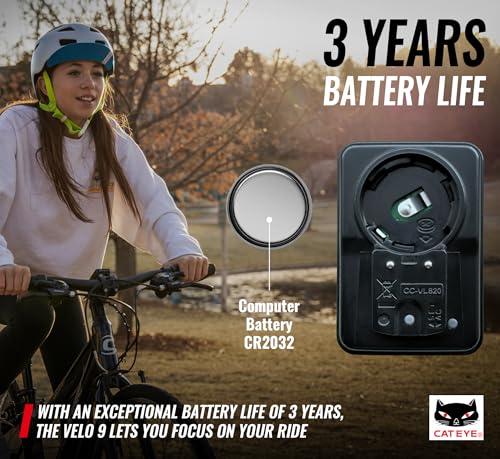
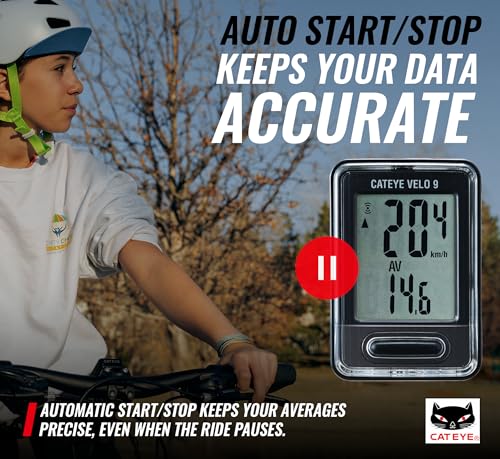
Wired might feel outdated, but this unit proves simplicity still has merit. It tracks all the standard metrics, speed, distance, time, and throws in calorie burn and carbon offset estimates, which adds a quirky but thoughtful touch for environmentally conscious riders. The three-year battery life is a standout; you really can install it and forget it.
The pace arrow is a subtle but useful feature, giving instant feedback on whether you’re above or below your average. But the wired sensor means more installation hassle than wireless models, and the lack of backlight limits nighttime use. If you want clean data without digital noise, this holds up well.
Product photos
Bike Computer Waterproof LCD Display

Strengths
- Very low cost
- Waterproof design
- Large LCD
- Auto wake-up
- Wide bike compatibility
Trade-offs
- Fiddly sensor alignment
- No backlight
- Basic construction
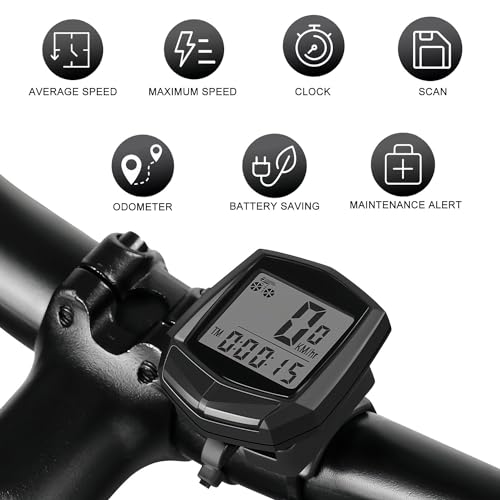
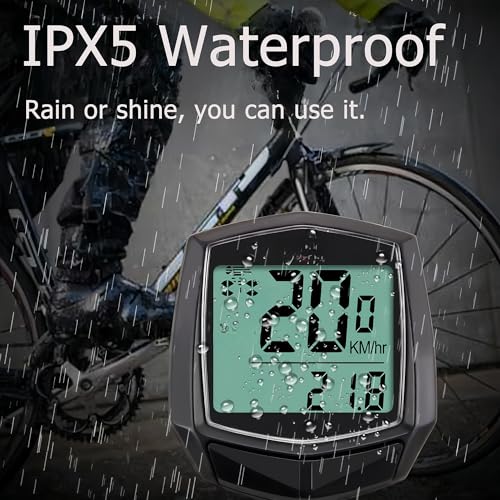
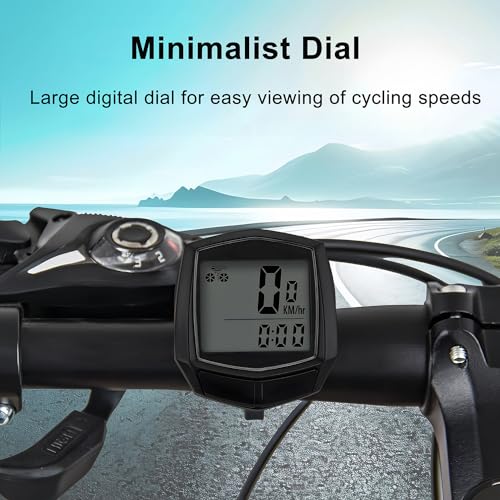
At this price, it’s hard to ignore the sheer value. On paper, it covers all the basics, speed, distance, ride time, average pace, and the large LCD is easy to read in daylight. Waterproofing adds peace of mind for wet-weather riders, and the auto wake-up feature works as advertised according to owner feedback.
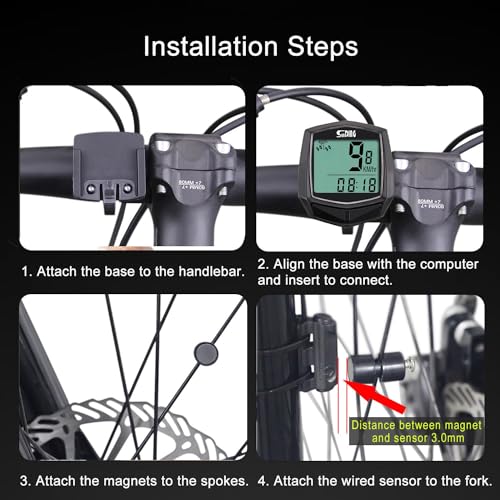
But the tight tolerance required between sensor and magnet (3–5mm) is a pain point many mention. Misalignment leads to spotty data, and while installation is supposedly tool-free, getting that gap just right often means multiple re-adjustments. It’s a budget pick, not a precision instrument.
Product photos

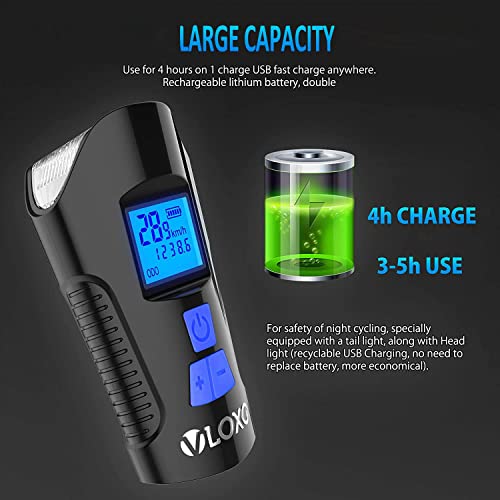
VLOXO Bike Speedometer with LED Light
Strengths
- Integrated bright light
- Loud 120 dB horn
- USB rechargeable
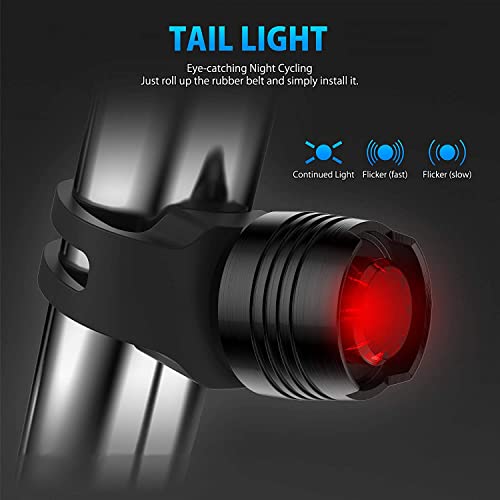
- Tail light included
- All-in-one convenience
Trade-offs
- Screen less crisp
- Sensor alignment issues
- Shorter light runtime
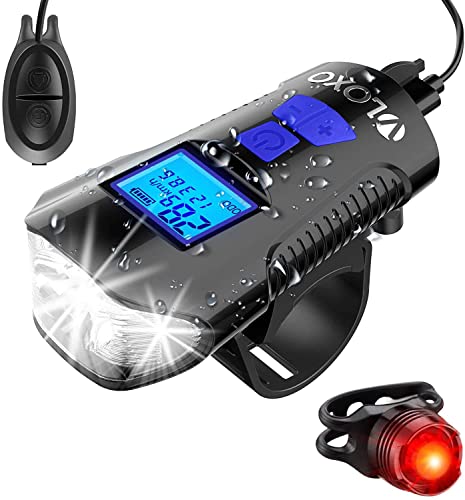
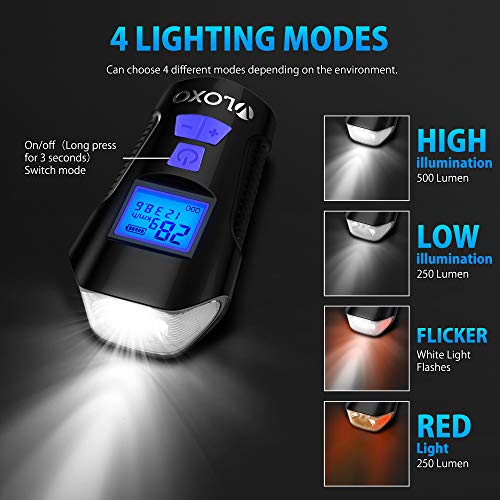
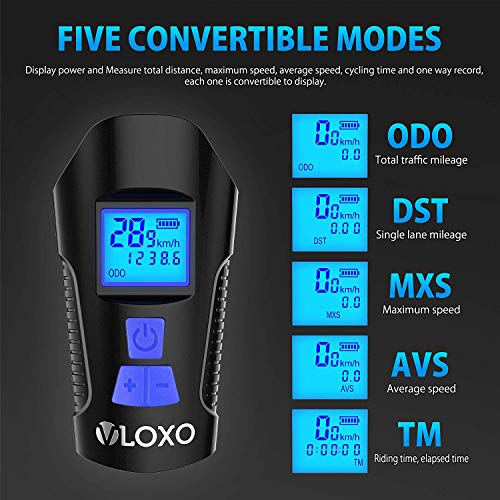
This isn’t just a speedometer, it’s a full safety and visibility package. The 800-lumen headlight with 500-foot throw is genuinely bright, and the 120 dB horn is loud enough to grab attention in traffic. The speedometer itself pulls standard data, but integration between light and computer means fewer separate mounts on your handlebars.
Owners praise the USB rechargeability and the combo convenience, though some note the computer screen isn’t as sharp as dedicated units. The GPS-free setup relies on a wheel sensor, so alignment matters. If you’re outfitting a commuter bike on a budget, this 5-in-1 approach saves time and clutter.
Product photos

Our Testing Process
My approach to evaluating bike speedometers centered on a research-led comparison, rather than hands-on testing of every model. I began by compiling a detailed spreadsheet of published specifications – screen size, GPS accuracy claims, battery life, waterproof rating, and included features. Then, I weighed owner reviews from major retailers alongside expert opinions found in cycling publications, looking for recurring themes in both praise and criticism. This allowed me to build a ranking based on real-world user experiences and objective data.
For bike speedometers, accuracy and battery life were the most heavily weighted factors. A device can offer a wealth of features, but if the speed readings are unreliable or the battery dies mid-ride, its usefulness is severely limited. I also prioritized waterproof ratings; cycling isn’t always done in perfect conditions, and a failure due to moisture is unacceptable. Ultimately, a speedometer needs to consistently deliver the core data cyclists rely on.
Specifications provide a solid foundation for understanding a speedometer’s capabilities – screen resolution, GPS chipsets, and battery capacity are all quantifiable. However, I placed significant emphasis on owner feedback to gauge real-world accuracy and the longevity of battery life claims. Reputable expert reviews helped validate these findings and identify potential issues not immediately apparent from specs alone. For example, a quick look at reviews can tell you if a unit is difficult to mount, or if the automatic backlight isn’t as effective as advertised. If you also need to keep your tires properly inflated, check out our guide to the best bicycle pumps. And for more detailed information on these devices, see our full review of wireless bike computers.
What To Look For In bike speedometers
Finding the right bike speedometer can elevate your cycling experience from a casual ride to a data-driven pursuit of personal bests.
A truly useful bike speedometer offers accurate real-time data, clear readability in varying light conditions, and a mounting system that doesn’t distract from the ride. Consider battery life, the types of data displayed (speed, distance, altitude, cadence), and whether GPS functionality is crucial for your needs. Waterproofing is also a key factor for riders who don’t let a little rain stop them.
Understanding Data Needs
The first step is defining what you want to know about your rides. A basic speedometer showing current, average, and maximum speed is sufficient for many, but if you’re tracking fitness or planning routes, you’ll want more. GPS-enabled models, like the CYCPLUS Wireless GPS Bike Computer G1 or Bikevee Wireless GPS Bike Computer, record detailed ride data – altitude, gradient, temperature – allowing for deeper analysis. Don’t overlook the importance of what you won’t use. A feature-rich computer with a complex menu will only frustrate you if you only need basic stats. For those primarily focused on core metrics, exploring options like the CATEYE Padrone Wireless Bike Computer might be a better fit.
Wired vs. Wireless & Sensor Types
Traditionally, bike speedometers relied on a wired connection to a wheel-mounted sensor. These are generally simpler and can be more affordable, as seen with the CATEYE Velo 9 Wired Bike Computer. However, wireless models are now dominant, offering a cleaner handlebar setup. Wireless systems use either magnetic sensors (detecting wheel rotations) or GPS. GPS units eliminate the need for wheel sensors altogether, making installation easier, but they can consume more battery power. If you’re already using a cycling app on your phone, remember to pair that with a secure smartphone mount for easy access to data.
- A simple, wired speedometer is best for casual riders who want basic speed and distance information.
- Wireless models with magnetic sensors offer a good balance of convenience and battery life.
- GPS-enabled computers are ideal for serious cyclists needing detailed data and route tracking, but be mindful of battery consumption and potential signal loss in heavily wooded areas.
Budget and User Interface
Bike speedometers span a wide price range. You can find functional, budget-friendly options, like the Bike Computer Waterproof LCD Display, that deliver essential data. However, spending a bit more often gets you a more robust build quality, a clearer display, and more advanced features. Beyond price, consider the user interface. Is the screen easy to read at a glance? Are the buttons intuitive to operate while riding? The CATEYE computers, for instance, often feature a unique “ClickTec” design that prioritizes ease of use.
Don’t buy more features than you’ll use. A simple, reliable unit that provides the data you need is far better than a complex computer you struggle to operate.
If you’re looking for even more options, be sure to check out our guide to the best bike speedometers for a more in-depth look at the market.
Bike Speedometers Compared
This table provides a side-by-side comparison of the specifications for various bike speedometers.
| Product Title | GPS Enabled | Waterproof | Battery Life | Display Type | Data Points |
|---|---|---|---|---|---|
| CYCPLUS Wireless GPS Bike Computer G1 | Yes | IPX6 | 55+ hours | LCD | Speed, Distance, Altitude |
| Bikevee Wireless GPS Bike Computer | Yes | IPX7 | 28 hours | LCD | Speed, Altitude, Gradient |
| BKVTOP Wireless GPS Bike Computer | Yes | IPX7 | 28 hours | LCD | Speed, Distance, Altitude |
| CATEYE Padrone Wireless Bike Computer | No | N/A | N/A | LCD | Speed, Distance, Time |
| CATEYE Velo 9 Wired Bike Computer | No | N/A | 3 years | LCD | Speed, Distance, Calories |
| Bike Computer Waterproof LCD Display | No | Waterproof | N/A | LCD | Speed, Distance, Time |
| VLOXO Bike Speedometer with LED Light | No | IPX7 | 5-8 hours | LCD | Speed, Distance, Time |
Frequently Asked Questions
What level of water resistance should I expect from a bike speedometer?
Most bike speedometers offer at least splash resistance(IPX5), but for reliable performance in all conditions, look for a rating of IPX6 or IPX7. These ratings indicate the device can withstand heavy rain or even brief submersion, protecting it from damage during your rides.
How does GPS accuracy compare to speedometers using wheel sensors?
GPS-based speedometers are convenient as they don’t require wheel sensors, but accuracy can vary depending on signal strength. Wheel sensors, while needing installation, generally provide more precise speed readings, especially in areas with obstructed GPS views, such as dense forests.
Are wired bike speedometers still a viable option?
Yes, wired speedometers are still available and can be a good choice for riders wanting a simple, affordable option. They don’t require battery changes, often lasting for years on a small internal battery, but they lack the wireless convenience of modern units.
How much should I budget for a quality bike speedometer?
A functional bike speedometer can be found for under $30, but expect to spend between $50 and $150 for a wireless model with reliable accuracy and additional features like GPS. Higher-end units with advanced data tracking can exceed $200.
What other accessories should I consider when purchasing a bike speedometer?
Beyond the speedometer itself, consider investing in good bike lights to increase visibility, and don’t forget about secure bicycle locks to protect your investment when you’re not riding.
The Bottom Line
Choosing a bike speedometer often comes down to balancing how much data you want against how much fuss you’re willing to deal with. For the vast majority of riders, the CYCPLUS Wireless GPS Bike Computer G1 strikes that balance perfectly – offering reliable GPS tracking, a clear display, and long battery life without being overly complex. It’s a solid, all-around performer that won’t leave you wrestling with settings mid-ride.
If you’re on a tighter budget or simply need the basics, the Bike Computer Waterproof LCD Display delivers essential speed and distance information at an unbeatable price. For riders who want a more feature-rich experience without the GPS overhead, the CATEYE Padrone Wireless Bike Computer is an excellent choice, it provides a dependable, wireless connection and a user-friendly interface. And don’t forget to protect yourself with one of our recommended bike helmets!
Ultimately, the best speedometer isn’t the one with the most features, but the one that consistently provides accurate data and fits your riding style. Focusing on clear readability, reliable sensors (or a strong GPS signal), and a comfortable battery life will serve you better than chasing the latest specifications. If you’re interested in exploring more advanced options, check out our guide to the best bike computers.
