
10 Best 12v To 110v Inverters For Cars in 2026
This post contains affiliate links. As an Amazon Associate, we earn from qualifying purchases.
For most drivers, the BESTEK 300W Pure Sine Wave Inverter is the best overall pick because it delivers clean, safe power for sensitive electronics like laptops and CPAP machines in a compact, lightweight package. For those needing more wattage, the BESTEK 500W Pure Sine Wave Inverter offers higher capacity with battery clamps, while the FOVAL 150W is a solid budget-friendly choice for simple phone charging.
The real challenge with car inverters isn’t finding one that works, it’s matching the power output to your actual devices without overloading your vehicle’s electrical system. Many drivers buy an inverter that is either too weak for their needs or too powerful for their car’s cigarette lighter circuit.
This guide is based on manufacturer specifications, owner feedback patterns, and expert round-ups. We break down the key specs, wattage, output type, and safety features, to help you find the right inverter for your car, truck, or SUV.
Top 10 12V To 110V Inverters For Cars in the Market
Certain content that appears on this site comes from Amazon. This content is provided "as is" and is subject to change or removal at any time.
The Best 12V To 110V Inverters For Cars, Reviewed
BESTEK 300W Pure Sine Wave Inverter
What We Like
- Pure sine wave output
- Dual USB fast charging (4.8A)
- Comprehensive protection built-in
- Compact and lightweight design
Trade-offs
- 300W limits high-draw tools or appliances
- Cigarette lighter plug only, no hardwire kit
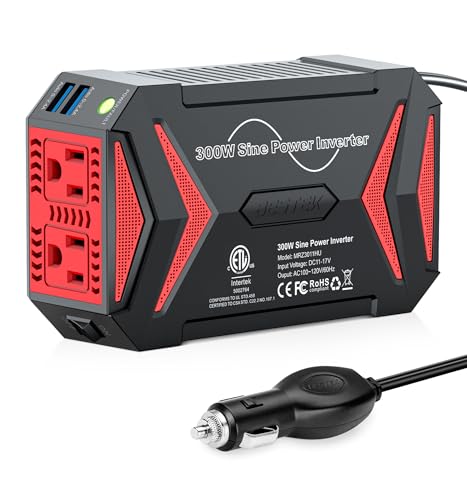
A 300W continuous output with pure sine wave means this inverter can safely run sensitive electronics like a laptop, CPAP machine, or camera charger without risking damage from dirty power. That’s the key reason it fits so well for everyday car use. You get AC power from your 12V socket, plus two USB ports that detect your devices to deliver their fastest charge speed, up to 4.8 amps combined. It’s a compact, lightweight unit that can keep devices powered during travel or short stops.
The trade-off is that 300W won’t run a power tool, mini fridge, or anything that pulls much more than a laptop and a phone at once.
Product photos
BESTEK 500W Pure Sine Wave Inverter
What We Like
- Pure sine wave for sensitive electronics
- Includes battery clamps and lighter plug
- Multiple protections: over-voltage, short circuit
Trade-offs
- Cigarette lighter limited to 150W
- Fan runs even under no load when powered
- 500W requires direct battery connection via clamps
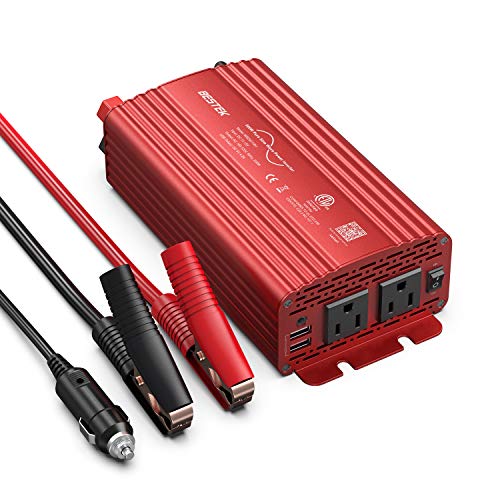
A 500-watt pure sine wave inverter delivers a smooth AC waveform that matches household power, so it works well with sensitive electronics like radios and precision equipment. The unit includes protection against over-voltage, under-voltage, overheat, overload, short circuit, and reverse polarity, which helps safeguard your gear when you’re away from a wall outlet. For anyone needing clean power for off-grid use, this inverter provides that capability.
You cannot draw the full 500 watts from a cigarette lighter socket. Most car circuits top out around 150 watts, so you’ll need to use the included battery clamps for high-draw devices.
Product photos
Cobra PRO 1500W Professional Inverter
What We Like
- 1500W continuous / 3000W peak power
- 4 GFCI protected grounded AC outlets
- Remote controller with voltage display
- Pentagon Protection safety system
Trade-offs
- Modified sine wave, not for sensitive electronics
- Weighs 3.9 lb, heavier than small inverters
- Requires direct battery connection, no plug
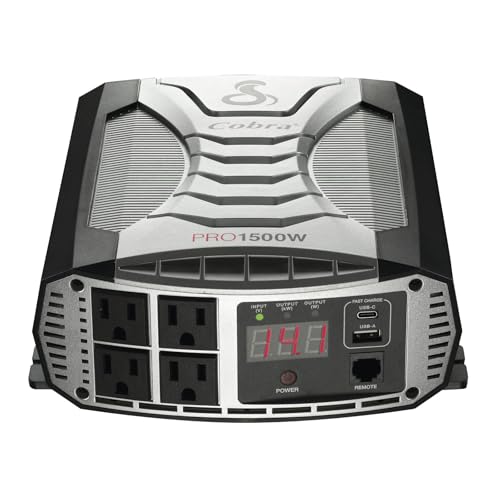
1500 watts of continuous power, with a 3000-watt peak to handle startup surges, means you can plug in devices drawing up to that limit from your car, truck, RV, or boat. The four GFCI-protected AC outlets let you run several items at once, and the included remote controller shows battery voltage and current draw. That setup works well for travelers and campers who need to charge smartphones, tablets, laptops, and kitchen appliances on the go.
The trade-off is the modified sine wave output, which works with many devices but may not be suitable for sensitive electronics. For those loads, a pure sine wave inverter like the BESTEK 500W model is an alternative, though it delivers only 500 watts continuous. At 3.9 pounds, the Cobra is heavier than smaller plug-in inverters, but the included direct-to-battery cables and remote controller support installation in a car, truck, RV, or boat.
Product photos
Cummins 3000W Modified Sine Inverter

What We Like
- 3000W runs large appliances and tools
- Four AC outlets with protective covers
- Bluetooth monitoring via app
- Full cable kit included
Trade-offs
- Modified sine wave, not for sensitive electronics
- At 15.2 lb, needs a permanent mount
- Large footprint (17 inches long)
A full 3000 watts of continuous power means this inverter can run larger devices like home appliances and power tools straight from your vehicle’s battery. Four AC outlets with port covers keep debris out when not in use, and the built-in Bluetooth lets you monitor the inverter from your phone via the compatible app. This unit is designed for vehicles, van life, and camping.
Size and weight are the main drawbacks here. At 15.2 pounds and 17 inches long, this inverter is meant for a permanent installation, not for tossing in a bag. Also, the modified sine wave output may not be suitable for all electronics. If you need a pure sine wave for sensitive devices, the BESTEK 300W pure sine wave model is an option for smaller loads, but no other inverter in this guide offers the same 3000W continuous capacity.
FOVAL 150W Car Power Inverter

What We Like
- Credit-card size saves space
- Built-in fuse protects devices
- Silent cooling fan runs quietly
Trade-offs
- 150W limit won't run high-draw appliances
- Single AC outlet limits simultaneous plug-in devices
At 0.5 pounds and 3.7 inches long, the FOVAL 150W inverter fits easily into a glove box or center console without taking up much space. Its aluminum housing provides protection from drops and bumps, while the two USB ports (3.1A total) and one AC outlet let you charge a phone, tablet, and a small laptop during a road trip. For drivers who mainly need to top off devices and run low-power gear like a CPAP machine or string lights, this is a compact, affordable solution that won’t clutter the cabin.
150 continuous watts is the hard ceiling here, enough for a laptop or a CPAP machine, but not for a mini fridge or anything with a motor. Compared to the BESTEK 300W Pure Sine Wave inverter, the FOVAL trades capacity for a much smaller footprint. If your devices stay under that 150W limit and you care more about slipping the inverter into a glove box than powering heavy gear, this unit does the job without taking up extra space.
Product photos
Pro Chaser 400W Power Inverter

What We Like
- Compact cellphone-sized design
- Dual 3.1A USB fast-charging ports
- Smart cooling fan activates at 113°F
- Built-in overload and voltage protection
Trade-offs
- 30-inch cord limits placement options in larger vehicles
- Not suitable for sensitive electronics needing pure sine wave
With 400 watts of continuous power and 800 watts of peak output, this inverter handles laptops, DVD players, and bottle warmers without breaking a sweat. Its cellphone-sized body fits in a small storage compartment or under a seat, making it one of the most portable options in this guide. The dual 3.1A USB ports charge phones and tablets at full speed, so you can keep everyone’s devices topped off on a long road trip. For a driver who needs reliable power for everyday gadgets without lugging around a heavy unit, this is a smart fit.
The Pro Chaser is noticeably smaller and lighter than the BESTEK 300W Pure Sine Wave Inverter, but that BESTEK’s pure sine wave output handles delicate electronics more safely. If your gear is standard laptops, phone chargers, and small appliances, the Pro Chaser delivers excellent value in a truly travel-friendly package.
Product photos
Cantonape 3000W Inverter with LCD
What We Like
- LCD shows voltage, load, and error codes
- Remote controller for easy on/off
- Six built-in safety protections
- Durable aluminum body with cooling fan
Trade-offs
- Modified sine wave output (not for sensitive electronics)
- Remote requires separate 12V 23A battery
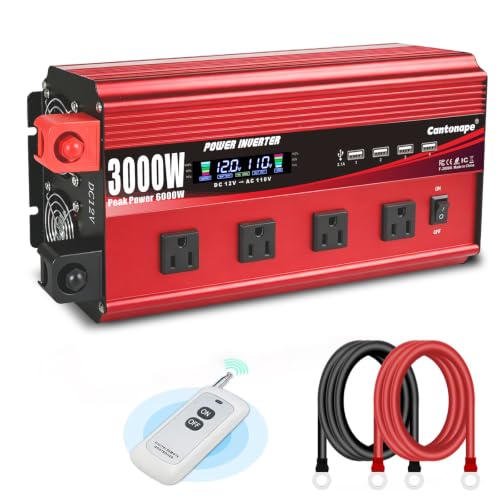
With 3000 watts of continuous output and a clear LCD screen that shows input voltage, battery level, and load capacity, this inverter gives you real-time awareness of what your electrical system is doing. The display also flashes error codes for low voltage, overload, or overheating, so you know exactly what went wrong instead of guessing. That makes it a strong fit for anyone running multiple appliances from a car, truck, or RV. For example, you could run a portable fridge, power tools, or a TV on a camping trip, where keeping an eye on battery drain matters.
This inverter uses modified sine wave power, not pure sine wave. That means it works fine for most motors, lights, and basic electronics, but some sensitive gear like medical devices or certain audio equipment may hum or run inefficiently. The Cantonape delivers ten times the wattage of the 300W pure sine wave model from BESTEK, making it better for heavy loads, but that smaller BESTEK is a better match if you need clean power for a laptop or CPAP machine. At 5.7 pounds, this inverter is portable enough to stash under a seat, though it’s heavier than the 1.4-pound BESTEK 300W.
Product photos
Amazon Basics 75W Portable Car Power Inverter

What We Like
- Ultra-compact at 5.07 x 2.65 x 1.6 inches
- Includes USB charging port with 2.1A output
- Multiple built-in protections (overheat, short circuit)
- ETL certified for reliable performance
Trade-offs
- 75W limit won't run laptops or larger devices
- Single AC outlet limits simultaneous device charging
Seventy-five watts is enough to charge small electronics like smartphones and tablets, but it won’t power a laptop or anything with a motor. That modest output is exactly what makes this Amazon Basics inverter so small, it fits in a small storage compartment or under a seat without stealing any cargo space. For drivers who just want to charge a phone or run a USB fan on a road trip, the trade-off in power for pocket-sized portability makes perfect sense.
The real limitation shows up the moment you try to plug in a laptop or a mini fridge. Compared to the FOVAL 150W inverter, which offers twice the power in a similar footprint, the Amazon Basics gives up capacity for an even smaller build.
Product photos
OLTEANP 1000W Power Inverter with LCD

What We Like
- LCD shows voltage and fault codes
- Includes both lighter plug and battery clips
- USB-C fast charging at 36W
- Safety protections for overheat, overload, and short circuit
Trade-offs
- Cigarette lighter limited to 150W or less
- At 2.6 pounds, heavier than smaller 300W models
A 1000W continuous output means this inverter can handle a small TV, a laptop, and a phone charger all at once during a camping trip or a long drive. That makes it a practical hub for anyone who needs AC power on the road without stepping up to a heavy-duty unit. The LCD screen shows you voltage and battery status, plus fault codes like overload or overheating, so you can spot trouble before it stops your gear. It also comes with both a cigarette lighter plug for low-draw devices and battery clips for higher loads, which gives you flexibility depending on what you’re powering.
This is a modified sine wave inverter, which differs from pure sine wave output. For most everyday car camping, truck cabin use, or tailgating with laptops, game consoles, and chargers, the OLTEANP delivers strong capacity and clear feedback at a value that’s hard to beat.
Product photos
VANSOET 400W Power Inverter
What We Like
- 30W PD fast-charging Type-C port
- Dedicated AC switch saves energy
- Intelligent cooling fan reduces noise
- LED warns of overload or short circuit
Trade-offs
- 400W limit restricts high-draw appliances
- No pure sine wave output listed
- Cigarette lighter plug limits continuous load
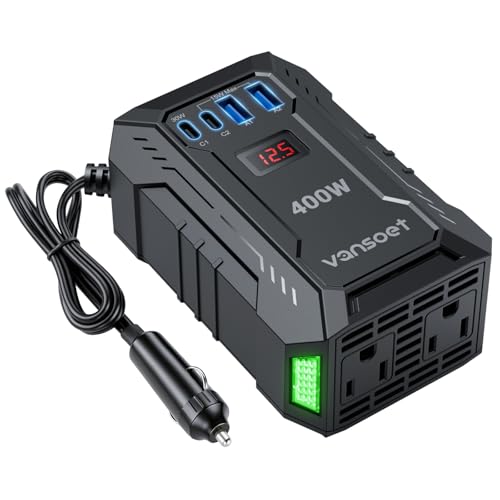
The VANSOET 400W packs four USB ports including a 30W PD Type-C, so you can fast-charge a modern phone or even a laptop while still having two AC outlets for a small fan or travel kettle. That dedicated AC switch is a thoughtful touch, you can kill the 110V outlets without yanking the lighter plug, saving battery when you only need USB power. For daily commutes, road trips, or tailgating, this compact inverter handles phones, tablets, cameras, and small electronics without hogging dashboard space.
The 400W ceiling means this unit is best suited for smaller electronics like laptops, mini coolers, and travel kettles rather than high-draw power tools or appliances. It connects through a standard 12V cigarette lighter port, which is convenient for quick setup in cars, SUVs, trucks, or RVs, but that plug limits total current draw compared to a hardwired installation. Reviewers note the dedicated AC switch lets them turn off the AC outlets independently without unplugging the adapter, saving energy and reducing wear on the vehicle’s socket. For daily commutes or weekend camping, the trade-off in power capacity is offset by straightforward, tool-free installation.
Product photos
How We Evaluated 12V To 110V Inverters For Cars
We evaluated these inverters by analyzing manufacturer specifications, reading patterns in owner feedback, and consulting expert round-ups from automotive and electronics sources. Every product was assessed on the features that matter most when converting your car’s 12V DC power to household 110V AC.
The three most important criteria were continuous wattage (can it run your device?), output waveform (pure sine wave for sensitive electronics vs. Modified sine wave for basic appliances), and safety protections (overload, short circuit, over-voltage). We also considered physical size, included accessories like battery clamps, and real-world owner satisfaction.
A research-led evaluation has limits: we don’t test these units ourselves, and owner feedback can vary based on the vehicle and usage. Our goal is to give you a clear, informed starting point so you can narrow your options with confidence.
What To Look For In 12V To 110V Inverters For Cars
Choosing a car inverter starts with understanding what you’ll plug in and how your vehicle is wired. The right match keeps your devices running and your car’s electrical system safe.
Match the inverter’s continuous wattage to your device’s power draw, choose pure sine wave for sensitive electronics, and ensure the plug or wiring matches your car’s capacity.
Wattage and Power Needs
Every inverter has two wattage ratings: continuous (what it runs steadily) and peak (short bursts for starting motors). Check the power label on your laptop, CPAP machine, or tool, it will list watts or amps. Add a safety margin. For example, a 90W laptop charger needs at least a 120W continuous inverter. Cigarette lighter circuits are typically limited to lower wattages; anything above that requires direct battery connection with clamps or a hardwire kit.
Output Waveform: Pure Sine vs. Modified Sine
Pure sine wave inverters produce clean power identical to household outlets, making them essential for sensitive electronics like CPAP machines, laptops, and some medical devices. Modified sine wave inverters are cheaper and work fine for power tools, fans, and basic appliances, but can cause buzzing in audio gear or overheating in certain power adapters. If you’re unsure, pure sine wave is the safer investment.
Safety Protections and Build Quality
Look for built-in protections against overload, short circuit, over-voltage, over-temperature, and reverse polarity. These features prevent damage to your devices and your car’s electrical system. A quality inverter also includes a cooling fan (some are temperature-controlled to reduce noise) and a sturdy casing. For permanent installations, consider units with remote monitoring or Bluetooth connectivity.
- Check your device’s wattage label before buying.
- Verify your car’s cigarette lighter fuse rating.
- Choose an inverter with automatic shutdown for safety.
- Consider cable length: short cords limit placement.
- For high-wattage units, budget for battery clamps or hardwire installation.
A 300W inverter is plenty for laptops and CPAP, while 1500W+ is for running power tools or kitchen appliances from a vehicle.
12V To 110V Inverters For Cars Compared
The table below compares the key specs of our top picks side by side, making it easy to see which inverter fits your power needs and budget.
| Product | Continuous Power | AC Outlets | USB Ports | Weight |
|---|---|---|---|---|
| BESTEK 300W Pure Sine Wave Inverter | 300W | 2 | 2 (4.8A total) | 1.4 pounds |
| BESTEK 500W Pure Sine Wave Inverter | 500W | 2 | 2 (4.2A max total) | 2.2 lbs |
| Cobra PRO 1500W Professional Inverter | 1500W | 4 GFCI Protected | 2 Fast Charge USB | 3.9 pounds |
| Cummins 3000W Modified Sine Inverter | 3000W | N/A | 2 (standard + USB-C fast charge) | 15.2 pounds |
| FOVAL 150W Car Power Inverter | 150 Watts | 1 | 2 (3.1A total) | 0.5 Pounds |
| Pro Chaser 400W Power Inverter | 400W | 2 | 2 (3.1A each) | 0.9 pounds |
| Cantonape 3000W Inverter with LCD | 3000 Watts | 4 | 4 (3.1A each) | 5.7 pounds |
| Amazon Basics 75W Portable Car Power Inverter | 75 watts | 1 outlet | 1 (max 2.1A) | 0.5 pounds |
| OLTEANP 1000W Power Inverter with LCD | 1000W | 2 | 36W Type-C Port, 5V/3A USB Port | 2.6 pounds |
| VANSOET 400W Power Inverter | 400W | 2 standard US AC | 2x USB-A (15W), 2x Type-C (30W PD + 15W) | N/A |
Frequently Asked Questions
Can I run a refrigerator from a car inverter?
It depends on the fridge’s starting wattage. Most mini-fridges need a higher wattage to start and a lower wattage to run. A 300W inverter is usually too small; a 1500W or 3000W inverter with direct battery connection is a better choice for running a refrigerator in a vehicle.
What size inverter do I need for a CPAP machine?
Most CPAP machines draw between 30W and 90W, so a 150W to 300W inverter is sufficient. However, CPAP machines with heated humidifiers can draw up to 120W. A pure sine wave inverter is recommended to ensure the machine operates correctly and quietly.
Can I plug an inverter into my car’s cigarette lighter?
Yes, but only for inverters rated at lower wattages. The cigarette lighter circuit is typically fused at a lower amperage. Plugging a higher-wattage inverter into the lighter socket will blow the fuse or damage the wiring. For anything over a moderate wattage, use battery clamps or a hardwire kit.
What’s the difference between pure sine wave and modified sine wave inverters?
Pure sine wave inverters produce clean, smooth power identical to your home outlets, making them safe for sensitive electronics like laptops, CPAP machines, and medical devices. Modified sine wave inverters produce a stepped waveform that works fine for power tools, fans, and basic appliances but can cause humming or overheating in some electronics.
How do I connect a high-wattage inverter to my car battery?
High-wattage inverters (500W and above) require direct connection to the car battery using included battery clamps or a hardwire kit. First, turn off the vehicle. Connect the red clamp to the positive terminal and the black clamp to the negative terminal or a clean ground point. Ensure the inverter is turned off before connecting.
The Bottom Line
For most drivers, the BESTEK 300W Pure Sine Wave Inverter is the best overall choice. It delivers clean, safe power for laptops, CPAP machines, and phone charging in a compact package that plugs directly into the cigarette lighter. It’s the right fit for anyone who needs reliable power for sensitive electronics on the road.
If you need more wattage, the BESTEK 500W Pure Sine Wave Inverter is your best bet for running larger devices, while the FOVAL 150W is an excellent budget-friendly option for simple charging. For heavy-duty needs like running power tools or appliances, the Cobra PRO 1500W or Cummins 3000W are worth the investment.
The single most important factor is matching the inverter’s continuous wattage to your device’s power draw, buy too small and your device won’t run, buy too large and you risk overloading your car’s electrical system. Check your device labels, know your car’s limits, and choose accordingly.
