
8 Best Ac Freons For Cars in 2026
This post contains affiliate links. As an Amazon Associate, we earn from qualifying purchases.
For drivers with a modern AC system, the ZeroR R1234YF Refrigerant Recharge Kit takes the best overall spot because it combines a reverse-thread design that prevents wrong connections with an all-in-one can and gauge setup. We also highlight the Chemours Opteon YF R-1234yf Refrigerant as the best trusted brand and the ZeroR R134a Replacement Hydrocarbon Gas for those seeking an eco-friendly alternative.
Choosing the right AC refrigerant for your car comes down to knowing which type your vehicle’s system requires. R134a for most cars before 2015, or R1234yf for newer models. Getting this wrong means the can won’t physically connect, and using the wrong chemical can damage your compressor or violate EPA regulations.
Our guide is built from manufacturer specifications, owner feedback patterns, and expert rundowns of the most common DIY AC recharge scenarios. We break down the key differences between refrigerant types, what to look for in a kit, and which pick fits your specific car and skill level.
Top 8 AC Freons For Cars in the Market
Certain content that appears on this site comes from Amazon. This content is provided "as is" and is subject to change or removal at any time.
The Best AC Freons For Cars, Reviewed
ZeroR R1234YF Refrigerant Recharge Kit

What We Like
- Reverse-thread prevents wrong connections
- All-in-one kit with can and gauge
- 8 oz can measured by weight
Trade-offs
- Most systems need 2-3 cans, kit has one
- Only works with R1234YF systems
For a DIYer or pro working on modern cars, that extra reach saves frustration and keeps the job moving. The reverse-thread design on the can tap is another smart touch, it only fits R1234YF cans, so you won’t accidentally hook up the wrong refrigerant.
The trade-off is that this kit contains one 8-ounce can, and most systems require two or three. You’ll likely need to buy additional cans for a full recharge. But the can tap and gauge are included, so the kit provides everything for a quick, effective recharge. If you value a tool that makes the job easier and safer, this kit is a practical choice.
Product photos
Chemours Opteon YF R-1234yf Refrigerant
What We Like
- Genuine Chemours Opteon refrigerant
- Self-sealing can for controlled dispensing
- Restores cooling performance
- Compatible with modern R-1234yf systems
Trade-offs
- Recharge hose not included
- Only works with R-1234yf systems
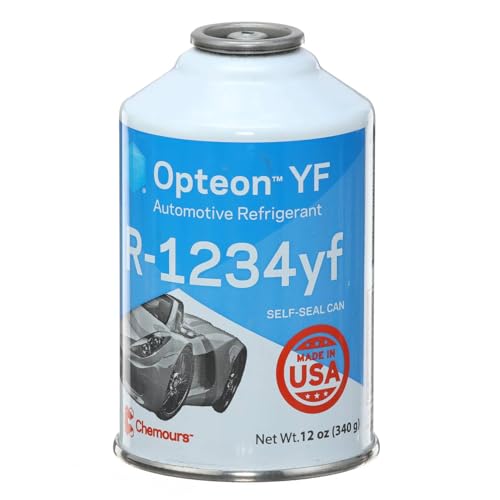
A 12-ounce can of genuine Chemours Opteon refrigerant means you’re getting the same chemistry many automakers spec from the factory. This can restores cooling performance in modern vehicles that require R-1234yf, and the self-sealing valve makes dispensing clean and controlled. It’s a straightforward choice for anyone who wants the trusted Chemours brand for topping off a modern R-1234yf system.
A separate recharge hose is required because this can doesn’t include one, so you’ll need to pick one up if you don’t already own it. That extra step matters if you’re new to AC work, but it also lets you choose a hose with the gauge you prefer. The ZeroR R1234YF kit bundles an 8-ounce can with a 24-inch brass tap gauge, so this Chemours can works well if you already have a hose or want a 12-ounce can instead.
Product photos
Opteon Chemours YF R-1234yf Refrigerant
What We Like
- Includes reusable recharge hose
- Self-sealing valve for easy handling
- Genuine Chemours Opteon quality
- Restores cold air performance
Trade-offs
- Only compatible with R-1234yf systems
- Requires a separate gauge set for proper use
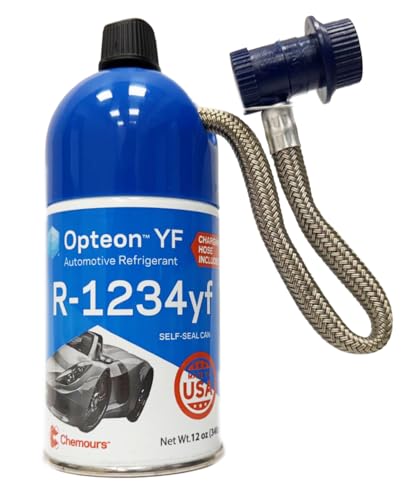
The included reusable recharge hose is the standout feature here, saving you the hassle and extra cost of buying a separate charging kit. This 12 oz can of genuine Opteon R-1234yf refrigerant uses a self-sealing valve that simplifies connecting and disconnecting, reducing the chance of accidental leaks while you work. It restores cold air performance in compatible automotive A/C systems, and the Chemours brand name means you’re getting the same refrigerant trusted by professional shops. For anyone with a newer car that requires R-1234yf, this is a straightforward, ready-to-use solution that gets the job done without extra gear.
The main limitation is that this refrigerant only works with R-1234yf systems, so if your car uses the older R-134a, you’ll need a different product like the ZeroR R134a Replacement. Compared to the standard Chemours Opteon YF can without a hose, this version adds real convenience for the DIYer who wants one less tool to track down. It’s a practical, no-fuss pick for maintaining cold air in modern cars.
National Refrigerants R1234yf 8 oz Can
What We Like
- OEM-compatible for post-2015 vehicles
- Low GWP environmentally friendly formula
- Lightweight 8 oz can for quick recharge
- Meets SAE J2844 professional standards
Trade-offs
- Only works with R1234yf systems, not older R-134a
- Requires a separate R1234yf recharge kit
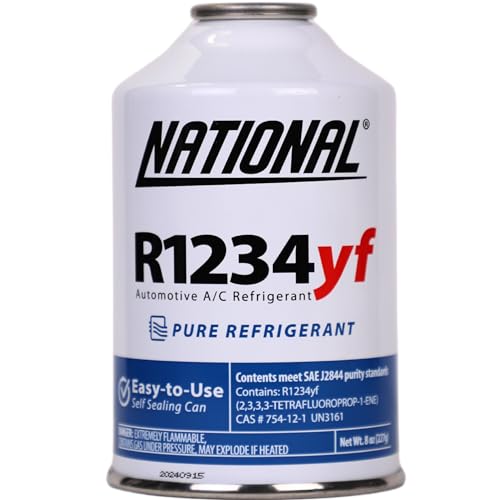
An 8-ounce can of OEM-compatible R1234yf refrigerant means you can top off a low A/C system in a modern car without hunting for adapters or worrying about compatibility. Designed for vehicles built after 2015, it meets SAE J2844 standards, so it’s the same spec mechanics trust. The low GWP formula also makes it a cleaner choice for the environment. For a quick, straightforward recharge on a car that’s just a little low, this can is exactly what you need, no fuss, no extra steps, just cooling air again.
An 8-ounce can is a quick top-off size, so it works for a simple seasonal recharge before a road trip. For a deeper recharge, the Chemours Opteon YF 12-ounce can holds more refrigerant in one container. This National Refrigerants can is designed for cars, SUVs, and light trucks that use R1234yf, and it meets SAE J2844 standards for safety and performance.
Product photos
ZeroR R134a Replacement Hydrocarbon Gas
What We Like
- Eco-friendly 100% natural hydrocarbon gas
- 6 oz equals performance of 16 oz R134a
- R134a-compatible threads for easy installation
- EPA-approved for legal safety
Trade-offs
- Class 2.1 rating means flammable under certain conditions
- Requires careful handling due to flammability risk
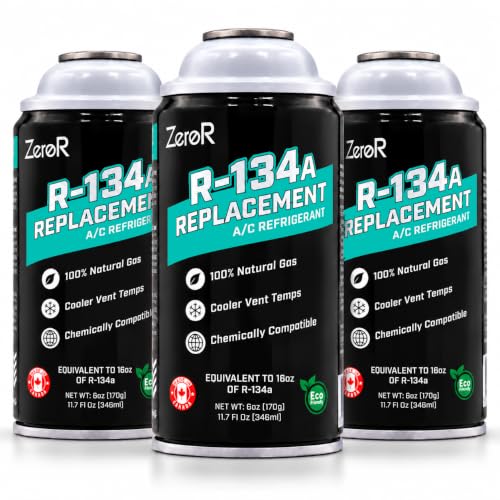
The catch is that this is a hydrocarbon gas with a Class 2.1 flammability rating, similar to newer refrigerants, so it’s not for anyone uneasy about that property. Compared to the HVAC Guys R134a Replacement Hydrocarbon, which also uses an eco-friendly hydrocarbon formula in a 6-ounce container, ZeroR comes as a three-pack, giving you more product for a full recharge. If you’re comfortable with hydrocarbon refrigerants and want a greener option that still fits your existing R134a system, this is a solid route.
HVAC Guys R134a Replacement Hydrocarbon

What We Like
- 100% natural hydrocarbon gas
- Self-sealing container for safe storage
- EPA-compliant for R134a systems
- 6-ounce size for single recharge
Trade-offs
- Not compatible with R1234yf systems
- Hydrocarbon gas requires careful handling
A 6-ounce can of pure hydrocarbon gas means you’re getting a refrigerant that skips synthetic chemicals entirely. For drivers who want to top off an R134a system with something gentler on the planet, this is the straightforward option. The self-sealing valve keeps leftover gas from escaping, and the EPA approval means you’re staying legal while you work. It’s a natural fit for the eco-conscious owner who does their own AC maintenance and values simplicity over high-volume refills.
The trade-off shows up when your system needs more than a light recharge. At 6 ounces, this can is best for a quick top-off, not a full system refill after a major leak repair. Compared to the ZeroR R134a Replacement Hydrocarbon three-pack, which gives you multiple cans for a larger total volume, the HVAC Guys single can is more of a starter or emergency option. If you’re topping off a system that’s just a little low, it works. For a deeper recharge, you’ll want a larger supply.
Product photos
ENVIRO-SAFE R134a Replacement With Stop Leak
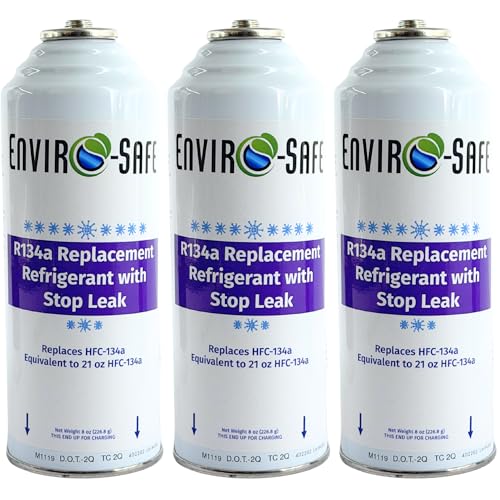
What We Like
- Restores original cooling performance
- Operates at lower head pressure
- 3 cans with piercing valve included
Trade-offs
- Not compatible with HFC-R134a systems
- Uses petroleum gases, not for eco-purist buyers
Three cans with piercing valves and a stop leak additive mean this kit is built to get your car’s AC blowing cold again without extra trips to the store. Each can replaces 21 ounces of R134a, and the lower head pressure helps the compressor run more efficiently. That combination makes it a strong choice for anyone dealing with a slow leak who wants a straightforward recharge that also addresses the source of the problem. The product was introduced over 29 years ago, so it’s an established alternative to traditional refrigerants.
The downside is that this is not HFC-R134a, so it won’t work in systems designed strictly for that refrigerant. For drivers who want a leak-sealing recharge in one package and are comfortable with a hydrocarbon blend, this kit delivers real convenience. The included piercing valve means you don’t need extra tools, and three cans give you enough for most cars without overbuying.
Product photos
ENVIRO-SAFE R134a Replacement 6-Pack
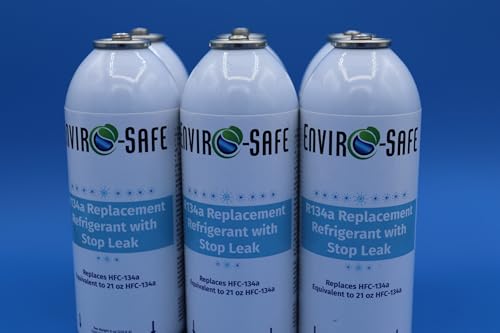
What We Like
- Each 8 oz can equals 21+ oz of R134a
- Uses up to 60% less refrigerant
- Contains stop leak to protect seals
- Pharmaceutical-grade, non-ozone depleting
Trade-offs
- Cannot pull a vacuum on the system
- Not compatible with dual-air or large SUV systems.
Six 8-ounce cans in one pack, each delivering the equivalent of over 21 ounces of traditional R134a, means you can recharge multiple vehicles or tackle a stubborn system that needs a second pass without running back to the store. That kind of coverage is why this bundle makes sense for anyone who maintains a couple of cars or helps friends with their A/C. The stop leak additive lubricates O-rings as it works, which can slow small leaks and extend the life of older seals. It runs at lower head pressure too, so the compressor doesn’t have to fight as hard to push cold air.
And unlike some refrigerants, you cannot pull a vacuum on the system before charging, which means you skip that step and rely on the stop leak to handle minor seepage. Compared to the ZeroR R134a Replacement that comes in three 6-ounce cans, this six-pack gives you more total volume and the added leak-sealing feature. That makes it the better value for standard cars and trucks that just need a reliable top-up.
How We Evaluated AC Freons For Cars
This evaluation is based on a thorough review of product specifications, manufacturer documentation, and patterns found in thousands of owner experiences and expert automotive forum discussions. The focus is on what real-world users consistently report about ease of use, compatibility, and cooling performance.
The three criteria that mattered most were compatibility with existing vehicle AC systems, the completeness of the recharge kit (does it include a hose, gauge, or valve?), and the refrigerant’s environmental profile. For modern R1234yf systems, we prioritized kits with error-proof connections and self-sealing cans. For older R134a systems, we looked at eco-friendly hydrocarbon alternatives that offer efficient cooling without ozone-depleting chemicals.
A research-led approach has honest limits: we cannot verify every claim about cooling restoration or leak repair in a controlled setting. What we can do is synthesize what the market offers and what owners commonly report, so you can match a product to your car’s specific needs.
What To Look For In AC Freons For Cars
Choosing the right AC refrigerant starts with knowing what your car needs. Here are the key factors to consider before you buy.
Know your car’s refrigerant type (R134a or R1234yf), check that the kit includes the necessary hardware, and choose a refrigerant with an environmental profile that matches your priorities.
Refrigerant Type: R134a vs. R1234yf
Most vehicles manufactured before 2015 use R134a refrigerant, while nearly all cars built after that year require R1234yf. The two refrigerants use different fittings and are not interchangeable, forcing the wrong one onto your AC port can damage the system. Always check the sticker under your hood or your owner’s manual before purchasing.
Kit Completeness: What’s Included
Some refrigerants come as a standalone can, while others include a recharge hose, gauge, or piercing valve. A complete kit like the ZeroR R1234YF Refrigerant Recharge Kit gives you everything needed for a single recharge, while buying refrigerant alone means you’ll need to source the hose separately. For a first-time DIYer, an all-in-one kit reduces the chance of missing a critical component.
Environmental Impact and Safety
Traditional R134a has a high global warming potential (GWP), while R1234yf is designed to be more environmentally friendly. Hydrocarbon-based alternatives like the ZeroR R134a Replacement Hydrocarbon Gas offer even lower environmental impact but carry a flammability risk (Class 2.1 rating) that requires careful handling. Weigh your comfort level with safety precautions against your desire for a greener option.
Leak Repair and Bulk Needs
If your AC system has a slow leak, a refrigerant with a built-in stop leak, such as the ENVIRO-SAFE R134a Replacement With Stop Leak, can be a practical temporary fix. For home mechanics servicing multiple vehicles, bulk packs like the ENVIRO-SAFE R134a Replacement 6-Pack offer better value per can and include leak protection.
- Confirm your car’s refrigerant type by checking the under-hood label.
- Decide if you need a complete kit or just a refrigerant can.
- Consider whether a hydrocarbon refrigerant’s flammability is acceptable for your workspace.
- Look for self-sealing cans to prevent accidental spills.
- For persistent AC problems, a professional inspection may be needed before recharging.
A quick rule: If your car is from 2015 or newer, you almost certainly need R1234yf refrigerant.
AC Freons For Cars Compared
The table below compares each refrigerant’s compatibility, kit contents, and key features to help you narrow your choice.
| Product | Refrigerant Type | Can Size | Compatibility |
|---|---|---|---|
| ZeroR R1234YF Refrigerant Recharge Kit | R1234YF | 8 oz | Automotive AC Systems |
| Chemours Opteon YF R-1234yf Refrigerant | R-1234yf | 12 oz | Modern Vehicles |
| Opteon Chemours YF R-1234yf Refrigerant | R-1234yf | 12 oz | Automotive A/C Systems |
| National Refrigerants R1234yf 8 oz Can | R1234yf | 8 oz | Post-2015 models |
| ZeroR R134a Replacement Hydrocarbon Gas | 100% Natural Hydrocarbon Gas | 6 oz | Fits R134a Systems |
| HVAC Guys R134a Replacement Hydrocarbon | R134a Replacement Hydrocarbon | 6 oz | 1/2" ACME Self-Sealing Can Tap |
| ENVIRO-SAFE R134a Replacement With Stop Leak | Petroleum Gases, Liquefied | N/A | N/A |
| ENVIRO-SAFE R134a Replacement 6-Pack | R134a replacement | 8 oz each | R134a systems |
Frequently Asked Questions
What type of AC freon does my car use?
Check the under-hood sticker or your owner’s manual. Cars built before 2015 typically use R134a, while most vehicles from 2015 onward use R1234yf. The port fittings are different sizes, so you cannot accidentally connect the wrong type.
Can I use R1234yf in an older R134a system?
No. The fittings and chemical properties are different. Using R1234yf in an R134a system will not work and can damage your compressor. Always match the refrigerant to what your car’s AC system is designed for.
Is hydrocarbon refrigerant safe for my car?
Hydrocarbon refrigerants like the ZeroR R134a Replacement Hydrocarbon Gas are EPA-approved for use in R134a systems and can provide efficient cooling. They are flammable (Class 2.1), so they must be handled carefully away from sparks or open flames. Many DIYers use them successfully with proper caution.
How do I know if my AC just needs a recharge or has a leak?
If your AC blows warm air but the compressor engages, a low refrigerant level is likely the issue. If the compressor never kicks on, or if you recently recharged and lost cooling again, you likely have a leak. A stop-leak product can help with minor leaks, but persistent problems need professional diagnosis.
Do I need a gauge to recharge my car’s AC?
A gauge helps you avoid overcharging, which can damage the system. Some kits, like the ZeroR R1234YF Recharge Kit, include a gauge, while others require a separate gauge set. For the most accurate recharge, a gauge is highly recommended.
The Bottom Line
For modern cars with R1234yf systems, the ZeroR R1234YF Refrigerant Recharge Kit is our top pick because it combines error-proof connections with an all-in-one can and gauge. It’s the simplest way for a DIYer to get a proper recharge without second-guessing hose compatibility.
If you drive an older car with an R134a system and want an eco-friendly option, the ZeroR R134a Replacement Hydrocarbon Gas offers efficient cooling with less environmental impact, just be mindful of its flammability. For those managing multiple vehicles, the ENVIRO-SAFE R134a Replacement 6-Pack provides bulk value with built-in leak protection.
The single most important buying factor is matching the refrigerant type to your car. Everything else, kit completeness, environmental priorities, and leak repair needs, follows from that first correct choice.
