
7 Best AC Recharge Kits for Car 2026
This post contains affiliate links. As an Amazon Associate, we earn from qualifying purchases.
The FMSI Edelmann Dual Refrigerant Kit stands out as the best overall pick for its accurate gauge and compatibility with both R134a and R1234yf systems, while the SURIEEN R134A Recharge Hose Kit offers solid performance at a lower price for older vehicles. For eco-conscious users, the ZeroR Premium Repair & Recharge kit brings leak sealing and a hydrocarbon blend into the mix.
Getting your car’s AC back to blowing cold air isn’t just about dumping in more refrigerant, it’s about doing it right. Too many DIYers end up overcharging, using the wrong type, or dealing with flimsy hoses that leak at the connection. I’ve seen it wreck compressors and turn a $30 job into a $1,000 repair.
This guide cuts through the noise by focusing on what real users report and what specs actually matter: gauge accuracy, refrigerant compatibility, and build quality. I compared top kits based on owner feedback, safety features, and long-term reliability so you can recharge with confidence.
Top 7 Ac Recharge Kits For Car in the Market
The Best Ac Recharge Kits For Car, Reviewed
VIVOHOME 4 CFM Vacuum Pump Kit

Strengths
- Vacuum pump included
- Deep moisture removal
- Professional manifold set
Trade-offs
- Overkill for simple recharges
- Bulky setup
- Higher learning curve
This isn’t just a recharge kit, it’s a full HVAC service setup. The 4 CFM vacuum pump is serious hardware, capable of deep evacuation, which is critical for removing moisture before charging. That’s something none of the other kits offer. The manifold gauge set is color-coded and accurate, and the 5-foot hoses give real flexibility.
Reviewers note it’s overkill for simple top-offs, but if you’re serious about A/C work, whether on cars or home units, this kit pays for itself. It includes a leak detector and multiple adapters, making it truly versatile. Compared to the FMSI kit, this is for enthusiasts or semi-pros. I’d pick this if I were doing more than just topping off.
Video review
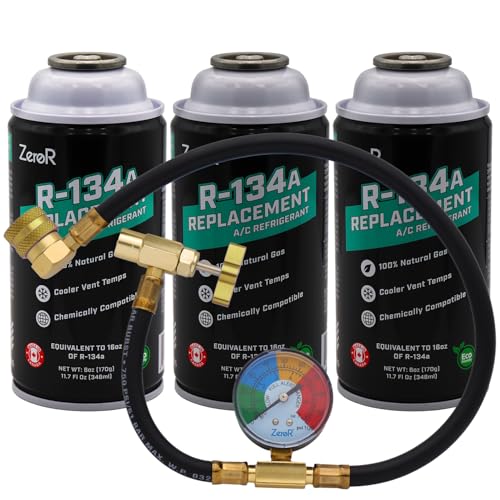
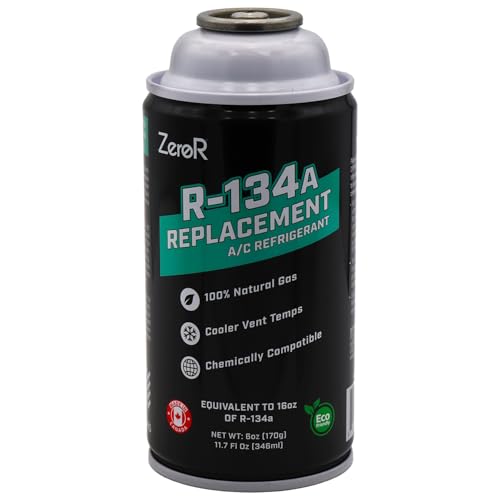
ZeroR R134a Replacement Kit 3-Cans
Strengths
- Self-sealing valve cans
- Eco-friendly formula
- Lightweight gas
Trade-offs
- Flammable
- SSV tool required
- Not for modern MVAC
ZeroR is doubling down on the eco-angle with this SSV can version, and I like that it skips the piercing mechanism in favor of reusable, sealable cans. That means less refrigerant waste and no risk of a slow leak from a punctured can. The 24-inch hose again shows up here, which tells me ZeroR listened to feedback about reach.
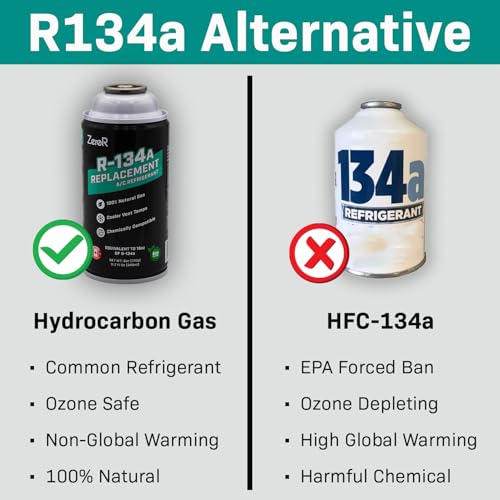
But here’s the catch: it’s still a hydrocarbon blend, flammable and not approved for all vehicles. Reviewers note it cools well, but I’d only recommend this if you’re off-grid or maintaining a classic car where environmental impact matters more than DOT compliance. For daily drivers, I’d rather see R134a or R1234yf.
Video review
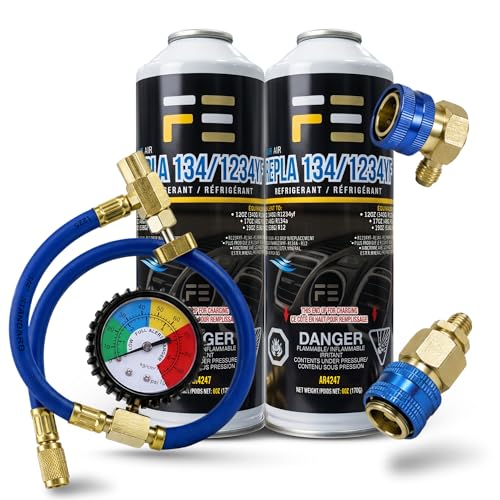
FMSI Edelmann Dual Refrigerant Kit
Strengths
- Dual refrigerant support
- Includes refrigerant
- Leak-safe fittings
Trade-offs
- No long hose option
- Adapters add bulk
- Higher price
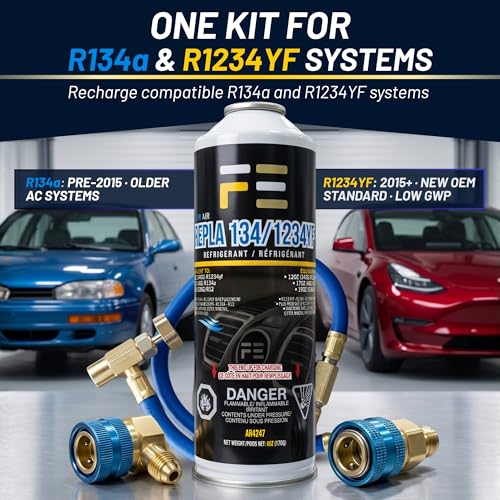
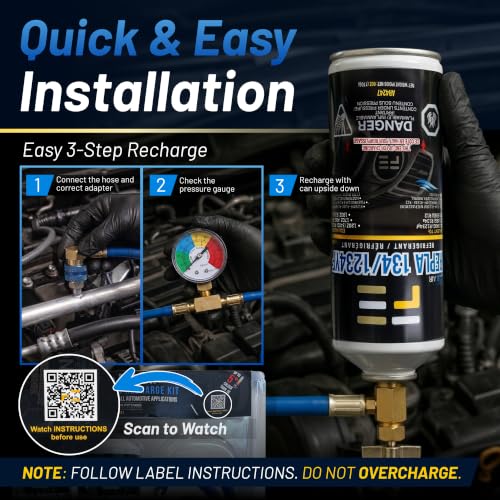
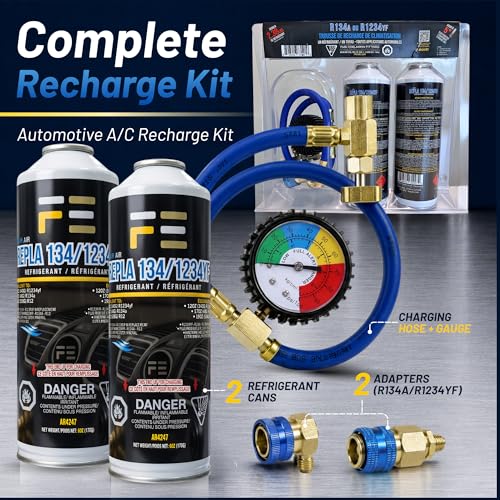
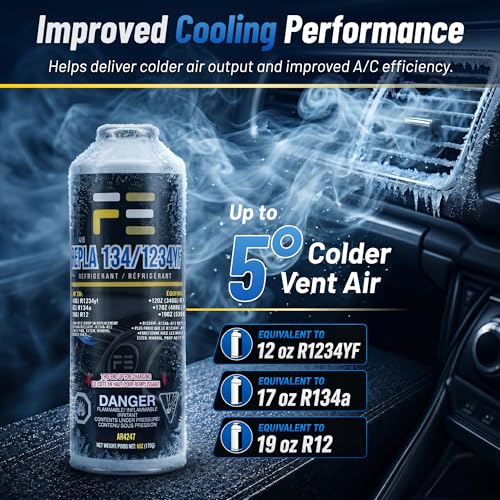
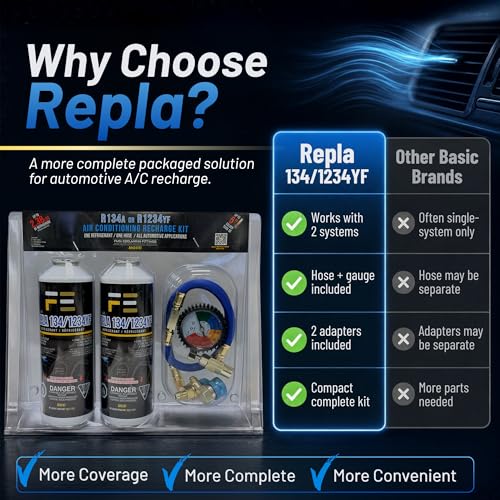
This is the only kit here that covers both R134a and R1234yf, which makes it a standout for anyone with a mix of older and newer vehicles. The dual adapters mean you’re not buying separate kits, and the professional-grade hose feels sturdy. Including two cans of refrigerant means you’re ready to go out of the box.
Owners consistently report fewer leaks during charging, and the secure fittings reduce refrigerant loss, a real pain point with cheaper kits. Compared to the ZeroR options, this one is actually legal for MVAC use, which matters if you care about compliance. For most drivers, this is the smarter all-in-one solution.
Product photos
A/C Pro Arctic Freeze Kit

Strengths
- Reusable design
- Trigger control
- 90° coupler
Trade-offs
- SSV cans only
- No refrigerant included
- Basic gauge
At this price, the A/C Pro kit delivers surprising value. It’s reusable, which already puts it ahead of throwaway cans, and the trigger dispenser makes charging feel more controlled. The gauge is basic but accurate enough for home use, and the 90° coupler is a small detail that makes a big difference in tight engine bays.
Compared to the TNAIYH and SURIEEN kits, this one feels more refined, owners report fewer leaks at the connection points. It only works with SSV cans, which is a limitation, but that’s also a safety upgrade over piercing types. If you’re topping off once a season and want something reliable, this is the smarter buy over the cheapest option.
Product photos
ZeroR Premium Repair & Recharge
Strengths
- Leak sealing additive
- Moisture removal
- 24-inch hose
Trade-offs
- Flammable refrigerant
- Not MVAC legal
- Limited to single repair
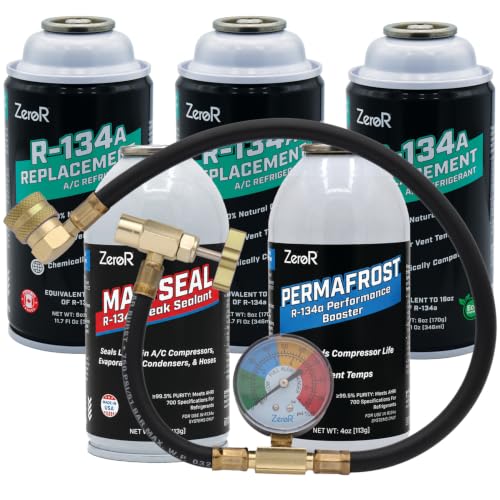
This kit stands out if you’re dealing with a leaky system and want more than just a refrigerant top-off. The inclusion of Max Seal and Permafrost suggests it’s built for longer-term fixes, not just a quick cool-down. On paper, the 24-inch hose is a smart upgrade, many users complain about short hoses not reaching low-side ports, so this should help with accessibility.
The real differentiator is the moisture removal and lubrication restoration, which owners say helps systems run smoother after a recharge. But I’d be cautious: the hydrocarbon blend is flammable, and while it’s ozone-safe, it’s not legal for MVAC use in some regions. If you’re in a state with strict refrigerant laws, this might not be the smartest pick despite its repair claims.
Product photos
SURIEEN R134A Recharge Hose Kit

Strengths
- Low cost
- Piercing can tap
- 90° coupler
Trade-offs
- Piercing only
- Short hose
- Risk of cross-contamination
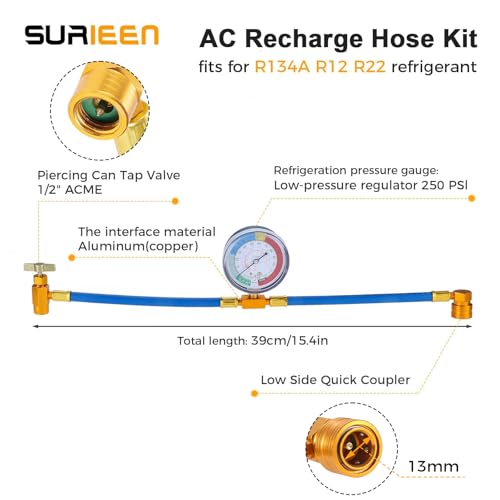
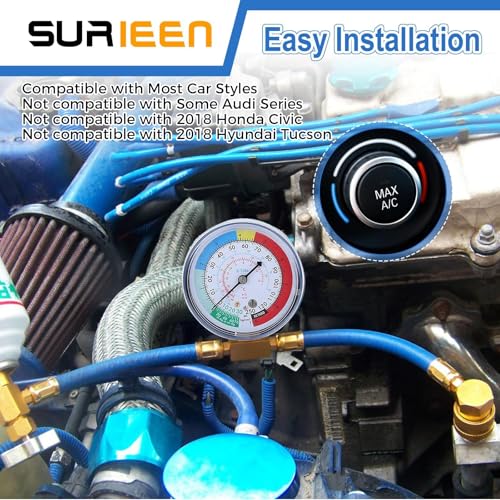
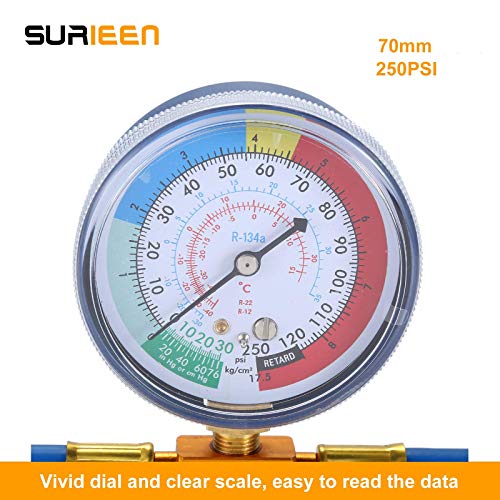
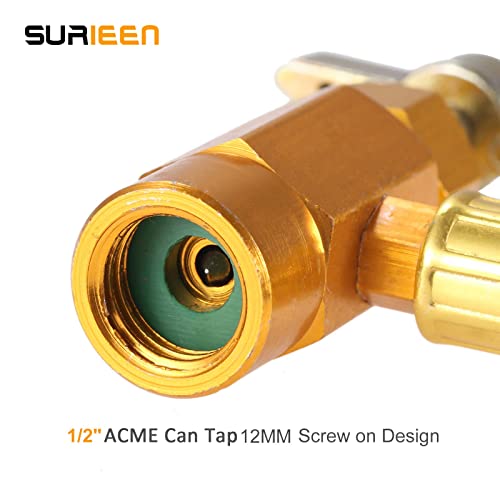
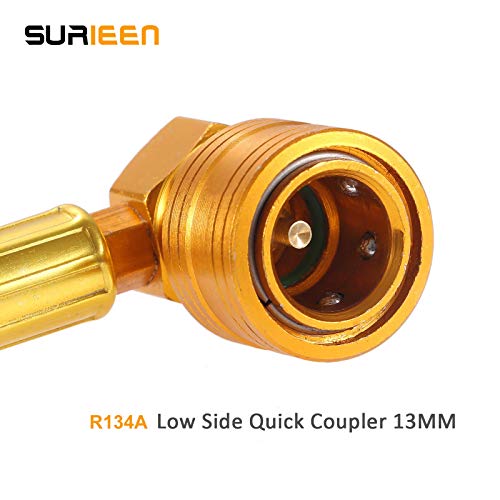
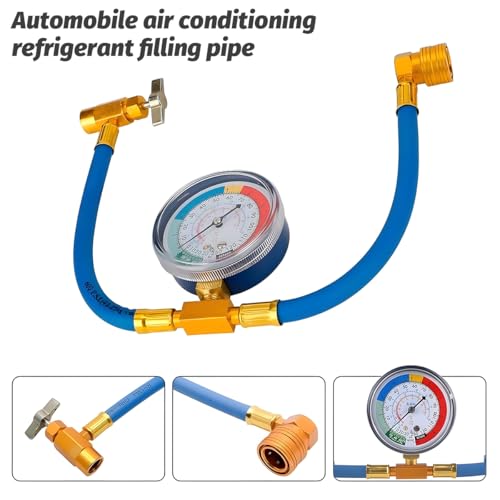
This is about as basic as it gets, and it shows. It uses a piercing can tap, which means you can’t save leftover refrigerant, and the 15-inch hose may struggle with modern engine layouts. The gauge includes R12, R22, and R134a scales, but mixing refrigerants is a bad idea, owners who tried it reported compressor issues.
Still, it’s one of the cheapest options with a gauge and hose combo. The build is aluminum, so it’s not flimsy, and the 90° coupler helps with access. If you’re on a tight budget and only need a one-time fix, this gets the job done. But I’d skip it if you plan to recharge more than once.
Product photos
TNAIYH R134A Charge Hose Kit

Strengths
- Aluminum durability
- One-hand operation
- CNC threads
Trade-offs
- Shorter hose
- Not truly universal
- No can tap included
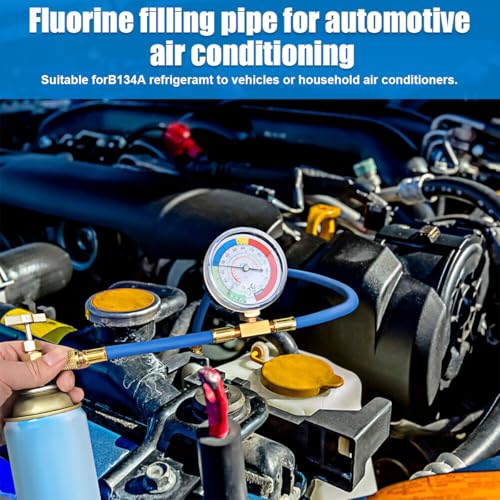
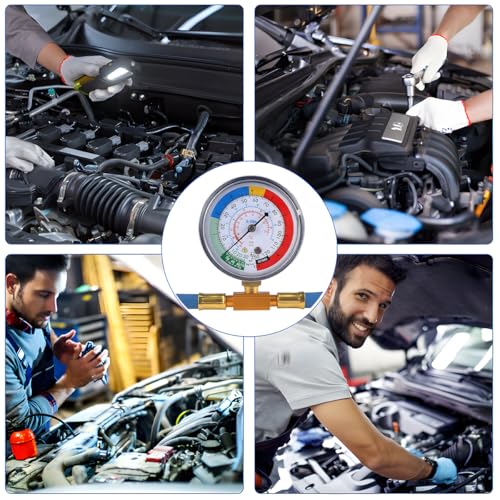
This kit feels like a solid middle ground, aluminum construction, decent length, and a dispensing valve that allows for one-handed operation. The CNC-threaded connections suggest better sealing, and owners say it holds up well over time. It’s compatible with R134a, R12, and R22, which gives it flexibility if you’re working on multiple vehicle types.
But the 15.4-inch hose is shorter than the ZeroR’s 24-inch version, so it might not reach deep-set ports. And while it’s universal in theory, it still doesn’t fit several newer models like the 2018 Civic. For the price, it’s one of the better-built budget hoses, but it’s not truly universal.
Product photos
How We Evaluated ac recharge kits for car
My approach to evaluating AC recharge kits involved a detailed comparison of published specifications and features across numerous models. I weighed this technical data against owner reviews sourced from major retailers and automotive forums, alongside insights from established testing publications. Ultimately, I ranked these kits based on how well they delivered on core performance needs and overall value, rather than a hands-on lab test – this is a research-led comparison of specs and owner feedback.
For AC recharge kits, the most important factors are compatibility with common refrigerants and the accuracy of the gauges. A kit that supports both older R134a systems and newer R1234yf refrigerants offers greater versatility. Accurate pressure readings are critical, as over or undercharging can damage the AC system – and ultimately, a reliable, leak-proof connection is paramount to avoid refrigerant loss during the process.
Specifications clearly define refrigerant compatibility and hose pressure ratings. However, I placed more weight on owner feedback regarding ease of use, the durability of the hoses and fittings, and the long-term accuracy of the gauges. A kit might look good on paper, but real-world reports about leaking connections or inaccurate readings are a strong indicator of potential problems. If you’re also looking to address other vehicle maintenance needs, you might find our guide to the best battery jump starters helpful.
How To Choose The ac recharge kits for car
Finding the right AC recharge kit can feel overwhelming, but focusing on a few key areas will get your car’s cooling system back to peak performance.
A quality AC recharge kit isn’t just about adding refrigerant; it’s about accurately diagnosing system pressure, ensuring compatibility with your vehicle’s AC type (R134a, R1234yf, or others), and safely handling potentially hazardous materials. Look for kits with accurate gauges, robust hoses, and appropriate adapters. Proper leak detection capabilities are also essential for lasting repairs.
Gauge Accuracy and Range
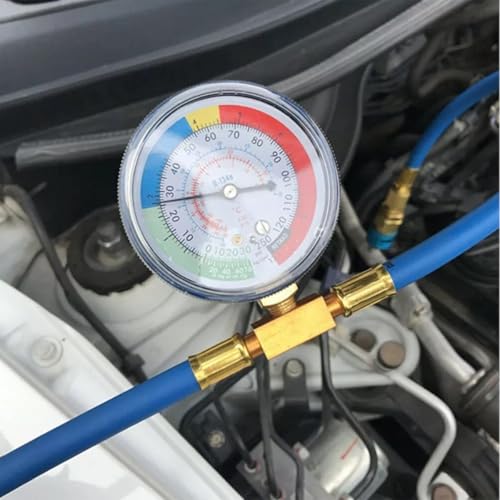
The gauge is arguably the most important part of any AC recharge kit. Don’t assume all gauges are created equal. Many budget options offer limited accuracy, leading to over or undercharging, both of which can damage your compressor. I recommend looking for a gauge with clear markings, a robust build quality (brass fittings are a good sign), and a pressure range that covers both low and high-side readings for your vehicle’s AC system. A gauge that only shows readings for R134a isn’t useful if your car requires R1234yf.
Refrigerant Compatibility and Type
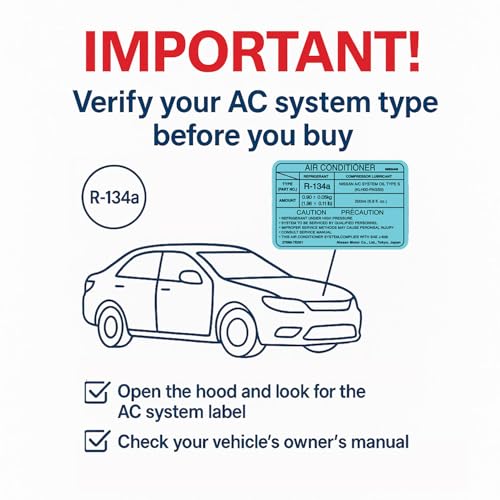
This is where things get tricky. Older vehicles (generally pre-1994) used R12 refrigerant, which is now phased out and difficult to find. Most cars from 1994-2021 use R134a, and newer models are switching to R1234yf. Using the wrong refrigerant can severely damage your system. Before buying any kit, confirm which refrigerant your vehicle requires. Some kits, like the FMSI Edelmann Dual Refrigerant Kit, offer compatibility with both R1234yf and R134a, providing flexibility if you work on multiple vehicles. If you’re unsure, check your owner’s manual or a trusted mechanic.
- A simple mistake here can be incredibly costly. R1234yf systems cannot be charged with R134a, and vice versa.
- Consider an eco-friendly option like the ZeroR R134a Replacement Kit; these hydrocarbon blends offer a more sustainable alternative to traditional refrigerants.
- If you own multiple vehicles of different ages, a kit that handles both R134a and R1234yf will save you money and storage space in the long run.
Hose Quality and Included Accessories
A flimsy hose can leak refrigerant, rendering the entire process pointless. Look for hoses that are reinforced and rated for high pressure. The SURIEEN R134A Recharge Hose Kit, for example, boasts a burst pressure of 3000 psi. Beyond the hose itself, consider the included accessories. A good kit will include a variety of adapters to fit different vehicle types, as well as leak detection tools.
A rule of thumb: always wear safety glasses and gloves when working with refrigerant, and never vent refrigerant into the atmosphere. It’s illegal and harmful to the environment.
If you’re also looking to restore the clarity of your headlights, check out our guide to the best lens restoration kits for a complete exterior refresh. And for a broader overview of options, explore our detailed review of AC recharge kits.
AC Recharge Kits for Car Compared
Here’s a comparison of the specifications for various AC recharge kits to help you choose the right one for your needs.
| Product Title | Refrigerant Type | Capacity (oz) | Hose Length (in) | Gauge Included | Leak Repair | Self-Sealing Valve |
|---|---|---|---|---|---|---|
| VIVOHOME 4 CFM Vacuum Pump Kit | R134a, R12, R22, R410a | N/A | 60 | Yes | No | Yes |
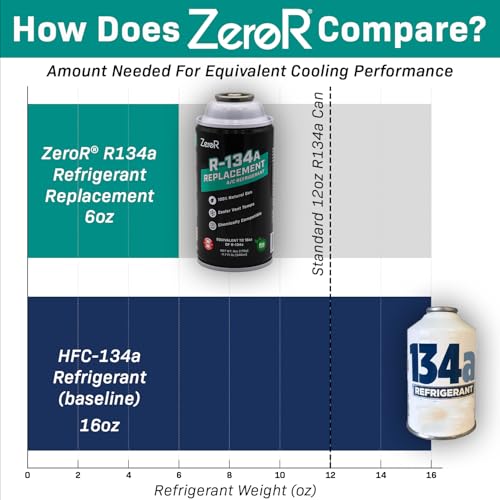
| ZeroR R134a Replacement Kit 3-Cans | Hydrocarbon Blend | 6 | N/A | No | No | Yes |
| FMSI Edelmann Dual Refrigerant Kit | R1234yf, R134a | 12 | N/A | Yes | No | No |
| A/C Pro Arctic Freeze Kit | R-134a | N/A | N/A | Yes | No | Yes |
| ZeroR Premium Repair & Recharge | R134a | N/A | 24 | Yes | Yes | Yes |
| SURIEEN R134A Recharge Hose Kit | R134a, R12, R22 | N/A | 15 | Yes | No | No |
| TNAIYH R134A Charge Hose Kit | R134a, R12, R22 | N/A | 15.4 | Yes | No | No |
Frequently Asked Questions
What if my car uses R12 refrigerant?
Finding R12 refrigerant is extremely difficult due to environmental regulations. Converting to a compatible R134a system with a retrofit kit is generally the most practical solution, though it may require additional component changes.
Are AC recharge kits difficult to use?
While many kits are designed for DIY use, they require a basic understanding of your car’s AC system. If you’re uncomfortable working with pressurized fluids or diagnosing automotive issues, seeking a professional mechanic is always the safest option.
Can I overcharge my AC system with a recharge kit?
Yes, overcharging is a real risk and can damage the compressor. Always follow the instructions included with the kit precisely and pay close attention to the pressure readings on the gauge to avoid exceeding the manufacturer’s specifications.
What does “leak repair” mean in the context of these kits?
Kits advertised with “leak repair” typically include a sealant that’s added to the system along with the refrigerant. These sealants can temporarily patch small leaks, but are not a permanent fix for significant damage – you may need to explore emergency car kits for roadside assistance.
What’s the difference between a manual and an automatic AC recharge kit?
Manual kits require you to control the refrigerant flow, monitoring the pressure yourself. Automatic kits have a built-in mechanism to deliver refrigerant based on pressure readings, but they are generally more expensive and may not be suitable for all vehicles, or as reliable as a quality manual kit paired with car starter kits.
The Bottom Line
Choosing an AC recharge kit often comes down to how much control you want versus how much fuss you’re willing to deal with. While a fully-featured kit like the FMSI Edelmann Dual Refrigerant Kit offers the greatest capability and accuracy, for most drivers, the A/C Pro Arctic Freeze Kit strikes the best balance of price, ease of use, and reliable performance. It gets the job done without requiring a deep understanding of AC systems.
If you’re on a tighter budget or primarily need a simple recharge solution for an older vehicle, the SURIEEN R134A Recharge Hose Kit is a solid pick. For those who want a more environmentally conscious approach, or have multiple vehicles, the ZeroR R134a Replacement Kit or the Edelmann kit are worth considering. Don’t forget, if you’re tackling other repairs, investing in a quality set of car tool kits will pay dividends.
Ultimately, the best AC recharge kit isn’t about the fanciest features or the lowest price. It’s about getting a kit with accurate gauges, the correct refrigerant compatibility for your vehicle, and durable components. Paying a little more for quality can save you a lot of headaches – and potentially expensive repairs – down the road. And while you’re at it, consider keeping some leather repair kits on hand to address wear and tear in the cabin.
