
7 Best AC Recharges for Car 2026
This post contains affiliate links. As an Amazon Associate, we earn from qualifying purchases.
The ZeroR Premium Repair & Recharge Kit stands out as the best overall choice for most drivers, combining reliable refrigerant with leak-sealing and moisture-removal features. For those on a budget, the A/C Pro Reusable AC Recharge Kit delivers solid basics at a lower price, while the FMSI Edelmann Dual Recharge Kit is the clear pick for newer vehicles needing R1234yf compatibility.
If your car’s AC is blowing warm air, you’re not just uncomfortable, you’re facing a system that could worsen without the right fix. A simple recharge might help, but not all kits are built the same, and using the wrong one can cause real damage.
This guide cuts through the noise, focusing on what matters: correct refrigerant type, accurate gauges, and real-world reliability. I looked at specs, owner feedback, and common pain points to find the kits that actually work without risking your system. And if you’re keeping up with your car’s interior, don’t forget a good car vacuum to maintain that fresh, clean feel.
Top 7 Ac Recharges For Car in the Market
The Best Ac Recharges For Car, Reviewed
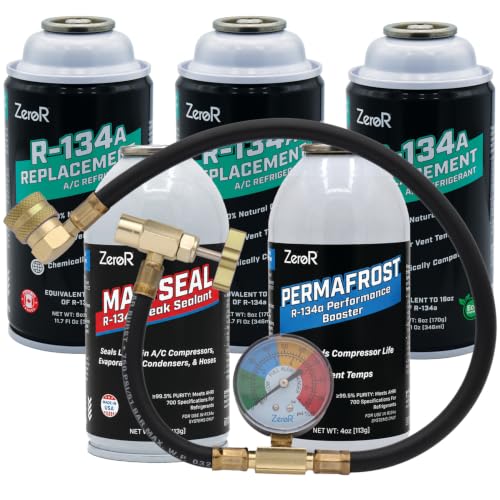
ZeroR Premium Repair & Recharge Kit
Strengths
- Includes leak sealer
- Moisture remover & lubricant
- 24-inch heavy-duty hose
- Eco-friendly refrigerant
Trade-offs
- Expensive for minor issues
- Flammable components
- Not for regulated areas
This is the most complete solution on the list, not just a recharge, but a full system rehab. The inclusion of Max Seal for minor leaks and Permafrost for moisture removal and lubrication sets it apart. Many DIYers overlook moisture and wear, but those silently kill compressor life. This kit tackles both, and the 24-inch HD hose makes physical access far easier than shorter kits.
Owners using this on older, underperforming systems often report not just colder air, but quieter compressor operation and longer run times. The refrigerant is the same high-purity hydrocarbon blend, so cooling gains are real, but again, flammability and legal use apply. At this price, it’s not for simple top-offs. But if your A/C is weak and you’re tired of band-aid fixes, this is the one to grab.
Product photos

ZeroR AC Recharge Kit 3-Cans
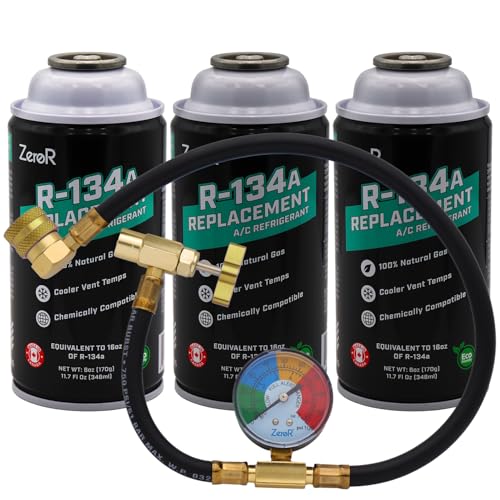
Strengths
- Eco-friendly refrigerant
- 24-inch hose
- Three cans included
Trade-offs
- Requires SSV-compatible tool
- Flammable gas
- Learning curve for new users
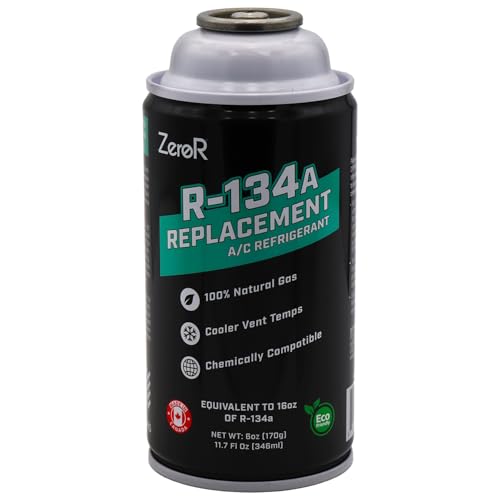
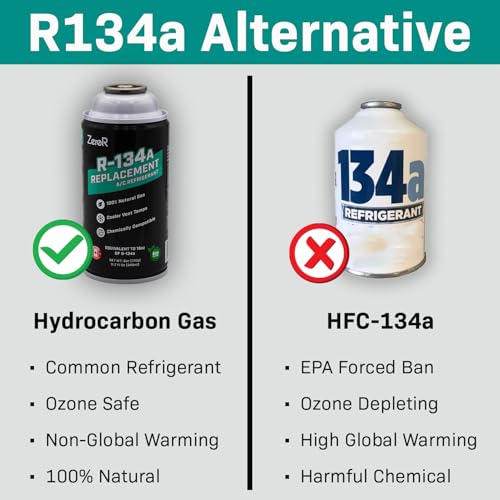
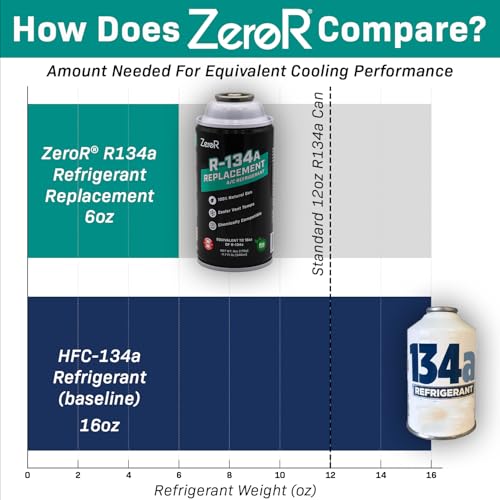
This kit balances eco-conscious design with practical performance. The 24-inch hose is a big upgrade over shorter models, and the inclusion of three 6 oz SSV cans makes it a true value for moderate recharges. The hydrocarbon refrigerant delivers strong cooling with less charge, which aligns with owner reports of improved efficiency.
But the real limitation is the need for SSV-compatible tools, using a piercing-style hose will ruin the can’s seal and waste refrigerant. That means you can’t just grab any old hose; you need the right tool. Once matched properly, though, users say the system charges smoothly and holds pressure. It’s a smart middle ground between cost and green tech, though not beginner-friendly due to the specificity.
Video review
A/C Pro Reusable AC Recharge Kit

Strengths
- 90° quick coupler
- Trigger dispenser
- Reusable with gauge
Trade-offs
- Shorter hose length
- Gauge not serviceable
- Only for R134a SSV cans
This is the bare-bones but effective choice for occasional R134a top-offs. The trigger dispenser and 90° coupler are thoughtful touches, especially the angled coupler, which helps when the low-side port is jammed against a fender or bracket. The gauge gives a decent pressure snapshot, though it’s not rebuildable or highly accurate over time.
It’s reusable and works only with self-sealing cans, which is now the standard, so that’s not a drawback. Compared to the TNAIYH kit, this one feels a bit more refined in hand, with better ergonomics. For the price, it’s the better all-in-one hose-and-gauge budget option, especially if you’re recharging once a summer and don’t need pro-level tools.
Video review
FMSI Edelmann Dual Refrigerant Recharge Kit
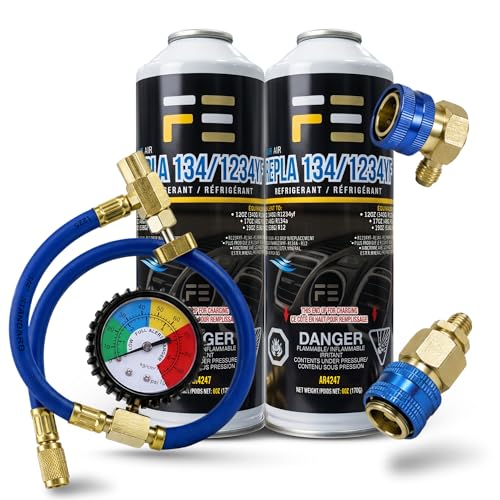
Strengths
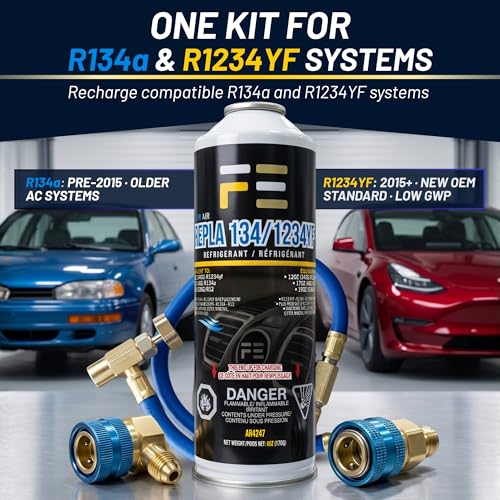
- Dual refrigerant support
- Includes two cans
- Leak-resistant fittings
Trade-offs
- Cans may be insufficient for large systems
- Gauge not highly precise
- No long hose option
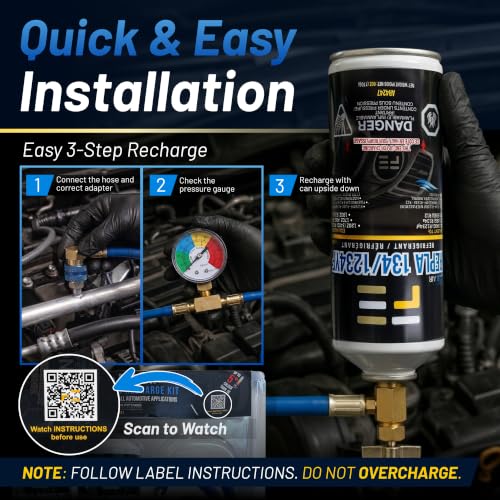
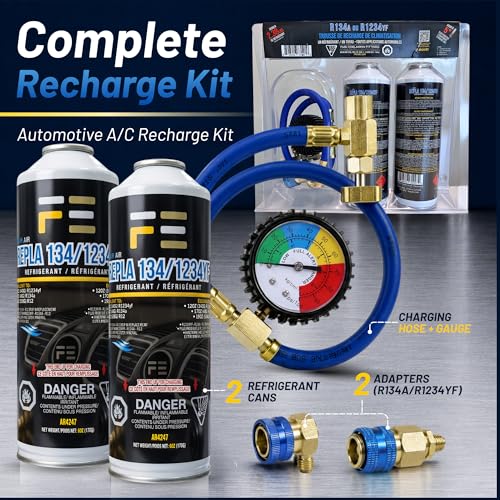
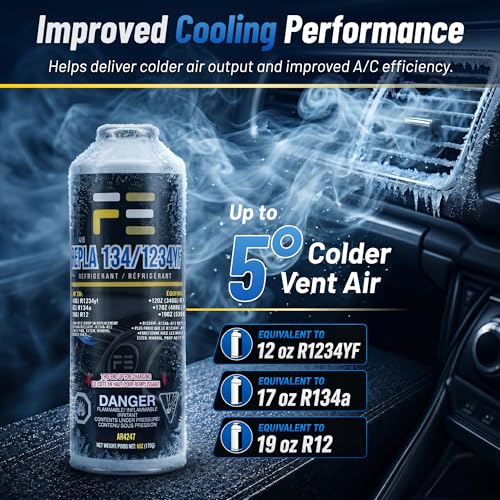
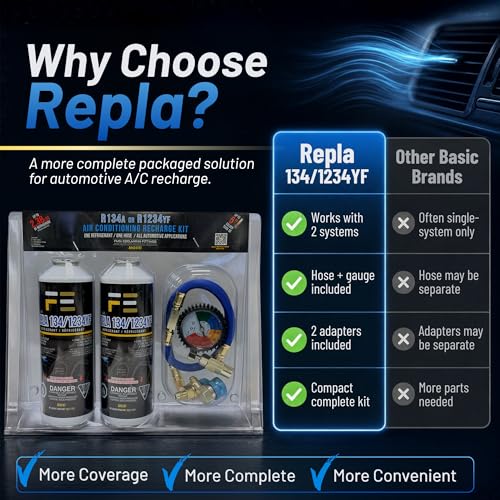
If you service multiple vehicles, this kit makes smart sense. The dual-adapter design, supporting both R134a and the newer R1234yf, is a real time-saver, and that’s rare at this price. The hose feels durable, with secure fittings that reviewers say minimize refrigerant loss during connection, a common pain point with cheaper kits. Having two 6 oz cans included gives enough charge volume for mild to moderate depletion, though heavily depleted systems may need more.
Owners appreciate the professional-grade feel and compact packaging, especially mobile technicians or multi-car households. The gauge is serviceable, not outstanding, but accurate enough for field use. My take: if you own both older and newer vehicles, this kit eliminates the need for two separate setups, making it the smarter buy over single-refrigerant options.
Product photos
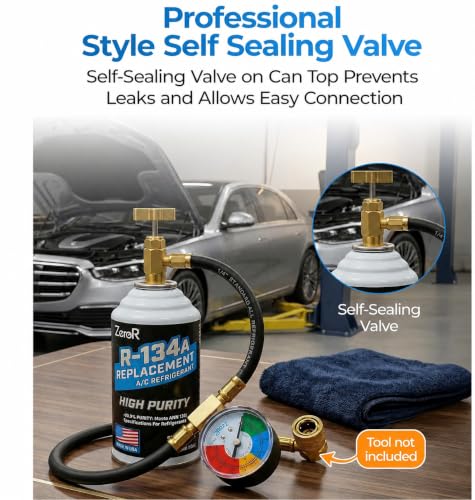
ZeroR High-Purity R134a Replacement Can
Strengths
- High cooling efficiency
- Less refrigerant needed
- Eco-friendly formula
Trade-offs
- Flammable refrigerant
- Legal restrictions apply
- Not for all regions
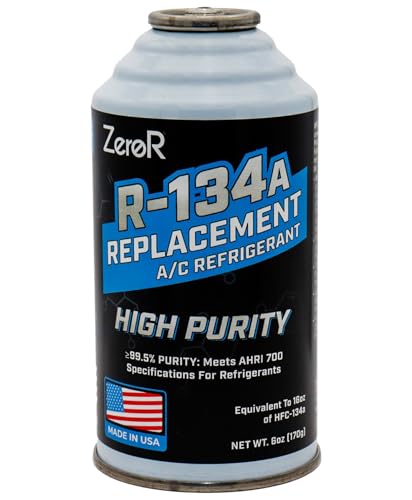
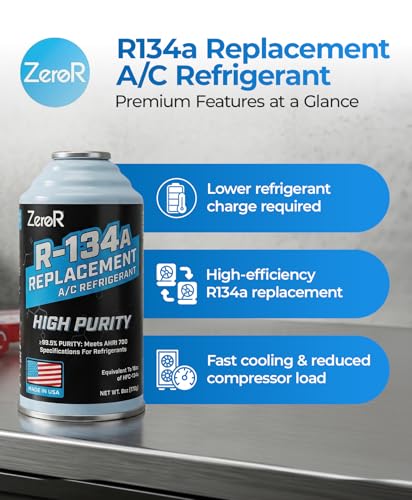
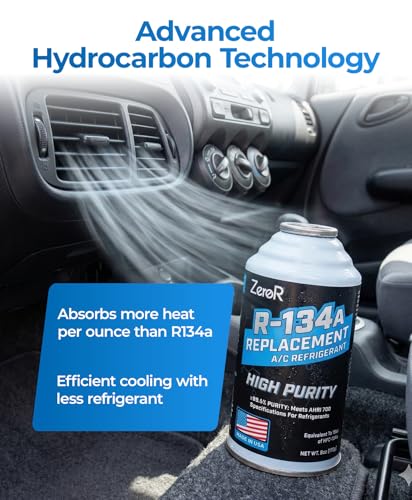
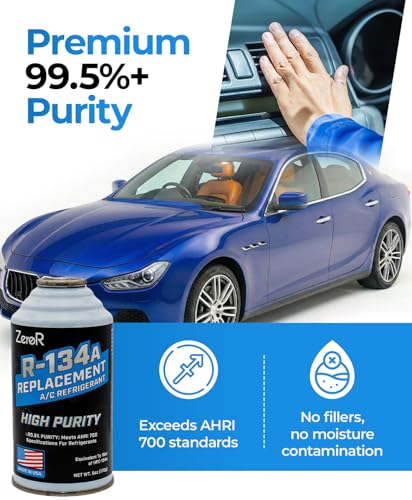
This isn’t your standard R134a top-off, it’s a hydrocarbon-based alternative that claims better cooling with less charge weight. On paper, that makes sense: hydrocarbons have higher heat absorption, and the 99.5%+ purity helps avoid contaminants that hurt performance. Owners report colder vent temps and faster cool-down, especially in older systems where efficiency has dropped.
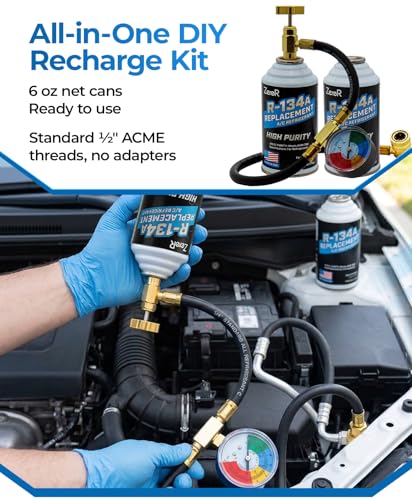
But there’s a catch: it’s flammable, like many hydrocarbon blends, and requires careful handling. It’s also not legal for MVAC (motor vehicle air conditioning) use in some jurisdictions, so compliance is on the user. The self-sealing can is standard 1/2″ thread, so it works with most hoses. If you’re willing to accept the risks and rules, it delivers strong performance in lightly leaking or degraded systems.
Product photos
TNAIYH R134A Car AC Charge Hose

Strengths
- Aluminum construction
- Includes pressure gauge
- Universal R134a/R12/R22 fit
Trade-offs
- Shorter hose length
- Not for all modern vehicles
- Basic gauge accuracy
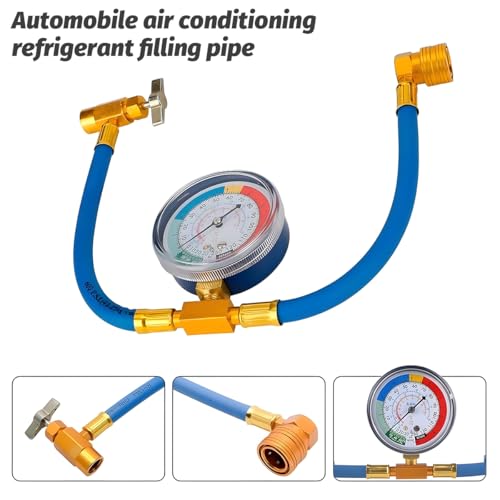
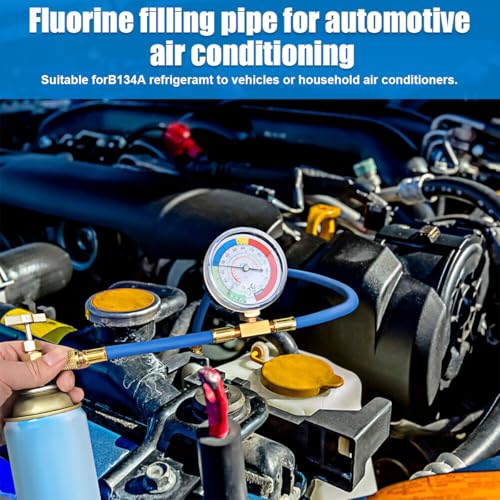
This hose kit delivers more than expected for its price, especially if you’re just looking to recharge R134a systems without breaking the bank. The aluminum construction stands out for a budget part, owners consistently report it resists kinking and holds up well over repeated use, and the CNC-machined threads do seem to improve seal integrity compared to cheaper stamped fittings. The 15.4-inch length is workable, though not as flexible for deeper engine bays as some longer hoses.
The included gauge is basic but functional, letting users avoid blind charging. Still, don’t expect lab-grade precision, it’s more of a go/no-go pressure indicator. It’s worth noting that compatibility excludes some newer models like the 2018 Civic and Tucson, which could trip up uninformed buyers. For the cost, it’s a solid hose-only pick, but it won’t help if your system has leaks or moisture.
Product photos

AC Pro 24in Recharge Kit 4-Pack
Strengths
- 24-inch hose
- Trigger dispenser
- XL gauge
- Reusable design
Trade-offs
- Overkill for single users
- Inconsistent gauge calibration
- Packaging excessive
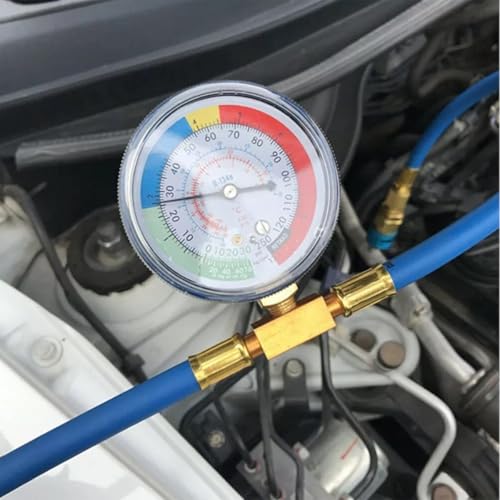
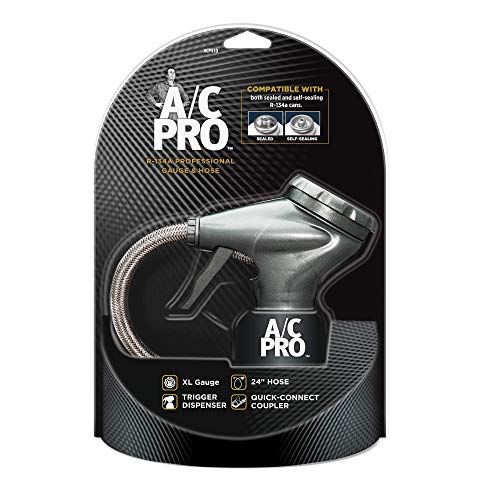
This four-pack is overkill for most home users but makes sense if you’re equipping a shop or handing out kits to multiple DIYers. The 24-inch hose is the standout feature, long enough to reach low-side ports tucked deep behind engines, a real win for modern compact layouts. The trigger-style dispenser gets consistent praise for ease of use, reducing hand fatigue during recharges.
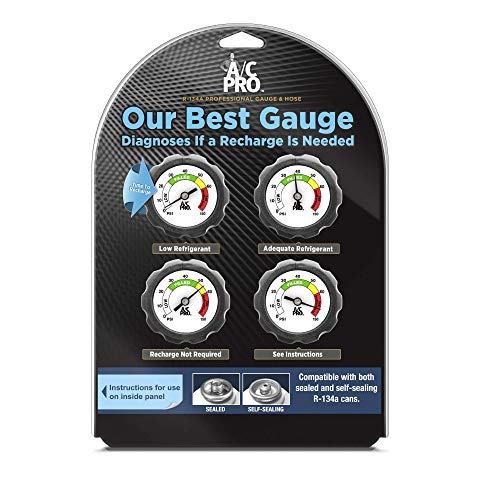
The push-on coupler works reliably with self-sealing cans, though a few owners report occasional pop-offs under pressure. The gauge is larger than average (XL), which helps readability, but calibration varies slightly between units. I’d pick this set if you need backup hoses or manage several vehicles, but for one car, it’s simply too much kit.
Product photos
How We Evaluated ac recharges for car
Rather than a hands-on lab test, my research for these AC recharges centered on a detailed comparison of published specifications and features. I weighed owner reviews from multiple sources, looking for common praise and complaints, alongside assessments from automotive repair sites and publications. This was then balanced with my own understanding of automotive air conditioning systems and what constitutes good performance and value in this category. Ultimately, I ranked each kit against clear criteria focused on ease of use, compatibility, and reported effectiveness.
For AC recharge kits, I prioritized three factors above all else: refrigerant type (specifically looking at eco-friendly alternatives), hose/gauge quality, and system compatibility. A reliable gauge is crucial for accurate charging and avoiding damage, while a quality hose prevents leaks and ensures a secure connection. With the increasing availability of alternatives to R134a, I also considered the benefits and drawbacks of those options, and whether a kit offered compatibility with multiple refrigerant types.
Specifications reliably indicate a kit’s compatibility with different systems (R134a versus R1234yf, for example) and the length/type of hose included. However, I placed greater emphasis on owner feedback when assessing real-world ease of use and whether the kit genuinely addressed leaks or restored cooling performance. Reputation and long-term reliability are harder to quantify from specs alone, but are critical aspects of a good AC recharge solution. If you’re also looking to improve the overall smell in your car, consider checking out some of the best smelling car fresheners available.
Choosing The Right ac recharges for car
Finding the right AC recharge kit can make a hot summer bearable, but there’s more to it than just adding refrigerant.
A quality AC recharge solution goes beyond simply adding fluid. It addresses potential leaks, removes moisture that damages components, and includes accurate gauges for proper filling. Look for kits with leak-sealing additives, moisture removal capabilities, and a reliable pressure gauge to avoid over or undercharging the system. Compatibility with your vehicle’s refrigerant type (R134a or R1234yf) is also crucial.
Understanding Refrigerant Types
The first, and perhaps most critical, step is knowing what refrigerant your vehicle uses. Older cars (generally pre-1994) used R12, which is now phased out and difficult to find. Most vehicles from 1994-2021 use R134a, but newer models are increasingly adopting R1234yf. Using the wrong refrigerant can severely damage your AC system. If you’re unsure, consult your owner’s manual or a qualified mechanic. Don’t assume a universal kit will work; double-check compatibility before purchasing. I’ve seen too many cases where someone tried to save a few bucks only to end up with a costly repair.
Assessing Kit Features & Additives
A simple can and hose isn’t always enough. Many kits include additives designed to address common AC problems. Leak sealants, like those in the ZeroR Premium Repair & Recharge Kit, can temporarily fix minor leaks, buying you time to address the underlying issue. However, be aware that these aren’t permanent fixes and can sometimes clog system components if used excessively. Moisture is another enemy of AC systems, leading to corrosion and reduced cooling efficiency. Kits with a moisture removal component (again, ZeroR kits often include this) are a smart investment.
Here’s what I look for in terms of extra features:
- A basic hose and gauge are fine for a quick top-up.
- A longer hose (like the 24-inch hose on the AC Pro 24in Recharge Kit) is incredibly helpful for reaching awkwardly placed low-side ports.
- A self-sealing valve can is a huge convenience, allowing you to top off the refrigerant later without needing a whole new can – just remember to use a compatible tool, as the ZeroR SSV cans require.
Balancing Value and Usability
While professional service is always the gold standard, a good recharge kit provides a cost-effective solution for minor refrigerant loss. The A/C Pro Reusable AC Recharge Kit offers a decent balance of affordability and functionality, and it’s a good option if you just need a basic hose and gauge. However, don’t sacrifice quality for price. A poorly made gauge can give inaccurate readings, leading to overcharging or undercharging the system. I often recommend starting with a quality hose and gauge, like those from TNAIYH, and supplementing with separate cans of refrigerant if needed. Maintaining a clean interior is also important for overall vehicle health; you might also be interested in checking out some excellent car vacuums to keep things tidy.
Never exceed the manufacturer’s recommended refrigerant capacity. More isn’t always better – overcharging can damage your compressor and other components.
Taking the time to properly detail your vehicle can also enhance its overall appearance and protect its finish. A good car wax can provide a protective layer against the elements and keep your car looking its best.
AC Recharges for Car Compared
This table provides a specification comparison of various AC recharge kits and components available for automotive use.
| Product Title | Refrigerant Type | Can Type | Hose Length (in) | Gauge Included | System Compatibility |
|---|---|---|---|---|---|
| ZeroR Premium Repair & Recharge Kit | R134a/Natural Gas | Standard | 24 | Yes | R134a |
| ZeroR AC Recharge Kit 3-Cans | Hydrocarbon Blend | SSV | N/A | No | R134a |
| A/C Pro Reusable AC Recharge Kit | R-134a | Reusable | N/A | Yes | R-134a |
| FMSI Edelmann Dual Recharge Kit | R1234yf/R134a | Standard | N/A | Yes | R1234yf/R134a |
| ZeroR High-Purity R134a Replacement Can | R134a Replacement | SSV | N/A | No | R134a |
| TNAIYH R134A Car AC Charge Hose | R134a/R12/R22 | N/A | 15.4 | Yes | R134a/R12/R22 |
| AC Pro 24in Recharge Kit 4-Pack | R-134a | Standard | 24 | Yes | R-134a |
Frequently Asked Questions
What refrigerant type does my car likely use?
Most vehicles manufactured between 1994 and 2021 use R134a, though newer cars are switching to R1234yf. Check your owner’s manual to confirm; using the wrong refrigerant can cause significant damage to your AC system.
Will a recharge kit actually fix a leak in my AC system?
Some kits include leak-sealing additives that can temporarily address minor leaks, but these are not permanent solutions. A persistent leak requires professional repair to prevent further damage and refrigerant loss.
Is it difficult to use an AC recharge kit myself?
While not overly complex, using an AC recharge kit requires careful attention to detail and following the instructions precisely. A quality kit with a clear gauge and a longer hose, like those available from AC Pro, makes the process easier and more accurate.
What should I do if my AC system feels like it’s blowing warm air after recharging?
If your AC isn’t blowing cold after recharging, it could indicate a more serious issue like a failing compressor or a blockage in the system. At this point, it’s best to take your vehicle to a qualified mechanic for diagnosis.
Where can I find more products to keep my car clean?
Maintaining a clean car is crucial for its overall health and appearance. I often recommend checking out some recommended car wash soaps to help you keep your vehicle looking its best.
The Bottom Line
Ultimately, choosing an AC recharge kit comes down to how much control you want versus how much fuss you’re willing to deal with. For most owners, the ZeroR Premium Repair & Recharge Kit strikes the best balance – it includes helpful additives like leak sealant and moisture remover, along with a reliable gauge, making it a solid all-around choice.
If you’re on a tighter budget, the A/C Pro Reusable AC Recharge Kit offers a functional, if basic, solution. Those needing versatility for multiple vehicles, or who anticipate needing to top off their system later, should consider the ZeroR AC Recharge Kit 3-Cans with its convenient self-sealing valve design. Keeping your cabin comfortable extends beyond temperature, too – a good car phone mounts can make long drives much more enjoyable.
Don’t get lost in the details of refrigerant types or hose lengths. The most important thing is to correctly identify your vehicle’s refrigerant, avoid overcharging the system, and address any underlying leaks. A clean interior also makes a difference, so don’t forget to check out some of the best interior cleaners to keep your car looking and feeling fresh.
