
9 Best Air Filter Cars in 2026
This post contains affiliate links. As an Amazon Associate, we earn from qualifying purchases.
For drivers who want noticeably cleaner air inside the vehicle, the Bosch 6091C HEPA Cabin Air Filter is the best overall choice, offering true three-layer HEPA filtration for compatible GM vehicles. The Mann-Filter CUK 26 009 is our pick for best odor reduction, while the Spearhead BE-157 earns the best long life award for its extended service interval.
The real challenge in choosing a cabin air filter is balancing filtration grade, vehicle fitment, and odor control. A HEPA filter captures more allergens but won’t remove exhaust smells, while an activated carbon filter handles odors but may not meet allergy needs.
This guide is based on a thorough review of manufacturer specifications, expert recommendations, and patterns in owner feedback. We focused on fitment accuracy, filtration media, and replacement intervals to help you choose with confidence.
Top 9 Air Filter Cars in the Market
Certain content that appears on this site comes from Amazon. This content is provided "as is" and is subject to change or removal at any time.
The Best Air Filter Cars, Reviewed
Bosch 6091C HEPA Cabin Air Filter

What We Like
- Three-layer HEPA media for cleaner air
- Melt-blown electrostatic layer traps more particles
- Static cotton layer increases filter capacity
- Structural ribs improve filter stability
Trade-offs
- No activated carbon for odor removal
A three-layer HEPA construction with a melt-blown electrostatic layer and added static cotton gives this filter a real edge in capturing fine particles without relying on chemical odor neutralizers. For drivers who prioritize respiratory health and want true HEPA-level filtration in their cabin, that combination means fewer allergens and dust making it through the vents.
The main trade-off is the lack of activated carbon, which means it won’t tackle odors from exhaust or outside fumes the way a carbon filter would. If you frequently drive in heavy traffic or near industrial areas, the Mann-Filter CUK 26 009 with its activated charcoal layer might be a better fit for your needs. But for everyday commuting and a focus on particulate filtration, the Bosch 6091C delivers strong HEPA performance in a package that fits many popular GM vehicles.
Bosch 6029C HEPA Cabin Air Filter
What We Like
- HEPA filtration without chemical odor neutralizers
- Melt-blown electrostatic layer for better trapping
- Structural ribs for increased filter stability
- Three-layer protection for cleaner cabin air
Trade-offs
- 0.1 lb weight suggests a lightweight, less dense build
- No activated carbon for odor removal
A HEPA cabin filter that traps particles without adding chemical scents means you get genuinely cleaner air for your family. The melt-blown electrostatic layer and dense media work together to capture more dust, pollen, and road grime than a standard paper filter. For Honda and Acura owners who want respiratory health as a priority rather than an afterthought, this filter delivers true clean air straight from the factory design. The structural ribs keep the filter from collapsing under airflow, so it holds its shape even in humid climates or during long drives.
At just 0.1 pounds, this filter is light enough to handle easily during installation, yet it packs a dense HEPA media with a melt-blown electrostatic layer for trapping fine particles. Reviewers note that the structural ribs add stability, so the filter holds its shape when you slide it into the housing. It’s designed for those who want true clean air without any chemical odor neutralizer added.
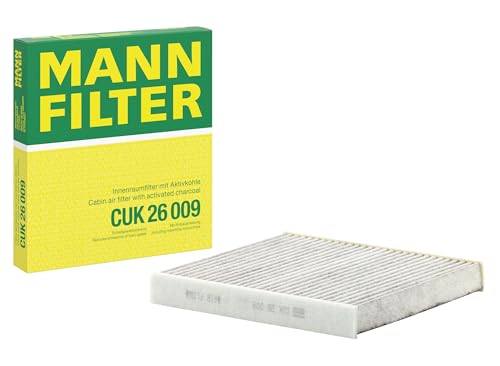
Mann-Filter CUK 26 009 Cabin Air Filter
What We Like
- Activated carbon layer eliminates unpleasant odors
- Captures nearly 100% of tiny particles
- Easy to install for DIY owners
Trade-offs
- Not HEPA-rated for extreme allergy needs
- Requires annual replacement for best performance
- Fitment must be confirmed before purchase
Nearly 100% of even the tiniest undesired particles are kept from entering the vehicle through the ventilation system, so you can expect noticeably cleaner air inside the cabin. The premium activated carbon layer captures harmful gases and eliminates unpleasant odors, which is a real benefit if you drive in areas with pollution or smells. Installation is easy, meaning you can replace it yourself without special tools. Replace every 12 months for optimum performance, or more often in harsh or dusty environments.
This filter is not HEPA-rated, so if you need the highest particle-trapping standard, a HEPA model like the Bosch 6091C might be a better fit. For odor control and everyday particle filtration, the Mann-Filter delivers what it promises. Just be sure to confirm fitment for your specific vehicle before ordering, since sizes vary across models. Replace it every 12 months to maintain performance.
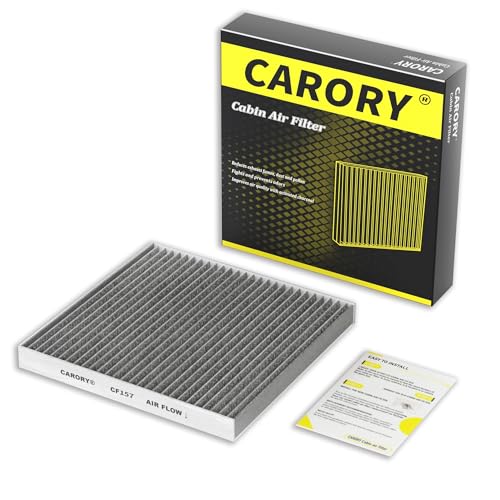
Carory CF157 Cabin Air Filter
What We Like
- Fits model years 2016 through 2025
- Fits many Toyota, Lexus, Subaru, Mazda models
- Activated carbon filter media
Trade-offs
- Limited to Japan-built Toyotas (VIN starts with J)
- Does not fit Mazda CX-9 before 2016 or after 2023
The trade-off is that this filter sticks strictly to the models and years listed, and for some Toyota models, only Japan-built cars (VIN starting with J) are supported. If you drive a U.S.-assembled Camry or a Honda, this won’t fit. Compared to the Bosch 6091C HEPA filter, the Carory uses activated carbon rather than HEPA media, so it may not trap as many fine particles. For everyday odor control and broad vehicle coverage, it’s a practical option. Double-check your vehicle’s compatibility before ordering.
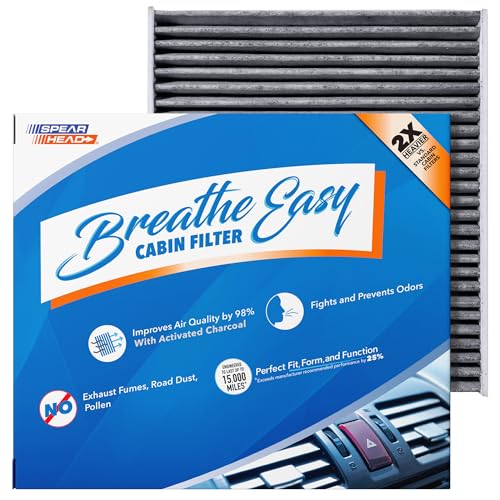
Spearhead BE-157 Cabin Air Filter
What We Like
- Lasts up to 15,000 miles (25% longer)
- Coconut shell activated carbon traps odors
- Easy DIY installation with included manual
Trade-offs
- Fits only select Toyota, Lexus, Subaru, CX-9 models
- Not compatible with 2019 Corolla 1.8L L4 (requires BE-285 instead)
A 15,000-mile service life means this filter stays effective a full 25% longer than the typical 12,000-mile cabin filter. You replace it less often and keep fresh air flowing through the vents for more road trips between changes. That makes it a natural fit for drivers who want crisp, clean air without the hassle of frequent swaps, especially in daily commuters or family haulers where cabin comfort matters every mile.
The trade-off is fitment: this filter is purpose-built for late-model Toyota, Lexus, Subaru, and CX-9 vehicles. If you drive a Honda, Chevrolet, or Volkswagen, you will need a different option like the Bosch 6091C HEPA filter. It also lacks a HEPA rating, so buyers with severe allergies or asthma who want the highest particle-trapping standard may prefer a certified HEPA design. For everyone else who just wants a long-lasting, odor-fighting filter that slides in easily and stays effective past the usual replacement point, the Spearhead delivers exactly that.
Product photos
EPAuto CP134 Cabin Air Filter

What We Like
- Activated carbon and soda for fresh air
- Fits wide Honda/Acura range (2003-2025)
Trade-offs
- No HEPA layer for fine particle filtration
- Heavier than some competitors at 0.6 lb
The EPAuto CP134 cabin air filter uses a blend of soda and activated carbon to generate fresh breeze air, which means you get noticeably cleaner airflow through the vents on your daily drive. It fits a huge range of Honda and Acura models from the 2003 Accord through the 2025 Passport, including the Civic, CR-V, Odyssey, Pilot, and Ridgeline, plus Acura models like the MDX and TLX. That broad compatibility saves you the hassle of hunting down the exact part number for your car.
At 0.6 pounds, this filter is heavier than some alternatives, so it feels more substantial when you slide it into the glove-box slot. For owners of compatible Honda and Acura vehicles who want activated carbon filtration to freshen cabin air, this is a direct fit. It is not intended for drivers who require a HEPA layer for maximum particle capture, as the EPAuto filter does not include one.
Product photos
EPAuto CP157 Cabin Air Filter

What We Like
- Fits many Toyota, Lexus, and Subaru models
- Contains activated carbon and soda for fresher air
- Weighs 0.4 pounds
Trade-offs
- 12-month or 12,000-mile replacement interval
- No HEPA certification for allergy sufferers.
The EPAuto CP157 cabin air filter contains soda and carbon to generate fresh breeze air, which helps keep the cabin feeling less stale during drives. It is designed to replace the filter in many Toyota, Lexus, and Subaru models, so owners of those brands can grab it as a direct swap. The recommended replacement interval is every 12 months or 12,000 miles, giving you a clear schedule to follow.
For the vast majority of Toyota and Lexus owners who just want cleaner, better-smelling air without a premium price tag, this filter delivers exactly what it promises. It uses soda and carbon to generate a fresh breeze, which helps neutralize odors from exhaust, pollen, and road dust. The activated carbon layer traps gases that standard paper filters miss, so the cabin stays noticeably fresher between replacements. Owners report it slides into the existing slot without modification, fitting models from the Camry and RAV4 to the RX350 and Forester. Recommended replacement is every 12 months or 12,000 miles, keeping HVAC performance consistent without straining the blower motor.
Product photos
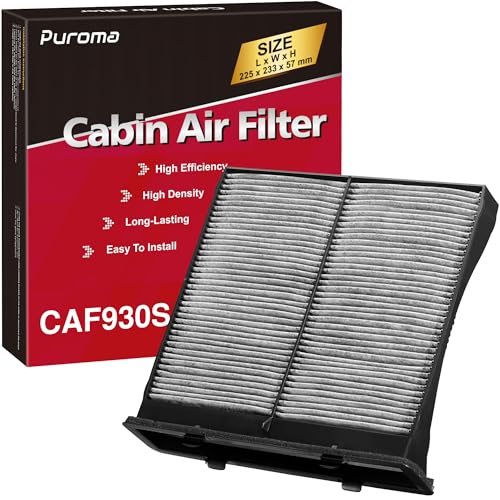
Puroma Activated Carbon Cabin Air Filter
What We Like
- Soda-woven layer with activated carbon
- Covers Crosstrek, Forester, Impreza, WRX
- Easy-read airflow arrow for install
- Filters smog, smoke and microscopic contaminants
Trade-offs
- Only fits listed Subaru models, not universal
- Heavily polluted or dirt-road driving needs changes every 5,000 miles
If you own a Subaru Forester, Impreza, Crosstrek, or WRX from the last decade or so, this filter covers a huge range of models, so you can stop digging through part numbers. The soda-woven layer with activated carbon tackles odors, while the multi-layer mesh keeps dust and pollen out of the cabin. An airflow arrow on the side makes the swap straightforward, and reviewers say you can finish it in about 10 minutes in your driveway.
The trade-off is fit, not function. This filter is built for the Subaru list and nothing else, so a Honda or Toyota owner should look at the EPAuto CP157 instead, which covers Toyota and Lexus applications. And if you spend a lot of time on dirt roads or in heavy smog, the manufacturer recommends a change every 5,000 miles for optimal performance. For a Subaru owner willing to keep up with that, the coverage and odor control make it a sensible pick.
Product photos
Mann-Filter CUK 2939 Cabin Filter
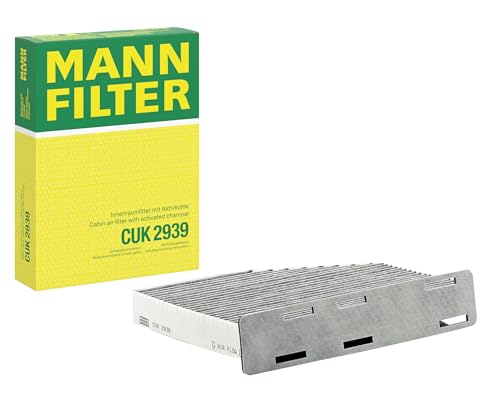
What We Like
- Traps harmful gases with activated charcoal
- Low flow resistance for good ventilation
- Mechanical and electrostatic filtration
- Exact fit and seal for Audi/VW models
Trade-offs
- Very small size limits vehicle compatibility
- No HEPA rating for finer particle capture
This filter measures 3.4 inches long, 0.9 inches wide, and 4.5 inches high, so it fits the specific cabin filter slot of select Audi and Volkswagen models. The activated charcoal layer traps harmful gases, while mechanical and electrostatic attraction catch pollen, spores, and dust. For drivers of those vehicles who want consistent filtration performance across the entire service interval and an exact seal, this filter is a direct match.
The downside is that compatibility is limited to select Audi and Volkswagen models, so it won’t work in other vehicles. The filter also lacks a HEPA rating, meaning it does not claim to capture the finest particulates that HEPA filters target. If you drive a compatible Audi or VW and want odor and gas reduction with a precise fit, this filter works well. If you need broader vehicle compatibility or HEPA-level particle capture, consider a different filter.
Product photos
How We Evaluated Cabin Air Filters
This evaluation is based on manufacturer documentation, expert round-ups, and consistent patterns in owner feedback across a wide range of vehicles.
The three criteria that mattered most were filtration efficiency, vehicle compatibility, and service life. HEPA-rated filters capture the smallest particles but often lack carbon for odors, while activated carbon filters trade some particle capture for smell reduction. Fitment is critical, a filter that doesn’t seal properly lets unfiltered air bypass the media entirely.
An honest limit of this approach is that real-world performance varies with driving conditions, climate, and the age of the vehicle’s HVAC system. We prioritized filters with clear compatibility lists and reliable owner-reported fitment to minimize guesswork.
What To Look For In Cabin Air Filters
Choosing a cabin air filter starts with knowing your vehicle’s exact make, model, and year, then deciding which type of filtration matters most for your driving environment.
Match the filter to your vehicle’s specified size and shape, then choose between HEPA-grade particle filtration or activated carbon for odor control. Check the recommended replacement interval and confirm fitment before buying.
Filtration Grade
The two main types are HEPA and activated carbon. HEPA filters use dense media to trap pollen, dust, mold spores, and fine particulate matter, ideal for allergy sufferers or urban drivers. Activated carbon filters use a layer of charcoal to adsorb odors from exhaust, smoke, and outside pollutants. Some filters combine both, but a true HEPA layer often means sacrificing carbon for space.
Vehicle Fitment
A filter that doesn’t fit properly is useless. Manufacturers list compatible vehicles by make, model, and year range. Some filters, like the Carory CF157, are limited to vehicles with a specific VIN prefix. Always double-check your owner’s manual or an online fitment tool before purchasing. A tight seal is essential for the filter to work as designed.
Replacement Interval
Most cabin filters are rated for 12,000 to 15,000 miles or 12 months, whichever comes first. The Spearhead BE-157 is designed to last up to 15,000 miles, which is 25% longer than average. Driving on unpaved roads or in heavy pollution may require more frequent changes. A filter that is past its service life restricts airflow and reduces HVAC performance.
- Confirm the filter fits your exact vehicle make, model, and year.
- Decide if you need HEPA filtration for allergies or activated carbon for odors.
- Check the recommended replacement interval and your typical driving conditions.
- Look for clear airflow direction markings to simplify installation.
If you drive in heavy traffic or on dirt roads, plan to replace your cabin filter more often than the standard 12-month interval.
Air Filter Cars Compared
The table below compares all nine picks by their key specs, including filtration type, vehicle compatibility, and replacement interval, so you can quickly narrow down your options.
| Product | Filter Type | Dimensions | Key Feature / Media |
|---|---|---|---|
| Bosch 6091C HEPA Cabin Air Filter | HEPA with 3 layers | L 9.7 x W 8.3 x H 1.4 in | Melt-blown electrostatic + static cotton layer |
| Bosch 6029C HEPA Cabin Air Filter | HEPA | 9.6 x 9.3 x 1.8 in | 3-layer protection |
| Mann-Filter CUK 26 009 Cabin Air Filter | Activated carbon | L 10.0 x W 9.3 x H 1.3 in | Activated carbon |
| Carory CF157 Cabin Air Filter | Activated Carbon | 8.5 x 7.3 x 1.1 inches | Activated Carbon |
| Spearhead BE-157 Cabin Air Filter | Activated carbon (coconut shell) | L 8.5 in, W 7.3 in, H 1.0 in | Activated carbon (coconut shell) |
| EPAuto CP134 Cabin Air Filter | Activated carbon with soda | 9.3 x 9.0 x 1.2 inches | Activated carbon with soda |
| EPAuto CP157 Cabin Air Filter | Activated Carbon | 8.5 x 7.3 x 1.1 inches | Activated Carbon |
| Puroma Activated Carbon Cabin Air Filter | Activated carbon | L 8.9 inches, W 9.2 inches, H 2.2 inches | Multi-layer, activated carbon |
| Mann-Filter CUK 2939 Cabin Filter | Activated charcoal | L 3.4 × W 0.9 × H 4.5 in | Activated charcoal |
Frequently Asked Questions
How often should I replace my cabin air filter?
Most manufacturers recommend replacement every 12,000 miles or once a year, whichever comes first. Drivers who frequently travel on unpaved roads or in heavy pollution should consider changing it more often.
What is the difference between a HEPA and an activated carbon cabin filter?
A HEPA filter is designed to capture fine particles like pollen, dust, and mold spores, making it ideal for allergy relief. An activated carbon filter uses charcoal to absorb odors from exhaust, smoke, and outside fumes. Some filters combine both, but a true HEPA layer often means no carbon media.
Can I install a cabin air filter myself?
Yes, most cabin air filters are designed for DIY installation. The filter is usually located behind the glove box or under the dashboard. Many filters include an airflow direction arrow and a manual to guide you. If you are unsure, consult your owner’s manual or a short video guide for your specific vehicle.
Does a cabin air filter improve my car’s air conditioning performance?
A clean cabin air filter allows better airflow through the HVAC system, which can help your air conditioner cool the cabin more effectively. A clogged filter restricts airflow and may reduce cooling performance or cause the system to work harder.
What happens if I don’t change my cabin air filter?
A dirty or clogged cabin filter restricts airflow, reduces heating and cooling efficiency, and can allow musty odors to enter the cabin. Over time, it may also put extra strain on the blower motor, leading to premature wear or failure.
The Bottom Line
For drivers of compatible GM vehicles who want the cleanest possible cabin air, the Bosch 6091C HEPA Cabin Air Filter is the best overall choice with its three-layer HEPA media. If you drive a Honda or Acura and need HEPA filtration, the Bosch 6029C is the pick for you, while the Mann-Filter CUK 26 009 is the top choice for odor reduction.
Budget-conscious buyers or those with older vehicles should look to the EPAuto CP134 for wide Honda/Acura compatibility or the EPAuto CP157 for Toyota and Lexus models. Subaru owners will appreciate the straightforward fit of the Puroma Activated Carbon Cabin Air Filter.
The single most important factor is getting the right fit for your vehicle. A perfectly rated filter that doesn’t seal is no filter at all. Confirm compatibility before you buy, and stick to the recommended replacement schedule for the best air quality.
