
10 Best Arm Cycle Machines in 2026
This post contains affiliate links. As an Amazon Associate, we earn from qualifying purchases.
The Sunny Health & Fitness Under Desk Smart Mini Pedal Exerciser earns our Best Overall award for its versatile 2-in-1 design that works for both arms and legs. It pairs that with a quiet mesh belt-drive resistance system. For those needing premium magnetic smoothness, the DeskCycle MagneTrainer is our Best Premium Magnetic pick. The Hybodies Arm Bike stands out as Best For Rehab with its four distinct training modes.
Arm cycle machines solve a specific problem: how to get upper body movement when you’re stuck at a desk, recovering from an injury, or simply want a low-impact cardio option. The right choice depends on your primary use, whether that’s quiet office work, structured physical therapy, or easy portability between rooms.
We evaluated these machines by analyzing manufacturer specifications, expert round-ups, and patterns in owner feedback. This guide breaks down the key features that matter most, from resistance type and noise level to stability and portability, so you can match a model to your routine.
Top 10 Arm Cycle Machines in the Market
Certain content that appears on this site comes from Amazon. This content is provided "as is" and is subject to change or removal at any time.
The Best Arm Cycle Machines, Reviewed
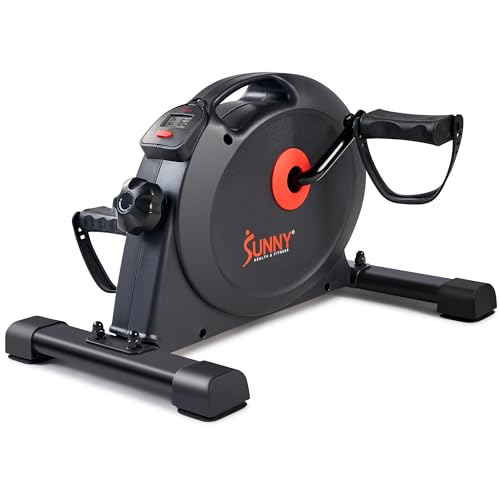
Sunny Health & Fitness Under Desk Smart Mini Pedal Exerciser
What We Like
- 2-in-1 design for legs and arms
- Quiet mesh belt-drive resistance
- Stepless micro-adjustable intensity
- Compact and lightweight for portability
Trade-offs
- At 11.7 lb, heavier than some portable arm-only models
- At 11.7 lb, too heavy for quick desk-to-desk transport.
A 2-in-1 design that works for both legs and arms makes this mini pedal exerciser unusually versatile for an under-desk machine. The stepless mesh belt-drive lets you dial in resistance smoothly and quietly, so you can pedal through a workday or a TV show without annoying anyone nearby. At 11.7 pounds with a built-in handle, it’s easy to slide under a desk or tuck into a closet when not in use. That combination of dual-purpose function and silent operation fits a wide range of daily routines, from office workers wanting to move more to seniors looking for gentle joint-friendly exercise.
The trade-off for that versatility is weight: at 11.7 pounds, it’s noticeably heavier than dedicated arm-only models like the MOMODA Arm Bike (3.3 lb). You might prefer that lighter option if you only need upper-body rehab and want something truly grab-and-go. The belt-drive resistance is quiet, which keeps noise low during use. Still, for most people wanting one machine that covers both arm and leg workouts without breaking the bank, this Sunny Health & Fitness model delivers a practical, no-fuss solution that fits easily into a home or office setup.
Product photos
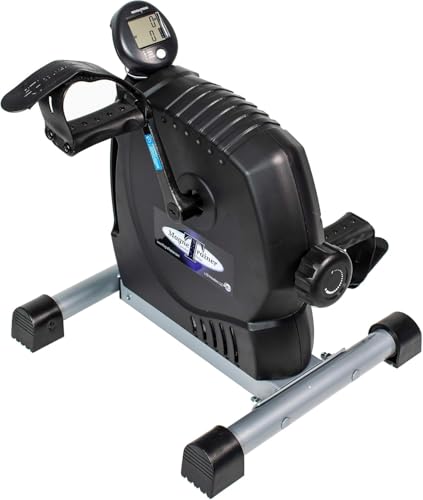
DeskCycle MagneTrainer Mini Exercise Bike
What We Like
- Ultra-smooth magnetic resistance for joint-friendly motion
- Whisper-quiet operation for use during work or TV
- Molded pedals with durable Velcro straps for arm or leg use
- Step-less intensity dial for fine resistance tuning
Trade-offs
- At 23 pounds, it's heavy to move between rooms
- No preset programs or smart connectivity for guided workouts
The DeskCycle MagneTrainer uses magnetic resistance, which provides a smooth and quiet pedal motion that is easy on joints, ideal for physical therapy or low-impact recovery. The step-less intensity dial lets you adjust resistance gradually, and the molded pedals with adjustable Velcro straps work for both arms and legs. At 23 pounds, it stays in place during use, making it a stable option for seniors or those with reduced mobility who want a full-body workout from a seated position.
That stability comes at a cost in weight: at 23 pounds, this is heavier than many mini cycles, so it is not easy to move between rooms. If portability is a priority, the Sunny Health & Fitness Under Desk Smart Mini Pedal Exerciser weighs 11.7 pounds and is more portable. But for buyers who value a stable, quiet machine that can be set up in one spot and left there, the MagneTrainer’s weight and magnetic smoothness are practical benefits.
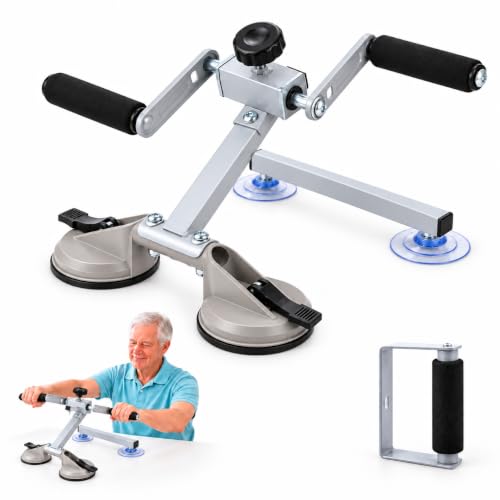
Hybodies Arm Bike for Physical Therapy
What We Like
- Four distinct training modes
- Suction base stays secure on smooth surfaces
- Soft padded handles for comfort
- No assembly needed, ready out of box
Trade-offs
- Tabletop use only, no floor or under-desk option
- Suction base requires smooth, non-porous surface
- No digital display for tracking progress
The arm bike offers four training modes: same-direction rowing, reverse cycling, single-arm rotation, and wrist training. The heavy-duty suction base is designed to stay firmly attached to wood, tile, or glass surfaces, which helps keep the unit stable during use. Adjustable resistance lets you tailor the effort to different recovery stages, so you can start with lighter tension and increase it as your strength improves.
This is a tabletop unit, so it is not designed for under-desk leg cycling like some other pedal exercisers. The suction cups work on smooth, non-porous surfaces such as wood, tile, or glass; they may not hold on carpet or textured countertops. There is no built-in display for tracking time, distance, or calories, so you would need to monitor your sessions separately. For someone focused on upper-body rehab, these limitations are offset by the targeted multi-mode support the machine provides.
Product photos
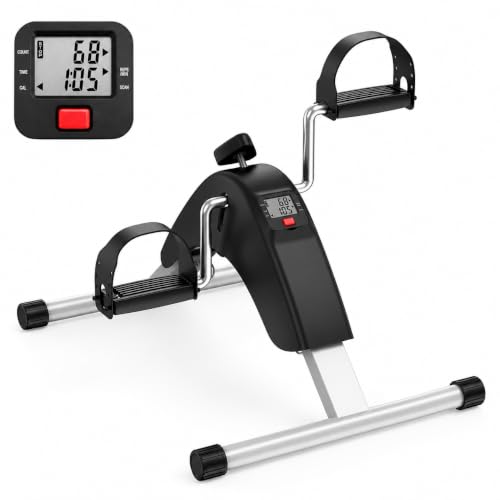
AN Under Desk Bike Pedal Exerciser
What We Like
- Quiet enough for office use
- Compact size fits under desks
- Adjustable resistance for varied intensity
- Safe non-slip design with foot straps
Trade-offs
- No magnetic resistance system
- Lacks smart connectivity or app support
Whisper-quiet pedaling and a compact 20-by-9-inch footprint make this under-desk bike a natural fit for offices or living rooms where noise and space are tight. The turn-knob resistance lets you dial up effort for a quick leg or arm session while the LCD keeps tabs on time, count, distance, and calories. Widened pedals with adjustable straps and rubber feet keep it planted, so you can focus on work or TV without the machine sliding away.
The quiet, compact design uses a friction-based tension system rather than the magnetic resistance found on the DeskCycle MagneTrainer. That means the feel may differ from magnetic models, and at 20 inches long it is larger than some competitors. Still, for someone who needs a discreet, quiet pedal exerciser that doubles as an arm bike and won’t disturb coworkers or family, this is a straightforward, no-fuss choice.
Product photos
MOMODA Arm Bike Upper Body Ergometer
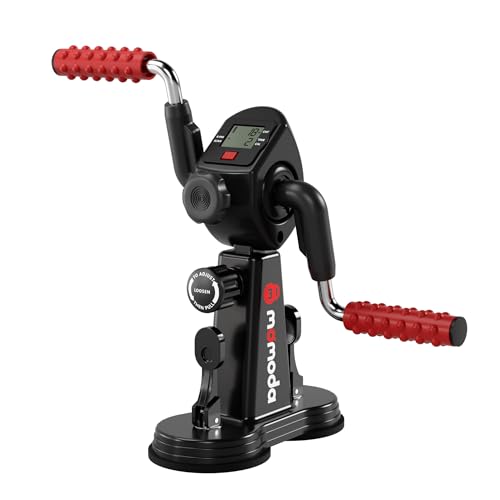
What We Like
- Dual suction cups hold tight on smooth surfaces
- Quiet operation for home or office
- Adjustable resistance from light therapy to endurance
Trade-offs
- Suction cups fail on carpet or soft surfaces
- At 3.3 lb, light enough to slide if not locked
The trade-off comes down to surface requirements. The dual suction cups lock extremely tight on glass, marble, bare desks, or smooth walls. However, they will not hold on carpet, desk pads, blankets, or any soft surface, so this machine demands a hard, clean spot to live. Compared to the DeskCycle MagneTrainer, which uses magnetic resistance and weighs 23 pounds for stability, the MOMODA is far lighter and easier to move, but its suction-only grip means you cannot use it on a padded desk mat or carpeted floor. For a quiet, handle-massage arm cycle that stays put on a bare desktop, this is a practical choice.
Product photos
Jeogejin Hand Bike for Physical Therapy
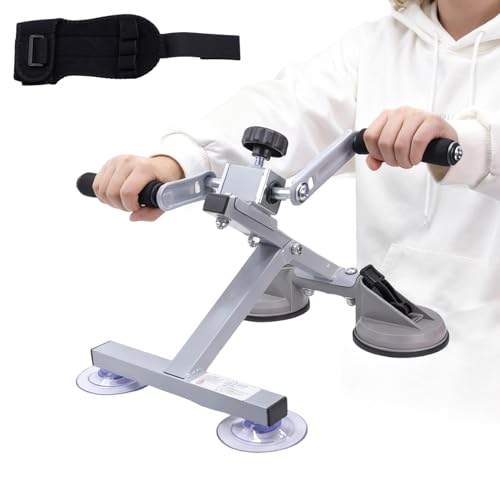
What We Like
- Three training modes for varied rehab needs
- Industrial suction cups for secure desk grip
- Lightweight and portable at 5.0 pounds
Trade-offs
- No magnetic or digital resistance adjustment mentioned
- Low 4.7-inch height limits upright arm positioning
Three distinct training modes, single-arm independent, bilateral synchronized, and standard cycling, make this hand bike a versatile tool for rehabilitation. The oversized industrial suction cups and anti-slip pads hold the 5.0-pound frame steady on a smooth desktop, so you can push through a session without the unit sliding around. This model is designed for stroke rehabilitation, post-surgery recovery, daily arm exercises, and shoulder/neck workouts for office workers, helping restore upper-body strength and flexibility.
The unit sits low at 4.7 inches tall, which works fine on a tabletop but is not designed for a tall, upright arm position. Compared to the Hybodies Arm Bike, which has a similar suction base, the Jeogejin offers three modes versus four, but the other-products list does not specify mode counts or included accessories for either model. If your goal is purely passive leg movement while working, the DeskCycle MagneTrainer is a better fit.
Product photos
RACOC Arm Bike with Desktop Clamp
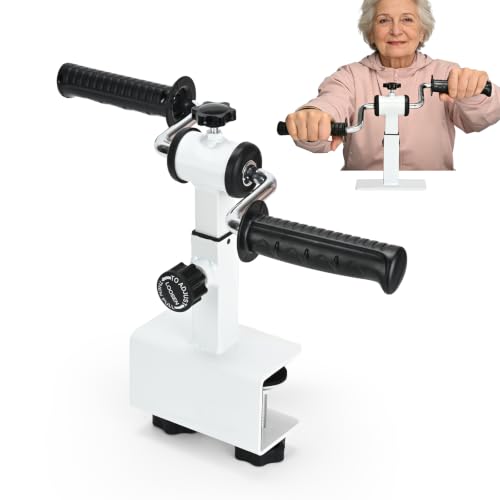
What We Like
- Desktop clamp prevents sliding during use
- Silicone pad protects desk surface
- Adjustable resistance from rehab to challenging
- Sweat-resistant ergonomic handle for comfort
Trade-offs
- Only fits desktops 0.4-1.95 inches thick
- No LCD display or workout tracking
- Clamp limits placement to table edges only
A desktop clamp that grips tables 0.4 to 1.95 inches thick means this arm bike stays planted while you crank, unlike suction-cup models that can slip on smooth surfaces. That fixed hold makes it a smart choice for anyone doing rehab after a shoulder injury or stroke recovery, where sudden movement could cause discomfort. The silicone pad underneath the clamp adds stability and protects the desk surface, and the tension knob lets you dial resistance from gentle range-of-motion work up to a challenging arm workout. If you need a stable, no-nonsense setup for a home desk or therapy table, this design delivers exactly that.
The trade-off is that the clamp system ties you to a desk edge with the right thickness, so it won’t work on a thick countertop or a thin laptop tray. Compared to the Hybodies Arm Bike, which uses suction cups, the RACOC demands a compatible surface but rewards you with a fixed hold. It also has no built-in display for tracking time or reps, so you’ll rely on feel or a separate timer. For someone focused purely on steady rehab or light exercise at a standard desk, those limits are easy to live with.
Product photos
MTGSTOCL Arm Bike for Physical Therapy
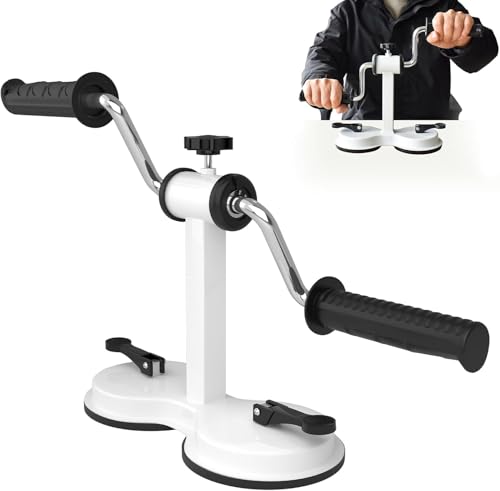
What We Like
- Zero assembly, ready out of box
- Lightweight at 4.35 lbs
- Quiet precision gear system
Trade-offs
- Suction base only works on smooth surfaces
- No LCD display for tracking progress
The MTGSTOCL Arm Bike’s high-adhesion suction cup locks onto glass, marble, or polished wood tables with a grip that won’t budge during rotation. That stability is the whole point for someone in physical therapy, whether recovering from a stroke or nursing a shoulder after surgery, the last thing you want is the machine sliding away mid-motion. At just 4.35 pounds and ready to use straight out of the box, it’s easy to move from the kitchen table to a desk or pack into a bag for a visit to a relative’s house. The adjustable tension knob lets you go from gentle mobilization to moderate strengthening, and the quiet gear system means you can pedal through a TV show without annoying anyone nearby.
The trade-off is that the suction base demands a smooth, clean surface to work its magic. If your only table is a rough wooden picnic bench or a textured laminate, the grip won’t hold as securely. For those situations, a clamp-style arm bike like the RACOC Arm Bike with Desktop Clamp might be a better fit. But if you have a glass desk, a marble countertop, or a polished dining table, the MTGSTOCL stays planted so you can focus on rebuilding range of motion without distraction. It’s a thoughtful, low-hassle tool for home rehab that puts safety first.
Product photos
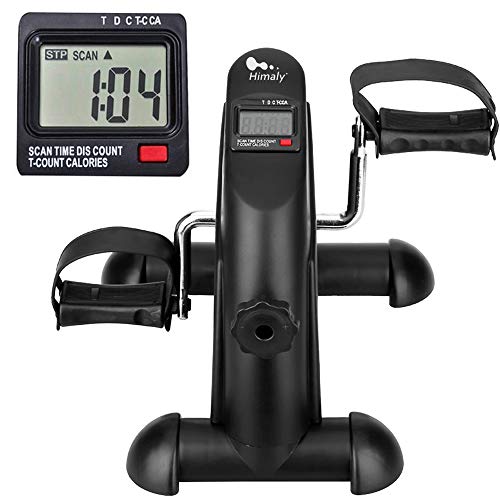
himaly Mini Exercise Bike
What We Like
- Only 8.1 lb for easy portability
- Compact size fits under desks or tables
- Adjustable resistance for arm and leg use
- Tool-free assembly in minutes
Trade-offs
- Friction-based resistance lacks magnetic smoothness
- Resistance adjustment requires manual twisting of knob
At just 8.1 pounds and measuring 16 inches long, this mini exercise bike is built for people who need to move their workout from room to room or tuck it away when not in use. The compact frame slides under most desks, and the adjustable multi-level resistance lets you dial in effort for both arm and leg exercises. Its LCD display tracks time, count, calories, and distance, so you can monitor progress without needing a separate app or device. This is the right pick if your top priority is a lightweight, portable unit that assembles in minutes with no tools required.
Weighing just 8.1 pounds, this mini bike is easy to carry from room to room or even toss in a car for use at the office. The compact size means it fits under most desks without taking up much floor space. Reviewers note that the anti-slip pedals and non-slip feet help keep it steady during normal use, though the lightweight build means it won’t resist heavy pushing the way a 23-pound DeskCycle MagneTrainer would. For gentle pedaling while seated, it stays put and does the job.
Product photos
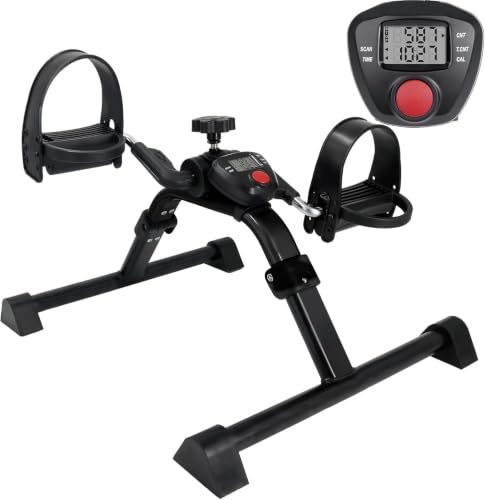
Vaunn Foldable Compact Pedal Exerciser
What We Like
- Quick-release folding for compact storage
- Wider base and heavy-duty frame for stability
- Lower height fits on desks or under tables
- Adjustable resistance for varied intensity
Trade-offs
- Lightweight design limits heavy leg use.
The quick-release folding mechanism and 5.7-pound weight make this pedal exerciser easy to carry and store when not in use, which suits small apartments or tidy desk setups. The lower height and wider base help it stay on a desktop when used as an arm strengthener, and it fits under a desk for pedaling while you work.
Product photos
How We Evaluated Arm Cycle Machines
This evaluation is based on manufacturer documentation, expert recommendations from physical therapy and fitness sources, and common themes found across thousands of owner experiences. We focused on what the specs and user patterns reveal about real-world performance.
Four criteria mattered most for this category. Resistance type determines smoothness and noise. Magnetic systems are quieter and more joint-friendly than friction-based options. Stability is critical for arm use, where a sliding unit ruins the workout; we looked at base design, suction cups, and clamps. Portability weights the trade-off between a sturdy unit and one you can easily move. Intended use helped us separate desk workers from rehab patients, since a machine that excels for one may fail for the other.
A research-led approach has limits. We cannot report how a machine feels during a 30-minute session or how well its suction cups hold on a specific desk finish. What we can do is give you the factual framework, weight, resistance type, dimensions, and owner-reported patterns, so you know what to expect before you buy.
What To Look For In Arm Cycle Machines
Choosing an arm cycle machine comes down to matching its design to where and how you’ll use it. A model perfect for a smooth kitchen table may be useless on a carpeted office floor, and a heavy magnetic unit that feels premium may be too cumbersome to move daily.
Focus on resistance type for noise and smoothness, base stability for your surface, weight for portability, and whether the machine offers arm-only or dual-use capability. These four factors determine most of your satisfaction.
Resistance Type
The two main options are magnetic and friction-based. Magnetic resistance, found on the DeskCycle MagneTrainer, uses magnets to create drag without physical contact. This means near-silent operation and a smooth, consistent feel ideal for office work or TV. Friction-based systems, common on budget models like the himaly Mini Exercise Bike, use a pad against the flywheel. They are louder and can feel gritty, but they cost less and are lighter. For rehab or quiet environments, magnetic is worth paying more for.
Stability and Surface Compatibility
An arm cycle that slides during use is worse than no machine at all. Stability comes from three main designs: suction cups (Hybodies, MOMODA, MTGSTOCL), desktop clamps (RACOC), or heavy base weight (DeskCycle at 23 pounds). Suction cups work well on smooth, non-porous surfaces but fail on carpet or textured tabletops. Clamps offer the most secure hold but limit placement to desk edges within a specific thickness range. Heavy base units are stable anywhere but hard to move.
Portability and Storage
Weight ranges from 3.3 pounds (MOMODA) to 23 pounds (DeskCycle). Lighter models are easy to stash in a drawer or carry between rooms, but they may slide more during use. Heavier units stay put but require dedicated floor or desk space. The Vaunn Foldable Compact Pedal Exerciser offers a middle ground with a quick-release folding frame, though its lightweight design limits heavy leg use. Consider how often you’ll move the machine and where you’ll store it when not in use.
- Measure your desk height and thickness to ensure clamp-on models will fit
- Check your floor or desk surface type, suction cups need smooth, non-porous material
- Decide if you need arm-only use or a 2-in-1 machine that also works legs
- Look for padded handles if you have joint sensitivity or plan long sessions
- Consider assembly requirements; some models like the Hybodies come ready out of box
A machine that matches your surface type and intended use will serve you far better than one with impressive specs that don’t fit your space.
Arm Cycle Machines Compared
The table below compares the 10 arm cycle machines across key specifications and features, making it easy to see which model fits your needs for resistance type, stability, and portability.
| Product | Weight | Dimensions | Resistance Type |
|---|---|---|---|
| Sunny Health & Fitness Under Desk Smart Mini Pedal Exerciser | 11.7 lb | 17.9 x 16.1 x 11.7 in | Stepless mesh belt-drive |
| DeskCycle MagneTrainer Mini Exercise Bike | 23.0 pounds | 9.0 x 16.0 x 16.0 in | Magnetic |
| Hybodies Arm Bike for Physical Therapy | N/A | N/A | Adjustable |
| AN Under Desk Bike Pedal Exerciser | N/A | 20.0 x 9.0 x 15.0 in | Adjustable turn-knob |
| MOMODA Arm Bike Upper Body Ergometer | 3.3 pounds | 5.5 x 14.6 x 16.1 in | Adjustable |
| Jeogejin Hand Bike for Physical Therapy | 5.0 Pounds | 13.4 x 12.8 x 4.7 in | Adjustable Resistance |
| RACOC Arm Bike with Desktop Clamp | N/A | 5 x 10 x 15 in | Adjustable tension knob |
| MTGSTOCL Arm Bike for Physical Therapy | 4.35 lbs | 17" x 5.6" | Adjustable tension knob |
| himaly Mini Exercise Bike | 8.1 lb | 16.0 x 13.8 x 12.6 in | Adjustable multi-level |
| Vaunn Foldable Compact Pedal Exerciser | 5.7 pounds | 18.75 x 15.5 x 11.25 in | Adjustable tension knob |
Frequently Asked Questions
Can arm cycle machines help with shoulder rehabilitation?
Yes, many arm cycle machines are designed specifically for physical therapy and post-surgery recovery. Models like the Hybodies Arm Bike and Jeogejin Hand Bike offer multiple training modes with adjustable resistance for structured rehab. Always follow your physical therapist’s guidance on resistance levels and range of motion.
How quiet are magnetic arm cycle machines for office use?
Magnetic resistance models like the DeskCycle MagneTrainer are whisper-quiet, producing only the sound of pedals turning. Owner feedback reports they are quiet enough for phone calls and open-plan offices. Friction-based models are louder but still acceptable for most home offices.
What surface do I need for a suction cup arm cycle?
Suction cup bases require a smooth, non-porous surface such as glass, polished wood, or laminate. They will not seal on carpet, textured tabletops, or painted surfaces with a rough finish. For those surfaces, look for clamp-on or heavy-base designs instead.
How much space does an arm cycle machine need on a desk?
Most desktop arm cycles measure roughly 15 to 20 inches wide and about 10 inches deep. The low-profile models like the AN Under Desk Bike Pedal Exerciser fit under standard desk heights. Clamp-on models require a desk edge with 0.4 to 1.95 inches of clearance.
Can I use an arm cycle machine while sitting at my desk?
Yes, most models are designed for seated use at a desk or table. The Sunny Health & Fitness Under Desk Mini Pedal Exerciser and DeskCycle MagneTrainer both fit under standard desks and allow arm or leg use while working. Ensure your chair height lets your arms reach the pedals at a comfortable angle.
The Bottom Line
The Sunny Health & Fitness Under Desk Smart Mini Pedal Exerciser is our Best Overall pick for most people because it balances versatility, quiet operation, and reasonable portability. It works for both arms and legs, fits under most desks, and offers stepless resistance adjustment without breaking the budget.
If your priority is rehab with structured training modes, the Hybodies Arm Bike is the clear choice with its four modes and no-assembly setup. For those who want the smoothest, quietest ride and don’t need to move the machine often, the DeskCycle MagneTrainer justifies its premium price with magnetic resistance and heavy-duty stability.
The single most important factor in choosing an arm cycle machine is matching its stability system to your surface. A machine that slides is unusable, no matter how smooth its resistance or how many features it offers. Measure your desk, check your floor, and pick the base design that stays put.
