
10 Best Balance Bikes For 4 Year Olds in 2026
This post contains affiliate links. As an Amazon Associate, we earn from qualifying purchases.
The Strider 14x Classic Balance Bike earns our best overall spot because it converts to a pedal bike later, letting one frame serve your child for years. For a lightweight budget option, the bicystar 14 Inch brings real air tires and an adjustable fit. The Radio Flyer Air Ride delivers the smoothest ride on paved paths and grass.
A 4-year-old’s balance bike needs to fit their growing legs and handle the surfaces they actually ride on, sidewalks, park paths, and grassy yards. Too heavy a frame can frustrate a young rider, while too small wheels can limit their stride and confidence.
This guide is research-based, drawing on manufacturer specifications, expert round-ups, and patterns in owner feedback. We evaluated each bike on fit range, weight, tire type, and adjustability to help you find the right match for your child’s size and riding environment.
Top 10 Balance Bikes For 4 Year Olds in the Market
Certain content that appears on this site comes from Amazon. This content is provided "as is" and is subject to change or removal at any time.
The Best Balance Bikes For 4 Year Olds, Reviewed
Strider 14x Classic Balance Bike
What We Like
- Converts to pedal bike later
- Adjustable seat and handlebars grow with child
- All-purpose tires grip any surface
- Tools included for quick assembly
Trade-offs
- At 12.5 lb, heavier than some competitors
- Pedal conversion kit sold separately
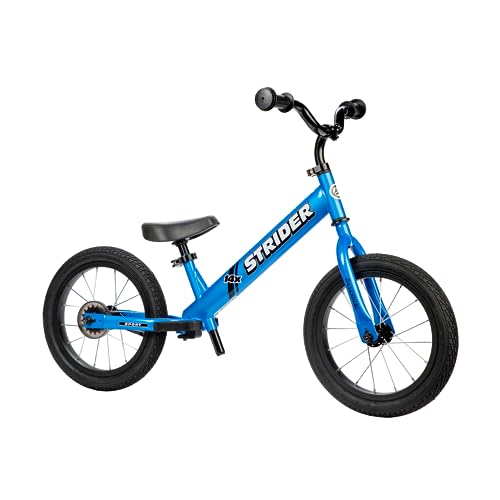
The Strider 14x Classic Balance Bike is built around one smart idea: a balance bike that can later become a pedal bike. With an adjustable seat height from 15 to 22 inches and handlebars that grow with your child, it fits kids with inseams from 16 to 23 inches, covering ages 3 through 6. That means you buy one bike and get years of use, starting as a no-pedal glider and, with the optional Easy-Ride Pedal Kit, turning into a pedal bike when your child is ready.
The trade-off is weight: at 12.5 pounds, this bike is heavier than some alternatives, like the bicystar 14 Inch at 8.5 pounds or the Radio Flyer Air Ride at 7.9 pounds. That extra weight comes from the steel frame and convertible design, which adds durability but may make it harder for a smaller child to lift or steer. For a family that wants one bike that spans several years and can later become a pedal bike, the heft is a reasonable trade-off.
bicystar 14 Inch Balance Bike
What We Like
- Real rubber air tires for grip
- Adjustable seat and handlebar grow with child
- Lightweight at 8.5 lbs for easy steering
- Quick assembly with included tools
Trade-offs
- No conversion kit to add pedals later
- No pedal conversion option for older kids
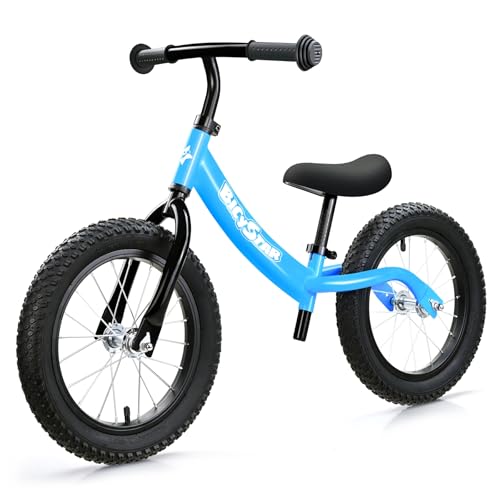
At 8.5 pounds, this bike is heavier than the Radio Flyer Air Ride (7.9 pounds), which could be a factor if a small child needs to lift it or a parent carries it often. Also, unlike the Strider 14x Classic which can convert to a pedal bike, this model does not offer that option, so you will need a separate pedal bike later. Still, the quick assembly, padded seat, soft grips, and coasting footrest make it a comfortable learning tool with real air tires and a warranty.
Radio Flyer Air Ride Balance Bike
What We Like
- Smooth ride on sidewalks, grass, gravel
- Tool-free adjustable seat for growth
- Grip tape footrest for safe gliding
- Lightweight yet durable steel frame
Trade-offs
- Heavier than some 12-inch balance bikes at 7.9 pounds
- No handbrake for speed control on downhill slopes
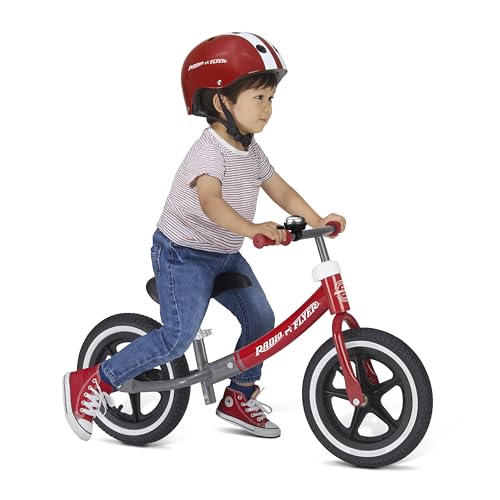
The 12-inch rubber air tires and sturdy steel frame deliver a smooth ride on sidewalks, grass, and gravel, so a child learning balance won’t feel every bump on a walk around the block. The tool-free adjustable seat grows with your child from 18 months to five years, making it a long-term companion for learning balance. Grip tape on the frame gives little feet a no-slip spot to rest while gliding, which helps them stay steady as they focus on steering.
At 7.9 pounds, it’s not the lightest in this guide, but that heft comes from a steel frame that should handle years of active play without wobbling. The air tires provide a cushioned ride on paved paths or well-kept grass. Still, the 12-inch wheels may feel less capable on loose gravel or deep dirt than the 14-inch options from other brands in this guide. For rougher terrain, a larger wheel size might be a better fit.
Product photos
Ridego 14 Inch Balance Bike
What We Like
- 8.16 lb glass-reinforced nylon frame
- Air rubber tires for all-terrain grip
- Adjustable seat from 14.2" to 18.3"
- 110 lb weight capacity
Trade-offs
- At 8.16 lb, heavier than some 14" rivals
- No pedals or training wheels, so it teaches only balance
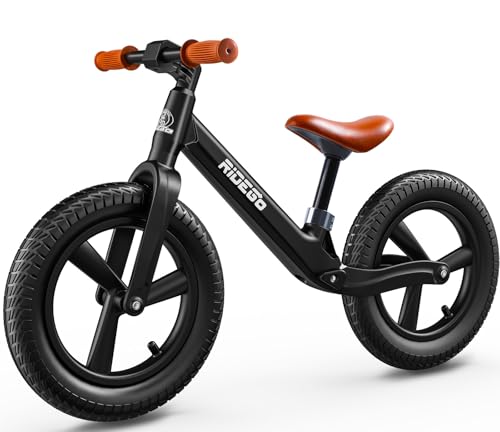
The trade-off for that lightweight nylon frame is that the Ridego comes in at 8.16 pounds, which is a bit heavier than the 7.9-pound Radio Flyer Air Ride. For a small child just starting out, that extra few ounces can make a difference when they’re learning to balance and steer. But for a child who already has some confidence on two wheels, the Ridego’s durable build and all-terrain tires offer more versatility than the lighter Radio Flyer.
Retrospec Cub Plus 12" Balance Bike

What We Like
- Adjustable V-brake with child-sized levers
- Ultra-low step-through frame for easy mounting
- Lightweight rust-resistant construction
Trade-offs
- 12-inch wheels limit terrain for taller 4-year-olds
- At 9.0 pounds, heavier than some 12-inch models
The Retrospec Cub Plus 12″ Balance Bike stands out for its adjustable V-brake system, a rare safety feature at this size that gives kids a genuine stopping mechanism. The airless tires never go flat, so the bike is always ready to roll on pavement or packed dirt without maintenance. The ultra-low step-through frame means even hesitant riders can hop on without help. For a parent wanting to teach proper braking early, this bike delivers that control without adding complexity.
This model weighs 9.0 pounds, which is on the heavier side for a toddler balance bike, though the rust-resistant frame and adjustable seat help it last through growth spurts. The bike is designed for children 18 months to 4 years old, so it suits younger or smaller riders best. If your child is on the smaller side and you prioritize a real brake, this is a well-thought-out choice.
SEREED Toddler Balance Bike

What We Like
- Tool-free quick-release seat and handlebar adjustment
- EVA foam tires never go flat
- Supports up to 110 lbs
- Includes personalization plate and stickers
Trade-offs
- 7.8 lb frame is heavier than some 12-inch balance bikes
- EVA foam tires offer less traction than air tires on loose terrain
A 12.6-inch starting seat height that adjusts up to 17.1 inches without tools lets parents quickly raise the saddle or handlebars to match a child’s growth. EVA foam airless tires never go flat and are noiseless on pavement or hardwood floors, making them suitable for indoor gliding. The carbon steel frame supports up to 110 pounds, so the bike can accommodate children within the recommended 2-5 year age range.
The trade-off for that sturdy steel frame is weight: at 7.8 pounds, it is exactly one pound heavier than the JOVA ZIFFY 12-inch model (6.8 pounds). That extra heft can make it slightly harder for a smaller child to lift the front wheel over curbs or carry it up steps. The EVA foam tires are not designed for the same traction as rubber air tires found on some other models, so on loose surfaces the SEREED may feel less secure. Still, for parents who want a bike that adjusts without tools for children ages 2 to 5, this is a practical choice.
Product photos
Umatoll Toddler Balance Bike
What We Like
- Tool-free seat and handlebar adjustment
- Quick spring buckle assembly
- Puncture-proof EVA foam tires
- Sturdy carbon steel frame
Trade-offs
- EVA foam tires offer less shock absorption than air tires
- No footrest for gliding practice
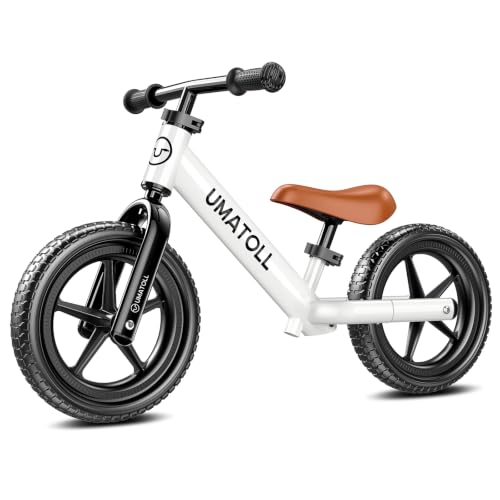
At 7.7 pounds, this balance bike assembles in minutes with a spring buckle system that requires no tools at all. For a parent of a four-year-old who is eager to start riding right away, that quick setup means less time fiddling with instructions and more time watching your child learn to balance. The carbon steel frame feels solid for the weight, and the EVA foam tires never go flat, so you can head out the door without checking air pressure first. This bike suits families who value simplicity and want to get rolling fast without any extra hassle.
The trade-off comes with those foam tires: they won’t puncture, but they also don’t cushion bumps the way rubber air tires do on gravel or uneven pavement. If your four-year-old will mostly ride on smooth sidewalks or driveways, the Umatoll works great. But for rougher terrain, a bike with rubber air tires may give a plusher ride. Still, for a bike that adjusts tool-free as your child grows and assembles quickly, the Umatoll delivers exactly what parents looking for a no-fuss balance bike need.
Product photos
JOVA ZIFFY 12 Inch Balance Bike
What We Like
- Lightest in guide at 6.8 lbs
- Built-in footrests speed balance learning
- Puncture-proof foam tires for all surfaces
- Soft PU seat and non-slip grips
Trade-offs
- 12-inch wheels limit stride for taller 4-year-olds
- Foam tires offer less grip than air tires on loose gravel
- No adjustable handlebar height for growing kids
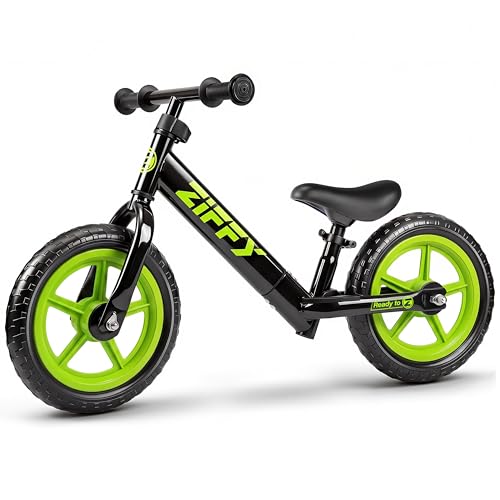
Weighing 6.8 pounds, this bike is one of the lighter options in the guide, which helps a young child lift and steer it without extra effort. The cushioned PU seat and soft rubber grips keep rides comfortable, while the built-in footrests let kids tuck their feet up and focus on balancing. For a child aged 2-5 years who is still learning, the low weight and footrests make the process smoother.
The 12-inch wheels and foam tires keep the bike light but mean it may not suit taller children who need a longer stride. Compared to the Strider 14x Classic (12.5 lbs, 14-inch wheels), a child on the upper end of the age range might find the ZIFFY’s wheel size limiting. Foam tires are puncture-proof and need no air, so they work well on grass, park trails, wooden floors, and gravel roads, though they may not grip as firmly on loose surfaces as air-filled tires. For indoor use and smooth pavement, the foam tires offer convenience with no maintenance.
Product photos
Bobike Toddler Balance Bike

What We Like
- Adjustable seat and handlebar grow with child
- 135° steering limit prevents side falls
- Fully enclosed wheels protect feet
- Disassembles for easy indoor/outdoor carry
Trade-offs
- Carbon steel frame is heavier than aluminum options
- No air tires for rougher terrain cushioning
The Bobike Toddler Balance Bike covers ages 2 to 5 with its adjustable seat and handlebar, so it grows alongside your child rather than being outgrown in a single season. The 135° steering limit and fully enclosed wheels are thoughtful safety details that reduce tipping and pinched fingers, making it a reassuring choice for parents introducing balance riding indoors or on pavement. Its carbon steel frame feels sturdy, and the ability to disassemble the middle section means it packs small for trips to the park or grandma’s house.
The Bobike’s 135-degree steering limit and fully enclosed wheels prevent side falls and foot injuries, making it a safe choice for toddlers learning balance indoors or out. Its adjustable seat and handlebar grow with a child from 2 to 5 years old, so the bike can serve for several years of practice. For rougher terrain, the bicystar 14 Inch Balance Bike includes rubber air tires that absorb bumps better on dirt paths.
besrey 5 in 1 Toddler Bike

What We Like
- 5 riding modes adapt as child grows
- 70° steering limit prevents rollovers
- Soft PU saddle for riding comfort
Trade-offs
- 7.3 lb frame is heavier than some competitors
- Limited 70° steering reduces turning agility
Five riding modes in one frame mean this bike can shift from a parent-steered tricycle to a classic balance bike as your child grows. For a family that wants one piece of gear to carry a toddler from wobbly first rides to confident gliding, the flexibility here is hard to beat.
Weight is a consideration here. At 7.3 pounds it’s noticeably heavier than the JOVA ZIFFY (6.8 lb), and the fully enclosed wheels are designed to protect little feet from slipping or falling. The limited steering keeps the bike stable on turns, which matters if your priority is safety over tight maneuverability. If your goal is a single bike that does many jobs rather than a pure lightweight glider, this design earns its keep.
Product photos
How We Evaluated Balance Bikes For 4 Year Olds
Our evaluation started with the core specs that matter most for a 4-year-old rider: seat height range, wheel size, frame weight, and tire type. We cross-referenced manufacturer data with expert round-ups and analyzed patterns in owner feedback about assembly, durability, and how well each bike fit children in the target age range.
The four criteria that guided our rankings were adjustability, weight, tire performance, and safety features. Adjustability covers the seat and handlebar range to accommodate growth. Lighter bikes are easier for children to control and carry. Air tires offer better grip and shock absorption than foam. Safety features include hand brakes, steering limits, and step-through frame designs.
A research-led evaluation like this provides a strong starting point, but every child’s proportions and confidence level differ. We recommend checking the seat height range against your child’s inseam measurement before purchasing.
What To Look For In Balance Bikes For 4 Year Olds
Choosing the right balance bike for a 4-year-old comes down to fit, weight, and the surfaces they’ll ride on. The following criteria will help you narrow down the options.
Look for a seat height range that matches your child’s current inseam, a lightweight frame for easy handling, and air tires if they’ll ride on grass or gravel. Adjustable handlebars and a hand brake add years of useful life.
Seat Height Range and Fit
The most critical measurement is the seat height range. For a 4-year-old, look for a minimum seat height around 14 inches and a maximum that reaches 18 inches or higher. This range accommodates growth and ensures the child can place both feet flat on the ground while seated. A bike that is too tall forces a child to tiptoe, which undermines the confidence needed to learn balance.
Frame Weight
A lighter frame makes a dramatic difference in how easily a 4-year-old can control the bike. Bikes under 9 pounds are ideal for this age group. Heavier frames above 12 pounds can be difficult for a preschooler to steer, lift, and carry over obstacles. Lightweight materials like aluminum and glass-reinforced nylon offer the best balance of durability and low weight.
Tire Type and Terrain
Tire choice directly affects where the bike performs best. Air-filled rubber tires provide superior grip and shock absorption on grass, gravel, and uneven pavement. EVA foam tires are lighter and never go flat, but they offer less traction on loose surfaces and transmit more vibration. For a 4-year-old who will ride mostly on sidewalks and driveways, foam tires work fine. For mixed terrain, prioritize air tires.
- Measure your child’s inseam (floor to crotch) and compare it to the bike’s minimum seat height.
- Test the weight by lifting the bike yourself, if it feels heavy to you, it will feel heavy to your child.
- Check if the handlebar height is adjustable so the bike grows with your child.
- Look for a hand brake if your child will ride on slopes or needs to learn safe stopping habits.
- Consider a convertible model if you want one bike that transitions from balance to pedals.
A good rule of thumb: your child should be able to sit on the seat with both feet flat on the ground and a slight bend in their knees.
Balance Bikes For 4 Year Olds Compared
The table below compares the key specs of our top picks side by side, including weight, wheel size, seat height range, and tire type.
| Product | Weight | Tire Type | Seat Height Range | Frame Material |
|---|---|---|---|---|
| Strider 14x Classic Balance Bike | 12.5 pounds | All-purpose tires | 15-22 inches | Lightweight Steel Frame |
| bicystar 14 Inch Balance Bike | 8.5 pounds | Rubber air tires | 13-21 inches | lightweight frame |
| Radio Flyer Air Ride Balance Bike | 7.9 pounds | 12-inch rubber air tires | Tool-free, adjustable | Sturdy steel |
| Ridego 14 Inch Balance Bike | 8.16 lbs | Air rubber tires | 14.2"–18.3" | Glass-reinforced nylon |
| Retrospec Cub Plus 12" Balance Bike | 9.0 Pounds | Air-filled wheels | Adjustable | Rust-resistant |
| SEREED Toddler Balance Bike | 7.8 pounds | EVA foam airless | 12.6-17.1 inches | Carbon steel |
| Umatoll Toddler Balance Bike | 7.7 pounds | Air-free EVA foam | Adjustable | Carbon steel |
| JOVA ZIFFY 12 Inch Balance Bike | 6.8 pounds | Foam rubber, puncture-proof | N/A | Carbon steel |
| Bobike Toddler Balance Bike | N/A | N/A | Adjustable | Carbon steel |
| besrey 5 in 1 Toddler Bike | 7.3 pounds | N/A | Adjustable | Curved Carbon Steel |
Frequently Asked Questions
What size balance bike should a 4-year-old get?
Most 4-year-olds fit best on a balance bike with 14-inch wheels and a seat height range of 14 to 18 inches. Check your child’s inseam measurement first: they should be able to sit on the seat with both feet flat on the ground. A bike that is too small will be outgrown quickly, while one that is too large can be difficult to control.
Are balance bikes better than training wheels?
Balance bikes teach the core skill of balancing before pedaling, which many parents and experts find more effective than training wheels. Children learn to steer, lean, and stop naturally without relying on the stability of training wheels. This approach often leads to a smoother transition to a pedal bike later.
When should a child switch from a balance bike to a pedal bike?
Most children are ready to transition to a pedal bike between ages 4 and 6, once they can glide confidently with both feet lifted off the ground. A convertible balance bike like the Strider 14x Classic allows you to add pedals when your child shows this readiness, making the switch straightforward.
Should I get a balance bike with a hand brake?
A hand brake is helpful for children riding on slopes or uneven terrain, as it teaches them to control speed before they transition to a pedal bike. For flat sidewalks and driveways, a hand brake is less essential since children can stop by putting their feet down. The Retrospec Cub Plus includes an adjustable V-brake with child-sized levers.
How long will a balance bike last my child?
The lifespan depends on the seat height range and build quality. A bike with a range from 14 to 18 inches can typically last two to three years for a 4-year-old. Models with tool-free adjustments make it easy to raise the seat and handlebars as your child grows, extending the useful life of the bike.
The Bottom Line
The Strider 14x Classic Balance Bike is our best overall choice for 4-year-olds because it grows with your child from balance to pedals, saving you from buying a separate bike later. Its adjustable seat and handlebars, all-purpose tires, and included assembly tools make it a complete package for families who want one bike that lasts several years.
If your budget is tighter, the bicystar 14 Inch Balance Bike delivers a lightweight frame with real air tires and adjustable fit at a more accessible price point. For parents who prioritize the smoothest ride on paved paths and grass, the Radio Flyer Air Ride offers tool-free adjustability and a comfortable gliding experience.
The single most important factor in choosing any balance bike is fit: a properly sized seat height gives your child the confidence to lift their feet and glide. Measure your child’s inseam, compare it to the bike’s seat height range, and you’ll set them up for success.
