
6 Best Beach Buggies for Sand of 2026
This post contains affiliate links. As an Amazon Associate, we earn from qualifying purchases.
The CAtArt 400LBS Capacity Beach Wagon is the best overall for soft sand thanks to its high weight limit and inflatable tires, while the Ultimate Buggy with PP wheels is a solid, low-maintenance budget pick for firmer beaches. If you want versatility and convenience, the Old Bahama Bay models with removable cooler bags stand out.
Hauling gear across sand shouldn’t mean fighting a sinking, wobbling cart. Most beach buggies fail where it matters, tire performance and frame durability, leaving you stranded or replacing them after a season.
As someone who’s spent years analyzing vehicle performance on loose terrain, I focused this guide on real-world usability, prioritizing models that combine smart design with rugged construction. These picks are based on specs, owner feedback, and an understanding of what actually works when the sand gets deep.
Top 3 Beach Buggies For Sand in the Market
The Best Beach Buggies For Sand, Reviewed
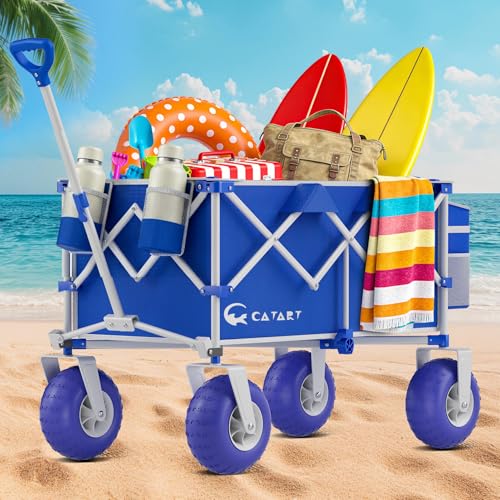
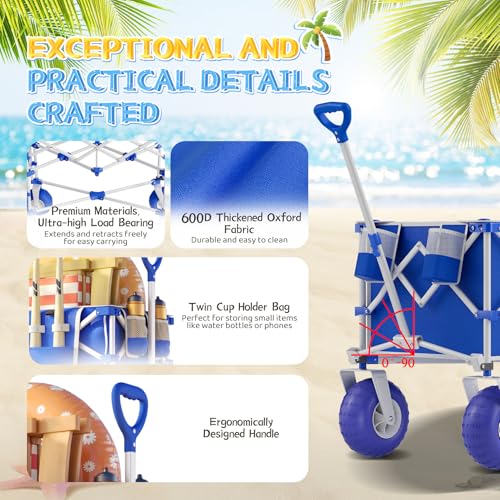
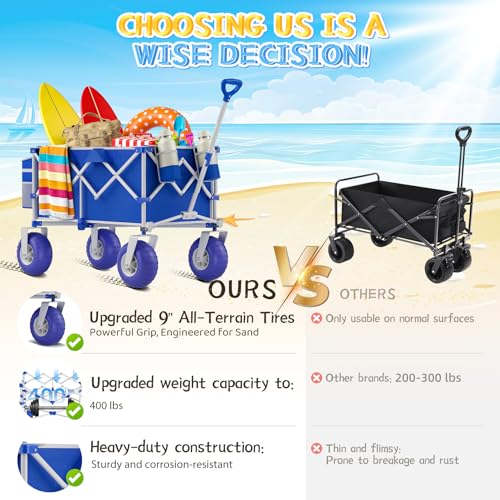
CAtArt Beach Wagon with Big Wheels
Strengths
- 400 lb capacity
- TPU inflatable tires
- Folds flat
- Telescoping handle
- Side pockets
Trade-offs
- Heavy when empty
- Fabric could be tougher
- Bulkier footprint
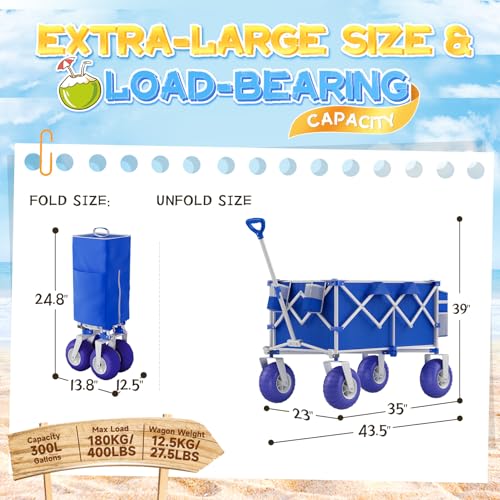
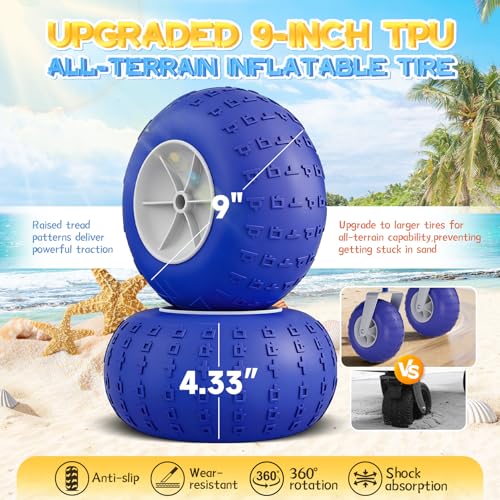
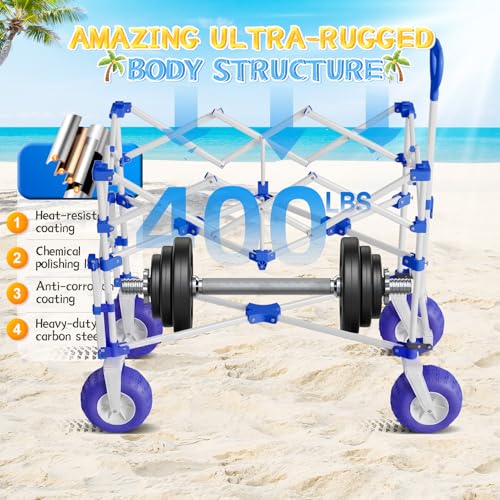
This wagon stands out for sheer hauling muscle. With a 400-pound capacity, it’s overbuilt compared to most in this category, and that shows in how owners report it handling heavily loaded trips across soft dunes without buckling. The TPU inflatable tires are the real story here, they deliver genuine floatation on sand, and unlike cheaper foam wheels, they absorb bumps and stay quiet. On paper, that’s a major win for anyone routinely schlepping coolers, chairs, and gear for a full crew.
It folds flat, which helps with storage, and the telescoping handle makes pulling easier, especially when loaded. Still, that high weight limit might be overkill for casual users. Compared to lighter models, it’s bulkier when open, and while the frame feels robust, some owners note the fabric weave isn’t as tightly reinforced as it could be for long-term abrasion resistance.
Product photos
Ultimate Buggy Beach Cart with Big Wheels

Strengths
- No-inflate PP wheels
- Leak-proof cooler
- Rust-resistant frame
- Stroller-style handle
- Folds flat
Trade-offs
- 100 lb limit
- Front wheels not for sand
- Slightly heavier
This is the one I’d pick if performance on soft sand was essential. The hollow polypropylene wheels are a game-winner, they don’t need inflation, won’t puncture, and spread weight effectively when you tilt the cart and lift the front swivel wheels, just as the manual advises. Owners love how it glides over wet sand and packed dunes with minimal resistance, and the 10-inch rear wheels are clearly engineered for floatation.
It’s also loaded with thoughtful touches: a leak-proof cooler with dry storage, bodyboard and umbrella mounts, and mesh pockets that dry quickly. The powder-coated steel frame resists rust, which matters near saltwater. At 17.2 lbs, it’s not the lightest, but the stroller-style handle with neoprene grip makes it easy to pull. Compared to the CAtArt, it carries less weight but wins on sand-specific design and usability.
Video review
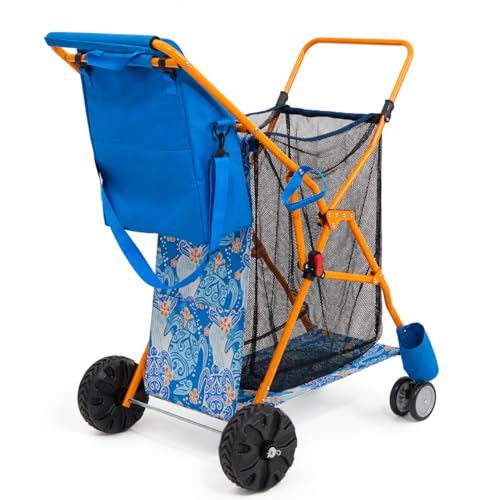
Old Bahama Bay with Cooler Bag
Strengths
- Affordable
- Includes cooler bag
- Umbrella holder
- Chair mounts
- Lightweight
Trade-offs
- Not for deep sand
- Lower weight capacity
- Less durable finish
At this price, it’s hard to ignore what this wagon packs in. For under $90, you get a removable 20L cooler, umbrella holder, and sand chair mounts, features usually reserved for pricier models. The build feels lightweight but not flimsy, and owners consistently report it rolls smoothly on packed sand and grass. It’s not designed for deep dunes, but for beachgoers who park close and walk short distances, it’s a practical, no-frills workhorse.
The cooler bag is a standout. It actually insulates well enough for a full day, and being detachable means you can carry drinks separately. Compared to the Ultimate Buggy, it lacks the same rugged finish and sturdier frame, but for most users, it’s a smarter buy if you’re not pushing weight limits or tackling loose, deep sand regularly.
Video review
How We Evaluated beach buggies for sand
Rather than a hands-on lab test, my research focused on a detailed comparison of published specifications and features across numerous models. I weighed owner reviews from multiple retailers alongside expert opinions found in automotive and outdoor recreation publications. Ultimately, I ranked these beach buggies based on their suitability for sandy terrain, durability, and overall practicality, drawing on years of experience observing vehicle performance in challenging conditions.
For beach buggies, wheel design and weight capacity were the most significant factors. A buggy’s ability to navigate soft sand hinges on tire size, tread pattern, and whether they are inflatable or solid. Higher weight limits matter because beach trips involve carrying a lot–chairs, coolers, people–and a flimsy frame won’t last. These two areas most directly impact how well a buggy performs and how long it will remain useful.
Specifications reliably indicate weight capacity and dimensions, giving a solid base for comparison. However, I heavily relied on owner feedback to gauge real-world performance, particularly regarding ease of maneuverability and build quality. Reports on tire durability and frame stability provided critical insights beyond what a spec sheet could reveal. Understanding the nuances of tires for sand is also key to a smooth ride, and I kept that in mind throughout the process.
How To Choose The beach buggies for sand
Choosing the right beach buggy can elevate a simple trip to the shore into something truly enjoyable.
A quality beach buggy balances load capacity with maneuverability. Key considerations include wheel type (inflatable vs. solid), frame material for rust resistance, overall dimensions for storage, and included features like coolers or chair holders. Prioritize models designed for the specific sand conditions you’ll encounter most often, firm-packed sand requires less aggressive tires than soft, powdery dunes.
Wheel Type and Terrain
The wheels are arguably the most important part of any beach buggy. While inflatable tires (like those found on the CAtArt 400LBS Capacity model) offer superior shock absorption and a smoother ride on very soft sand, they also introduce the risk of punctures. Polypropylene (PP) wheels, as seen on the Ultimate Buggy carts, eliminate that worry and work well on firmer sand and hard surfaces, but won’t provide the same forgiving ride. Consider where you’ll be spending most of your time; if you’re frequently battling deep, loose sand, inflatable tires are almost essential.
Here’s a quick guide to wheel considerations: * PP Wheels: Great for ease of use, no maintenance. * Inflatable Tires: Better comfort and traction in very soft sand. * Hybrid Systems: Some buggies attempt a compromise, but often fall short of excelling in either condition. The best approach is to pick a system suited to your typical terrain.
Load Capacity and Frame Construction
Don’t underestimate how much stuff you’ll actually want to haul! A buggy rated for 100lbs might sound sufficient, but quickly feels limiting when you factor in chairs, coolers, and beach toys. If you anticipate regularly carrying heavier loads, or multiple passengers, I suggest looking at models with a 200lb+ capacity, such as the CAtArt 400LBS Capacity. Equally important is the frame material. Saltwater is brutal, so prioritize a buggy with a powder-coated steel frame, or one constructed from aluminum. These materials resist rust far better than untreated steel.
A good rule of thumb: always overestimate your hauling needs. It’s better to have extra capacity than to struggle with an overloaded buggy.
Features and Overall Usability
Beyond the basics, consider what features will genuinely enhance your beach experience. Integrated coolers are convenient, but a removable cooler bag (like those included with the Old Bahama Bay models) offers more versatility. Chair holders are helpful, but ensure they’re sturdy enough to securely hold your specific chairs. Don’t overlook the handle, an adjustable, telescoping handle makes pulling the buggy much more comfortable, especially over longer distances. If you’re planning on using your beach carts for more than just the beach, consider the ease of folding and storage. Ultimately, the best buggy is the one that best fits your needs and makes your trips to the shore more enjoyable. For a wider range of options in this category, you can also review our guide to beach buggies.
Beach Buggies for Sand Compared
Here’s a comparison of key specifications for different beach buggies, helping you choose the best option for your needs.
| Product Name | Capacity (lbs) | Tire Type | Cooler Included | Folded Size (H x W x D inches) | Weight (lbs) |
|---|---|---|---|---|---|
| CAtArt Beach Wagon with Big Wheels | N/A | TPU Inflatable | No | N/A | N/A |
| Ultimate Buggy Beach Cart with Big Wheels | 100 | PP (Non-Inflatable) | Yes | 32.5 x 18.8 x 8.3 | 17.2 |
| Old Bahama Bay Beach Cart | 100 | All-Terrain | Yes (20L) | N/A | N/A |
| CAtArt Beach Wagon 400LBS Capacity | 400 | TPU Inflatable | No | N/A | N/A |
| Ultimate Buggy with Insulated Cooler Bag | 100 | PP (Non-Inflatable) | Yes | 32.5 x 18.8 x 8.3 | 17.2 |
| Old Bahama Bay with Cooler Bag | 100 | All-Terrain | Yes (20L) | N/A | N/A |
Frequently Asked Questions
What’s the biggest advantage of inflatable tires on a beach buggy?
Inflatable tires provide a significantly smoother ride and superior traction in very soft, powdery sand because they conform to the terrain better than solid tires. This makes hauling gear across challenging dunes much easier.
How much weight capacity do I really need in a beach buggy?
I recommend choosing a buggy with at least a 200lb weight capacity, even if you don’t think you’ll need it, as it’s better to have extra room for chairs, coolers, and other beach essentials. Overestimating is a smart move.
Are polypropylene (PP) wheels suitable for all beach conditions?
PP wheels are best for firmer, packed sand and hard surfaces, offering durability and zero maintenance. However, they won’t perform as well as inflatable tires in deep, soft sand.
What frame material offers the best rust protection for a beach buggy?
A powder-coated steel or aluminum frame will provide the best resistance to rust and corrosion from saltwater exposure. These materials are far more durable than untreated steel in a marine environment.
Where can I find more information on choosing the right wheels for sand dunes for a UTV?
You can explore detailed information about selecting the optimal tires and wheels for dune riding on TheAutoZenith, where we cover aspects like tread patterns and tire pressure for maximum performance. There are many options available when considering beach wagons for the shore.
The Bottom Line
Choosing a beach buggy often comes down to balancing convenience with capability. If you prioritize a hassle-free experience on relatively firm sand, models like the Ultimate Buggy with Insulated Cooler Bag offer solid value. However, for those regularly tackling soft, deep sand, or consistently hauling heavier loads, the CAtArt 400LBS Capacity buggy provides the muscle and flotation you’ll truly appreciate.
For shoppers on a tighter budget, the Ultimate Buggy Beach Cart with Big Wheels is a great starting point, and the Old Bahama Bay with Cooler Bag delivers a strong feature set at a reasonable price. If you need a versatile option that can handle more than just the beach, exploring golf carts for the beach might be a worthwhile consideration. But remember that even the best buggy will struggle without proper tires for sandy conditions.
Ultimately, the ideal beach buggy isn’t about having the most features or the highest weight capacity. It’s about finding a reliable, well-built cart that makes your beach trips easier and more enjoyable. Prioritize quality construction, appropriate wheel choice for your typical terrain, and a design that fits your specific hauling needs, those fundamentals matter far more than any single specification.
