
10 Best Bicycle Tyres For Puncture Resistance in 2026
This post contains affiliate links. As an Amazon Associate, we earn from qualifying purchases.
For road cyclists who refuse to let a flat ruin a good ride, the Continental Grand Prix 5000 Road Tyre is our best overall pick. It wins with its Vectran Breaker layer that balances cut resistance with flexibility. For commuters wanting maximum flat protection, the Schwinn 26×1.95 Hybrid Bike Tire earns our Best Puncture Guard award, while the Schwalbe Green Marathon Bicycle Tyre leads for eco-conscious riders.
The real challenge with puncture-resistant tyres is finding one that doesn’t ride like a garden hose. Too much armour makes a tyre heavy and sluggish, while too little leaves you stranded. You need protection that works without turning your bike into a slog.
This guide is based on manufacturer specifications, expert round-ups, and patterns in owner feedback. We looked at puncture layers, casing construction, tread design, and real-world durability to help you choose the right tyre for your riding style and road conditions.
Top 10 Bicycle Tyres For Puncture Resistance in the Market
Certain content that appears on this site comes from Amazon. This content is provided "as is" and is subject to change or removal at any time.
The Best Bicycle Tyres For Puncture Resistance, Reviewed
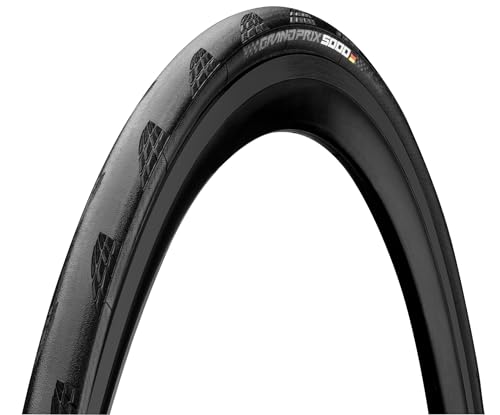
Continental Grand Prix 5000 Road Tyre
What We Like
- Vectran Breaker for cut resistance and flexibility
- BlackChili Compound balances grip and rolling resistance
- LazerGrip micro profile aids cornering grip
- Active Comfort Technology absorbs road vibration
Trade-offs
- Narrow 25 mm width limits comfort on rough roads
- Requires inner tube and hooked rims (not tubeless)
A Vectran Breaker layer spun from liquid crystal polymer makes this tyre lighter and more cut resistant than a standard nylon breaker. So you get serious puncture protection without the weight penalty that often comes with armoured road tyres. The BlackChili Compound balances grip and low rolling resistance, while LazerGrip’s lasered micro profile on the shoulders helps cornering confidence. Active Comfort Technology soaks up road vibration for a smoother ride over long miles. That combination of protection, speed, and comfort is why this tyre suits riders who want one set of hoops for daily training, club runs, and race day alike.
The 25 mm width is fast and responsive on smooth tarmac, but on chipseal or rougher back roads you’ll feel more buzz than a wider option like the Schwalbe Marathon Plus. You also need an inner tube and hooked rims, so if you’ve already gone tubeless, the Pirelli Cinturato Velo TLR might be a simpler fit. Still, for a road-focused rider who prizes puncture resistance without giving up speed or handling, this is the balanced pick.
Product photos
Schwinn 26×1.95 Hybrid Bike Tire

What We Like
- Dedicated puncture guard under tread
- Steel bead for secure fit
- Smooth tread for pavement and light trails
- Wider knob spacing aids cornering
Trade-offs
- Hybrid tread limits deep off-road grip
- Narrower PSI range than some road tyres
A dedicated puncture guard layer sits under the tread to block sharp objects before they reach the tube. This makes the Schwinn 26×1.95 Hybrid a straightforward choice if your main worry is flats on paved commutes or light gravel paths. The steel bead construction and 40 to 65 PSI range give you room to dial in comfort or rolling speed. Riders who stick to pavement and packed dirt will appreciate the smooth centre tread, while the wider knob spacing at the edges adds confidence when leaning into a turn.
The trade-off is weight: at 2.0 pounds, this tire is heavier than some alternatives like the Schwalbe Marathon Plus (1.1 pounds) or the Continental Contact Plus (2.2 pounds). If you are carrying your bike up stairs or accelerating often, that extra heft becomes noticeable. Still, for a durable, no-nonsense tire that prioritizes flat prevention over grams, the Schwinn delivers exactly what it promises. It is a practical fit for casual riders and commuters who want to roll without worrying about glass or thorns.
Schwalbe Green Marathon Bicycle Tyre

What We Like
- 80% recycled and renewable materials
- Multiple size options from 16 to 28 inch
Trade-offs
- 1.2 lb is heavier than some road-oriented tyres
- Wired bead construction
At 1.2 pounds with a wired bead construction, the Green Marathon is heavier than some alternatives like the Continental Grand Prix 5000, which weighs 0.5 pounds. That extra weight is less noticeable if you leave the tyre mounted full-time, but riders who frequently swap tyres for trips might prefer a lighter folding option. For cyclists who want Schwalbe’s eco-friendly design and the brand’s long-standing expertise, this tyre offers a practical balance of sustainability and everyday performance.
Schwalbe Marathon Plus 26×2.00 Tyre

What We Like
- Sidewall resists cracking from low pressure
- Available in sizes for e-bikes, road bikes, and MTBs
Trade-offs
- At 1.1 lb, heavier than some road-focused tires
- Heavy feel reduces acceleration on climbs.
The trade-off is weight: at 1.1 pounds, this tire is heavier than the Continental Grand Prix 5000 (0.5 pounds). That extra weight can affect acceleration and feel on pavement, so it’s not the best choice for riders focused on speed. But for daily reliability, especially on an e-bike or touring bike, the puncture protection gives riders confidence that lighter tires may not offer.
Product photos
Continental Contact Plus City Bike Tire

What We Like
- ECE-R75 certified for 50 km/h e-bikes
- SafetyPlus Breaker rated Safety Level 7
- Low rolling resistance saves battery life
- Reflective sidewalls improve low-light visibility
Trade-offs
- Wire bead limits tubeless conversion
- 1040 g adds weight for manual pedaling
The Continental Contact Plus is ECE-R75 certified for e-bikes up to 50 km/h, meaning the casing can handle the extra torque and speed of a fast electric bike without deforming or overheating. Its SafetyPlus Breaker is rated Safety Level 7 by Continental, pairing a cut- and puncture-resistant ply with flexible natural rubber. That high protection comes with low rolling resistance, which helps save battery life on e-bikes and keeps standard bikes rolling easily. Riders who commute daily on an e-bike or a rental-style city bike will find the low rolling resistance a real bonus: the elastic breaker keeps the tire spinning freely, stretching battery range and making every pedal stroke count.
At 1040 grams, this tire carries a noticeable heft that riders feel when accelerating or climbing. The wire bead construction requires an inner tube, so tubeless setups are off the table. That weight comes from the SafetyPlus Breaker, which pairs a SafetySystem Breaker with flexible natural rubber to create an extremely cut- and puncture-resistant ply rated Safety Level 7 by Continental. For urban commuters and e-bike users, that trade-off means fewer flats on glass-strewn bike lanes or rough pavement. The tire also carries ECE-R75 certification for e-bikes up to 50 km/h, so it handles high acceleration torque and fast cornering without compromising structure.
Pirelli Cinturato Velo TLR Road Tyre

What We Like
- Armour Tech nylon and aramid puncture layer
- SmartNET Silica for grip on varied terrain
- Tubeless-ready for lower flats and smoother ride
- Hookless rim compatible per ETRTO standards
Trade-offs
- Narrow 26c width limits comfort on rough roads
- Max 73 psi restricts high-pressure riders
- Designed for road, not gravel or off-road
A high-density nylon layer reinforced with aramid fibers gives this tire puncture resistance for long road rides. The SmartNET Silica compound keeps grip predictable on smooth asphalt and rough patches, so you don’t have to slow down when the road gets less than perfect. For distance cyclists who want to minimize flats without adding heavy weight, this tire delivers protection that doesn’t compromise speed.
The Cinturato Velo TLR’s 26 mm width and 73 psi maximum pressure suit riders who stick to paved roads and want strong puncture protection. It is not for those seeking plush cushioning over rough terrain or the ability to run very high pressures. For gravel or heavy loads, a wider tire would be more appropriate.
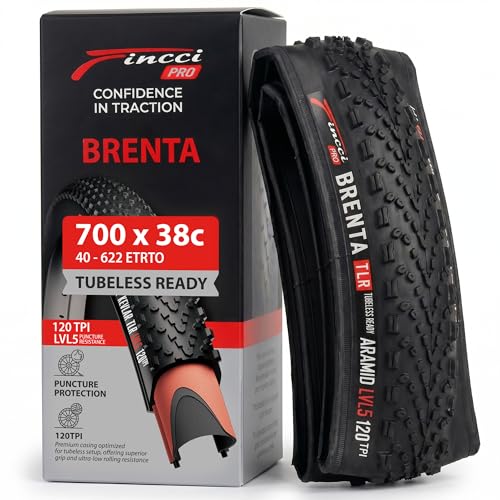
Fincci Brenta 700x38c Gravel Tyre
What We Like
- LVL 5 puncture protection layer
- 1mm nylon anti-puncture shield
- Tubeless ready for lower flats
- 120 TPI casing for supple ride
Trade-offs
- Tread depth 1.5mm limits loose terrain grip
- Tubeless setup requires compatible rims and valves
The Fincci Brenta packs a 1mm nylon anti-puncture layer rated at LVL 5 protection, which means glass shards and thorns have a tough barrier to get through before they reach the casing. This tire is built for riders who want to commute or cruise on mixed pavement without constantly patching tubes or sealing punctures. The 120 TPI nylon casing gives a surprisingly supple ride for a tire with this much armor, and the tubeless-ready design lets you ditch inner tubes entirely for even fewer flats. It suits anyone who values peace of mind on city streets, paved paths, and hardpack gravel more than all-out speed or aggressive cornering.
The trade-off shows up when you leave the tarmac. With a shallow 1.5mm tread, this tire is happiest on asphalt and packed dirt; loose gravel or mud will test its limits. Compared to a tire like the Panaracer Gravelking SK Classic, which uses a more aggressive tread pattern for loose surfaces, the Fincci sticks to its urban and light-gravel mission. The 700x38c size is a practical middle ground for road bikes and hybrids, but if you need float over soft ground or deep gravel, a wider tire would serve you better. For the commuter or weekend path rider who wants maximum puncture resistance without the weight of a full touring tire, this is a smart, focused choice.
Pirelli P-Zero Race SL TLR Tyre

What We Like
- Smart Evo compound for low rolling resistance
- Techwall Road adds puncture protection without bulk
- Tubeless ready for fewer flats
- 120tpi casing for supple ride feel
Trade-offs
- Not ideal for heavy touring loads.
- Requires tubeless setup experience.
With a 335-gram weight and 120tpi casing, this tyre uses a Smart Evo compound to keep rolling resistance low while the Techwall Road reinforcement adds a defensive layer. It suits riders who want to push pace on mixed surfaces but still dread mid-ride flats, offering a middle ground between speed and protection.
The trade-off shows up when you compare it to the Schwalbe Green Marathon: that tyre uses a GreenGuard puncture protection layer and weighs more, so it may handle debris differently. But the Pirelli is designed for performance, making it a better fit for riders who prioritize speed over absolute armour.
Product photos
Panaracer Gravelking SK Classic Tyre

What We Like
- Low rolling resistance for gravel
- Puncture resistant BeadLock technology
- 120Tpi Tufftex casing balances durability and weight
- ZSG compound works in hot or cold
Trade-offs
- 30C width is narrow for deep loose gravel
- Requires tubeless setup for full TLR benefit
A 120Tpi Tufftex casing balances durability with a lightweight feel, so the tire doesn’t weigh down your bike on long rides. The ZSG Natural Gravel Compound delivers low rolling resistance and minimal energy loss, and it performs consistently in both hot and cold temperatures. That makes it a strong fit for riders who spend most of their time on maintained gravel and hardpack, where speed and smoothness matter more than outright traction. Panaracer’s BeadLock technology also helps with installation and adds an extra layer of rim protection, a thoughtful touch for anyone mounting their own tires.
The 30C width is narrower than what many gravel riders prefer for loose or chunky surfaces. For comparison, the Fincci Brenta 700x38c is a wider option. But for riders focused on puncture resistance and low rolling resistance on mixed surfaces, this Panaracer offers those features without adding unnecessary weight.
Product photos
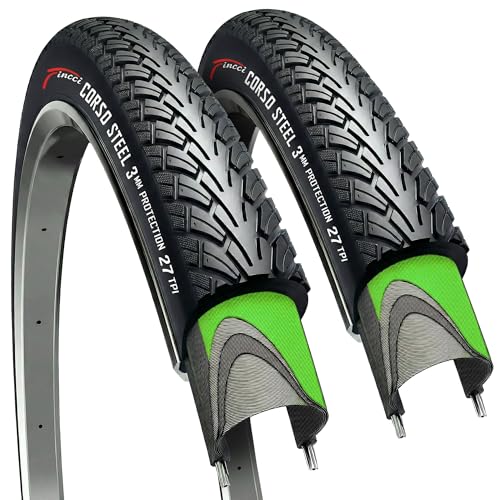
Fincci 26×1.95 MTB Tyre Pair
What We Like
- 3mm anti-puncture layer for debris resistance
- Semi-slick tread rolls smoothly on pavement
- Foldable steel bead for compact storage
Trade-offs
- 1.5mm tread depth limits off-road grip
- 27 TPI casing is less supple than higher-TPI tires
A 3mm anti-puncture layer makes this pair a serious shield against thorns, glass, and road debris for anyone riding on mixed surfaces. The semi-slick tread with a center ridge keeps rolling resistance low on asphalt, while the shoulder knobs provide enough bite for light gravel and packed dirt. This is a practical choice for daily commuters and weekend riders who want dependable flat protection without swapping to a heavy, sluggish tire.
The trade-off comes in tread depth: at 1.5mm, the tread is shallow enough that aggressive off-road trails will feel slippery. The 27 TPI nylon casing is a standard construction for this price range. For riders who stick to paved paths, light gravel, and urban streets, this pair delivers reliable protection at a practical weight.
Product photos
How We Evaluated Bicycle Tyres For Puncture Resistance
This guide draws on manufacturer technical data, expert reviews from cycling publications, and consistent themes from long-term owner feedback. Claims are cross-referenced against known industry standards and rider reports.
The four criteria that mattered most were puncture protection layer construction, tyre weight versus rolling resistance, casing thread count (TPI) for suppleness, and real-world durability patterns reported by riders. A tyre with a thick rubber layer might stop flats but feel dead; a high-TPI casing with a flexible breaker can protect without the penalty.
The honest limit of a research-led evaluation is that individual riding conditions vary widely. A tyre that survives glass-strewn city streets for one commuter may fail on a gravel shoulder for another. We prioritize designs with proven protection architecture over marketing claims.
What To Look For In Bicycle Tyres For Puncture Resistance
Choosing a puncture-resistant tyre means balancing protection with ride quality. Here is what matters most.
Look for a dedicated puncture breaker layer, nylon, aramid, or Vectran, between the tread and casing. Higher TPI (threads per inch) casings offer a more supple ride. Match tread pattern to your primary surface: slick for pavement, file or small knobs for light gravel.
Puncture Protection Layer
The heart of any puncture-resistant tyre is its breaker layer. Nylon breakers are common and effective for commuting, while aramid (Kevlar) and Vectran offer higher cut resistance without adding stiffness. Some tyres use multiple layers or a full casing of puncture-resistant material. Check the manufacturer’s description for the specific material and its position in the tyre construction.
TPI (Threads Per Inch)
TPI measures casing thread count. A higher TPI uses finer threads that flex more easily, giving a smoother ride and better grip. Lower TPI casings are heavier and stiffer but often more durable against pinch flats. For puncture resistance, a high-TPI casing with a dedicated breaker layer is the ideal combination.
Tread Pattern and Volume
Slick or near-slick treads roll fastest and offer the most consistent contact patch for braking and cornering on pavement. A file tread or small centre knobs add grip on light gravel without much rolling penalty. Wider tyres (32 mm and up) can run lower air pressure, which reduces the chance of pinch flats and improves comfort, an underrated puncture defence.
- Check the tyre’s stated PSI range and your rim’s internal width for compatibility.
- Look for a reflective sidewall if you ride in low light.
- Confirm the tyre is tubeless-ready if you want sealant-based flat protection.
- Verify the bead type: folding beads save weight, wire beads are more durable.
- Match the tyre width to your riding surface, wider is not always better for road speed.
A good rule: the more glass and debris on your route, the more important a dedicated breaker layer becomes over simple thick rubber.
Bicycle Tyres For Puncture Resistance Compared
The table below compares each tyre’s key puncture-resistance features, weight, and intended use to help you narrow your choice.
| Product | Size | Puncture Protection | Bead Type | Weight |
|---|---|---|---|---|
| Continental Grand Prix 5000 Road Tyre | 700×25 (ETRTO 25-622) | Vectran Breaker (liquid crystal polymer) | folding | 0.5 pounds |
| Schwinn 26×1.95 Hybrid Bike Tire | 26 x 1.95 inches | Extra layer under tread | Steel bead | 2.0 Pounds |
| Schwalbe Green Marathon Bicycle Tyre | 16 to 28 inch | GreenGuard | Wired tyre | 1.2 pounds |
| Schwalbe Marathon Plus 26×2.00 Tyre | 26 x 2.00 | 5 mm SmartGuard layer | N/A | 1.1 pounds |
| Continental Contact Plus City Bike Tire | 26×1.75 (47-559) | Safety Level 7 | Wire Bead | 1040 g |
| Pirelli Cinturato Velo TLR Road Tyre | 700x26c | Armour Tech (nylon + aramid) | Clincher Type | 0.6 Pounds |
| Fincci Brenta 700x38c Gravel Tyre | 700x38c | LVL 5, 1mm nylon layer | Foldable aramid | 550g per tire |
| Pirelli P-Zero Race SL TLR Tyre | 700 x 32c | Techwall Road | folding | 335g |
| Panaracer Gravelking SK Classic Tyre | 700 x 30C | BeadLock puncture resistant | N/A | 0.8 Pounds |
| Fincci 26×1.95 MTB Tyre Pair | 26 x 1.95 inches | 3mm anti-puncture layer | Foldable steel bead | 1.28 kg each |
Frequently Asked Questions
What is the best tyre for preventing punctures on a road bike?
The Continental Grand Prix 5000 Road Tyre is our best overall pick for road cyclists. Its Vectran Breaker layer provides cut resistance without the stiffness of thicker nylon guards, and the BlackChili Compound balances grip with low rolling resistance. For maximum armour on a road bike, consider the Schwalbe Marathon Plus.
Are tubeless tyres more puncture resistant than tube-type tyres?
Tubeless tyres reduce the chance of pinch flats because there is no inner tube to pinch between the tyre and rim. They also allow sealant to fill small punctures as you ride. However, tubeless does not replace a dedicated puncture breaker layer, a tubeless tyre without protection can still suffer cuts.
How often should I replace puncture-resistant bicycle tyres?
Replace a tyre when the tread is worn flat, when cuts or bulges appear in the sidewall, or when the casing threads become visible. Puncture protection layers lose effectiveness as the tread wears down. Many riders replace rear tyres more often than front tyres.
What does TPI mean for puncture resistance?
TPI stands for threads per inch, a measure of casing thread count. Higher TPI casings (120+) use finer threads that flex more, giving a suppler ride and better grip. They can be more prone to cuts without a breaker layer. Lower TPI casings are stiffer and more resistant to pinch flats but ride harsher.
Can I use a puncture-resistant tyre on an e-bike?
Yes, but you need a tyre rated for your e-bike’s speed. The Continental Contact Plus City Bike Tire is ECE-R75 certified for 50 km/h e-bikes and has a Safety Level 7 breaker. Always check the tyre’s speed certification and recommended load capacity before mounting on an e-bike.
The Bottom Line
For road cyclists who want top puncture protection without riding a sluggish tyre, the Continental Grand Prix 5000 Road Tyre is our best overall pick. Its Vectran Breaker and BlackChili Compound deliver cut resistance and grip that serious riders will appreciate, though the 25 mm width means it’s best on smoother pavement.
If you commute on pavement and light trails, the Schwinn 26×1.95 Hybrid Bike Tire offers a dedicated puncture guard at a more accessible price point. For riders who want maximum armour and don’t mind the weight, the Schwalbe Marathon Plus is the flat-less standard. Eco-conscious riders should look at the Schwalbe Green Marathon, built from 80% recycled materials.
The single most important factor in choosing a puncture-resistant tyre is matching the protection layer to your road conditions. A thick breaker is wasted on clean asphalt, and a lightweight casing will fail on debris-strewn city streets. Know your route, then pick the tyre that protects it.
