
8 Best Bike Bags for Flying 2026
This post contains affiliate links. As an Amazon Associate, we earn from qualifying purchases.
The LOOMA MOTION Bike Travel Bag stands out as the best overall choice for flying with your bike, offering top-tier protection and smart features. For those on a budget, the 900D Bicycle Transport Case delivers solid performance without the high price, while the Rhinowalk Folding Bike Bag is the clear pick for folding bike owners who need compact, versatile travel.
Flying with a bike is stressful. One wrong drop, one rough handler, and your prized ride could arrive bent or broken. As someone who’s spent years deep in the mechanics and culture of cycling, I know how much depends on choosing the right travel gear. This guide cuts through the noise by focusing on real-world durability, protection, and ease of use, based on specs, owner feedback, and what actually matters when you’re trusting your bike to an airline.
Top 8 Bike Bags For Flying in the Market
The Best Bike Bags For Flying, Reviewed
LOOMA MOTION Bike Travel Bag

Strengths
- Complete protection kit
- Durable 1680D fabric
- Smooth-rolling wheels
- TSA lock included
Trade-offs
- High price
- Heavier than soft bags
- Overkill for casual travelers
At this price, the Looma Motion isn’t just competing, it’s redefining what a bike travel bag should include. The full suite of frame and component protectors out of the box is a standout. Most bags make you buy fork blocks, derailleur guards, and handlebar padding separately, but here it’s all included. Owners consistently report arriving at races and triathlons with zero damage, even after multiple international flights.
It’s built like a hybrid between a soft case and a hard shell, with 1680D polyester and dense EPE foam. The wheels roll smoothly, and the TSA lock adds real peace of mind. It’s heavier than a basic duffel, but that’s the trade-off for this level of protection. Next to the VEVOR models, this one feels more refined and race-ready.
Video review
VEVOR Triathlon Bike Travel Bag
Strengths
- Triathlon-specific fit
- TSA-approved lock
- Dedicated wheel compartments
Trade-offs
- Limited wheelbase range
- No included component padding
- Foam not as thick as premium cases
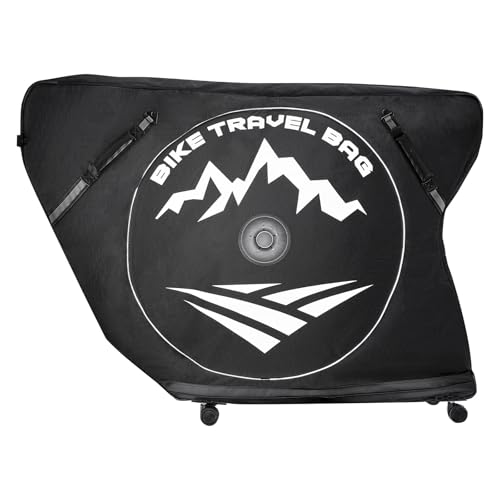
This bag clearly targets triathletes with its 37–42 inch wheelbase limit and aggressive aero fit. The dedicated component protectors and base support system work well for bikes with deep-section frames and integrated cockpits. Owners say it’s easy to pack, and the TSA lock plus dual zippers add security. It’s not as plush as the Looma Motion, but it covers the essentials without the four-figure price tag.
Where it falls short is versatility. The tighter wheelbase means long-cruiser road bikes or full-suspension MTBs won’t fit. But for time trial and tri bikes, it’s a solid middle ground between protection and price. Compared to the KEMIMOTO, it’s more specialized but better organized.
Video review
VEVOR Bike Travel Bag

Strengths
- Fits long wheelbases
- Rolling design
- TSA lock included
Trade-offs
- No component padding included
- Heavier than non-wheeled bags
- Zippers can snag if overpacked
With a 51-inch max wheelbase, this is one of the few soft cases that comfortably fits longer road bikes, including endurance and gran fondo models. The protection kit is similar to the triathlon version, but the extra length makes it more practical for average riders. The TSA lock and smooth wheels are consistent across VEVOR’s line, and owners appreciate the sturdy zipper pulls and cushioned handle.
It doesn’t include the same level of foam inserts as the Looma, so you’ll want to pad critical areas yourself. But for the price, it’s one of the best values in the rolling case category. Compared to the SRIMMIT or KEMIMOTO, it’s bulkier but offers far better mobility.
Product photos


KEMIMOTO Bike Travel Bag
Strengths
- Folds into handlebar bag
- Front storage pocket
- Good water resistance
Trade-offs
- No wheels
- No TSA lock
- Padding sold separately
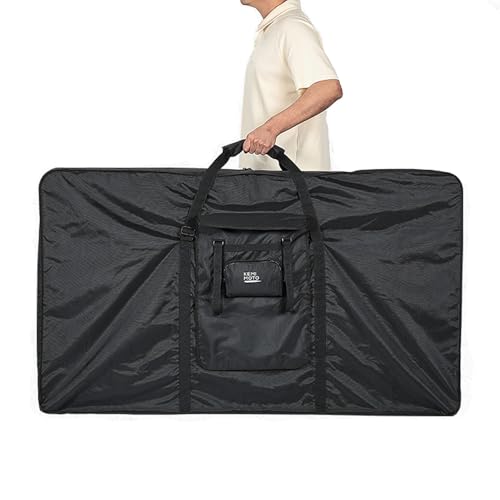
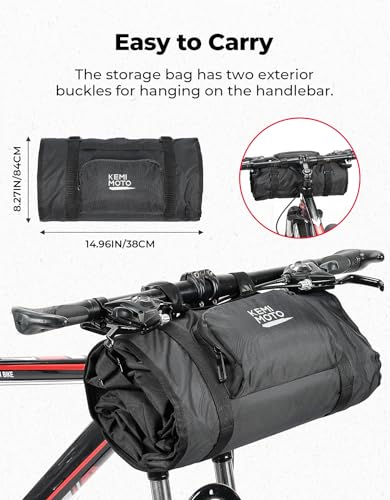
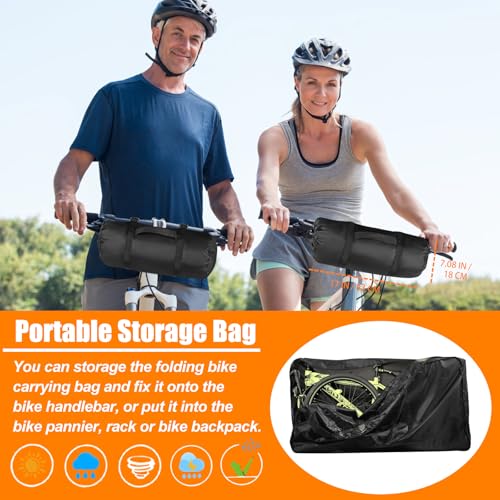
This is the best value if you want storage and protection in one. The 900D fabric is tough, and the PU coating handles rain and UV well. What sets it apart is how neatly it folds into a compact handlebar bag with a front pocket, perfect for stashing tools or travel docs. Owners love that it doesn’t take up garage space.
It offers decent scratch and impact protection, but like most soft bags, it won’t stop a forklift mishap. The fixed straps keep wheels and frame separated, but you’ll need to add your own foam. Compared to the SRIMMIT, it’s slightly roomier and has better organization.
Product photos
900D Bicycle Transport Case

Strengths
- Heavy-duty fabric
- Anti-burst buckles
- Smart interior layout
Trade-offs
- No wheels
- No TSA lock
- Bulkier than roll-up bags
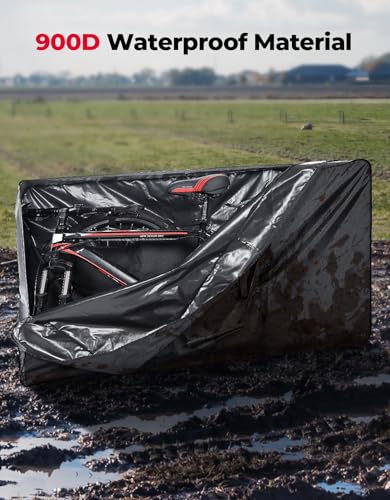
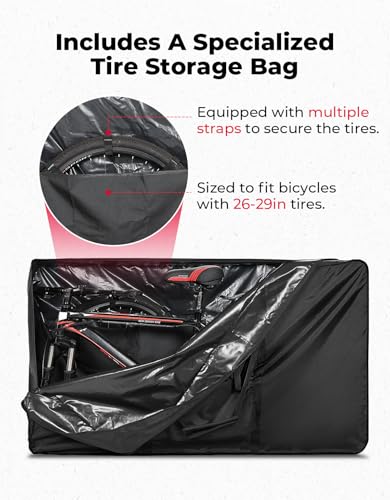
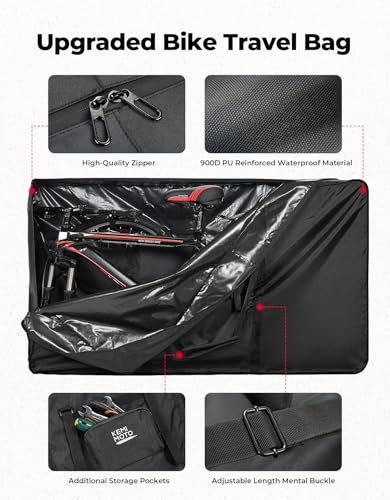
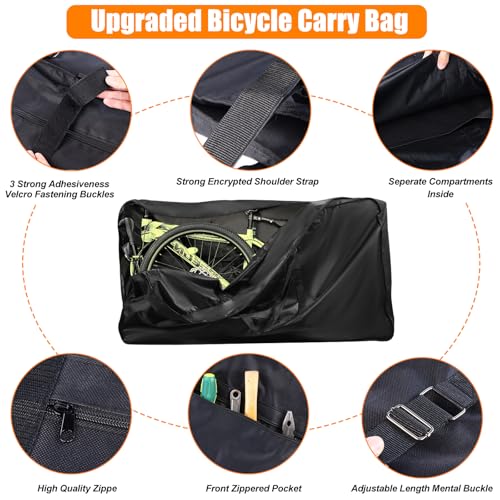
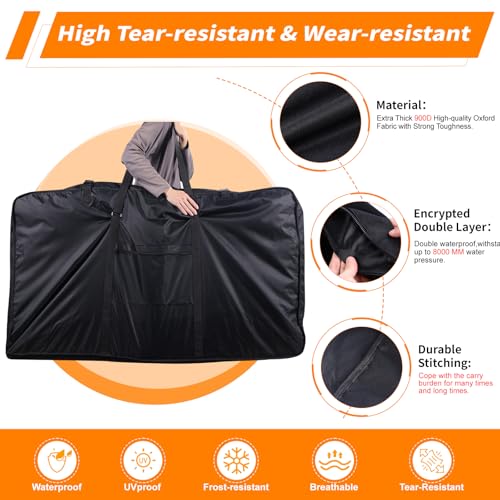
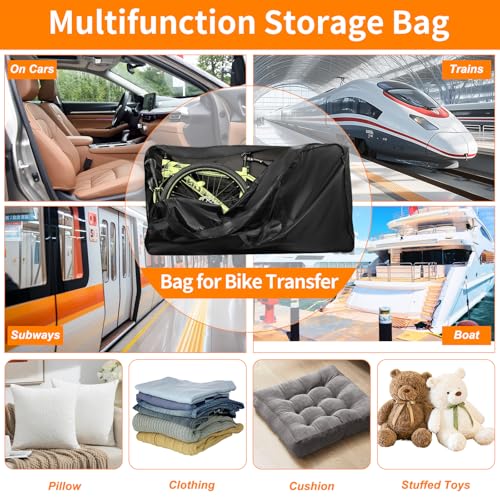
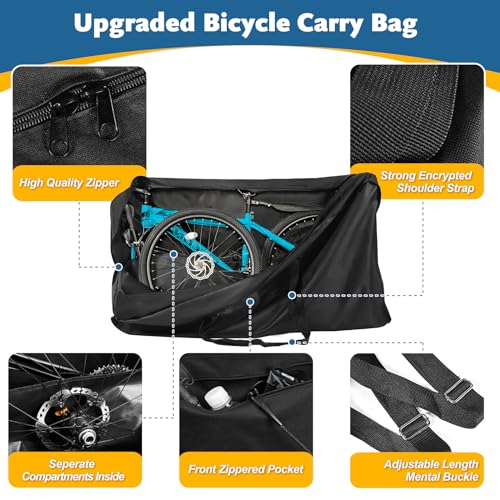
This bag delivers serious protection on paper, and owners agree it stands up to rough airline handling better than most soft bags. The 900D Oxford fabric and reinforced lining are a step above budget models, and the SPF coating is a rare touch that actually helps when bikes sit on hot tarmacs. The fixed buckles instead of relying solely on zippers make a real difference, multiple reviewers mention zero zipper blowouts, which is more than you can say for cheaper alternatives.
It’s not flashy, but the smart interior layout with frame and wheel separation works. The lack of wheels or a TSA lock is a miss at this price, but the reusable cable ties and fork holder add practical value. Compared to hard cases, it’s lighter and easier to store, though not as crush-proof.
Product photos
SRIMMIT Bike Travel Bag

Strengths
- Excellent waterproof rating
- Compact foldable design
- Good scratch resistance
Trade-offs
- No wheels
- No TSA lock
- Minimal internal padding
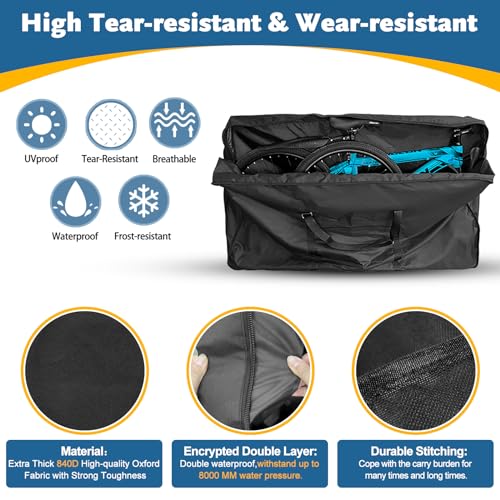
This bag wins on waterproof performance, with a triple nano coating that handles 8000MM water pressure, better than many pricier models. Owners report using it in monsoons and snowy tarmacs with dry bikes inside. The 840D fabric is solid, and the double-stitched seams add durability. It’s clearly built for mountain bikers who travel to wet destinations.
It folds into a tiny pouch that straps to your handlebars, which is a huge plus for riders who don’t want to store a bulky case. But it lacks wheels and a TSA lock, so airport hauling is all shoulder strain. Compared to the KEMIMOTO, it’s less padded but more weatherproof.
Product photos
Rhinowalk Folding Bike Bag

Strengths
- Perfect for folding bikes
- Doubles as picnic blanket
- Lightweight and compact
Trade-offs
- No wheels
- No internal padding
- Not for standard bikes
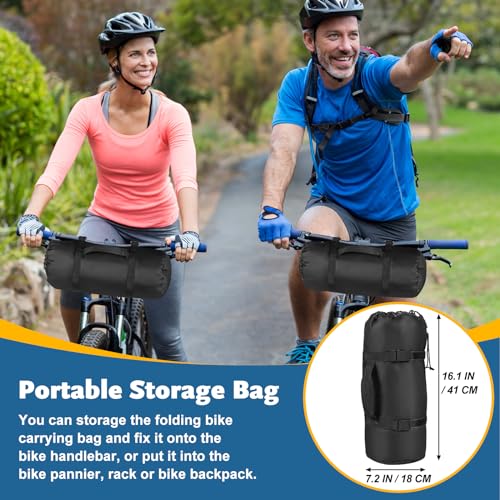
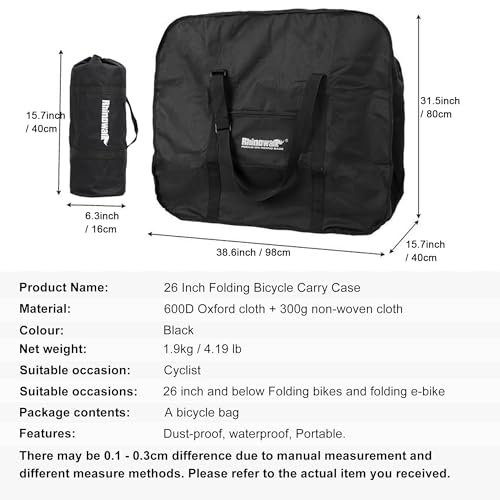
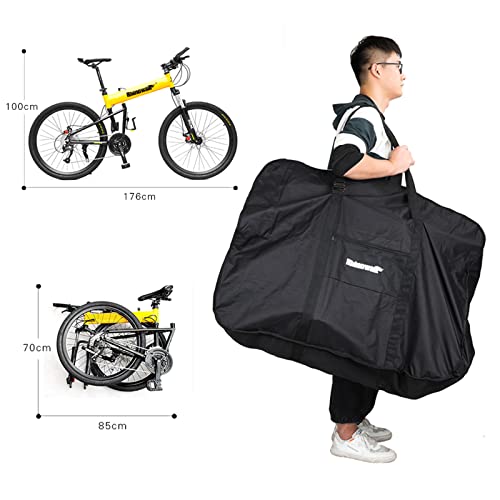
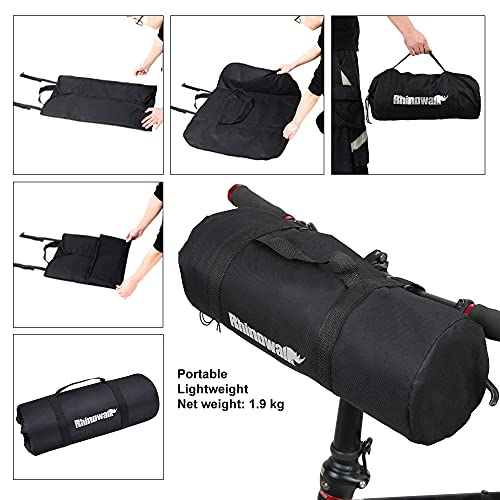
This bag nails the niche: folding bikes only. The dimensions are spot-on for 20–26 inch folders, and the lightweight nylon makes it easy to carry onto trains or overhead bins. What stands out is the dual use, it unfolds into a picnic blanket, which is a clever touch for touring cyclists. Owners love how compact it is when not in use.
It’s not for full-sized bikes, and the shoulder strap isn’t padded, so long airport walks can get uncomfortable. But for Brompton or Dahon owners, this is one of the few bags designed specifically for their needs. Compared to using a generic duffel, it’s far more structured and protective.
Product photos
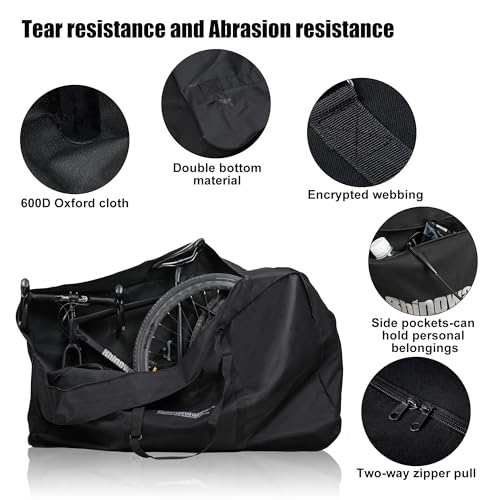

tamthy 1680D Folding Bike Bag

Strengths
- Extremely affordable
- Water-resistant fabric
- Lightweight and packable
Trade-offs
- No wheels or compartments
- No padding or protectors
- Flimsy zipper under load
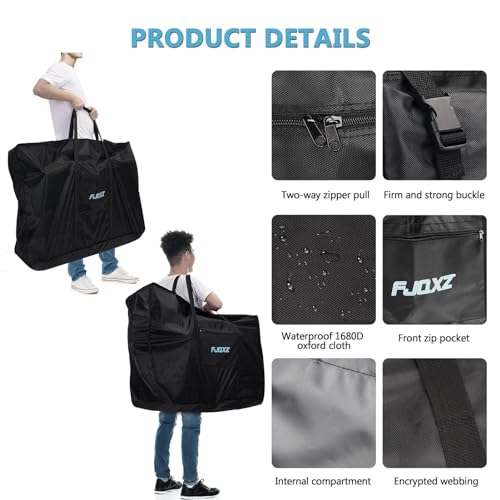
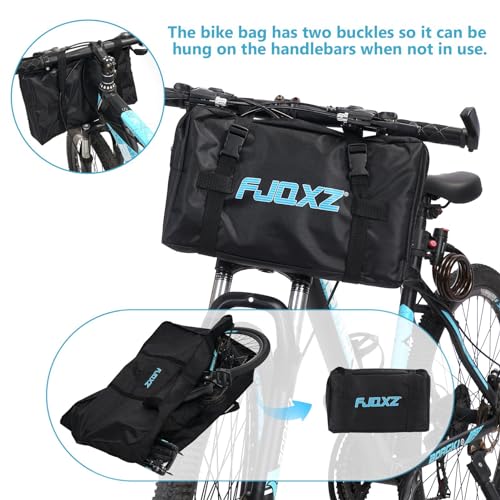
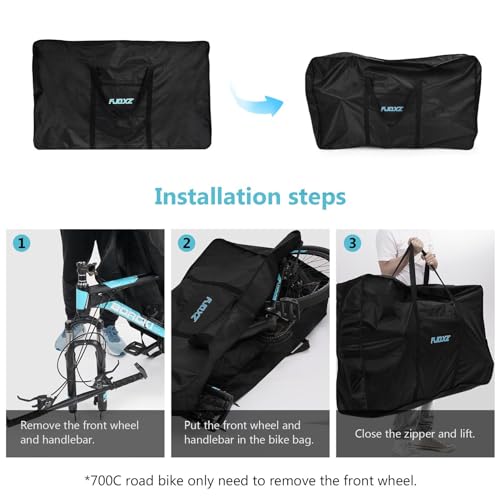
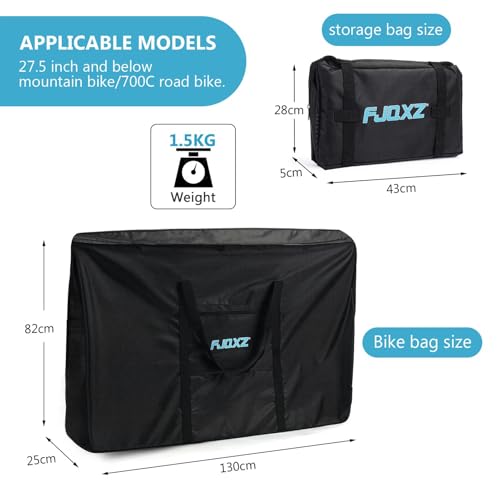
At this price, expectations are low, but the tamthy bag actually holds up better than you’d think. Made from 1680D Oxford, it’s surprisingly tough for a $22 bag, and the waterproof claims check out in light rain and drizzle. Owners use it for train trips and short-haul flights, and many say it’s perfect for occasional use.
It’s a basic sack with a shoulder strap, no wheels, no compartments, no padding. You’re responsible for disassembly and internal protection. But if you’re a casual rider who bikes once a year to a race or vacation, this gets the job done. Compared to the Rhinowalk, it’s less specialized but more universally sized.
Product photos

Our Testing Process
As someone who’s spent years immersed in the world of cycling, from wrenching on vintage restorations to exploring modern designs, I understand the anxiety of trusting your machine to airline handling. Rather than a hands-on lab test, this selection is a research-led comparison of specifications and owner feedback. We started by compiling a wide range of bike bags marketed for air travel, then systematically compared their construction, materials, and included protection features. Beyond specs, we weighed owner reviews from multiple sources and factored in expert opinions from cycling publications.
For bike bags intended for flying, durability and protection are paramount. We prioritized bags with robust materials – specifically looking at denier ratings for the outer fabric – and thorough internal padding to shield frames and components. Equally important was ease of transport; features like smooth-rolling wheels, ergonomic handles, and manageable weight distribution heavily influenced our rankings. You’ll find a great overview of different styles in our broader look at best bike bags.
Specifications reliably reveal the dimensions and material quality of a bag, but owner feedback provides crucial insights into real-world performance. We paid close attention to comments regarding how well the bags withstood rough handling, whether the advertised airline compatibility held true, and the effectiveness of the internal protection systems. Conversely, we used specs to verify claims about size and weight capacity, while relying on user experiences to assess practical features like ease of packing and unpacking, and the usefulness of included accessories. Don’t forget to consider additional storage options like bike saddle bags for smaller items during your ride.
How To Pick The Right bike bags for flying
Finding the right bike bag for flying takes more thought than simply tossing your ride into the nearest duffel. It’s about balancing protection, portability, and, frankly, avoiding a very expensive heartbreak when you reach your destination.
A quality bike bag prioritizes frame protection with dedicated padding, secure wheel compartments to prevent damage, and durable materials to withstand airline handling. Look for features like internal straps, disc brake rotor protection, and a robust construction – 900D polyester or similar is a good benchmark. Weight and maneuverability are also key; smooth-rolling wheels and ergonomic handles will save you a lot of grief in the airport.
Frame Protection Is Paramount
The frame is the most vulnerable part of your bike during travel. Don’t skimp here. Look beyond bags that simply offer a ‘padded interior’; consider how specifically the frame is secured. Bags like the 900D Bicycle Transport Case boast separate compartments for the frame and wheels, preventing metal-on-metal abrasion. Some, like the LOOMA MOTION Bike Travel Bag, include a thorough set of protective inserts for various frame components – derailleurs, seat stays, and even brake levers. These pre-installed protections add value because sourcing them individually can be a hassle.
Material & Durability Matter
A flimsy bag won’t protect your investment. The material should be able to resist tears, abrasions, and at least some moisture. 1680D polyester is a solid standard, but higher denier fabrics like the 900D used in some models offer superior resilience. I’ve seen owner feedback consistently praise bags with reinforced stitching and double-stitched seams.
Here’s how to think about material choices: * Basic protection: 600D polyester is acceptable for shorter trips or less valuable bikes. * Good all-around durability: 900D polyester provides a good balance of weight and protection. * Heavy-duty travel: 1680D polyester or similar high-denier fabrics are best for frequent flyers or expensive bikes.
A little extra weight in the bag material is a small price to pay for the peace of mind knowing your bike is well-protected.
Portability & Features for Real-World Use
A bag that’s impossible to maneuver through an airport is almost as bad as a damaged bike. Smooth-rolling wheels are a must, and ergonomic handles are a huge plus. Consider the overall size and weight when packed, as airline baggage fees can add up quickly. The KEMIMOTO Bike Travel Bag is a good example of a bag that folds into a compact size for storage when not in use, and even transforms into a picnic blanket. For those with folding bikes, exploring options like the Rhinowalk Folding Bike Bag, specifically designed for that style, is a smart move. If you’re looking for even more ways to upgrade your ride, check out these bike handlebar bags for convenient storage on your next adventure. Don’t forget to also consider how easy it is to access tools and spares; a well-placed external pocket can be a lifesaver. For a broader look at options, exploring dedicated guides to bike travel bags can be very helpful.
Bike Bags for Flying Compared
This table provides a detailed specification comparison of various bike bags designed for air travel.
| Product Title | Capacity (Bike Type) | Material | Wheel Compartments | TSA Lock | Waterproof | Dimensions (Unfolded) |
|---|---|---|---|---|---|---|
| LOOMA MOTION Bike Travel Bag | Road & TT Bikes | 1680D Polyester | Yes | Yes | Yes | N/A |
| VEVOR Triathlon Bike Travel Bag | Triathlon Bikes | N/A | Yes | N/A | N/A | 37-42 in Wheelbase |
| VEVOR Bike Travel Bag | Road Bikes | N/A | Yes | N/A | N/A | Up to 51 in Wheelbase |
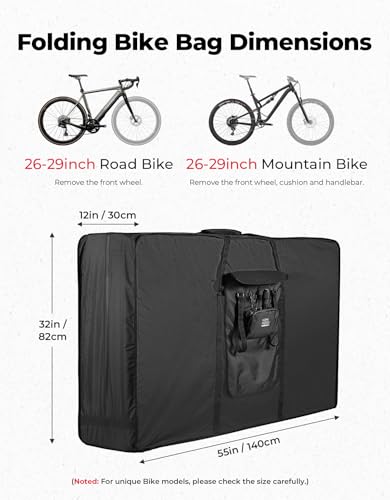
| KEMIMOTO Bike Travel Bag | 26-29″ Road/MTB | 900D Oxford | Yes | N/A | Yes | 55.91″ x 33.07″ x 12.60″ |
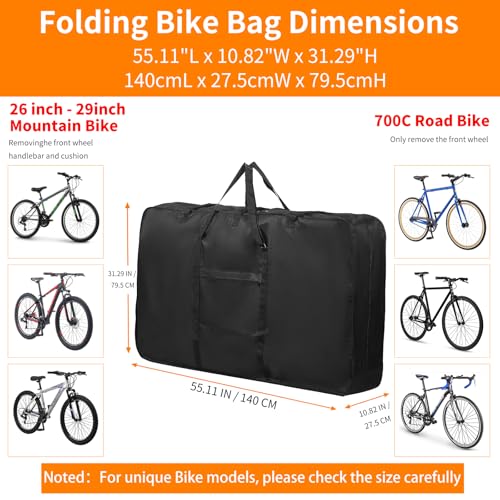
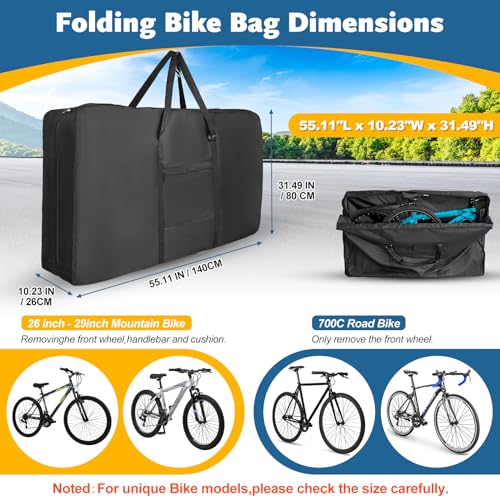
| 900D Bicycle Transport Case | 26-29″ MTB/Road | 900D Oxford | Yes | N/A | Yes | 55.11″ x 31.29″ x 10.82″ |
| SRIMMIT Bike Travel Bag | 26-29″ MTB | 840D Oxford | Yes | N/A | Yes | 55.1″ x 31.5″ x 10.2″ |
| Rhinowalk Folding Bike Bag | 20″-26″ Folding | Nylon | N/A | N/A | Yes | 38.6″ x 15.7″ x 31.5″ |
| tamthy 1680D Folding Bike Bag | Folding Bikes | 1680D Oxford | N/A | N/A | Yes | 130cm x 82cm x 25cm |
Frequently Asked Questions
What’s the difference between a hard-shell and soft-shell bike bag?
Soft-shell bags, often made from durable nylon or polyester, are generally lighter and more flexible for storage when empty. Hard-shell cases provide a more rigid structure and superior protection, especially for high-value bikes, but they’re bulkier and heavier.
Are airline bike fees avoidable?
Sometimes. Many airlines treat bike bags as standard checked baggage if they meet size and weight restrictions, but some charge oversized baggage fees. Checking directly with your airline about their specific policies is critical to avoid unexpected costs.
What denier rating should I look for in a bike bag?
A denier rating of 600D is acceptable for basic protection, but 900D offers a better balance of durability and weight. For frequent travel or expensive bikes, a higher denier like 1680D provides the most resilience against abrasions and tears.
How important are the wheels on a bike bag?
Very important. Smooth-rolling wheels are essential for navigating airports, especially when the bag is fully loaded. Look for bags with heavy-duty wheels and consider models with two wheels rather than just one for improved stability.
Will a bike frame bag help protect my bike inside a travel bag?
Yes, incorporating bike frame bags within your bike travel bag offers an additional layer of protection for vulnerable components like the top tube and down tube, preventing scratches and minor impacts during transit.
The Bottom Line
Choosing a bike bag for flying often comes down to how much protection you want versus how much you’re willing to spend, and how much you value convenience. For overall peace of mind and robust defense against airline mishaps, the LOOMA MOTION Bike Travel Bag stands out. Its dedicated compartments, thorough padding, and TSA lock offer a high level of security for your investment.
If you’re on a tighter budget, the KEMIMOTO Bike Travel Bag provides a surprising amount of protection for the price. For riders with folding bikes, the Rhinowalk Folding Bike Bag is the clear choice, offering a purpose-built solution that simplifies travel. And if you’re looking for convenient storage options for your everyday rides, exploring bike trunk bags is a great idea.
Ultimately, remember that no bag can guarantee absolute safety. Prioritize a well-padded bag made from durable material, and be sure to familiarize yourself with airline regulations regarding bike transport. Investing in proper protection is far less expensive than replacing a damaged bike, but thoughtful packing and a bit of common sense are just as crucial.
