
8 Best Bike Gps Computers in 2026
This post contains affiliate links. As an Amazon Associate, we earn from qualifying purchases.
For cyclists who want the most advanced navigation and coaching features on the market, the Garmin Edge 1060 Premium Cycling Computer is the best overall pick. It offers hands-free voice control, real-time stamina insights, and preloaded maps. For endurance riders who prioritize battery life, the Garmin Edge 540 Compact GPS Cycling Computer offers up to 42 hours of use. The Wahoo ELEMNT ACE GPS Bike Computer provides real-time wind data for performance-focused cyclists.
Choosing the right bike GPS computer means balancing screen size, battery life, navigation features, and how you plan to use the data. A racer needs different metrics than a tourer, and a commuter has different priorities than a gravel explorer. The wrong choice can mean a dead battery mid-ride or a screen that’s hard to read in bright sun.
This guide is based on a thorough review of manufacturer specifications, expert round-ups, and patterns found in owner feedback across the cycling community. We’ve ranked eight top models to help you find the computer that matches your riding style and budget.
Top 8 Bike GPS Computers in the Market
Certain content that appears on this site comes from Amazon. This content is provided "as is" and is subject to change or removal at any time.
The Best Bike GPS Computers, Reviewed
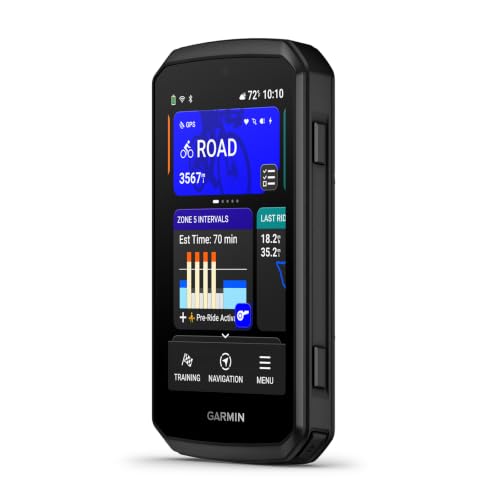
Garmin Edge 1060 Premium Cycling Computer
What We Like
- Hands-free voice control and messaging
- Real-time stamina insights from Human Performance Lab
- Preloaded bike-specific maps with advanced routing
Trade-offs
- Voice command performance varies with riding conditions
- Real-time stamina requires compatible power meter and HR monitor
Sixty hours of battery life in saver mode means you can ride multi-day adventures without hunting for a charge, while the vivid touchscreen and buttons give you control even in wet gloves. This computer is built for the rider who wants more than just speed and distance: it offers hands-free voice messaging, preloaded bike-specific maps that factor in total ascent and bike type, and power guide targets that recommend power targets throughout a course. For anyone training seriously or exploring new routes solo, that combination of navigation smarts and performance coaching is what pushes it to the top of the list.
The trade-off is that some of its smartest features, like stamina tracking and adaptive power targets, require extra sensors you’ll need to buy and mount. If you ride without a power meter or heart rate monitor, you’re paying for capability you won’t use. It’s a premium tool for the rider who wants full navigation and coaching integration, not a minimalist choice for casual weekend spins.
Garmin Edge 540 Compact GPS Cycling Computer

What We Like
- Up to 42 hours in battery saver mode
- Multi-band GNSS for accurate positioning
- Daily suggested workouts adapt to your training
- ClimbPro ascent planner on every ride
Trade-offs
- Performance features require compatible power meter and HR monitor
- Button-only controls, no touchscreen for quick map scrolling
Up to 42 hours in battery saver mode means you can ride through a long weekend without needing to recharge, as long as conditions are favorable. The multi-band GNSS provides enhanced positioning accuracy in challenging environments, so you stay on track even where signals can be tricky. And when you pair it with a compatible power meter and heart rate monitor, the daily suggested workouts adapt to your current training load and recovery, giving you personalized coaching based on your event.
The smart training features, like stamina insights, power targets, and strength classification, only activate when you add a compatible power meter and heart rate monitor. Without those sensors, you still get excellent navigation and ride tracking, but you miss the coaching that sets this model apart. Compared to the Garmin Edge 1060, which adds voice control and a larger screen, the 540 is lighter at 0.2 pounds, but you lose the hands-free convenience. If you’re happy pressing buttons and want the longest battery life in a small package, this is the one to grab.
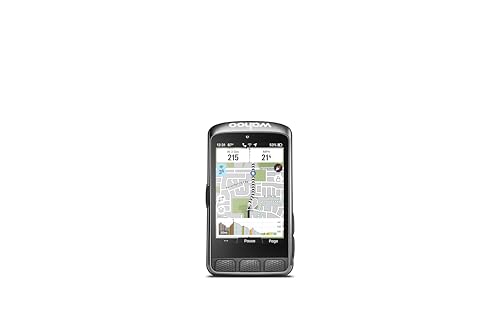
Wahoo ELEMNT ACE GPS Bike Computer
What We Like
- Real-time wind sensor tracks air resistance
- 30-hour battery for long rides
- Voice navigation keeps eyes on road
- Dual-band GPS for accurate positioning
Trade-offs
- 0.5 lb is heavier than compact competitors
- Large 3.8 in screen adds bulk on handlebars
A built-in pressure sensor that measures air resistance in real time means you can see exactly how much energy you’re burning against the wind while you ride. That live AirBoost and AirDrag data helps you adjust your position or effort on the spot, and after the ride the Wahoo app breaks it all down into wind insights. This computer is built for cyclists who want to optimize every pedal stroke in windy conditions, for training or for cutting time off a weekend ride.
Size and weight are the main compromises here. At half a pound and with a 3.8-inch touchscreen, it’s noticeably bulkier than something like the Garmin Edge 540, which weighs 0.2 pounds and fits a more compact bar setup. That extra screen real estate is great for viewing maps and wind metrics, but if you prefer a minimalist cockpit or ride a lot of bumpy trails, the larger footprint might feel intrusive. For riders focused on aero efficiency and willing to carry a bit more weight up front, this is a specialized tool that delivers what no other computer here does.
Product photos
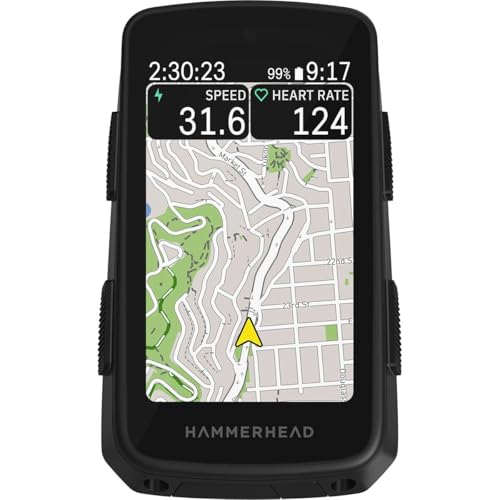
SRAM 00.3018.396.001 Bike Gps Computer
What We Like
- Extended memory for faster map rendering
- Multi-band GNSS for accurate tracking
- Touchscreen with intuitive hardware and software
Trade-offs
- At 0.9 pounds, heavier than many competitors
- Bulkier and heavier than Garmin Edge 540 or Wahoo ACE.
The SRAM 00.3018.396.001, sold as the Hammerhead Karoo, packs extended memory storage that lets you load detailed maps and ride data without slowdowns. That extra storage means faster map rendering and longer uptime, so you spend less time waiting and more time exploring unfamiliar routes. Its multi-band GNSS keeps tracking accurate in city streets or on rugged trails, and the touchscreen interface is designed to let you manage ride data without fumbling. This computer suits cyclists who load up on maps, plan long adventures, or want room to store lots of ride history without worrying about running out of space.
At 0.9 pounds, this computer is nearly five times heavier than the Garmin Edge 540 (0.2 pounds), so it adds noticeable heft to your handlebars. That extra weight is the trade-off for a larger touchscreen and more memory, which reviewers say makes map rendering faster. Cyclists who need ample onboard storage for detailed maps and long ride logs will appreciate the capacity. Not ideal for weight-conscious riders or those with cramped handlebar setups.
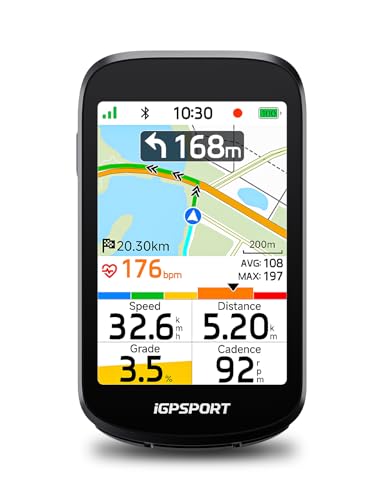
iGPSPORT BSC500 GPS Bike Computer
What We Like
- 3.3-inch touchscreen with button operation
- Dual-band 5-satellite positioning for accuracy
- Smart MAP navigation with turn reminders
- iClimb 2.0 hill-climbing route preview
Trade-offs
- Voice navigation via built-in speaker only
- No headphone or earbud audio output
A 3.3-inch touchscreen with both tap and button control means you can navigate menus even with sweaty or gloved fingers, a real plus on long rides. The dual-band satellite system locks onto five constellations at once, so positioning stays accurate in dense tree cover or urban canyons. For cyclists who want reliable navigation and climb planning without spending for a top-tier name, this unit delivers smart route features like automatic yaw replanning and speed-adjusted turn alerts that keep you on track.
The trade-off shows up in screen size, at 3.3 inches it is noticeably smaller than the Wahoo ELEMNT ACE’s 3.8-inch display, which matters if you like glancing at multiple data fields at speed. Voice navigation comes through the built-in speaker rather than a headphone connection, so wind noise can drown out cues on fast descents. Still, for the rider who values accurate mapping and a responsive touch interface over a giant screen, the BSC500 packs surprising capability into a compact, lightweight body.
iGPSPORT BiNavi GPS Bike Computer

What We Like
- Yaw Planning auto-recovers route when off course
- iClimb Pro previews climbs for pacing
- Dual-band GPS for accurate positioning
- Music control via phone pairing
Trade-offs
- 3.5-inch screen smaller than some premium models
- No voice navigation or voice control listed
The iGPSPORT BiNavi’s Yaw Planning feature sets it apart: if you miss a turn, the computer automatically recalculates a new route to get you back on track, no pausing or fumbling with your phone. That kind of real-time rerouting is a genuine help for cyclists who explore unfamiliar roads or follow imported routes from apps like Strava and Komoot. The 3.5-inch touch screen provides a clear view of maps and data, and the dual-band GPS (L1 and L5) keeps your position locked even under tree cover or near buildings. Riders who tackle hilly terrain will appreciate the iClimb Pro preview, which shows upcoming grade changes so you can pace your effort instead of blowing up halfway up.
A 3.5-inch touch screen is the centerpiece here, giving you a clear map view that’s still compact enough to tuck into a jersey pocket. Automatic rerouting kicks in if you miss a turn, and dual-band GPS (L1 and L5) keeps your position accurate even under trees or near buildings. Riders who want spoken turn-by-turn directions will need to look elsewhere, since this computer relies on visual cues and the touch interface.
Product photos
Sigma Rox 12.1 Evo GPS Bike Computer

What We Like
- Pre-installed OSM maps with turn-by-turn
- Intelligent re-routing if you deviate
- 22 additional sport profiles for any riding
- Crash alarm notifies emergency contacts
Trade-offs
- No voice control or voice navigation
- Basic set excludes heart rate or cadence sensors
At 3.7 inches long and 0.2 pounds, this computer is light enough to mount on any handlebar without adding noticeable weight. The pre-installed OSM maps with turn-by-turn directions and intelligent re-routing keep you on track even if you wander off route on gravel or MTB trails. With six predefined and 22 additional sport profiles, you can tailor the display and route preferences for road, touring, e-bike, or gravel riding. The crash alarm notifies emergency contacts in case of a fall, which adds a layer of safety for solo rides.
Unlike some rivals like the Garmin Edge 1060, this computer does not offer voice control or voice navigation. The basic set ships with only the GPS mount, Long-Butler GPS, and USB-C cable, so heart rate or cadence sensors are not included and must be purchased separately. For cyclists who appreciate German engineering, detailed mapping, and the ability to draw a custom route directly on the map, the Rox 12.1 Evo delivers a focused, capable experience.
Product photos
COOSPO CS600 GPS Bike Computer
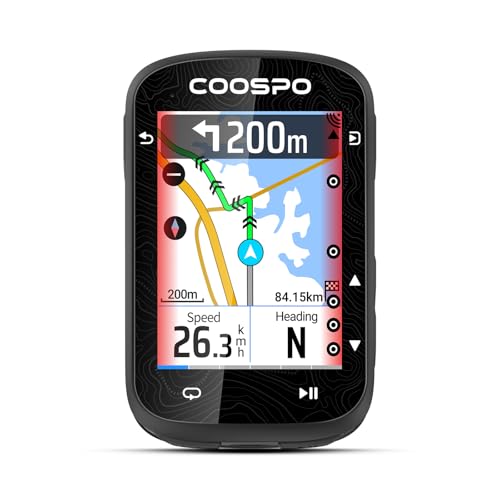
What We Like
- 2.4" high-resolution color touchscreen
- 36-hour battery with 2-hour Type-C charging
- IPX7 waterproof for heavy rain
- Built-in route navigation with breadcrumb trail
Trade-offs
- 2.4" screen is smaller than many competitors
- No voice navigation or wind sensor
- Touchscreen only, no physical buttons
A 36-hour battery life means you can ride through a multi-day tour without hunting for an outlet, and the IPX7 waterproofing lets you keep going through a downpour without worrying about the electronics. The 2.4-inch color touchscreen adjusts its backlight automatically so you can read it in changing light conditions. This computer suits the cyclist who wants a full-featured GPS unit with route navigation and detailed metrics.
The screen size is a compromise here. At 2.4 inches, it’s smaller than the 3.3-inch iGPSPORT BSC500 listed in our guide. The touchscreen is responsive, but there are no physical buttons, which some riders may miss in certain conditions. That said, for cyclists who prioritize a long battery, solid waterproofing, and the convenience of wireless syncing to Strava and TrainingPeaks, the CS600 delivers where it counts.
Product photos
How We Evaluated Bike GPS Computers
To build this guide, we analyzed manufacturer specifications, studied expert round-ups from cycling publications, and looked for consistent patterns in thousands of owner reviews. Our goal was to identify the strengths and trade-offs of each model based on what real riders report, not just what the box says.
We focused on four key criteria that matter most for a bike GPS computer. These include navigation accuracy and ease of use, covering map quality, rerouting, and climb features. Also important are battery life for the type of riding you do, sensor compatibility and data fields for training, and durability and screen readability in various weather and light conditions. Each product was evaluated against these standards.
Because this is a research-led evaluation rather than a hands-on test, we rely on the documented experiences of the cycling community. This approach gives us a broad view of reliability and performance over time, but it means we can’t speak to the feel of a button press or the responsiveness of a touchscreen from personal use.
What To Look For In Bike GPS Computers
Choosing a bike GPS computer is about matching features to your riding habits. The right unit will simplify your ride, not complicate it.
Focus on battery life that covers your longest rides, a screen you can read at a glance, and navigation features that match your route style. Don’t pay for advanced training metrics if you don’t use a power meter or heart rate monitor.
Battery Life and Charging
Battery life is the most critical spec for long rides and multi-day tours. Look for a unit that offers at least 20 hours of standard use, with battery saver modes that can extend that to 30 or more hours. Consider how you charge: USB-C is faster and more convenient than older micro-USB. For bikepackers, the ability to charge from a power bank mid-ride is a must.
Screen Size, Type, and Readability
Screen size affects how much data you can see at once. Smaller screens keep the unit compact, while larger screens offer better map detail. Color touchscreens are intuitive for map scrolling, but button-only units are easier to use with gloves or in the rain. Look for high-resolution displays that remain readable in direct sunlight.
Navigation and Routing Features
Not all navigation is equal. Basic units offer breadcrumb trails, while advanced ones have turn-by-turn directions, preloaded maps, and automatic rerouting. ClimbPro or iClimb features show upcoming ascents so you can pace yourself. For exploring new routes, look for units that can plan and recalculate on the fly without needing a phone.
- Does the unit have preloaded maps or do you need to download them?
- Can it reroute automatically if you go off course (yaw replanning)?
- Does it offer climb-specific data like gradient, distance, and elevation remaining?
- Is the touchscreen responsive with wet fingers or gloves?
A good rule of thumb: if you ride the same routes, basic navigation is fine. If you explore, invest in a unit with detailed maps and smart rerouting.
Bike GPS Computers Compared
The table below compares the key specs of our top eight picks side-by-side, making it easy to see which computer fits your riding needs.
| Product | Display Type | Weight | Navigation Features |
|---|---|---|---|
| Garmin Edge 1060 Premium Cycling Computer | Vivid color touchscreen | 0.3 pounds | Superior Navigation, Voice Control |
| Garmin Edge 540 Compact GPS Cycling Computer | Button controls | 0.2 pounds | Multi-band GNSS, ClimbPro |
| Wahoo ELEMNT ACE GPS Bike Computer | 3.8 in Touchscreen | 0.5 pounds | Voice Navigation |
| SRAM 00.3018.396.001 Bike Gps Computer | Touchscreen | 0.9 pounds | Multi-band GNSS |
| iGPSPORT BSC500 GPS Bike Computer | 3.3'' Touch Screen | 0.2 pounds | Smart MAP + Voice, Yaw Planning |
| iGPSPORT BiNavi GPS Bike Computer | 3.5 inch touch screen | 0.2 pounds | Smart MAP, Yaw Planning, Saved Point |
| Sigma Rox 12.1 Evo GPS Bike Computer | N/A | 0.2 lb | Pre-installed OSM with turn-by-turn |
| COOSPO CS600 GPS Bike Computer | 2.4" color touchscreen | 0.3 pounds | Built-in Route Navigation |
Frequently Asked Questions
What is the best bike GPS computer for navigation?
The Garmin Edge 1060 Premium Cycling Computer offers the most advanced navigation with preloaded bike-specific maps and hands-free voice control. For automatic rerouting when you go off course, the iGPSPORT BiNavi GPS Bike Computer features Yaw Planning.
How long should a bike GPS computer battery last?
For most riders, a battery life of at least 20 hours is ideal to cover long weekend rides. Endurance cyclists and multi-day tourers should look for models like the Garmin Edge 540 that offer up to 42 hours in battery saver mode.
Do I need a touchscreen on a bike GPS computer?
A touchscreen makes map scrolling and navigation easier, but it can be less responsive with wet gloves. Button-only units like the Garmin Edge 540 are more reliable in rain and cold. Your choice depends on whether you prioritize ease of use or all-weather reliability.
Can a bike GPS computer work without a phone?
Yes, most modern bike GPS computers can function independently. They use built-in GPS for tracking, and many have preloaded maps for navigation. However, features like live tracking, smart notifications, and weather updates typically require a connection to your phone.
What is ClimbPro on a Garmin Edge computer?
ClimbPro is a feature found on Garmin Edge computers that shows the remaining ascent, gradient, and distance for upcoming climbs on your route. It helps you pace your effort so you don’t run out of energy before the top. The iGPSPORT BSC500 offers a similar feature called iClimb.
The Bottom Line
For cyclists who want the most complete navigation and training package, the Garmin Edge 1060 Premium Cycling Computer is the best overall choice. It’s built for performance-driven riders who will use its voice control, stamina insights, and detailed maps to get the most out of every ride.
If your priority is staying out for days without recharging, the Garmin Edge 540 Compact GPS Cycling Computer offers unbeatable battery life with button controls. For budget-minded shoppers, the iGPSPORT BSC500 GPS Bike Computer delivers a touchscreen, dual-band GPS, and climb features at an affordable price.
The most important factor in choosing a bike GPS computer is honesty about how you ride. Focus on battery life and screen readability first, then add features like wind analysis or advanced routing only if your routes and training goals demand them.
