
10 Best Bike Helmets For Toddlers in 2026
This post contains affiliate links. As an Amazon Associate, we earn from qualifying purchases.
The woom Ready Toddler Bike Helmet is the best bike helmet for toddlers. It wins for its ultra-low shell that covers the forehead and temples where kids most often hit, plus a magnetic clasp that opens one-handed. For a lighter option, the Schwinn Classic Toddler Bike Helmet is our Best Lightweight Pick, and the Bimalsic Toddler Bike Helmet is the lightest toddler helmet we found.
A toddler’s first bike helmet needs to do more than just fit. It must stay put during a tumble, feel comfortable enough that a child won’t fight wearing it, and cover the right areas of the head. Parents also need a buckle that won’t pinch little chins or catch on clothing.
This guide is based on a review of manufacturer specifications, safety standards, and patterns in owner feedback. We compared fit systems, weight, ventilation, and coverage across ten models to help you find the right helmet for your child’s head size and activity level.
Top 10 Bike Helmets For Toddlers in the Market
Certain content that appears on this site comes from Amazon. This content is provided "as is" and is subject to change or removal at any time.
The Best Bike Helmets For Toddlers, Reviewed
woom Ready Toddler Bike Helmet

What We Like
- Magnetic clasp opens one-handed
- Ultra-low shell covers forehead and temples
- Rear dial grows with child
- Reflective details for low-light visibility
Trade-offs
- At 1.0 lb, heavier than many toddler helmets
- No CPSC certification mentioned for the woom Ready
A magnetic chin-strap clasp that opens with one hand, even in gloves, means toddlers can buckle themselves without pinching skin or catching hair. That single feature, combined with a shell shaped from thousands of real children’s head scans, gives a fit that doesn’t slip or pinch from the very first ride. The rear dial lets you tune the size in seconds, so the helmet stays snug as your child grows. That makes it a long-term solution for families who want one helmet to last through several seasons of scooters, bikes, and skates.
At 1.0 pound, the woom is heavier than some alternatives like the 0.5-pound GLAF Baby Bike Helmet, which may be a consideration for very young toddlers. However, the woom’s ultra-low shell protects the forehead, temples, and back of the head, areas where kids actually fall. If you want a helmet that fits securely from age 1 through early teens with a pinch-free magnetic clasp, the woom is a strong option. If a lighter weight is a priority, the GLAF is worth considering.
Schwinn Classic Toddler Bike Helmet

What We Like
- Ultra lightweight shell
- Adjustable dial fit system
- Full coverage with lower molded shell
- Integrated visor shields sun
Trade-offs
- Only fits 48-52 cm head circumference
- No themed character designs for kids who want them
At just 0.6 pounds, this Schwinn helmet is one of the lightest toddler options you’ll find, which makes a real difference for a little one who’s still getting used to wearing a helmet. That low weight, combined with multiple air vents and an adjustable dial fit system, means your child stays cool and comfortable while you get a snug, secure fit that adjusts as they grow. The full-coverage shell extends lower at the back for added protection, and the integrated visor helps keep sun out of their eyes during afternoon rides. It’s a thoughtful, practical design for parents who want safety without a bulky, heavy helmet that kids resist.
The trade-off is that the size range is fairly narrow, 48 to 52 cm, so it’s best for toddlers ages 3 to 5, and won’t work for younger or older kids. For a lightweight, well-vented helmet with a secure dial fit for the preschool years, this Schwinn is a comfortable choice.
Product photos
Bimalsic Toddler Bike Helmet

What We Like
- Weighs only 0.5 pounds
- 12 vents for active airflow
- Adjustable dial fit system
- Two pad thicknesses for custom fit
Trade-offs
- Size XS tops out at 49 cm head circumference
- No extended rear coverage mentioned for falls
- Only one shell design (Dinosaur) in this size
At just half a pound, this helmet puts almost no strain on a toddler’s neck, which matters when little ones are still building strength and balance. The 12 vents actively channel air through interior channels, so sweaty heads stay cooler during warm-weather rides or scooter sessions. It’s certified to both CPSC and ASTM standards, and the adjustable dial makes it easy to get a snug fit, even a child can turn it. With two sets of pads (4 mm and 7 mm), you can mix and match to get the right feel for heads between 45 and 49 cm, which typically fits from 12 months to about 2.5 years.
This XS size stops at 49 cm, so if your child’s head measures around 48 cm, the manufacturer suggests choosing the larger size S, which covers up to 54 cm. That means you might outgrow this helmet sooner than a model like the woom Ready, which fits ages 1-14. Still, for a lightweight, well-vented option that’s easy to adjust and certified for safety, this is a thoughtful pick for the youngest riders just starting out.
GLAF Baby Bike Helmet

What We Like
- 14 vents for breathability
- Adjustable spin dial and straps
- Multi-sport use (bike, scooter, skateboard)
- Lightweight at 0.5 pounds
Trade-offs
- XS size tops out at 20.08 inches head circumference
With 14 vents and a lightweight 0.5-pound build, this helmet keeps active toddlers cool without weighing them down. The adjustable spin dial and chin straps let you get a snug fit as your child grows, and the PC shell with EPS foam handles impacts from bike, scooter, or skateboard rides. It’s a practical choice for parents who want one helmet that covers multiple activities, not just cycling.
The XS size fits head circumferences from 18.11 to 20.08 inches, which means it covers most toddlers from age 1 to 5 but won’t work for older or larger kids. If your child’s head falls within that range, the helmet’s 14 vents help keep them cool during active play, and the lightweight build makes it comfortable for long wear. The matte-black finish and multi-sport certification give you a simple, versatile option for biking, scootering, or skating.
Product photos
MOUNTALK Kids Bike Helmet
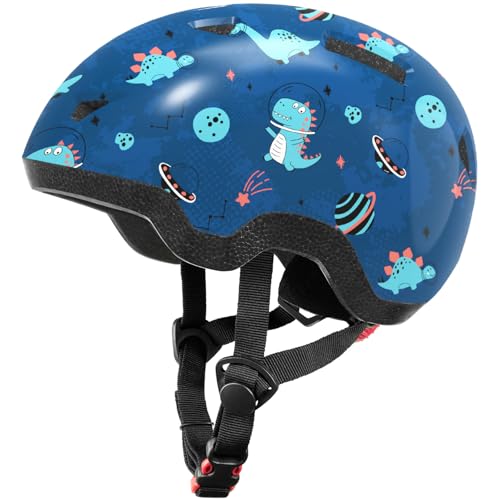
What We Like
- Two sizes cover ages 1-6
- Rear dial and adjustable straps for fit
- 11 vents with internal cooling channels
- Removable washable pads for comfort
Trade-offs
- Only two sizes, not for heads above 54 cm
- No padding for heads under 46 cm
The helmet comes in two separate sizes. XS for 46-50 cm heads and S for 50-54 cm, so you pick the one that fits your child now, not one that magically adjusts across years. An adjustable rear dial, side straps, and chin buckle let you fine-tune the fit so it doesn’t slide around, which matters when a toddler’s head shape is still changing. Eleven vents and six internal cooling channels help keep a sweaty kid comfortable on warm rides, and the pads pop out for washing after muddy scooter trips. For families who want a helmet that fits properly at a single stage, this is a straightforward option.
You get only two size ranges, so a child with a head circumference over 54 cm will outgrow the larger size. For the 1-to-6 crowd whose head measures within these ranges, this helmet offers solid safety certification and thoughtful comfort features for everyday riding.
XJD Toddler Bike Helmet

What We Like
- 14 air vents for cooling
- Bug mesh keeps out insects
- Removable washable foam lining
- Three sizes for growing kids
Trade-offs
- No extended rear coverage listed
- Strap padding is soft velcro only
The XJD toddler helmet has 14 air vents and integrated bug mesh in the front vents, which helps keep airflow moving and insects out during warm rides. The removable foam lining can be washed, so grime from daily scooter or bike sessions won’t build up. At 0.5 pounds, it’s lightweight, and the three size options (from 12 months up to about 8 years) let you adjust the fit as your child grows.
The soft velcro chin padding may not feel as substantial as some heavier helmets on the market, though the XJD still uses an ABS shell and EPS foam for impact resistance. If your toddler runs hot or you want a helmet that’s easy to clean and won’t weigh them down, this is a practical choice.
Product photos
Bell Paw Patrol Toddler Helmet

What We Like
- Big bright Paw Patrol graphics
- Pinch Guard free buckle
- One-step easy fit system
Trade-offs
- Universal fit lacks fine adjustment dial
- No ventilation vents listed for airflow
- Only fits 48-52 cm head sizes
A 48-52 cm fit range and CPSC certification for age 1 and older mean this helmet meets the safety standards for toddlers. The big, bright Paw Patrol character graphics are the real draw here, kids who love the pup characters will actually want to wear it, which is half the battle with toddler gear. The one-step easy fit system and pinch-guard buckle are listed features that simplify getting the helmet on and off.
Instead of a dial-adjustment system, this helmet uses a universal fit that relies on the one-step mechanism and padding. That makes it less precise than the adjustable dial found on the Schwinn Classic Toddler Helmet. There are also no listed vents, which could mean less airflow on warm days compared to vented options like the Bimalsic. For a young rider who is excited by the character design and needs a safe, easy-to-use helmet for short neighborhood rides, this is a fun and functional pick. Not ideal for families who want a fine-tune fit or extra cooling vents for longer rides.
Raskullz Skelosaurus Toddler Helmet

What We Like
- 3D rubber mohawk and dinosaur graphics
- Aerodynamic cooling vents for airflow
- Adjustable straps for custom snug fit
- Meets CPSC and ASTM safety standards
Trade-offs
- Fits only 48-52 cm heads, not smaller toddlers
- No dial-adjust system for quick sizing
At 0.8 pounds, this helmet is light enough for a toddler to wear without fussing on a short ride. The black bendable 3D rubber mohawk and T-Rex skeleton graphics give it a playful look that kids enjoy. The aerodynamic cooling vents provide airflow, and the adjustable straps allow a custom snug fit. It meets CPSC safety standards for bicycle helmets and ASTM standards for multi-impact skateboard helmets, so it works for both cycling and skateboarding.
This helmet is designed for heads measuring 48 to 52 cm, typically ages 3 to 5. If your toddler has a smaller head, you’ll need to look at options like the GLAF Baby Bike Helmet, which starts at size XS for one-year-olds. The Raskullz uses a PVC outer shell and strap adjustment rather than a dial-fit system, so getting the perfect fit takes a bit more fiddling than with the Schwinn Classic’s quick-turn dial. But for a kid who wants a dinosaur-themed helmet that meets both bike and skateboard safety standards, this is a fun option.
AUKA Toddler Bike Helmet

What We Like
- 14 air vents for cooling
- Adjustable rear dial and chin straps
- Removable, washable inner pads
- Multi-sport use: bike, scooter, skateboard
Trade-offs
- Only two sizes cover 1-8 years
- Insect net only in front vent
This AUKA helmet weighs 0.6 pounds and has 14 air vents, which helps keep a toddler cool during active use. The rugged PC shell and EPS foam meet the CPSC safety standard for ages 1 and up, while the adjustable rear dial and chin straps let you get a snug fit that adapts as your child grows. It is a practical multi-sport choice for cycling, skating, or scooting, and the removable inner pads make cleanup easy after sweaty outings.
Families looking for a single helmet that transitions between cycling, skating, and scooter use will find this model covers the basics effectively. It meets the U.S. Consumer Product Safety Commission safety standard for bicycle helmets for ages one and older, with extended head coverage for added protection. The rugged PC shell and high-quality EPS foam work together to absorb impact. Two sizes are available: XS fits head circumferences of 48-50 cm for toddlers ages one to three, while S fits 51-54 cm for children ages three to eight. An adjustable rear dial and chin straps allow a custom fit as the child grows.
Product photos
Bell Disney Princess Toddler Helmet

What We Like
- Official Disney Princess graphics
- Pinch Guard buckle prevents pinching
- Extended rear coverage adds protection
- High-impact reflectors boost visibility
Trade-offs
- Fits only 48-52 cm heads
- Fixed 48-52 cm size range, no fine-tuning dial
A CPSC-certified helmet with an extended rear coverage shell means this Bell model prioritizes protection for the back of a toddler’s head, a common impact zone during falls. The official Disney Princess graphics turn a safety essential into something your little one actually wants to wear, which matters a lot when you’re trying to get a wiggly three-year-old to keep it on. Self-adjusting True Fit padding and a Pinch Guard buckle take the hassle out of buckling, so you spend less time wrestling and more time riding.
This helmet complies with the U.S. CPSC standard for bicycle helmets for ages 1 and up, with extended rear coverage for added protection, so it meets the same safety requirements as any full-size helmet while offering more coverage at the back. The True Fit system self-adjusts for a proper fit, and the Pinch Guard prevents pinching when buckling, which makes it easier to get a secure fit on a wiggly toddler. The fit range is 48-52 cm, so measure your child’s head before buying to ensure it will work.
Product photos
How We Evaluated Bike Helmets For Toddlers
Our evaluation started with the basics: safety certifications, head circumference ranges, and the type of fit system each helmet uses. We compared manufacturer data on weight, ventilation, and coverage, then looked at what parents consistently said about ease of use, adjustment, and how well their child tolerated wearing the helmet.
The four criteria that mattered most were fit adjustability, weight, coverage, and closure type. A helmet that cannot be dialed in snugly will not protect properly. Weight matters because a heavy helmet can make a toddler’s neck sore. Coverage, especially around the forehead and rear of the head, is where real-world falls happen. The closure needs to be easy for an adult to operate but secure enough that a child cannot unbuckle it while riding.
A research-led evaluation has limits. We did not conduct impact tests or long-term wear trials. Our recommendations are based on published specifications, safety documentation, and the experiences reported by a large number of owners. Fit remains the single most important factor; a well-reviewed helmet that does not match your child’s head shape will not be the right choice.
What To Look For In Bike Helmets For Toddlers
Choosing a toddler bike helmet comes down to fit, weight, and the features that make a child willing to keep it on. Here is what to check before you buy.
Look for a helmet that meets CPSC safety standards, covers the forehead and the back of the head, and uses a dial or similar system to adjust the fit precisely. Weight under one pound is ideal for toddlers. A pinch-free buckle saves frustration.
Fit And Sizing
The helmet should sit level on the head, about one finger-width above the eyebrows, and the straps should form a V under each ear. Most toddler helmets list a head circumference range in centimeters. Measure your child’s head with a soft tape measure just above the eyebrows and around the widest part. A dial adjustment system lets you fine-tune the fit as the child grows, while a fixed-size helmet with foam pads offers less precision.
Weight And Ventilation
A helmet that weighs less than one pound is noticeably more comfortable for a toddler. Look for at least 10 to 14 vents to keep air moving, especially if you live in a warm climate or plan longer rides. Some helmets include bug mesh over the front vents, which is a nice bonus for spring and summer outings.
Closure And Buckle
Magnetic buckles, like the one on the woom Ready, are a major convenience. They let you fasten the helmet one-handed and avoid pinching a child’s chin. Standard plastic buckles work fine but require two hands and can catch skin. Some helmets use a “Pinch Guard” design that prevents the buckle from pinching, which is helpful for wiggly toddlers.
- Measure your child’s head circumference before shopping; do not guess the size.
- Check that the helmet covers the forehead and does not tilt back.
- Look for a rear dial or similar fit system rather than relying only on foam pads.
- Choose a bright color or reflective details for visibility.
- Confirm the helmet meets CPSC safety standards.
A helmet that fits well and feels light is one a toddler will actually keep on.
Bike Helmets For Toddlers Compared
The table below compares the key specs and features of each helmet so you can see the differences in fit, weight, and adjustability at a glance.
| Product | Age Range | Weight | Size / Head Circumference | Closure / Fit System |
|---|---|---|---|---|
| woom Ready Toddler Bike Helmet | 1 to 14 | 1.0 pounds | 3 sizes (X-Small shown) | Magnetic, pinch-free; Rear dial adjustment |
| Schwinn Classic Toddler Bike Helmet | Ages 3-5 | 0.6 pounds | 48-52 cm | Adjustable dial fit system |
| Bimalsic Toddler Bike Helmet | 12m-2.5 Years | 0.5 pounds | 45-49 cm (XS) | Adjustable dial fit |
| GLAF Baby Bike Helmet | 1-5 years (XS size) | 0.5 pounds | 18.11-20.08 inches (XS) | Adjustable straps and spin dial |
| MOUNTALK Kids Bike Helmet | Age 2-4/3-6 Years Old | N/A | XS (46-50 cm), S (50-54 cm) | Rear dial, side straps, chin buckle |
| XJD Toddler Bike Helmet | Age 1+ | 0.5 pounds | N/A | Adjustable straps and adjustable fit dial |
| Bell Paw Patrol Toddler Helmet | Ages 3-5 | 0.6 Pounds | 48-52 cm | Pinch Guard free buckle; One step easy fit |
| Raskullz Skelosaurus Toddler Helmet | 3-5 years | 0.8 Pounds | 48-52 cm | Adjustable straps for a custom snug fit |
| AUKA Toddler Bike Helmet | Age 1-3-5-8 Years | 0.6 pounds | XS (48-50cm), S (51-54cm) | Adjustable rear dial and chin straps |
| Bell Disney Princess Toddler Helmet | Ages 3+ | N/A | 48-52 cm | True Fit + Pinch Guard buckle |
Frequently Asked Questions
What size bike helmet does a toddler need?
Measure your child’s head circumference with a soft tape measure just above the eyebrows. Most toddler helmets fit head sizes between 46 and 52 centimeters. Check the specific size range listed for each helmet, as some start at 48 cm and others go as low as 46 cm.
How tight should a toddler bike helmet be?
The helmet should feel snug but not uncomfortable. When you shake your head gently, the helmet should not move around. The straps should be tight enough that you can fit only one finger between the strap and the chin. A dial adjustment system helps get the fit just right.
Are magnetic buckles safer for toddler helmets?
Magnetic buckles are not necessarily safer in a crash, but they are much easier for parents to use one-handed and they do not pinch little chins. This convenience can make a big difference in how often a child wears the helmet correctly.
Can a toddler use a bike helmet for other activities?
Some helmets are certified for multi-sport use, including biking, scootering, and skateboarding. Check the safety certification label on the helmet. A helmet that is only certified for biking may not offer the same protection for a fall from a skateboard or scooter.
How do I clean a toddler bike helmet?
Most toddler helmets have removable, washable foam pads and liners. You can hand wash these with mild soap and water and let them air dry. The outer shell can be wiped down with a damp cloth. Avoid submerging the entire helmet in water.
The Bottom Line
The woom Ready Toddler Bike Helmet is our best overall pick for most families. Its ultra-low shell covers the forehead and temples, the rear dial grows with the child, and the magnetic clasp makes fastening easy. It is heavier than some options, but the coverage and adjustability justify the weight for parents who want one helmet that lasts.
If you want the lightest possible helmet for a very young toddler, the Bimalsic Toddler Bike Helmet weighs only half a pound and offers a dial fit and good ventilation. For a budget-friendly multi-sport helmet, the AUKA Toddler Bike Helmet covers ages 1 to 3 with 14 vents and a dial adjustment.
The single most important buying factor is fit. No helmet can protect a child if it does not stay in place during a fall. Measure your toddler’s head, check the size range, and choose a helmet with a dial or other precise fit system.
