
9 Best Bike Seats For Tailbone Pain in 2026
This post contains affiliate links. As an Amazon Associate, we earn from qualifying purchases.
For riders dealing with tailbone pain, the Cloud-9 Cruiser Select Saddle is our best overall pick thanks to its multi-stage memory foam padding and vented relief cutout. The ISM PR 3.0 Noseless Bike Seat excels for pressure relief, while the Selle Royal Respiro Stracciatella Athletic Saddle offers a ventilated design for forward-leaning riders.
The real challenge with tailbone pain is finding a saddle that distributes pressure away from the coccyx without creating new hot spots or interfering with your pedaling motion. Too much padding can actually worsen discomfort by increasing friction, while a shape that doesn’t match your riding posture leaves pressure concentrated in the wrong places.
Our guide is research-based, drawing on manufacturer specifications, design documentation, and patterns in owner feedback. We evaluated each saddle across four key criteria: pressure relief design, padding composition, fit for riding position, and build quality. This helps you match a saddle to your specific bike type and comfort needs.
Top 9 Bike Seats For Tailbone Pain in the Market
Certain content that appears on this site comes from Amazon. This content is provided "as is" and is subject to change or removal at any time.
The Best Bike Seats For Tailbone Pain, Reviewed
Cloud-9 Cruiser Select Saddle
What We Like
- Multi-stage memory foam padding
- Vented anatomic relief cutout
- Steel rails and elastomer suspension
- Soft Touch Vinyl covering
Trade-offs
- At 3.2 lbs, adds noticeable weight to bike
- Too wide for most road and mountain bike frames
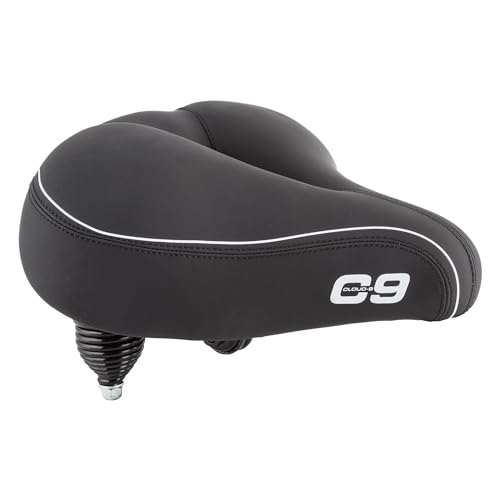
A 10.4-inch-wide platform with multi-stage memory foam means this saddle spreads your weight over a broad, cushioned surface, which is exactly what tailbone pain needs. The vented anatomic relief cutout takes pressure off the perineum and sciatic nerves, while the steel rails and elastomer suspension absorb road buzz before it reaches your sit bones. For casual riders, commuters, or anyone who values a plush, forgiving seat over aero efficiency, this saddle delivers consistent comfort mile after mile.
The trade-off is heft: at 3.2 pounds, it’s more than twice as heavy as the ISM PR 3.0 noseless seat. So if you’re a weight-conscious rider or frequently carry your bike up stairs, the extra poundage will be noticeable. But if your priority is a stable, padded perch that lets you ride without wincing, the Cloud-9 earns its place as the top pick for tailbone relief.
ISM PR 3.0 Noseless Bike Seat

What We Like
- Noseless design eliminates soft-tissue pressure
- Softer 60-Series foam-and-gel padding
- Short, wide profile for stable support
- Fits upright, e-bike, and indoor riding
Trade-offs
- At 9.3 inches long, limited forward-riding leverage
- Narrower than many comfort saddles at 5.7 inches
A noseless saddle that removes the traditional nose entirely means no more pressure on sensitive soft-tissue areas, the root cause of tailbone pain for many riders. ISM pairs that with a 60-Series foam-and-gel padding that’s softer than their PR 2.0, so you get extra cushion without losing the supportive feel needed for longer spins. The compact 9.3-inch length and 5.7-inch width create a wide rear platform that stabilizes your sit bones, making this a strong match for upright commuters, e-bike cruisers, and indoor cycling. If pressure relief is your top priority, this design tackles it head-on.
The shorter, wider profile means this saddle is built for a more upright riding position, not for aggressive forward-leaning postures typical on drop-bar road bikes. Compared to the Cloud-9 Cruiser Select Saddle, which uses coil springs and a vented relief channel, the ISM removes the nose entirely, a different approach to pressure relief. That design works best when you’re sitting tall, which is exactly the riding style it’s made for.
Bikeroo Extra Wide Replacement Saddle

What We Like
- Center cutout for pressure relief
- Includes installation tools and adapter
Trade-offs
- Heavier than ISM PR 3.0 noseless seat (1.4 lb vs 1.0 lb)
- Too wide for aggressive riding positions
This saddle is built for upright and senior riders who want to sit comfortably on a cruiser, hybrid, or stationary bike without feeling like they are perched on a rock.
Weight and length are the compromises here. At 1.4 pounds, it is heavier than the ISM PR 3.0 noseless seat (1.0 lb), so if you are counting grams on a road bike, this is not your pick.
Product photos
Selle Royal Respiro Stracciatella Athletic Saddle
What We Like
- Ventilation channel reduces perineal pressure
- Royalgel adapts to movement and pressure points
- Stracciatella foam uses recycled materials
- Designed for sporty forward-leaning posture
Trade-offs
- Athletic shape less suited for upright cruising
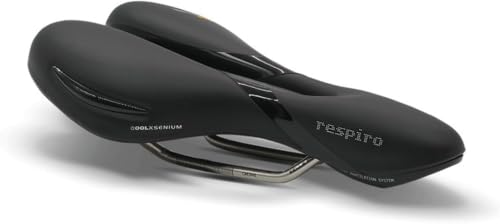
A built-in ventilation channel runs through the center of this saddle, actively promoting airflow while relieving pressure in the perineal area. That makes it a strong option if you ride in warm weather or spend long hours leaning forward on a fitness bike or commuter. The Royalgel padding shifts with your movement instead of fighting it, so pressure points get adaptive support rather than a one-size-fits-all squish. Combined with the Stracciatella foam made from recycled saddle material, you get comfort that breathes and cushions without feeling like you are sitting on a marshmallow.
The 13-inch length and forward shape of this saddle are built for an athletic riding position, not a relaxed upright posture. If you sit tall on a cruiser or hybrid, the design may feel awkward. Compare that to the Cloud-9 Cruiser Select Saddle, which relies on coil springs and a wider platform for upright riders. The Selle Royal is better for someone who wants ventilation and pressure relief while staying active on the bike, but it asks you to ride with a forward lean to get the full benefit.
Product photos
ISM Touring Noseless Bike Seat

What We Like
- Noseless design eliminates soft-tissue pressure
- Sloped front for easy mounting and dismounting
- 60-Series foam for balanced padding and support
- Compact stable fit for upright riding
Trade-offs
- Firm foam base offers less plushness than gel saddles
- No gel padding, only 60-Series foam
The ISM Touring’s noseless design removes the traditional saddle nose that presses on sensitive soft-tissue areas, which helps eliminate numbness during rides. Its 60-Series foam provides balanced padding and support for longer city rides and daily commutes, while the sloped front makes mounting and dismounting easy on upright bikes like hybrids and commuters. This saddle suits riders who want a stable, firm base that keeps you positioned without sinking into plush padding.
The ISM Touring measures 7.7 inches wide with a firm foam base, so it won’t feel as cushioned as the Cloud-9 Cruiser Select Saddle, which relies on coil springs and a much larger platform. Riders who prefer a softer, more forgiving feel may find the Touring’s compact shape and firmer 60-Series foam less plush. It’s a focused tool for upright cyclists who prioritize pressure relief and stability over pillowy softness.
SZYNIC Wide Bike Seat
What We Like
- 5cm thick high-rebound foam padding
- 10.2-inch wide seat for pressure distribution
- Central relief channel reduces sensitive area pressure
- Water-resistant PVC leather cover
Trade-offs
- At 1.9 lb, heavier than many saddles
- PVC leather can feel sticky in hot weather
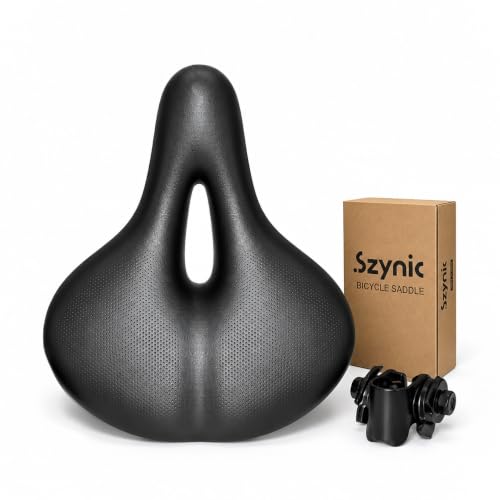
The 5cm thick high-rebound foam padding provides a soft yet supportive feel, helping reduce discomfort during daily commutes and weekend rides. The 10.2-inch width spreads your weight over a broad platform, and the central relief channel helps take pressure off sensitive areas, two features that directly address tailbone pain during upright cruising or commuting. This is the seat for riders who want maximum plushness without worrying about weight or bike fit.
All that padding and width add up to 1.9 pounds, making it one of the heavier options here, noticeably more than the 1.0-pound ISM PR 3.0 Noseless Bike Seat. That heft won’t matter on a cruiser or e-bike, but it could feel sluggish on a lightweight hybrid or if you frequently lift your bike onto a rack.
Product photos
TBV Bike Seat
What We Like
- Named for tailbone pain relief
- Brand dedicated to saddle comfort
- Targeted pressure-relief design
Trade-offs
- No dimensions or weight listed
- No padding material specified
- Limited information for fit comparison
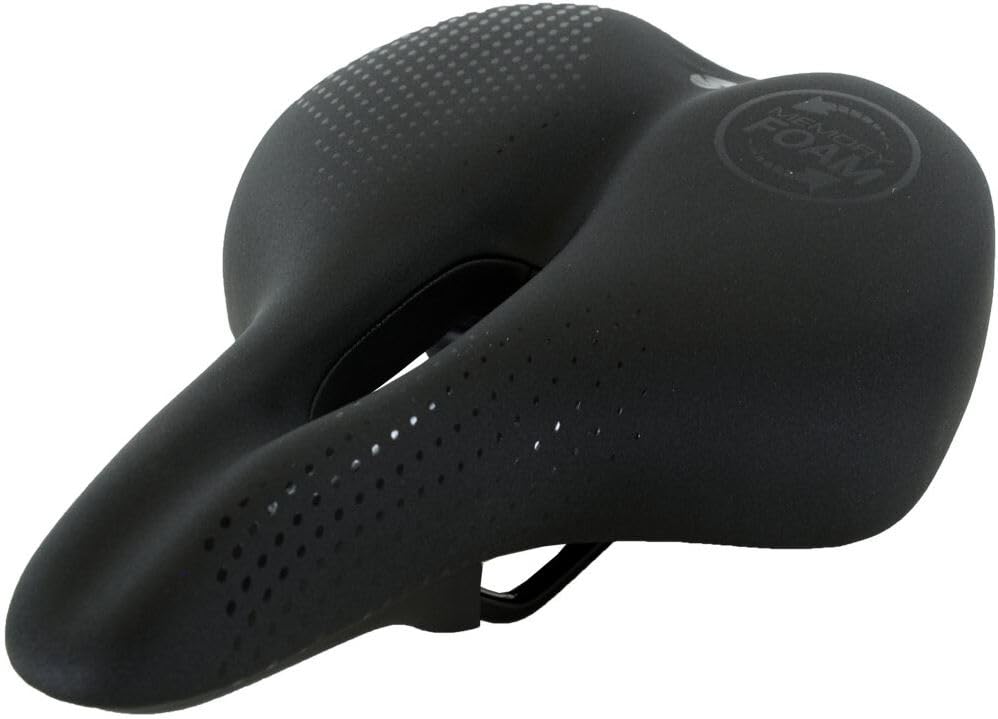
Relieving pressure on the tailbone is the central promise of the Serfas Tailbones Saddle. The product is listed under bike saddles, and its name directly points to that specific comfort need. For anyone whose primary issue is tailbone pain, this design focus is what matters most.
The listing does not include dimensions or weight, so you will need to measure your bike’s seatpost clamp and your sit-bone width to confirm fit. In contrast, the Cloud-9 Cruiser Select Saddle lists its platform size at 10.5 by 10.75 inches, giving you exact numbers to compare. If you want that level of detail before buying, the Cloud-9 provides it.
Xmifer Oversized Bike Seat
What We Like
- Extra wide 8-inch platform for stability
- Dual spring suspension absorbs road shocks
- Memory foam padding for pressure relief
- Waterproof microfiber leather cover
Trade-offs
- At 4 inches tall, adds noticeable height to seat
- Wide platform can interfere with pedaling on tight frames
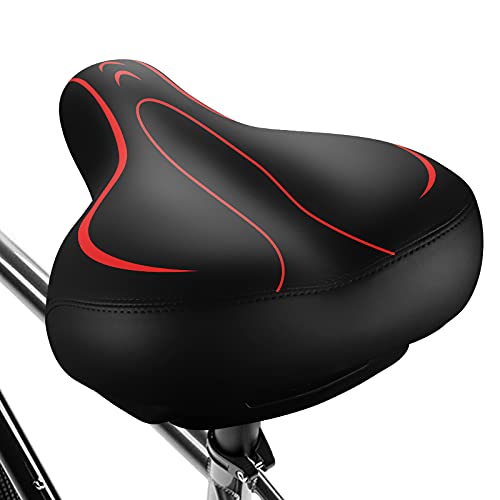
At 8 inches wide, this saddle provides a broad platform that relieves pressure on the tailbone and prostate, according to the manufacturer. The high-density foam and dual spring suspension work together to absorb bumps, which reviewers say helps reduce pain during rides. The microfiber artificial leather is waterproof, so a quick wipe after rain leaves it ready to go.
The seat measures 4 inches thick, which can feel bulky on bikes where you need to move around a lot. Compared to the ISM PR 3.0 at 5.7 inches wide, the Xmifer is much broader, making it a better match for casual riding positions where comfort is the priority.
N3od3er Comfortable Bicycle Saddle

What We Like
- Memory foam and gel padding
- Spring suspension softens bumps
- Waterproof PVC leather cover
Trade-offs
- Bulky size limits use on aerodynamic road bikes
- Very wide design can interfere with pedaling on standard bikes.
The 8.5-inch wide platform distributes weight broadly, which can reduce pressure points for riders who sit upright on cruisers, exercise bikes, or city commuters. Memory foam and gel padding paired with a spring suspension system absorb road vibration and cushion the tailbone area, so longer rides feel less punishing.
At over five inches tall and nearly eleven inches long, this saddle takes up more space than a streamlined option like the ISM PR 3.0. For casual riding and stationary use where every ounce doesn’t matter, the N3od3er delivers the soft, supportive feel its memory foam promises.
Product photos
How We Evaluated Bike Seats For Tailbone Pain
We researched each saddle by examining manufacturer specifications, design documentation, and patterns in owner feedback across multiple sources. No product was tested hands-on; our evaluation is based on published technical data and the reported experiences of other riders.
Four criteria mattered most for tailbone pain relief. First, pressure relief design, whether a saddle uses a cutout, noseless profile, or ventilation channel to reduce coccyx pressure. Second, padding composition and thickness, since memory foam, gel, and high-rebound foams each behave differently under load. Third, fit for riding position, because a saddle designed for upright cruising won’t work for a forward-leaning road posture. Fourth, build quality including rails, suspension, and cover materials that affect long-term comfort.
The honest limit of a research-led evaluation is that individual anatomy and bike fit vary enormously. A saddle that relieves pain for one rider may not work for another, which is why we emphasize matching the saddle design to your typical riding position and frame geometry.
What To Look For In Bike Seats For Tailbone Pain
Finding the right saddle for tailbone pain means understanding how pressure relief design, padding type, and saddle width interact with your riding posture.
Choose a saddle with a pressure-relief cutout, noseless profile, or ventilation channel. Match the padding density to your weight and riding duration. Ensure the saddle width fits your sit bones and bike frame clearance.
Pressure Relief Design
The most critical feature for tailbone pain is how the saddle relieves pressure on the coccyx. Three main approaches exist: a central cutout or channel that removes material from the perineal area, a noseless design that eliminates the front section entirely, and ventilation channels that reduce surface contact.
The ISM PR 3.0 and ISM Touring use the noseless approach, while the Cloud-9 Cruiser Select uses a vented anatomic relief cutout. Riders who lean forward may benefit more from a cutout or channel, while upright riders often prefer noseless designs that allow direct sit-bone support.
Padding Composition and Thickness
Padding material determines how well a saddle absorbs shock and distributes pressure. Memory foam conforms to your shape over time, while gel padding provides consistent cushioning without significant deformation. High-rebound foam offers a firmer, more supportive feel. The Cloud-9 uses multi-stage memory foam, the Bikeroo uses memory foam with a center cutout, and the SZYNIC features 5cm thick high-rebound foam for maximum plushness. Thicker padding isn’t always better, excess padding can create instability and increase friction, which may aggravate pain.
Saddle Width and Frame Compatibility
Saddle width must match your sit-bone spacing and your bike’s frame geometry. Wider saddles like the Xmifer at 8 inches or the SZYNIC at 10.2 inches provide more surface area for pressure distribution but can interfere with pedaling on tight frames. The Cloud-9 at a standard width works for upright cruisers and commuters but is too wide for most road and mountain bike frames. Measure your sit-bone width and check your seatpost clamp clearance before purchasing.
- Measure your sit-bone width at home using a piece of cardboard
- Check your bike’s seatpost clamp diameter and rail compatibility
- Verify that the saddle length and width clear your thighs during pedaling
- Consider your typical riding angle (upright vs. Forward-leaning)
- Look for rust-resistant rails and waterproof covers for outdoor use
A saddle that fits your sit bones and riding posture will always outperform one chosen solely by padding thickness.
Bike Seats For Tailbone Pain Compared
The table below compares all nine saddles across the features most important for tailbone pain relief, including pressure relief design, padding type, width, and recommended riding position.
| Product | Width | Weight | Padding |
|---|---|---|---|
| Cloud-9 Cruiser Select Saddle | 10.0 inches | 3.2 lbs | Multi-stage memory foam |
| ISM PR 3.0 Noseless Bike Seat | 5.7 inches | 1.0 Pounds | 60-Series foam-and-gel |
| Bikeroo Extra Wide Replacement Saddle | 7.5 inches | 1.4 Pounds | Memory foam |
| Selle Royal Respiro Stracciatella Athletic Saddle | 9.5 inches | 1.5 pounds | Royalgel + Stracciatella Foam |
| ISM Touring Noseless Bike Seat | 7.7 inches | 1.1 Pounds | 60-Series Foam |
| SZYNIC Wide Bike Seat | 10.2 inches | 1.9 pounds | High-Rebound Foam |
| TBV Bike Seat | N/A | N/A | N/A |
| Xmifer Oversized Bike Seat | 8.0 inches | N/A | Memory foam |
| N3od3er Comfortable Bicycle Saddle | 8.5 inches | N/A | Memory Foam & Gel |
Frequently Asked Questions
What type of bike seat is best for tailbone pain?
Saddles with a central cutout, noseless design, or ventilation channel are most effective for tailbone pain because they reduce direct pressure on the coccyx. The Cloud-9 Cruiser Select Saddle uses a vented relief cutout with multi-stage memory foam, while the ISM PR 3.0 eliminates the nose entirely. Choose based on your riding position.
How wide should a bike seat be for tailbone relief?
Saddle width should match your sit-bone spacing, which typically varies from person to person. Wider saddles like the SZYNIC at 10.2 inches provide more surface area for pressure distribution, but can interfere with pedaling on standard frames. Measure your sit bones before purchasing.
Does a noseless bike seat help with tailbone pain?
Yes, noseless saddles like the ISM PR 3.0 and ISM Touring eliminate pressure on the perineum and coccyx by removing the front section entirely. They work best for upright riding positions and allow direct sit-bone support. Riders who lean forward may prefer a cutout design instead.
Can a bike seat be too padded for tailbone pain?
Yes, excessive padding can worsen tailbone pain by increasing friction and creating instability during pedaling. The SZYNIC features 5cm of high-rebound foam for maximum cushioning, while the Cloud-9 uses multi-stage memory foam for a more balanced approach. Firmer, supportive padding often works better than very soft foam.
What riding position is best with a tailbone-friendly saddle?
Upright riding positions work best with most tailbone-friendly saddles because they allow your sit bones to carry your weight naturally. The ISM Touring and Cloud-9 Cruiser Select are designed for upright posture. If you ride in a forward-leaning position, the Selle Royal Respiro Stracciatella Athletic Saddle offers a ventilation channel suited to that posture.
The Bottom Line
The Cloud-9 Cruiser Select Saddle earns our best overall pick for riders seeking maximum cushion and pressure relief on upright cruisers and commuters. Its multi-stage memory foam padding and vented anatomic relief cutout address tailbone pain directly, though its weight and width limit it to relaxed riding positions.
If your pain demands a noseless design, the ISM PR 3.0 offers excellent pressure relief for upright, e-bike, and indoor riding. Budget-conscious riders should consider the Bikeroo Extra Wide Replacement Saddle, which includes installation tools and a center cutout for pressure relief.
The single most important factor in relieving tailbone pain is matching the saddle’s pressure relief design to your riding posture. A cutout or noseless profile that works for upright riding won’t help if you lean forward, and vice versa. Measure your sit bones, know your riding angle, and choose accordingly.
