
8 Best Biker Backpacks of 2026
This post contains affiliate links. As an Amazon Associate, we earn from qualifying purchases.
The best biker backpacks balance security, weather protection, and visibility, and after researching the field, the 40L Water-Resistant Riding Backpack stands out as the top all-around choice. For those on a budget, the KEMIMOTO 20L offers smart helmet storage and solid build, while the 50L Expandable Helmet Backpack gives unmatched versatility for longer trips.
Riding means exposure, wind, rain, and traffic, so your backpack needs to do more than just carry gear. It should keep your helmet secure, your electronics dry, and make you visible to drivers, all without turning your back into a sweatbox.
This guide cuts through the noise by focusing on what matters: real-world feedback, verified specs, and the design details that make a difference on the road. These picks were selected based on helmet compatibility, water resistance, comfort features, and visibility, because a good biker backpack works as hard as you do.
Top 8 Biker Backpacks in the Market
The Best Biker Backpacks, Reviewed
40L Water-Resistant Riding Backpack
Strengths
- True full-face helmet fit
- Dual full-length reflectors
- Recycled materials
- Padded laptop sleeve
- Hard-shell streamlined design
Trade-offs
- No USB port
- Rain cover sold separately
- Slightly heavier than soft bags
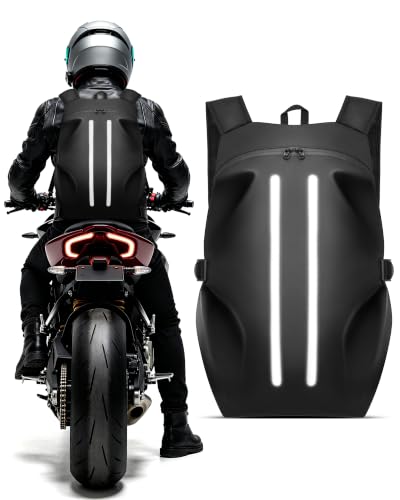
This 40L pack hits the sweet spot between function, safety, and sustainability, earning its ‘Best Overall’ label. The hard-shell compartment opens wide with dual zippers, making helmet insertion actually easy, not a chore. The dual full-length reflective panels are a standout: they cover the entire back, giving unmatched rear visibility. That’s not just nice, it’s life-saving in low-light traffic.
Constructed with GRS-certified recycled materials, it appeals to eco-minded riders without sacrificing toughness. The waterproof zippers and sealed seams hold up well in rain, and the laptop sleeve is properly padded. Compared to the yucenbra, it’s better organized; versus the Oumurs, it’s more agile. For daily riders and weekend tourers alike, this is the most balanced package.
Video review
50L Expandable Helmet Backpack

Strengths
- 50L expandable capacity
- Includes rain cover
- USB charging port
- Durable 1680D fabric
- Ventilated back panel
Trade-offs
- Bulky on small bikes
- USB port not powered
- Awkward dual-holding design
If you need space, the Oumurs 50L delivers, no question. It’s one of the few packs here that can genuinely double as a travel bag, with expandable capacity and a rugged 1680D Oxford shell that owners say shrugs off abrasion and weather. The included rain cover is a thoughtful touch, and the USB port (though you’ll need your own power bank) adds modern convenience. The dual-holding system for helmets and balls is odd but usable, some riders repurpose it for hydration bladders or odd-sized gear.
Comfort is solid thanks to the ventilated back panel and padded straps, but 50L means bulk. On smaller bikes, it can feel like a top box strapped to your back. Still, for weekenders or light tourers, it’s one of the most capable large packs here.
Product photos


WEPLAN Large Capacity Helmet Backpack

Strengths
- Low cost
- Fits most helmets
- Reflective strip
- Simple, roomy design
- Decent water resistance
Trade-offs
- No laptop compartment
- Flimsy internal organization
- Soft structure sags
The WEPLAN backpack is one of the most affordable here, and it shows, both in what it delivers and what it skips. It offers large capacity and can swallow most helmet types, which is great for budget riders. The high-density nylon sheds light rain, and the reflective strip adds basic visibility. Owners say it’s decent for the price, especially for occasional use or short commutes.
But it’s a soft shell with minimal structure, so it collapses when empty and offers little impact protection. The internal layout is sparse, just a few compartments, no dedicated tech sleeve. Compared to the yucenbra or the top-rated 40L pack, it’s a step down in refinement. Still, for a spare bag or a first-time rider, it’s not a bad entry point.
Video review
riderbag Reflective Commuter Riding Bag
Strengths
- High-visibility panels
- Lightweight build
- 35L practical capacity
- Ventilated back padding
- Side water bottle pockets
Trade-offs
- Expensive for features
- No USB port or charging option
- Reflective material can wear
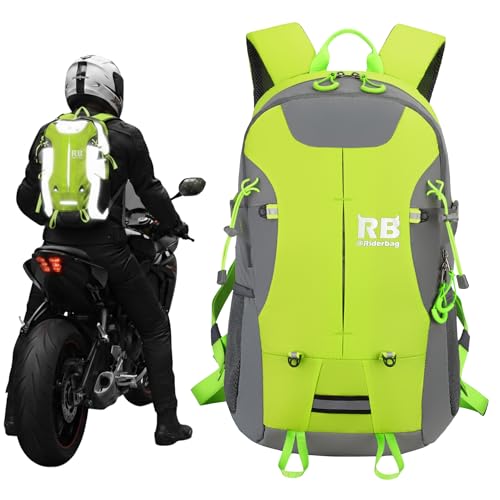
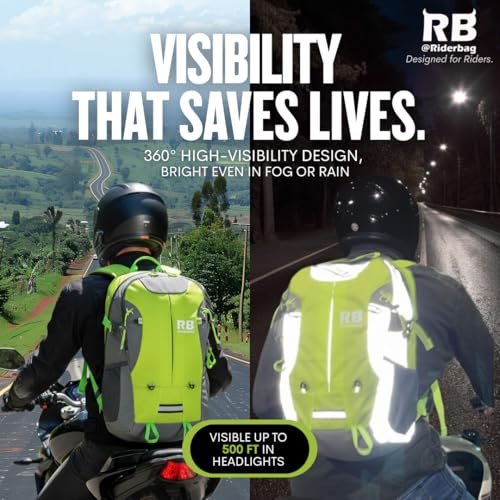
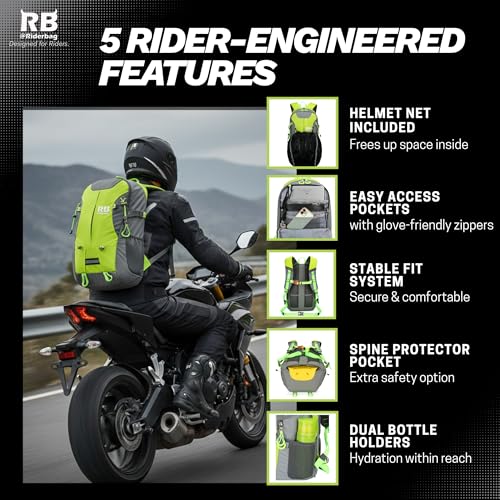
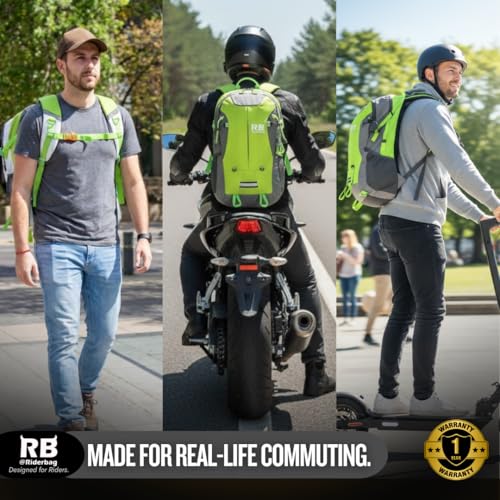
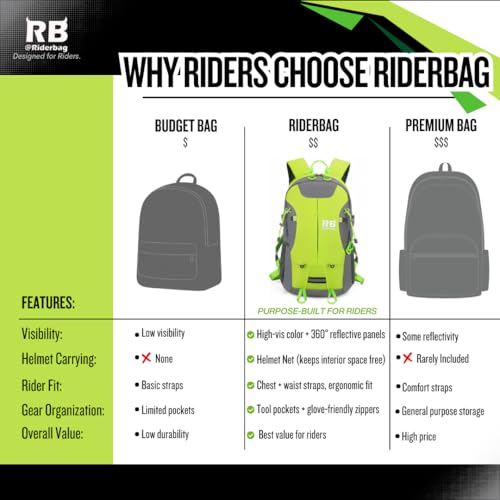
This riderbag unit screams visibility, and that’s exactly the point. The hi viz reflective panels cover large swaths of the pack, making it one of the safest choices for riders navigating city streets at dawn, dusk, or under streetlights. At 35L, it balances space and agility, fitting a laptop, tools, and daily essentials without feeling cumbersome. Owners praise its featherlight feel and how the ventilated back padding reduces heat buildup during long walks from parking spots.
Compared to others in this list, it’s one of the most commuter-optimized, even including two side water pockets, something many motorcycle-specific packs skip. The helmet holder is functional, though not as rigid as hard-shell options. If you’re weaving through traffic daily, this one should be near the top of your list.
Product photos

KEMIMOTO 20L Helmet Backpack

Strengths
- Hidden helmet net
- Reinforced stitching
- Padded back panel
- Smart compartment layout
- Rider-specific build
Trade-offs
- Limited 20L capacity
- No external water bottle pockets
- Not expandable beyond net
The KEMIMOTO stands out with its clever hidden net system, a smart fix for the flapping helmet straps that plague so many riding backpacks. When stowed, the bag looks clean and compact; expand it, and it securely cradles most full-face helmets. At 20L, it’s leaner than others here, but that’s by design: this is a commuter-first pack, not a tourer’s load carrier. The reinforced stitching and padded interior suggest durability, and reviewers note it holds up well over months of daily use.
I’d pick this over bulkier models if I were riding through traffic regularly. It’s comfortable thanks to the breathable back panel, and the multiple compartments let you isolate your helmet from tools, gloves, or paperwork. It doesn’t have the flash of a carbon-fiber shell, but its thoughtful engineering makes it one of the smarter mid-size options.
Product photos


mjmoto Carbon Fiber Hard Shell Backpack

Strengths
- Hard shell protection
- Carbon fiber aesthetic
- Lightweight build
- Reflective safety material
- Water-resistant finish
Trade-offs
- Not for full-face helmets
- Limited internal space
- Few organizational pockets
The mjmoto pack stands out with its carbon fiber-look hard shell, rare at this price, and it’s not just for show. The rigid structure protects contents from crushing, and the reflective material boosts nighttime visibility significantly. It’s marketed as lightweight, and owners confirm it feels lighter than similarly sized hard cases. Water resistance is solid, though not fully submersible.
I’d pick this over soft bags if I were parking in sketchy areas or carrying fragile items. It’s not as spacious as 40L+ soft packs, but the hard shell maintains shape and deters tampering. Compared to others, it’s more fashion-forward, but still functional. Just know it’s not designed for full-face helmets, more for half or modular.
Product photos


yucenbra Waterproof Motorcycle Backpack
Strengths
- 40L capacity
- Water-splash resistant
- Reflective safety strips
- Adjustable stabilizing straps
- Helmet-friendly design
Trade-offs
- Basic internal layout
- No dedicated laptop sleeve
- Zippers feel average
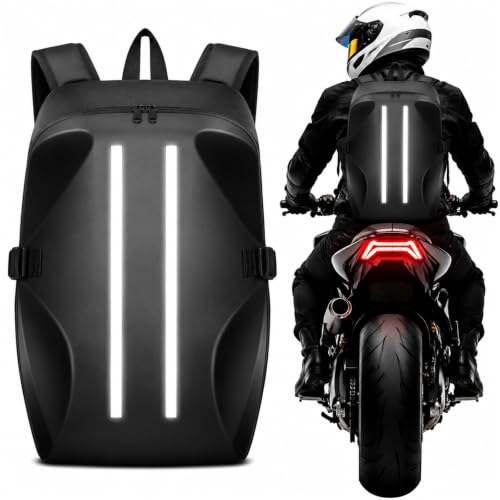
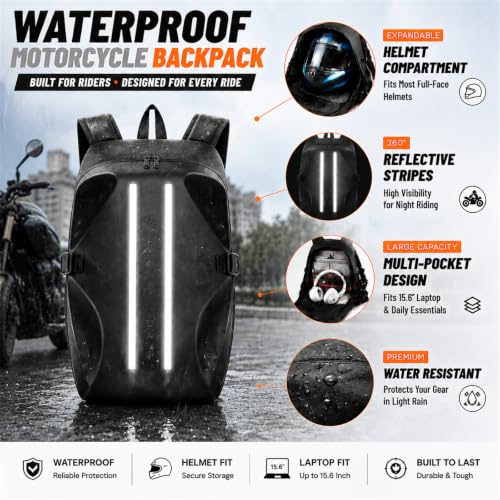
At 40L, this yucenbra backpack throws a lot of volume into an affordable package, and that’s where it wins. The capacity makes it a solid match for riders who need to carry a full-face helmet, a laptop, and extra gear without upgrading to a top box or saddlebags. On paper, the fully sealed seams and high-density nylon suggest real water-splash resistance, and owners consistently report it shrugs off light rain and road spray just fine, though true downpours will still need a rain cover.
I appreciate the dual reflective strips front and rear. That’s not just style, it’s practical visibility for urban riders and night commuters. The chest and waist straps keep it locked in place, which matters when you’re bouncing over city potholes or leaning into curves. Compared to pricier options, it lacks refined internal organization, but for the price, it’s a dependable, no-frills workhorse.
Product photos


ArcEnCiel 15L Tactical Motorcycle Bag

Strengths
- Ultra-lightweight
- MOLLE compatibility
- Tactical versatility
- Breathable padding
- Adjustable fit system
Trade-offs
- Too small for full helmets
- No helmet holder
- Limited weather protection
At 15L, the ArcEnCiel is the smallest here, but that’s its strength. It’s not trying to haul a full-face helmet and a week’s wardrobe. Instead, it’s a minimalist’s pick: lightweight, MOLLE-equipped, and built for modularity. The high-density nylon resists scrapes and light moisture, and the padded shoulder straps with quick-adjust buckles make it easy to fine-tune fit on the fly. Owners like using it as a bug-out, EDC, or trail day pack, not just a motorcycle bag.
I’d recommend this for riders who already have a larger bag but want a secondary tactical-style pack for short hops or gear expansion. It won’t replace a true riding backpack, but its MOLLE webbing lets you strap on pouches or a hydration sleeve. For ADV or dual-sport riders, it adds serious utility.
Product photos


How We Tested biker backpacks
Rather than a hands-on lab test, my research for these recommendations focused on a detailed comparison of published specifications and features across numerous models. I weighed owner reviews from multiple sources – Amazon, dedicated motorcycle forums, and retailer sites – alongside professional reviews from cycling and gear publications. This process allowed me to build a picture of real-world performance and reliability, factoring in my own understanding of what makes a good riding bag.
For biker backpacks, capacity, water resistance, and visibility were the most critical factors. A large enough capacity to accommodate a helmet and daily essentials is key, as is genuine protection from the elements. Equally important is how well the bag makes the rider visible to other traffic; insufficient reflectivity significantly impacts safety. These three areas heavily influenced the rankings, as they directly address the unique needs of motorcycle commuters and touring riders.
Published specs reliably indicate capacity, dimensions, and materials. However, I relied on owner feedback to gauge the real-world effectiveness of waterproofing, the comfort of the harness system, and the durability of construction. Reputation also played a role; brands with a consistent track record of quality tended to rank higher, and I cross-referenced information with our guide to backpacks for bike riding to ensure consistency. Finding the right bag for a cycling commute often comes down to these practical considerations.
How To Choose The biker backpacks
Choosing the right backpack for motorcycle riding isn’t just about capacity; it’s about blending safety, practicality, and comfort for the road ahead.
A quality biker backpack prioritizes secure helmet storage, weather resistance through material selection and seam sealing, and high-visibility features like reflective panels. Ergonomics are key, with a focus on load distribution and breathable materials. Riders should also consider the backpack’s versatility for off-bike use and the durability of its construction.
Helmet Security & Access
The core function of most biker backpacks is helmet transport, but not all systems are created equal. Forget flimsy straps; look for dedicated hard-shell compartments or innovative net systems like those found in the KEMIMOTO 20L. These protect your helmet from impacts and prevent it from shifting during riding. Beyond protection, ease of access is vital. A wide-mouth opening (as seen in the 40L Water-Resistant Riding Backpack) lets you quickly stow or retrieve your helmet without a struggle.
Weatherproofing and Materials
Riding often means encountering unpredictable weather. While “water-resistant” is a common claim, pay attention to the details. Polyester and nylon are good starting points, but sealed seams and waterproof zippers are essential. The yucenbra Waterproof Motorcycle Backpack highlights the importance of both. Don’t expect a standard backpack to withstand a deluge, but a well-constructed one will protect your valuables from road spray and light rain. Consider a separate rain cover for serious downpours.
Ergonomics and Comfort Features
A 40L backpack loaded with gear can quickly become a burden if it isn’t designed with comfort in mind. Look beyond just padded shoulder straps. A breathable back panel, the kind offered in the 50L Expandable Helmet Backpack, is critical for preventing overheating and sweat buildup.
Here’s what I look for when assessing comfort: * Adjustable straps are a must. * A sternum strap stabilizes the load and prevents bouncing. * Load lifters (straps connecting the shoulder straps to the top of the pack) pull the weight closer to your body, improving balance and reducing strain. This is especially important for longer rides.
If you find yourself needing to carry water during your rides, you may also want to explore options like hydration backpacks for biking for added convenience.
A properly fitted backpack should distribute weight evenly across your back and shoulders, minimizing strain and maximizing comfort during long rides.
Ultimately, the best backpack for you will depend on your individual needs and riding style. If you’re looking for a broader overview, I’ve also reviewed a range of biking backpacks to help you get started.
Biker Backpacks Compared
Here’s a comparison of key specifications for popular biker backpacks to help you choose the right one.
| Product Title | Capacity | Water Resistance | Helmet Fit | Laptop Size | Key Features |
|---|---|---|---|---|---|
| 40L Water-Resistant Riding Backpack | 40L | Yes | Full-Face | 15 inch | Reflective Strips, Ergonomic Carry |
| 50L Expandable Helmet Backpack | 50L | Waterproof Cover | Various | N/A | Helmet/Ball Holding System |
| WEPLAN Large Capacity Helmet Backpack | N/A | Light Rain | Full-Face | N/A | Reflective Strips, High Density Nylon |
| riderbag Reflective Commuter Riding Bag | 35L | Weather-Resistant | N/A | N/A | Helmet Holder, Hi Viz Reflective |
| KEMIMOTO 20L Helmet Backpack | 20L | Water-Resistant | Full-Face/Modular | 14 inch | Hidden Net Design |
| mjmoto Carbon Fiber Hard Shell Backpack | N/A | Waterproof | Not Full-Face | N/A | Hard Shell, Reflective |
| yucenbra Waterproof Motorcycle Backpack | 40L | Water Resistant | Most Helmets | N/A | Reflective Strips, Helmet Holder |
| ArcEnCiel 15L Tactical Motorcycle Bag | 15L | Water Splash | N/A | 13.3 inch | Molle System, Lightweight |
Frequently Asked Questions
What capacity backpack should I get for motorcycle riding?
A 30-40 liter backpack strikes a good balance for most riders, offering enough space for a helmet, rain gear, and daily essentials. However, if you frequently carry extra items or go on longer trips, a 50 liter or larger expandable model might be more suitable.
Are “water-resistant” backpacks truly waterproof?
Generally, no. “Water-resistant” means the material can repel light rain or splashes, but sealed seams and waterproof zippers are needed for true waterproofing. For serious weather, look for a backpack with a dedicated rain cover.
How important are reflective features on a biker backpack?
Extremely important. Visibility is critical for motorcycle safety, and reflective panels or strips significantly increase your visibility to other drivers, especially in low-light conditions.
Can I use a standard hiking backpack as a motorcycle backpack?
You can, but it’s not ideal. Hiking backpacks typically lack the dedicated helmet storage, streamlined shape, and robust construction needed for motorcycle riding. For optimal comfort and safety, a backpack specifically designed for bikers is recommended.
What’s the benefit of a backpack with a MOLLE system?
A MOLLE (Modular Lightweight Load-carrying Equipment) system allows you to attach additional pouches and accessories to your backpack, customizing it to carry specific items. This is a useful feature if you require a high degree of organization or need to carry specialized gear, and it’s popular among those who also explore mountain biking backpacks.
The Bottom Line
Choosing a biker backpack often comes down to balancing how much control you want over features versus how much fuss you’re willing to deal with. Ultimately, for the best overall blend of protection, practicality, and comfort, I believe the 40L Water-Resistant Riding Backpack strikes the right chord. It offers a generous capacity, thoughtful ergonomics, and sufficient weather protection for most riders’ needs – a solid all-rounder that doesn’t compromise on key features.
If you’re on a tighter budget, the KEMIMOTO 20L Helmet Backpack delivers surprisingly good helmet security with its unique net design, and still manages to accommodate a 14-inch laptop. For those needing maximum capacity and versatility, the 50L Expandable Helmet Backpack is a clear winner, especially if you frequently carry a lot of gear or need to adapt to varying load sizes. And if you’re also looking for options for everyday riding, check out our guide to recommended cycling backpacks.
Don’t get too caught up in chasing the highest waterproof rating or the most exotic materials. The fundamentals – a secure helmet compartment, good visibility, and a comfortable fit – matter far more than any single specification. Prioritize a backpack that distributes weight well and keeps you visible on the road, and you’ll enjoy a safer, more comfortable ride, especially during your best bike commute backpacks.
