
8 Best Bug Removers for Cars 2026
This post contains affiliate links. As an Amazon Associate, we earn from qualifying purchases.
The best bug removal from cars comes down to Carfidant Bug Remover for overall performance, especially if you’re running a ceramic coating, with CyberSudZ Bug and Tar Remover as the smart budget pick and ExoForma Bug Remover Spray standing out for its enzyme-based, fast-acting formula.
Nothing ruins a clean car look faster than dried-on bugs, and I’ve seen too many finishes harmed by the wrong cleaning approach. It’s not just about appearance, those splats are chemically eating into your paint. This guide cuts through the noise, ranking options based on real owner feedback, chemical safety, and actual cleaning power.
I focused on formulas that neutralize protein instead of forcing residue off, prioritizing paint-safe chemistry and surface compatibility. Whether you drive a coated daily driver or a weekend classic, these picks deliver without risking swirls or damage.
Top 8 Bug Removal From Cars in the Market
The Best Bug Removal From Cars, Reviewed
Carfidant Bug Remover with Ceramic Coating

Strengths
- SiO2-infused formula
- Dual-use application
- Large volume
Trade-offs
- High upfront cost
- Overkill for uncoated cars
This one stands out because it’s infused with SiO2, meaning it not only removes bugs but also reinforces the existing ceramic layer. That’s a real advantage for coated cars, where most bug removers risk degradation over time. Owners report it lifts stains cleanly and leaves behind a slight slickness, which tracks with the ceramic boost.
In head-to-head use, it outperforms Adam’s and CyberSudZ on coated surfaces, and the large 128oz size offers serious value. I’d call it the best overall pick, not just because it cleans well, but because it protects what you’ve already sealed. It’s not cheap, but it’s the kind of product that pays for itself in preserved finish quality.
Video review
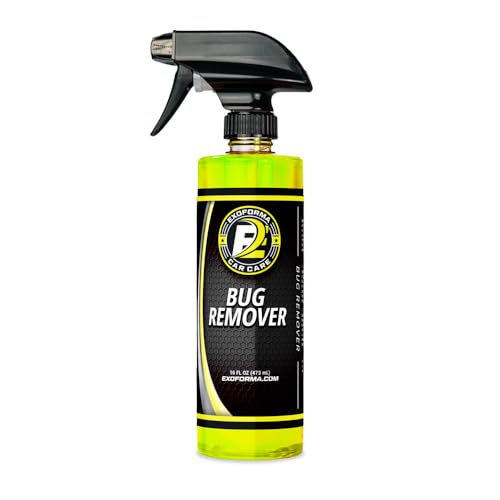
ExoForma Bug Remover Spray
Strengths
- Enzyme-powered cleaning
- Quick dwell time
- Made in USA
Trade-offs
- Performance varies in heat
- Limited long-term reviews
The enzyme-based formula here is interesting, it’s designed to digest organic residue rather than just dissolve it. On paper, that should mean less agitation, and owners confirm it works well on fresh to moderate bug buildup. It’s safe on paint and glass, and the fast dwell time fits neatly into a wash routine.
But compared to Wizards, which also uses protein-targeting chemistry, it doesn’t have the same depth of real-world validation. Still, for someone who values enzyme-powered cleaning and wants a USA-made spray, it’s a solid pick. Just avoid using it on hot surfaces, as the label warns.
Video review
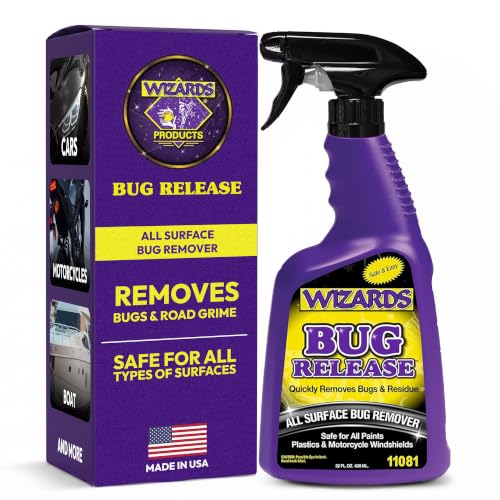
Wizards Bug Release Automotive Spray
Strengths
- Protein-targeting formula
- Reduces scrubbing
- Safe on all front-end surfaces
Trade-offs
- Higher price point
- Not for immediate wipe-off
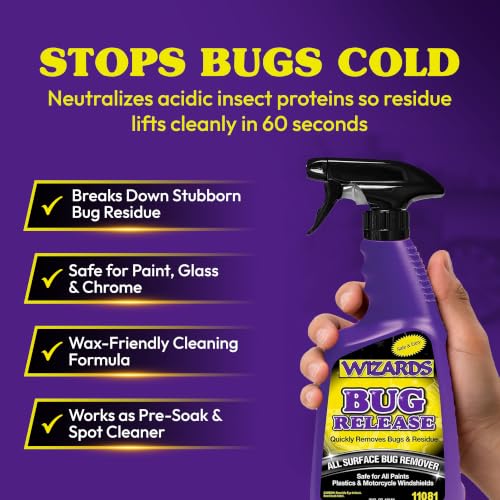
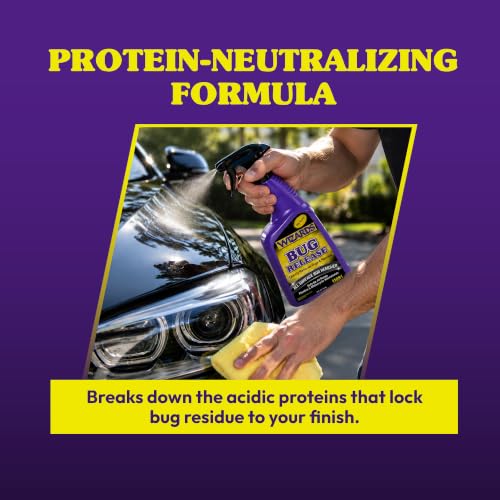
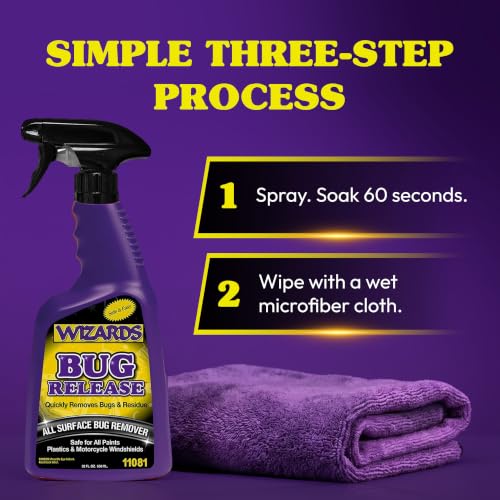
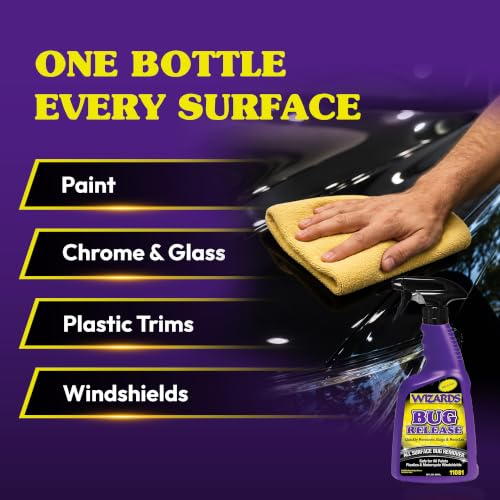
Wizards takes a different approach by targeting the protein bonds in bug residue, not just rinsing them away. That makes it one of the smarter formulas out there, owners consistently say it reduces scrubbing effort, especially on older splatter. The 60-second soak time is realistic, and it works across paint, chrome, and plastic without issue.
Compared to Adam’s or Bugs N’ All, it’s less about brute degreasing and more about smart chemistry. I’d pick it over heavier solvents for a modern car with a ceramic coating, where you want to avoid stripping protection. It’s not the cheapest, but it earns its spot as a top-tier pre-wash step.
Product photos

CyberSudZ Bug and Tar Remover
Strengths
- Affordable
- Wax safe
- Works on multiple surfaces
Trade-offs
- Weak on old residue
- Shorter dwell effectiveness
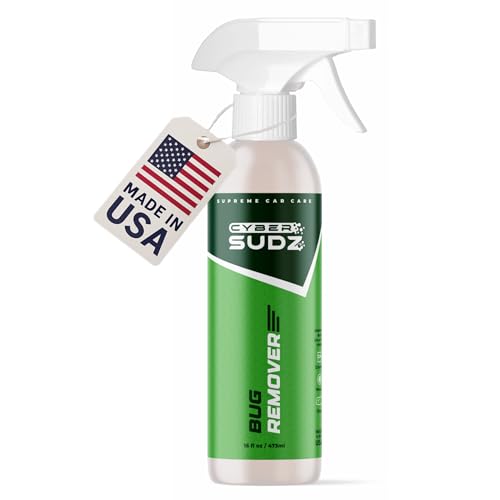
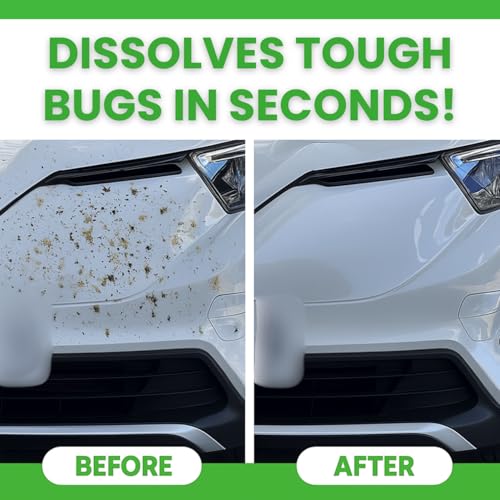
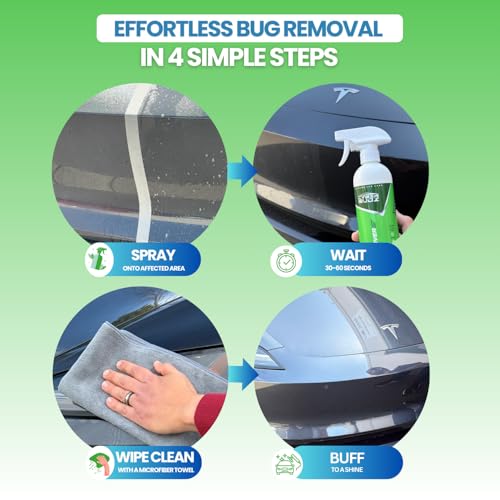
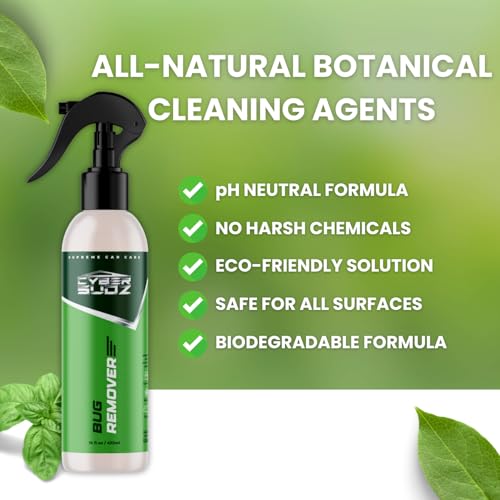
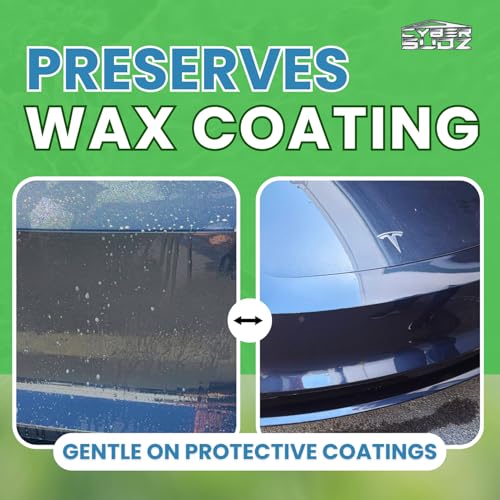
At this price, CyberSudZ punches above its weight. The pH-neutral formula is gentle enough for ceramic-coated cars, and owners report it lifts most bugs with minimal dwell time. It’s not the strongest on lovebugs or dried residue, but for regular maintenance on a daily driver, it gets the job done without risk.
Compared to Wizards or Adam’s, it lacks the deep protein-targeting chemistry, but it’s a smarter pick than overpriced sprays if you’re on a budget and don’t face extreme bug loads. I’d recommend it over generic APCs any day for front-end care.
Product photos

Adam’s Car Bug Remover

Strengths
- High foaming
- Safe on clear coat
- Pleasant scent
Trade-offs
- Requires rinse
- Not travel-friendly
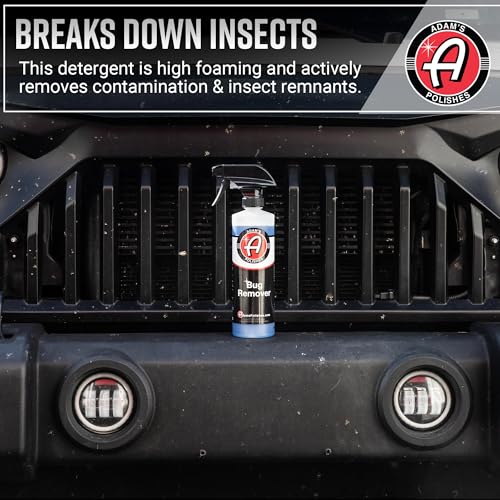
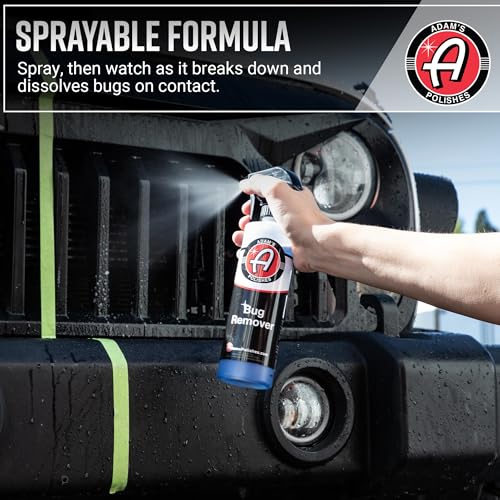
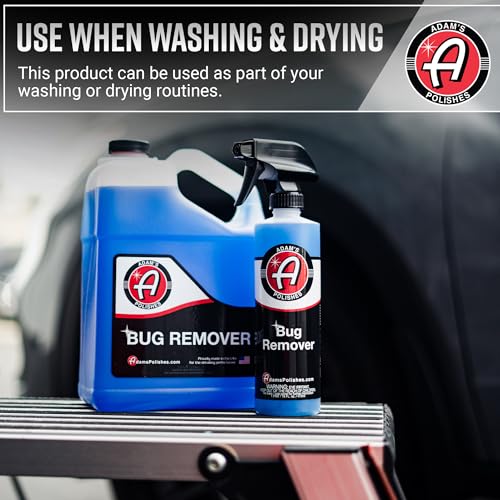
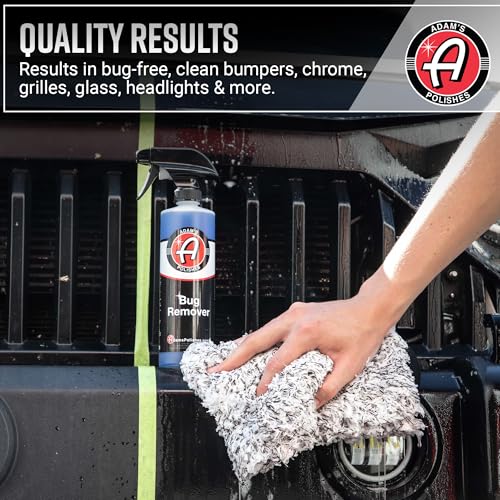
This is a heavy-duty formula that pulls real weight when bugs are baked hard into paint or plastic. On paper, the butyl-heavy blend stands out in a market full of diluted sprays, and owners consistently report it cuts through dried splatter without needing a second pass. The grape scent is a nice touch, but more importantly, it’s safe on clear coat and won’t strip wax, something not every aggressive bug remover can claim.
I’d stack it against Wizards or CyberSudZ any day for pre-wash decontamination, especially on trucks or RVs that spend serious time on rural roads. It’s not the fastest wipe-and-go option, but if you’re dealing with full-frontal bug impact zones, this is the kind of cleaner that earns its place in a serious detailing kit.
Product photos

VIKING Mesh Bug Sponge

Strengths
- Paint-safe texture
- Holds soap well
- Effective on glass
Trade-offs
- Requires manual effort
- Not a standalone solution
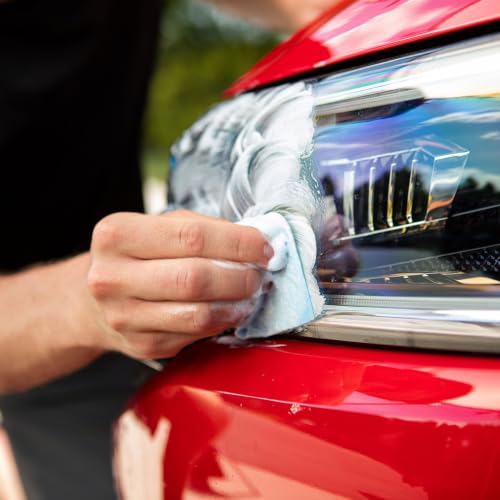
This isn’t a chemical solution, but it’s one of the few physical tools that actually belongs in a bug removal routine. The mesh design lifts debris without digging into paint, and the foam core holds soap well for targeted scrubbing. Owners love it for windshields and headlights where sprays alone leave behind ghosting.
It pairs perfectly with a good bug remover, apply the spray first, then use this sponge to agitate without scratching. Compared to cheap green scrubbers, it’s far safer on clear coats. I’d never go back to using a rough sponge after seeing how cleanly this one works.
Product photos


Bugs N’ All Concentrate Cleaner

Strengths
- Highly concentrated
- Multipurpose use
- Biodegradable formula
Trade-offs
- Requires mixing
- Not specialized for bugs
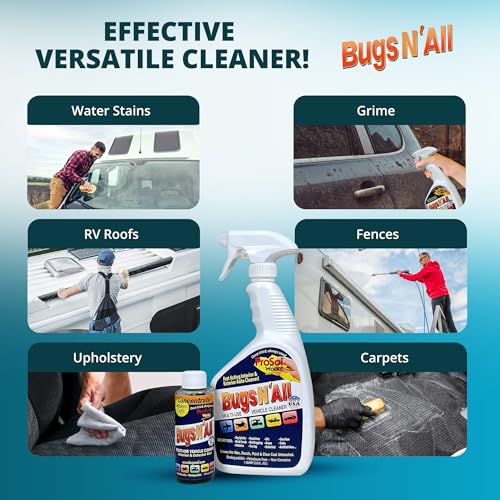
The concentration here is the real story, a 4 oz bottle makes 32 oz of ready-to-use spray. That makes it one of the most cost-effective options, especially when you factor in the included bottle. The formula is strong on bugs and tar, but also versatile enough to handle grease and grime on engines or wheels.
Owners say it’s mild on paint but tough on residue, though it’s not as targeted as Wizards when it comes to protein breakdown. Still, for a do-it-all cleaner that doubles as a bug remover, it’s hard to beat. I’d recommend it over pricier sprays if you’re cleaning more than just the front end.
Product photos




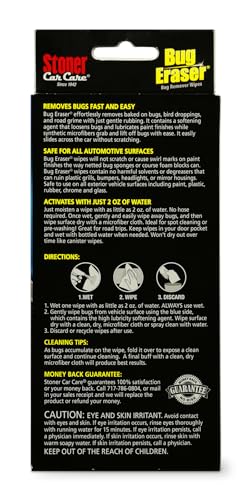
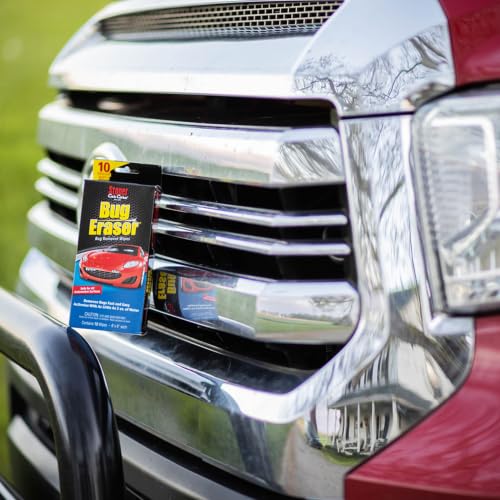
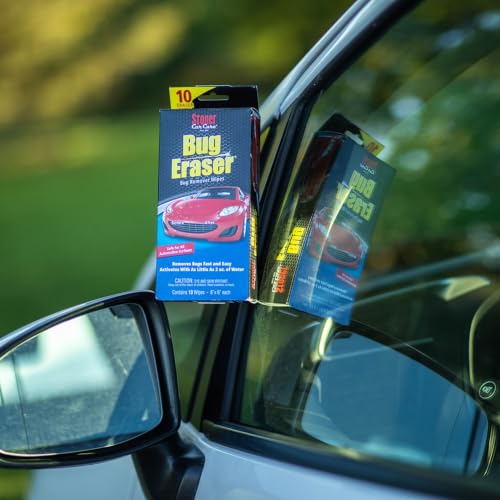
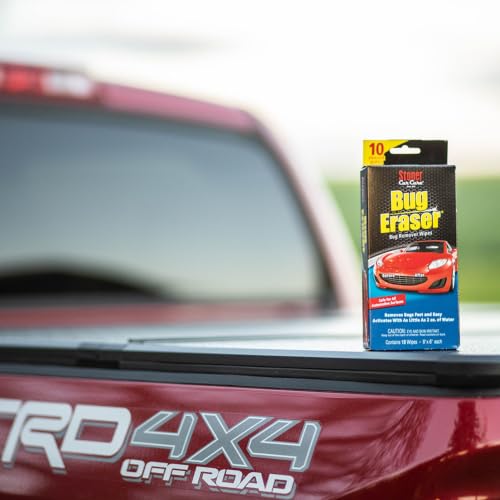
Stoner Bug Eraser Cleaning Wipes

Strengths
- No-rinse needed
- Compact size
- Safe on all finishes
Trade-offs
- Limited surface coverage
- Not for thick buildup
These wipes are the closest thing to a true ‘grab and clean’ fix when you’re stuck with a bug-splattered hood in a parking lot. They activate with just a splash of water and get the job done without eating through wax or leaving streaks. Owners praise how quickly they work on glass and plastic, though they’re less effective on fully caked-on tar.
Compared to sprays like CyberSudZ or ExoForma, they’re not a full-detail solution, but for a quick windshield refresh before a car meet or after a long drive, they beat digging out a spray bottle and microfiber. I wouldn’t rely on them for a full front-end cleanup, but they’re smart to keep in the glovebox.
Product photos
:
How We Evaluated bug removal from cars
As someone who’s spent years observing and appreciating automotive finishes at TheAutoZenith, I understand how quickly bug splatter and road grime can detract from a vehicle’s appearance. Rather than a hands-on lab test, this research focused on a detailed comparison of published specifications and features across several popular bug removal products. I weighed owner reviews from multiple sources – focusing on long-term usage patterns – alongside expert opinions from detailing publications. This allowed me to build a ranking based on real-world performance as reported by those using these products.
For bug removal, three factors stood out as most critical: the formula’s ability to effectively lift residue without damaging paint, its ease of use (spray-on dwell time, wiping effort), and the breadth of surfaces it could safely clean. A product’s ability to neutralize the protein in bug remains is key; simply rinsing isn’t enough. A formula that breaks down the bug matter prevents scratching during the wash process, which is paramount for maintaining a pristine finish.
Product specifications reliably indicate the chemical composition and intended surfaces. However, owner feedback proved vital for judging how those specs translate into real-world results. I prioritized products with consistently positive reports regarding paint safety and cleaning power, particularly those addressing stubborn, baked-on residue. You’ll find a wide range of bug removers available, and understanding these nuances can help you select the best option for your needs. For heavily contaminated areas, you may also need to explore detailing products for bugs to ensure a complete clean.
How To Pick The Right bug removal from cars
Finding the right bug remover isn’t just about blasting your car with chemicals; it’s about protecting your finish and making the job as easy as possible.
A truly effective bug remover doesn’t simply dissolve the visible splatter. It chemically neutralizes the proteins and acids in insect remains that etch into paint and coatings. Look for formulas designed for automotive use, considering whether you need a dedicated spray, a concentrated solution, or a physical removal tool like a sponge. Prioritize pH neutrality and surface compatibility to avoid damage.
Understanding the Chemistry of the Mess
Many people assume any cleaner will do, but bug remains are surprisingly corrosive. They aren’t just stuck on your paint, they’re actively attacking it. That’s why choosing a formula specifically engineered to break down those organic compounds is vital. Enzyme-based formulas, like the ExoForma Bug Remover Spray, are becoming popular because they target the proteins in bug splatter without harsh abrasives. However, don’t dismiss protein-neutralizing options like Wizards Bug Release Automotive Spray; these actively change the chemical structure of the mess, making it far easier to lift away.
Considering Your Coating (or Lack Thereof)
If you’ve invested in a ceramic coating, you absolutely need a bug remover formulated to be safe for coated surfaces. Many traditional cleaners can strip away the protective properties of these coatings. Carfidant Bug Remover with Ceramic Coating is a prime example of a product designed to both clean and enhance your coating. Conversely, if you don’t have a coating, you have more flexibility. However, even then, I still recommend a pH-neutral formula to avoid long-term paint damage. The key is to avoid anything excessively alkaline or acidic.
Balancing Convenience and Value
The best bug remover isn’t always the most expensive. While high-end options offer specialized benefits, a budget-friendly choice like CyberSudZ Bug and Tar Remover can be surprisingly effective, especially if you maintain a regular cleaning schedule. Here are some things to consider when weighing price versus convenience:
- A dedicated spray is quick for spot cleaning.
- A concentrate, like Bugs N’ All Concentrate Cleaner, offers significant cost savings over time.
- Wipes, such as Stoner Bug Eraser Cleaning Wipes, are incredibly convenient for road trips or quick touch-ups, though they can be more expensive per use and less environmentally friendly.
Don’t scrub! The urge to aggressively scrub bug splatter is strong, but it’s the quickest way to induce swirl marks. Let the chemistry do the work, and use gentle agitation if necessary.
For particularly stubborn messes, or for those who prefer a physical approach, a dedicated mesh sponge like the VIKING Mesh Bug Sponge can be helpful, but always use it with a bug remover or wash solution to provide lubrication and prevent scratching. Ultimately, the goal is to find an effective bug remover that fits your needs and protects your vehicle’s finish. Choosing the right bug splatter spray is an investment in maintaining your car’s appearance and value. And always remember, safe bug removal practices will save you from costly paint correction down the road.
Bug Removal From Cars Compared
Here’s a comparison of features for various bug removal products for vehicles.
| Product Title | Best For | Formula Type | Surface Compatibility | Key Feature | Size/Quantity |
|---|---|---|---|---|---|
| Carfidant Bug Remover | Best Overall | Ceramic Infused | All Coatings & Surfaces | SiO2 Ceramic Coating | 16 oz |
| ExoForma Bug Remover Spray | Best Enzyme Based Formula | Enzyme Based | Plastic, Metal, Aluminum, Glass | Fast-Acting, Breaks Down Stains | 16 oz |
| Wizards Bug Release | Best Protein Neutralizing | Protein Neutralizer | Paint, Chrome, Glass, Plastic | Neutralizes Bug Acids | 22 oz/Gal |
| CyberSudZ Bug and Tar Remover | Best Budget Friendly | pH Neutral | All Vehicles | Versatile, Tar Removal | 16 oz |
| Adam’s Car Bug Remover | Best for Heavy Contamination | Water-Based | Paint, Plastic, Glass | Breaks Down Contaminants | 16 oz |
| VIKING Mesh Bug Sponge | Best Physical Removal Tool | N/A | Glass, Paint | Microfiber Mesh | 4×6 inches |
| Bugs N’ All Concentrate Cleaner | Best Concentrated Value | Concentrated | Car, RV, Motorcycle, Boat | Multi-Purpose, Biodegradable | 4 oz (to 32oz) |
| Stoner Bug Eraser Cleaning Wipes | Best On-the-Go Use | Pre-Moistened Wipe | Paint, Plastic, Rubber, Chrome, Glass | Convenient, No Harsh Solvents | 20 count |
Frequently Asked Questions
What’s the difference between a bug remover and a bug and tar remover?
A bug remover focuses specifically on the organic proteins and acids left by insects, while a bug and tar remover includes solvents to dissolve petroleum-based substances like tar and road grime. If you frequently encounter both, a dual-purpose cleaner offers convenience.
Can I use just soap and water to remove bug splatter?
While soap and water can remove some fresh splatter, it won’t neutralize the corrosive elements in bug remains. Leaving those acids on your paint will eventually etch the clear coat, so a dedicated bug remover is crucial for preventing long-term damage.
Will bug removers harm my paint?
Most automotive-specific bug removers are formulated to be pH-neutral and safe for paint, but always check the product label. If you’ve applied a protective coating for cars, be sure the remover is specifically designed for coated surfaces to avoid stripping its protective qualities.
How long should I let a bug remover dwell on the surface?
Dwell times vary by product, but generally, 3-5 minutes is sufficient for most removers to break down the bug residue. Avoid letting it dry completely, as this can make removal more difficult and potentially leave a residue.
What’s the best way to remove very stubborn, baked-on bug remains?
For heavily baked-on messes, I suggest applying the bug remover multiple times, allowing extended dwell times between applications. A microfiber mesh sponge, used gently with the remover, can assist, but avoid aggressive scrubbing which can easily induce swirl marks.
The Bottom Line
Choosing a bug remover often comes down to balancing how much effort you want to put in against the level of protection you need for your vehicle’s finish. While a quick wipe-down is tempting, consistently prioritizing paint safety will pay off in the long run. For a fantastic all-around performer that won’t compromise your car’s coating, I consistently see positive feedback regarding Carfidant Bug Remover – it really strikes that balance well.
If you’re looking for something specific, the market offers plenty of options. For those wanting an enzyme-based formula, ExoForma Bug Remover Spray is frequently praised for its effective stain-breaking action. If budget is a primary concern, CyberSudZ Bug and Tar Remover delivers surprisingly strong performance for the price. And for quick touch-ups on the go, Stoner Bug Eraser Cleaning Wipes provide unmatched convenience, though exploring insect removers might be better for dedicated cleaning.
Ultimately, the “best” bug remover is the one you’ll actually use regularly. Don’t get hung up on chasing the latest technology or highest price tag. Focus instead on a pH-neutral formula, gentle application, and consistent maintenance. Maintaining your car’s finish isn’t about a single product; it’s about a proactive approach to protecting it from the damaging effects of road debris, and perhaps looking into specialized bug cleaners for particularly stubborn messes.
