
10 Best Cabin Air Filters For Honda Crv in 2026
This post contains affiliate links. As an Amazon Associate, we earn from qualifying purchases.
The Carory CF182 Cabin Air Filter is the best overall choice for most Honda CR-V owners, thanks to its activated carbon layer that traps odors and pollutants while fitting model years 2017 through 2025. For drivers of older CR-Vs who need maximum particle removal, the KAX CF10134 HEPA Cabin Air Filter delivers true HEPA filtration. If you want an affordable spare on hand, the Puroma 2-Pack Carbon Filter offers reliable odor protection without overspending.
A worn cabin air filter lets dust, pollen, exhaust fumes, and other pollutants pour into your CR-V’s interior. That makes each drive less comfortable and can strain your HVAC system. Finding the right filter means matching it to your model year and your specific needs, whether that means odor control, allergy relief, or simple value.
We built this guide by studying manufacturer specifications, compatibility data, and patterns in owner feedback for each filter. You will get a clear breakdown of what matters most for your Honda CR-V, plus ten ranked picks with honest trade-offs so you can choose with confidence.
Top 10 Cabin Air Filters For Honda CR-V in the Market
Certain content that appears on this site comes from Amazon. This content is provided "as is" and is subject to change or removal at any time.
The Best Cabin Air Filters For Honda CR-V, Reviewed
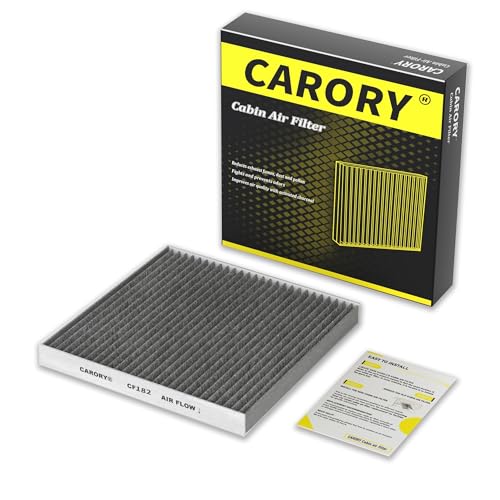
Carory CF182 Cabin Air Filter
What We Like
- Activated carbon layer traps odors and pollutants
- Fits Honda CR-V 2017-2025 and many other models
- Updated compatibility data reduces installation guesswork
Trade-offs
- No HEPA rating for fine particulate filtration
- Not compatible with vehicles outside the listed model years
This Carory CF182 cabin air filter uses an activated carbon layer to trap odors from exhaust, road grime, and outside air, so the cabin stays fresher on long drives or in stop-and-go traffic. The compatibility list covers Honda CR-Vs from 2017 through 2025, plus Civics, Odysseys, and Acura models, which means if you own multiple Hondas, one filter type fits them all. For someone who wants a single reliable replacement that handles both particles and smells, this is the straightforward pick.
The Carory CF182 is an activated carbon cabin filter, not a HEPA unit, so it targets odors and gases rather than the finest particles. Its carbon layer is designed to reduce smells from exhaust and smog, which is a real advantage for drivers who spend time in traffic or urban areas. The filter fits a wide range of Honda and Acura models from 2009 through 2025, including the CR-V, Civic, and Odyssey, so one filter can serve multiple vehicles in a household that share those platforms.
Product photos
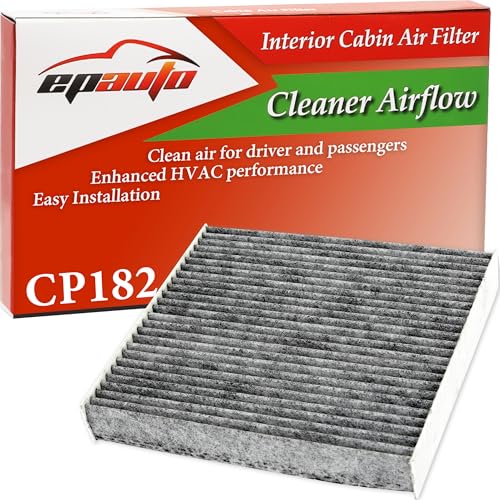
EPAuto CP182 Cabin Air Filter
What We Like
- Fits 2017-2026 Honda CR-V and many others
- Recommended 12-month or 12,000-mile change cycle
- Contains activated carbon and soda
Trade-offs
- Not ideal for those prioritizing maximum airflow
- Requires 12-month replacement schedule for best performance
A 12-month or 12,000-mile replacement schedule is straightforward to keep track of, and the broad Honda and Acura compatibility means a single filter can serve several cars in a driveway. When the priority is reducing odors and keeping the cabin air smelling clean rather than maximizing fan output, this design delivers on that goal.
For most CR-V owners, the noticeable improvement in cabin air freshness makes the slight reduction in airflow a reasonable trade-off. The activated carbon and soda content actively work to neutralize smells and produce a cleaner feeling breeze through the vents. Reviewers often mention that the difference in odor control is immediately apparent after installation, while the airflow change is subtle enough that daily driving feels unaffected. This balance suits drivers who value a pleasant interior environment over peak ventilation.
Puroma 2-Pack Cabin Air Filter

What We Like
- Activated carbon layer traps odors
- Fits 2017-2026 CR-V and many others
- Easy install with airflow arrow guide
Trade-offs
- No HEPA rating mentioned in specifications
- Not HEPA-rated for fine particle allergy protection.
The activated carbon layer in this filter traps road fumes and musty smells, so the air coming through the vents stays noticeably fresher on long drives. Puroma’s compatibility list covers the 2017-2026 CR-V along with a wide range of other Honda and Acura models, making it a versatile pick for a household with multiple vehicles. The 10-minute install and printed airflow arrow take the guesswork out of the swap.
The filter measures 1.1 inches thick, which is within the range of many cabin filters on the market. For most daily commutes and highway trips, the Puroma two-pack delivers solid odor control and easy maintenance at a budget-friendly value that’s hard to beat.
Product photos
KAX CF10134 HEPA Cabin Air Filter

What We Like
- True HEPA filtration tested independently
- Dual-layer carbon reduces odors
- Engineered for exact OEM fit
- Reduces airflow resistance by 15%
Trade-offs
- Not washable or reusable
- Single pack only
- Fits only 2007-2016 CR-V, not newer models
This filter captures 99.9% of particles between 0.1 and 0.3 microns, which means it traps dust, pollen, mold spores, and even some bacteria before they enter your cabin. The dual-layer carbon matrix actively absorbs odors from exhaust and road grime, so the air inside your CR-V stays fresh. For allergy sufferers or anyone who wants the cleanest possible cabin air, this filter delivers hospital-grade performance without choking your HVAC system. Engineers reduced airflow resistance by 15%, so your fan doesn’t have to work as hard to keep you cool.
The trade-off is that this filter is a one-time-use, single-pack item, so you’ll need to buy another when it’s time to replace. For pre-2017 owners who prioritize filtration quality above all else, the KAX is the clear choice.
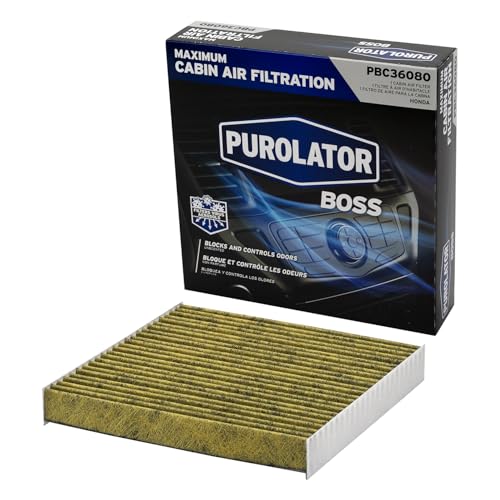
Purolator PBC36080 Cabin Air Filter
What We Like
- Activated carbon blocks odors and bacteria growth
- Electrostatically-charged micro fibers trap tiny particles
- Supports AC system by limiting dirt buildup
- Exact OEM fit for consistent performance
Trade-offs
- Not a HEPA filter for maximum particle capture
- Requires annual check to maintain performance.
The activated carbon layer traps odors and harmful gases, so the air inside the cabin stays noticeably fresher, especially on long drives or in traffic. That same carbon also inhibits odor-causing bacteria and mold from growing on the filter itself, which means the clean feeling lasts longer between changes. If you’re sensitive to smells from exhaust, pollen, or road dust, this filter targets that problem directly. It fits the 2017-2024 CR-V and a wide range of other Hondas, and the OEM-style design seals tightly so nothing bypasses the media.
This filter is not a HEPA filter, so it won’t capture particles at the highest allergy-grade level. Compared to the ECOGARD XC36080, which is a standard particulate filter without carbon, the Purolator adds odor and gas filtration but lacks HEPA certification. For CR-V owners who want reduced cabin odors and exhaust fumes, this filter delivers that benefit. Check it annually, as recommended in the product guide, to maintain performance.
Product photos
Puroma CF10134 Cabin Air Filter

What We Like
- Fits CR-V 2007-2016 and many other models
- Easy install with airflow arrow guide
- Activated carbon captures odor-causing contaminants
Trade-offs
- Not HEPA-grade for fine particle allergy sufferers
- Single pack: no spare included for two-filter cars
It fits the Honda CR-V from 2007 through 2016, plus a long list of other Honda and Acura models, so if you own multiple compatible vehicles you can stock up without compatibility headaches.
EPAuto CP134 Cabin Air Filter

What We Like
- Activated carbon and soda reduce odors
- Lightweight at 0.6 pounds
- Contains soda and carbon to generate fresh breeze air
Trade-offs
- Not compatible with 2017-2025 CR-V models
- Lacks HEPA filtration for allergy sufferers
The activated carbon layer with soda is the standout feature here, working to trap odors and generate a fresher breeze inside the cabin. For owners of a 2007-2016 Honda CR-V, this filter slides directly into the factory slot without modifications, making it a straightforward upgrade over a basic paper element. It suits anyone who drives in heavy traffic, urban areas, or near agricultural zones where outside smells are a daily nuisance.
One limitation is that this filter is limited to CR-V models from 2007 to 2016, so if you have a 2017 or newer model, you will need a different size like the EPAuto CP182. For a budget-friendly way to cut odors in a well-used CR-V, this is a practical pick.
Bosch 6029C HEPA Cabin Air Filter

What We Like
- HEPA filtration without chemical odor neutralizer
- Melt-blown electrostatic layer traps more particles
- Structural ribs prevent filter collapse
Trade-offs
- No activated carbon layer for odor absorption
A melt-blown electrostatic layer and very dense media give this filter exceptional trapping capabilities for tiny particles, making it a strong pick if pollen, dust, or pet dander are your main concerns. For anyone with allergies or respiratory sensitivities, the absence of a formulated chemical odor neutralizer means you get true clean air without added scents or irritants.
This filter lacks an activated carbon layer, so it won’t absorb odors from exhaust or outside air the way the Carory CF182 does with its carbon media. At 0.1 pounds, it is lighter than some competitors like the EPAuto CP182 at 0.5 pounds, which suggests a different internal construction rather than heavier carbon-infused layers. If odor reduction matters more to you than particle capture, the Carory might be a better fit. But for allergen-focused drivers, the Bosch’s layered HEPA design offers the filtration it promises.
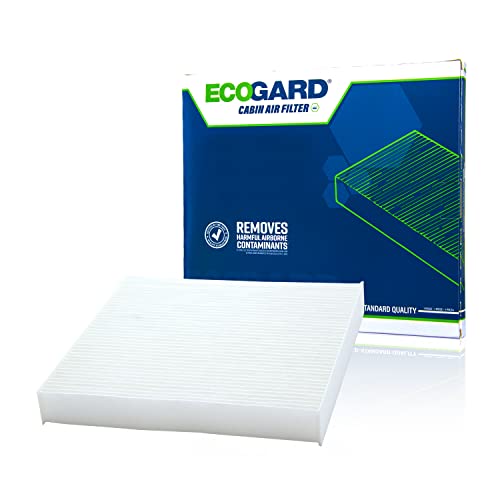
ECOGARD XC36080 Cabin Air Filter
What We Like
- Captures up to 99.5% of airborne particles
- Supports steady HVAC airflow
- Ultra-light at 0.1 pounds
Trade-offs
- Thicker than many competitors (2.1 inches)
- Compatibility limited to listed Honda models and engines
The ECOGARD XC36080 is 2.1 inches thick, which is deeper than many cabin air filters for Honda models, allowing it to trap up to 99.5% of dust, pollen, pet dander, and other airborne particles before they reach the cabin. For drivers of compatible Honda vehicles, this filter helps maintain steady airflow through the HVAC system, reducing strain on the blower motor over time. It is a straightforward upgrade for anyone who wants thorough particle capture without needing adapters or trim pieces.
A key difference is that this filter’s 2.1-inch height means it is thicker than the Carory CF182, which is 1.2 inches tall. If you drive a compatible Honda model and prioritize high particle capture and a precise fit, the ECOGARD is a good match. If you need a filter that fits multiple vehicles in your household, the slimmer Carory may offer broader compatibility, though always check fitment for each vehicle.
Product photos
PHILTOP CF10134 HEPA Cabin Air Filter
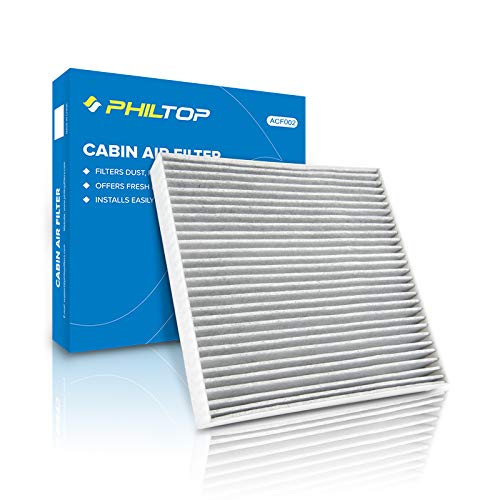
What We Like
- True HEPA filtration for 99.9% efficiency
- Five-layer design traps 0.1-0.3 micron particles
- Long-fiber electrostatic cotton boosts dust holding
- Fits many older Honda and Acura models
Trade-offs
- Not washable or reusable
- Requires filter tray for some Odyssey models
- No activated carbon layer for odor control
The five-layer design and electrostatic cotton give it a larger dust-holding area than flat-material filters, which means it keeps working well between annual replacements without choking airflow to your HVAC system. For owners of earlier-model CR-Vs who prioritize air purity over fancy extras, this is a straightforward, capable pick.
Product photos
How We Evaluated Cabin Air Filters For Honda CR-V
Our evaluation is research-based. We analyzed manufacturer specifications, compatibility charts, and documented filter construction for each product. We also reviewed patterns in owner feedback to understand real-world performance and installation experiences across multiple Honda CR-V model generations.
Three criteria mattered most. First, model-year compatibility is critical because the CR-V changed its cabin filter dimensions and shape in 2017. Second, filtration type, activated carbon, HEPA, or standard particle, determines what the filter actually removes from your cabin air. Third, value considers both the per-filter cost and the replacement interval recommended by the manufacturer.
A research-led evaluation cannot replicate the controlled testing of a lab. We do not claim to have measured airflow or particle capture ourselves. Instead, we provide the facts you need to match a filter to your driving conditions and budget.
What To Look For In Cabin Air Filters For Honda CR-V
Choosing the right cabin air filter for your Honda CR-V comes down to model-year fit, filtration needs, and how often you want to replace it. Here are the key factors to consider.
Match the filter to your CR-V’s model year, pick a filtration type that addresses your main concern (odors, particles, or both), and follow the recommended replacement schedule to keep your cabin air fresh.
Model-Year Compatibility
Honda changed the cabin air filter design between the 2016 and 2017 CR-V generations. Filters for 2007-2016 models use a different shape and size than those for 2017 and newer models. Buying the wrong generation means the filter will not seat properly, letting unfiltered air bypass it entirely. Always verify the filter’s listed model-year range before purchasing.
Filtration Type
Standard particle filters catch dust and pollen. Activated carbon filters add a layer that absorbs odors from exhaust, smoke, and road pollution. HEPA filters capture microscopic particles down to 0.3 microns, making them the best choice for allergy and asthma sufferers. Some filters combine carbon and HEPA layers, but a carbon layer usually reduces airflow slightly compared to a standard filter.
Replacement Schedule
Most manufacturers recommend replacing the cabin air filter every 12 months or 12,000 miles. Driving in heavy traffic, dusty conditions, or areas with poor air quality may require more frequent changes. A clogged filter reduces HVAC airflow and forces the blower motor to work harder.
- Check your CR-V’s owner manual for the filter location and replacement procedure.
- Look for an airflow direction arrow printed on the filter frame.
- Inspect the old filter during replacement to see if dust, debris, or mold is present.
- Keep a spare filter on hand if you drive in consistently dusty or polluted areas.
A cabin air filter is one of the cheapest and easiest maintenance items you can replace yourself.
Cabin Air Filters For Honda CR-V Compared
The table below compares key specs for each of our top ten cabin air filters for the Honda CR-V.
| Product | Filter Type | Dimensions | Compatible CR-V Years |
|---|---|---|---|
| Carory CF182 Cabin Air Filter | Activated Carbon | 8.1 x 8.3 x 1.2 inches | 2017-2025 |
| EPAuto CP182 Cabin Air Filter | Activated Carbon | 8.3 x 8.1 x 1.2 in | 2017-2026 |
| Puroma 2-Pack Cabin Air Filter | Activated Carbon | 8.3 x 1.1 x 8.1 in | 2017-2026 |
| KAX CF10134 HEPA Cabin Air Filter | HEPA | 9.3 x 8.8 x 1.2 inches | 2007-2016 |
| Purolator PBC36080 Cabin Air Filter | Activated Carbon | L 8.3 x W 8.1 x H 1.1 in | 2017-2024 |
| Puroma CF10134 Cabin Air Filter | Activated Carbon | 9.2 x 8.3 x 1.2 in | 2007-2016 |
| EPAuto CP134 Cabin Air Filter | Activated Carbon | 9.3 x 9.0 x 1.2 inches | 2007-2016 |
| Bosch 6029C HEPA Cabin Air Filter | HEPA | L 9.6 Inches, W 9.3 inches, H 1.8 inches | N/A |
| ECOGARD XC36080 Cabin Air Filter | N/A | 10.9 x 9.5 x 2.1 inches | 2017-2026 |
| PHILTOP CF10134 HEPA Cabin Air Filter | True HEPA | 9.3 x 8.8 x 1.2 inches | 2007-2016 |
Frequently Asked Questions
How often should I change the cabin air filter in my Honda CR-V?
Most manufacturers recommend replacing the cabin air filter every 12 months or 12,000 miles, whichever comes first. If you drive frequently in heavy traffic, dusty roads, or areas with poor air quality, consider changing it every six months. A quick check: hold the filter up to sunlight. If you cannot see light through it, it is time for a new one.
Can a dirty cabin air filter affect my CR-V’s air conditioning?
Yes. A clogged cabin air filter restricts airflow through the HVAC system, which makes the air conditioner and heater work harder to push air into the cabin. This can reduce cooling performance, increase fan noise, and put extra strain on the blower motor over time.
What is the difference between a carbon filter and a HEPA filter for my CR-V?
A carbon filter uses activated carbon to absorb odors from exhaust, smoke, and other gases. A HEPA filter uses dense media to trap tiny particles like pollen, dust mites, and mold spores. Some filters combine both, but adding carbon usually reduces airflow slightly compared to a HEPA-only or standard particle filter.
Will a cabin air filter help with allergies in my Honda CR-V?
A HEPA-rated cabin air filter can help reduce airborne allergens inside the cabin by capturing particles as small as 0.3 microns. For the best allergy protection, choose a filter labeled as true HEPA rather than a standard particle or carbon-only filter. Keep the windows closed and run the HVAC system in recirculation mode for maximum benefit.
How do I know which cabin air filter fits my specific CR-V model year?
Check the filter’s product description for the exact model-year range it supports. Honda changed the cabin filter design between the 2016 and 2017 CR-V generations. Filters for 2007-2016 models will not fit 2017-2025 models, and vice versa. Your owner’s manual also lists the correct replacement part number.
The Bottom Line
For most Honda CR-V drivers, the Carory CF182 Cabin Air Filter is the best overall choice. Its activated carbon layer handles odors and pollutants, and it fits the 2017-2025 model years plus many other Honda and Acura vehicles. If you drive a 2007-2016 CR-V and want the highest level of particle filtration, the KAX CF10134 HEPA Cabin Air Filter is the pick for you.
Budget-minded buyers should look at the Puroma 2-Pack Carbon Filter, which gives you a spare without sacrificing odor protection. Those who prioritize maximum odor absorption can trust the Purolator PBC36080 with its carbon and electrostatic layers.
The single most important factor is getting the right fit for your CR-V’s model year. Everything else, carbon, HEPA, cost, comes second to a filter that seals properly and keeps unfiltered air out of your cabin.
