
7 Best Car Air Purifiers for Smokers 2026
This post contains affiliate links. As an Amazon Associate, we earn from qualifying purchases.
The LUFTRUM Car Air Purifier with HEPA stands out as the best overall for smokers, thanks to its strong filtration and smart features. For a budget-friendly, portable option, the Arint Mini Car Air Purifier delivers solid performance, while the Aucleia Portable Car Air Purifier H13 offers extra versatility with aromatherapy and a filter indicator.
Smoking in a car leaves behind more than just the obvious smell, residue clings to surfaces, and fine particles linger in the air long after the window rolls down. Tackling that requires more than a scented air freshener. This guide cuts through the noise, focusing on purifiers that actually remove smoke particles and odors using proven filtration.
My picks are based on specs, owner feedback, and what matters most in a small, enclosed space: effective HEPA and activated carbon filters, reliable airflow, and practical design. I looked at how well each unit handles smoke-related pollutants, how easy it is to use while driving, and what owners say about long-term reliability.
Top 6 Car Air Purifiers For Smokers in the Market
The Best Car Air Purifiers For Smokers, Reviewed
LUFTRUM Car Air Purifier with HEPA

Strengths
- H13 HEPA + carbon filtration
- PM2.5 sensor display
- Auto on/off with ignition
Trade-offs
- Higher price point
- Filter replacements needed
- Bulkier than mini models
If you’re serious about cleaning a smoker’s car, this is the one to beat. It’s got a 4-stage filtration system with H13 HEPA, activated carbon, and even a formaldehyde-specific layer, specs that matter when dealing with VOCs and tar-laden air. The built-in PM2.5 sensor is a standout, giving real-time feedback so you see the air improve. Plus, it auto-starts with the ignition, which is a small but meaningful touch for daily drivers.
Owners praise its silent operation and consistent performance. At nearly $110, it’s the most expensive here, but it’s also CARB and ETL certified, meaning it’s safe and ozone-free, critical for long-term use. Compared to others, this is the most complete package. My recommendation? This is the smarter buy if you want real, measurable air quality improvement.
Video review
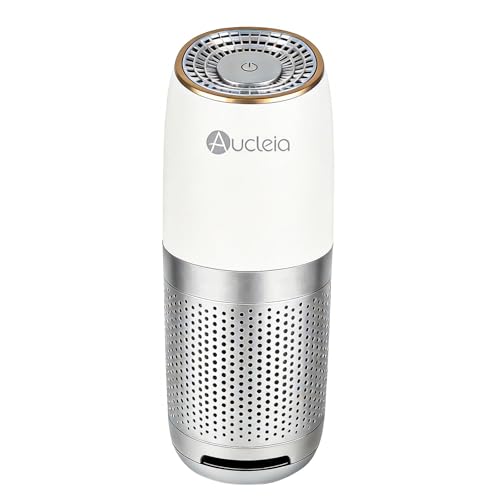
Aucleia Portable Car Air Purifier H13
Strengths
- H13 HEPA filtration
- Cup holder fit
- Aromatherapy option
Trade-offs
- No air quality sensor
- Filter indicator beeps
- Slightly noisy on high
This hits the sweet spot between performance and price. With a True H13 HEPA filter and activated carbon layer, it’s built to handle smoke and pet odors head-on. The 3-speed control gives you flexibility, boost mode tackles stale air fast, while standard mode runs quietly for hours. I like that it fits in a cup holder and turns on with the car, making it hassle-free.
Owners report it noticeably reduces smoke smell after repeated use, and the optional aromatherapy pad is a nice touch for masking residual odors. It doesn’t have a sensor like the LUFTRUM, but for most buyers, this is the easy pick. The negative ions are a bonus, though the real work is done by the physical filter.
Video review
Arint Mini Car Air Purifier
Strengths
- Extremely quiet
- True HEPA + carbon
- USB-C charging
Trade-offs
- Small coverage area
- Shorter runtime on high
- Tiny build feels fragile
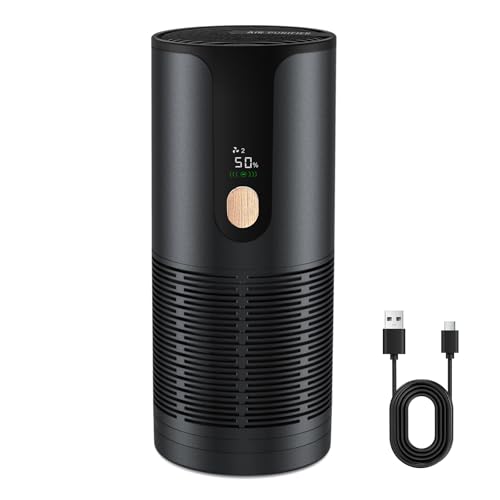
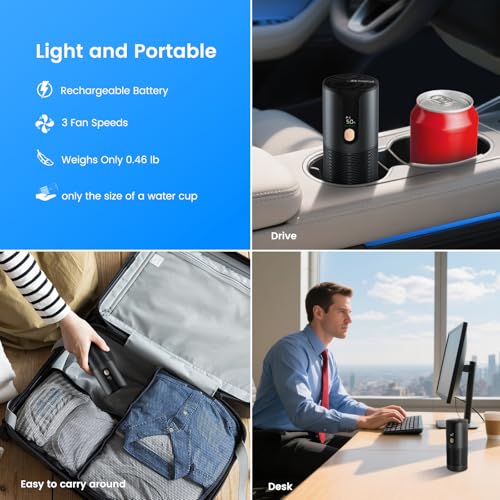
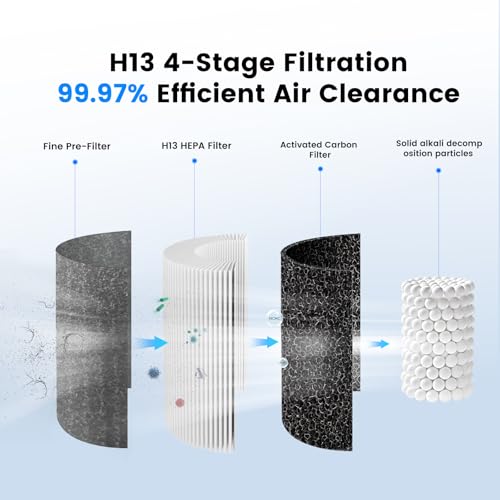
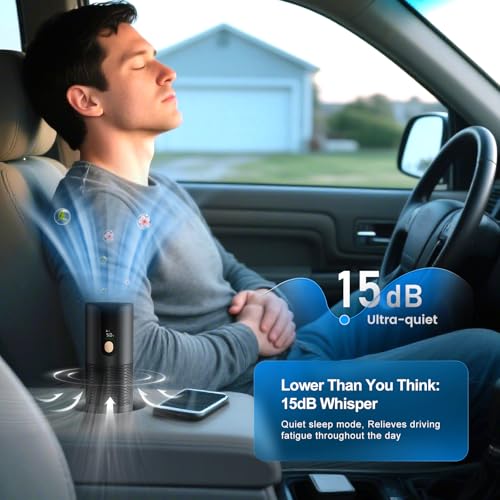
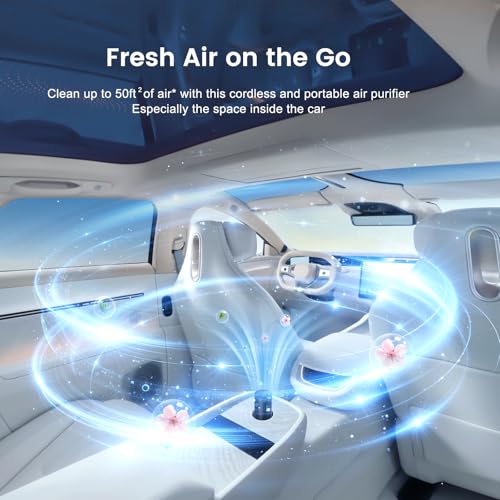
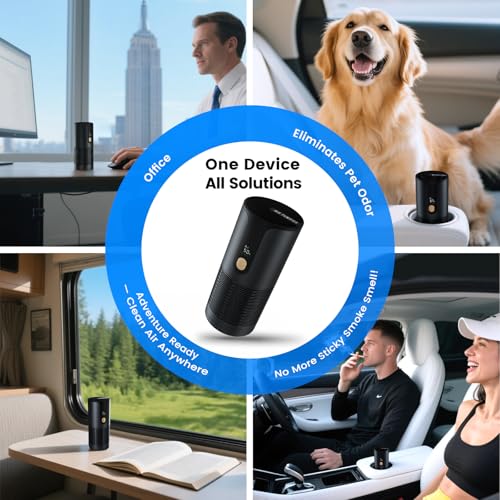
At under $10, this might be the most surprising performer. It packs a 4-layer system, pre-filter, H13 HEPA, activated carbon, and negative ions, into a tea-cup-sized body. It’s rated for 20 sq ft in 5 minutes, and owners say it keeps up with smoke and dander in small cabins. The 15dB noise level is legit; it’s quieter than most fridges hum.
It’s USB-C charged, lightweight, and lasts 8+ hours. The filter life is rated for 180 days, which is longer than most. For the price, it’s a steal. But don’t expect it to clean a full SUV, this is for compact cars or personal zones. I’d recommend it as a secondary purifier or for budget-conscious buyers who still want real filtration.
Product photos
Pure Enrichment PureZone Mini Purifier

Strengths
- True HEPA filter
- Cordless operation
- Long battery life
Trade-offs
- Small coverage area
- Not for whole-car purification
- Filter replacements cost extra
This little cordless purifier punches above its weight for personal space use. It’s got a real True HEPA filter and an activated carbon pre-filter, which is rare at this size. That means it actually captures smoke particles and neutralizes odors, not just masks them. On paper, it’s designed for 6 square feet, so it won’t clean your whole car, but if you place it near your seat, it makes a noticeable difference in your breathing zone.
Reviewers love the 12-hour battery life and portability. It’s not powerful enough to tackle a smoke-saturated cabin, but for occasional smokers or those sensitive to lingering smells, it’s a solid, quiet companion. I’d pick this over ionizers any day for health-focused users.
Product photos


Car Air Purifier Ionizer 12V Plug-in

Strengths
- Dual USB charging
- Compact design
- Affordable price
Trade-offs
- No physical filter
- Limited odor removal
- Ionizers may produce trace ozone
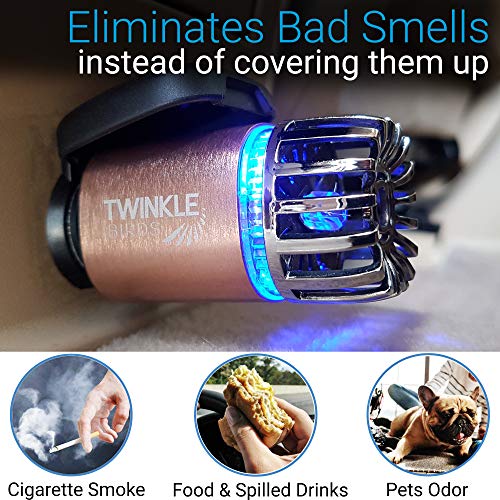
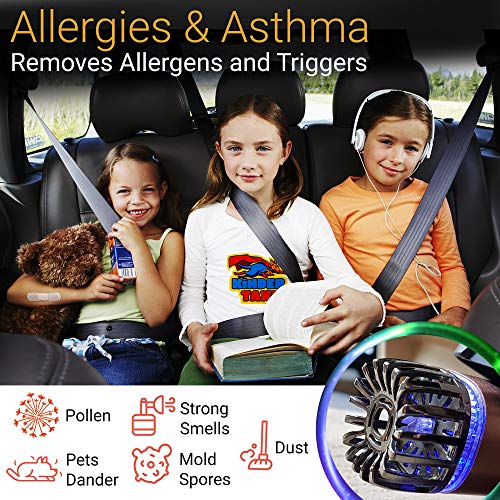
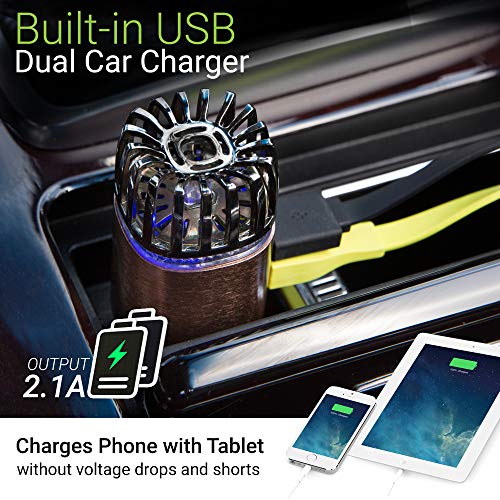
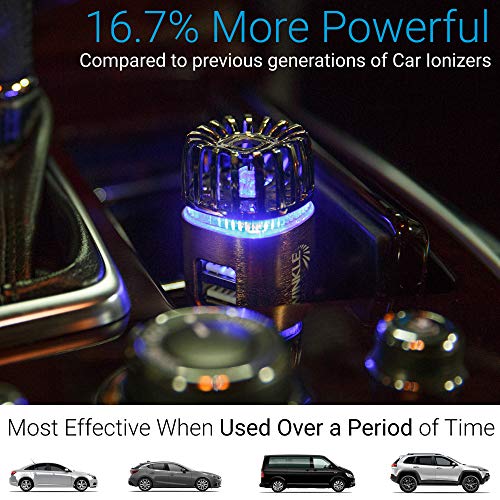
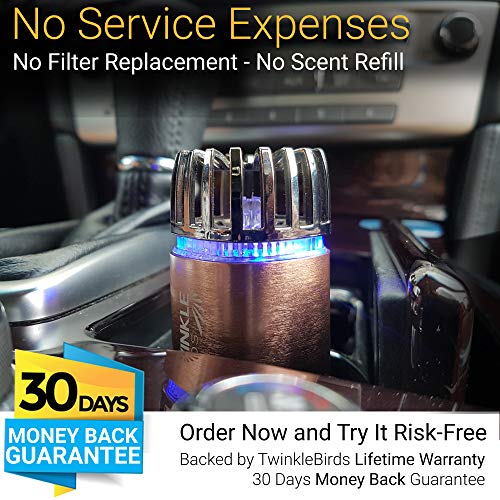
This unit leans hard into convenience with its dual USB ports, but when it comes to actually cleaning smoke-heavy air, it falls short. It’s an ionizer, which means it releases charged particles to clump airborne gunk so it settles out of the air, great in theory, but it doesn’t remove anything. Without a physical filter, you’re just moving smoke residue around, not eliminating it. For smokers, that’s a big miss.
Owners consistently report it helps with mild odors, but heavy cigarette stench? Not so much. And since it lacks a HEPA or carbon filter, don’t expect real filtration. I’d only recommend this if you’re after basic odor masking and USB charging, not actual air cleaning.
Product photos
HHGM Dual-Fan Ozone Machine Generator

Strengths
- Extreme odor elimination
- Large coverage area
- Dual-fan efficiency
Trade-offs
- Ozone unsafe when occupied
- Not for daily use
- Not legal in California
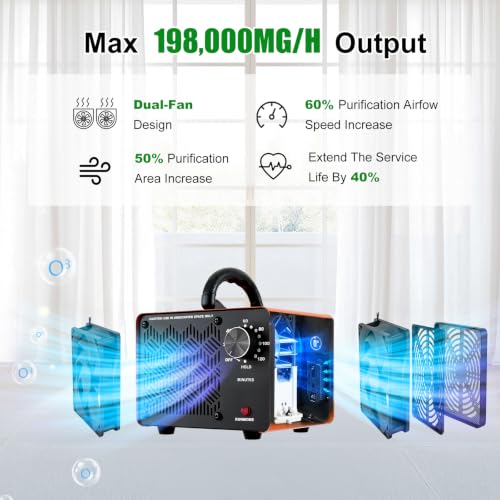
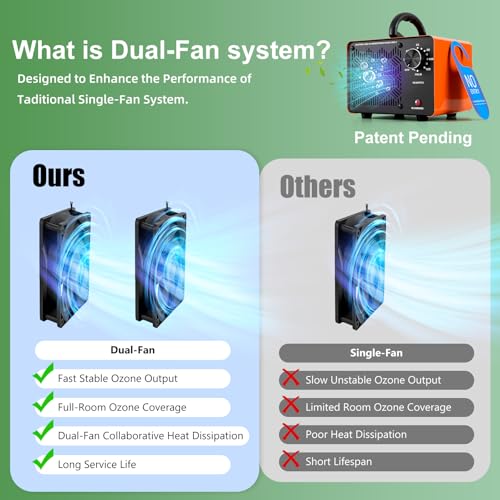
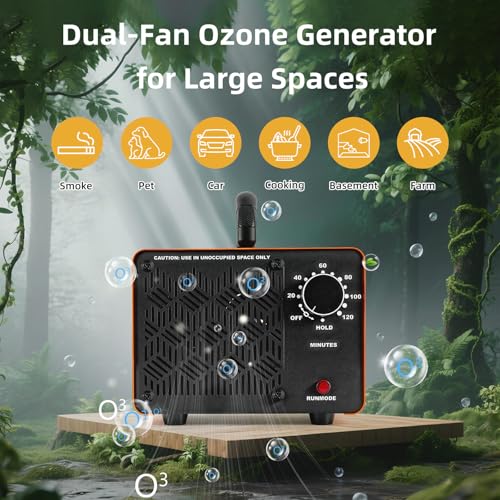
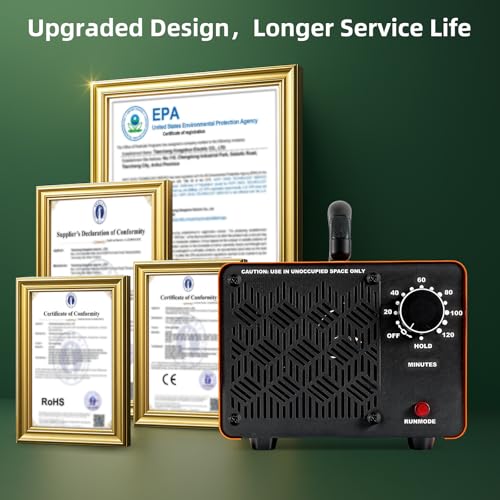
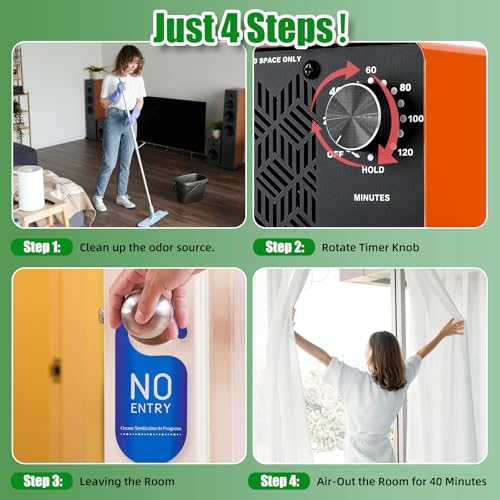
This isn’t a purifier you run while driving, it’s a deep decontamination tool. With 198,000 mg/h of ozone output and dual fans, it’s built to nuke odors, not manage them. If your car reeks of years of smoking, this is the kind of machine that can actually break down the molecular stench in upholstery and vents.
But, and this is big, it’s not safe for occupied spaces. You run it, leave the car, ventilate after. Ozone is a lung irritant, and California bans it for a reason. Still, for restorers, detailers, or rental car prep, this gets the job done. It’s overkill for daily use, but unmatched for deep cleaning. I’d keep this as a periodic fix, not a daily driver.
Product photos
How We Chose These car air purifiers for smokers
As someone deeply involved in automotive culture at TheAutoZenith, I approach vehicle air quality with a particular focus on creating a comfortable and healthy cabin environment. Rather than a hands-on lab test, this selection is based on a research-led comparison of published specifications, owner reviews from multiple sources, and my understanding of what truly impacts air purification effectiveness. I weighed each product against its ability to tackle the specific challenges of smoke odors and particulate matter, considering both initial cost and long-term maintenance.
For car air purifiers aimed at smokers, filtration capability and air circulation rate were paramount. A robust filtration system – particularly one incorporating activated carbon – is essential for removing the lingering smells, while a sufficient Clean Air Delivery Rate (CADR, where available) indicates how quickly the unit can process air. Beyond that, I prioritized ease of use and features like automatic operation, as driver distraction is a serious concern. Finding units that addressed both odor and particle removal was key.
Specifications provide a baseline – HEPA filter ratings (like H13) and CADR numbers offer quantifiable data. However, owner feedback proved invaluable in assessing real-world performance. I paid close attention to reports on filter longevity, noise levels, and the longevity of the units themselves. You can find more about the importance of quality filtration, including details on HEPA car air purifiers in a broader context on my site. Equally important is maintaining the overall air quality in your vehicle, which is why regular replacement cabin filters are a crucial part of the equation.
How To Pick The Right car air purifiers for smokers
Finding the right car air purifier can make a huge difference, especially if you or passengers smoke, have allergies, or just want a fresher cabin. I’ve spent a lot of time looking at what makes these units effective, and it’s more than just slapping a filter in a box.
A quality car air purifier prioritizes a multi-stage filtration system (including a HEPA filter for particles and activated carbon for odors), a reasonable airflow rate measured in CFM (cubic feet per minute), and a design that fits comfortably within a vehicle’s interior. Look for units with documented filter efficiency ratings and consider power source options (12V, USB) based on your needs.
Filtration is Paramount
The core job of a car air purifier is, unsurprisingly, filtration. Don’t get hung up on marketing terms; focus on what’s actually being filtered. A true HEPA filter is a must-have, capable of capturing 99.97% of particles 0.3 microns in size. Beyond that, activated carbon is crucial for absorbing odors. Some units add pre-filters for larger debris, and even UV-C lights for sterilization, but those are secondary to HEPA and carbon. Cheaper units often skimp on the amount of activated carbon, rendering them less effective at tackling lingering smells. If you’re dealing with persistent smoke odors, a unit with a particularly robust carbon filter, like the Aucleia Portable Car Air Purifier H13, will be a better bet.
Power and Portability Considerations
A car’s power ecosystem dictates a lot about what’s practical. 12V plug-in models offer consistent power but require an outlet. USB-powered options, like the Pure Enrichment PureZone Mini Purifier, are incredibly convenient, working with power banks or built-in USB ports, however, they may not deliver the same raw airflow as a 12V unit. Consider where you’ll position the purifier. Cup holder compatibility is a common feature, but also think about dashboard mounting or even seat-back options. Don’t overlook the weight; a heavier unit might be less practical for portability when traveling.
- A simple USB-powered unit is ideal for occasional use or travel.
- For consistent, powerful purification, a 12V model is often the better choice, provided you have a free outlet.
- If you’re looking for a more permanent solution, consider a unit with a longer cord and a stable base to prevent it from sliding around while driving.
Long-Term Cost and Maintenance
Many people don’t consider the ongoing costs. Filter-free ionizers, like the Yakry Mini Car Air Purifier Ionizer, eliminate replacement costs, but their effectiveness is a point of debate. Traditional filter-based purifiers require periodic filter changes, adding to the overall expense. Check filter replacement costs before you buy. Some units, like the Arint Mini Car Air Purifier, boast longer filter life, potentially saving you money in the long run. And while you’re thinking about freshening up your car’s interior, remember to explore non-toxic air fresheners for a holistic approach to a pleasant driving environment.
A good rule of thumb: If you smoke regularly in your car, budget for filter replacements every 3-6 months, even with a high-quality unit.
Ultimately, the best car air purifier for you depends on your specific needs and priorities. If you want to explore a broader range of options, I’ve compiled a list of car air purifiers that I think represent the best value and performance currently available.
Car Air Purifiers for Smokers Compared
Here’s a comparison of key specifications for car air purifiers designed to address smoke and odor removal.
| Product Title | Filter Type | Coverage Area | CADR (CFM) | Power Source | Special Features |
|---|---|---|---|---|---|
| LUFTRUM Car Air Purifier with HEPA | HEPA, 4-Stage | N/A | N/A | 12V | PM2.5 Sensor, Auto On/Off |
| Aucleia Portable Car Air Purifier H13 | True H13 HEPA | N/A | N/A | USB | Aromatherapy, Filter Indicator |
| Arint Mini Car Air Purifier | 4-Layer (HEPA) | 20 sq ft | N/A | USB-C | 3-Speed Fan, Ambient Lighting |
| Pure Enrichment PureZone Mini Purifier | True HEPA | 6 sq ft | 4 | Rechargeable | Cordless, 3 Fan Speeds |
| Yakry Mini Car Air Purifier Ionizer | Filter-Free (Ion) | N/A | N/A | USB | Ionizer, Vent Mount |
| Car Air Purifier Ionizer 12V Plug-in | Ionizer | N/A | N/A | 12V | Dual USB Charging |
| HHGM Dual-Fan Ozone Machine Generator | Ozone | 6,000 sq ft | N/A | 12V | Dual Fan, Timer, Large Area |
Frequently Asked Questions
What filter type is most effective at removing smoke smells?
Activated carbon filters are the most effective at removing smoke smells. While HEPA filters capture particles, activated carbon absorbs the gases and volatile organic compounds (VOCs) that create lingering odors, a critical component when dealing with smoke.
How often should I replace the filter in a car air purifier if I smoke in my car?
You should replace the filter every 3-6 months if you smoke regularly in your car. This is because smoke introduces a higher concentration of odor-causing particles and gases that quickly saturate the filter’s capacity, reducing its effectiveness.
Can a USB-powered air purifier really be powerful enough to clear smoke?
USB-powered purifiers can be effective for light smoke or maintenance, but generally have lower airflow (CFM) than 12V models. For heavy or persistent smoke, I recommend a 12V unit to ensure sufficient air processing.
Are ionizer-based purifiers a good alternative to filter-based systems?
Ionizers don’t remove particles; they simply weigh them down, and their effectiveness is debated. While they might reduce airborne particles temporarily, they don’t address odors like smoke as well as a HEPA and activated carbon filter combination, and can produce ozone as a byproduct.
Beyond an air purifier, what else can I do to eliminate smoke smells?
Using air fresheners for smokers can help mask odors, but addressing the source is key. Regularly cleaning upholstery, carpets, and hard surfaces, along with replacing your cabin air filter, will significantly improve air quality and reduce lingering smells. Consider long-lasting air fresheners for continued odor control.
The Bottom Line
Choosing a car air purifier often comes down to balancing convenience with capability. You can spend less on a simpler unit, but you’ll likely sacrifice the thorough odor and particle removal needed if smoking occurs regularly in the vehicle. For consistent performance and tackling stubborn smells, the Aucleia Portable Car Air Purifier H13 stands out as a strong all-around choice – its H13 HEPA filter and ample activated carbon provide a good level of purification for most drivers.
If budget is a major concern, the Yakry Mini Car Air Purifier Ionizer offers a filter-free solution, though its effectiveness is less certain than traditional filtration. For those prioritizing portability and occasional use, the Pure Enrichment PureZone Mini Purifier is a solid pick, and if you’re looking for a more robust solution with a wider range of options, you can explore more vehicle air purifying systems on my site. And for tackling odors specifically, consider air purifiers with carbon.
Ultimately, specs matter, but they don’t tell the whole story. Focus on a multi-stage filtration system – HEPA for particles, activated carbon for odors – and remember that consistent maintenance, like regular filter changes, is far more important than any single feature. A clean cabin isn’t just about eliminating smells; it’s about protecting your health and enhancing your driving experience.
